What is an API Waterfall? A Comprehensive Guide.
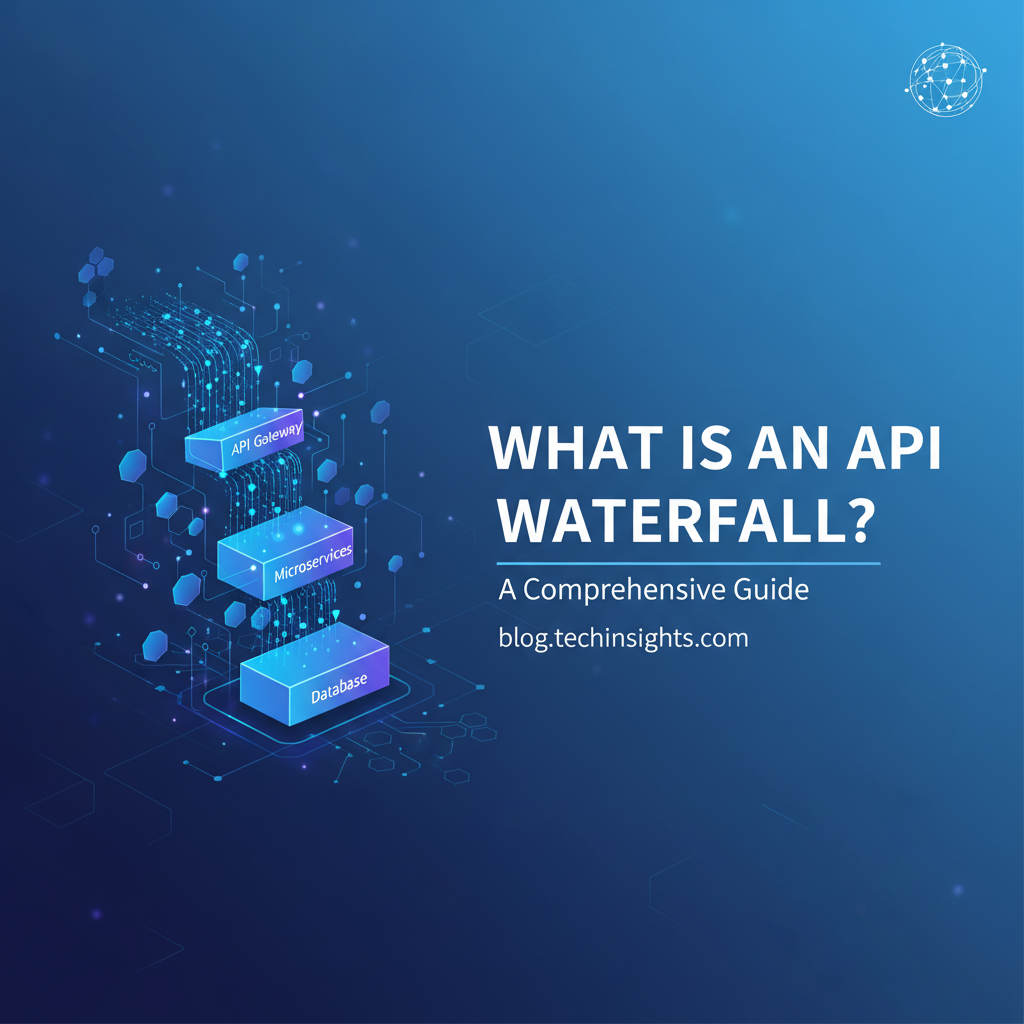


In the intricate world of modern software development, where microservices, cloud computing, and distributed systems reign supreme, the concept of Application Programming Interfaces (APIs) has evolved from a mere technical interface to the fundamental backbone connecting disparate services and applications. APIs are the silent workhorses that enable seamless communication, data exchange, and functionality sharing across an ever-expanding digital landscape. However, as systems grow in complexity and dependencies multiply, developers and architects often encounter a phenomenon that can significantly impact performance, resilience, and user experience: the API waterfall. This comprehensive guide delves deep into what an API waterfall entails, why it occurs, its profound implications, and, most importantly, how to effectively manage and optimize these intricate sequences of API calls, particularly leveraging the power of an API gateway.
The Foundation: Understanding APIs and Their Role
Before we unpack the complexities of an API waterfall, it's crucial to establish a firm understanding of what an API is and why it has become indispensable. At its core, an API is a set of defined rules that allows different software applications to communicate with each other. It acts as an intermediary, specifying how one piece of software can request services from another, and how data should be exchanged. Think of an API as a menu in a restaurant: it lists what you can order, and when you place an order, the kitchen (another application) prepares it and sends it back to you. You don't need to know how the kitchen works internally; you just need to know how to interact with the menu.
The pervasive adoption of APIs has revolutionized software development in several key ways. Firstly, it fosters modularity and reusability, allowing developers to build complex applications by composing smaller, independent services. This approach dramatically speeds up development cycles and reduces time-to-market. Secondly, APIs enable robust integration with third-party services, opening up vast ecosystems of functionality—from payment processing and geolocation to machine learning and social media feeds—without having to build everything from scratch. Thirdly, APIs are the lynchpin of modern microservices architectures, where a single application is broken down into a suite of small, independent services, each running in its own process and communicating through lightweight mechanisms, often HTTP-based RESTful APIs. This distributed nature, while offering scalability and resilience, also introduces new challenges, prominently setting the stage for the API waterfall phenomenon.
The sheer volume and diversity of APIs in use today underscore their critical importance. From public APIs offered by tech giants like Google, Facebook, and Amazon, to private APIs used exclusively within an organization, and partner APIs shared with select collaborators, they form the arteries and veins of the digital economy. Every time you check the weather on your phone, stream a movie, make an online purchase, or even interact with a smart home device, chances are multiple APIs are working in concert behind the scenes to deliver that experience. The smooth operation of these interconnected APIs is paramount for the health and performance of virtually every digital service we interact with daily.
The Gatekeeper: The Indispensable API Gateway
Given the proliferation and critical role of APIs, managing them effectively becomes a monumental task. This is where the API gateway steps in as an architectural cornerstone. An API gateway is essentially a single entry point for all client requests, acting as a reverse proxy that sits in front of your API services. Instead of clients directly calling individual microservices or backend systems, they interact solely with the API gateway, which then routes the requests to the appropriate backend service.
The primary purpose of an API gateway is to centralize and offload common API management tasks that would otherwise need to be implemented within each individual service. This centralization brings a multitude of benefits. For instance, an API gateway can handle authentication and authorization, ensuring that only legitimate and authorized users can access your services. It can enforce rate limiting and throttling policies, preventing abuse and protecting your backend systems from being overwhelmed by excessive requests. Furthermore, it offers request and response transformation capabilities, allowing you to modify headers, payload formats, or even combine responses from multiple services before sending them back to the client, simplifying the client-side logic.
Beyond these fundamental functions, API gateways also provide crucial capabilities for monitoring, logging, and analytics, offering deep insights into API usage patterns, performance metrics, and potential issues. They can facilitate versioning of APIs, allowing for seamless updates and deprecations without breaking existing client integrations. Moreover, in complex microservices environments, an API gateway can perform service discovery, dynamically locating the correct instance of a backend service, and implement load balancing to distribute traffic evenly across multiple instances, thereby enhancing fault tolerance and scalability. The strategic placement of an API gateway significantly reduces the cognitive load on client applications, which no longer need to know the intricate topology of the backend services, making the system more resilient to changes in the backend architecture. This robust mediation layer is not just a convenience; it's a necessity for scalable, secure, and manageable API ecosystems, playing a pivotal role in mitigating the challenges posed by the API waterfall effect.
Unraveling the API Waterfall: Definition and Dynamics
With a solid understanding of APIs and the critical role of an API gateway, we can now precisely define and explore the API waterfall. The term "API waterfall" isn't a universally standardized technical term like "REST API" or "API Gateway," but it vividly describes a common phenomenon in distributed systems: a sequence or chain of interdependent API calls, where the initiation of one call is dependent on the completion or output of a preceding call. This creates a cascading effect, much like a series of waterfalls, where each tier relies on the flow from the one above it.
This dependency often results in a cumulative latency, where the total time taken for the entire operation is the sum of the latencies of all individual calls, plus any network overheads and processing times in between. Imagine a complex user request that requires data from multiple backend services. The frontend might first call an authentication API, which then returns a user ID. This user ID is then used to call a profile API to fetch user details. Simultaneously, or subsequently, the profile data might trigger a call to a preferences API to retrieve personalized settings, and an order history API to fetch past transactions. Each of these backend calls, in turn, might have its own internal dependencies on databases or other microservices. This intricate dance of interconnected api calls, where one action triggers the next in a sequential manner, perfectly illustrates the API waterfall.
The visual analogy of a network waterfall chart, commonly used in web performance analysis, is highly relevant here. Such charts depict the sequence and duration of resources being loaded on a webpage. Similarly, an API waterfall diagram would show the timeline of each API call, illustrating when it starts, when it finishes, and how long it takes, clearly highlighting the serial dependencies. The problem arises when these individual delays accumulate, leading to significant end-to-end latency and a degraded user experience. Understanding this cascading dependency is the first step towards diagnosing and addressing performance bottlenecks inherent in complex distributed api architectures.
Characteristics of an API Waterfall
Several characteristics define an API waterfall:
- Serial Execution: The most defining feature is that calls are often executed one after another, as the input for a subsequent call depends on the output of a prior one. This strict ordering means that the total execution time is at least the sum of the individual execution times.
- Cumulative Latency: Each hop in the waterfall adds its own latency—network travel time, server processing time, and any intermediate data transformations. These small delays compound rapidly, leading to noticeable overall response times.
- Dependency Chain: A clear chain of command or data flow exists, where services are tightly coupled in terms of data exchange during a specific operation. A failure or delay in an early part of the chain can propagate and affect all subsequent calls.
- Resource Contention: As requests flow through the waterfall, they might contend for shared resources like database connections, CPU cycles, or network bandwidth at various points, exacerbating delays.
- Increased Complexity: From a debugging and monitoring perspective, tracing the full lifecycle of a request through an API waterfall can be challenging, as the state and context are passed across multiple service boundaries.
Understanding these characteristics is vital for both identifying when an API waterfall is occurring and for strategizing how to optimize the underlying api interactions to enhance system performance and reliability.
Why API Waterfalls Occur: The Roots of Complexity
The emergence of API waterfalls is not usually a result of poor design intent, but rather an inevitable consequence of certain architectural patterns and business requirements inherent in modern software development. Several key factors contribute to the formation of these complex api call sequences.
1. Microservices Architecture and Granularity
The widespread adoption of microservices architecture is perhaps the most significant catalyst for API waterfalls. While microservices offer immense benefits in terms of scalability, independent deployability, and technological diversity, they inherently break down monolithic applications into smaller, focused services. Each service typically owns its data and exposes its functionality through an API.
Consider a scenario where a user wants to view their dashboard on an e-commerce platform. This seemingly simple request might involve: * Calling a User Service to get basic user information. * Using the user ID to call an Order Service to fetch recent orders. * For each order, calling a Product Catalog Service to retrieve product details. * Calling a Recommendation Service that might, in turn, depend on the User Service and Product Catalog Service to generate personalized suggestions. * Finally, calling a Payment Service to display payment methods.
Each interaction between these services represents an api call, and if the client needs aggregated data, it often has to orchestrate these calls sequentially, forming a deep waterfall. The granular nature of microservices, while promoting autonomy, means that a single high-level business operation might require touching many different services, leading to multiple inter-service api calls.
2. Complex Business Logic and Data Aggregation
Modern applications often need to present a unified view of data that is naturally distributed across various domains. Business processes are rarely simple, linear flows; they involve intricate steps, conditional logic, and the aggregation of information from diverse sources. For example, generating a comprehensive report might require fetching sales data from a Sales API, customer demographics from a CRM API, inventory levels from an Inventory API, and shipping information from a Logistics API. Each of these APIs might belong to different departments or even different third-party vendors.
To fulfill a single user request, an application often needs to collect, process, and combine data from several api endpoints. If the data from one API is a prerequisite for calling another (e.g., getting a list of customer IDs from one API to then query details for each customer from another), a waterfall is unavoidable. The complexity of the underlying business logic directly translates into the complexity and depth of the api call sequence.
3. Third-Party API Integrations
Applications rarely exist in isolation; they frequently integrate with external services provided by third parties. These can include payment gateways (Stripe, PayPal), identity providers (Auth0, Okta), mapping services (Google Maps), communication platforms (Twilio, SendGrid), and various other SaaS offerings. Each integration introduces an external api dependency.
When a client application needs to interact with multiple third-party APIs to complete a transaction or provide a feature, an API waterfall often forms. For instance, an application processing an online order might: * Call its internal Order Service. * The Order Service then calls a Payment Gateway API to authorize the payment. * Upon successful payment, it calls a Shipping Carrier API to arrange shipment. * Finally, it might call an Email Service API to send a confirmation email to the customer.
These external calls add not only latency but also introduce dependencies on external systems, whose performance and availability are beyond the direct control of the application developer. Managing these external api calls within a waterfall becomes even more critical due to these external factors.
4. Client-Side Orchestration (BFF Pattern Misuse)
Sometimes, the responsibility of orchestrating multiple api calls falls to the client application itself, or to a "Backend for Frontend" (BFF) service that is not robustly designed. While BFFs are excellent for tailoring API responses to specific client needs, an improperly implemented BFF can become an orchestrator of deep, sequential api calls. If a single page load requires the client or BFF to make five sequential calls to different backend services, each waiting for the previous one to complete, it creates a client-side API waterfall. This pushes the burden of complexity and latency management to the consumer, which is generally undesirable for performance and maintainability.
In summary, API waterfalls are a natural outcome of decomposing systems into granular services, handling complex business logic, integrating with external ecosystems, and sometimes, suboptimal client-side orchestration. Recognizing these root causes is the first step towards strategically addressing their impact and designing more efficient and resilient api architectures.
The Cascade Effect: Impacts of API Waterfalls
While API waterfalls are often an unavoidable consequence of modern distributed architectures, their presence brings a host of challenges that can severely impact the performance, reliability, and maintainability of a system. Understanding these impacts is crucial for motivating the necessary optimization efforts.
1. Performance Latency and Degraded User Experience
The most immediate and noticeable impact of an API waterfall is increased latency. Since requests are often executed sequentially, the total response time for a complex operation is the sum of the individual latencies of each api call in the chain, plus any network transit times and processing overheads at each hop. Even if each individual api call is fast (e.g., 50ms), a chain of 10 such calls would result in a minimum end-to-end latency of 500ms, excluding network and processing overheads. In reality, these overheads are significant, and individual calls can take much longer due to database queries, complex computations, or external service dependencies.
This cumulative delay directly translates into a degraded user experience. Users accustomed to instantaneous responses become frustrated by slow loading times, unresponsive interfaces, and perceived sluggishness. Studies consistently show a strong correlation between page load times and user engagement, conversion rates, and abandonment rates. A delay of just a few hundred milliseconds can significantly impact key business metrics. In a competitive digital landscape, performance is not just a feature; it's a critical differentiator, and deep API waterfalls pose a direct threat to achieving optimal performance.
2. Increased System Load and Resource Consumption
Each api call in a waterfall consumes resources. This includes CPU cycles, memory, database connections, and network bandwidth on the calling service, the receiving service, and any intermediary components like load balancers or message queues. A deep waterfall, especially under high traffic conditions, can lead to a significant increase in overall system load.
For instance, if a single user request triggers 15 api calls across various microservices, then 100 concurrent users would generate 1500 api calls. This amplified traffic can strain backend databases, overload service instances, and saturate network links. Services might spend more time waiting for responses from downstream dependencies, holding onto resources unnecessarily, leading to thread pool exhaustion, connection timeouts, and ultimately, system instability. The "thundering herd" problem, where many clients simultaneously attempt to access a resource, can be exacerbated by API waterfalls, leading to cascading failures under peak loads.
3. Error Propagation and Resilience Challenges
The serial nature of an API waterfall makes the entire operation highly susceptible to failures in any part of the chain. If an api call early in the sequence fails or times out, all subsequent calls that depend on its output cannot proceed. This means a single point of failure deep within the architecture can cause the entire end-to-end transaction to fail, even if other services are perfectly healthy.
Moreover, error propagation can be tricky to manage. A service might return an obscure error code, which then needs to be translated and handled appropriately by upstream services. If not handled gracefully, a small error can ripple through the system, leading to widespread outages or incorrect data processing. Building resilience into such a chain requires sophisticated error handling, retries with exponential backoff, circuit breakers, and timeouts at every step, adding significant complexity to the development and operational overhead. The "blast radius" of a failure in a deep waterfall can be extensive, making it difficult to isolate and mitigate issues.
4. Complexity in Monitoring, Debugging, and Troubleshooting
Pinpointing the exact source of performance bottlenecks or failures within an API waterfall is a formidable challenge. When a client experiences slow performance or an error, tracing the request's journey across multiple services, each with its own logs and metrics, can be like finding a needle in a haystack.
Traditional monitoring tools, which often focus on individual service health, may not provide the holistic view needed to understand the end-to-end flow. Developers need to stitch together logs from various services, correlating requests by transaction IDs or correlation IDs, to reconstruct the sequence of events. This manual correlation is time-consuming and error-prone. Without adequate distributed tracing capabilities, identifying which api call in a long chain is causing the delay or failure becomes an exercise in frustration, significantly increasing mean time to resolution (MTTR) for critical issues. This complexity directly impacts developer productivity and operational efficiency, making incident response more challenging.
In summary, while API waterfalls are an inherent part of complex distributed systems, their negative impacts on performance, resource utilization, system resilience, and operational efficiency are profound. Addressing these challenges is paramount for building robust, scalable, and user-friendly applications in today's api-driven world.
APIPark is a high-performance AI gateway that allows you to securely access the most comprehensive LLM APIs globally on the APIPark platform, including OpenAI, Anthropic, Mistral, Llama2, Google Gemini, and more.Try APIPark now! 👇👇👇
Strategies for Managing and Optimizing API Waterfalls
Effectively managing and optimizing API waterfalls requires a multi-faceted approach, combining architectural patterns, design principles, and the judicious use of specialized tools. The goal is to reduce latency, enhance resilience, and simplify the overall complexity of interdependent api calls.
1. Leverage the API Gateway for Orchestration and Optimization
The API gateway, positioned at the edge of your backend services, is arguably the most powerful tool for mitigating the negative effects of API waterfalls. It can intelligently orchestrate, transform, and optimize api requests before they reach the backend services or before responses are sent back to the client.
- Request Aggregation (Fan-out/Fan-in): One of the most common and effective strategies. Instead of the client making multiple sequential calls, the API gateway can receive a single client request, fan out parallel calls to multiple backend services, aggregate their responses, and then fan in a single, consolidated response back to the client. This dramatically reduces the cumulative latency by parallelizing operations that are not strictly dependent on each other. For example, getting user profile data, order history, and recommendations can often happen concurrently if the initial user ID is available.
- Caching: The gateway can cache responses from frequently accessed, slowly changing backend services. If a client requests data that has been recently fetched and is still valid, the gateway can serve the cached response immediately, bypassing the entire backend
apiwaterfall and significantly reducing latency and backend load. - Rate Limiting and Throttling: While primarily security and stability features, these also protect backend services from being overwhelmed by excessive requests generated by deep waterfalls, preventing cascading failures.
- Circuit Breakers: The gateway can implement circuit breakers for backend services. If a particular service is experiencing issues, the gateway can "trip" the circuit, preventing further requests from reaching the failing service and instead returning a fallback response or an error immediately. This prevents a failing service from causing a deeper waterfall to fail or time out completely, enhancing overall system resilience.
- Protocol Translation and Transformation: The gateway can translate protocols (e.g., from HTTP/1.1 to HTTP/2, or even between different message formats) and transform request/response payloads, ensuring that backend services receive data in their preferred format, simplifying their logic and potentially reducing the number of internal
apicalls they need to make for data manipulation. - Load Balancing: Distributing incoming client requests across multiple instances of backend services ensures that no single instance becomes a bottleneck, contributing to faster response times and improved availability within a waterfall.
APIPark's Role: This is precisely where platforms like APIPark shine. APIPark, as an open-source AI gateway and API management platform, provides robust capabilities that directly address API waterfall challenges. Its end-to-end API lifecycle management helps regulate API management processes, manage traffic forwarding, load balancing, and versioning of published APIs. This means it can effectively orchestrate requests, apply policies, and ensure efficient routing. Furthermore, its ability to quickly integrate 100+ AI models and encapsulate prompts into REST APIs allows developers to create powerful aggregated APIs. For instance, rather than a client making a separate call to fetch data and then another to a sentiment analysis AI, APIPark can act as the intermediary, combining these steps into a single logical API endpoint, thereby collapsing potential waterfalls. Its high performance, rivalling Nginx, ensures that the gateway itself doesn't become a bottleneck, handling over 20,000 TPS on modest hardware, which is critical when managing high-volume, multi-stage API interactions. Detailed API call logging and powerful data analysis features in APIPark also empower teams to trace and troubleshoot issues within complex API call sequences, quickly identifying where bottlenecks or failures occur, which is invaluable for mitigating API waterfalls.
2. Asynchronous Processing and Event-Driven Architectures
For operations where immediate consistency or a direct response is not strictly required, asynchronous processing can break the sequential chain of an API waterfall. Instead of waiting for a downstream api call to complete, the upstream service can simply publish a message or event to a message queue or an event bus. Downstream services can then consume these messages independently and perform their tasks without blocking the initial request.
Examples include: * Order fulfillment: After a payment is confirmed, the system can publish an "Order Placed" event. A separate shipping service, inventory service, and notification service can subscribe to this event and process their respective tasks in parallel and asynchronously, rather than being called sequentially. * Complex data processing: Offloading long-running tasks to background workers that are triggered by api calls but execute independently.
This approach significantly reduces the perceived latency for the user, as the initial api request can return a quick acknowledgment, while the bulk of the work happens in the background. It also enhances resilience, as message queues provide durability and retry mechanisms, allowing downstream services to recover from temporary failures without impacting upstream operations.
3. Parallelization of Independent API Calls
Whenever possible, identify api calls within a waterfall that do not have strict data dependencies on each other and execute them in parallel. This is distinct from API gateway aggregation, as it can be done at various levels within the application code or within microservices themselves. Modern programming languages offer robust concurrency primitives (e.g., Goroutines in Go, async/await in Python/JavaScript, CompletableFuture in Java) that make it straightforward to launch multiple api requests concurrently and await their combined results.
For example, when rendering a user profile page, if the user's basic information, their list of friends, and their recent activity feed are all fetched from different services but none strictly depend on the others beyond an initial user ID, these three api calls can be initiated simultaneously. This approach can drastically reduce the total elapsed time compared to sequential execution.
4. Batching Requests
If an application frequently needs to make multiple api calls to the same service to fetch data for multiple items (e.g., getting details for 10 products by making 10 separate calls to the Product Catalog Service), consider implementing a batching mechanism. A batch api endpoint would allow the client to send a single request containing multiple queries or commands, and the service responds with a single aggregated response.
Batching reduces network overhead (fewer HTTP handshakes, headers, and payload wrappers) and allows the backend service to potentially optimize its internal operations (e.g., a single database query to fetch 10 products instead of 10 separate queries). This can significantly improve performance for data retrieval scenarios that would otherwise create mini-waterfalls for each item.
5. Data Pre-processing and Caching at Source
Reduce the depth of an API waterfall by minimizing the number of hops required to get essential data. This can involve:
- Denormalization: In some cases, duplicating data across services (denormalization) might be acceptable to avoid cross-service
apicalls for frequently accessed, critical information. This trades off some data consistency complexity for significant performance gains. - Materialized Views: Pre-calculating and storing complex aggregations or joins of data from multiple sources into a dedicated view or cache. This allows consumers to query a single, pre-processed source instead of triggering a multi-service
apiwaterfall. - Local Caching: Implementing caching mechanisms within individual microservices to store frequently accessed data, preventing repetitive calls to internal databases or other dependent services.
6. GraphQL or Similar Query Languages
GraphQL is an API query language that allows clients to request exactly the data they need and nothing more. Crucially, it enables clients to fetch data from multiple resources in a single request. Instead of making separate api calls to a User Service, an Order Service, and a Product Service, a client can send a single GraphQL query that specifies all the required data fields across these different "types." The GraphQL server (often acting as a facade or an intelligent api gateway) then resolves these queries internally, potentially making parallel calls to backend services, and returns a single, structured JSON response.
This shifts the orchestration burden from the client (or a naive BFF) to the GraphQL server, effectively collapsing multiple api waterfall stages into a single, optimized request from the client's perspective. It empowers frontend developers to retrieve precisely what's needed for a specific UI component, avoiding over-fetching and under-fetching of data.
7. Effective API Design and Domain Driven Design
A well-designed api structure can naturally mitigate waterfalls. Adhering to principles of Domain-Driven Design (DDD) helps define clear service boundaries and reduce unnecessary cross-domain api calls. Services should be cohesive, meaning they encapsulate related functionality and data, and loosely coupled, minimizing direct dependencies on other services.
- Avoid chatty APIs: Design APIs that provide sufficient information in a single response, rather than forcing clients to make subsequent calls to retrieve related details.
- Aggregate Root APIs: Create APIs that represent an "aggregate root" in DDD terms, allowing clients to interact with a consistent cluster of domain objects through a single endpoint, rather than needing to orchestrate interactions with individual entities.
- Consider API Versioning: Implement clear API versioning strategies to manage changes gracefully, preventing clients from relying on deprecated functionalities that might break existing
apiwaterfall chains.
8. Robust Monitoring and Observability
You cannot optimize what you cannot measure. Comprehensive monitoring and observability are non-negotiable for identifying and resolving API waterfall issues.
- Distributed Tracing: Implementing distributed tracing (e.g., using OpenTelemetry, Jaeger, Zipkin) allows developers to visualize the entire journey of a request across multiple services. This is invaluable for identifying which
apicall in a waterfall is causing latency, pinpointing bottlenecks, and understanding inter-service dependencies. - Centralized Logging: Aggregating logs from all services into a central logging system (e.g., ELK stack, Splunk) with correlation IDs enables rapid debugging and troubleshooting of specific requests traversing the waterfall.
- Performance Metrics: Continuously monitor key performance indicators (KPIs) like latency, throughput, error rates, and resource utilization for each
apiendpoint and service. Alerting on deviations from baselines helps proactively address performance regressions or failures within a waterfall.
By combining these strategies, organizations can significantly reduce the impact of API waterfalls, leading to more performant, resilient, and maintainable distributed systems. The focus should always be on reducing serial execution, minimizing network hops, and shifting orchestration to intelligent intermediaries like the api gateway wherever appropriate.
Deep Dive into API Gateways: The Cornerstone of Waterfall Management
The API gateway's role in mitigating the complexities of API waterfalls cannot be overstated. It acts as an intelligent intermediary, capable of implementing sophisticated logic to optimize request flows, enhance security, and provide critical operational insights. Let's delve deeper into how an API gateway, such as APIPark, addresses these challenges.
Request/Response Transformation
One of the most powerful features of an API gateway is its ability to transform requests and responses. In the context of API waterfalls, this is crucial for simplifying client interactions and adapting to backend service requirements. * Request Transformation: The gateway can modify incoming requests from clients before forwarding them to backend services. This might involve adding authentication tokens, transforming data formats (e.g., converting XML to JSON or vice-versa), enriching requests with additional context (e.g., user details from an identity service), or simplifying complex query parameters into a format expected by the backend. This helps standardize api interactions and reduce the burden on individual microservices, making them more focused on business logic. * Response Transformation: Similarly, the gateway can modify responses from backend services before sending them back to the client. This is particularly useful for aggregating data from multiple services into a single, coherent response (as discussed in request aggregation), filtering out unnecessary data, or transforming the data format to suit the client's needs. For instance, if three different microservices return parts of a user profile, the gateway can combine these into a single JSON object for the client. This prevents the client from having to make multiple api calls and perform the aggregation logic itself, effectively collapsing a multi-stage waterfall into a single perceived interaction for the client.
Security Policies and Access Control
An API gateway is the ideal place to enforce security policies universally across all APIs, regardless of their backend implementation. This is essential for protecting backend services that might be part of an API waterfall. * Authentication and Authorization: The gateway can handle user authentication (e.g., validating JWT tokens, API keys) and authorization (e.g., checking user permissions against specific api endpoints). This offloads security concerns from individual services, allowing them to focus purely on business logic. If an unauthenticated request attempts to initiate a deep API waterfall, the gateway can block it at the first point of entry, preventing unnecessary load on downstream services. * Threat Protection: Features like IP whitelisting/blacklisting, WAF (Web Application Firewall) capabilities, and schema validation protect against common api security threats such as SQL injection, XSS, and DDoS attacks. By filtering malicious requests at the gateway, the entire api waterfall chain is protected. * Granular Access Control: Many gateways, including APIPark, allow for the creation of multiple tenants (teams) with independent API and access permissions. APIPark also supports subscription approval features, ensuring callers must subscribe and await administrator approval before invoking an API. This robust control prevents unauthorized API calls from triggering unnecessary or malicious waterfalls.
Analytics and Monitoring
Comprehensive visibility into API traffic is paramount for understanding, troubleshooting, and optimizing API waterfalls. The API gateway serves as a central point for collecting vital operational data. * Detailed API Call Logging: Gateways record every detail of each API call, including request/response payloads, headers, timings, status codes, and caller information. This centralized logging (a key feature of APIPark) provides a single source of truth for debugging and auditing. When a client reports a slow response, the detailed logs can help trace the entire journey through the gateway and into the backend services, quickly identifying where the latency accumulated within the waterfall. * Real-time Metrics and Analytics: Gateways provide dashboards and reports on key metrics such as latency, throughput, error rates, and unique API consumers. This allows operations teams to monitor the health and performance of the entire api ecosystem in real-time. By observing trends and anomalies, they can proactively identify potential bottlenecks or performance regressions introduced by complex API waterfalls. * Traceability: Modern API gateways often integrate with distributed tracing systems. By injecting trace IDs into requests as they enter the system and propagating them across all subsequent api calls within the waterfall, the gateway enables end-to-end visibility. This visual representation of the request flow, showing dependencies and timings, is invaluable for diagnosing performance issues in complex, multi-service operations.
Developer Portal Features
While not directly related to the technical optimization of API waterfalls, a developer portal is crucial for managing their complexity from an organizational perspective. * Centralized API Catalog: A developer portal (another core feature of APIPark) provides a centralized display of all available API services. This makes it easy for different departments and teams to find and use the required api services. Clear documentation, example usage, and SDKs help developers understand how to correctly interact with APIs, reducing the likelihood of inefficient api waterfall implementations due to misunderstanding. * Team Collaboration and Sharing: Facilitating API service sharing within teams, as APIPark does, ensures that best practices for api consumption are shared and that developers are aware of existing optimized APIs, preventing the re-creation of services or inefficient api calls.
APIPark's Specific Advantages: APIPark's comprehensive feature set, from quick integration of over 100 AI models to prompt encapsulation into REST API, directly enables the creation of smarter, more efficient API endpoints. Instead of a client orchestrating calls to a data service and then an AI service for analysis, APIPark can expose a single, consolidated api that performs both steps internally, significantly reducing the "hops" in a waterfall from the client's perspective. Its robust end-to-end API lifecycle management ensures that these composite APIs are well-governed, performant, and secure. Moreover, APIPark's powerful data analysis capabilities, which analyze historical call data to display long-term trends and performance changes, are critical for continuous improvement and preventative maintenance, allowing teams to identify and address api waterfall issues before they impact users. This robust governance and performance monitoring are essential tools for any enterprise navigating the challenges of complex api interactions.
In essence, the API gateway transforms from a simple proxy into a sophisticated control plane, an intelligent orchestrator that not only protects and manages api traffic but also actively contributes to optimizing complex api waterfalls, ensuring that distributed systems remain performant, resilient, and manageable.
Practical Examples and Solutions
To solidify our understanding, let's consider a couple of hypothetical scenarios involving API waterfalls and how the discussed strategies, particularly the API gateway, can provide effective solutions.
Scenario 1: E-commerce Product Page Load
Imagine a user landing on a product details page of an e-commerce website. To render this page, the frontend application needs various pieces of information, which are likely spread across several microservices.
Initial (Suboptimal) Waterfall: 1. Frontend calls ProductService/product/{id} to get basic product details (name, price, description). 2. Frontend uses product_id to call InventoryService/product/{id}/stock to get stock levels. 3. Frontend uses product_id to call ReviewService/product/{id}/reviews to get customer reviews. 4. Frontend uses product_id to call RecommendationService/product/{id}/related to get related products. 5. Frontend then iterates through related products, making N calls to ProductService/product/{related_id} for each related product's basic details.
This creates a deep, multi-stage API waterfall. Steps 2, 3, and 4 could potentially run in parallel after step 1, but step 5 introduces an N+1 query problem, drastically increasing latency if there are many related products.
Optimized Solution using API Gateway (and other strategies):
An API gateway can transform this waterfall:
- API Gateway Aggregation: The client makes a single
GET /products/{id}/detailsrequest to the API gateway. - The gateway, upon receiving this request, fans out parallel requests to:
ProductService/product/{id}InventoryService/product/{id}/stockReviewService/product/{id}/reviewsRecommendationService/product/{id}/related
- Crucially, for the
RecommendationServiceresponse, which returns a list of related product IDs, the gateway itself can then make a batch call toProductService/products?ids={id1},{id2},...to fetch details for all related products in a single operation, or even make parallel calls for individual related products if batching is not supported by the backend service. - The gateway then consolidates all these responses into a single, rich JSON payload and sends it back to the frontend.
Impact: * Reduced Latency: Significant reduction in total round trips between client and backend. Parallel execution and batching drastically cut down cumulative waiting times. * Simplified Client: The frontend no longer needs to orchestrate multiple api calls or handle complex aggregation logic. It makes a single, simple request. * Improved Resilience: The gateway can apply circuit breakers to individual backend services, so if, for example, the RecommendationService is slow, the product page can still load quickly by omitting recommendations, rather than failing entirely.
Scenario 2: User Onboarding and Provisioning
Consider a new user signing up for a service. This process often involves multiple steps across various internal and external systems.
Initial (Suboptimal) Waterfall: 1. User signs up via AuthService/register. 2. AuthService creates user, then calls ProfileService/user/create to store profile data. 3. ProfileService calls NotificationService/send-welcome-email to send a welcome email. 4. AuthService also calls BillingService/user/provision to set up billing account. 5. BillingService then calls ThirdPartyTaxService/calculate-initial-tax to determine tax implications. 6. Finally, AuthService returns success to the user.
This is a deep, serial waterfall, where the user waits for all these internal and external calls to complete. A failure at any point (e.g., ThirdPartyTaxService is down) would delay or fail the entire registration process.
Optimized Solution using Asynchronous Processing and API Gateway:
- Asynchronous Processing:
- When the user signs up via
AuthService/register, theAuthServiceperforms initial user creation and then immediately publishes an "UserRegistered" event to a message queue (e.g., Kafka, RabbitMQ). AuthServicecan then return a quick success response to the user, indicating that registration has been initiated, without waiting for downstream processes.- Separate microservices (e.g.,
ProfileService,NotificationService,BillingService) subscribe to the "UserRegistered" event. - The
ProfileServiceprocesses the event to create the user profile. - The
NotificationServiceprocesses the event to send the welcome email. - The
BillingServiceprocesses the event to provision the billing account, and it might then asynchronously call theThirdPartyTaxServiceor defer it.
- When the user signs up via
- API Gateway for Initial Authentication: The API gateway would manage the
AuthService/registerendpoint, handling initial authentication logic, rate limiting, and ensuring the request reaches theAuthServicesecurely and reliably.
Impact: * Immediate User Feedback: The user receives an immediate "Registration successful" message, improving user experience. * Decoupling and Resilience: Services are decoupled. If the NotificationService or BillingService is temporarily down, the registration still proceeds; their tasks will be retried later from the message queue. A failure in ThirdPartyTaxService no longer blocks user registration. * Scalability: Each downstream task can scale independently based on demand. * Reduced Latency (perceived): The perceived latency for the user is dramatically reduced because the critical path is much shorter.
These examples demonstrate how various strategies, with the API gateway playing a central role, can effectively transform burdensome API waterfalls into efficient, resilient, and performant operations. The key lies in identifying dependencies, parallelizing independent tasks, leveraging aggregation, and embracing asynchronous patterns where immediate synchronous responses are not critical.
Best Practices for Architecting Systems with Potential API Waterfalls
Architecting systems in a microservices paradigm means acknowledging that API waterfalls are an inherent reality. The goal isn't to eliminate them entirely, but to design systems that minimize their negative impact and manage their complexity gracefully. Here are some best practices:
1. Prioritize API Gateway Deployment
As evident throughout this guide, an API gateway is not optional for complex api ecosystems. Deploy an api gateway from the outset. It should be the single entry point for all client requests, acting as the intelligent traffic controller, orchestrator, and security enforcer. Ensure your chosen gateway, like APIPark, offers robust features for request aggregation, caching, security, and observability to actively manage potential waterfalls.
2. Design for Cohesion and Loose Coupling
Adhere to the principles of Domain-Driven Design (DDD) to define clear, well-bounded service contexts. Each microservice should be cohesive, owning its data and domain logic, and expose a well-defined api. Strive for loose coupling between services, meaning they should have minimal direct dependencies on each other. When dependencies are necessary, prefer asynchronous communication (events/messages) over synchronous api calls for non-critical path operations. This reduces the likelihood of deep, tightly coupled synchronous waterfalls.
3. Embrace Asynchronous Patterns Where Appropriate
For non-real-time operations, background tasks, or scenarios where eventual consistency is acceptable, leverage asynchronous communication patterns such as message queues or event streams. This decouples services, improves responsiveness for the user, and enhances resilience by allowing services to process events at their own pace and recover from transient failures without blocking upstream components in a synchronous waterfall.
4. Implement Comprehensive Observability from Day One
You cannot optimize what you cannot see. Instrument your entire system, from the API gateway to individual microservices and databases, with robust logging, metrics, and distributed tracing. Use correlation IDs to trace requests end-to-end across service boundaries. This visibility is absolutely critical for identifying performance bottlenecks, error propagation, and latency hotspots within API waterfalls. Tools like APIPark with its detailed API call logging and powerful data analysis features are essential here for understanding and pre-empting issues.
5. Prioritize Performance Testing and Load Testing
Regularly perform performance and load testing, especially under conditions that simulate peak traffic and deep API waterfall scenarios. This helps uncover bottlenecks, resource contention issues, and potential cascading failures before they impact production. Focus on end-to-end transaction times, not just individual service latencies.
6. Design for Failure (Resilience Patterns)
Assume that any part of your API waterfall can fail. Implement resilience patterns at every level: * Timeouts: Apply aggressive timeouts for all external and internal api calls. * Retries with Exponential Backoff: Implement smart retry mechanisms for transient failures. * Circuit Breakers: Use circuit breakers (e.g., via the API gateway or service mesh) to prevent a failing service from being continuously hammered, allowing it to recover and preventing upstream services from blocking indefinitely. * Fallbacks: Provide fallback mechanisms or default responses when a dependency is unavailable or times out, allowing the system to degrade gracefully rather than failing entirely.
7. Optimize Data Access
Minimize the number of data fetches and hops. * Caching: Implement caching at various layers—API gateway, service level, database level—for frequently accessed and relatively static data. * Batching/Bulk APIs: Design api endpoints that support batch operations when multiple items of the same type need to be processed. * GraphQL: Consider using GraphQL as an API layer, especially for client-facing APIs, to allow clients to fetch exactly what they need in a single request, collapsing multiple waterfall stages.
8. Document API Dependencies and Call Flows
Maintain clear documentation of api dependencies, call flows, and service contracts. This helps developers understand the implications of changes and design new features without inadvertently creating inefficient or brittle API waterfalls. Visualizing these dependencies can be incredibly helpful for architecture reviews.
9. Continuously Monitor and Refine
The digital landscape is dynamic. Continuously monitor the performance of your API waterfalls in production. Analyze API usage patterns, identify emerging bottlenecks, and refactor services or optimize api calls as needed. This iterative process of monitoring, analyzing, and refining is key to maintaining a performant and resilient api ecosystem.
By embedding these best practices into the architectural design and development lifecycle, organizations can effectively tame the complexities of API waterfalls, transforming them from potential liabilities into manageable, predictable components of a robust distributed system.
Conclusion
The API waterfall, while not a novel term in the lexicon of software architecture, vividly encapsulates the intricate and often challenging reality of interdependent API calls in modern distributed systems. From the proliferation of microservices to the necessity of data aggregation and third-party integrations, the cascading sequence of api requests is an inherent characteristic of today's api-driven world. However, ignoring its implications—ranging from debilitating latency and resource exhaustion to fragile resilience and debugging nightmares—is a perilous path for any enterprise.
This comprehensive guide has illuminated the dynamics of API waterfalls, explored their root causes, detailed their profound impacts, and, most importantly, presented a robust arsenal of strategies for their effective management and optimization. Central to these strategies is the indispensable API gateway, which stands as the intelligent traffic controller, orchestrator, and security guardian at the edge of your backend services. Platforms like APIPark, an open-source AI gateway and API management platform, provide the powerful capabilities—from intelligent request aggregation and load balancing to detailed logging and performance analytics—that are crucial for transforming complex API waterfalls into efficient and resilient operational flows.
By embracing practices such as intelligent API gateway orchestration, asynchronous processing, judicious parallelization, meticulous API design, and comprehensive observability, organizations can mitigate the negative "cascade effect." The journey through API waterfalls is one of continuous architectural refinement, diligent monitoring, and a commitment to building systems that are not only functional but also performant, scalable, and resilient. In an era where digital experiences are paramount, mastering the art of API waterfall management is not merely a technical endeavor; it is a strategic imperative for sustained business success.
FAQ
1. What exactly is an API waterfall? An API waterfall refers to a sequence of interdependent Application Programming Interface (API) calls, where the initiation or successful completion of one API call is required before a subsequent API call can proceed. This creates a cascading chain of requests, similar to how water flows down multiple tiers of a waterfall, often leading to cumulative latency and increased complexity in distributed systems.
2. Why are API waterfalls a problem for performance? API waterfalls pose a significant performance problem because the total time taken for an operation is the sum of the latencies of all individual API calls in the sequence, plus network overhead and processing time at each step. This cumulative delay can lead to slow response times for users, degraded user experience, and a perceived sluggishness in the application, directly impacting user engagement and business metrics.
3. How does an API Gateway help in managing API waterfalls? An API gateway is a crucial component for managing API waterfalls. It can aggregate multiple backend API calls into a single client request, parallelizing independent calls to reduce latency. It also provides caching, rate limiting, circuit breakers, and request/response transformation, all of which reduce the number of direct client-to-service interactions, optimize data flow, and enhance the resilience of the entire API call chain. For instance, platforms like APIPark centralize API management, orchestration, and performance monitoring, significantly mitigating waterfall effects.
4. What are some key strategies to optimize an API waterfall? Key strategies include: * API Gateway Aggregation: Using an API gateway to combine multiple API calls into one. * Asynchronous Processing: Decoupling services using message queues for non-real-time tasks. * Parallelization: Executing independent API calls concurrently rather than sequentially. * Caching: Storing frequently accessed data at various layers to avoid redundant API calls. * Batching Requests: Allowing clients to send a single request for multiple queries to the same service. * GraphQL: Empowering clients to fetch all necessary data from multiple sources in a single request. * Distributed Tracing: Implementing tools to visualize the entire API call flow across services to identify bottlenecks.
5. How do tools like APIPark specifically address API waterfall challenges? APIPark, as an open-source AI gateway and API management platform, directly addresses API waterfall challenges through several features: * End-to-End API Lifecycle Management: Regulating traffic forwarding, load balancing, and versioning to optimize call flows. * Unified API Format & Prompt Encapsulation: Enabling developers to create composite APIs that can internally orchestrate AI models and data fetches, reducing client-side waterfall complexity. * High Performance: Ensuring the gateway itself doesn't become a bottleneck, capable of handling large-scale traffic efficiently. * Detailed API Call Logging & Data Analysis: Providing comprehensive insights to trace and troubleshoot issues within complex API call sequences, pinpointing performance bottlenecks and failures. These capabilities are vital for architects and developers to understand and optimize the intricate dependencies within an API waterfall.
🚀You can securely and efficiently call the OpenAI API on APIPark in just two steps:
Step 1: Deploy the APIPark AI gateway in 5 minutes.
APIPark is developed based on Golang, offering strong product performance and low development and maintenance costs. You can deploy APIPark with a single command line.
curl -sSO https://download.apipark.com/install/quick-start.sh; bash quick-start.sh

In my experience, you can see the successful deployment interface within 5 to 10 minutes. Then, you can log in to APIPark using your account.

Step 2: Call the OpenAI API.