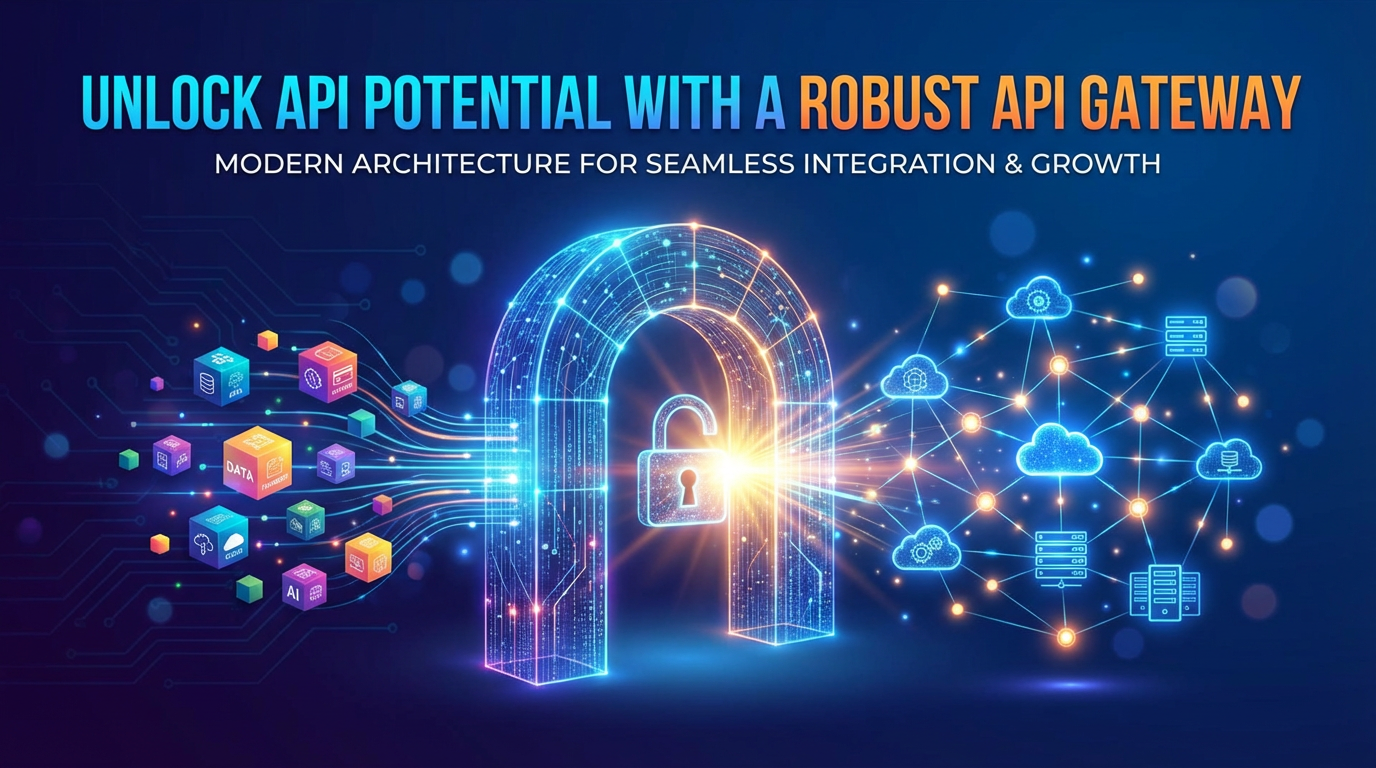
Unlock API Potential with a Robust API Gateway


The digital arteries of our modern world are made of Application Programming Interfaces, or APIs. These invisible yet indispensable connectors power everything from our social media feeds and online banking to sophisticated cloud infrastructures and smart city initiatives. In an era where software interoperability and real-time data exchange are not just advantages but necessities, the sheer volume and complexity of APIs have soared, presenting both immense opportunities and significant management challenges. As organizations transition from monolithic applications to agile microservices architectures, the need for a sophisticated, centralized control point becomes overwhelmingly clear. This control point is the API gateway, a critical piece of infrastructure that acts as the single entry point for all client requests, orchestrating interactions, enforcing policies, and securing the intricate web of services behind it.
The journey into unlocking the full potential of APIs begins with understanding and strategically implementing a robust API gateway. This article delves deep into the multifaceted world of API gateways, exploring their foundational role, core functionalities, profound benefits, architectural considerations, and future trajectory. We will uncover how a well-chosen API gateway not only streamlines API management but also dramatically enhances security, performance, and scalability, transforming an organization's digital capabilities. From basic traffic routing to advanced AI model integration, the API gateway is no longer just a technical component but a strategic asset, indispensable for navigating the complexities of the modern API economy and driving innovation.
The Foundational Role of APIs in the Modern Digital Landscape
The evolution of software development has been nothing short of revolutionary, marked by a decisive shift from monolithic applications to highly distributed, modular systems. Once, entire applications were built as single, indivisible units, making updates, scaling, and fault isolation cumbersome and risky. Today, the landscape is dominated by microservices – small, independent services that perform specific business functions and communicate with each other primarily through APIs. This architectural paradigm has unlocked unprecedented agility, allowing development teams to build, deploy, and scale services independently, accelerating innovation cycles and improving system resilience.
APIs are the connective tissue of this new digital organism. They define how different software components should interact, specifying the operations that can be performed, the data formats to be used, and the expected responses. Consider a typical interaction in your daily life: when you book a flight online, the travel website doesn't directly access the airline's internal databases. Instead, it makes calls to the airline's APIs to check flight availability, retrieve pricing, and process bookings. Similarly, when you make a payment, your bank's application integrates with a payment gateway API to securely transfer funds. The ubiquity of APIs extends across every sector, from social media platforms integrating third-party applications to healthcare systems exchanging patient data, and e-commerce platforms personalizing user experiences. Each interaction, each piece of data exchanged, hinges on the precise and reliable functioning of APIs.
The rise of the API economy signifies a profound shift in business models. Companies are no longer just selling products or services; they are exposing their core capabilities as APIs, allowing partners and developers to build new applications and innovative solutions on top of their platforms. This fosters ecosystems, expands market reach, and creates entirely new revenue streams. For instance, mapping services expose APIs that allow countless applications to embed location-based features, while cloud providers offer APIs that grant developers programmatic access to computing, storage, and networking resources. In essence, APIs have democratized access to digital functionalities, empowering a new generation of interconnected applications and services.
However, this proliferation of APIs brings its own set of formidable challenges. Without proper management, organizations face a potential sprawl of unorganized, insecure, and poorly performing APIs. Security breaches can occur if APIs are not adequately protected, leading to data loss and reputational damage. Inconsistent API design and documentation can lead to developer frustration and integration headaches. Furthermore, monitoring the health and performance of hundreds or thousands of APIs individually becomes an impossible task, making it difficult to identify and resolve issues promptly. This is where the concept of an API gateway transcends being a mere convenience and transforms into an absolute necessity, acting as the centralized nerve center for managing this complex digital landscape. It provides the essential structure, security, and visibility needed to harness the immense power of APIs, preventing chaos and paving the way for scalable and secure digital innovation.
Understanding the API Gateway: More Than Just a Proxy
At its core, an API gateway serves as a single, unified entry point for all client requests interacting with a multitude of backend services. Imagine it as the highly sophisticated concierge of a grand hotel, directing guests (client requests) to the right departments (backend services), managing access, ensuring safety, and providing a seamless experience. It sits between the client applications (web, mobile, third-party) and the backend services, acting as a reverse proxy, but with significantly enhanced functionalities that go far beyond simple traffic forwarding.
The concept of an API gateway is often confused with other networking components like load balancers or reverse proxies. While it incorporates elements of both, an API gateway offers a much richer set of application-level features. A reverse proxy forwards requests to a single backend server or a group of servers based on simple routing rules. A load balancer distributes incoming network traffic across multiple servers to ensure optimal resource utilization and prevent overload. An API gateway, however, operates at a higher level of abstraction. It understands the nuances of API calls, allowing it to apply complex business logic, security policies, and transformation rules tailored specifically for API interactions. It's not just about moving packets; it's about intelligently managing the entire API lifecycle from the client's perspective.
Core Functions of an API Gateway: A Comprehensive Overview
To truly appreciate the value of an API gateway, one must understand its extensive repertoire of functions, each meticulously designed to enhance the security, performance, and manageability of an API ecosystem.
- Request Routing: This is the most fundamental function. The API gateway receives an incoming request and, based on predefined rules (e.g., URL path, HTTP method, client type), routes it to the appropriate backend service or microservice. This decouples clients from specific service locations, allowing backend services to be relocated, scaled, or updated without impacting client applications. For instance, a request to
/users/123might be routed to theUserService, while/products/456goes to theProductService. - Load Balancing: To ensure high availability and optimal performance, API gateways distribute incoming traffic across multiple instances of a backend service. If one instance becomes overloaded or unresponsive, the gateway intelligently directs traffic to healthy instances, preventing service disruptions and maintaining responsiveness. This is crucial for applications experiencing fluctuating traffic loads, ensuring that no single service instance becomes a bottleneck.
- Authentication and Authorization: Security is paramount. The API gateway acts as the primary enforcement point for access control. It can authenticate client requests using various schemes (e.g., OAuth 2.0, JWT, API keys) and then authorize whether the authenticated client has permission to access the requested resource. This centralized security layer offloads authentication and authorization logic from individual backend services, simplifying development and ensuring consistent security policies across all APIs. Without this, every microservice would need to implement its own security mechanisms, leading to inconsistencies and potential vulnerabilities.
- Rate Limiting and Throttling: To prevent abuse, denial-of-service (DoS) attacks, and ensure fair usage, API gateways can enforce rate limits. This means restricting the number of requests a client can make within a specified time frame. Throttling temporarily limits request rates to prevent a service from being overwhelmed, ensuring that critical backend systems remain stable even under heavy load. For example, a free tier user might be limited to 100 requests per minute, while a premium user might get 10,000.
- Caching: Performance optimization is a significant benefit. An API gateway can cache responses from backend services for a specified duration. If subsequent identical requests arrive within that period, the gateway can serve the cached response directly, bypassing the backend service entirely. This significantly reduces latency, decreases the load on backend systems, and improves overall application responsiveness, especially for frequently accessed, immutable data.
- Protocol Translation: In complex architectures, clients might use different communication protocols than backend services. For instance, a mobile client might send requests over HTTP/2, while a legacy backend service might only support HTTP/1.1 or even a different protocol like gRPC or SOAP. An API gateway can perform protocol translation, allowing disparate systems to communicate seamlessly without requiring changes on either end. This flexibility is vital for integrating diverse technologies.
- Request/Response Transformation: API gateways can modify the structure or content of requests before forwarding them to a backend service, and similarly, transform responses before sending them back to the client. This is useful for normalizing data formats, adding or removing headers, aggregating data from multiple services, or masking sensitive information. For example, a gateway might transform a client's generic request into a format specific to a legacy backend system, or simplify a complex backend response before sending it to a mobile app.
- Logging and Monitoring: Comprehensive logging and monitoring are crucial for operational visibility. API gateways can log every incoming and outgoing request, capturing details such as request headers, body, timestamps, client IP, response codes, and latency. This centralized logging provides a unified view of all API traffic, making it easier to troubleshoot issues, detect anomalies, and understand API usage patterns. Integrated monitoring tools track metrics like request rates, error rates, and response times, providing real-time insights into the health and performance of the API ecosystem.
- Analytics: Beyond raw logs, an API gateway can aggregate and analyze call data to provide valuable business insights. This might include identifying top consumers, tracking usage trends, understanding API adoption rates, and calculating monetization metrics. Such analytics are invaluable for product managers and business strategists to make informed decisions about API development and marketing.
- Security Policies: Beyond basic authentication and authorization, an API gateway can enforce advanced security policies such as IP whitelisting/blacklisting, WAF (Web Application Firewall) capabilities to protect against common web vulnerabilities (e.g., SQL injection, cross-site scripting), and data encryption in transit. This creates a robust defensive perimeter, shielding backend services from various cyber threats.
In summary, an API gateway is far more than a simple passthrough. It is an intelligent, policy-driven control plane that mediates all interactions between clients and backend services. By centralizing these critical functions, it liberates individual microservices from handling boilerplate concerns, allowing them to focus purely on their business logic. This not only simplifies development but also significantly enhances the overall resilience, security, and performance of the entire API landscape, positioning the organization to fully leverage the power of its digital assets.
Key Benefits of Implementing a Robust API Gateway
The strategic adoption of an API gateway is not merely an architectural choice; it's a foundational decision that yields a multitude of profound benefits across an organization's entire digital ecosystem. These advantages span from bolstering security and enhancing performance to streamlining development and opening new avenues for business growth.
1. Enhanced Security: A Centralized Defensive Perimeter
One of the most critical benefits of an API gateway is its ability to centralize and enforce security policies. In a microservices environment, having to implement security measures independently for dozens or hundreds of services is a recipe for disaster, leading to inconsistencies, configuration drift, and gaping vulnerabilities. The API gateway acts as a unified security enforcement point, intercepting every request and applying a consistent set of security rules.
- Centralized Authentication and Authorization: As discussed, the gateway can handle token validation (e.g., JWT, OAuth), API key management, and user authentication, passing only authenticated and authorized requests to the backend. This offloads complex security logic from individual services.
- Threat Protection: Many API gateways include built-in Web Application Firewall (WAF) capabilities, shielding backend services from common web attacks like SQL injection, cross-site scripting (XSS), and DoS attacks. They can also perform schema validation, ensuring that incoming data conforms to expected formats and preventing malformed requests from reaching sensitive services.
- Data Masking and Encryption: Sensitive data can be masked or tokenized at the gateway level before reaching backend systems, minimizing exposure. Furthermore, the gateway ensures secure communication through TLS/SSL encryption for all data in transit, protecting against eavesdropping and tampering. By consolidating security, an API gateway significantly reduces the attack surface, simplifies compliance efforts, and provides a robust, layered defense for valuable digital assets.
2. Improved Performance and Scalability: Optimizing Resource Utilization
Performance and scalability are paramount for modern applications, and an API gateway plays a pivotal role in optimizing both.
- Caching Mechanisms: By caching frequently requested API responses, the gateway dramatically reduces the load on backend services and improves response times for clients. This is particularly effective for static or semi-static data, where subsequent requests can be served directly from the cache, bypassing the need to hit the backend.
- Load Balancing and Intelligent Routing: The gateway efficiently distributes incoming traffic across multiple instances of backend services, preventing any single service from becoming a bottleneck. Advanced routing capabilities can direct traffic based on service health, geographic location, or even specific request parameters, ensuring optimal resource utilization and low latency.
- Connection Pooling and Protocol Optimization: API gateways can maintain persistent connections to backend services, reducing the overhead of establishing new connections for every request. They can also optimize protocol usage, for instance, by translating HTTP/1.1 requests to HTTP/2 for backend communication, which offers better performance through multiplexing and header compression. These optimizations lead to faster API responses, higher throughput, and more efficient use of backend resources, allowing applications to handle increased traffic gracefully without significant over-provisioning.
3. Simplified API Management and Development: Streamlining Operations
An API gateway significantly simplifies the management of complex API ecosystems, benefiting both operations and development teams.
- Unified Control Plane: Instead of managing security, routing, and policies for each service individually, the API gateway provides a single, centralized point of control. This drastically reduces operational complexity and improves consistency across the entire API landscape.
- Service Decoupling: Clients interact only with the gateway, completely decoupled from the specific implementation details, locations, or versions of backend services. This allows development teams to evolve, refactor, or even replace backend services without impacting client applications, fostering greater agility and continuous delivery.
- Developer Experience: A well-managed API gateway often integrates with developer portals, providing a consistent way for internal and external developers to discover, understand, and subscribe to APIs. Consistent API definitions, clear documentation, and standardized access methods reduce onboarding friction and boost developer productivity. This ease of use is crucial for accelerating innovation and fostering a vibrant developer community around an organization's APIs.
4. Monetization Opportunities: Unlocking New Business Models
For many organizations, APIs are not just technical interfaces but revenue-generating products. An API gateway is instrumental in enabling API monetization strategies.
- Tiered Access and Billing: Gateways can enforce different service level agreements (SLAs) and rate limits for various user tiers (e.g., free, basic, premium), allowing businesses to charge based on usage volume, features accessed, or performance guarantees.
- Detailed Usage Analytics: By logging and analyzing every API call, the gateway provides the granular data needed for accurate billing, usage reporting, and understanding the value generated by different APIs. This data is invaluable for optimizing pricing models and identifying high-value API consumers. By providing the technical infrastructure for managing access and tracking usage, an API gateway transforms APIs from cost centers into profit centers, enabling new subscription-based business models and expanding market reach.
5. Resilience and Reliability: Building Robust Systems
Modern applications demand high availability and fault tolerance. An API gateway contributes significantly to the resilience of an API ecosystem.
- Circuit Breakers: If a backend service becomes unresponsive or starts throwing too many errors, the gateway can temporarily "trip a circuit breaker," preventing further requests from being sent to that faulty service. This allows the service time to recover and prevents a cascading failure that could bring down the entire system.
- Retries and Fallbacks: The gateway can be configured to automatically retry failed requests or to route them to a fallback service if the primary service is unavailable, enhancing fault tolerance.
- Service Discovery Integration: By integrating with service discovery mechanisms, the gateway can dynamically adapt to changes in the backend service landscape, routing requests only to healthy and available instances. These features ensure that the overall system remains operational and responsive even when individual components experience temporary issues, providing a more robust and reliable user experience.
6. Observability: Gaining Deep Insights
Understanding the health, performance, and usage patterns of an API ecosystem is crucial for proactive management and troubleshooting. An API gateway is a powerful hub for observability.
- Centralized Logging: As the single entry point, the gateway can capture comprehensive logs for all incoming and outgoing API traffic, including request/response details, latency, errors, and authentication information. This provides a unified data source for analysis.
- Metrics and Tracing: Gateways can emit detailed metrics (e.g., request rates, error rates, average latency per API endpoint) to monitoring systems. Many also support distributed tracing, allowing developers to trace a single request's journey across multiple microservices, quickly identifying performance bottlenecks or points of failure. This rich telemetry data empowers operations teams to detect issues early, diagnose problems quickly, and make data-driven decisions to optimize API performance and reliability.
In summary, implementing a robust API gateway transcends mere technical convenience; it is a strategic imperative for any organization operating in the API economy. It provides a fortified perimeter against security threats, optimizes performance and scalability, simplifies the complexities of API management, unlocks new monetization avenues, enhances system resilience, and offers unparalleled observability. By consolidating these critical functionalities, an API gateway empowers businesses to unleash the full potential of their APIs, fostering innovation, reducing operational overhead, and driving sustainable digital growth.
Architecture and Deployment Patterns
The effective implementation of an API gateway hinges on understanding its various architectural considerations and deployment patterns. There isn't a one-size-fits-all solution; the choice depends heavily on an organization's infrastructure, scale, specific requirements, and existing technology stack.
Deployment Options: Where Your Gateway Resides
API gateways can be deployed in several ways, each offering distinct advantages and trade-offs:
- On-Premise Deployment:
- Description: The API gateway software is installed and managed directly on the organization's own servers, within its data centers.
- Advantages: Provides maximum control over infrastructure, data locality, and security configurations. Can be ideal for highly regulated industries or environments with strict data sovereignty requirements. No reliance on external vendors for uptime or performance.
- Disadvantages: Requires significant upfront investment in hardware, software licenses, and dedicated IT personnel for maintenance, upgrades, and scaling. Can be less agile than cloud-based solutions and might struggle to scale rapidly in response to sudden traffic spikes.
- Cloud-Based (SaaS) Deployment:
- Description: The API gateway is provided as a service by a third-party vendor (e.g., AWS API Gateway, Azure API Management, Google Cloud Apigee). The vendor manages all infrastructure, software, and scaling.
- Advantages: Low operational overhead as the vendor handles maintenance, patching, and scaling. Rapid deployment and quick time to market. Often comes with integrated features like developer portals, analytics, and monetization tools. High availability and scalability are managed by the cloud provider.
- Disadvantages: Less control over the underlying infrastructure and customization options. Potential vendor lock-in. Data might reside in regions controlled by the vendor, which could be a concern for some compliance requirements. Cost can increase significantly with high usage volumes.
- Hybrid Deployment:
- Description: A combination of on-premise and cloud-based deployments. For example, an organization might use a cloud gateway for external-facing APIs while maintaining an on-premise gateway for internal-facing or highly sensitive APIs.
- Advantages: Offers a balance of control and agility. Allows organizations to leverage cloud benefits for certain workloads while keeping critical data or applications on-premise. Provides flexibility for phased migration to the cloud.
- Disadvantages: Increased complexity in managing multiple gateway instances and ensuring consistent policy enforcement across different environments. Requires robust network connectivity and security between on-premise and cloud infrastructure.
Architectural Considerations: Designing for Resilience and Scale
Beyond the deployment location, several architectural decisions influence the effectiveness of an API gateway:
- Single Gateway vs. Multiple Gateways:
- Single Gateway: Simpler to manage initially but can become a bottleneck or single point of failure as the API ecosystem grows. Also, applying disparate policies (e.g., public vs. internal APIs) to a single gateway can lead to complexity.
- Multiple Gateways: Organizations often implement specialized gateways. For example, an "edge gateway" (also known as an external API gateway) handles requests from external clients and enforces public-facing security policies. An "internal gateway" (or micro-gateway) might reside within a service mesh or specific domain, handling internal service-to-service communication with less stringent public security policies but optimized for internal trust boundaries. This distributed approach enhances resilience and allows for tailored policy application.
- Integration with Existing Infrastructure: An API gateway rarely operates in isolation. It needs to seamlessly integrate with:
- Identity Providers (IDPs): For robust authentication (e.g., Okta, Auth0, Keycloak).
- Logging and Monitoring Systems: To centralize data (e.g., ELK Stack, Splunk, Prometheus, Grafana).
- Service Discovery Mechanisms: (e.g., Consul, Eureka, Kubernetes Service Discovery) to dynamically locate backend services.
- CI/CD Pipelines: For automated deployment and management of gateway configurations.
- High Availability and Disaster Recovery: For production systems, the API gateway itself must be highly available. This typically involves deploying multiple gateway instances across different availability zones or regions, with automatic failover mechanisms. Disaster recovery plans should ensure that API access can be restored quickly in the event of a major outage.
- Scalability: The gateway must be able to scale horizontally to handle increasing traffic. This involves stateless gateway design (where state is stored externally, e.g., in a shared cache or database) and leveraging containerization (Docker, Kubernetes) for elastic scaling.
Choosing an API Gateway: Key Factors to Consider
Selecting the right API gateway is a critical decision. Here are the key factors to weigh:
- Features: Does it offer the core functionalities you need (routing, security, rate limiting, caching, transformation)? Does it support advanced features like GraphQL, event-driven integration, or AI model management?
- Scalability and Performance: Can it handle your projected traffic volumes with low latency? Is it designed for high throughput and horizontal scaling?
- Cost: Evaluate licensing fees, operational costs, and potential cloud consumption charges. Consider the total cost of ownership (TCO) over time.
- Ease of Use and Management: How complex is it to configure, deploy, and manage? Is there good documentation and a user-friendly interface or API?
- Vendor Support and Community: For commercial products, what level of technical support is offered? For open-source solutions, is there an active community and robust documentation?
- Flexibility and Customization: Can it be extended or customized to meet unique organizational requirements? Does it support various authentication methods and backend protocols?
- Integration Ecosystem: How well does it integrate with your existing monitoring, logging, identity management, and CI/CD tools?
When considering options, organizations often look at a spectrum ranging from commercial, fully managed services to open-source solutions. For instance, commercial offerings like Apigee or Kong Enterprise provide comprehensive features and enterprise-grade support but come with significant costs. On the other end, open-source API gateways like Kong Community Edition, Apache APISIX, or Envoy (often used as a proxy within a service mesh) offer flexibility and cost savings but require more in-house expertise for deployment and management.
Among the notable open-source solutions that offer a robust blend of features, particularly for modern challenges including AI integration, is APIPark. APIPark is an all-in-one AI gateway and API developer portal that is open-sourced under the Apache 2.0 license. It's designed to help developers and enterprises manage, integrate, and deploy AI and REST services with remarkable ease. Its capabilities include quick integration of over 100 AI models, a unified API format for AI invocation, and prompt encapsulation into REST APIs, alongside comprehensive end-to-end API lifecycle management. Such platforms provide a powerful, community-driven alternative for organizations seeking control and customization without the proprietary lock-in, proving that high performance and advanced features, like those rivaling Nginx with over 20,000 TPS on modest hardware, are attainable within the open-source ecosystem. You can learn more about this versatile platform at ApiPark.
By carefully evaluating these factors and understanding the architectural implications, organizations can select and deploy an API gateway that not only meets their current needs but also provides a scalable and resilient foundation for future digital growth and innovation.
Advanced API Gateway Capabilities and Use Cases
The role of an API gateway has evolved significantly beyond basic request routing and security enforcement. Modern gateways are now sophisticated platforms capable of orchestrating complex microservices interactions, enabling event-driven architectures, and even acting as specialized interfaces for emerging technologies like AI.
1. Microservices Orchestration and Service Mesh Integration
In highly distributed microservices environments, managing inter-service communication can become complex. While an API gateway handles external client-to-service communication, a service mesh (e.g., Istio, Linkerd) typically manages internal service-to-service communication. * Complementary Roles: The API gateway acts as the "edge proxy," the first point of contact for requests coming into the cluster, applying broad policies for external traffic. The service mesh then handles finer-grained policies, traffic management, and observability for internal service calls. * Orchestration: Advanced gateways can orchestrate calls across multiple backend services to fulfill a single client request, aggregating responses or transforming them before sending them back. This allows client applications to make a single, simpler API call, while the gateway handles the complexity of breaking it down into multiple internal service calls. This is particularly useful for creating "composite APIs" that combine data from several microservices.
2. Event-Driven Architectures (EDA) Integration
Many modern applications leverage event-driven patterns, where services communicate asynchronously through events. An API gateway can bridge the gap between synchronous API calls and asynchronous event streams. * API-to-Event Translation: A client might make a standard RESTful API call to the gateway. The gateway can then translate this into an event message and publish it to a message queue or event bus (e.g., Kafka, RabbitMQ). This allows frontend applications to interact with backend systems that primarily operate on an event-driven model without needing to understand the underlying messaging infrastructure. * Webhook Management: Conversely, the gateway can manage webhooks, allowing backend services to subscribe to events and push notifications to client applications or third-party systems as events occur, enabling real-time interactions and data synchronization.
3. GraphQL Gateway: Unifying Data Access
GraphQL is a query language for APIs that allows clients to request exactly the data they need, nothing more, nothing less. A GraphQL gateway or proxy layer built into an API gateway can provide significant advantages: * Single Endpoint for Diverse Backends: A GraphQL gateway can unify data from multiple backend REST APIs, databases, or even other GraphQL services into a single, cohesive schema. This simplifies data fetching for clients, as they only interact with one endpoint to get all necessary information. * Reduced Over-fetching/Under-fetching: Clients can specify the exact fields they require, eliminating the common REST API issues of over-fetching (receiving more data than needed) or under-fetching (requiring multiple requests to get all necessary data). * Backend for Frontend (BFF) Alternative: While a BFF pattern creates a separate backend for each frontend, a GraphQL gateway can offer a more generic, yet highly customizable, data access layer that serves multiple client types efficiently.
4. Backend for Frontend (BFF) Pattern
The BFF pattern involves creating a separate backend service specifically tailored for each type of client application (e.g., one BFF for web, another for mobile, another for smart TV). An API gateway can effectively manage and route traffic to these BFFs. * Client-Specific Optimization: Each BFF can expose a distinct API optimized for its client's unique needs, data requirements, and user experience. This avoids creating a "one-size-fits-all" API that might be inefficient for diverse client types. * Isolation of Concerns: Changes to a specific frontend's API (and its corresponding BFF) do not impact other frontends or the core backend services. The API gateway ensures that requests from the web client go to the web BFF, mobile requests to the mobile BFF, and so on.
5. API Versioning and Lifecycle Management
Managing multiple versions of an API is a common challenge. An API gateway provides robust mechanisms to handle API versioning gracefully: * Version-Based Routing: The gateway can route requests to specific API versions based on URL path (/v1/users), query parameters (?api-version=1), or HTTP headers (Accept-Version: 1). This allows organizations to introduce new API versions without breaking existing client applications. * Deprecation and Sunsetting: The gateway can facilitate the deprecation of older API versions by allowing limited access, redirecting to newer versions, or providing custom error messages, guiding developers to transition to the latest APIs. * Full Lifecycle Management: From design and publication to invocation, monitoring, and eventual decommissioning, the API gateway helps regulate the entire API management process. It assists in managing traffic forwarding, load balancing, and versioning of published APIs, ensuring a structured and controlled evolution of the API ecosystem.
6. Monetization and Advanced Analytics
Beyond basic rate limiting, modern API gateways offer sophisticated tools for API monetization and in-depth analytics. * Customizable Plans: Create flexible API usage plans with different pricing tiers, feature sets, and QoS guarantees. * Billing Integration: Integrate with billing systems to automate invoicing based on metered API usage. * Behavioral Analytics: Track user engagement, identify popular endpoints, detect anomalies in usage, and gain insights into how APIs are driving business value. This data is critical for product development, marketing, and sales strategies.
7. AI Gateway Integration: Specialization for AI Models
The proliferation of AI and Machine Learning (ML) models has introduced a new layer of complexity. Managing access to, integrating, and deploying these models can be challenging due to diverse input/output formats, authentication mechanisms, and cost structures. This has given rise to specialized AI gateway capabilities within or as an extension of traditional API gateways.
- Unified AI Model Access: An AI gateway provides a single, consistent API interface for interacting with a multitude of AI models, regardless of their underlying framework or deployment location. This abstracts away the complexities of different AI vendors or internal model implementations.
- Prompt Encapsulation: A particularly powerful feature, prompt encapsulation allows users to combine AI models with custom prompts to create new, specialized APIs. For example, a base language model can be wrapped with a prompt to create a "sentiment analysis API" or a "text summarization API," making complex AI functionalities easily consumable via a simple REST call.
- Standardized API Format for AI Invocation: It standardizes the request data format across all AI models. This ensures that changes in AI models or prompts do not affect the consuming application or microservices, significantly simplifying AI usage and reducing maintenance costs.
- Centralized Authentication and Cost Tracking for AI: Just like traditional APIs, AI models need secure access and careful cost management. An AI gateway centralizes authentication for all integrated AI models and provides detailed cost tracking based on usage, allowing organizations to monitor and optimize their AI expenditures.
- Quick Integration of Diverse AI Models: Platforms like ApiPark exemplify these advanced capabilities by offering quick integration of over 100 AI models with a unified management system for authentication and cost tracking. This dramatically accelerates the adoption and deployment of AI within enterprises, making cutting-edge AI functionalities accessible and manageable through a familiar API paradigm. APIPark’s performance, rivaling Nginx with over 20,000 TPS on modest hardware, underscores its ability to handle large-scale AI inference traffic efficiently.
By leveraging these advanced capabilities, organizations can move beyond basic API connectivity to build highly sophisticated, resilient, and intelligent digital ecosystems. The API gateway, especially when augmented with specialized features like those for AI, becomes not just a traffic cop but a strategic orchestrator, empowering businesses to innovate faster, operate more reliably, and unlock new value from their data and services.
The API Gateway in the Age of AI and Emerging Technologies
The relentless pace of technological innovation ensures that the landscape of software development is in constant flux. In this era, dominated by the transformative power of Artificial Intelligence, serverless computing, edge computing, and even nascent Web3 paradigms, the API gateway is not merely adapting; it is evolving to become a pivotal enabler of these new frontiers. Its role is expanding from a general-purpose traffic manager to a specialized orchestrator for intelligent, distributed systems.
The Rise of AI Gateways: A Specialized API Gateway for Intelligence
As mentioned, AI and Machine Learning (ML) models are rapidly becoming integral components of enterprise applications. From natural language processing to predictive analytics and computer vision, these models offer immense capabilities. However, integrating and managing a diverse portfolio of AI models – whether from various cloud providers (OpenAI, Google AI, Azure AI), open-source projects, or internally developed solutions – presents unique challenges: * Heterogeneous Interfaces: Different AI models often have distinct APIs, input/output formats, and authentication mechanisms. * Cost Management: AI inference can be expensive, and tracking usage across multiple models and users is crucial. * Prompt Management: For generative AI, managing and versioning prompts, which significantly influence model behavior, becomes a critical concern. * Security: Protecting access to sensitive models and data, and preventing misuse, is paramount.
This is precisely where the AI gateway emerges as a specialized form of API gateway. * Unified AI Access Layer: An AI gateway acts as a single, standardized API endpoint for all underlying AI models. It abstracts away the complexity, allowing developers to interact with any AI model using a consistent API format, simplifying development and reducing integration overhead. * Prompt Engineering and Encapsulation: A core feature, the AI gateway enables prompt encapsulation. Developers can define, store, and version prompts within the gateway, combining them with specific AI models to create ready-to-use, domain-specific APIs (e.g., a "financial sentiment analysis API" that uses a generic large language model with a financial-domain-specific prompt). This ensures prompt consistency and reusability. * Centralized Cost Tracking and Policy Enforcement: The AI gateway centralizes authentication and authorization for all AI models. Crucially, it provides granular cost tracking, allowing organizations to monitor AI usage per user, application, or model, enabling effective budget management and chargebacks. * Model Agnostic Switching: By standardizing the API format for AI invocation, the AI gateway allows for seamless switching between different AI models (e.g., from GPT-3.5 to GPT-4, or an open-source alternative) without impacting the consuming application's code. This fosters flexibility, reduces vendor lock-in, and allows organizations to leverage the best-performing or most cost-effective model for a given task. * Performance and Scalability for AI Inference: AI workloads can be demanding. An AI gateway is built to handle high-throughput inference requests, often incorporating optimized caching and load balancing specifically for AI model serving.
Platforms like ApiPark are at the forefront of this trend. As an open-source AI gateway and API management platform, APIPark not only provides traditional API gateway functionalities but also excels in AI integration. It boasts the capability to quickly integrate over 100 AI models, offers a unified API format for AI invocation, and allows for prompt encapsulation into REST APIs. This ensures that enterprises can harness the power of AI efficiently, securely, and scalably, transforming complex AI deployments into manageable, consumable APIs.
Serverless Functions and Edge Computing: Distributed Intelligence
The move towards serverless architectures (Functions-as-a-Service) and edge computing fundamentally changes where and how code is executed. * Gateway as Serverless Front-End: API gateways are often the primary front-end for serverless functions, routing requests directly to ephemeral functions without provisioning or managing servers. They provide the necessary security, rate limiting, and request transformation for these event-driven computations. * Edge Gateway for Low Latency: For edge computing, where processing occurs closer to the data source and users, specialized edge API gateways are emerging. These gateways are deployed on edge devices or in regional data centers, minimizing latency for users and reducing bandwidth requirements by processing data closer to its origin. This is particularly relevant for IoT devices, real-time analytics, and localized AI inference.
Web3 and Decentralized APIs: A Glimpse into the Future
While still in nascent stages, the concepts of Web3, blockchain, and decentralized APIs present intriguing future directions for API gateways. * Gateway to Blockchain Networks: API gateways could provide simplified access to blockchain networks, abstracting away the complexities of smart contract interactions and cryptographic signatures for traditional Web2 applications. * Decentralized Identity and Access Management: As decentralized identity solutions gain traction, API gateways might integrate with these systems to verify user identities and authorize access to resources in a privacy-preserving and verifiable manner. * Token-Gated Access: API gateways could enforce access to APIs based on the ownership of specific NFTs or fungible tokens, enabling new forms of API monetization and community access.
Security Advancements: AI-Driven Threat Detection
The evolution of security threats is met with advancements in defensive capabilities. API gateways are increasingly incorporating AI and ML for enhanced security: * Behavioral Anomaly Detection: AI algorithms can analyze API traffic patterns to detect unusual behavior that might indicate an attack (e.g., sudden spikes in requests from a single IP, abnormal request sequences), providing proactive threat detection. * Automated Threat Response: Upon detecting a threat, the gateway can automatically implement countermeasures like blocking malicious IPs, applying stricter rate limits, or isolating suspicious clients, without human intervention. * Intelligent Policy Adaptation: AI can help gateways dynamically adapt security policies based on evolving threat landscapes and real-time risk assessments, moving beyond static rule sets.
In conclusion, the API gateway is far from a static piece of infrastructure. It is a dynamic, evolving component that is crucial for navigating the complexities of emerging technologies. Its specialization into AI gateways, its role in serverless and edge computing, and its potential integration with Web3 paradigms highlight its indispensable position as the central nervous system for digital interactions. By understanding and strategically leveraging these advanced capabilities, organizations can ensure their digital platforms are not only resilient and high-performing but also agile enough to embrace the innovations of tomorrow.
Implementation Best Practices and Common Pitfalls
Implementing an API gateway is a significant undertaking that, when executed correctly, can transform an organization's digital capabilities. However, like any powerful tool, it comes with its own set of best practices to follow and pitfalls to avoid to ensure success.
Implementation Best Practices
- Start Small, Scale Gradually: Don't attempt to put every single API behind a gateway from day one. Begin with a critical, manageable set of APIs, perhaps a new project or a set of APIs that share common security requirements. Learn from this initial deployment, optimize configurations, and then gradually expand the scope. This iterative approach minimizes risk and allows teams to build expertise.
- Define Clear API Contracts (OpenAPI/Swagger): Before exposing any API through the gateway, rigorously define its contract using standards like OpenAPI (formerly Swagger). This contract specifies the API's endpoints, request/response formats, authentication methods, and error codes. A well-defined contract ensures consistency, facilitates automated testing, and simplifies client integration, leading to a better developer experience. The gateway can then use this contract for schema validation and transformation.
- Implement Robust Testing (Unit, Integration, Performance): Treat your API gateway configuration and policies as code.
- Unit Tests: Test individual policies and routing rules in isolation.
- Integration Tests: Ensure the gateway correctly routes requests to backend services and applies policies as expected.
- Performance Tests: Conduct load testing to verify the gateway can handle projected traffic volumes and measure its latency under stress. This is critical for preventing bottlenecks and ensuring scalability.
- Monitor Everything, Continuously: Observability is non-negotiable. Configure the API gateway to export comprehensive metrics, logs, and traces to your centralized monitoring system.
- Key Metrics: Track request rates, error rates, average response times (latency), cache hit ratios, CPU/memory usage of the gateway instances.
- Alerting: Set up alerts for critical thresholds (e.g., high error rates, sudden traffic drops/spikes) to enable proactive problem detection and resolution.
- Distributed Tracing: Leverage distributed tracing to visualize the entire request flow from client through the gateway to backend services, making it easy to pinpoint performance issues or failures.
- Keep Security at the Forefront: Security should be a continuous concern, not an afterthought.
- Principle of Least Privilege: Grant only the necessary permissions to applications and users accessing APIs through the gateway.
- Regular Security Audits: Conduct periodic security audits and penetration testing of the gateway and its configurations.
- Stay Updated: Keep the gateway software patched and updated to protect against known vulnerabilities.
- WAF Integration: Leverage Web Application Firewall (WAF) capabilities to protect against common web exploits.
- Automate Configuration and Deployment: Use Infrastructure-as-Code (IaC) tools (e.g., Terraform, Ansible) to manage API gateway configurations. Integrate gateway deployment and policy updates into your CI/CD pipelines. Automation ensures consistency, reduces human error, and enables rapid, reliable changes.
- Document Thoroughly: Provide clear and comprehensive documentation for both internal teams and external developers. This includes:
- API Gateway Setup: How the gateway is configured and managed.
- API Definitions: Detailed documentation for each API exposed, often using a developer portal.
- Authentication Mechanisms: Clear instructions on how to authenticate and authorize requests.
- Troubleshooting Guides: Common issues and their resolutions.
Common Pitfalls to Avoid
- Over-Centralization and Bottlenecks: While centralization is a benefit, over-centralizing all logic within the API gateway can turn it into a monolithic bottleneck. The gateway should handle cross-cutting concerns (security, routing, rate limiting), but core business logic belongs in backend services. Avoid making the gateway too "smart" or it becomes an anti-pattern, difficult to scale and maintain.
- Ignoring Performance Metrics: Deploying an API gateway without adequate performance monitoring is a recipe for disaster. A poorly performing gateway can degrade the performance of all underlying APIs. Regularly analyze metrics, identify bottlenecks, and optimize caching, load balancing, and gateway resource allocation.
- Lack of Documentation and Developer Experience: A powerful API gateway is useless if developers don't know how to use the APIs it exposes. Neglecting documentation, providing inconsistent API definitions, or making API discovery difficult will lead to developer frustration and low adoption. Invest in a good developer portal and maintain high-quality API documentation.
- Inadequate Security Measures: Relying solely on the API gateway for all security can be dangerous if the gateway itself is not properly secured or configured. Backend services should still implement their own internal security measures (e.g., input validation, authorization checks) as a defense-in-depth strategy. Never trust inputs that have passed through the gateway blindly.
- Choosing the Wrong Gateway Solution for Specific Needs: Selecting a gateway that is either over-engineered (too complex, too expensive for simple needs) or under-equipped (lacking critical features for complex requirements) can lead to significant headaches. Carefully assess your current and future needs, including considerations for open-source solutions like APIPark, which provides both robustness and specific capabilities for AI, against commercial offerings. A mismatch can result in costly re-platforming or compromise functionality.
- Neglecting Versioning Strategy: Without a clear API versioning strategy implemented at the gateway, evolving APIs can break existing clients. Plan how you will introduce new API versions, manage deprecation, and support older versions through the gateway to ensure a smooth transition for consumers.
By diligently adhering to these best practices and consciously avoiding common pitfalls, organizations can successfully implement a robust API gateway that not only streamlines operations and enhances security but also truly unlocks the full potential of their APIs, driving innovation and sustainable growth in the digital economy.
Conclusion: The Indispensable Nexus of the Digital Economy
In the rapidly evolving landscape of the digital economy, APIs have cemented their position as the fundamental building blocks of modern software, powering everything from cloud-native applications to sophisticated AI models. Their ubiquity, however, brings with it a commensurate increase in complexity and challenges, particularly around management, security, and performance. This extensive exploration has underscored a crucial truth: a robust API gateway is not merely a technical component but an indispensable strategic asset that effectively addresses these challenges, transforming potential chaos into structured efficiency.
We have delved into the multifaceted nature of the API gateway, recognizing it as far more than a simple reverse proxy. It serves as the intelligent nexus for all client-API interactions, meticulously performing critical functions such as request routing, load balancing, centralized authentication and authorization, rate limiting, caching, and robust logging. These capabilities collectively offload boilerplate concerns from individual services, allowing developers to focus on core business logic and accelerating the pace of innovation.
The benefits of a well-implemented API gateway are profound and far-reaching. It dramatically enhances security by creating a fortified, consistent defensive perimeter against various threats, significantly improves performance and scalability through intelligent traffic management and caching, and simplifies the intricate world of API management. Moreover, it empowers businesses to unlock new monetization opportunities, build more resilient systems through fault tolerance mechanisms, and gain unparalleled observability into their digital operations. Platforms like ApiPark, an open-source AI gateway and API management platform, exemplify how even within the open-source realm, organizations can find comprehensive solutions that provide enterprise-grade performance and advanced features, particularly for integrating and managing AI models.
As we look to the future, the API gateway's role is only set to expand. In an age increasingly defined by Artificial Intelligence, serverless computing, and the promise of Web3, the gateway is evolving to become a specialized orchestrator for intelligent, distributed systems. The emergence of AI gateways, capable of unifying access to diverse AI models, encapsulating prompts, and providing granular cost tracking, highlights this ongoing adaptation. Its critical function as a front-end for serverless functions and its potential for managing decentralized APIs further solidify its enduring relevance.
However, realizing these benefits requires a thoughtful and strategic approach. Adhering to best practices such as starting small, defining clear API contracts, rigorous testing, continuous monitoring, and prioritizing security, while diligently avoiding common pitfalls like over-centralization or neglecting documentation, is paramount.
In essence, a robust API gateway is the cornerstone of a secure, performant, and scalable API ecosystem. It is the architectural linchpin that enables organizations to fully leverage the power of APIs, fostering innovation, reducing operational overhead, and navigating the complexities of our increasingly interconnected digital world. For any enterprise aspiring to thrive in the modern digital landscape, investing in and strategically deploying an API gateway is not just an option; it is a strategic imperative for unlocking boundless digital potential.
APIPark is a high-performance AI gateway that allows you to securely access the most comprehensive LLM APIs globally on the APIPark platform, including OpenAI, Anthropic, Mistral, Llama2, Google Gemini, and more.Try APIPark now! 👇👇👇
Frequently Asked Questions (FAQ)
1. What is an API Gateway and why is it essential for modern applications?
An API gateway acts as a single entry point for all client requests to a multitude of backend services, typically in a microservices architecture. It sits between client applications (web, mobile, third-party) and the backend services. It's essential because it centralizes critical cross-cutting concerns such as authentication, authorization, rate limiting, traffic routing, load balancing, caching, and logging. This centralization simplifies API management, enhances security, improves performance and scalability, and frees individual microservices from implementing these common functionalities, allowing them to focus solely on their core business logic. Without a robust gateway, managing a large number of APIs would lead to significant operational complexity, security vulnerabilities, and inconsistent experiences.
2. How does an API Gateway differ from a traditional Load Balancer or Reverse Proxy?
While an API gateway incorporates functionalities of both a load balancer and a reverse proxy, it operates at a higher level of abstraction and offers a much richer feature set. * Reverse Proxy: Forwards client requests to a single backend server or a group of servers, typically based on hostname or path, without inspecting the content of the request at an application level. * Load Balancer: Distributes incoming network traffic across multiple servers to optimize resource utilization, maximize throughput, reduce latency, and ensure fault tolerance. * API Gateway: Does all of the above but also understands the specifics of API calls. It can apply complex business logic, transform request/response data, enforce detailed security policies (like OAuth, JWT validation), manage API versions, perform caching at an application level, and provide granular analytics specific to API usage. It's an intelligent traffic manager for APIs, not just network packets.
3. What are the key benefits of using an API Gateway for security?
An API gateway provides a centralized and robust security perimeter for your API ecosystem. Its key security benefits include: * Centralized Authentication & Authorization: It acts as the primary enforcement point, validating client identities (e.g., via API keys, OAuth 2.0, JWTs) and verifying permissions before requests reach backend services, ensuring consistent security. * Threat Protection: Many gateways include Web Application Firewall (WAF) capabilities, protecting against common web vulnerabilities like SQL injection, cross-site scripting (XSS), and Denial-of-Service (DoS) attacks. * Rate Limiting & Throttling: Prevents API abuse and potential DoS attacks by restricting the number of requests a client can make within a specified timeframe. * Data Masking & Encryption: It can mask sensitive data or ensure all data in transit is encrypted (TLS/SSL), protecting against eavesdropping and data breaches. By consolidating security measures, the API gateway significantly reduces the attack surface and simplifies compliance efforts across the entire API landscape.
4. Can an API Gateway help with AI model integration and management?
Absolutely, and this is an evolving, critical capability. Specialized API gateways, often referred to as AI gateways, are designed to streamline the integration and management of Artificial Intelligence and Machine Learning models. They address challenges such as diverse model interfaces, inconsistent authentication, and complex prompt management. Key features include: * Unified API Format for AI Invocation: Provides a consistent API interface for interacting with various AI models, abstracting away their underlying differences. * Prompt Encapsulation: Allows users to combine AI models with custom prompts to create new, domain-specific APIs (e.g., a sentiment analysis API from a general language model). * Centralized Authentication & Cost Tracking: Manages secure access to AI models and provides granular usage-based cost tracking. * Model Agnostic Switching: Enables seamless switching between different AI models without requiring application code changes. Platforms like ApiPark are prime examples of open-source AI gateways that offer these advanced capabilities, significantly simplifying the deployment and consumption of AI within enterprises.
5. What factors should I consider when choosing an API Gateway solution?
Selecting the right API gateway is crucial for long-term success. Key factors to consider include: * Core Features: Ensure it offers essential functionalities like routing, security, rate limiting, caching, and request/response transformation. * Advanced Capabilities: Evaluate if it supports advanced features relevant to your needs, such as GraphQL, event-driven integration, or specific AI gateway functionalities. * Scalability and Performance: Assess its ability to handle your current and projected traffic volumes with low latency and high throughput. * Deployment Options: Consider whether you need on-premise, cloud-based (SaaS), or hybrid deployment flexibility. * Cost: Evaluate licensing fees, operational expenses, and potential cloud consumption costs for both commercial and open-source solutions. * Ease of Use & Management: Look for intuitive configuration, good documentation, and user-friendly interfaces or APIs for management. * Integration Ecosystem: Verify its compatibility with your existing identity providers, logging/monitoring systems, and CI/CD pipelines. * Vendor Support & Community: For commercial products, assess vendor support quality; for open-source options, look for an active community and robust documentation.
🚀You can securely and efficiently call the OpenAI API on APIPark in just two steps:
Step 1: Deploy the APIPark AI gateway in 5 minutes.
APIPark is developed based on Golang, offering strong product performance and low development and maintenance costs. You can deploy APIPark with a single command line.
curl -sSO https://download.apipark.com/install/quick-start.sh; bash quick-start.sh

In my experience, you can see the successful deployment interface within 5 to 10 minutes. Then, you can log in to APIPark using your account.

Step 2: Call the OpenAI API.