Understanding Public API Contract Testing
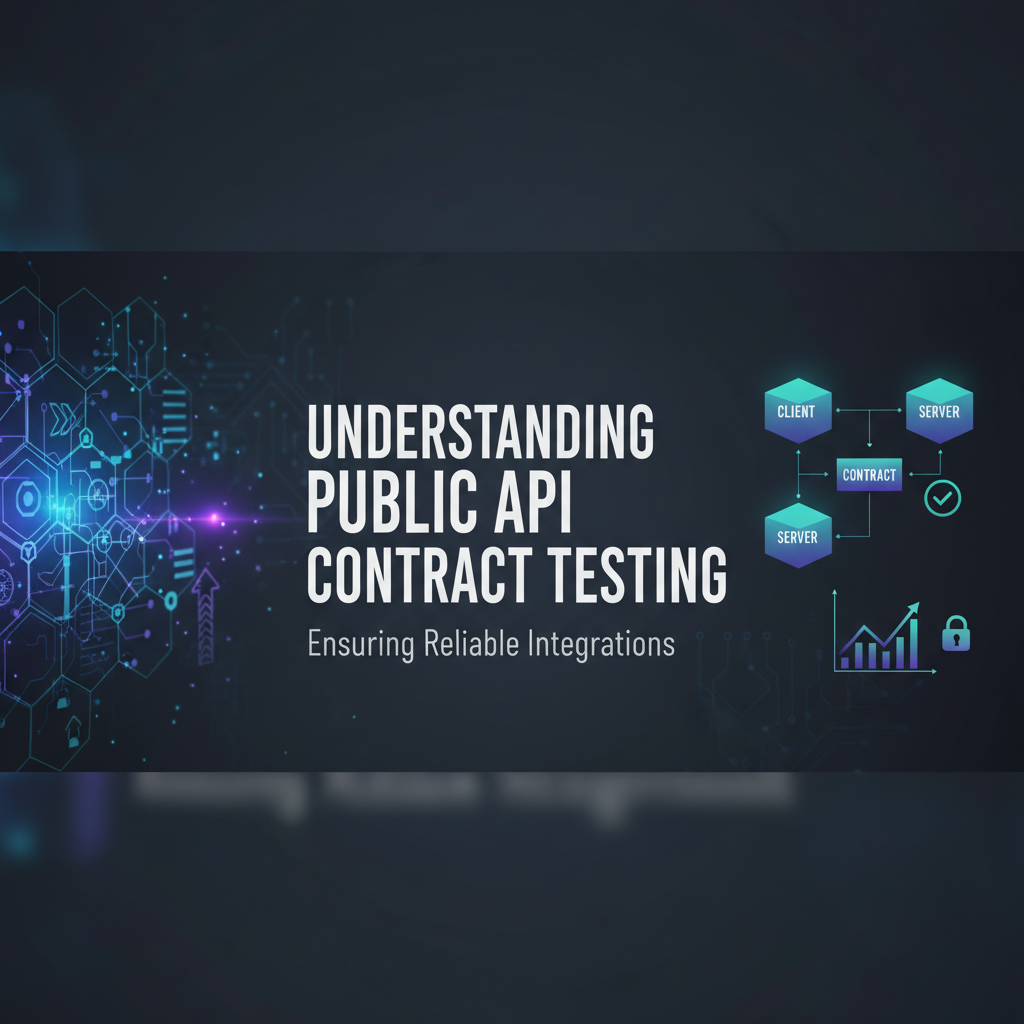


In the intricate tapestry of modern software development, Application Programming Interfaces (APIs) serve as the fundamental threads that connect disparate systems, services, and applications. From mobile apps communicating with backend servers to microservices orchestrating complex business processes, and external partners integrating their platforms, the reliance on APIs has never been more profound. Among these, Public APIs stand as gateways to an organization's digital capabilities, inviting external developers and businesses to build upon their services, fostering innovation, and expanding reach. However, the very openness that defines a public API introduces unique challenges, paramount among them being the assurance of stability, consistency, and a reliable user experience. This is precisely where API contract testing emerges not just as a best practice, but as an indispensable pillar for any organization committed to building robust and trustworthy public API ecosystems.
At its core, API contract testing is a rigorous methodology focused on verifying that an API provider adheres to a pre-defined agreement (the "contract") regarding its interface, behavior, and data structures. For public APIs, this contract, often formalized through an OpenAPI (formerly Swagger) specification, becomes the single source of truth for both the API producer and its myriad consumers. Deviations from this contract, whether intentional or accidental, can lead to devastating consequences: broken integrations, frustrated developers, and ultimately, a loss of trust and adoption. This article will embark on a comprehensive journey into the world of public API contract testing, meticulously exploring its foundational concepts, methodologies, the crucial role it plays in robust API Governance, essential tools and technologies, practical implementation strategies, and the challenges one might encounter, all while underscoring its pivotal role in cultivating a stable, predictable, and thriving API economy.
The Foundation: What are Public APIs and Why Contracts Matter?
Before delving deep into the mechanics of contract testing, it is imperative to establish a clear understanding of what constitutes a public API and the profound significance of its underlying contract.
Defining Public APIs
A public API is an interface exposed by an organization to external developers, partners, or the general public, allowing them to programmatically access its services, data, or functionality. Unlike private APIs, which are typically confined within an organization's internal systems, or partner APIs, which are restricted to specific collaborators, public APIs are designed for broad consumption. They are often accompanied by extensive documentation, developer portals, and support channels, aiming to foster an ecosystem of third-party applications and services that leverage the provider's capabilities.
Consider the APIs offered by Stripe for payment processing, Twilio for communication services, or GitHub for repository management. These are prime examples of public APIs that power countless applications globally. Their success hinges not only on the utility they provide but, crucially, on their reliability, predictability, and ease of integration. Any breaking change or unexpected behavior in such an API can ripple through a vast network of dependent applications, causing widespread disruption and eroding confidence.
The API Contract: A Blueprint of Expectations
In the context of APIs, a "contract" is much more than a legal document; it's a technical agreement outlining the exact expectations between the API provider and its consumers. This contract specifies:
- Endpoints: The URLs where resources can be accessed (e.g.,
/users,/products/{id}). - HTTP Methods: The operations that can be performed (GET, POST, PUT, DELETE).
- Request Parameters: The inputs required for each operation (query parameters, headers, request body schema).
- Response Structure: The data format and fields returned by the API for different scenarios (success, errors).
- Authentication/Authorization: How access is granted and managed.
- Error Codes and Messages: Standardized ways of communicating issues.
- Data Types and Formats: Ensuring consistency in data representation.
Historically, these contracts were often implicitly understood or described in prose documentation. However, with the rise of machine-readable specifications, the contract has evolved into a tangible, versioned artifact.
The Indispensable Role of OpenAPI
The OpenAPI Specification (OAS), formerly known as Swagger Specification, has emerged as the de facto standard for defining RESTful APIs. It provides a language-agnostic, human-readable, and machine-readable interface description for REST APIs. An OpenAPI document, typically written in YAML or JSON, acts as the definitive source of truth for an API's contract.
Why is OpenAPI so critical for public APIs?
- Clarity and Ambiguity Reduction: It eliminates guesswork by explicitly defining every aspect of the API's interface.
- Automated Tooling: OpenAPI documents can be used to automatically generate documentation, client SDKs, server stubs, and, crucially, tests.
- Standardization: It provides a common language for describing APIs, facilitating communication between development teams, testers, and consumers.
- Foundation for Contract Testing: The OpenAPI specification serves as the bedrock against which an API's actual implementation is validated during contract testing.
Without a well-defined and widely accepted contract, the development process for both API producers and consumers becomes fraught with peril. Producers risk introducing breaking changes unnoticed, and consumers face the constant threat of integrations failing due to unexpected API behavior. For public APIs, where the consumer base is diverse and often unknown, a robust, explicit contract, powered by OpenAPI, is not just beneficial—it is an absolute necessity for fostering a reliable and scalable API ecosystem.
The Core Concept: What is API Contract Testing?
Having established the critical role of APIs and their contracts, particularly the OpenAPI specification for public interfaces, we now turn our attention to the specific practice of API contract testing. This methodology is a specialized form of testing designed to validate the agreement between an API provider and its consumers.
Definition and Purpose
API contract testing is the process of verifying that an API adheres to its defined contract and that consumers correctly interact with that contract. It's about ensuring that the API's behavior matches the documented expectations. The primary purpose is to catch contract violations early in the development lifecycle, preventing them from propagating to production and causing downstream integration failures.
This form of testing stands apart from other common API testing types:
- Unit Testing: Focuses on individual components or functions within the API's codebase.
- Integration Testing: Verifies the interaction between different modules or services within the API's domain.
- End-to-End Testing: Simulates a full user journey through multiple systems, including the API, UI, and databases.
- Performance Testing: Assesses the API's speed, responsiveness, and stability under various load conditions.
- Security Testing: Identifies vulnerabilities in the API's authentication, authorization, and data handling.
While these testing types are crucial, none specifically focus on the agreement between the API provider and its consumers in the same way contract testing does. Contract testing's unique value lies in its ability to pinpoint whether the actual implementation of an API deviates from its promised interface, regardless of whether the API technically "works" in isolation.
The Two Sides of the Contract Testing Coin
API contract testing can be broadly categorized into two main perspectives:
- Producer-Side Contract Testing:
- Focus: The API provider (producer) ensures that its API implementation strictly adheres to the published contract (e.g., the OpenAPI specification).
- Mechanism: The producer writes tests that send requests to its API and validates the responses against the schema defined in the contract. These tests ensure that the API returns the correct data types, field names, required fields, and adheres to expected status codes and error formats.
- Benefit: Guarantees that the API's actual behavior matches its documentation, preventing producers from inadvertently introducing breaking changes.
- Example: If the OpenAPI spec states an endpoint
/usersshould return an array of objects, each with aname(string) andid(integer) field, the producer's contract tests would assert that the API indeed returns this structure.
- Consumer-Side Contract Testing:
- Focus: The API consumer ensures that its expectations of the API (i.e., how it intends to use the API) are aligned with the API's contract.
- Mechanism: Consumers define their specific interactions with the API, capturing the requests they send and the responses they expect. These "consumer contracts" are then shared with the API producer. The producer, in turn, verifies its API against all registered consumer contracts, ensuring that its changes don't break any existing consumers.
- Benefit: Provides consumers with confidence that their integration logic will continue to work, and gives producers a safety net by explicitly knowing how their API is being used. This is particularly powerful in microservices architectures but can also be adapted for public APIs by treating a "reference consumer" or a critical integration as the contract definer.
- Example: A consumer application might expect the
/usersendpoint to return anamefield. Its consumer-driven contract test would specify this expectation. The API producer would then run a test to ensure its API provides thisnamefield, as per the consumer's request.
For public APIs, the shared OpenAPI specification often serves as a central, hybrid contract. Both producers and consumers can leverage this single source of truth to validate their respective implementations and expectations. Producers test their API against the OpenAPI spec to ensure compliance, while consumers can use the spec to generate client code, mock servers, and validate the responses they receive from the actual API. This shared understanding, formalized by the OpenAPI spec, is the cornerstone of effective public API Governance and a predictable api experience.
The Imperative for Public APIs: Why Contract Testing is Crucial Here
The stakes are uniquely high for public APIs. While internal APIs benefit greatly from contract testing by streamlining development across internal teams, public APIs operate in an open ecosystem where the consumer base is vast, diverse, and often beyond the direct control or immediate knowledge of the API provider. In this environment, the consequences of contract deviations are magnified, making contract testing not merely a good practice, but an absolute necessity for survival and growth.
Avoiding Breaking Changes: The Public API's Arch-Nemesis
The most catastrophic event for any public API is the introduction of a "breaking change." This occurs when an API modification unexpectedly alters its behavior, data structure, or interface in a way that causes existing consumer applications to fail. For public APIs, a breaking change can:
- Disrupt thousands or millions of applications: From small startups to large enterprises, all dependent systems would cease to function correctly.
- Erode trust: Developers invest time and resources integrating with an API. If it's unstable, they will quickly move to more reliable alternatives.
- Damage reputation: A reputation for unreliability can be devastating, leading to a decline in adoption and negative publicity.
- Generate immense support costs: The API provider will be inundated with support tickets, bug reports, and complaints, diverting resources from new feature development.
API contract testing directly addresses this by:
- Early Detection: It identifies potential breaking changes before they are deployed to production, allowing developers to fix them proactively.
- Schema Enforcement: It rigorously checks that the API's responses adhere to the expected OpenAPI schema, catching missing fields, incorrect data types, or altered structures.
- Behavioral Consistency: Beyond just schema, it ensures that the API's functional behavior (e.g., error codes, authentication flows) remains consistent with the contract.
By catching these deviations early, contract testing acts as a critical safety net, safeguarding the API's stability and protecting its broad consumer base from disruptive changes.
Ensuring Developer Experience (DX): The Gateway to Adoption
For a public API to succeed, it must offer an exceptional Developer Experience (DX). Developers are its primary users, and their ability to quickly and easily understand, integrate, and build upon the API is paramount. The API contract, especially when formalized with OpenAPI, is the cornerstone of this experience.
Contract testing enhances DX by:
- Guaranteeing Documentation Accuracy: When the API implementation is consistently validated against its OpenAPI spec, developers can trust that the documentation (often generated directly from the spec) is accurate and up-to-date.
- Providing Predictable Behavior: Developers can build their applications with confidence, knowing that the API will behave as described in the contract, reducing guesswork and debugging time.
- Facilitating Mocking and Local Development: Consumers can use the OpenAPI spec to generate mock servers, allowing them to develop and test their applications against a simulated API without needing access to a live backend.
A public api with a robust contract, backed by thorough contract testing, communicates reliability and professionalism, significantly improving the DX and encouraging broader adoption.
Building Trust and Reliability: The Currency of the API Economy
Trust is the bedrock of any successful long-term relationship, and this holds especially true in the API economy. Public API providers must earn and maintain the trust of their consumers. Unreliable APIs, characterized by frequent breaking changes, inconsistent behavior, or poorly documented interfaces, quickly lose this trust.
Contract testing directly contributes to building trust and reliability by:
- Demonstrating Commitment to Stability: By actively testing against the contract, providers signal their dedication to maintaining a stable and consistent interface.
- Reducing Operational Risk for Consumers: Consumers can integrate with the API with lower risk, knowing that their applications are less likely to break due to unforeseen changes.
- Fostering a Predictable Development Environment: Predictability allows consumers to plan their development efforts more effectively, leading to smoother integrations and faster time-to-market for their own products.
Facilitating Independent Development: Accelerating Innovation
One of the significant advantages of well-defined APIs is the ability for teams (or organizations, in the public API context) to develop independently and in parallel. The API contract serves as the interface between these decoupled components.
Contract testing supports independent development by:
- Decoupling Producer and Consumer Releases: The producer can evolve its internal implementation, and the consumer can update its application, as long as both continue to adhere to the agreed-upon contract.
- Reducing Dependencies on Live Systems: Consumers can use contract-based mocks for their testing, reducing the need to constantly hit the producer's live (or staging) environments.
- Speeding Up Development Cycles: Both sides can iterate faster with confidence, knowing that contract tests will flag any incompatibilities early.
Enhancing API Governance: A Strategic Imperative
API Governance refers to the comprehensive set of rules, processes, and tools an organization uses to manage its APIs throughout their entire lifecycle. For public APIs, robust API Governance is not merely a technical concern but a strategic imperative that impacts business value, security, and operational efficiency.
API contract testing is a cornerstone of effective API Governance because it:
- Enforces Standards: It ensures that all APIs adhere to predefined organizational standards for design, documentation, and behavior.
- Promotes Consistency: It drives consistency across different APIs and versions, making the entire API portfolio easier to understand and use.
- Supports Versioning Strategies: It helps validate that new API versions maintain backward compatibility where intended, or clearly delineate breaking changes where necessary.
- Integrates into CI/CD: By automating contract tests within CI/CD pipelines, organizations can embed API Governance checks directly into their development workflows, preventing non-compliant APIs from being deployed.
For organizations leveraging API management platforms, such as ApiPark, features like end-to-end API lifecycle management, unified API formats, and prompt encapsulation into REST API naturally align with strong API Governance principles. ApiPark helps manage the entire lifecycle of APIs, from design to publication and invocation, assisting in regulating API management processes and ensuring consistency, which inherently supports the maintenance of robust API contracts and the implementation of effective contract testing strategies. Its ability to centralize display of all API services and manage traffic forwarding and versioning are direct enablers of better contract adherence and, by extension, superior API Governance.
Reducing Support Burden and Accelerating Release Cycles
The proactive nature of contract testing significantly reduces the number of issues that reach production. Fewer issues mean a lighter load on support teams, allowing them to focus on more complex, edge-case problems rather than preventable contract breaches. This also translates to greater confidence in releases. When contract tests are integrated into the CI/CD pipeline, development teams can deploy updates more frequently and with greater assurance, accelerating release cycles and enabling faster delivery of new features and improvements.
In sum, for public APIs, contract testing moves beyond a mere technical validation; it becomes a strategic tool for managing risk, fostering innovation, building trust, and ensuring the long-term success and sustainability of an organization's digital offerings.
Methodologies and Approaches to Public API Contract Testing
Implementing API contract testing effectively requires an understanding of the various methodologies and approaches available. While some techniques might be more suited for internal microservices, many can be adapted or directly applied to the unique challenges of public APIs, often with the OpenAPI specification serving as the central orchestrator.
1. Schema Validation: The Baseline of Contract Testing
Schema validation is the most fundamental and often the first step in API contract testing. It involves verifying that the structure and data types of API requests and responses conform to a predefined schema. For public APIs, this schema is almost invariably the OpenAPI specification.
How it works:
- Producer Side: The API server's responses are intercepted and validated against the response schemas defined in the OpenAPI document. This ensures the API is returning the data it promised.
- Consumer Side: Before sending a request, the consumer's request payload can be validated against the request schema in the OpenAPI document. Upon receiving a response, the consumer can validate it against the expected response schema. This ensures the consumer is sending valid requests and correctly interpreting valid responses.
Benefits:
- Easy to implement: Many tools offer built-in OpenAPI schema validation.
- Catches structural errors: Identifies missing required fields, incorrect data types, or unexpected extra fields.
- Provides a quick feedback loop: Can be run as part of unit or integration tests.
Limitations:
- Only validates structure, not behavior. It won't tell you if the API returns the correct data, only if the data is formatted correctly.
- Doesn't test business logic.
2. Producer-Driven Contract Testing (with OpenAPI as the Contract)
In a producer-driven model for public APIs, the API provider is the authoritative source of the contract, typically expressed as an OpenAPI specification. The provider is responsible for ensuring its API implementation matches this spec.
How it works:
- Provider Defines Contract: The API provider creates and maintains the OpenAPI specification, detailing all endpoints, requests, and responses. This spec is treated as the source of truth.
- Provider Tests Implementation: The provider writes automated tests that send requests to its API and then validate the API's actual responses (status codes, headers, body) against the rules and schemas defined in the OpenAPI specification.
- Consumers Utilize Contract: Consumers use this published OpenAPI spec to:
- Generate client SDKs.
- Generate mock servers for local development and testing.
- Understand the API's expected behavior.
- Write their own integration tests based on the spec.
Benefits for Public APIs:
- Single Source of Truth: The OpenAPI spec acts as the definitive contract for all consumers.
- Strong Producer Assurance: The producer guarantees that its API adheres to the contract, preventing breaking changes.
- Simplified Consumer Integration: Consumers have a reliable contract to build against, reducing ambiguity and integration effort.
Challenges:
- Relies heavily on the producer accurately and comprehensively defining the OpenAPI spec.
- Doesn't directly capture how specific consumers use the API, only what the API offers.
3. Consumer-Driven Contract Testing (CDCT)
While often associated with internal microservices, CDCT can be conceptually adapted or influence approaches for public APIs, especially for critical integrations or where a "reference consumer" exists. In pure CDCT, the consumers define the contracts, and the producer validates against them.
How it works (in its original form):
- Consumer Defines Expectations: A consumer defines its specific expectations of the API (i.e., the requests it sends and the responses it expects) in a "pact" or contract file.
- Consumer Runs Tests: The consumer runs its integration tests using a mock server generated from its contract, ensuring its application works with the expected API behavior.
- Contract Shared with Producer: The generated contract file is published to a "pact broker" or shared directly with the producer.
- Producer Verifies Contract: The API producer fetches all relevant consumer contracts and runs provider-side verification tests. These tests ensure that the producer's actual API can fulfill all the expectations defined by its consumers.
Applicability for Public APIs:
- Limited Direct Adoption: Full CDCT is less common for truly public APIs with unknown, vast consumer bases because managing contracts from every potential consumer would be intractable.
- Reference Consumer Model: It can be valuable if a public API has a few highly critical "reference consumers" (e.g., a mobile app owned by the same company, or a crucial partner integration). The contracts from these reference consumers can be used to provide strong validation for the API provider.
- Internal API Segments: Parts of a public API that are actually consumed by internal microservices can still benefit from CDCT.
Benefits:
- Guarantees Consumer Compatibility: Ensures that API changes won't break specific consumers.
- Minimal Over-testing: Producers only implement what consumers actually use.
Challenges:
- Managing contracts from many consumers is complex.
- Requires a collaborative effort between producer and consumer.
4. Hybrid Approaches / Shared Contract Approach (OpenAPI-Centric)
For public APIs, the most practical and widely adopted approach is often a hybrid, OpenAPI-centric model that leverages the best aspects of producer-driven testing and schema validation.
How it works:
- OpenAPI as the Universal Contract: The OpenAPI specification is established as the canonical contract for the public API. It's meticulously maintained, versioned, and published.
- Producer-Side Validation: The API provider implements robust automated tests that validate its API's responses and behavior directly against the OpenAPI specification. Tools like Dredd or custom frameworks are used here. This ensures the API delivers what the contract promises.
- Consumer-Side Utility and Validation: Consumers use the OpenAPI spec for:
- Generating dynamic mocks for their local development.
- Generating client SDKs in their preferred language.
- Potentially implementing their own basic schema validation on responses received from the live API. This ensures their expectations align with the contract.
- For critical consumers, they might even run their own "producer-like" tests against the live API, verifying that it still adheres to the published OpenAPI spec.
Benefits:
- Scalable for Public APIs: Avoids the complexity of managing individual consumer contracts while still providing strong guarantees.
- Strong Foundation for DX: Provides a clear, unambiguous contract for all users.
- Balance of Responsibility: Producers ensure compliance, consumers benefit from a stable interface.
- Enables API Governance: Makes it easier to enforce standards and consistency across the API portfolio.
Mock Servers for Consumers
A powerful extension of contract testing for public APIs is the use of mock servers generated directly from the OpenAPI specification.
How it works:
- Tools like Stoplight Prism or even custom scripts can take an OpenAPI document and spin up a lightweight server that simulates the API's behavior.
- These mocks can return example responses defined in the OpenAPI spec, or even generate dynamic responses based on the request.
Benefits for Public API Consumers:
- Decoupled Development: Consumers can start developing their applications even before the actual API is fully implemented or deployed.
- Reduced Dependencies: Eliminates the need for consumers to connect to live (potentially rate-limited or unstable) test environments during their development phase.
- Faster Local Testing: Enables rapid local testing of consumer applications without network latency or external service dependencies.
- Early Feedback: Allows consumers to validate their integration logic against the contract early, identifying misunderstandings or issues before interacting with the real API.
The choice of methodology often depends on the specific context, the maturity of the API, and the relationship with consumers. However, for public APIs, establishing a strong, OpenAPI-centric, producer-driven contract testing strategy with the capability for consumers to leverage mocks is generally the most robust and scalable approach.
APIPark is a high-performance AI gateway that allows you to securely access the most comprehensive LLM APIs globally on the APIPark platform, including OpenAI, Anthropic, Mistral, Llama2, Google Gemini, and more.Try APIPark now! 👇👇👇
Key Tools and Technologies for Public API Contract Testing
The effectiveness of any contract testing strategy hinges upon the right tools and technologies. For public APIs, these tools often revolve around the OpenAPI specification, enabling both producers and consumers to validate against this shared contract.
1. OpenAPI (Swagger) Specification: The Unifying Contract
It bears repeating: the OpenAPI specification is not merely a tool; it is the fundamental technology underpinning modern API contract testing. It serves as the canonical contract definition for RESTful APIs.
- Role: Defines endpoints, HTTP methods, request parameters, response schemas, security schemes, and example requests/responses in a machine-readable format (YAML or JSON).
- How it supports contract testing: It is the "contract" itself. All contract testing tools either generate tests from it or validate API behavior against it. Without a well-defined OpenAPI spec, robust contract testing is significantly harder.
- Tools: Swagger UI for interactive documentation, Swagger Editor for design, various SDK generators.
2. Dredd: OpenAPI-Driven Contract Testing
Dredd is a command-line tool specifically designed for testing APIs against their OpenAPI (or API Blueprint) specification. It is a prime example of a producer-driven contract testing tool.
- Functionality: Dredd reads an OpenAPI document, parses the defined requests and expected responses, and then sends those requests to a running API endpoint. It then validates the actual responses against the expectations laid out in the OpenAPI specification, checking status codes, headers, and body schemas.
- Use Case: Ideal for API providers who want to ensure their API implementation precisely matches their published OpenAPI contract. It identifies inconsistencies between documentation and actual behavior.
- Benefits: Excellent for catching breaking changes and ensuring documentation accuracy.
- Integration: Can be easily integrated into CI/CD pipelines to run contract checks on every build.
3. Pact: Consumer-Driven Contract Testing Framework
Pact is the most popular framework for consumer-driven contract testing. While primarily geared towards microservices, its principles and capabilities can be valuable for specific public API scenarios (e.g., critical reference consumers).
- Functionality: Pact allows consumers to define their expectations of an API in code. It then generates "pact files" (contracts) and provides a mock service for consumers to test against. The producer then uses Pact's provider verification tools to ensure its API fulfills these consumer expectations.
- Use Case: Best when there's a strong, identifiable relationship between a specific consumer and the API, and the consumer's needs are paramount. Less suitable for truly generic public APIs with countless, unknown consumers.
- Benefits: Provides strong guarantees that API changes won't break specific consumer integrations.
- Ecosystem: Supports various languages (Ruby, JavaScript, Java, .NET, Python, etc.) and includes Pact Broker for managing and sharing contracts.
4. Karate DSL: All-in-One API Test Automation
Karate DSL (Domain Specific Language) is a powerful open-source tool that combines API testing, performance testing, and UI automation into a single framework. It is well-suited for API contract testing.
- Functionality: Karate allows users to write API tests using a simple, readable syntax. It can easily parse OpenAPI specifications to generate test cases or validate responses against schemas. It supports scenario outlines for data-driven testing and can perform complex assertions on JSON/XML responses.
- Use Case: Excellent for both functional testing and contract testing (producer-driven). It can validate responses against OpenAPI schemas and also test the API's overall behavior.
- Benefits: Versatile, easy to learn, and capable of handling complex API workflows. Its "schema-validation" feature can directly leverage OpenAPI documents.
5. Postman / Newman: Popular for API Development and Basic Contract Checks
Postman is an incredibly popular tool for API development, testing, and documentation. While not a dedicated contract testing framework like Dredd or Pact, it offers robust features that can be leveraged for basic contract validation.
- Functionality: Postman allows users to send HTTP requests, inspect responses, and write JavaScript-based "tests" for assertions. It can import OpenAPI specifications to create collections, which can then be used to generate requests and pre-populate expected response structures.
- Newman: Postman's command-line companion, Newman, enables running Postman collections as part of CI/CD pipelines.
- Use Case: Useful for manual and automated schema validation. Developers can write tests to verify specific fields, data types, and status codes against the contract.
- Limitations: While powerful for functional testing, building comprehensive, programmatic contract validation solely within Postman can become cumbersome for very large OpenAPI specs compared to specialized tools.
6. Stoplight Studio / Prism: Design-First and Mocking
Stoplight offers a suite of tools for designing, documenting, and testing APIs. Stoplight Studio is an OpenAPI design tool, and Prism is an OpenAPI mock server.
- Functionality: Stoplight Studio helps create and maintain high-quality OpenAPI specifications using a visual editor and linting rules. Prism can then take these OpenAPI specs and automatically generate a mock server, returning example responses defined in the spec, or even generating dynamic data.
- Use Case: Primarily for a design-first approach to APIs. Producers use Studio to define the contract, and then Prism allows both producers and consumers to develop against a mock API that strictly adheres to that contract. This enables early contract validation by seeing how consumers interact with the mocked API.
- Benefits: Excellent for collaborative API design, ensuring the contract is well-defined, and providing robust mocks for consumers.
7. Custom Frameworks and Scripting (e.g., Python with jsonschema)
For organizations with specific needs or existing tooling, building custom contract testing solutions using general-purpose programming languages and libraries is a viable option.
- Functionality: Using libraries like
jsonschema(Python),ajv(JavaScript), or similar JSON schema validators, developers can write scripts to:- Parse an OpenAPI document.
- Extract request/response schemas.
- Send requests to the API.
- Validate the API's responses against the extracted schemas.
- Use Case: Highly flexible for complex validation logic, integration with existing internal tools, or when specific language ecosystems are preferred.
- Benefits: Full control over the testing process, can be tailored precisely to organizational requirements.
- Considerations: Requires more effort to develop and maintain compared to off-the-shelf solutions.
8. API Management Platforms and Gateways
Many API management platforms and gateways, while not strictly "contract testing" tools in the traditional sense, play a crucial role in enforcing API Governance and, by extension, contract adherence.
- Functionality: Platforms like ApiPark offer features such as API design tools, policy enforcement, traffic management, and developer portals. They often include capabilities for validating API requests against defined schemas (e.g., for security or data integrity), ensuring that incoming requests conform to the contract. Some may even offer linting for OpenAPI specifications to ensure best practices.
- Use Case: Integral for maintaining API Governance across an entire API portfolio, ensuring consistency, and enforcing security policies. While they don't test the API's implementation against the contract in the same way Dredd does, they ensure that the usage of the API adheres to certain contractual elements.
- APIPark's Role: As an AI gateway and API management platform, ApiPark provides end-to-end API lifecycle management, including design, publication, invocation, and decommission. This comprehensive management inherently supports strict adherence to API contracts. Its unified API format for AI invocation and prompt encapsulation into REST API features highlight the importance of well-defined interfaces. By helping regulate API management processes, manage traffic forwarding, and versioning, ApiPark strengthens the framework within which API contracts are defined, maintained, and indirectly validated through consistent management, contributing significantly to a robust API Governance strategy.
Choosing the right combination of these tools allows organizations to build a comprehensive and automated contract testing strategy for their public APIs, ensuring reliability, stability, and trust across their entire API ecosystem.
Implementing Public API Contract Testing: Best Practices
Successful implementation of public API contract testing extends beyond merely selecting the right tools; it demands a strategic approach, organizational commitment, and disciplined execution. Adhering to best practices ensures that contract testing becomes an integral, valuable part of your API development lifecycle, rather than an afterthought.
1. Start Early with Contract Definition (Design-First Approach)
The most effective contract testing begins before a single line of API code is written.
- Practice: Adopt a design-first approach where the OpenAPI specification is drafted and reviewed before development begins. This allows for early feedback on the API's interface and capabilities from potential consumers and stakeholders.
- Benefit: Prevents costly rework by catching design flaws or misalignments with consumer needs at the earliest stage. The OpenAPI spec becomes the blueprint that guides both development and testing.
- Actionable Tip: Use tools like Stoplight Studio or Swagger Editor to collaboratively design the OpenAPI spec. Involve product managers, frontend developers, and potential external partners in the review process.
2. Version Your OpenAPI Specification
Just like your API code, your OpenAPI specification is a living document that will evolve. Treat it as a critical artifact in your version control system.
- Practice: Store your OpenAPI spec in a Git repository alongside your API code. Implement versioning strategies (e.g., semantic versioning) for your API and reflect these in your OpenAPI document (
info.version). - Benefit: Provides an auditable history of contract changes, facilitates rollback if issues arise, and clearly communicates API evolution to consumers. It's essential for managing multiple API versions (
v1,v2, etc.). - Actionable Tip: Link specific API code versions to specific OpenAPI spec versions in your CI/CD system to ensure the correct contract is always being tested against the corresponding API implementation.
3. Automate Everything: Integrate Contract Tests into CI/CD Pipelines
Manual contract testing is unsustainable and prone to human error. Automation is key to achieving continuous validation.
- Practice: Embed your contract tests (using tools like Dredd or Karate) directly into your Continuous Integration/Continuous Delivery (CI/CD) pipelines.
- Benefit: Ensures that every code change, no matter how small, is automatically validated against the API contract. This provides immediate feedback, prevents non-compliant APIs from being deployed, and accelerates release cycles.
- Actionable Tip: Configure your CI/CD pipeline to:
- Build and deploy the API to a temporary test environment.
- Run the contract tests against this deployed instance.
- If tests pass, proceed with deployment to staging/production; otherwise, fail the build.
4. Clear Ownership of the Contract
Ambiguity in contract ownership can lead to inconsistencies and neglect.
- Practice: Clearly define who is responsible for maintaining and updating the OpenAPI specification. This is typically the API development team, or a dedicated API architect.
- Benefit: Ensures accountability, consistency, and prompt updates to the contract as the API evolves.
- Actionable Tip: Designate a specific role or team member (e.g., "API Lead") to be the gatekeeper for OpenAPI spec changes, ensuring they are thoroughly reviewed before merging.
5. Establish a Consumer Feedback Loop
Even with public APIs, understanding consumer needs and pain points is invaluable for refining your contract.
- Practice: Provide channels for consumer feedback on your API and its documentation (e.g., developer forums, issue trackers, direct contact for key partners). Pay attention to common integration issues or questions that might indicate unclear contract definitions.
- Benefit: Helps refine the API contract to better meet real-world consumer needs, identify ambiguities, and improve the overall developer experience.
- Actionable Tip: Monitor metrics like support tickets related to API integration, documentation clarity ratings, and API adoption rates to gauge consumer satisfaction with your contract.
6. Comprehensive Schema Definition
A vague OpenAPI schema is a weak contract. Detail matters.
- Practice: Ensure your OpenAPI specification meticulously defines all aspects of your API:
- Data Types and Formats: Use
type(string, integer, boolean) andformat(date-time, email, uuid) correctly. - Required Fields: Explicitly mark fields as
required. - Enums: Define allowed values using
enumwhere appropriate. - Examples: Provide realistic
examplesfor both request and response bodies. These examples are invaluable for consumers and for generating accurate mock data. - Descriptions: Add clear
descriptionfields for every parameter, property, and operation.
- Data Types and Formats: Use
- Benefit: Reduces ambiguity for consumers, makes auto-generated documentation more useful, and strengthens the foundation for robust contract testing.
- Actionable Tip: Use OpenAPI linting tools (e.g., Spectral by Stoplight) to automatically check for best practices and common pitfalls in your spec.
7. Establishing Strong API Governance Policies
Contract testing is a core pillar of robust API Governance.
- Practice: Define clear organizational policies around API design standards, documentation requirements, versioning strategies, and the mandatory inclusion of contract testing in the development workflow.
- Benefit: Ensures consistent quality, security, and maintainability across your entire API portfolio, making it easier for developers to navigate and use your APIs.
- APIPark's Contribution: Platforms like ApiPark are designed to facilitate strong API Governance by providing end-to-end API lifecycle management. Its features like API service sharing within teams, independent API and access permissions for each tenant, and API resource access requiring approval are all mechanisms that enforce governance policies and ensure contract adherence throughout the API's operational life. By offering a unified management system and standardizing API invocation, ApiPark reinforces the structured environment necessary for effective contract testing.
8. Documenting Contract Testing Strategy
Make your contract testing strategy transparent and accessible.
- Practice: Document your chosen contract testing methodology, the tools used, how to write and run contract tests, and how to interpret their results.
- Benefit: Onboards new team members quickly, ensures consistent application of the strategy, and builds a shared understanding of its importance.
- Actionable Tip: Include sections on contract testing in your internal developer documentation and your public developer portal (if appropriate, to explain your commitment to stability).
By diligently implementing these best practices, organizations can transform API contract testing from a mere technical chore into a powerful strategic advantage, enabling them to build and maintain public APIs that are reliable, trustworthy, and a pleasure to integrate with.
Challenges and Considerations in Public API Contract Testing
While the benefits of public API contract testing are undeniable, its implementation is not without its challenges. Organizations must be aware of these potential pitfalls and proactively plan strategies to mitigate them to ensure a successful and sustainable contract testing practice.
1. Complexity of Large OpenAPI Specifications
As APIs grow in scope and functionality, their OpenAPI specifications can become incredibly large and intricate.
- Challenge: Maintaining, reviewing, and ensuring the accuracy of a massive OpenAPI spec can be daunting. Large specs are prone to human error, making it difficult to guarantee that every detail reflects the API's true behavior.
- Mitigation:
- Modularization: Break down large OpenAPI specs into smaller, reusable components using
$refpointers. This improves readability and maintainability. - Clear Ownership: Assign specific sections of the spec to relevant teams or individuals.
- Automated Linting: Use OpenAPI linting tools (e.g., Stoplight Spectral) to automatically enforce style guides, detect errors, and encourage best practices.
- Documentation as Code: Treat the OpenAPI spec like code, with pull requests, reviews, and automated checks.
- Modularization: Break down large OpenAPI specs into smaller, reusable components using
2. Backward Compatibility vs. Evolution
Public APIs must balance the need to introduce new features and improvements with the critical requirement of not breaking existing consumers.
- Challenge: Deciding when to introduce a breaking change, how to manage multiple API versions, and ensuring that contract tests correctly validate backward compatibility (or its absence).
- Mitigation:
- Strict Versioning Policy: Implement a clear API versioning strategy (e.g., URI versioning
/v1/users,/v2/usersor header versioning). - Deprecation Strategy: Announce deprecations well in advance, providing ample time and guidance for consumers to migrate.
- Separate Contracts: Maintain separate OpenAPI specifications for each major API version (
api-v1.yaml,api-v2.yaml). - Parallel Testing: Run contract tests for all supported API versions against their respective contracts to ensure backward compatibility is maintained where intended.
- Strict Versioning Policy: Implement a clear API versioning strategy (e.g., URI versioning
3. Data Dependencies for Tests
Contract tests often require specific data to execute and validate responses, which can be challenging to manage in dynamic environments.
- Challenge: Ensuring consistent and predictable test data. Mocking external systems (databases, other microservices) accurately, especially for complex scenarios.
- Mitigation:
- Seed Test Data: Implement mechanisms to automatically seed a test database with known data before running contract tests.
- Mock External Dependencies: Use service virtualization or mocking frameworks to simulate responses from other services that your API depends on.
- Generative Testing: Use tools that can generate valid request payloads based on your OpenAPI schema, reducing the need for manually crafted data for basic schema validation.
- Focus on Contract Adherence: For core contract tests, prioritize validating schema and general behavior over deep business logic, which might require more complex data setups.
4. Managing Multiple Versions of an API
Public APIs typically have multiple versions active concurrently, each with its own contract.
- Challenge: Running and managing contract tests for
v1,v2, and potentiallyv3simultaneously. Ensuring test results clearly indicate which version is being tested. - Mitigation:
- Automated Pipeline per Version: Set up dedicated CI/CD pipelines or stages for each active API version's contract tests.
- Clear Tagging/Branching: Use distinct branches or tags in your version control system for each API version's code and its corresponding OpenAPI spec.
- Centralized Test Reporting: Aggregate test results from all versions into a centralized dashboard for easy monitoring.
5. Performance Overhead of Extensive Testing
Running a large suite of contract tests on every code commit can add significant time to CI/CD pipelines.
- Challenge: Balancing thoroughness with speed. Nobody wants a 30-minute build time for contract tests.
- Mitigation:
- Optimize Test Scope: Focus contract tests on core contract elements (schema validation, key functional behaviors) rather than exhaustive business logic testing (which might be handled by functional integration tests).
- Parallel Execution: Run tests in parallel across multiple agents or containers in your CI/CD environment.
- Selective Testing: For very large APIs, consider running a subset of critical contract tests on every commit, and a more exhaustive suite on nightly builds or before major releases.
- Efficient Tooling: Choose contract testing tools that are performant and designed for automation.
6. Educating Developers and Fostering a Contract-First Mindset
The success of contract testing heavily relies on the development team's understanding and adoption of a contract-first mindset.
- Challenge: Shifting development culture from code-first to contract-first, and ensuring all team members understand the importance of contract adherence.
- Mitigation:
- Training and Workshops: Provide regular training sessions on OpenAPI specification, contract testing principles, and chosen tools.
- Internal Documentation: Create clear, accessible internal documentation on API design guidelines and contract testing processes.
- Lead by Example: Senior developers and architects should champion the contract-first approach and demonstrate its benefits.
- Make it Easy: Provide templates, code generators, and automated workflows that make it easy for developers to define and test contracts.
7. Security API Aspects
While contract testing primarily focuses on functionality and structure, it can indirectly support API security but is not a replacement for dedicated security testing.
- Challenge: Contract tests ensure the API behaves as defined but don't inherently test for vulnerabilities that might exist despite the contract (e.g., SQL injection, insecure direct object references).
- Consideration:
- Include Security Aspects in Contract: The OpenAPI spec can define security schemes (API keys, OAuth2), and contract tests can verify that these mechanisms are present and correctly invoked.
- Complement with Security Testing: Contract testing should always be complemented by specialized API security testing tools and penetration testing to identify genuine vulnerabilities.
- Data Validation: Contract tests' schema validation helps prevent certain types of attacks by ensuring input conforms to expected types and formats, reducing the attack surface.
By acknowledging these challenges and implementing proactive strategies, organizations can build a resilient and effective public API contract testing framework that truly enhances the reliability and trustworthiness of their digital offerings.
The Future of Public API Contract Testing and API Governance
The landscape of API development is continuously evolving, driven by new technologies, architectural patterns, and heightened expectations for reliability and innovation. Public API contract testing and API Governance are not static disciplines; they are poised for significant advancements that will further solidify their role in the digital economy.
1. AI/ML Assisted Contract Generation & Testing
Artificial Intelligence and Machine Learning are increasingly being applied to software development processes, and API lifecycle management is no exception.
- Future Vision: Imagine AI-powered tools that can:
- Suggest Contract Enhancements: Analyze existing API traffic and OpenAPI specs to recommend improvements, identify common patterns, or suggest missing examples.
- Generate Contract Tests: Automatically create comprehensive contract tests based on an OpenAPI specification, reducing manual effort.
- Identify Implicit Contracts: For legacy APIs without formal contracts, AI might infer OpenAPI specifications by analyzing API call logs and responses.
- Predict Breaking Changes: ML models could analyze code changes and historical data to predict the likelihood of a breaking change and flag it before deployment.
- APIPark's Foresight: ApiPark is at the forefront of this trend, integrating AI capabilities directly into API management. Its ability to quickly integrate 100+ AI models and encapsulate prompts into REST API demonstrates a vision where AI itself is managed and governed through robust API interfaces. This focus on AI-driven API integration naturally positions ApiPark to potentially leverage AI/ML in future iterations for enhanced contract analysis, generation, and validation of the very APIs it manages, including those exposed as public services. The platform's powerful data analysis features, which analyze historical call data for trends and performance, lay a foundation for predictive governance and contract integrity.
2. Event-Driven API Contracts (AsyncAPI)
While OpenAPI dominates for RESTful APIs, the rise of event-driven architectures (EDA) and streaming data means that contract testing must extend beyond request-response paradigms.
- Future Vision: AsyncAPI is emerging as the OpenAPI equivalent for asynchronous services (e.g., Kafka, RabbitMQ, WebSockets). The future will see robust contract testing for event-driven APIs, ensuring that event producers adhere to their defined message schemas and consumers correctly process them.
- Implication: Contract testing will become more sophisticated, involving validation of message payloads, topics/channels, and interaction patterns in an asynchronous context.
3. Continuous Contract Validation and Real-time Monitoring
Moving beyond pipeline-based testing, the next frontier involves continuous, even real-time, validation of API contracts.
- Future Vision:
- Runtime Contract Monitoring: Tools actively monitor live API traffic, intercepting requests and responses to validate them against the OpenAPI spec in real-time. Any deviation triggers alerts.
- Anomaly Detection: ML models identify deviations from expected API behavior (even if not explicitly defined in the contract) that could indicate an implicit contract breach or a lurking issue.
- Self-Healing APIs: In highly advanced scenarios, systems might even automatically roll back or adjust behavior when severe contract violations are detected.
- APIPark's Contribution: ApiPark provides detailed API call logging and powerful data analysis, which are foundational for continuous monitoring. By recording every detail of each API call and analyzing historical data, it enables businesses to quickly trace and troubleshoot issues and perform preventive maintenance. This capability is perfectly aligned with the future of continuous contract validation, where real-time data informs and reinforces contract adherence.
4. Platform Approach to API Governance
Organizations are increasingly seeking integrated platforms that offer end-to-end solutions for API lifecycle management, rather than stitching together disparate tools.
- Future Vision: Comprehensive API Governance platforms will incorporate contract design, testing, documentation generation, monitoring, security analysis, and version management into a seamless workflow. These platforms will serve as central hubs for all API-related activities, ensuring consistency and compliance by design.
- APIPark's Role: ApiPark embodies this future vision by positioning itself as an all-in-one AI gateway and API developer portal. Its emphasis on end-to-end API lifecycle management, quick integration of AI models, unified API formats, and enterprise-grade features for security and analytics align directly with the growing demand for holistic API Governance solutions. By offering both an open-source and commercial version, ApiPark caters to diverse needs, solidifying its place in the evolving landscape of API management and contract integrity.
5. Emphasis on Developer Experience (DX)
The focus on Developer Experience will only intensify, making robust API contracts and intuitive testing mechanisms even more critical.
- Future Vision: Tools will become even more user-friendly, providing immediate, actionable feedback to developers. Automated documentation and mock server generation will be standard, allowing developers to integrate with public APIs with minimal friction. The clarity and reliability provided by strong contract testing will be a key differentiator for public API providers in a competitive market.
In conclusion, the future of public API contract testing and API Governance is one of increasing automation, intelligence, and integration. As APIs continue to drive innovation and interconnect the digital world, the discipline of ensuring their reliability and trustworthiness through robust contracts and diligent testing will remain paramount. Organizations that embrace these advancements will be best positioned to build thriving, resilient, and highly adopted public API ecosystems.
Conclusion
The journey through the intricacies of public API contract testing reveals a fundamental truth: in the realm of modern software, where apis are the lifeblood of interconnected systems, the reliability of a public api is not merely a technical concern but a strategic imperative. From the foundational role of the OpenAPI specification as the definitive contract to the nuanced methodologies of producer-driven and hybrid testing approaches, contract testing emerges as the most effective safeguard against the pervasive threat of breaking changes and the erosion of consumer trust.
We have explored why contract testing is uniquely crucial for public APIs, emphasizing its power to ensure a superior developer experience, build unshakeable trust, facilitate independent development, and, critically, serve as a cornerstone of robust API Governance. The array of powerful tools, from specialized frameworks like Dredd and Pact to versatile platforms like Karate DSL and comprehensive API management solutions such as ApiPark, underscores the industry's commitment to supporting this vital practice.
Implementing effective contract testing requires discipline, from adopting a design-first approach and versioning your OpenAPI specification to automating tests within CI/CD pipelines and establishing clear ownership. It demands a commitment to comprehensive schema definition and the integration of strong API Governance policies across the organization. While challenges such as managing complex OpenAPI specs, balancing backward compatibility with evolution, and handling test data dependencies exist, they are surmountable with proactive planning and the right strategies.
Looking ahead, the future promises even more sophisticated approaches, with AI/ML-assisted contract generation, the expansion into event-driven api contracts, and continuous, real-time contract validation. These advancements, coupled with an unwavering focus on the developer experience and the proliferation of integrated API Governance platforms, will further solidify contract testing's indispensable role.
Ultimately, by rigorously applying api contract testing, organizations can transcend the anxieties of api fragility and instead cultivate public api ecosystems that are not only stable and predictable but also foster innovation, drive adoption, and solidify their position as trusted providers in the global api economy. This commitment to contract integrity is not just about writing better code; it's about building lasting relationships and unlocking the full potential of digital collaboration.
Frequently Asked Questions (FAQ)
1. What is the fundamental difference between API Contract Testing and traditional Integration Testing?
The fundamental difference lies in their focus. Traditional integration testing verifies that different modules or services within a system correctly interact with each other, often involving actual deployments and data flows to ensure the overall system works as expected. API Contract Testing, on the other hand, specifically verifies that an API adheres to its published contract (e.g., an OpenAPI specification) regarding its interface, data structures, and behavior, and that consumers correctly interact with that defined contract. It ensures the agreement between producer and consumer is upheld, even without needing the full system to be integrated. Contract testing can isolate contract violations earlier and faster, often using mocks, whereas integration testing confirms the end-to-end functionality of interacting components.
2. Why is OpenAPI (Swagger) so crucial for API Contract Testing, especially for public APIs?
OpenAPI is crucial because it provides a machine-readable, language-agnostic, and unambiguous specification of an API's contract. For public APIs, where there are myriad unknown consumers, this explicit contract becomes the single source of truth that everyone can rely on. It defines endpoints, request/response schemas, data types, security, and examples. Contract testing tools can then directly parse this OpenAPI document to automatically generate tests, validate API behavior against its defined schema, or create mock servers for consumers. Without a standardized, detailed contract like OpenAPI, contract testing would be highly inconsistent, manual, and prone to misinterpretation, making it impossible to guarantee a stable public API experience.
3. Can API Contract Testing prevent all types of API breaking changes?
API Contract Testing is highly effective at preventing structural and behavioral breaking changes that violate the defined contract, such as changes to field names, data types, required parameters, status codes, or response schemas. It is less effective at preventing logical breaking changes that might stem from altered business logic which still adheres to the contract's structure but produces unexpected results (e.g., a change in how a calculation is performed). It also doesn't directly address performance regressions or security vulnerabilities unless these are explicitly defined and tested within the contract scope (e.g., enforcing an authentication flow). Therefore, contract testing must be complemented by other testing types like functional, performance, and security testing for comprehensive API quality assurance.
4. How does API Contract Testing relate to API Governance?
API Contract Testing is a cornerstone of robust API Governance. API Governance encompasses the strategies, processes, and tools an organization uses to manage its APIs throughout their lifecycle to ensure consistency, quality, security, and compliance with business objectives. Contract testing actively enforces many of these governance policies by: 1. Ensuring Standards: It verifies that APIs conform to predefined design standards (e.g., using OpenAPI). 2. Maintaining Consistency: It drives consistent behavior and data structures across an API portfolio. 3. Supporting Versioning: It validates backward compatibility and manages API evolution. 4. Promoting Reliability: By preventing breaking changes, it enhances the API's trustworthiness, which is a key governance objective. In essence, contract testing provides the automated guardrails that ensure APIs are built and maintained in alignment with an organization's overall API Governance framework.
5. What role do mock servers play in API Contract Testing for consumers?
Mock servers play a crucial role for API consumers in contract testing by providing a simulated version of the API based on its OpenAPI specification. This allows consumers to: 1. Develop Independently: Start developing and testing their applications against a realistic API interface even before the actual API is fully implemented or deployed. 2. Decouple from Live Environments: Reduce reliance on the producer's live (and potentially unstable or rate-limited) test environments. 3. Speed Up Local Development: Run faster, more reliable local tests without network latency or external system dependencies. 4. Early Validation: Validate their integration logic and assumptions against the contract early in their development cycle, catching potential misunderstandings before they interact with the real API. By leveraging mock servers generated from the API contract, consumers can significantly accelerate their development process while ensuring their applications correctly interpret and interact with the API as defined.
🚀You can securely and efficiently call the OpenAI API on APIPark in just two steps:
Step 1: Deploy the APIPark AI gateway in 5 minutes.
APIPark is developed based on Golang, offering strong product performance and low development and maintenance costs. You can deploy APIPark with a single command line.
curl -sSO https://download.apipark.com/install/quick-start.sh; bash quick-start.sh

In my experience, you can see the successful deployment interface within 5 to 10 minutes. Then, you can log in to APIPark using your account.

Step 2: Call the OpenAI API.