SOAP Calls vs REST: Which API Protocol is Right for You?
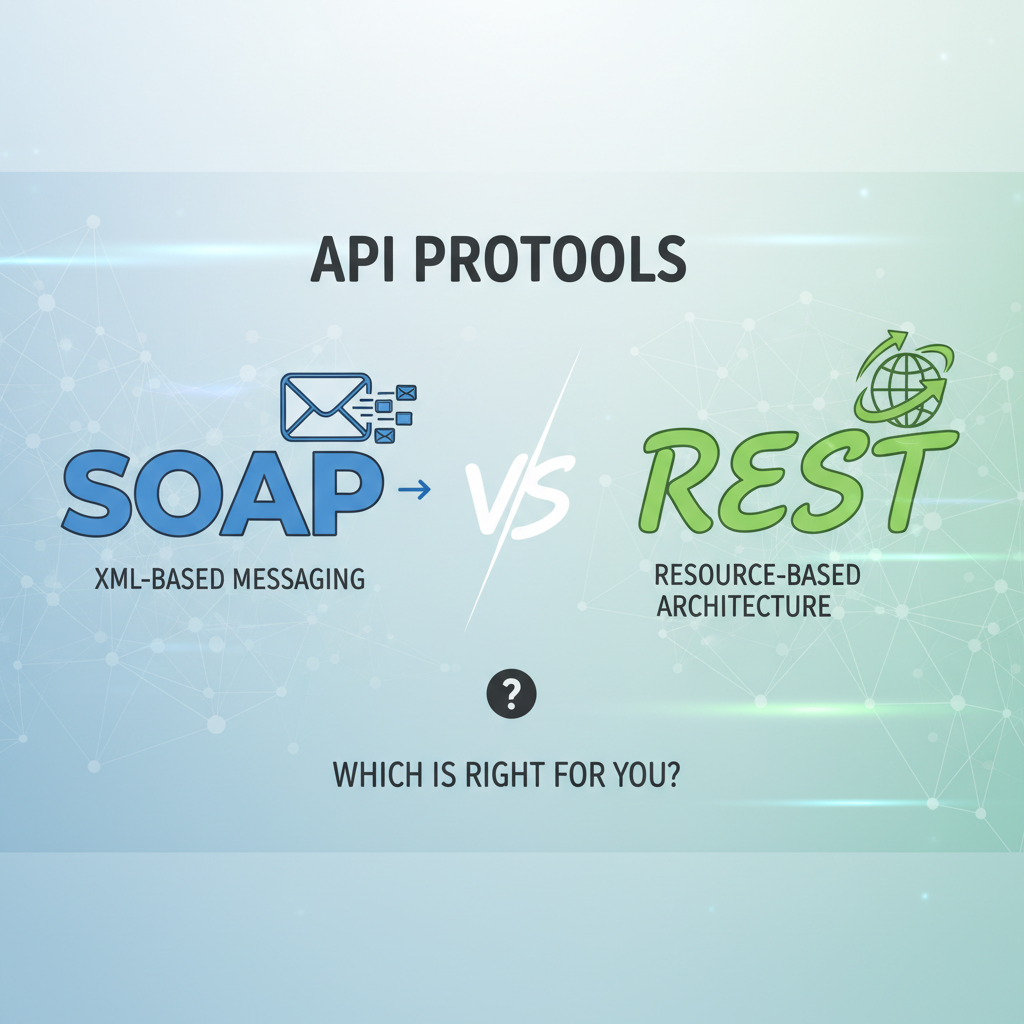


In the dynamic landscape of modern software development, Application Programming Interfaces (APIs) serve as the essential conduits that enable different software systems to communicate, share data, and interoperate seamlessly. From powering the smallest mobile applications to orchestrating vast enterprise architectures, APIs are the invisible threads that weave together the fabric of our digital world, fostering innovation, promoting connectivity, and driving the microservices revolution. Choosing the right architectural style for your api is a foundational decision that impacts everything from development speed and performance to scalability and long-term maintainability.
Among the myriad of api architectural styles and protocols, two giants have historically dominated the discourse: SOAP (Simple Object Access Protocol) and REST (Representational State Transfer). While newer paradigms like GraphQL and gRPC are gaining traction, SOAP and REST remain the most prevalent choices, each possessing distinct philosophies, strengths, and weaknesses. Understanding these differences is not merely an academic exercise; it's a critical prerequisite for architects and developers aiming to build robust, efficient, and future-proof systems. This comprehensive guide will delve deep into the intricacies of SOAP and REST, comparing their mechanisms, advantages, disadvantages, and ideal use cases, ultimately empowering you to make an informed decision about which api protocol is truly right for your specific project. We will also explore the indispensable role of an api gateway in managing these diverse api ecosystems, highlighting how such a platform can bridge the gaps and enhance the capabilities of both SOAP and REST implementations.
Understanding the Foundation: What is an API?
Before we dissect the nuances of SOAP and REST, it's crucial to firmly grasp the fundamental concept of an API. At its core, an api is a set of defined rules that dictate how applications or devices can communicate with each other. It acts as an intermediary, allowing different software components to interact without needing to understand the internal workings of the other. Imagine an API as a waiter in a restaurant: you, the customer, represent one application, and the kitchen represents another. You don't need to know how the chef prepares the food; you simply tell the waiter what you want (make a request), and the waiter conveys your order to the kitchen. The kitchen then prepares the food and sends it back via the waiter (provides a response). This abstraction simplifies development, promotes modularity, and facilitates the integration of disparate systems.
APIs are essential for several reasons:
- Interoperability: They enable different software systems, potentially built using different programming languages and technologies, to work together.
- Modularity and Reusability: APIs allow developers to break down complex applications into smaller, manageable components, each accessible via an API. These components can then be reused across multiple projects, accelerating development cycles.
- Innovation: By exposing data and functionality through APIs, organizations can enable third-party developers to build new applications and services on top of their platforms, fostering an ecosystem of innovation. Think of how many applications are built using Google Maps
apior Twitter'sapi. - Decoupling: APIs promote loose coupling between systems, meaning changes in one system are less likely to break another, as long as the
apicontract remains stable. This is a cornerstone of microservices architectures. - Data Exchange: APIs are the primary mechanism for exchanging data between client applications and servers, forming the backbone of virtually every web and mobile application we use today.
With this foundational understanding, we can now embark on our detailed exploration of the two dominant api architectural styles.
Deep Dive into SOAP: The Structured and Protocol-Agnostic Approach
SOAP, an acronym for Simple Object Access Protocol, emerged in the late 1990s as a Microsoft initiative, rapidly evolving into a W3C standard. Unlike REST, which is an architectural style, SOAP is a defined messaging protocol. This distinction is fundamental. As a protocol, SOAP prescribes a very rigid and structured format for messages, ensuring high reliability, security, and transactionality, often at the cost of simplicity and performance.
What is SOAP?
SOAP is an XML-based messaging protocol for exchanging structured information in the implementation of web services. Its primary goal is to enable programs running on disparate operating systems, using different technologies and programming languages, to communicate using HTTP (or other protocols) and XML. The "Simple" in its name might seem ironic to those accustomed to modern api development, given its verbosity and complexity, but it was considered simple compared to earlier distributed object models.
Key characteristics of SOAP include:
- XML-based: All SOAP messages are formatted using XML, which provides a highly structured and extensible way to encode data.
- Strictly Typed: SOAP relies heavily on formal definitions, enforced through Web Services Description Language (WSDL), to describe the operations a web service offers, the data types it uses, and how to access it. This strict contract ensures interoperability and type safety.
- Protocol-Agnostic: While most commonly associated with HTTP, SOAP messages can be transported over a variety of network protocols, including SMTP (email), TCP, JMS, and more. This flexibility allows SOAP to integrate into diverse network environments.
- Stateful (with extensions): While the core SOAP protocol is stateless, it supports advanced WS-standards (e.g., WS-ReliableMessaging, WS-AtomicTransaction) that can introduce statefulness and transactionality, crucial for enterprise-grade applications.
- Security and Reliability Built-in: SOAP comes with a rich set of "WS-*" extensions (WS-Security, WS-ReliableMessaging, WS-AtomicTransaction) that address enterprise-level concerns like security, reliability, and complex transaction management directly within the protocol.
How SOAP Works
A SOAP communication involves a client making a request to a web service, and the service responding. The entire process is governed by a strict set of rules.
- SOAP Message Structure: Every SOAP message is an XML document with a specific structure:
- Envelope: The root element of a SOAP message, defining the XML namespace used in the message and identifying it as a SOAP message. It's like the outer wrapper of a letter.
- Header (Optional): Contains application-specific information such as authentication credentials, transaction IDs, routing information, or other metadata not directly part of the message's main content. This is where WS-Security details often reside.
- Body: Contains the actual
apicall information, including the method to be invoked on the server and any parameters required for that method. It's the core payload of the message. - Fault (Optional): Used to carry error and status information within the message if something goes wrong during the
apicall. It provides a standardized way to communicate exceptions.
- WSDL (Web Services Description Language): This is the cornerstone of SOAP
apidefinition. WSDL is an XML-based language used to describe the functionality offered by a SOAP web service. It specifies:- The operations (methods) a service provides.
- The input and output parameters for each operation, including their data types.
- The location of the web service (its endpoint URL).
- The communication protocols and message formats used. WSDL acts as a formal contract between the service provider and the consumer. Tools can consume a WSDL file to automatically generate client-side code (stubs) that can easily invoke the web service, ensuring strong type checking and reducing development errors.
- Communication Flow:
- A client application (often generated from WSDL) constructs a SOAP request message, encapsulating the desired operation and parameters within the SOAP Body.
- This XML message is then sent to the web service's endpoint, typically over HTTP POST.
- The web service processes the request, performs the necessary operations, and constructs a SOAP response message, which includes the result or any fault information.
- The response message is sent back to the client, which then parses the XML to extract the result.
Pros of SOAP
- Robust Security (WS-Security): SOAP offers enterprise-level security features through WS-Security, which provides mechanisms for message integrity, confidentiality, and authentication. This includes digital signatures, encryption, and various authentication tokens, making it suitable for highly sensitive data and regulated industries.
- Reliable Messaging (WS-ReliableMessaging): For mission-critical applications where message delivery guarantees are paramount, SOAP can leverage WS-ReliableMessaging to ensure messages are delivered exactly once and in the correct order, even across unreliable networks.
- ACID Transactions (WS-AtomicTransaction): SOAP supports distributed
apitransactions with ACID (Atomicity, Consistency, Isolation, Durability) properties through WS-AtomicTransaction, which is crucial for complex enterprise operations that involve multiple interdependent steps. - Strict Contract Enforcement: WSDL provides a rigid contract that both clients and servers must adhere to. This strong coupling can reduce integration issues by ensuring that all parties understand the expected message structure and data types upfront, leading to more predictable integrations.
- Language and Platform Independent: Since SOAP uses XML for messaging, it is inherently language and platform agnostic. Any system that can parse and generate XML can interact with a SOAP service, regardless of its underlying technology stack.
- Built-in Error Handling: The SOAP Fault element offers a standardized way to communicate error conditions, allowing for predictable and robust error management.
Cons of SOAP
- Complexity and Verbosity: The most significant drawback of SOAP is its inherent complexity. SOAP messages are often large and verbose due due to their XML structure, including namespaces and numerous wrappers, which can lead to higher bandwidth consumption and processing overhead. The extensive WS-standards also add to the learning curve.
- Performance Overhead: The large XML payloads and the processing required to parse and generate them can lead to slower performance compared to lighter-weight alternatives. This overhead can be a critical factor in high-traffic or low-latency scenarios.
- Steeper Learning Curve: Developing and debugging SOAP
apis typically requires a deeper understanding of XML, WSDL, and the various WS-extensions, making it less accessible for new developers or projects with tight deadlines. - Limited Browser Support: SOAP is not directly supported by web browsers, making it unsuitable for direct client-side web application communication without an intermediary layer.
- Tooling Dependency: Due to its complexity and reliance on WSDL, SOAP development heavily depends on specialized tools and IDEs for generating code and validating messages. While these tools can simplify some aspects, they also create a dependency.
When to Use SOAP
SOAP remains a viable and often preferred choice in specific scenarios, particularly where enterprise-grade features are non-negotiable:
- Legacy Enterprise Applications: Integrating with older, established enterprise systems, especially in sectors like banking, finance, healthcare, and telecommunications, where SOAP-based services are already prevalent.
- Highly Secure Environments: Industries requiring strict security protocols, compliance regulations, and robust message-level security (e.g., healthcare data exchange, financial transactions) often benefit from WS-Security.
- Distributed Transactions: For applications needing guaranteed
apitransaction integrity across multiple systems, where ACID properties are paramount. - Formal Contracts and Strict Interoperability: When explicit contracts are essential, and systems must strictly adhere to defined interfaces, WSDL's rigorous definitions can prevent many integration issues.
- Mission-Critical Applications: Where reliable message delivery and guaranteed ordering are absolutely critical, even in the face of network instability.
Deep Dive into REST: The Flexible and Resource-Oriented Approach
REST, or Representational State Transfer, is not a protocol but an architectural style introduced by Roy Fielding in his 2000 doctoral dissertation. It is built upon the existing infrastructure of the internet, leveraging HTTP as its communication protocol. REST revolutionized api design by emphasizing simplicity, scalability, and performance, making it the dominant choice for modern web and mobile applications.
What is REST?
REST is a stateless, client-server architectural style that treats everything as a resource. Resources are identified by unique Uniform Resource Identifiers (URIs) and manipulated using a uniform interface—primarily the standard HTTP methods. When a client requests a resource, the server transfers a representation of the resource's current state to the client.
Key characteristics (often referred to as "constraints") of REST include:
- Client-Server Architecture: There's a clear separation of concerns between the client and the server. The client handles the user interface and user experience, while the server manages data storage, security, and business logic.
- Statelessness: Each request from a client to a server must contain all the information necessary to understand the request. The server should not store any client context between requests. This constraint improves scalability and reliability.
- Cacheability: Clients can cache responses, improving
apiperformance and scalability by reducing the need for repeated requests to the server for the same resource. - Layered System: A client cannot ordinarily tell whether it is connected directly to the end server or to an intermediary along the way (e.g., a proxy,
api gateway, or load balancer). This allows for flexible and scalable architectures. - Uniform Interface: This is the most critical constraint. It simplifies the overall system architecture by ensuring that all components interact with resources in a standardized way. It consists of four sub-constraints:
- Identification of resources: Resources are identified using URIs.
- Manipulation of resources through representations: Clients interact with resources by sending representations of those resources (e.g., JSON or XML) in their requests.
- Self-descriptive messages: Each message includes enough information to describe how to process the message.
- Hypermedia as the Engine of Application State (HATEOAS): The client interacts with the application solely through hypermedia provided dynamically by the server. This means the client discovers available actions and resources through links embedded in the representations. (Often overlooked or partially implemented in many "RESTful" APIs).
- Code-on-Demand (Optional): Servers can temporarily extend or customize the functionality of a client by transferring executable code (e.g., JavaScript applets). This is the only optional constraint.
How REST Works
RESTful apis operate on the concept of resources, which can be anything that can be named and addressed (e.g., a user, a product, an order).
- Resources and URIs: Each resource is identified by a unique URI (e.g.,
/users,/products/123). Clients interact with these resources using standard HTTP methods. - HTTP Methods: REST leverages the standard HTTP verbs to perform CRUD (Create, Read, Update, Delete) operations on resources:
GET: Retrieves a representation of a resource. (Idempotent and safe)POST: Creates a new resource or submits data to be processed. (Not idempotent, not safe)PUT: Updates an existing resource completely or creates it if it doesn't exist. (Idempotent, not safe)DELETE: Removes a resource. (Idempotent, not safe)PATCH: Applies partial modifications to a resource. (Not idempotent, not safe)HEAD,OPTIONS: Less common but also part of the uniform interface. The concepts of "idempotence" (making the same request multiple times has the same effect as making it once) and "safety" (the request does not alter the server's state) are important for understanding how these methods are intended to be used.
- Statelessness Explained: When a client sends a request to a REST
api, the request must contain all the necessary information (authentication tokens, session IDs, parameters) for the server to fulfill it. The server does not store any session state specific to the client between requests. This greatly simplifies server design and allows for easy horizontal scaling, as any server can handle any request from any client at any time. - Representations: Resources are accessed via their representations. These representations can be in various formats, with JSON (JavaScript Object Notation) being the most popular due to its lightweight nature and ease of parsing in web and mobile environments. XML, plain text, or even images can also serve as representations. The client indicates its preferred format using the
Acceptheader, and the server responds with aContent-Typeheader. - Status Codes: RESTful
apis use standard HTTP status codes (e.g., 200 OK, 201 Created, 404 Not Found, 500 Internal Server Error) to communicate the outcome of anapirequest, providing a universally understood way to convey success or failure. - OpenAPI (formerly Swagger): While REST itself doesn't mandate a description language like WSDL, the
OpenAPISpecification has become the de facto standard for documenting RESTfulapis.OpenAPIuses a JSON or YAML format to describe endpoints, operations, parameters, authentication methods, and responses. This allows for clearapicontracts, automated client generation, and interactive documentation (like Swagger UI), greatly improving developer experience andapidiscoverability. It fills a similar role to WSDL but for the more flexible REST world.
Pros of REST
- Simplicity and Ease of Use: REST is much simpler to understand and implement than SOAP. It leverages existing HTTP infrastructure and common web concepts, making it more intuitive for developers.
- Performance and Scalability:
- Lightweight Payloads: REST typically uses JSON, which is much more compact and efficient than XML, resulting in smaller message sizes and faster transmission.
- Statelessness: The stateless nature of REST requests simplifies server logic and allows for easy load balancing and horizontal scaling, as any server can handle any request.
- Caching: REST's cacheability constraint allows clients, proxies, and
api gateways to store responses, significantly reducing server load and improving response times for frequently accessed resources.
- Flexibility in Data Formats: While JSON is dominant, REST can support various data formats (XML, plain text, HTML), offering flexibility depending on the
apiconsumer's needs. - Browser Compatibility: REST is directly compatible with web browsers, allowing
apicalls to be made directly from JavaScript, which is crucial for modern single-page applications (SPAs) and dynamic web content. - Broader Adoption and Ecosystem: Due to its simplicity and effectiveness, REST has garnered widespread adoption, leading to a massive ecosystem of tools, libraries, and frameworks that support its development and consumption.
- Developer-Friendly Documentation (OpenAPI): The
OpenAPISpecification has made documenting and exploring RESTapis a much smoother experience, enabling developers to quickly understand and integrate with services.
Cons of REST
- Lack of Inherent Statefulness: While a strength for scalability, the stateless nature can be challenging for applications requiring complex, multi-step operations where context needs to be maintained across requests. This often requires clients to manage state or for server-side workarounds (e.g., tokens, session IDs within requests).
- Less Strict Contract Enforcement: Unlike SOAP's WSDL, REST doesn't inherently mandate a strict contract. While
OpenAPIaddresses this, it's an additional specification, not part of the core REST architectural style. This can sometimes lead toapiinconsistencies if not diligently managed. - Security Relies on HTTP/TLS: REST security primarily relies on HTTP-level mechanisms like TLS (HTTPS) for transport-level encryption, OAuth 2.0 for authorization, and
apikeys for authentication. While effective, it doesn't offer the same message-level security features as WS-Security out-of-the-box, which might require additional implementation efforts for granular security. - Limited Built-in Reliability and Transaction Features: REST does not inherently provide protocols for reliable messaging or distributed
apitransactions like SOAP's WS-ReliableMessaging or WS-AtomicTransaction. These features must be implemented at the application level, which can add complexity. - Over-fetching/Under-fetching: For clients needing only specific fields from a large resource, REST can sometimes lead to over-fetching (retrieving more data than needed). Conversely, a client needing data from multiple related resources might have to make multiple requests (under-fetching), impacting performance. This is one area where GraphQL offers an alternative.
When to Use REST
REST is the de facto standard for a vast majority of new api development, particularly for:
- Web and Mobile Applications: Building
apis for internet-facing applications, single-page applications, and mobile apps where speed, scalability, and ease of development are paramount. - Public APIs: Exposing data and functionality to third-party developers, where simplicity and broad accessibility are key.
- Microservices Architectures: The stateless and loosely coupled nature of REST aligns perfectly with the principles of microservices, enabling independent deployment and scaling of services.
- Cloud Services: Many cloud platforms and services expose their functionalities through RESTful
apis due to their scalability and flexibility. - Data-Centric Operations: When the primary goal is to expose CRUD operations on data resources in a clear and intuitive manner.
- Rapid Development: Teams prioritizing quick iteration and deployment will find REST's simplicity and extensive tooling ecosystem highly beneficial.
Key Differences and Comparison: SOAP vs. REST
Understanding the core differences between SOAP and REST is crucial for making an informed decision. The following table provides a succinct yet comprehensive comparison:
| Feature/Aspect | SOAP (Simple Object Access Protocol) | REST (Representational State Transfer) |
|---|---|---|
| Architectural Style | Protocol | Architectural Style (uses existing protocols like HTTP) |
| Message Format | XML only (verbose, heavy) | JSON (most common), XML, text, HTML (lighter, flexible) |
| Transport Protocol | Protocol-agnostic (HTTP, SMTP, TCP, JMS, etc.) | Primarily HTTP/HTTPS |
| API Description | WSDL (Web Services Description Language) - mandatory, strict | OpenAPI Specification (or RAML, API Blueprint) - de facto standard, descriptive |
| Contract Enforcement | Strong, strictly enforced by WSDL | Less strict, relies on documentation (OpenAPI) and developer discipline |
| Statefulness | Can be stateful (via WS-extensions), but core protocol is stateless | Stateless by design (each request is independent) |
| Performance | Generally slower due to larger XML payloads and processing overhead | Generally faster due to lightweight JSON and caching capabilities |
| Security | Built-in WS-Security (message-level security, encryption, signatures) | Relies on transport-level security (TLS/HTTPS), OAuth, API Keys (bearer tokens) |
| Reliability | Built-in WS-ReliableMessaging for guaranteed delivery | Application-level implementation required for reliability |
| Transactionality | Built-in WS-AtomicTransaction for ACID compliance | Application-level implementation required for distributed transactions |
| Complexity | High (verbose XML, extensive WS-standards, steeper learning curve) | Low (simple, leverages HTTP, intuitive resource model) |
| Tooling | Heavily relies on specialized tools for WSDL parsing and code generation | Lighter tooling, OpenAPI generators, curl, browser developer tools |
| Browser Support | No direct browser support (requires intermediaries) | Excellent direct browser support (JavaScript, AJAX) |
| Use Cases | Enterprise applications, legacy systems, financial services, telecom, highly regulated industries, complex B2B integrations requiring strict contracts and high security. | Web services, mobile apps, microservices, public APIs, IoT, cloud services, rapid development, B2C applications. |
APIPark is a high-performance AI gateway that allows you to securely access the most comprehensive LLM APIs globally on the APIPark platform, including OpenAI, Anthropic, Mistral, Llama2, Google Gemini, and more.Try APIPark now! 👇👇👇
The Indispensable Role of an API Gateway in Modern Architectures
Regardless of whether your organization opts for the robust, contract-driven approach of SOAP or the lightweight, resource-oriented flexibility of REST, effectively managing your apis is paramount. This is where an api gateway becomes an indispensable component in modern software architectures. An api gateway acts as a single entry point for all api calls, sitting between the client applications and the backend services. It centralizes common api management functions, allowing developers to focus on core business logic rather than re-implementing these concerns in every service.
An api gateway enhances the capabilities of both SOAP and REST apis by providing:
- Security: It acts as a primary enforcement point for authentication, authorization, rate limiting, and threat protection, shielding backend services from malicious attacks. This is crucial for securing both traditional SOAP services and public-facing REST
apis. - Traffic Management: Gateways can perform load balancing, intelligent routing, caching, and request/response transformation, optimizing
apiperformance and ensuring high availability. For high-traffic RESTapis, caching at the gateway significantly reduces load on backend services. - Monitoring and Analytics: An
api gatewaycan collect detailed logs and metrics onapiusage, performance, and errors, providing valuable insights for operational teams and business stakeholders. - Protocol Translation: While not a full SOAP-to-REST converter, some gateways can handle basic protocol mediation, exposing internal SOAP services as simpler RESTful endpoints (or vice-versa), abstracting complexity for
apiconsumers. - Lifecycle Management: From design and publication to versioning and decommissioning, an
api gatewayassists in managing the entireapilifecycle, ensuring consistency and governance across allapis. - Developer Portals: Many
api gatewaysolutions include developer portals that make it easier for internal and external developers to discover, understand, and consumeapis, often leveragingOpenAPIspecifications for clear documentation.
For organizations looking to streamline the management of diverse api landscapes, whether they employ SOAP, REST, or a hybrid approach, an api gateway is an indispensable tool. Platforms like ApiPark offer comprehensive api management solutions designed to meet the evolving needs of developers and enterprises. APIPark stands out as an open-source AI gateway and API management platform that can manage a wide array of api services, from traditional REST APIs to new AI models. It provides end-to-end API lifecycle management, enabling users to design, publish, invoke, and decommission APIs with ease, while also regulating traffic forwarding, load balancing, and versioning. Its capabilities extend to quick integration of over 100 AI models with unified management, encapsulating prompts into REST APIs, and offering independent API and access permissions for multiple tenants. With performance rivaling Nginx, detailed call logging, and powerful data analysis features, APIPark helps businesses ensure system stability, security, and optimize their api operations, making it an excellent choice for managing both conventional and cutting-edge api infrastructures.
The Evolving Landscape and Hybrid Approaches
While SOAP and REST have dominated for years, the api landscape is continually evolving. Newer architectural styles and technologies are emerging to address specific challenges:
- GraphQL: An
apiquery language and runtime for fulfilling those queries with your existing data. It allows clients to request exactly the data they need, addressing the over-fetching and under-fetching issues common in REST. This can significantly reduce bandwidth and multiple round trips. - gRPC: A high-performance, open-source universal RPC (Remote Procedure Call) framework developed by Google. It uses Protocol Buffers for message serialization and HTTP/2 for transport, offering significant performance advantages for microservices communication, particularly in high-volume, low-latency scenarios.
- WebHooks: A way for one app to send real-time information to another app, effectively enabling event-driven
apicommunication.
Given this diversity, many enterprises adopt a hybrid approach. For instance, internal, mission-critical systems might still rely on SOAP for its robust transactionality and security features, especially for integrating with legacy systems. Simultaneously, the same organization might expose public-facing functionalities via RESTful apis to mobile apps and external partners, leveraging their simplicity and performance. An api gateway is crucial in such hybrid scenarios, acting as the intelligent intermediary that can orchestrate communication across different protocols and architectural styles, providing a unified api experience to consumers. The increasing adoption of OpenAPI (formerly Swagger) as a descriptive format for REST apis has also simplified documentation and client generation, contributing to the maturity of the REST ecosystem.
The decision isn't always about picking one over the other in isolation. It's about strategically deploying the right tool for the right job, ensuring interoperability, and future-proofing your api design to adapt to emerging technologies and business needs.
Making the Right Choice: Factors to Consider
Choosing between SOAP and REST is a strategic decision that should be guided by a thorough analysis of your project's specific requirements and constraints. There is no one-size-fits-all answer, and the "best" choice is always the one that aligns most closely with your objectives. Here are key factors to consider:
1. Project Requirements and Functional Needs
- Security Requirements: How sensitive is the data being exchanged? Does your application demand message-level security, digital signatures, and encryption capabilities that are natively provided by WS-Security in SOAP? If so, SOAP might be a stronger fit. For most web applications, transport-level security (HTTPS) coupled with OAuth 2.0 or
apikeys is sufficient, making REST a suitable choice. - Reliability and Transactionality: Does your application require guaranteed message delivery, strict message ordering, or distributed ACID transactions across multiple services? SOAP's WS-ReliableMessaging and WS-AtomicTransaction extensions are specifically designed for these complex enterprise-grade requirements. REST requires these to be implemented at the application level, which can add significant complexity.
- Performance and Scalability: How critical is low latency and high throughput? REST, with its lighter JSON payloads, efficient caching mechanisms, and statelessness, generally offers superior performance and scalability for high-volume
apis. If yourapiwill serve millions of mobile users or web clients, REST is likely the better option. - Complexity of Operations: Are your
apioperations simple CRUD (Create, Read, Update, Delete) on resources, or do they involve complex, multi-step business processes that might benefit from formal operation definitions? REST excels at resource-oriented operations, while SOAP can be more suitable for defining complex remote procedure calls.
2. Team Expertise and Development Ecosystem
- Developer Familiarity: What is your development team's existing expertise? If your team is well-versed in XML, WSDL, and Java-based enterprise frameworks, working with SOAP might be more productive. Conversely, if your team is comfortable with web technologies, JavaScript, and JSON, REST will have a much lower learning curve and faster development cycles.
- Tooling Availability: Assess the availability and maturity of development tools, libraries, and frameworks for each protocol in your chosen technology stack. REST has a vast and vibrant ecosystem across almost all modern programming languages. SOAP also has robust tooling, particularly in enterprise environments like Java (JAX-WS) and .NET.
- Documentation Standards: While SOAP uses WSDL, REST often leverages
OpenAPI(Swagger) for its documentation. Consider which standard better fits your existing documentation practices and preferredapideveloper experience.
3. Existing Infrastructure and Integration Landscape
- Legacy Systems Integration: Are you integrating with older enterprise systems that already expose SOAP services? In such cases, adopting SOAP for new integrations might simplify communication and leverage existing infrastructure.
- Client-Side Requirements: Who will be consuming your
api? If it's primarily web browsers or mobile applications, REST's native compatibility with HTTP and JSON makes it the obvious choice. If the consumers are other enterprise applications with robust SOAP stacks, either could work. - Network Constraints: In environments with limited bandwidth or high latency, the larger message sizes of SOAP can be a significant disadvantage. REST's lightweight messages are generally more forgiving in such conditions.
4. Scalability Needs and Future Growth
- Anticipated Traffic Volume: If you anticipate a large number of concurrent
apicalls and high traffic volume, REST's statelessness and cacheability make it inherently more scalable. - Microservices Architecture: REST is the prevailing choice for microservices due to its loose coupling, statelessness, and ease of deployment. If your architectural roadmap points towards a microservices approach, REST will be a more natural fit.
- Evolvability and Flexibility: REST
apis tend to be more flexible and easier to evolve over time, especially with careful versioning strategies. The rigid contract of SOAP, while beneficial for strictness, can sometimes make changes more cumbersome.
5. Industry Standards and Compliance
- Regulatory Compliance: Some highly regulated industries (e.g., finance, healthcare, government) might have specific standards or legacy systems that mandate the use of SOAP for certain types of data exchange due to its inherent security and transaction features.
- Common Practices: In many domains, REST has become the de facto standard for public-facing
apis, and adhering to these common practices can simplify adoption and integration for your partners.
By meticulously evaluating these factors, you can weigh the trade-offs and arrive at a decision that best serves your project's technical, operational, and business objectives. In many modern scenarios, especially for web and mobile development, REST will be the default choice due to its simplicity, performance, and vast ecosystem. However, for specific enterprise-grade requirements around security, reliability, and transaction management, SOAP still holds a significant advantage. The prudent approach often involves leveraging an api gateway to manage both, abstracting the underlying protocol complexity from api consumers and providing a unified governance layer.
Conclusion
The choice between SOAP and REST is not about identifying a universally "better" protocol, but rather selecting the most appropriate tool for a given job. Both SOAP and REST have proven their mettle over years of extensive use, each carving out a niche where its strengths shine brightest.
SOAP stands as the stalwart champion for enterprise-grade applications where strict contracts, robust security (via WS-Security), assured reliability (WS-ReliableMessaging), and ACID-compliant distributed transactions (WS-AtomicTransaction) are non-negotiable. Its formal, XML-based structure and protocol-agnostic nature provide a rigid framework for mission-critical integrations in highly regulated industries and complex B2B scenarios. However, this power comes with the cost of increased complexity, verbosity, and performance overhead, making it less suitable for agile, high-volume, and public-facing apis.
REST, on the other hand, embodies the spirit of the modern web. Its simplicity, lightweight JSON payloads, statelessness, and reliance on existing HTTP infrastructure make it exceptionally well-suited for web services, mobile applications, microservices, and public apis where speed, scalability, and ease of development are paramount. While it doesn't offer the same built-in enterprise features as SOAP, its flexibility, broad adoption, and extensive ecosystem (including OpenAPI for documentation) have made it the dominant api architectural style for the vast majority of new development.
Ultimately, the decision hinges on a careful evaluation of your project's specific needs concerning security, performance, transactionality, team expertise, and existing infrastructure. In many contemporary landscapes, a hybrid approach might be the most pragmatic, leveraging SOAP for specific internal enterprise integrations and REST for external or new cloud-native services. Regardless of the chosen protocol, the role of an api gateway is increasingly vital. Platforms like ApiPark provide a centralized, intelligent layer to manage, secure, monitor, and optimize your entire api portfolio, seamlessly handling both SOAP and REST apis, and even extending to cutting-edge AI services. By understanding the distinct philosophies and practical implications of each, architects and developers can make informed decisions that pave the way for successful, scalable, and maintainable software systems in an ever-evolving digital world.
FAQs
1. Is REST replacing SOAP entirely? No, REST is not entirely replacing SOAP. While REST has become the de facto standard for most new web and mobile api development due to its simplicity and performance, SOAP remains relevant and often preferred in specific enterprise sectors (e.g., finance, healthcare, government) where its built-in security, reliability, and transaction management features are critical for legacy systems and highly regulated environments. Many organizations use a hybrid approach.
2. What is the main difference in how SOAP and REST handle communication? The main difference lies in their fundamental nature: SOAP is a protocol, while REST is an architectural style. SOAP mandates a strict, XML-based messaging format and can use various transport protocols (though typically HTTP), relying heavily on WSDL for its contract. REST, conversely, leverages standard HTTP methods (GET, POST, PUT, DELETE) to interact with resources identified by URIs, and primarily uses lightweight data formats like JSON, adhering to a stateless, client-server model.
3. When should I prioritize security in choosing between SOAP and REST? If your api requires message-level security, digital signatures, encryption of specific message parts, and robust, standardized mechanisms for identity and authentication (like WS-Security), then SOAP offers these capabilities natively. For most applications, REST's reliance on transport-level security (HTTPS/TLS) combined with standard authentication/authorization protocols (like OAuth 2.0 or api keys managed by an api gateway) is sufficient and simpler to implement. Prioritize SOAP if the regulatory or security requirements explicitly demand its advanced message-level features.
4. How does an api gateway benefit both SOAP and REST apis? An api gateway acts as a central management point for all api traffic. It enhances both SOAP and REST by providing centralized security (authentication, authorization, rate limiting), traffic management (load balancing, routing, caching), monitoring, logging, and api lifecycle management. For SOAP, it can simplify access and apply consistent security policies. For REST, it can improve performance through caching and provide a unified entry point, abstracting backend complexity. Platforms like APIPark are designed to provide these comprehensive management capabilities for diverse api ecosystems.
5. What is OpenAPI, and how does it relate to SOAP and REST? OpenAPI (formerly Swagger) is a language-agnostic, human-readable specification for describing RESTful apis using JSON or YAML. It defines endpoints, operations, parameters, authentication methods, and responses, effectively creating a machine-readable api contract. While SOAP uses WSDL for its strict contract, REST doesn't have a native equivalent; OpenAPI fills this gap, providing standardized documentation, enabling automated client generation, and facilitating developer adoption for RESTful apis. It helps bring order and discoverability to the flexible world of REST.
🚀You can securely and efficiently call the OpenAI API on APIPark in just two steps:
Step 1: Deploy the APIPark AI gateway in 5 minutes.
APIPark is developed based on Golang, offering strong product performance and low development and maintenance costs. You can deploy APIPark with a single command line.
curl -sSO https://download.apipark.com/install/quick-start.sh; bash quick-start.sh

In my experience, you can see the successful deployment interface within 5 to 10 minutes. Then, you can log in to APIPark using your account.

Step 2: Call the OpenAI API.