Smart Communication: Messaging Services with AI Prompts
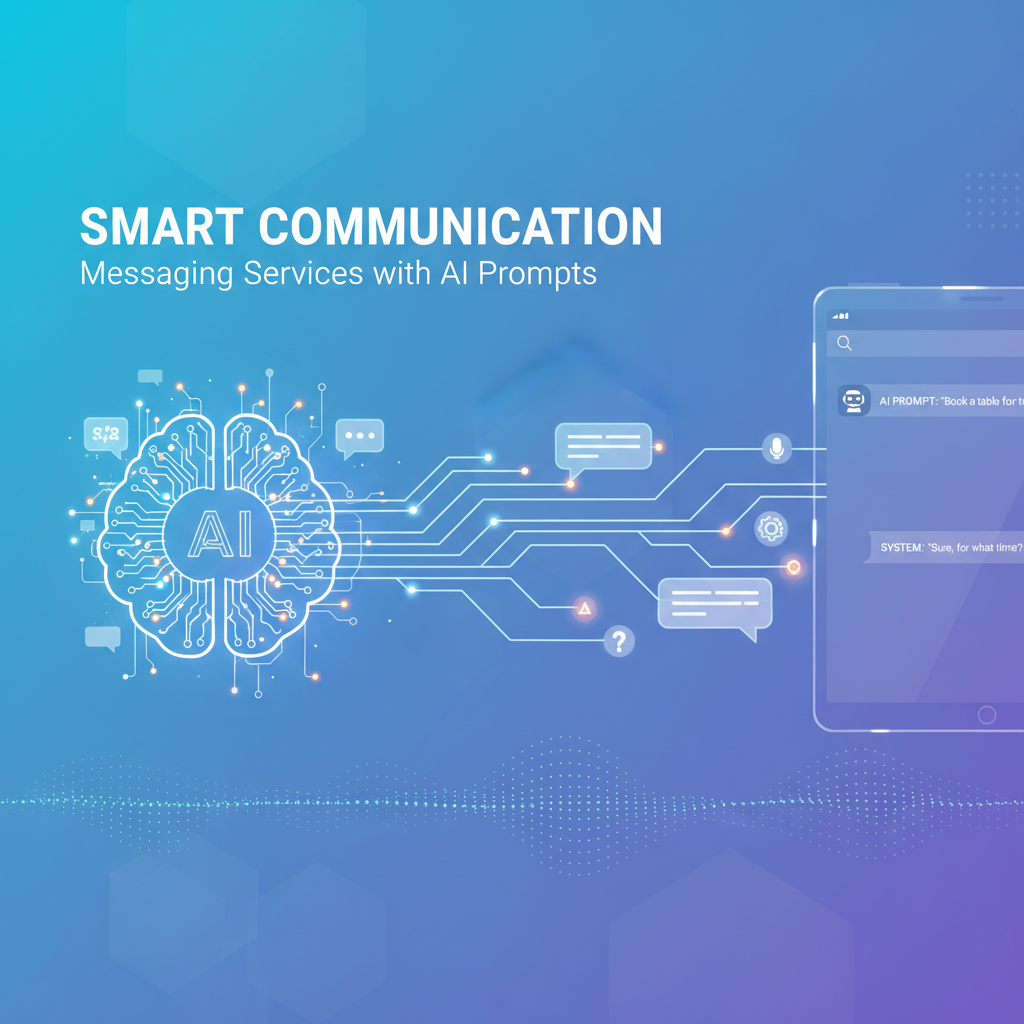


The landscape of human interaction is undergoing a profound transformation, driven by the relentless march of artificial intelligence. In no domain is this more evident than in communication, where messaging services, once mere conduits for text, are now evolving into sophisticated platforms for intelligent interaction. This evolution, from simple message relay to truly smart communication, is powered by advanced AI prompts and an intricate understanding of conversational context, pushing the boundaries of what machines can comprehend and contribute to human discourse. The journey towards truly intelligent messaging is complex, requiring not only powerful AI models but also robust protocols and platforms to manage their nuanced interactions.
The Dawn of Smart Communication: Messaging Services with AI Prompts
Smart communication transcends the traditional exchange of information; it embodies a dynamic, context-aware dialogue where AI plays a pivotal role in understanding, generating, and even anticipating user needs. Messaging services, which have become ubiquitous in both personal and professional spheres, are at the forefront of this revolution. From instant messaging apps facilitating daily chats to enterprise platforms streamlining workflows, the integration of artificial intelligence is redefining efficiency, personalization, and user experience. The essence of this transformation lies in the sophisticated application of AI prompts, which are carefully crafted instructions or questions designed to elicit specific, intelligent responses from AI models. These prompts are the critical interface, translating human intent into a language AI can process, enabling interactions that are not just reactive but genuinely intuitive and proactive. The ambition is to move beyond simple automation to create conversational experiences that mirror, or even surpass, the nuances of human-to-human interaction, driven by an ever-deepening understanding of context and intent.
The historical trajectory of messaging services offers a compelling narrative of continuous innovation. What began with rudimentary text messages, limited by character counts and basic functionality, swiftly expanded into rich multimedia platforms. The advent of the internet democratized communication further, giving rise to instant messaging clients that connected people across geographical divides in real-time. Yet, for all their advancements, these early services remained largely passive channels, dependent on explicit user input for every action. The intelligence, the contextual understanding, and the proactive assistance were conspicuously absent. Users had to painstakingly formulate their requests, sift through information manually, and manage conversations without any automated aid. This manual overhead often led to inefficiencies, miscommunications, and a general sense of frustration, particularly in complex or high-volume interaction scenarios. The true potential of messaging, as a vibrant, intelligent ecosystem, remained untapped until the integration of artificial intelligence began to fundamentally reshape its capabilities and user engagement models.
The Transformative Power of AI in Messaging
The introduction of Artificial Intelligence marked a paradigm shift, infusing messaging services with capabilities that were once the exclusive domain of science fiction. AI, at its core, enables machines to simulate human intelligence, including learning, problem-solving, perception, and language understanding. In the context of messaging, this translates into a suite of powerful functionalities: natural language processing (NLP) for understanding human speech and text, natural language generation (NLG) for crafting coherent and contextually relevant responses, and machine learning (ML) for continuously improving performance based on interactions. These technologies converge to create chatbots, virtual assistants, and intelligent messaging agents that can not only respond to queries but also perform tasks, provide personalized recommendations, and even engage in complex multi-turn dialogues.
The immediate benefits are palpable across various sectors. In customer service, AI-powered chatbots handle routine inquiries, reducing response times and freeing human agents to focus on more complex issues. For personal use, virtual assistants embedded in messaging apps can manage schedules, set reminders, and fetch information with remarkable efficiency. In the business realm, AI automates aspects of internal communication, facilitates knowledge sharing, and even aids in project management by processing natural language commands. However, the true magic lies not just in these individual capabilities, but in their synergistic application, guided by the art and science of AI prompts, to create seamless, intelligent conversational flows that genuinely enhance the user experience and drive tangible outcomes for individuals and organizations alike.
Core AI Concepts Fueling Smart Communication
To appreciate the depth of AI's impact on messaging, it's essential to understand the foundational concepts at play:
- Natural Language Processing (NLP): This field focuses on enabling computers to understand, interpret, and generate human language. In messaging, NLP is crucial for parsing user input, identifying key entities (names, dates, locations), and understanding the underlying sentiment and intent of a message. Without robust NLP, an AI model would be unable to make sense of the myriad ways humans express themselves. It includes tasks like tokenization, part-of-speech tagging, named entity recognition, and dependency parsing, all working in concert to break down complex human language into structured data that AI can process.
- Natural Language Understanding (NLU): A sub-field of NLP, NLU specifically aims at discerning the meaning and intent behind human language. While NLP might identify words and grammatical structures, NLU strives to grasp the why and what of a message. For instance, if a user types "Book me a flight to Paris next Tuesday," NLU identifies the intent (flight booking), the destination (Paris), and the date (next Tuesday), even if the phrasing is colloquial or slightly ambiguous. This deeper comprehension is what allows AI to move beyond keyword matching to truly intelligent response generation.
- Natural Language Generation (NLG): Complementing NLU, NLG is the process of generating human-like text from structured data. After understanding a user's request and processing it, an AI model uses NLG to formulate a coherent, contextually appropriate, and grammatically correct response. This involves selecting the right words, constructing sentences, and ensuring the overall tone and style align with the conversation's context. The quality of NLG directly impacts how natural and helpful an AI's responses feel to the user.
- Machine Learning (ML): At the heart of most modern AI systems, ML algorithms allow computers to learn from data without being explicitly programmed. In messaging services, ML models are trained on vast datasets of conversations, allowing them to identify patterns, predict user behavior, and continuously improve their understanding and generation capabilities. Reinforcement learning, a subset of ML, is particularly relevant for training conversational AIs to optimize their responses based on feedback and successful interactions, leading to more engaging and effective dialogues over time. This continuous learning loop is what enables AI systems to adapt and evolve, providing increasingly sophisticated and personalized communication experiences.
The Art and Science of AI Prompts: Crafting Effective Interactions
The intelligence of an AI model, no matter how advanced, is often only as good as the prompt it receives. AI prompts are not just simple questions; they are carefully engineered directives that guide the AI towards a desired output. This often involves providing context, specifying desired formats, defining constraints, and even offering examples. Effective prompt engineering is rapidly becoming a critical skill, bridging the gap between human intention and machine execution.
Prompt Engineering: Definition, Importance, and Techniques
Prompt engineering is the discipline of designing and refining inputs for AI models, especially large language models (LLMs), to achieve specific, high-quality outputs. It’s an iterative process that involves understanding the AI model’s capabilities and limitations, and then crafting prompts that leverage its strengths while mitigating its weaknesses.
The importance of prompt engineering cannot be overstated. A poorly constructed prompt can lead to irrelevant, inaccurate, or generic responses, diminishing the value of the AI interaction. Conversely, a well-engineered prompt can unlock the full potential of an AI model, yielding highly precise, creative, and contextually relevant results. This is particularly vital in smart communication, where the goal is to facilitate natural, meaningful, and efficient exchanges.
Techniques in prompt engineering include:
- Clarity and Specificity: Prompts should be unambiguous, clearly stating the task and desired outcome. Vague prompts lead to vague responses. For example, instead of "Tell me about the weather," a better prompt is "What is the current weather forecast for London, UK, including temperature and precipitation likelihood for the next 24 hours?"
- Contextual Information: Providing relevant background information helps the AI understand the situation. This is where the concept of Model Context Protocol (MCP) becomes critical, as it dictates how this context is managed and presented to the AI. For example, if discussing a specific project, the prompt might include details about the project's objectives, timeline, and key stakeholders.
- Role-Playing: Instructing the AI to adopt a specific persona (e.g., "Act as a marketing expert," "You are a customer service agent") can significantly influence the tone, style, and content of its responses. This helps tailor the AI's output to specific use cases and user expectations.
- Few-Shot Learning: Providing one or more examples of desired input-output pairs within the prompt can guide the AI to generate responses consistent with the given pattern. This technique is particularly effective for tasks requiring a specific format or style.
- Chain of Thought Prompting: Breaking down a complex task into smaller, sequential steps within the prompt encourages the AI to reason through the problem logically, often leading to more accurate and robust solutions. This mimics human problem-solving and can greatly improve the AI's ability to handle multi-step instructions.
- Constraint Setting: Defining negative constraints (what the AI should not do) or positive constraints (what it must include) helps refine the output. For example, "Do not use jargon" or "Include a call to action."
- Iterative Refinement: Prompt engineering is rarely a one-shot process. It often involves experimenting with different phrasings, adding or removing details, and evaluating the AI's responses until the desired quality is achieved. This continuous feedback loop is essential for optimizing AI interactions.
Challenges in Prompting
Despite its power, prompt engineering comes with its own set of challenges:
- Ambiguity and Nuance: Human language is inherently ambiguous, and translating subtle nuances into explicit AI instructions can be difficult. What seems clear to a human might be interpreted differently by an AI.
- Model Limitations: Even the most advanced AI models have limitations. They may struggle with highly abstract concepts, complex reasoning, or specific factual inaccuracies, regardless of prompt quality. Understanding these limitations is key to setting realistic expectations.
- "Hallucinations": LLMs can sometimes generate plausible-sounding but factually incorrect information. Prompt engineering strategies can help mitigate this, but it remains a persistent challenge, especially when dealing with open-ended questions.
- Bias: AI models are trained on vast datasets, which often reflect societal biases. If prompts are not carefully crafted, they can inadvertently amplify these biases in the AI's responses.
- Scalability: Manually crafting and refining prompts for every conceivable interaction scenario is not scalable for complex applications. Automated prompt generation and dynamic prompt optimization are emerging areas to address this.
- Context Window Limitations: Older models or specific configurations might have limited "memory" or context windows. If a conversation extends beyond this window, the AI loses track of previous turns, leading to disjointed or irrelevant responses. This specific challenge highlights the urgent need for sophisticated Model Context Protocol implementations.
Contextual Understanding in AI: Why It's Crucial for Smart Communication
At the heart of truly smart communication lies the ability of an AI to maintain and leverage context. A conversation, by its very nature, is cumulative. Each statement builds upon previous ones, drawing meaning from shared history, inferred intent, and even unspoken assumptions. Without this continuous thread of context, interactions quickly devolve into disjointed, frustrating exchanges. Imagine talking to a human who forgets everything you said a minute ago – that’s the experience of an AI lacking robust contextual understanding.
The Problem of Limited Memory
Early AI systems, particularly rule-based chatbots, suffered from a severe limitation: a short memory span, or often, no memory at all beyond the immediate input. Each interaction was treated as a standalone event, isolated from previous exchanges. This meant that if a user asked, "What's the weather like?", and then followed up with, "How about tomorrow?", the AI might not understand that "tomorrow" referred to the same location mentioned earlier, or even that it was still discussing weather. It would require the user to re-state the entire context with each subsequent query, leading to highly inefficient and unnatural conversations.
This "limited memory" problem wasn't just an inconvenience; it was a fundamental barrier to creating engaging, intelligent conversational agents. For an AI to feel truly smart, it needs to remember names, preferences, ongoing tasks, and the general flow of a dialogue. It needs to understand when a pronoun refers to a previously mentioned entity, or when a follow-up question is implicitly tied to an earlier topic. Overcoming this limitation has been a primary focus in the evolution of conversational AI, leading to the development of sophisticated mechanisms for context management.
Introducing Model Context Protocol (MCP)
To address the pervasive challenge of limited memory and fragmented conversations, the concept of a Model Context Protocol (MCP) has emerged as a critical architectural component in advanced AI systems. An MCP is essentially a standardized framework or set of rules that dictates how conversational history, user preferences, system states, and external data are collected, managed, and presented to an AI model during an interaction. It's the engine that ensures an AI system retains a coherent "memory" of ongoing dialogue, allowing it to provide responses that are not just syntactically correct but also deeply contextually relevant.
The primary purpose of an MCP is to bridge the gap between individual AI prompts and the cumulative nature of human conversation. Without an MCP, each prompt is an island, forcing the AI to interpret every input in isolation. With an MCP, the AI operates within a rich tapestry of preceding interactions, user profiles, and even real-time environmental data, enabling it to generate far more intelligent, personalized, and seamless responses. It transforms a series of discrete question-and-answer pairs into a fluid, meaningful dialogue.
Deep Dive into MCP Mechanisms
An effective MCP employs several intricate mechanisms to manage and leverage context:
- Conversation History Management:
- Transcript Storage: The most fundamental aspect is the ability to store the full transcript of a conversation. This includes both user inputs and AI outputs, often timestamped and attributed to the respective speaker.
- Summarization Techniques: For long conversations, simply passing the entire transcript to an AI model can be computationally expensive and may exceed the model's context window limits. MCPs often incorporate summarization techniques, where previous turns of a conversation are condensed into more manageable snippets or key takeaways. This could involve abstractive summarization (generating new sentences that capture the essence) or extractive summarization (selecting the most important existing sentences).
- Sliding Window: Another common technique is the "sliding window," where only the most recent N turns or a fixed token limit of the conversation history is passed to the AI. As new messages come in, older ones drop out of the window, ensuring that the AI always focuses on the most immediate context while keeping the input size manageable.
- Embedding and Retrieval: Advanced MCPs use vector embeddings to represent conversational turns semantically. When context is needed, these embeddings can be queried (using similarity search) to retrieve the most relevant past messages, even if they occurred much earlier in a long conversation, allowing for selective and efficient context recall.
- User Profile and Preferences:
- Explicit Preferences: MCPs integrate data explicitly provided by the user, such as language preference, notification settings, or default locations.
- Implicit Preferences: They also infer preferences from user behavior over time. For example, if a user frequently asks about sports scores, the MCP might infer a preference for sports news and proactively offer related updates or tailor responses to include sports-related analogies.
- Personalized Data: This can include names, addresses, past orders, subscription details, and other sensitive information, which must be managed securely and only leveraged when relevant and with appropriate user consent.
- Real-time Data and External Knowledge:
- API Integrations: MCPs are designed to fetch real-time data from external sources via APIs. This could include weather forecasts, stock prices, news feeds, flight information, or CRM data. For instance, if a user asks about their flight status, the MCP would trigger an API call to an airline's system and inject that real-time data into the prompt for the AI. This is where platforms like ApiPark become invaluable, simplifying the integration and management of these diverse external APIs, including those for various AI models and traditional REST services.
- Knowledge Bases: Many enterprise MCPs integrate with internal knowledge bases or documentation repositories. If a user asks a question about company policy, the MCP can retrieve relevant documents and present them to the AI model to formulate an accurate and authoritative answer.
- System State: The MCP tracks the current state of the application or service. For example, if a user is in the middle of a booking process, the MCP remembers the selected dates, destinations, and preferences, allowing the AI to continue the process seamlessly without repeating information.
- Semantic Contextualization:
- Entity Resolution: Identifying and linking entities (e.g., "Paris" referring to the city, not a person named Paris) across different turns of a conversation.
- Topic Tracking: Maintaining an understanding of the current topic(s) of discussion and being able to gracefully shift between related topics or return to a previous one.
- Intent Recognition: Continuously re-evaluating the user's intent as the conversation progresses, ensuring that the AI's responses remain aligned with the evolving purpose of the interaction.
These mechanisms work in concert to construct a comprehensive "context object" or "context vector" that is then passed along with the current user prompt to the AI model. This rich contextual payload allows the AI to generate responses that are not just syntactically correct, but also deeply informed by the entire history and surrounding circumstances of the interaction, leading to a truly "smart" communication experience.
The Impact of MCP on User Experience
The profound impact of a well-implemented MCP on user experience cannot be overstated. It transforms interactions from fragmented exchanges into coherent, personalized, and efficient dialogues:
- Coherence and Continuity: Users no longer need to repeat themselves. The AI remembers past information, previous questions, and ongoing tasks, creating a natural flow that mimics human conversation. This greatly reduces user frustration and enhances the feeling of interacting with an intelligent agent rather than a simple machine.
- Personalization: By leveraging user profiles and preferences, the AI can tailor its responses, recommendations, and even its tone to suit the individual. This leads to a more engaging and relevant experience, where the AI feels like it truly understands and caters to the user's specific needs and interests.
- Efficiency: Contextual understanding streamlines interactions. Users can ask follow-up questions without re-stating context, saving time and effort. The AI can proactively offer relevant information or suggest next steps, anticipating needs rather than merely reacting to commands. For businesses, this translates to faster problem resolution and higher customer satisfaction.
- Reduced Cognitive Load: Users don't have to keep track of previous turns or mentally fill in missing information for the AI. The MCP handles this heavy lifting, allowing users to focus on the content of the conversation itself.
- Complex Task Handling: Multi-step processes, such as booking a multi-leg trip, managing a complex project, or troubleshooting a technical issue, become manageable within a conversational interface because the MCP ensures the AI maintains awareness of all steps, constraints, and dependencies.
In essence, the Model Context Protocol is the invisible architecture that breathes life into smart communication, enabling AI models to move beyond mere pattern matching to genuinely understand and engage in meaningful dialogue.
Specific Models and Protocols: The Claude Model Context Protocol
While the principles of MCP are broadly applicable, specific AI models often implement their own sophisticated versions of context management, tailored to their unique architectures and capabilities. Among the leading large language models, the Claude model context protocol stands out as a prime example of an advanced MCP implementation designed for superior conversational performance, particularly in handling extensive and complex dialogue histories.
Claude, developed by Anthropic, is known for its ability to process remarkably long context windows. This capability is a direct result of its sophisticated Model Context Protocol, which allows it to maintain coherence over tens of thousands of tokens (words and sub-words), far exceeding the typical limits of many other models. This extended context window is not just about raw capacity; it's about the protocol's ability to effectively utilize that capacity to retain crucial information across prolonged interactions.
Features and Advantages of the Claude Model Context Protocol:
- Extended Context Window: The most significant advantage of the Claude model context protocol is its ability to process extremely long sequences of text. This means it can "remember" a much larger portion of a conversation, an entire document, or even multiple documents simultaneously.
- Benefit: For smart communication, this translates into AI agents that can engage in protracted dialogues without losing their train of thought. They can reference details from hours-long conversations, understand the full scope of complex tasks, or digest lengthy documents and discuss them intelligently, all within a single interaction thread. This is particularly valuable for applications like customer support, legal review, or creative writing, where extensive context is often paramount.
- Robust Coherence Maintenance: Beyond simply storing more text, the Claude model context protocol is engineered to maintain strong semantic coherence across its vast context window. It doesn't just treat the context as a bag of words; it actively processes and integrates information from disparate parts of the input to build a holistic understanding.
- Benefit: This leads to more consistent and logically flowing responses. The AI is less prone to contradictions, misinterpretations, or forgetting key facts mentioned much earlier in the conversation. It creates a more reliable and trustworthy conversational partner.
- Fine-grained Contextual Referencing: The protocol allows Claude to selectively focus on and retrieve specific pieces of information from its long context window with greater accuracy. This is likely achieved through advanced attention mechanisms and internal retrieval augmented generation (RAG) techniques, where relevant snippets are dynamically pulled into focus.
- Benefit: This precision enables the AI to answer highly specific follow-up questions, cross-reference details, and integrate information from various parts of the dialogue to form nuanced responses, making the interaction feel remarkably intelligent and detail-oriented.
- Handling Complex Information Architectures: For enterprise applications, the Claude model context protocol facilitates the ability to process not just conversational history, but also structured data, policy documents, code snippets, and other complex information sources simultaneously.
- Benefit: This makes Claude particularly adept at tasks requiring the synthesis of information from multiple, diverse sources, acting as an intelligent knowledge worker that can draw upon a vast internal "library" during a conversation.
The advancements embodied in the Claude model context protocol underscore a critical trend in AI: the shift from isolated turn-taking to deep, sustained conversational understanding. This capability is instrumental in realizing the full promise of smart communication, enabling AI to perform tasks that demand sustained attention to detail and a profound grasp of overarching context.
Use Cases for Smart Communication with AI Prompts
The fusion of smart communication and AI prompts unlocks an unparalleled array of applications across virtually every industry. These systems are not merely automating tasks; they are enhancing human capabilities, fostering new forms of interaction, and creating efficiencies previously unimaginable.
1. Customer Service and Support: The AI-Powered Front Line
One of the most immediate and impactful applications is in customer service. AI-powered chatbots and virtual assistants, guided by carefully crafted prompts and robust MCPs, have become the first point of contact for countless customers.
- Intelligent Call Routing: Before connecting to a human agent, AI can intelligently route customer queries to the most appropriate department or specialist based on initial prompts and contextual understanding.
- 24/7 Support: AI agents provide round-the-clock assistance, answering FAQs, resolving common issues, and guiding users through self-service options, drastically reducing wait times.
- Personalized Problem Solving: Leveraging Model Context Protocol (MCP) to access customer history, order details, and previous interactions, AI can offer highly personalized support, proactively suggesting solutions or troubleshooting steps without requiring the customer to repeat information. For example, an AI could say, "I see you recently purchased product X. Are you experiencing an issue with its setup?" – a level of context that greatly enhances the customer experience.
- Proactive Engagement: AI can identify potential issues based on user behavior or system alerts and proactively reach out to customers with relevant information or assistance, preventing problems before they escalate. For instance, sending a message about a potential service disruption in their area.
- Multilingual Support: AI models can converse in multiple languages, broadening access to support services for a global customer base without the need for an equally global human workforce.
2. Personalized Marketing and Sales: Tailored Engagement
AI prompts in messaging are revolutionizing how businesses engage with potential and existing customers, moving beyond generic campaigns to hyper-personalized interactions.
- Targeted Product Recommendations: Based on browsing history, past purchases, and preferences gathered through conversational prompts (and managed by MCP), AI can recommend products or services that are highly likely to appeal to the individual.
- Lead Qualification and Nurturing: AI can engage with leads in real-time, asking qualifying questions, providing information, and addressing objections, thereby streamlining the sales funnel and passing warmer leads to human sales representatives.
- Interactive Campaigns: Instead of static emails, AI-driven messaging allows for interactive marketing campaigns where customers can ask questions about promotions, customize offers, or request more details directly within the chat interface.
- Post-Purchase Engagement: AI can follow up after a purchase to offer support, gather feedback, suggest complementary products, or remind customers about warranty information, fostering loyalty and repeat business.
- Dynamic Content Generation: AI can dynamically generate personalized marketing copy, subject lines, or even entire campaign messages based on audience segments and individual user context, ensuring maximum relevance and engagement.
3. Internal Team Collaboration and Knowledge Management
Within organizations, smart communication enhances productivity and information flow.
- Intelligent Information Retrieval: Employees can query AI bots in team messaging platforms to instantly access company policies, HR information, project documentation, or technical specifications. The AI, powered by its MCP, navigates internal knowledge bases and external APIs to provide concise answers.
- Meeting Summaries and Action Items: AI can listen to meeting transcripts (with consent) and generate concise summaries, identify key decisions, and list actionable tasks, distributing them to relevant team members.
- Project Management Assistance: AI can track project progress, remind team members of deadlines, flag potential bottlenecks, and answer project-related questions, acting as a virtual project assistant.
- Onboarding and Training: New hires can interact with AI bots to get answers to common onboarding questions, learn about company culture, or access training materials, making the onboarding process more efficient and engaging.
- Automated Workflow Triggers: AI can initiate workflows based on conversational cues, such as creating a new task in a project management tool after a team discussion or scheduling a follow-up meeting.
4. Education and Training: Personalized Learning Pathways
Smart communication holds immense promise for transforming education, offering personalized and accessible learning experiences.
- Adaptive Learning Companions: AI tutors can provide personalized instruction, answer student questions, offer explanations, and adapt learning paths based on an individual student's progress and understanding, leveraging their MCP to remember past interactions and areas of difficulty.
- Language Learning Practice: AI can act as a conversational partner for language learners, providing real-time feedback on grammar, vocabulary, and pronunciation, simulating immersive practice scenarios.
- Knowledge Assessment and Feedback: AI can conduct quizzes, evaluate written assignments, and provide instant, constructive feedback, helping students identify areas for improvement.
- Study Resource Navigation: Students can ask AI bots for specific study materials, research papers, or external resources related to a topic, making information discovery more efficient.
- Interactive Course Content: AI can make static course materials interactive, allowing students to ask clarifying questions directly within a reading or video, enhancing comprehension and engagement.
5. Healthcare Applications: Empathetic and Efficient Support
In healthcare, AI-driven messaging can improve patient engagement, streamline administrative tasks, and provide preliminary support.
- Patient Triage and Information Gathering: AI chatbots can conduct initial symptom assessments, gather relevant medical history (securely), and provide preliminary health information, guiding patients on appropriate next steps (e.g., "See a doctor," "Go to urgent care").
- Appointment Scheduling and Reminders: Patients can easily schedule, reschedule, or cancel appointments via chat, and receive automated reminders, reducing no-show rates.
- Medication Adherence: AI can send personalized medication reminders and answer questions about prescriptions, improving patient compliance.
- Mental Health Support: AI-powered conversational agents can offer preliminary mental health support, provide coping strategies, and connect users with human therapists or crisis lines when needed, offering a judgment-free space for initial discussion.
- Post-Discharge Follow-up: AI can check in with patients after discharge, monitor their recovery, and answer common questions, providing a layer of continuous care.
6. Creative Writing and Content Generation: A New Muse
AI prompts are empowering creators by acting as brainstorming partners, idea generators, and even co-writers.
- Idea Generation: Writers can use AI to brainstorm plot points, character names, setting descriptions, or dialogue snippets by providing initial prompts and iterating on the AI's suggestions.
- Content Outlining: AI can help structure articles, essays, or stories by generating detailed outlines based on a given topic and desired tone.
- Drafting Assistance: For overcoming writer's block, AI can generate initial drafts of paragraphs, sections, or even entire articles based on specific prompts, which can then be refined by a human.
- Style Transformation: AI can rewrite existing text in a different style, tone, or for a specific target audience, helping authors adapt their work.
- Summarization and Expansion: AI can summarize lengthy documents or expand brief notes into detailed narratives, saving significant time in content creation workflows.
These diverse use cases merely scratch the surface of smart communication's potential. As AI models become more sophisticated and Model Context Protocols (MCPs) grow more robust, the boundaries of what is possible will continue to expand, embedding intelligence into every facet of our digital interactions.
APIPark is a high-performance AI gateway that allows you to securely access the most comprehensive LLM APIs globally on the APIPark platform, including OpenAI, Anthropic, Mistral, Llama2, Google Gemini, and more.Try APIPark now! 👇👇👇
Building Smart Messaging Services: Technical Considerations
Developing and deploying smart messaging services powered by AI prompts and advanced context protocols is a complex endeavor, requiring careful consideration of several technical challenges. From integrating diverse AI models to ensuring data security and managing API lifecycles, developers face a multi-faceted landscape.
Integration Challenges
Integrating AI models into existing messaging infrastructure is not a trivial task. Different AI models (e.g., from OpenAI, Anthropic, Google, custom models) often have varying APIs, authentication mechanisms, data formats, and rate limits. This heterogeneity creates a significant integration overhead:
- API Standardization: Each AI model might require specific request payloads and return different response structures. Developers spend considerable time writing adapters and converters to normalize these interactions.
- Authentication and Authorization: Managing API keys, tokens, and access permissions for numerous AI services and external data sources can become a security and operational nightmare.
- Version Control: AI models are constantly evolving. New versions can introduce breaking changes, requiring frequent updates to integration code.
- Orchestration: For complex smart communication scenarios, multiple AI models might need to work in concert (e.g., one for NLU, another for NLG, and a third for task execution). Orchestrating these interactions, managing their states, and ensuring seamless handoffs adds layers of complexity.
- Prompt Management: Storing, versioning, and dynamically selecting the right prompt for a given AI model and context becomes challenging at scale.
Data Privacy and Security
Smart communication systems often handle sensitive user data, making privacy and security paramount concerns.
- Compliance: Adhering to regulations like GDPR, HIPAA, CCPA, and industry-specific standards is critical. This involves strict controls over data collection, storage, processing, and retention.
- Data Encryption: All data, both in transit and at rest, must be encrypted to prevent unauthorized access.
- Access Control: Robust access control mechanisms are needed to ensure that only authorized personnel and systems can access sensitive data.
- Data Minimization: Collecting and retaining only the data absolutely necessary for the service helps mitigate risks.
- Model Privacy: Ensuring that AI models do not inadvertently leak sensitive information learned during training or interaction is a continuous area of research and development.
- Audit Trails: Comprehensive logging of all data access and processing activities is essential for accountability and troubleshooting.
Scalability and Performance
Smart messaging services, especially in high-traffic environments like customer support or large enterprise collaboration, must be highly scalable and performant.
- Latency: AI model inferences can be computationally intensive, leading to latency. Optimizing response times is crucial for a smooth user experience.
- Throughput: The system must handle a large volume of concurrent requests without degradation in performance.
- Resource Management: Efficiently managing computing resources (GPUs, CPUs, memory) for AI inference is vital for cost-effectiveness.
- Load Balancing and High Availability: Distributing traffic across multiple instances and ensuring redundancy are necessary to prevent outages and maintain service levels.
- Context Storage: Storing and retrieving context data for millions of simultaneous conversations requires robust, high-performance database solutions.
These technical challenges highlight the need for specialized tools and platforms that can abstract away much of this complexity, allowing developers to focus on building intelligent conversational experiences rather than grappling with infrastructure.
The Role of API Management Platforms
In the face of these technical complexities, API management platforms have become indispensable for organizations looking to harness the power of AI in their smart communication strategies. These platforms act as a central nervous system for API integration, simplifying the process of connecting diverse services, managing their lifecycle, and ensuring their security and performance.
One such comprehensive solution is ApiPark. APIPark is an open-source AI gateway and API developer portal designed to help developers and enterprises manage, integrate, and deploy both AI and traditional REST services with remarkable ease. It directly addresses many of the integration, security, and performance challenges discussed earlier, making it a powerful enabler for building sophisticated smart messaging services.
Key Features of APIPark and Their Value to Smart Communication:
- Quick Integration of 100+ AI Models:
- Value for Smart Communication: APIPark provides a unified management system for authenticating and tracking costs across a wide variety of AI models. This means developers building smart messaging services don't have to individually configure and manage API keys for OpenAI, Anthropic, Google AI, and potentially custom internal models. Instead, they interact with a single gateway, drastically reducing integration time and complexity. This accelerates the process of experimenting with different models for specific tasks (e.g., one model for NLU, another for creative text generation, a third for summarization) within a smart communication flow.
- Unified API Format for AI Invocation:
- Value for Smart Communication: This feature is crucial for maintaining agility. APIPark standardizes the request data format across all integrated AI models. This standardization ensures that changes in underlying AI models (e.g., upgrading from one version of Claude to another, or switching from one LLM provider to another) or prompt modifications do not necessitate changes in the application or microservices consuming these APIs. For smart communication, this means a conversational AI can adapt to newer, better models or refined prompts without breaking its core application logic, simplifying AI usage and significantly reducing maintenance costs and development overhead.
- Prompt Encapsulation into REST API:
- Value for Smart Communication: This is a game-changer for prompt engineering. Users can quickly combine AI models with custom prompts to create new, specialized APIs. For instance, a complex multi-turn prompt for sentiment analysis of customer feedback, or a detailed translation prompt optimized for a specific domain, can be encapsulated into a simple, reusable REST API. This empowers non-AI experts to leverage sophisticated AI functionalities within their messaging services, enabling rapid deployment of features like automated sentiment detection for customer interactions, or context-aware translation for multilingual support, all exposed as easily consumable APIs.
- End-to-End API Lifecycle Management:
- Value for Smart Communication: APIPark assists with managing the entire lifecycle of APIs—from design and publication to invocation and decommission. It regulates API management processes, handles traffic forwarding, load balancing, and versioning of published APIs. For smart messaging services, this ensures that the underlying AI APIs are stable, performant, and correctly managed throughout their operational life. It prevents issues arising from outdated APIs, ensures consistent traffic distribution, and allows for controlled updates and rollbacks, which is vital for maintaining reliable smart communication channels.
- API Service Sharing within Teams:
- Value for Smart Communication: In larger organizations developing smart communication solutions, different departments or teams might need to access the same AI-powered services (e.g., a shared sentiment analysis API for marketing and customer service). APIPark centralizes the display of all API services, making it easy for different teams to find and use the required APIs. This fosters collaboration, reduces duplication of effort, and ensures consistency in how AI capabilities are leveraged across the enterprise's messaging landscape.
- Independent API and Access Permissions for Each Tenant:
- Value for Smart Communication: For enterprises operating multiple smart messaging products or serving different clients, APIPark enables the creation of multiple teams (tenants), each with independent applications, data, user configurations, and security policies. While sharing underlying infrastructure, this tenant isolation ensures that one team's AI API usage or data does not interfere with another's, providing robust security and operational separation critical for multi-tenant smart communication platforms.
- API Resource Access Requires Approval:
- Value for Smart Communication: Security is paramount. APIPark allows for the activation of subscription approval features. Callers must subscribe to an API and await administrator approval before they can invoke it. This prevents unauthorized API calls and potential data breaches, offering an essential layer of control for sensitive AI-powered messaging services.
- Performance Rivaling Nginx:
- Value for Smart Communication: With just an 8-core CPU and 8GB of memory, APIPark can achieve over 20,000 TPS, supporting cluster deployment for large-scale traffic. High performance is non-negotiable for real-time smart communication. Messaging services often experience peak loads, and APIPark's ability to handle high transaction rates ensures that AI responses are delivered promptly, maintaining a smooth and responsive user experience even under heavy demand.
- Detailed API Call Logging:
- Value for Smart Communication: APIPark provides comprehensive logging, recording every detail of each API call. This feature is invaluable for troubleshooting, monitoring, and auditing smart communication systems. Businesses can quickly trace and troubleshoot issues with AI invocations, identify performance bottlenecks, and ensure system stability and data security, especially when dealing with complex Model Context Protocol interactions.
- Powerful Data Analysis:
- Value for Smart Communication: By analyzing historical call data, APIPark displays long-term trends and performance changes. This predictive capability helps businesses with preventive maintenance, allowing them to address potential issues before they impact their smart messaging services. For instance, identifying a rising error rate in calls to a specific AI model or a degradation in latency can trigger proactive measures, ensuring continuous, high-quality AI-powered communication.
Deployment and Support: APIPark offers quick deployment with a single command and provides both an open-source version for startups and a commercial version with advanced features and professional technical support for leading enterprises. This flexible approach ensures that organizations of all sizes can leverage its capabilities to build and manage their smart communication infrastructures. APIPark, as an open-source AI gateway and API management platform by Eolink, stands as a testament to bridging the gap between cutting-edge AI models and their practical, scalable deployment in real-world applications like smart messaging services.
Future Trends in Smart Communication
The evolution of smart communication is far from complete. Several emerging trends promise to redefine the landscape once again, pushing the boundaries of what AI can achieve in human-machine interaction.
Multimodal AI: Beyond Text
Currently, much of smart communication is text-based. However, the future points towards multimodal AI, where systems can seamlessly process and generate information across various modalities: text, speech, images, video, and even haptic feedback.
- Integrated Experiences: Imagine a smart messaging service where you can send a voice message, and the AI understands it, generates a textual summary, identifies an object in an accompanying image, and then responds with a video explanation, all while maintaining conversational context.
- Richer Understanding: By combining input from multiple senses, AI can gain a far richer and more nuanced understanding of user intent and emotion, leading to more empathetic and effective communication.
- Accessibility: Multimodal AI will significantly enhance accessibility for users with disabilities, allowing them to communicate in their preferred modality.
Proactive AI: Anticipating Needs
The current generation of smart communication is largely reactive, responding to user prompts. Future AI will be increasingly proactive, anticipating user needs and offering assistance before being explicitly asked.
- Contextual Foresight: Leveraging advanced Model Context Protocols (MCPs) that integrate not just conversational history but also user behavior patterns, calendar data, location information, and external events, AI will predict requirements. For example, if your calendar shows a flight, the AI might proactively offer flight status updates or remind you to check in.
- Personalized Nudges: AI could proactively suggest useful information, offer to perform tasks, or even initiate conversations based on observed patterns and inferred intentions, making communication feel less like a query-response loop and more like a collaboration with an intelligent assistant.
- Emotional Intelligence: More advanced AI might even detect subtle emotional cues in communication and proactively offer support or adjust its tone accordingly.
Ethical AI and Governance: Building Trust
As AI becomes more pervasive in communication, ethical considerations and robust governance frameworks will become paramount.
- Transparency and Explainability: Users will demand to know when they are interacting with an AI and how its decisions are made. Future AI will offer greater transparency, providing explanations for its recommendations or actions.
- Bias Mitigation: Continued efforts to identify and mitigate biases in AI models are crucial to ensure fair and equitable communication experiences for all users.
- Data Governance and Privacy: Stricter regulations and more sophisticated tools for managing user data, ensuring privacy, and obtaining informed consent will be essential. The secure management of sensitive data within MCPs will be a key focus.
- Human Oversight: Maintaining a human-in-the-loop approach for critical decisions or complex edge cases will remain vital to ensure safety and accountability.
Hyper-Personalization: The Individualized Experience
Building on advanced MCPs and machine learning, future smart communication will offer unprecedented levels of personalization, tailoring interactions down to the individual's unique cognitive style, preferences, and even mood.
- Adaptive Communication Styles: AI might learn a user's preferred communication style (e.g., concise, detailed, formal, informal) and adapt its responses accordingly.
- Dynamic Information Delivery: Content will be dynamically assembled and presented in a way that is most effective for the individual user, whether that's through visual aids, summarized points, or detailed explanations.
- Emotional Resonance: AI could aim for responses that resonate emotionally with the user, fostering a deeper sense of connection and understanding, without crossing into deceptive or manipulative territory.
These trends paint a picture of a future where communication is not just smart but truly intelligent, empathetic, and seamlessly integrated into every facet of our lives, constantly adapting to our needs and enhancing our ability to connect and collaborate.
Challenges and Ethical Considerations in Smart Communication
While the promise of smart communication is immense, its widespread adoption also brings forth significant challenges and ethical considerations that demand careful attention and proactive solutions. Ignoring these issues could undermine trust, perpetuate harm, and hinder the responsible development of AI.
Bias in AI
AI models, particularly large language models central to smart communication, are trained on vast datasets derived from human-generated content. This means they inevitably reflect the biases present in that data – societal biases related to race, gender, socioeconomic status, religion, and more.
- Manifestation: In smart communication, this bias can manifest as discriminatory language, unfair recommendations, stereotypical portrayals, or even differential access to services based on demographic cues. An AI might inadvertently perpetuate harmful stereotypes or provide less helpful responses to certain user groups.
- Mitigation: Addressing bias requires multifaceted approaches, including curating more diverse and representative training datasets, developing bias detection tools, implementing fairness metrics, and incorporating ethical guidelines into prompt engineering and model development, as well as continuous monitoring of AI outputs.
Transparency and Explainability
Many advanced AI models, especially deep learning networks, operate as "black boxes." It's often difficult to understand why they produced a particular output, even if the output is correct.
- Impact on Trust: In critical smart communication applications (e.g., healthcare, financial advice), users and regulators need to understand the reasoning behind an AI's advice or decision. Lack of transparency erodes trust and makes it difficult to debug errors or identify bias.
- Ethical Imperative: Explaining AI decisions is not just a technical challenge but an ethical imperative, particularly when those decisions have significant implications for individuals.
- Solutions: Research into explainable AI (XAI) aims to develop models that can provide human-understandable explanations for their behavior. For smart communication, this could mean an AI not only giving an answer but also briefly explaining the key contextual factors (managed by its Model Context Protocol) or data points that led to that answer.
Job Displacement and Workforce Transformation
The automation capabilities of smart communication systems, particularly in areas like customer service, content generation, and administrative tasks, raise concerns about job displacement.
- Economic Impact: While AI can create new jobs and enhance productivity, it will also undoubtedly transform existing roles, potentially leading to job losses in sectors heavily reliant on routine communication tasks.
- Reskilling and Upskilling: Societies and organizations need to proactively invest in reskilling and upskilling initiatives to prepare the workforce for an AI-augmented future, focusing on skills that complement AI capabilities, such as critical thinking, creativity, and emotional intelligence.
- Ethical Responsibility: Companies deploying smart communication solutions have an ethical responsibility to consider the impact on their employees and contribute to transition strategies.
Over-Reliance on AI and Loss of Critical Thinking
As AI systems become more capable and integrated into daily communication, there's a risk of over-reliance, potentially leading to a degradation of human critical thinking and problem-solving skills.
- Information Bubbles: If AI-driven communication always presents information tailored to individual preferences (hyper-personalization), it could inadvertently reinforce existing beliefs and create information bubbles, reducing exposure to diverse perspectives.
- Decision Delegation: Delegating too many decisions to AI, even in conversational contexts, might diminish human agency and the ability to make nuanced judgments independently.
- Maintaining Human Skills: It's crucial to design smart communication systems that augment human intelligence rather than replace it, encouraging human critical engagement and providing opportunities for users to challenge or override AI suggestions. This also applies to the Model Context Protocol; while it provides context, it should not enforce a rigid, unchallengeable narrative.
Security Vulnerabilities and Misuse
Advanced AI systems, especially those with extensive access to data via Model Context Protocol (MCP), present new security vulnerabilities and potential for misuse.
- Adversarial Attacks: AI models can be tricked or manipulated by subtly crafted inputs (adversarial attacks) to generate harmful or incorrect responses.
- Data Breaches: Given the volume and sensitivity of data processed by smart communication systems, data breaches could have severe consequences. Robust encryption, access control (as offered by platforms like ApiPark), and secure development practices are paramount.
- Malicious Use: The ability of AI to generate highly convincing and personalized content could be exploited for sophisticated phishing campaigns, disinformation, propaganda, or even psychological manipulation at scale.
- Ethical AI Development: Developers and organizations must prioritize security and ethical considerations from the design phase, implementing safeguards and actively working to prevent malicious applications of smart communication technologies.
Navigating these challenges requires a continuous dialogue among technologists, ethicists, policymakers, and the public. The goal is not to halt innovation but to guide it responsibly, ensuring that smart communication truly serves humanity's best interests while mitigating its potential risks.
Conclusion: The Intelligent Horizon of Communication
The journey into smart communication, propelled by the synergistic forces of advanced AI and sophisticated prompting techniques, has irrevocably reshaped how humans and machines interact. From rudimentary text messages to dynamic, context-aware dialogues, the evolution has been nothing short of revolutionary. The ability of AI to understand, generate, and even anticipate human intent has transformed messaging services into powerful engines of efficiency, personalization, and connection across every conceivable domain.
At the heart of this transformation lies the increasingly critical role of contextual understanding. The very fabric of meaningful conversation is woven from shared history, implicit references, and an evolving narrative. The development of robust frameworks like the Model Context Protocol (MCP) has been instrumental in overcoming the inherent "memory limitations" of early AI, enabling systems to maintain a coherent grasp of ongoing interactions. Whether through sophisticated summarization, intelligent retrieval, or the seamless integration of real-time data, the MCP ensures that AI responses are not isolated reactions but deeply informed contributions to an unfolding dialogue. The advanced capabilities seen in implementations such as the Claude model context protocol, with its extensive context window and refined coherence maintenance, exemplify the cutting edge of this crucial technological development.
The practical implications are vast and varied, ranging from round-the-clock personalized customer support and hyper-targeted marketing campaigns to more efficient team collaboration and empathetic healthcare interactions. These applications, guided by the art and science of prompt engineering, demonstrate how carefully crafted instructions can unlock the profound intelligence embedded within AI models.
However, the realization of this intelligent future is not without its technical and ethical complexities. Integrating a diverse array of AI models, managing their unique APIs, ensuring stringent data privacy and security, and guaranteeing scalability are formidable challenges. This is where platforms like ApiPark emerge as essential enablers, simplifying the integration of 100+ AI models, standardizing API formats, encapsulating prompts into reusable APIs, and providing end-to-end lifecycle management. By abstracting away much of the underlying infrastructure complexity, APIPark empowers developers to focus on crafting truly intelligent conversational experiences rather than grappling with the mechanics of AI deployment, proving invaluable for the seamless adoption of the Model Context Protocol and other AI advancements.
Looking ahead, the horizon of smart communication promises even more profound shifts, driven by multimodal AI, proactive intelligence, and increasingly sophisticated personalization. Yet, this progress must be tempered with a steadfast commitment to ethical AI development, prioritizing transparency, mitigating bias, and carefully navigating the societal impacts of job displacement and over-reliance on technology.
Ultimately, smart communication with AI prompts is not just about making machines talk; it's about making them truly understand, anticipate, and meaningfully contribute to the human experience. It's about building bridges of intelligence that enhance our ability to connect, create, and thrive in an increasingly digital world, constantly pushing the boundaries of what is possible in the realm of human-machine collaboration.
Frequently Asked Questions (FAQs)
1. What is the Model Context Protocol (MCP) and why is it important for smart communication? The Model Context Protocol (MCP) is a standardized framework or set of rules that dictates how conversational history, user preferences, system states, and external data are collected, managed, and presented to an AI model during an interaction. It is crucial because it enables AI systems to retain a coherent "memory" of ongoing dialogue, ensuring that responses are not just syntactically correct but also deeply contextually relevant. Without an MCP, AI would treat each prompt in isolation, leading to fragmented and frustrating conversations. It allows AI to understand pronouns, remember previous topics, and provide personalized, efficient interactions.
2. How do AI prompts differ from simple questions, and why is "prompt engineering" a growing field? AI prompts are far more than simple questions; they are carefully engineered directives that guide an AI model to produce specific, high-quality outputs. They often include context, desired formats, constraints, and even examples. Prompt engineering is the discipline of designing and refining these inputs to leverage an AI model's strengths and mitigate its weaknesses. It's a growing field because the quality of an AI's output is directly proportional to the quality of the prompt. Effective prompt engineering unlocks an AI's full potential, enabling precise, creative, and contextually relevant results, which is vital for building truly smart communication systems.
3. What are the main benefits of using AI-powered messaging services in a business context? AI-powered messaging services offer numerous benefits for businesses, including 24/7 customer support, leading to reduced response times and improved customer satisfaction. They enable personalized marketing and sales by offering targeted recommendations and qualifying leads more efficiently. Internally, they enhance team collaboration through intelligent information retrieval and project management assistance. Additionally, they can streamline onboarding processes, offer specialized support in sectors like healthcare, and even assist in creative content generation, ultimately boosting efficiency, reducing operational costs, and fostering deeper engagement.
4. How does an API management platform like APIPark contribute to building smart communication services? An API management platform like ApiPark significantly simplifies the development and deployment of smart communication services by addressing key technical challenges. It offers quick integration of diverse AI models with a unified management system, standardizes AI invocation formats (ensuring flexibility and reducing maintenance), and allows prompt encapsulation into reusable REST APIs. APIPark also provides end-to-end API lifecycle management, robust security features (like access approval and tenant isolation), high performance, and detailed logging and analytics, which are all critical for managing the complexity and ensuring the reliability of AI-powered messaging solutions.
5. What are some of the ethical concerns surrounding the widespread adoption of smart communication with AI? The widespread adoption of smart communication with AI raises several ethical concerns. These include the potential for bias in AI models, which can perpetuate discrimination if not carefully mitigated. The "black box" nature of many AI systems leads to a lack of transparency and explainability, making it difficult to understand AI decisions. There are also concerns about job displacement as AI automates communication tasks, necessitating workforce reskilling. Additionally, over-reliance on AI could diminish human critical thinking, and the potential for security vulnerabilities and misuse (e.g., for disinformation or manipulation) requires robust ethical governance and continuous vigilance in AI development and deployment.
🚀You can securely and efficiently call the OpenAI API on APIPark in just two steps:
Step 1: Deploy the APIPark AI gateway in 5 minutes.
APIPark is developed based on Golang, offering strong product performance and low development and maintenance costs. You can deploy APIPark with a single command line.
curl -sSO https://download.apipark.com/install/quick-start.sh; bash quick-start.sh

In my experience, you can see the successful deployment interface within 5 to 10 minutes. Then, you can log in to APIPark using your account.

Step 2: Call the OpenAI API.