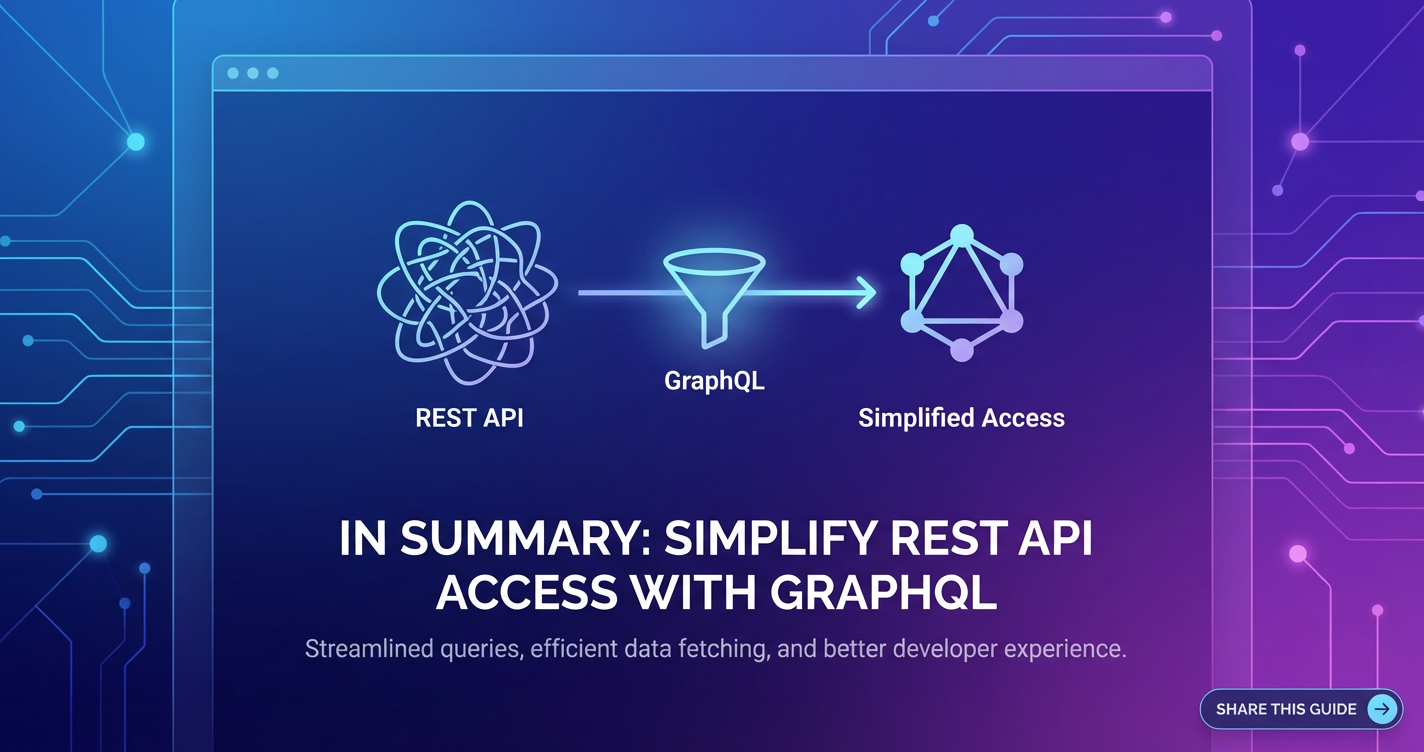
Simplify REST API Access with GraphQL
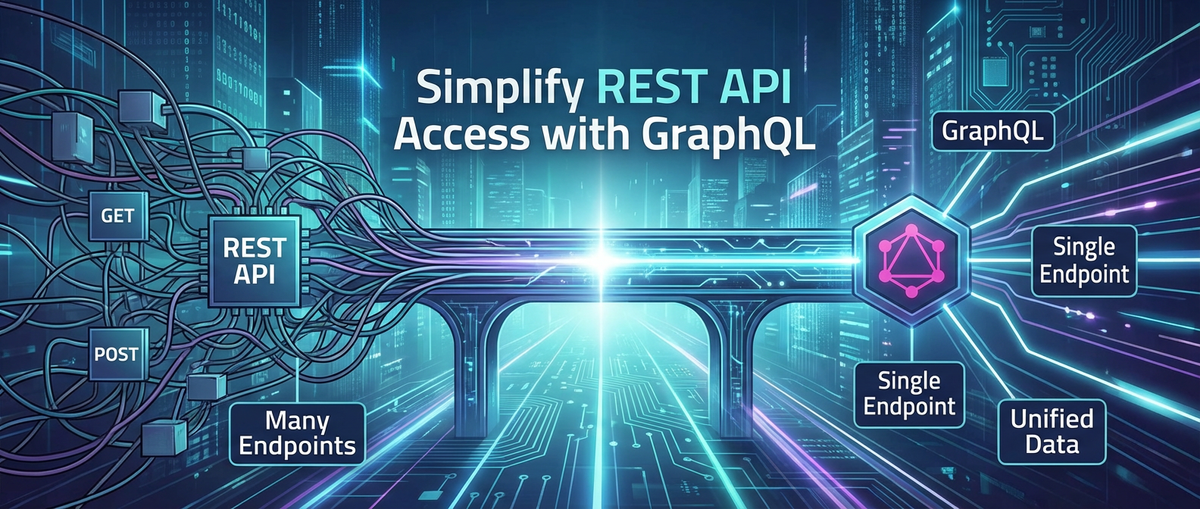


In the intricate tapestry of modern software development, Application Programming Interfaces (APIs) serve as the fundamental threads that connect disparate services, applications, and data sources. They are the bedrock upon which the digital economy is built, enabling everything from mobile applications to microservices architectures. However, as applications grow in complexity and user expectations for real-time, personalized experiences intensify, the traditional paradigms for accessing these vital apis have begun to show their limitations. Developers are increasingly grappling with the challenges of over-fetching data, under-fetching requiring multiple requests, and the rigid structures imposed by conventional RESTful services. This intricate dance of data retrieval often leads to slower application performance, increased network overhead, and a more cumbersome development experience.
For years, REST (Representational State Transfer) has reigned supreme as the architectural style of choice for web services, lauded for its simplicity, statelessness, and adherence to standard HTTP methods. It has undeniably played a pivotal role in the proliferation of interconnected systems, facilitating communication between countless applications across the internet. Yet, the very principles that make REST robust can, paradoxically, become bottlenecks in an era demanding unparalleled flexibility and efficiency. Imagine a mobile application that needs to display a user's profile, their last five orders, and the shipping status of each order. With a typical REST api design, this would often necessitate a cascade of requests: one for the user profile, then potentially another for their orders, and yet more individual requests for the detailed status of each order. This series of network round trips accumulates latency, consumes valuable mobile data, and complicates the client-side aggregation of data.
Enter GraphQL, a powerful query language for apis and a runtime for fulfilling those queries with your existing data. Conceived and open-sourced by Facebook, GraphQL offers a revolutionary approach to api design and consumption, shifting the control of data fetching from the server to the client. Instead of a server dictating what data is available at fixed endpoints, GraphQL empowers clients to declare precisely what data they need, in what shape, and from which related resources, all within a single request. This fundamental shift promises to simplify the often-complex process of accessing apis, particularly those built on the REST architecture. By acting as an intelligent facade or an api gateway layer over existing RESTful services, GraphQL can abstract away the underlying complexities, offering a unified, efficient, and highly flexible interface to the myriad data sources that power today's applications. This article delves deep into how GraphQL can transform and simplify the way we interact with REST apis, enhancing developer experience, optimizing data transfer, and paving the way for more agile and performant applications. We will explore the challenges inherent in traditional REST, unveil GraphQL as a compelling solution, discuss practical implementation strategies, and highlight the role of robust api gateway solutions in managing this evolving api landscape, considering how tools like APIPark can facilitate this transition and ongoing management.
The Labyrinth of Traditional REST APIs: Strengths, Limitations, and Growing Pains
RESTful architecture has long been the de facto standard for building web services, and for good reason. Its principles—resource-oriented design, stateless communication, and the use of standard HTTP methods—have fostered a loosely coupled, scalable, and easily understandable approach to api development. Developers across the globe have embraced REST for its simplicity, its ability to leverage existing web infrastructure, and the clear separation it provides between client and server. The widespread adoption of REST apis has facilitated an explosion of interconnected services, driving innovation in cloud computing, microservices, and mobile application development. Tools for documenting REST apis, most notably OpenAPI (formerly Swagger), have further streamlined development by providing a machine-readable specification that allows for automated client generation, testing, and interactive documentation, making apis easier to consume and understand.
However, as applications have evolved from simple web pages to complex, data-rich interactive experiences spanning multiple platforms, the inherent rigidity of REST has begun to expose significant limitations. These limitations often translate into inefficiencies, increased development time, and a less than ideal user experience.
The Problem of Over-fetching
One of the most pervasive issues with REST apis is over-fetching. When a client makes a request to a REST endpoint, the server typically responds with a predefined, fixed structure of data for that resource. For instance, an endpoint like /users/{id} might return a user's ID, name, email, address, phone number, creation date, last login, and a host of other attributes. While comprehensive, this full dataset is rarely needed by every client in every scenario. A mobile app displaying a list of users might only require their names and profile pictures. A dashboard might need names and active status. In both these cases, the api sends much more data than necessary across the network.
This excessive data transfer leads to several undesirable consequences. Firstly, it consumes more bandwidth, which is particularly problematic for mobile users on metered connections or in areas with poor network coverage. Secondly, it increases the time it takes for data to travel from the server to the client, delaying the rendering of information and negatively impacting perceived performance. Finally, the client-side application often has to parse and then discard the unnecessary fields, adding computational overhead that could otherwise be avoided. This constant battle against data bloat is a significant efficiency drain in many modern applications relying heavily on api interactions.
The Dilemma of Under-fetching and Multiple Requests
Conversely, REST apis often suffer from under-fetching, which forces clients to make multiple sequential requests to gather all the necessary information for a single view. Consider an e-commerce application displaying an order summary. To present this summary, the client might need the order details, the customer's shipping address, and a list of items within the order, each with its product details (name, price, image). A typical REST approach would involve:
- Requesting
/orders/{id}to get basic order information. - From the order details, extracting a
customer_idand making a subsequent request to/customers/{customer_id}for shipping information. - Also from the order details, extracting a list of
product_idsand making N individual requests to/products/{product_id}for each item's details.
This "N+1 problem" in REST contexts is a severe performance killer. Each additional request introduces network latency, a potentially expensive round trip between client and server. In scenarios where a single page requires data aggregated from five or ten different resources, the cumulative delay can become substantial, leading to a sluggish and frustrating user experience. It also places a greater burden on the client to orchestrate these requests, handle potential failures, and piece together the final data structure, increasing the complexity of client-side logic.
Rigid Endpoints and Versioning Headaches
RESTful apis are inherently designed around fixed resources and predictable endpoints. While this offers stability, it can also lead to rigidity. When client requirements change, or new data fields are needed, the backend api often needs to be modified. If a new field is added, existing clients might not care, but they still receive it (over-fetching). If a field is removed or its type changes, it creates a breaking change that can disrupt existing consumers.
To manage these breaking changes, developers often resort to api versioning, leading to endpoints like /v1/users and /v2/users. While necessary, maintaining multiple versions of an api is a significant operational burden, requiring duplicated code, prolonged support for older versions, and a complex migration path for clients. This overhead can slow down development cycles and consume valuable engineering resources. The goal of OpenAPI specifications is to help document these versions, providing a clear contract, but the underlying complexity of managing multiple api versions remains.
Documentation and Discovery with OpenAPI
OpenAPI has emerged as a crucial standard for documenting REST apis. It provides a language-agnostic, human-readable, and machine-readable specification for apis, detailing endpoints, parameters, responses, and authentication methods. This has dramatically improved api discoverability and consumption, enabling developers to understand and interact with apis more effectively. OpenAPI tools can generate interactive documentation (like Swagger UI), client SDKs, and even server stubs, significantly reducing the manual effort involved in api integration.
However, even with OpenAPI, the documentation describes what the server provides at each endpoint, not necessarily what a specific client needs. Clients still have to navigate this comprehensive description, understand the relationships between resources, and formulate their requests accordingly, often encountering the over-fetching or under-fetching problems despite clear documentation. The OpenAPI specification is a blueprint of the api surface, but it doesn't solve the data fetching flexibility problem.
Challenges for Mobile Development
Mobile applications face unique constraints, including limited battery life, variable network conditions, and often higher latency. The over-fetching and under-fetching issues inherent in REST apis are exacerbated in this environment. Making multiple, chatty requests can quickly drain a device's battery and lead to frustratingly slow load times, especially on slower 3G or 4G connections. Optimizing data transfer and minimizing network round trips is paramount for delivering a fluid mobile experience. For these reasons, many mobile developers have been at the forefront of seeking more efficient api interaction patterns.
In summary, while REST apis have served as a robust foundation for the interconnected web, their fixed resource model and request-response patterns are increasingly challenged by the dynamic data requirements of modern applications. These limitations underscore the growing need for more flexible, efficient, and client-centric approaches to api access, setting the stage for the emergence and adoption of technologies like GraphQL. The management of these ever-growing api landscapes also necessitates sophisticated solutions, often in the form of an api gateway, which can enforce policies, manage traffic, and provide a unified entry point, regardless of the underlying api style.
Unveiling GraphQL as the Simplifier: A Paradigm Shift in Data Fetching
GraphQL represents a fundamental shift in how applications interact with data apis. It is not merely another architectural style but rather a powerful query language for apis and a runtime for fulfilling those queries. Instead of being centered around resources and fixed endpoints, GraphQL is client-driven, empowering the client to define its data requirements with unprecedented precision. This paradigm shift offers a compelling solution to many of the pain points associated with traditional REST apis, ushering in an era of greater efficiency, flexibility, and developer agility.
What is GraphQL? At Its Core
At its heart, GraphQL operates on a simple yet profound principle: ask for what you need, get exactly that. Unlike REST, where the server dictates the shape of the data returned by an endpoint, GraphQL allows the client to specify the data it requires in a query. This query is sent to a single GraphQL endpoint, and the server responds with a JSON object that precisely matches the structure of the query.
Key aspects that define GraphQL include:
- Query Language, Not a Transport Protocol: GraphQL is independent of the transport layer. While commonly used over HTTP, it can be utilized with other protocols. The "query" part refers to the language clients use to ask for data.
- Schema-First Approach: Central to GraphQL is its strongly-typed schema. The schema defines all possible data that clients can query, including types, fields, and relationships. This schema acts as a contract between the client and the server, ensuring data consistency and predictability. It's akin to an
OpenAPIspecification for REST, but dynamically queryable and intrinsically linked to the data fetching mechanism. - Single Endpoint: A GraphQL
apitypically exposes a single HTTP endpoint (e.g.,/graphql). All data requests, regardless of complexity or the number of underlying resources, are routed through this one endpoint. This contrasts sharply with REST's many resource-specific endpoints. - Resolvers: On the server-side, "resolvers" are functions responsible for fetching the data for a specific field in the schema. When a query comes in, the GraphQL engine traverses the query, calling the appropriate resolvers to gather the requested data from various sources—databases, other microservices, or even existing REST
apis. - Queries, Mutations, and Subscriptions:
- Queries: Used for reading data (analogous to GET requests in REST).
- Mutations: Used for writing, updating, or deleting data (analogous to POST, PUT, PATCH, DELETE in REST).
- Subscriptions: Allow clients to receive real-time updates from the server when specific data changes, enabling powerful real-time features.
How GraphQL Addresses REST's Pain Points
The architectural design of GraphQL directly tackles the limitations often encountered with REST apis:
Eliminating Over-fetching
The most celebrated benefit of GraphQL is its ability to eliminate over-fetching. Because the client dictates the exact fields it needs, the server only returns that specific data, and nothing more.
Example: REST vs. GraphQL for User Data
Let's say a REST api for users has an endpoint /api/users/123 which returns:
{
  "id": "123",
  "name": "Alice Wonderland",
  "email": "alice@example.com",
  "address": {
    "street": "123 Rabbit Hole",
    "city": "Wonderland",
    "zip": "10001"
  },
  "phoneNumbers": ["+1-555-123-4567"],
  "profilePictureUrl": "https://example.com/alice.jpg",
  "lastLogin": "2023-10-26T10:00:00Z"
}
If a client only needs the user's name and email, with REST, it still receives the entire JSON object.
With GraphQL, the client would send a query like this:
query GetUserNameAndEmail {
  user(id: "123") {
    name
    email
  }
}
And the server's response would be:
{
  "data": {
    "user": {
      "name": "Alice Wonderland",
      "email": "alice@example.com"
    }
  }
}
This precise data fetching significantly reduces bandwidth usage and processing overhead on both client and server, leading to faster load times and more efficient api communication.
Solving Under-fetching (One Request Round Trip)
GraphQL excels at solving the under-fetching problem by allowing clients to request related data in a single query, thereby eliminating the need for multiple round trips. The hierarchical nature of GraphQL queries naturally models relationships between data entities.
Example: REST vs. GraphQL for User and Orders
REST Approach (Multiple Requests):
GET /api/users/123(get user info and order IDs)GET /api/orders/order_id_1(get details for order 1)GET /api/orders/order_id_2(get details for order 2) ... and so on for N orders.
This would involve 1 + N network requests.
GraphQL Approach (Single Request):
query GetUserWithOrders {
  user(id: "123") {
    name
    email
    orders {
      id
      status
      total
      items {
        product {
          name
          price
        }
        quantity
      }
    }
  }
}
This single GraphQL query retrieves the user's name and email, along with all their orders, the status and total of each order, and for each item within an order, the product name and price. The GraphQL server, through its resolvers, intelligently fetches all this data from its various sources (which could be several underlying REST apis) and aggregates it into a single, comprehensive response. This drastically reduces network latency and simplifies client-side data orchestration.
Flexibility and Adaptability
The client-driven nature of GraphQL offers unparalleled flexibility. As application requirements evolve, frontend developers can adjust their queries to fetch new data fields or reshape existing ones without requiring any changes to the backend api definition (as long as the fields exist in the schema). This dramatically speeds up feature development and iteration cycles, as frontend teams become less dependent on backend deployments for minor data adjustments. It fosters a more agile development environment, where apis can adapt quickly to changing business needs.
No Versioning Headaches (Mostly)
GraphQL's schema evolution capabilities mitigate many of the versioning challenges faced by REST. Instead of creating new api versions (e.g., /v2), GraphQL encourages additive changes to the schema. New fields and types can be added without affecting existing queries. If a field needs to be deprecated, it can be marked as such in the schema, allowing clients to gradually transition without breaking existing functionality. This graceful evolution reduces the operational burden of maintaining multiple api versions and provides a smoother experience for api consumers. While major architectural shifts might still necessitate significant changes, the day-to-day evolution of data structures is handled far more elegantly.
Built-in Documentation (Introspection)
One of GraphQL's most powerful features is its introspection system. The GraphQL schema is self-documenting; clients can query the schema itself to understand what types, fields, and arguments are available. Tools like GraphiQL or Apollo Studio leverage this introspection to provide interactive api explorers, showing available queries, mutations, and types in real time. This live, accurate documentation is always up-to-date with the api's current state, eliminating the need for separate documentation maintenance or the risk of outdated OpenAPI files for api consumers. It makes api discovery and integration much more intuitive and efficient for developers.
GraphQL as an API Gateway Facade
The concept of an api gateway is critical in modern microservices architectures. An api gateway acts as a single entry point for all clients, routing requests to the appropriate backend services, handling cross-cutting concerns like authentication, authorization, rate limiting, caching, and monitoring. In a complex landscape of numerous microservices, an api gateway provides abstraction and simplifies client-side interactions.
GraphQL is perfectly positioned to serve as a powerful api gateway facade, particularly when dealing with an ecosystem of existing REST apis. Instead of replacing all existing REST services, which can be a monumental task, a common strategy is to place a GraphQL layer in front of them. In this setup:
- Clients make a single GraphQL query to the GraphQL
api gateway. - The GraphQL server, acting as an
api gatewayor part of it, receives the query. - Its resolvers then intelligently break down the GraphQL query into multiple calls to the underlying REST
apis (or other data sources). - The GraphQL server aggregates the data from these various REST responses, transforms it to match the client's requested GraphQL structure, and sends back a single, unified response.
This pattern allows organizations to reap the benefits of GraphQL's flexibility and efficiency without undertaking a costly and disruptive rewrite of their existing backend infrastructure. It enables a gradual adoption strategy, where new services might be built directly with GraphQL, while legacy REST services are exposed through the GraphQL facade. Such a GraphQL api gateway becomes an intelligent aggregation layer, simplifying the client's view of the backend services, regardless of their underlying implementation details. This also allows for centralized policy enforcement and management through the api gateway, enhancing security and operational control over the entire api landscape.
APIPark is a high-performance AI gateway that allows you to securely access the most comprehensive LLM APIs globally on the APIPark platform, including OpenAI, Anthropic, Mistral, Llama2, Google Gemini, and more.Try APIPark now! 👇👇👇
Practical Implementation: Building a GraphQL Layer Over Existing REST APIs
Integrating GraphQL with existing REST apis is a common and highly effective strategy for progressively modernizing an api ecosystem without a full-scale rewrite. This approach allows organizations to leverage their established REST services while providing clients with the benefits of GraphQL's flexibility and efficiency. The core idea is to introduce a GraphQL layer that sits between the client applications and the backend REST apis, acting as an intelligent intermediary.
Architectural Patterns for GraphQL on REST
Several architectural patterns facilitate the integration of GraphQL with existing REST services:
- GraphQL Gateway/Proxy: This is perhaps the most straightforward and popular approach. A dedicated GraphQL service is deployed that acts as a proxy or gateway. This service exposes a GraphQL endpoint to clients. When a client sends a GraphQL query, the GraphQL gateway's resolvers translate the query's fields into calls to the appropriate backend REST
apiendpoints. It then aggregates the responses from these REST calls, transforms the data to fit the GraphQL schema, and sends a single, unified response back to the client.- How it works:
- Client sends a GraphQL query for
user.nameanduser.orders. - The GraphQL gateway's
userresolver might callGET /api/v1/users/{id}on a "User Service" RESTapi. - The
ordersresolver, once it has the user ID, might callGET /api/v1/users/{id}/orderson an "Order Service" RESTapi. - The gateway then combines these responses into the structured GraphQL output.
- Client sends a GraphQL query for
- Benefits: Requires no modification to existing REST
apis, allowing for gradual adoption. Centralizes data fetching logic, making client applications simpler. - Challenges: Can introduce an additional network hop and processing overhead if not optimized. Resolvers can become complex if they need to orchestrate many underlying
apicalls and perform extensive data transformations. Careful management by anapi gatewayproduct is crucial for performance and observability.
- How it works:
- Backend-for-Frontend (BFF) with GraphQL: This pattern involves creating a separate backend service specifically tailored for a particular client application (e.g., a mobile app, a web dashboard). Instead of a generic GraphQL gateway, each BFF exposes a GraphQL
apioptimized for its specific client's data needs. These BFFs then communicate with the underlying microservices (often RESTful) to fetch and aggregate data.- Benefits: Allows for highly optimized
apis for specific clients, reducing over-fetching even further. Provides clear ownership for client-specificapilogic. - Challenges: Can lead to code duplication if multiple clients require similar data. Increases the number of backend services to maintain.
- Benefits: Allows for highly optimized
- Hybrid Approach: Many organizations adopt a hybrid model. New services or features are built using GraphQL natively, while existing, stable REST services are exposed through a GraphQL gateway. This allows for a graceful transition and the best of both worlds, incrementally modernizing the
apilandscape.
Tools and Technologies for Wrapping REST APIs
The ecosystem for building GraphQL servers and integrating with REST is rich and constantly evolving.
- GraphQL.js: The reference implementation in JavaScript, providing the core GraphQL runtime. Most other tools are built on top of this.
- Apollo Server: A popular, production-ready GraphQL server that can be easily integrated into Node.js applications. It provides features like caching, error handling, and
api gatewayintegration. - GraphQL Tools (
@graphql-tools): A collection of utilities for building GraphQL schemas. Particularly relevant here isstitchSchemas, which allows you to combine multiple GraphQL schemas (including schemas generated from RESTapis) into a single, unified schema. - GraphQL Mesh: A powerful tool that can take various
apisources (includingOpenAPIspecifications, gRPC, databases, etc.) and expose them as a single GraphQLapi. It's designed specifically for building a GraphQL gateway over diverse backend services. - Hasura & Prisma: While primarily known for providing GraphQL
apis over databases, these tools also have capabilities to integrate with externalapis, allowing for hybrid data sourcing.
Schema Design Considerations
When wrapping REST apis with GraphQL, careful schema design is paramount. The goal is to create an intuitive, client-friendly GraphQL schema that effectively abstracts the underlying REST complexities.
- Translating REST Resources to GraphQL Types: Each significant REST resource (e.g.,
/users,/products) should ideally map to a GraphQL Type. Collections of resources can be represented as lists of these types. - Handling Relationships: This is where GraphQL shines. If a REST endpoint returns a
userId, the GraphQL schema should define aUsertype with a fieldordersthat returns a list ofOrdertypes. The resolver fororderswould then know how to call the appropriate RESTapi(e.g.,/users/{id}/orders) to fetch that data. - Arguments and Filters: REST
apis often use query parameters for filtering and pagination (e.g.,/products?category=electronics&limit=10). In GraphQL, these translate into arguments on fields (e.g.,products(category: "electronics", limit: 10)). - Authentication and Authorization: The GraphQL layer needs to pass authentication tokens to the underlying REST
apis and ensure that the client making the GraphQL request is authorized to access the requested data. This often involves integrating with an existing identity provider and passing JWTs orapikeys. - Error Handling: A robust GraphQL gateway must gracefully handle errors returned by the underlying REST
apis, mapping them to GraphQL's error format and providing meaningful messages to the client. - Data Transformation: Often, data returned by REST
apis needs to be transformed (e.g., renaming fields, converting data types) to fit the GraphQL schema's contract. Resolvers are the ideal place for this logic.
The Role of an API Gateway in this Setup
A dedicated api gateway plays an indispensable role in a mixed REST and GraphQL environment. While the GraphQL server itself acts as an intelligent facade, a broader api gateway solution provides essential cross-cutting concerns that transcend any specific api style.
An api gateway product like ApiPark can be deployed in front of both your GraphQL endpoint and any underlying REST apis that are still directly exposed or consumed by other services. This centralized api gateway provides:
- Unified Access Control: Enforcing authentication and authorization policies across all
apis, regardless of whether they are GraphQL or REST. This is especially vital when the GraphQL layer needs to delegate permissions checks to anapi gateway. - Rate Limiting and Throttling: Protecting backend services from abuse or overload by limiting the number of requests per client or per time period. This is critical for GraphQL, where complex queries could potentially lead to heavy backend load.
- Traffic Management: Load balancing requests across multiple instances of your GraphQL server or REST services, ensuring high availability and performance.
- Caching: Implementing caching strategies at the
api gatewaylevel can reduce the load on backend services and improve response times for frequently requested data, whether through REST or GraphQL. - Monitoring and Logging: Providing comprehensive visibility into
apitraffic, performance metrics, and error rates. For GraphQL, this means tracking query execution times, resolver performance, and potential N+1 issues. APIPark, for instance, offers "Detailed API Call Logging" and "Powerful Data Analysis" capabilities that are invaluable for understanding the health and performance of your entireapiecosystem, including granular details of how GraphQL queries resolve into underlying REST calls. - Security Policies: Implementing Web Application Firewall (WAF) rules, bot protection, and other security measures to safeguard your
apis from various cyber threats. - Version Management and Routing: While GraphQL helps with schema evolution, an
api gatewaycan still manage routing to different versions of underlying RESTapis or GraphQL schemas if necessary.
Crucially, an api gateway can also leverage OpenAPI definitions for the underlying REST services. Many GraphQL tools for schema generation or api stitching can consume OpenAPI specifications to automatically create GraphQL types and resolvers, significantly accelerating the setup of a GraphQL facade. For instance, APIPark's "End-to-End API Lifecycle Management" can help regulate API management processes and traffic forwarding for both your traditional REST apis and the GraphQL proxy, ensuring a cohesive and well-governed api landscape.
For organizations seeking a comprehensive solution to manage their api landscape, whether traditional REST services or the newer GraphQL facades, platforms like ApiPark offer invaluable capabilities. It can ensure that even as you layer GraphQL on top of existing REST services, the underlying api infrastructure remains robust, secure, and performant. Its ability to "Quick Integrate 100+ AI Models" also highlights its forward-thinking approach, recognizing that modern api gateways must handle a diverse set of service types beyond just traditional REST. With features like "Performance Rivaling Nginx," APIPark can effectively handle the traffic load generated by complex GraphQL queries resolving into numerous backend REST calls.
Advantages, Challenges, and Best Practices for a Hybrid API Ecosystem
The integration of GraphQL with existing REST apis, facilitated by intelligent api gateway solutions, presents a compelling path forward for modernizing api access. However, like any architectural decision, it comes with its own set of advantages and challenges. Understanding these, along with adopting best practices, is crucial for successful implementation and long-term sustainability.
Advantages of GraphQL Over REST for API Access
When strategically applied as a facade over REST apis, GraphQL offers a multitude of benefits that significantly enhance the api consumption experience:
- Improved Client Experience and Performance: By enabling clients to fetch exactly what they need in a single request, GraphQL dramatically reduces over-fetching and eliminates the N+1 problem inherent in many REST implementations. This leads to fewer network round trips, lower bandwidth consumption, and ultimately, faster data loading and a more responsive user interface. This is particularly critical for mobile applications where network conditions are often suboptimal.
- Faster Feature Development for Frontend Teams: Frontend developers gain unprecedented control over data fetching. They can iterate rapidly on new features or UI changes without waiting for backend
apimodifications, as long as the required data fields are available in the GraphQL schema. This autonomy accelerates the development cycle and reduces dependencies between frontend and backend teams. - Self-Documenting and Discoverable APIs: The introspection capabilities of GraphQL mean that the schema itself serves as live, up-to-date documentation. Tools like GraphiQL provide an interactive explorer that allows developers to discover types, fields, and queries dynamically. This eliminates the common problem of outdated documentation (even
OpenAPIspecs can lag behind implementation) and significantly lowers the barrier to entry for newapiconsumers. - Aggregation of Diverse APIs: GraphQL excels at unifying data from multiple disparate sources. Whether these are various REST microservices, legacy databases, or even third-party
apis, the GraphQL layer can seamlessly aggregate and present them as a single, coherentapi. This simplifies the client's mental model and interaction patterns, abstracting away the underlying complexity of the microservices landscape. - Reduced API Versioning Complexity: GraphQL's additive schema evolution mechanism makes
apiversioning much less painful. New fields can be added without breaking existing clients, and deprecated fields can be gracefully phased out. This contrasts with REST's common practice of maintaining multipleapiversions, which can be a significant operational overhead. - Strongly Typed System: The robust type system in GraphQL provides compile-time validation for queries and responses, leading to fewer runtime errors and more predictable
apiinteractions. This enhances developer confidence and productivity.
Challenges and Considerations
While GraphQL offers significant advantages, its adoption also comes with a new set of challenges that need to be addressed:
- Learning Curve for Developers: Both frontend and backend developers need to learn GraphQL's query language, schema definition language (SDL), and server-side implementation patterns (resolvers, data loaders). This initial learning investment can be substantial.
- N+1 Problem (Server-Side): Although GraphQL solves the N+1 problem for clients, it can re-introduce it on the server-side if resolvers are not implemented carefully. If fetching a list of items, and then for each item, a sub-field triggers a separate database or REST
apicall, it can lead to many unnecessary backend requests. This necessitates the use of optimization techniques like DataLoaders. - Caching Complexity: REST's resource-oriented design and HTTP method semantics (especially GET) make it highly amenable to HTTP caching at various layers (CDN, browser,
api gateway). GraphQL, with its single endpoint and dynamic queries, complicates traditional HTTP caching. Caching strategies for GraphQL often need to be implemented at the application level (e.g., query caching, persistent queries, response normalization). - File Uploads and Large Binary Data: While possible, handling file uploads and large binary data can be less straightforward with GraphQL compared to traditional REST
apis that leverage multipart/form-data. Alternative approaches or hybrid solutions are often employed. - Performance Monitoring and Tracing: Monitoring the performance of GraphQL
apis requires specialized tools and techniques beyond standard HTTP request logging. Understanding which parts of a complex query are slow, or which resolvers are causing bottlenecks, needs detailed tracing and profiling within the GraphQL server itself. - Security Concerns: Complex GraphQL queries, if not properly validated and limited, can lead to denial-of-service (DoS) attacks (e.g., deeply nested queries that exhaust server resources). Implementing query depth limiting, complexity analysis, and strict authorization at the field level is crucial.
- Rate Limiting: Traditional
api gatewayrate limiting often relies on endpoint and method. For GraphQL's single endpoint, rate limiting needs to be more sophisticated, potentially based on query cost, user ID, or other custom metrics.
Best Practices for a Hybrid GraphQL & REST Ecosystem
To maximize the benefits and mitigate the challenges of using GraphQL over REST, consider these best practices:
- Schema-First Development: Design your GraphQL schema upfront, focusing on the client's data needs rather than mirroring the backend REST
apis. The schema should be intuitive, consistent, and well-organized. This contract-first approach ensures alignment between frontend and backend. - Implement DataLoaders for N+1 Optimization: Crucial for server-side performance. DataLoaders batch and cache requests to backend data sources (databases, REST
apis), significantly reducing the number of calls made by resolvers, especially when fetching related data. - Robust Authentication and Authorization: Implement authentication at the
api gatewayor GraphQL layer. For authorization, ensure fine-grained control, potentially down to individual fields, to prevent unauthorized access to sensitive data. This might involve integrating with existing user management systems and passing context to resolvers. - Monitoring and Logging with Context: Utilize specialized GraphQL monitoring tools (e.g., Apollo Studio, custom solutions). Ensure logs provide enough detail to trace individual query execution, resolver performance, and errors. A comprehensive
api gatewaysolution like ApiPark, with its "Detailed API Call Logging" and "Powerful Data Analysis," can centralize this observability across both GraphQL and underlying REST services, helping businesses quickly pinpoint issues and understand long-term performance trends. - Query Depth and Complexity Limiting: Protect your GraphQL server from malicious or inefficient queries by implementing query depth and complexity analysis. Reject queries that exceed predefined thresholds to prevent resource exhaustion.
- Strategic Use of Mutations and Subscriptions: Understand when to use Queries (read-only), Mutations (write operations), and Subscriptions (real-time updates). While Mutations offer flexibility, ensure they are designed carefully to maintain data integrity.
- Leverage an API Gateway for Centralized Management: Position a robust
api gateway(like APIPark) in front of your GraphQL layer and any directly exposed RESTapis. This centralizes vital cross-cutting concerns such as security, rate limiting, traffic management, and analytics. It provides a single point of control and observability for your entireapiportfolio. - Gradual Adoption and Iteration: Don't try to rewrite your entire
apilandscape at once. Start by introducing GraphQL for new features or specific client applications, allowing it to coexist with your existing RESTapis. Iterate and learn from your initial deployments. - Utilize OpenAPI for Schema Generation: If you have existing REST
apis documented withOpenAPIspecifications, leverage tools like GraphQL Mesh orgraphql-toolsthat can automatically generate parts of your GraphQL schema and resolvers from theseOpenAPIdefinitions, greatly accelerating the integration process.
By carefully considering these best practices and leveraging the capabilities of modern api gateway platforms, organizations can successfully simplify REST api access with GraphQL, building more efficient, flexible, and developer-friendly api ecosystems. This approach doesn't just improve technical metrics; it empowers development teams to innovate faster and deliver richer, more responsive experiences to their users.
Conclusion: Harmonizing the API Landscape for Modern Development
The evolution of apis has been a relentless pursuit of efficiency, flexibility, and developer empowerment. From the early days of SOAP to the widespread adoption of REST, each paradigm has brought its own set of advantages and, inevitably, new challenges. As applications have grown in complexity, demanding ever more dynamic and personalized data experiences, the limitations of traditional REST apis—particularly concerning over-fetching, under-fetching, and rigid endpoint structures—have become increasingly apparent. These challenges, while manageable in simpler contexts, become significant bottlenecks in the fast-paced, microservices-driven world of modern development.
GraphQL emerges not as a replacement for REST, but as a powerful, complementary technology that addresses these very pain points. By shifting the control of data fetching from the server to the client, GraphQL empowers developers to ask for exactly what they need, in precisely the format they require, all within a single, efficient request. This client-driven approach fundamentally transforms api access, leading to:
- Unparalleled Efficiency: Reduced network requests and minimized data transfer, resulting in faster load times and improved performance, especially critical for mobile and low-bandwidth environments.
- Enhanced Flexibility: Client applications can adapt rapidly to changing requirements without backend
apimodifications, fostering quicker feature development and iteration cycles. - Superior Developer Experience: Self-documenting schemas through introspection, coupled with powerful tooling, make
apidiscovery and integration intuitive and less error-prone. - Unified Data Access: The ability to aggregate data from disparate sources (including multiple REST
apis, databases, and microservices) into a single, coherentapiview simplifies client-side logic and abstracts backend complexity.
The practical strategy of layering GraphQL as an intelligent facade or api gateway over existing REST apis stands out as a pragmatic and effective modernization path. This approach allows organizations to incrementally adopt GraphQL, leveraging their established REST investments while gradually introducing the benefits of a more flexible api interaction model. It mitigates the need for disruptive, full-scale rewrites, offering a bridge between legacy systems and future-proof api architectures.
In this hybrid api ecosystem, the role of a robust api gateway is more critical than ever. It serves as the indispensable control plane, orchestrating and securing both the GraphQL layer and the underlying REST services. Platforms like ApiPark exemplify the next generation of api gateway and management solutions that are essential for navigating this complex landscape. With its capabilities for end-to-end api lifecycle management, detailed logging, powerful data analysis, and high-performance traffic management, APIPark ensures that whether you're exposing traditional REST apis, a GraphQL facade, or even integrating advanced AI models, your api infrastructure remains secure, performant, and governable. Its ability to manage access, enforce policies, and provide deep insights into api calls is invaluable for maintaining stability and driving innovation across diverse api technologies. The integration of OpenAPI specifications for REST services into the broader api management strategy further solidifies the cohesiveness and discoverability of the entire api portfolio.
Ultimately, the choice between REST and GraphQL is not an exclusive one. The future of api development increasingly points towards a harmonious coexistence, where each technology is utilized where it best excels. GraphQL provides an elegant solution for client-driven data fetching and aggregation, while REST continues to be valuable for simple resource-oriented interactions and broad api exposure. By strategically deploying GraphQL as a simplification layer atop existing REST apis, supported by comprehensive api gateway solutions, organizations can unlock new levels of efficiency, accelerate innovation, and deliver exceptional digital experiences in an ever-evolving technological landscape. This thoughtful integration empowers developers, optimizes data flow, and positions enterprises for sustained success in the api-driven economy.
Frequently Asked Questions (FAQ)
Here are 5 frequently asked questions about simplifying REST API access with GraphQL:
Q1: What is the primary benefit of using GraphQL to access existing REST APIs?
The primary benefit is improved data fetching efficiency and flexibility for clients. By placing a GraphQL layer in front of REST APIs, clients can make a single request to fetch exactly the data they need from multiple underlying REST resources, eliminating over-fetching (getting too much data) and under-fetching (requiring multiple requests for related data). This significantly reduces network round trips, conserves bandwidth, and speeds up application performance, especially for complex UIs and mobile clients.
Q2: Do I need to rewrite all my existing REST APIs to use GraphQL?
No, absolutely not. One of the most common and effective strategies is to use GraphQL as an intelligent facade or an api gateway layer over your existing REST APIs. This involves deploying a GraphQL server that receives client queries, then translates and orchestrates calls to your existing REST endpoints. The GraphQL server aggregates the responses and shapes them into the format requested by the client. This allows for gradual adoption and modernization without a complete backend rewrite.
Q3: How does GraphQL handle the "N+1 problem" when fetching data from REST APIs?
While GraphQL solves the N+1 problem for clients (one query for all data), it can reintroduce it on the server-side if not handled properly. If each field's resolver makes an independent REST call, a single GraphQL query could trigger many backend REST requests. To mitigate this, developers use techniques like DataLoaders. DataLoaders batch multiple requests for the same resource into a single backend call and cache results, significantly optimizing the communication between the GraphQL server and the underlying REST APIs, ensuring efficient data retrieval.
Q4: What role does an api gateway play in a setup with GraphQL over REST?
An api gateway is crucial in a hybrid GraphQL and REST environment. It acts as a central control point that sits in front of both your GraphQL server and any directly exposed REST APIs. Key api gateway functions include: unified authentication and authorization, rate limiting, traffic management (e.g., load balancing), caching, centralized monitoring and logging (like ApiPark's detailed call logging), and applying security policies. The api gateway ensures overall governance, security, and performance for your entire api landscape, regardless of the underlying technology.
Q5: Can OpenAPI specifications be leveraged when building a GraphQL layer over REST?
Yes, absolutely. OpenAPI specifications, which rigorously describe your REST APIs, can be highly valuable. Tools like GraphQL Mesh or @graphql-tools/wrap can consume existing OpenAPI definitions and automatically generate corresponding GraphQL types and resolvers. This significantly accelerates the process of building a GraphQL schema that mirrors and exposes the capabilities of your existing REST services, reducing manual effort and ensuring consistency between your REST documentation and your GraphQL facade.
🚀You can securely and efficiently call the OpenAI API on APIPark in just two steps:
Step 1: Deploy the APIPark AI gateway in 5 minutes.
APIPark is developed based on Golang, offering strong product performance and low development and maintenance costs. You can deploy APIPark with a single command line.
curl -sSO https://download.apipark.com/install/quick-start.sh; bash quick-start.sh

In my experience, you can see the successful deployment interface within 5 to 10 minutes. Then, you can log in to APIPark using your account.

Step 2: Call the OpenAI API.