Schema.GroupVersionResource Test: Best Practices
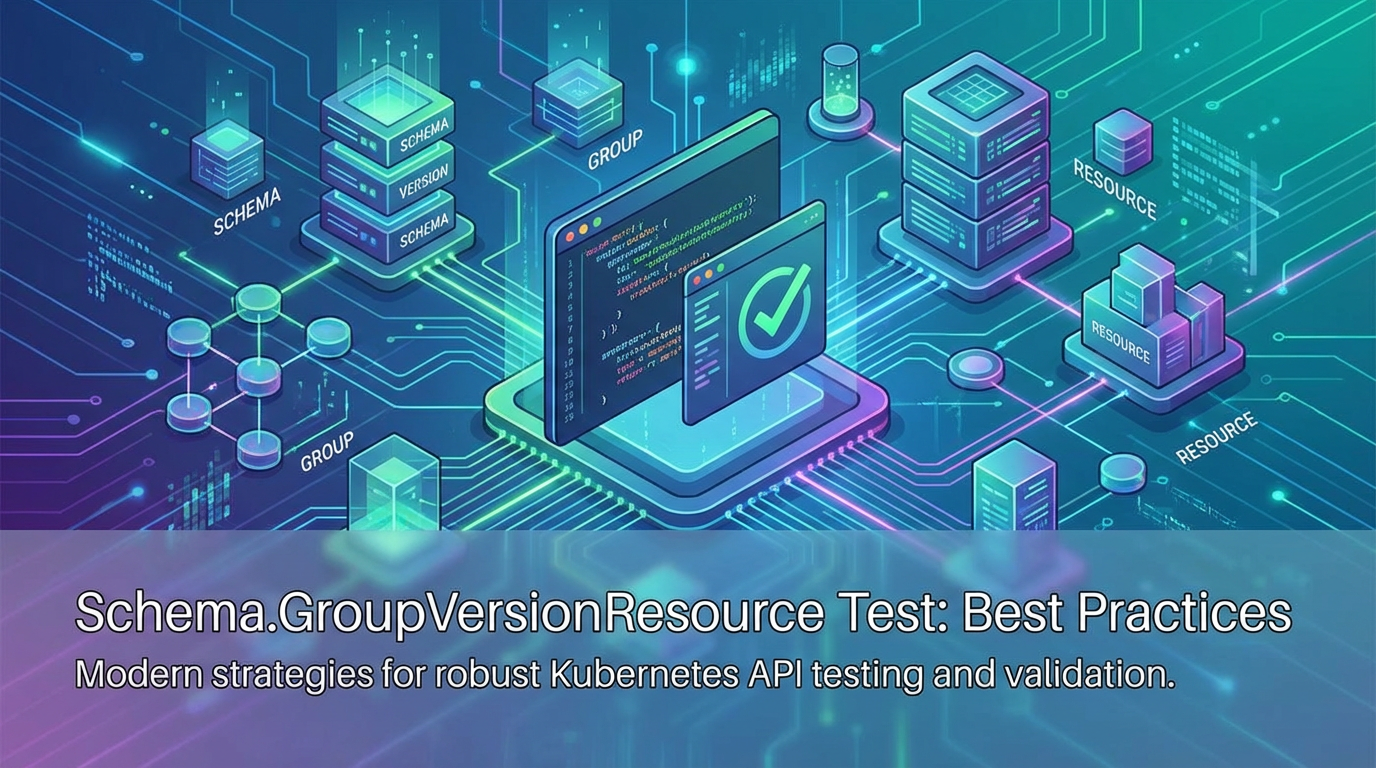


In the intricate landscape of modern software architecture, the concept of an api stands as a cornerstone, facilitating communication and interaction between myriad components. From microservices orchestrating complex business logic to robust cloud-native applications deployed on platforms like Kubernetes, the reliability and correctness of these apis are paramount. Within the Kubernetes ecosystem, a fundamental construct known as GroupVersionResource (GVR) serves as the precise identifier for every kind of resource an api server manages, from basic Pods and Deployments to intricate Custom Resources. The schema underpinning these GVRs defines their structure, validation rules, and behavior, making rigorous testing of GVR-related logic not merely a best practice, but an absolute imperative for ensuring system stability, compatibility, and security.
This extensive guide delves into the best practices for testing Schema.GroupVersionResource within the Kubernetes context. We will explore why comprehensive testing of GVRs is critical, how OpenAPI specifications play a vital role in defining and validating these schemas, and the various methodologies—from static analysis to end-to-end integration—that developers must employ. We'll also examine the essential tools and frameworks that empower development teams to build resilient and predictable Kubernetes-native applications, touching upon how a well-managed api gateway environment can complement this testing strategy, particularly for services exposed to external consumers. Our aim is to provide a holistic understanding, equipping practitioners with the knowledge to establish robust testing pipelines that safeguard the integrity of their Kubernetes deployments.
Part 1: Deconstructing Schema.GroupVersionResource and its Role in the Kubernetes API
To truly appreciate the nuances of testing GVRs, one must first grasp their foundational role within the Kubernetes api machinery. At its heart, Kubernetes is a declarative system where users describe their desired state using various resources. These resources, whether they are built-in (like Deployment, Service, Pod) or custom-defined (CustomResourceDefinition or CRD), are precisely identified and managed through their GroupVersionResource (GVR).
1.1 The Anatomy of a GroupVersionResource (GVR)
A GVR is essentially a unique coordinate system used by the Kubernetes api server to categorize and locate resources. It comprises three distinct components:
- Group: The API Group acts as a logical namespace for related resources. For instance,
appscontains resources likeDeploymentandStatefulSet, whilebatchhousesJobandCronJob. Custom resources, defined via CRDs, often reside in their own unique groups, typically following a reverse domain name convention (e.g.,stable.example.com). This grouping helps prevent naming collisions and allows for better organization of the vast array of resources within Kubernetes. Without clear grouping, theapisurface would quickly become unmanageable and prone to conflicts, especially as new functionalities and extensions are introduced. The choice of an API Group is a critical architectural decision, influencing how resources are discovered and how access control policies (like RBAC) are applied, thereby impacting the overall security and maintainability of the Kubernetes environment. - Version: The API Version signifies the stability and maturity level of the resources within a given group. Common versions include
v1(stable, generally production-ready),v1beta1(beta, potentially subject to incompatible changes), oralphaversions. Kubernetes follows a strict API versioning policy to ensure backward compatibility and graceful evolution of itsapis. When anapichanges, new versions are introduced rather than modifying existing ones in a backward-incompatible way. This allows clients to upgrade at their own pace and prevents disruption. Testing against different API versions is crucial, especially during upgrades or when developing controllers that must support multiple versions of a resource. The version aspect dictates the expected behavior and schema of a resource, making it a critical element for bothapiconsumers andapiproviders alike. - Resource: This component refers to the plural name of the specific type of object within a group and version. For example, within the
appsgroup andv1version, we finddeployments. For thebatchgroup andv1version, we havejobs. This plural naming convention is consistent across the Kubernetesapiand provides a clear, human-readable identifier for the type of data being manipulated. It is the most granular part of the GVR, pinpointing the exact entity being addressed by anapicall. Defining the resource name carefully avoids ambiguities and ensures thatapiinteractions are precise.
Combined, a GVR like apps/v1/deployments precisely identifies the standard Deployment resource, specifying its group (apps), version (v1), and plural resource name (deployments). This granular identification system is fundamental to how the Kubernetes api server routes requests, how client-go constructs api calls, and how controllers watch and reconcile resources. Any operation, whether creating, reading, updating, or deleting a resource, implicitly or explicitly relies on its GVR for correct execution.
1.2 The Indispensable Role of Schemas
While GVR identifies what a resource is, the schema defines how that resource is structured. A schema is a formal description of the data, outlining its fields, their data types, constraints (e.g., minimum/maximum values, regular expressions), and relationships. For Kubernetes resources, schemas dictate:
- Structure: What fields a resource object can have (e.g.,
metadata,spec,status). - Data Types: The expected type for each field (e.g., string, integer, boolean, array of objects).
- Validation Rules: Constraints that ensure data integrity (e.g., a field must be non-empty, an integer must be positive, a string must match a specific pattern). These rules are vital for preventing malformed configurations from being applied to the cluster, which could lead to instability or incorrect application behavior. Without robust schema validation, the
apiserver would accept any input, making debugging and ensuring consistency nearly impossible.
For Custom Resource Definitions (CRDs), developers explicitly define their resource's schema using OpenAPI v3 schema. This schema is embedded directly within the CRD definition and is used by the Kubernetes api server for powerful server-side validation. When a user submits a custom resource, the api server automatically validates it against the CRD's OpenAPI schema before persisting it. This server-side validation is a critical security and stability feature, catching configuration errors early and preventing bad data from corrupting the cluster state. It reduces the burden on client-side validation and ensures that all resources, regardless of their origin, conform to the expected structure.
1.3 Connecting GVRs to OpenAPI Specifications
The OpenAPI Specification (formerly Swagger) is a language-agnostic, human-readable, and machine-readable interface description language for RESTful APIs. Kubernetes leverages OpenAPI extensively for its api definition.
- API Discovery: The Kubernetes
apiserver exposes its entireapisurface, including all built-in and custom resources, via anOpenAPIendpoint (typically/openapi/v2or/openapi/v3). This endpoint serves a comprehensive description of every GVR, detailing their schemas, supported operations (GET, POST, PUT, DELETE), and parameter definitions. Tools likekubectlandclient-goutilize thisOpenAPIspecification forapidiscovery, client generation, and client-side validation, ensuring that clients interact with theapiserver correctly and efficiently. - Schema Enforcement: As mentioned,
OpenAPIschema definitions within CRDs enable server-side validation. This means that any resource object submitted to the Kubernetesapiserver must conform to itsOpenAPIschema. If a submitted object violates any of the schema's rules (e.g., a required field is missing, a value is of the wrong type, or a string doesn't match a pattern), theapiserver will reject the request with a detailed error message. This strict enforcement is a cornerstone of Kubernetes' reliability, guaranteeing that the cluster's state remains consistent and predictable.
The interplay between GVRs, their underlying schemas, and the OpenAPI specification is fundamental to the robust operation of Kubernetes. Understanding this relationship is the first step towards developing effective testing strategies for any component that interacts with the Kubernetes api.
Part 2: The Imperative of Testing GVR-Related Logic
The complexity of distributed systems, coupled with the declarative nature of Kubernetes, magnifies the importance of rigorous testing for GVR-related logic. Neglecting this crucial aspect can lead to a cascade of issues, from subtle data corruption to widespread application downtime and even severe security vulnerabilities. The stakes are particularly high when custom resources are involved, as their behavior directly impacts the applications running on the cluster.
2.1 Why Testing GVRs is Non-Negotiable
The core reasons for thoroughly testing GVRs stem from the potential for profound negative impacts:
- Preventing Regressions: As Kubernetes evolves, or as custom controllers and operators are updated, changes to GVR schemas or the logic that interacts with them can inadvertently introduce regressions. A new field, a modified validation rule, or an altered
apiversion could break existing deployments or client applications. Comprehensive testing, especially across different GVR versions, acts as a safeguard against such unintended consequences, ensuring that new releases maintain compatibility with previous versions and expected behaviors. - Ensuring Compatibility Across Versions: Kubernetes itself undergoes regular updates, and so do the
apis and their GVRs. Applications and controllers must be compatible with the versions of GVRs they are designed to interact with. Testing ensures that a controller written forapps/v1Deployments still functions correctly, even if the underlying Kubernetes version introduces minorapichanges or if it needs to support multipleapiversions for smooth upgrades. For CRDs, this means ensuring that a controller can gracefully handle older versions of a custom resource while preparing for newer ones. This is particularly challenging in dynamic environments where clusters may not all be on the same Kubernetes version. - Validating Custom Resources: Custom Resource Definitions (CRDs) allow developers to extend the Kubernetes
apiwith their own resource types. While incredibly powerful, this power comes with the responsibility of ensuring these custom resources are well-defined and behave as expected. Untested CRD schemas can lead to:- Invalid State: If the schema allows for invalid configurations, custom resources could be created in a state that prevents the controller from ever reconciling them correctly, leading to "stuck" resources.
- Runtime Errors: Controllers interacting with ill-defined custom resources might encounter unexpected data types or missing fields, resulting in panics, errors, or incorrect logic execution.
- Security Gaps: Weak schema validation could allow malicious or malformed input, potentially leading to privilege escalation, denial-of-service attacks, or information disclosure, especially if a custom resource's fields are used to construct commands or paths.
- Reliability of Controller Logic: Controllers are the heart of Kubernetes, continuously watching GVRs and reacting to changes to drive the cluster towards the desired state. Testing the logic within these controllers, particularly how they interpret and manipulate GVR objects, is crucial. This includes verifying their ability to handle various events (creation, update, deletion), edge cases (race conditions, network partitions), and error scenarios gracefully. A faulty controller due to untested GVR interactions can destabilize an entire application or even the cluster itself.
2.2 The Impact of Untested GVRs
The consequences of neglecting GVR testing are far-reaching and can significantly undermine the reliability and security of a Kubernetes-based system:
- Data Corruption and Inconsistency: Incorrect schema validation or faulty controller logic interacting with GVRs can lead to malformed data being stored in
etcd. This corrupted data can then propagate, causing applications to behave unpredictably, leading to data loss, or requiring complex manual intervention to rectify the cluster state. In distributed systems, inconsistencies are notoriously difficult to debug and resolve, making prevention through rigorous testing paramount. - Application Downtime and Instability: Errors in GVR schemas or controller logic can prevent resources from being created or updated correctly. For example, a typo in a CRD's schema, a missing required field, or an incorrect value constraint can halt the deployment of critical application components. This can result in application services becoming unavailable or entering an unhealthy state, leading to direct business impact and user dissatisfaction. Even subtle bugs can accumulate and lead to cascading failures across interconnected microservices.
- Security Vulnerabilities: As highlighted earlier, weak schema validation can be a gateway for attackers. By injecting malicious data into custom resources, an attacker might exploit flaws in the controller's processing logic. For example, if a field meant to contain a simple string is instead used to execute a command without proper sanitization, it could open up command injection vulnerabilities. Testing for such edge cases and ensuring strict adherence to
OpenAPIschemas is a vital layer of defense. - Operational Overhead and Debugging Nightmares: When issues arise from untested GVR interactions, debugging them in a complex, distributed Kubernetes environment can be a time-consuming and frustrating endeavor. Pinpointing whether the problem lies in the resource definition, the
apiserver's validation, the controller's logic, or an external dependency requires deep expertise and extensive logging. Proactive testing significantly reduces the likelihood of these operational burdens, allowing teams to focus on feature development rather than firefighting. - Broken
APIContracts and Client Compatibility Issues: For applications that consume Kubernetesapis, changes to GVRs without proper testing can break theirapicontracts. This forces client applications to update, causing friction and delaying deployments. Maintaining a stableapicontract through rigorous testing of GVR versions is essential for a healthyapiecosystem and for ensuring that consumers of theapi(both internal and external) can rely on its predictable behavior.
The challenges of testing distributed systems, where asynchronous events, network latency, and eventual consistency are the norm, further underscore the need for a systematic and comprehensive approach to GVR testing. It requires a multi-faceted strategy that addresses various levels of abstraction, from individual code components to the entire system interaction.
Part 3: Best Practices for GVR Schema Validation and API Testing
Effective testing of GVRs necessitates a layered approach, encompassing various stages of validation and interaction. Each layer provides a different perspective and captures different types of defects, contributing to a robust overall quality assurance strategy.
3.1 Static Analysis and Schema Validation: The First Line of Defense
Static analysis involves examining code and configuration files without executing them. For GVRs and Kubernetes manifests, this means validating YAML or JSON files against their OpenAPI schemas. This is the earliest and most cost-effective stage to catch errors.
- Leveraging
OpenAPISpecifications for Early Validation: Kubernetes' reliance onOpenAPIfor schema definition is a powerful asset. Tools can parse theOpenAPIspecification for a given GVR (either from the Kubernetesapiserver or from a CRD definition) and use it to validate local YAML/JSON manifests before they are ever applied to a cluster. This catches syntax errors, missing required fields, incorrect data types, and violations of value constraints immediately, preventingapiserver rejections and wasted deployment cycles. Integrating this validation into pre-commit hooks or CI pipelines ensures that no malformed manifests even reach the cluster. This proactive approach significantly shifts the detection of errors to the left in the development lifecycle, where they are cheapest and easiest to fix. - Tools for Linting and Validating YAML/JSON against Schema: Several excellent tools are available to facilitate static schema validation:
kubeval: A popular command-line tool that validates Kubernetes configuration files against their correspondingOpenAPIschemas. It can fetch schemas directly from the Kubernetesapiserver or use cached versions, supporting both built-in resources and CRDs. Its flexibility allows it to be integrated easily into any CI/CD pipeline, providing quick feedback on manifest correctness.yamllint/jsonlint: While not Kubernetes-specific, these tools ensure that your configuration files are syntactically correct YAML or JSON, catching basic parsing errors before schema validation even begins.- Integrated Development Environment (IDE) Plugins: Many modern IDEs offer plugins that provide real-time schema validation and linting for Kubernetes manifests, offering instant feedback to developers as they type. This immediate feedback loop is invaluable for productivity and error prevention, guiding developers towards correct configurations.
- Importance in CI/CD Pipelines: Integrating static analysis and schema validation into Continuous Integration/Continuous Delivery (CI/CD) pipelines is non-negotiable. Every pull request or commit should trigger these checks. If a manifest fails schema validation, the pipeline should fail, preventing invalid configurations from being merged or deployed. This automated gatekeeping ensures a consistent level of quality for all Kubernetes configurations, reducing the risk of runtime failures and making deployments more predictable. Furthermore, it enforces consistency across teams and projects, adhering to a defined standard for resource definitions.
3.2 Unit Testing for GVR Components: Isolating Logic
Unit tests focus on the smallest testable parts of an application, typically individual functions or methods, in isolation. For GVR-related logic, this means testing how components interact with specific GVR objects without involving a running Kubernetes cluster.
- Testing Controller Logic that Interacts with Specific GVRs: Controllers are responsible for observing changes to GVRs and reacting to them. Unit tests should verify the internal logic of these controllers, such as:
- Reconciliation Logic: How the controller processes a GVR object (e.g., creating child resources, updating status fields, performing business logic).
- Event Handling: How the controller responds to different types of
apievents (create, update, delete) for a GVR. - Validation Logic (Pre-
APIServer): Any custom validation applied before an object is sent to theapiserver, thoughapiserver-side validation is preferred. - Error Handling: How the controller gracefully handles errors encountered during GVR processing.
- Mocking
client-goInteractions: When unit testing controller logic, direct interaction with a live Kubernetes cluster is impractical and slow. Instead, developers should mock theclient-gointerfaces used to interact with GVRs. Mocking allows tests to simulateapiserver responses (e.g., a successful resource creation, anapierror, a resource not found) without making actual network calls. Tools likegomockor manually implemented mock structs are commonly used in Go projects. This isolation ensures that tests only verify the logic under test, not the behavior of theapiserver or network. Mocking also facilitates testing of error paths and edge cases that might be difficult to reproduce in a live cluster. - Testing Custom Admission Webhooks (Schema Validation, Mutation): Admission webhooks (validating and mutating) are crucial for enforcing custom policies and schema rules that go beyond what
OpenAPIschema validation can provide. They operate at theapiserver level, intercepting resource requests before persistence. Unit tests for webhooks should focus on:- Validation Logic: Verifying that the webhook correctly accepts valid requests and rejects invalid ones based on its custom rules.
- Mutation Logic: Ensuring that the webhook correctly modifies resource objects as expected (e.g., injecting default values, adding labels).
- Side Effects: Confirming that the webhook doesn't have unintended side effects. Mocking the
AdmissionReviewobject (which represents the incoming request) allows developers to test these webhooks in isolation.
3.3 Integration Testing with GVRs: Interacting with a Real Cluster
Integration tests verify that different components of a system work together correctly. For GVRs, this often means deploying controllers and custom resources to a real (albeit isolated) Kubernetes environment and observing their interactions.
- Setting Up Isolated Kubernetes Clusters: Running integration tests against a shared, persistent Kubernetes cluster is prone to flakiness and interference. Best practice dictates using ephemeral, isolated clusters for each test run. Popular options include:
kind(Kubernetes in Docker): Creates local Kubernetes clusters using Docker containers as "nodes." It's fast, lightweight, and ideal for CI/CD environments.k3s/minikube: Other lightweight Kubernetes distributions suitable for local development and testing, offering varying features and resource consumption. These tools allow developers to spin up a clean cluster for each test suite, ensuring a consistent testing environment and preventing test pollution.
- Testing Resource Creation, Updates, and Deletion: Integration tests should simulate the complete lifecycle of GVRs. This involves:
- Creating custom resources or standard Kubernetes objects.
- Waiting for the controller to reconcile them and the system to reach a desired state (e.g., Pods running, services reachable).
- Updating resources to test modification logic and schema evolution.
- Deleting resources and verifying proper cleanup. These tests use actual
client-gocalls to interact with the ephemeral cluster, verifying the end-to-end behavior of the system.
- Verifying Controller Reactions to GVR Changes: A core aspect of integration testing is observing how controllers react to changes in the GVRs they watch. This includes scenarios like:
- Dependencies: Testing that a controller correctly creates/updates/deletes other Kubernetes resources (e.g., Deployments, Services) based on the state of a custom resource.
- Status Updates: Ensuring that the controller correctly updates the
statusfield of a custom resource to reflect its current state (e.g., "Ready," "Error," "Progressing"). - Error Scenarios: Testing how the controller behaves when underlying Kubernetes
apicalls fail or when external dependencies are unavailable.
- Using
client-goEffectively:client-gois the official Go client library for Kubernetes and is essential for writing robust integration tests. It provides informers (for watching resources), listers (for caching and reading resources), and clientsets (for directapiinteraction). Integration tests leverageclient-goto programmatically create, modify, and query GVRs within the test cluster and to assert their state. Learningclient-go's patterns for waiting for specific conditions and handling errors is crucial for writing reliable integration tests.
3.4 End-to-End Testing and API Interaction: The Full System Perspective
End-to-end (E2E) tests validate the entire application flow, from the user interface or client api call down to the underlying Kubernetes resources and services. For GVRs, this means testing how external apis, applications, or even an api gateway interact with the services deployed on Kubernetes that are managed by or produce GVRs.
- Full System Deployment and Interaction: E2E tests involve deploying the entire application stack, including all controllers, custom resources, and dependent services, onto a test Kubernetes cluster. They then simulate real-world user or client interactions. This could involve making HTTP requests to a service exposed via a LoadBalancer or an Ingress, and then verifying the desired outcome by inspecting logs, checking database states, or querying Kubernetes resources. This comprehensive approach uncovers issues that might not be visible at lower testing levels, such as integration problems between different microservices or incorrect network configurations.
- Testing User-Facing
APICalls That Rely on Underlying GVRs: Many applications expose their ownapis to consumers, but their internal logic might heavily depend on the creation, management, and reconciliation of various GVRs within Kubernetes. E2E tests should target these externalapiendpoints. For example, if a custom resource defines a "user profile service," an E2E test would make a REST call to create a user, and then verify that the corresponding custom resource and its related Kubernetes objects (e.g., a Deployment for the user profile microservice) are correctly created and in a healthy state within the cluster. This validates the entire operational chain from the user's perspective. - Scenario-Based Testing: E2E tests often involve complex scenarios that mimic real-world usage patterns. This might include:
- Creating multiple interdependent resources in a specific order.
- Simulating failures (e.g., deleting a critical dependency) and observing the system's recovery.
- Testing upgrade paths by applying new versions of custom resources or controllers.
- Validating the performance and scalability of the system under load. Scenario-based testing ensures that the application behaves correctly under a wide range of conditions, not just isolated happy paths.
- Consideration of
api gatewayLayers: When applications interact with services deployed on Kubernetes, especially microservices exposed via anapi gateway, robust end-to-end testing becomes paramount. Such testing should validate not just the internal Kubernetes resource manipulations (governed by GVRs) but also the externalapicontracts as enforced and managed by theapi gateway. Platforms like APIPark, an open-source AI gateway and API management platform, play a crucial role here. By providing comprehensive API lifecycle management, APIPark ensures that theapis exposed to consumers, which might depend on underlying GVRs for their infrastructure, are consistently managed, secured, and performant. Testing in such environments requires validating the entireapichain, from the client's perspective through theapi gatewaydown to the Kubernetes-managed service, ensuring that routing, authentication, rate limiting, and other gateway policies are correctly applied alongside the Kubernetes-native operations. This holistic approach prevents discrepancies between how anapiis designed, how it's deployed, and how it's consumed.
3.5 Versioning and Backward Compatibility: Navigating Evolution
Kubernetes APIs, and by extension custom GVRs, are designed to evolve. Managing this evolution, particularly ensuring backward compatibility, is a critical and complex testing challenge.
- Testing GVR Evolution: New Fields, Deprecations: As applications mature, their custom resource schemas will inevitably change. New fields might be added, existing fields might be deprecated or removed (after a deprecation period), and validation rules might be tightened. Testing must cover:
- Forward Compatibility: Ensuring that controllers can handle older versions of a custom resource even after a new version of the schema or controller is deployed. For example, if a new optional field is added, older custom resources without that field should still be processed correctly.
- Backward Compatibility: Ensuring that new custom resources adhering to the latest schema can be processed by older controllers (if supported, e.g., during a canary deployment) or that clients configured for older schemas can still interact gracefully, perhaps receiving appropriate warnings or errors.
- Field Deprecation/Removal: Testing the graceful deprecation process, including warnings for usage of deprecated fields, and eventually the safe removal of fields without breaking existing deployments that have transitioned.
- Ensuring Old Clients/Configurations Still Work or Fail Gracefully: Client applications and existing Kubernetes configurations might not be updated simultaneously with your GVR schema. Testing needs to verify that:
- Older client tools (e.g.,
kubectlversions,client-goapplications) can still interact with theapiserver without breaking, even if they don't understand new GVR fields. - Existing YAML manifests for custom resources, conforming to an older GVR schema, can still be applied to the cluster (if schema evolution is additive and compatible) or are gracefully rejected with clear error messages if breaking changes are introduced. This prevents unexpected outages when users try to apply legacy configurations.
- Older client tools (e.g.,
- Schema Migrations and Their Testing: When a GVR schema undergoes non-trivial changes (e.g., renaming fields, restructuring nested objects), schema migration logic might be required in the controller or via conversion webhooks. Testing these migrations is crucial:
- Conversion Webhooks: For CRDs, conversion webhooks are used to convert custom resources between different
apiversions (e.g., fromv1beta1tov1). Thoroughly testing these webhooks is paramount to ensure data integrity during conversion, preventing data loss or corruption when resources are accessed through different API versions. - Controller Migration Logic: If a controller needs to handle schema differences directly, its migration logic (e.g., defaulting new fields for old resources, transforming data) must be exhaustively tested to ensure data consistency and correct behavior across all resource versions. This can involve creating resources in an old version, then updating them to trigger the controller's migration path, and asserting the final state.
- Conversion Webhooks: For CRDs, conversion webhooks are used to convert custom resources between different
3.6 Performance and Scalability Testing: Under Pressure
The design and behavior of GVRs can significantly impact the performance and scalability of a Kubernetes cluster. Testing these aspects ensures the system can handle expected loads.
- How GVR Definitions Impact Performance:
- Schema Complexity: Very large or deeply nested schemas, or schemas with many validation rules, can increase the
apiserver's processing time for resource validation and storage. - Number of Custom Resources: A large number of custom resources (e.g., tens of thousands) can put pressure on
etcd(the Kubernetes backing store) and theapiserver, impactingapicall latency and controller watch performance. - Controller Efficiency: Inefficient controllers that repeatedly update resource status or trigger many cascading resource changes can lead to
apiserver throttling or "thundering herd" issues.
- Schema Complexity: Very large or deeply nested schemas, or schemas with many validation rules, can increase the
- Testing
APIServer Load with Large Numbers of Custom Resources: Performance tests should simulate scenarios with high numbers of GVRs. This involves:- Mass Resource Creation: Creating thousands or tens of thousands of custom resources simultaneously to observe
apiserver response times,etcddisk/CPU usage, and controller reconciliation latency. - Churn/Updates: Simulating rapid updates or deletions of a large number of GVRs to test the system's resilience and
apiserver's ability to handle high write loads. - Watch Performance: Assessing how many active watches (from controllers,
kubectlusers, etc.) theapiserver can sustain without degradation, especially with many GVR types.
- Mass Resource Creation: Creating thousands or tens of thousands of custom resources simultaneously to observe
- Implications for Resource Quotas and Limits: Performance testing can help identify appropriate resource quotas and limits for custom resource usage. If a custom resource type is found to be particularly resource-intensive for the
apiserver oretcd, it might necessitate stricter quotas on the number of such resources allowed per namespace or cluster. This prevents a single misbehaving or over-provisioned custom resource from impacting the stability of the entire cluster. Monitoringapiserver metrics (CPU, memory, request latency) andetcdmetrics (disk I/O, storage size) during these tests is crucial for identifying bottlenecks.
This multi-layered approach to GVR testing—from static validation to full end-to-end scenarios, including versioning and performance considerations—provides a comprehensive safety net. Each best practice complements the others, building confidence in the reliability and correctness of Kubernetes-native applications.
APIPark is a high-performance AI gateway that allows you to securely access the most comprehensive LLM APIs globally on the APIPark platform, including OpenAI, Anthropic, Mistral, Llama2, Google Gemini, and more.Try APIPark now! 👇👇👇
Part 4: Essential Tools and Frameworks for GVR Testing
A robust testing strategy is only as effective as the tools and frameworks that implement it. For GVR testing in Kubernetes, a rich ecosystem of specialized tools, primarily for the Go language (Kubernetes' primary implementation language), empowers developers to build comprehensive test suites.
4.1 client-go: The Foundation for Go Applications
client-go is the official Go client library for interacting with the Kubernetes api. It provides type-safe access to Kubernetes resources (defined by GVRs) and is the fundamental building block for writing controllers, operators, and any Go application that needs to communicate with a Kubernetes cluster.
- Direct
APIInteraction:client-goprovidesclientsetsthat allow applications to perform CRUD (Create, Read, Update, Delete) operations on resources identified by their GVR. For example,clientset.AppsV1().Deployments("namespace").Create(ctx, deploy, metav1.CreateOptions{})directly interacts with theapps/v1/deploymentsGVR. - Informers and Listers: For building controllers,
client-gooffersinformersto efficiently watch GVRs for changes andlistersto provide a local, read-only cache of resources. These components are critical for reactive controller logic. - Testing
client-goDependent Logic: In unit tests,client-gointerfaces are typically mocked. In integration tests,client-gois used against a real (ephemeral) Kubernetes cluster to simulateapicalls and verify the actual state of GVRs.
4.2 controller-runtime and envtest: Streamlining Controller Testing
controller-runtime is a library built on top of client-go that simplifies the development of Kubernetes controllers and webhooks. It abstracts away much of the boilerplate, providing a framework for building robust operators. envtest is a testing utility within controller-runtime specifically designed for integration testing.
controller-runtime: Facilitates the creation ofManagers,Controllers, andWebhooks. It handles informer setup, event queues, and reconciliation loops, making it easier to focus on the core logic.envtest: This package allows you to spin up a minimal, in-memory Kubernetesapiserver (backed byetcd) in your test suite. It's incredibly useful for integration testing controllers and webhooks without the overhead of a fullkindorminikubecluster.envtestprovides a realapiserver to interact with, enabling testing of actualapicalls and schema validation, but it doesn't include a Kubelet or Pod networking, so it's not suitable for tests that require Pods to actually run. It's ideal for verifying theapiserver interactions and reconciliation logic of controllers and CRDs.
4.3 kind, k3s, minikube: Local Kubernetes Clusters for Integration
For integration and end-to-end tests that require a fully functional Kubernetes environment (including Pod scheduling, networking, and Kubelet operations), lightweight local clusters are indispensable.
kind(Kubernetes in Docker): As mentioned,kindcreates Kubernetes clusters using Docker containers as nodes. It's highly configurable, supports multi-node clusters, and is excellent for CI environments due to its fast startup and teardown times. It allows for testing complex GVR interactions including Pod lifecycle events.k3s: A lightweight, CNCF-certified Kubernetes distribution built for edge, IoT, and CI/CD. It's a single binary, consumes minimal resources, and starts very quickly. Ideal for situations where a full-blown Kubernetes environment is too heavy.minikube: A long-standing tool for running a single-node Kubernetes cluster locally. It supports various virtualization drivers (Docker, VirtualBox, Hyper-V) and is good for local development and debugging.
These tools provide the essential runtime environment to validate how controllers and applications interact with GVRs in a near-production setting, including network policies, storage, and scheduling.
4.4 kubeval, yamllint: Static Schema Validation Powerhouses
These tools are crucial for the "shift-left" strategy, catching schema-related errors early.
kubeval: Specifically designed to validate Kubernetes configuration files (YAML/JSON) against theirOpenAPIschemas. It understands Kubernetes GVRs and can retrieve schemas from a running cluster or local caches. It's a must-have for CI pipelines to ensure that all manifests conform to their expected structure before deployment.yamllint: A generic linter for YAML files. While not Kubernetes-specific, it helps enforce consistent formatting and catch basic YAML syntax errors that could lead to parsing failures.
4.5 Test Frameworks: Structuring Your Tests
While Go's built-in testing package is perfectly capable, specialized frameworks can enhance test readability and capabilities.
- Go's
testingPackage: The standard library'stestingpackage provides the fundamental building blocks for writing unit and integration tests in Go. It supports test functions, setup/teardown logic (viaTestMain), and parallel execution. Ginkgo/Gomega: For a behavior-driven development (BDD) style of testing,Ginkgois a popular Go testing framework, often paired withGomegaas a matcher library. They provide a more descriptive and readable syntax for tests, making it easier to define complex test scenarios and expectations for GVR interactions.
4.6 OpenAPI Generators and Validators
Beyond kubeval, other tools leverage OpenAPI for different aspects of GVR testing.
OpenAPIGenerators: Tools that can generateOpenAPIspecifications from code (e.g., Go structs defining your custom resources) or from existing CRDs. These generated specs can then be used by clients or other validation tools.- Custom
OpenAPIValidators: For highly specialized validation needs, developers might write custom scripts or tools that parseOpenAPIschemas and perform deeper, domain-specific checks thatkubevalmight not cover by default.
4.7 Broader API Management and Gateway Solutions
While client-go and controller-runtime are indispensable for testing Kubernetes-native components, a holistic view of api testing often extends beyond the cluster boundary. For organizations managing a diverse portfolio of apis, including those serving AI models or traditional REST services, robust api gateway and management platforms become essential. APIPark, for instance, offers features like end-to-end API lifecycle management, detailed API call logging, and powerful data analysis, which are invaluable for testing the reliability, performance, and security of apis exposed to external consumers. Its ability to unify API formats and encapsulate prompts into REST APIs means that even complex AI service invocations, which might rely on specific Kubernetes deployments (and thus GVRs) for their infrastructure, can be thoroughly tested and managed from a centralized platform. This allows for a consistent testing approach for both internal, Kubernetes-centric apis and external-facing services, ensuring that the entire api ecosystem functions predictably and securely. For example, an APIPark managed api might be configured to route requests to a microservice deployed in Kubernetes, which itself relies on specific CRDs for its configuration. Testing the APIPark route would then implicitly test the underlying GVR interactions.
Here's a summary table comparing different testing types for GVRs:
| Test Type | Focus Area | Key Objective | Primary Tools/Frameworks | When to Use |
|---|---|---|---|---|
| Static Analysis | Configuration files (YAML/JSON) and OpenAPI schemas |
Catch basic syntax and schema violations early | kubeval, yamllint, IDE plugins |
Pre-commit hooks, CI pipelines (before deployment) |
| Unit Testing | Individual functions/methods within controllers, webhooks | Verify isolated logic and specific GVR interactions (mocked) | Go testing, gomock, Ginkgo/Gomega |
During feature development, for fine-grained logic validation |
| Integration Testing | Controller-API server interaction, webhook behavior |
Ensure components work together in a minimal K8s environment | envtest, client-go, kind/k3s/minikube (for more complex scenarios) |
After unit tests, to validate api interactions and reconciliation loops |
| End-to-End Testing | Full application flow, external APIs, API gateway interaction |
Validate entire system behavior from client perspective | client-go, HTTP clients, specific E2E frameworks, APIPark (for external APIs) |
Before release, to ensure overall system functionality and user experience |
| Performance Testing | API server load, controller efficiency, etcd pressure |
Measure system throughput, latency, and resource utilization | Load testing tools (e.g., JMeter, Locust), client-go for resource churn |
During development cycles for scaling, before major releases |
| Versioning/Compatibility | GVR schema evolution, migration, client compatibility | Ensure smooth upgrades and graceful handling of older resources | Integration tests (with different CRD versions), custom conversion webhooks | When introducing new API versions or making schema changes |
By strategically employing these tools and frameworks across different test types, development teams can construct a robust and comprehensive testing harness for their GVR-dependent applications in Kubernetes.
Part 5: Advanced Considerations and Common Pitfalls in GVR Testing
While the foundational best practices are critical, several advanced considerations and common pitfalls can significantly impact the effectiveness and reliability of GVR testing. Addressing these nuances is essential for truly robust Kubernetes-native application development.
5.1 Testing Custom Resource Definitions (CRDs) and Their Lifecycle
CRDs are the primary mechanism for extending the Kubernetes api. Their testing needs to cover more than just the custom resources themselves; it must also include the CRD definition and its behavior.
- CRD Definition Validation: Beyond validating instances of custom resources, the CRD definition itself must be tested. This includes:
- Syntactic Correctness: Is the CRD YAML valid Kubernetes YAML?
- Schema Correctness: Is the
OpenAPIv3 schema within the CRD definition valid? Are field types correct? Are constraints well-defined? Tools likekubeval(with--strictmode) can help here. - Names and Scopes: Are the
group,version,names(plural, singular, kind, short names) correctly defined and unique? Is thescope(Namespaced or Cluster) appropriate?
- CRD Installation and Upgrade Testing:
- Initial Installation: Testing that the CRD can be successfully installed into a cluster, and that subsequent custom resources can be created.
- Upgrade Paths: Testing upgrades of a CRD definition (e.g., adding new optional fields, updating conversion webhooks). This can involve deploying an older version of the CRD, creating resources, then applying a newer CRD version, and verifying that existing resources remain valid and new resources can be created according to the updated schema.
- Rollback Scenarios: What happens if a CRD upgrade fails or needs to be rolled back? Ensuring that the cluster remains in a consistent state.
5.2 Webhooks (Admission, Validating, Mutating) and Their Testing
Admission webhooks are powerful extensions to the Kubernetes api server that allow for custom validation and mutation of resources. They operate at a critical point in the api request lifecycle, making their correct behavior paramount.
- Unit Testing Webhook Logic: As discussed in Part 3.2, unit tests should meticulously cover the internal logic of validating and mutating webhooks. This involves mocking the
AdmissionReviewobject and asserting the generatedAdmissionResponse. - Integration Testing Webhooks: This is where
envtestshines. Deploying the webhook server alongside theapiserver (provided byenvtest) allows for testing realapirequests that trigger the webhook. Tests should:- Send valid resource requests and verify they are admitted (and potentially mutated as expected).
- Send invalid resource requests and verify they are rejected with appropriate error messages.
- Test edge cases, such as very large requests, requests missing critical fields, or requests with unexpected values.
- Failure Modes and Resilience: What happens if the webhook server is down or returns an error? Testing the
failurePolicyof theValidatingWebhookConfigurationandMutatingWebhookConfigurationto ensure the cluster behaves as intended (e.g., failing open or failing closed for specific webhooks). This is crucial for maintaining cluster availability.
5.3 RBAC Implications for GVR Access
Role-Based Access Control (RBAC) governs who can do what to which GVRs. Testing RBAC policies related to GVRs is essential for security and correct operation.
- Testing Access Permissions: Verify that users, service accounts, and controllers have only the necessary permissions to interact with specific GVRs.
- Positive Tests: Ensure that operations (create, get, list, watch, update, delete) succeed when the caller has the required
RoleBindingorClusterRoleBinding. - Negative Tests: Crucially, ensure that operations fail when the caller lacks the necessary permissions. This prevents privilege escalation or unauthorized access to sensitive custom resources.
- Positive Tests: Ensure that operations (create, get, list, watch, update, delete) succeed when the caller has the required
kubectl auth can-iin Tests: While not directly for automated execution,kubectl auth can-ican be a useful diagnostic tool during test development to quickly verify expected permissions for a given service account and GVR. For automated tests, programmatically creatingRoles,ClusterRoles,RoleBindings, andClusterRoleBindings for test service accounts and then asserting the success or failure ofclient-gooperations is the way to go.
5.4 Security Testing: Guarding Against Vulnerabilities
Beyond basic schema validation, GVRs can introduce deeper security concerns that require specific testing.
- Input Sanitization and Validation (Beyond
OpenAPI): WhileOpenAPIschema validation is robust, some security vulnerabilities might arise from the interpretation of valid input. For example, if a GVR field stores a file path, ensuring that path traversals (../) are prevented within the controller's logic is critical. This often requires application-level sanitization and security checks in addition to schema validation. - Confidential Data Handling: If custom resources store sensitive information, testing should ensure proper encryption at rest, secure
apiserver communication (TLS), and strict RBAC controls to limit access to such data. - Denial-of-Service (DoS) Attacks:
- Resource Exhaustion: Can an attacker create a massive number of custom resources that overwhelm the
apiserver oretcd? Performance tests (Part 3.6) can help identify such vulnerabilities. - Webhook Exploitation: Can a maliciously crafted resource request cause a webhook to consume excessive resources or loop indefinitely? Testing webhook resilience and resource limits is important.
- Resource Exhaustion: Can an attacker create a massive number of custom resources that overwhelm the
- Supply Chain Security: For custom resources and controllers, ensuring that the images, dependencies, and code used are from trusted sources and have been scanned for vulnerabilities is part of a broader security posture, though not strictly GVR testing itself, it impacts the trust in GVR logic.
5.5 Common Mistakes to Avoid
Even with the best intentions, developers often fall into traps when testing GVRs.
- Insufficient Schema Validation: Relying solely on basic
OpenAPItypes (e.g.,string) without adding specific patterns, enums, or length constraints can lead to accepting malformed but syntactically valid data. Always define the most restrictive schema possible. - Ignoring Version Skew: Assuming that all components (controllers,
client-goversions, cluster versions) will always be perfectly aligned is a recipe for disaster. Designing for and testing version skew (e.g., an older controller running on a newer cluster, or vice-versa) is essential for robust systems. - Inadequate Error Handling: Controllers that don't gracefully handle
apiserver errors, network partitions, or malformed resources will be brittle. Testing various error injection scenarios is crucial. - Over-reliance on
kubectl applywithout Validation: Whilekubectl applyis convenient, it should always be preceded by static schema validation in automated pipelines. Manually applying untested manifests is risky. - Testing Only "Happy Paths": Real-world systems encounter errors, edge cases, and unexpected inputs. Tests must cover negative scenarios, invalid configurations, and resource limits to ensure resilience.
- Slow Integration Tests: If integration tests take too long, developers will run them less often, negating their benefits. Optimizing test environments (e.g., using
envtestfor focused tests, fastkindclusters) and parallelizing tests are critical. - Not Cleaning Up Test Resources: Leaving behind resources in test clusters can lead to interference with subsequent test runs or resource exhaustion. Always ensure comprehensive cleanup.
By carefully considering these advanced aspects and actively avoiding common pitfalls, developers can significantly enhance the quality, security, and maintainability of their Kubernetes-native applications, ensuring that their GVR-driven logic stands up to the demands of production environments.
Part 6: Integrating GVR Testing into CI/CD
The ultimate goal of adopting best practices for GVR testing is to automate and integrate them seamlessly into the Continuous Integration/Continuous Delivery (CI/CD) pipeline. This automation ensures consistent quality, provides rapid feedback to developers, and acts as a robust gatekeeper against regressions and vulnerabilities.
6.1 Automating Tests at Every Stage of the Development Pipeline
A comprehensive CI/CD pipeline should incorporate different types of GVR tests at appropriate stages:
- Pre-commit Hooks / Local Checks:
- Static Analysis: Immediately run
kubeval,yamllint, and any custom linters on CRD definitions and custom resource manifests. This provides instant feedback to developers before code is even committed. - Unit Tests: Run all unit tests for controller logic, webhooks, and
client-gointeractions. These are fast and provide confidence in individual components.
- Static Analysis: Immediately run
- Continuous Integration (CI) Phase: Triggered by every commit or pull request.
- Static Analysis: Re-run all static analysis tools on CRDs and manifests, ensuring nothing slipped through local checks.
- Unit Tests: Execute the full suite of unit tests.
envtestIntegration Tests: Run integration tests usingenvtestfor controllers and webhooks, validating their interaction with theapiserver without the full overhead of a cluster.kind/k3sIntegration Tests: For more complex integration tests that require a full Kubernetes environment (e.g., Pod scheduling, network policies), spin up ephemeralkindork3sclusters. These tests might run in parallel to optimize execution time.OpenAPICompliance Checks: Ensure that any generatedOpenAPIspecifications for custom resources are valid and conform to expectations.
- Continuous Delivery (CD) / Deployment Phase: Before deploying to staging or production environments.
- End-to-End Tests: Execute a suite of E2E tests against a dedicated staging cluster. These tests validate the entire application flow, including user-facing
apis and interactions through anyapi gatewaylayer. - Performance and Scalability Tests: Run targeted performance tests (if applicable) against a staging environment to ensure the GVR-driven application can handle expected load.
- Security Scans: While not strictly GVR testing, integrate container image scanning and security audits for the controllers and custom resources.
- Upgrade/Downgrade Tests: For critical applications, automate the process of upgrading to a new version (including CRDs and controllers) and verifying functionality, as well as testing rollback scenarios.
- End-to-End Tests: Execute a suite of E2E tests against a dedicated staging cluster. These tests validate the entire application flow, including user-facing
6.2 Fast Feedback Loops: Empowering Developers
The hallmark of an effective CI/CD pipeline is its ability to provide fast feedback. When GVR tests are slow or unreliable, developers tend to bypass them or ignore their results.
- Prioritize Speed: Optimize unit and
envtestintegration tests for speed. They should run in minutes, if not seconds. Longerkind/k3sintegration and E2E tests can be triggered less frequently or run in parallel. - Clear Reporting: Test results must be clear, concise, and actionable. When a GVR test fails, the report should immediately point to the problematic manifest, code section, or
apiinteraction. - Local Testability: Developers should be able to run all relevant tests locally with ease before pushing code. This "fail fast" approach reduces the cycle time for bug fixes.
6.3 Gatekeeping Deployments Based on GVR Test Results
The CI/CD pipeline acts as a series of gates. If any critical GVR test fails, the pipeline should stop, preventing faulty code or configurations from progressing to deployment.
- Mandatory Checks: Static analysis, unit tests, and essential integration tests should be mandatory for merging pull requests.
- Staging Gates: E2E and performance tests against a staging environment should be mandatory before deploying to production. This ensures that the fully integrated system, including its interaction with an
api gatewayif present, meets quality standards. - Rollback Strategy: Even with thorough testing, issues can arise in production. A robust deployment strategy includes the ability to quickly roll back to a known good version of CRDs, controllers, and application components.
6.4 The Role of API Gateway in a Robust Deployment Pipeline
For external-facing services built on Kubernetes, the api gateway becomes an integral part of the CI/CD pipeline's testing scope.
- Gateway Configuration Validation: The configurations for the
api gatewayitself (e.g., routing rules, authentication policies, rate limits) should be subject to static analysis and integration testing. If these configurations are managed as Kubernetes custom resources (e.g., Ingress objects, API gateway CRDs), then the GVR testing best practices apply directly to them. - End-to-End Validation with
API Gateway: As mentioned, E2E tests should interact with theapi gatewayjust as external clients would. This validates that the gateway correctly routes requests to the Kubernetes-managed services, and that those services (which rely on GVRs) respond appropriately. - Performance Testing Through the Gateway: Performance tests should include the
api gatewayas part of the load path, ensuring it can handle the expected traffic and doesn't introduce bottlenecks. - APIPark Integration: Platforms like APIPark, an AI gateway and API management platform, simplify the management and deployment of
apis, thereby enhancing the overall CI/CD process forapis that might be served by Kubernetes-managed resources. APIPark's lifecycle management features, for instance, can be integrated into the deployment pipeline to ensure that newapiversions are published, tested, and rolled out systematically, complementing the GVR testing within Kubernetes by providing a governed layer forapiexposure. Its detailed API call logging and powerful data analysis features also provide invaluable telemetry for post-deployment validation and ongoing monitoring, feeding insights back into the testing and development cycle.
By weaving GVR testing into the fabric of the CI/CD pipeline, organizations can achieve a continuous state of validation, ensuring that their Kubernetes deployments remain stable, secure, and performant throughout their lifecycle.
Conclusion
The Schema.GroupVersionResource construct is more than just an identifier in Kubernetes; it is the blueprint for how resources are defined, validated, and managed, forming the very foundation of the Kubernetes api ecosystem. As applications become increasingly cloud-native and rely heavily on custom resources, the imperative for rigorous testing of GVR-related logic grows exponentially. Neglecting this crucial aspect can introduce a myriad of issues, from subtle data corruption and system instability to severe security vulnerabilities, underscoring why api reliability is paramount.
We have traversed the critical landscape of GVR testing best practices, starting with a foundational understanding of GVRs and their intrinsic connection to OpenAPI specifications for schema definition and enforcement. The journey highlighted the non-negotiable reasons for investing in comprehensive testing—preventing regressions, ensuring cross-version compatibility, and validating the very core of custom resource behavior.
Our exploration delved into a layered testing strategy, from the efficiency of static analysis using tools like kubeval and yamllint to catch errors early, through the surgical precision of unit tests for isolated controller and webhook logic. We then escalated to integration tests, leveraging ephemeral clusters via envtest, kind, or k3s to validate component interactions in a near-real Kubernetes environment. Finally, we examined the all-encompassing end-to-end tests that simulate full application flows, emphasizing the importance of considering api gateway layers like APIPark when testing services exposed to external consumers. The complexities of versioning, backward compatibility, and performance considerations were also brought to the forefront, alongside a discussion of advanced pitfalls to actively avoid.
Ultimately, integrating these GVR testing best practices into a robust CI/CD pipeline is the key to achieving continuous validation. Automating checks at every stage—from pre-commit to production deployment—ensures fast feedback loops, gatekeeps against faulty configurations, and fosters a culture of quality. By embracing these methodologies and leveraging the powerful ecosystem of testing tools, developers can build Kubernetes-native applications that are not only feature-rich but also exceptionally resilient, predictable, and secure. In an api-driven world, where OpenAPI reigns supreme for definition and an api gateway manages exposure, a commitment to rigorous GVR testing is an investment in the long-term success and stability of your cloud-native infrastructure.
5 FAQs about Schema.GroupVersionResource Test: Best Practices
1. What is a GroupVersionResource (GVR) in Kubernetes, and why is testing it so important?
A GVR is a unique identifier for a specific type of resource within the Kubernetes api, composed of an API Group (e.g., apps), an API Version (e.g., v1), and the Resource's plural name (e.g., deployments). It precisely tells the api server which kind of object is being manipulated. Testing GVRs is crucial because they define the contract and structure of all Kubernetes resources, including custom ones. Untested GVRs or their associated logic can lead to critical issues such as data corruption, application downtime, security vulnerabilities (especially with custom resources), and broken api compatibility across versions. Rigorous testing ensures that resources conform to their defined schema, controllers react correctly to resource changes, and the system remains stable and predictable.
2. How does OpenAPI specification relate to GVR testing, and what role does it play?
The OpenAPI specification is fundamentally linked to GVR testing as it provides the formal schema definition for all Kubernetes resources. Every GVR has an OpenAPI schema that dictates its structure, data types, and validation rules. During testing, OpenAPI specifications are used for: * Static Analysis: Tools like kubeval validate YAML/JSON manifests against their OpenAPI schemas before deployment, catching errors early. * Server-Side Validation: For Custom Resource Definitions (CRDs), the OpenAPI schema embedded in the CRD is used by the Kubernetes api server for automatic server-side validation, ensuring only valid resources are persisted. * Client Generation: OpenAPI specs enable client-go and other clients to correctly interact with the api server, adhering to the expected resource structures. Testing ensures that the api contract defined by OpenAPI is honored throughout the system.
3. What are the different types of tests recommended for GVRs, and when should each be used?
A layered approach is best for GVR testing: * Static Analysis: Uses tools like kubeval to validate manifests against OpenAPI schemas. Run this as early as possible (e.g., pre-commit hooks, CI). * Unit Tests: Focus on isolated functions within controllers and webhooks, often mocking client-go interactions. Run continuously during development for fast feedback. * Integration Tests: Verify how controllers and webhooks interact with a real (but isolated) Kubernetes api server (e.g., using envtest or kind). Run after unit tests, usually in CI. * End-to-End (E2E) Tests: Validate the entire application flow, from external api calls (potentially through an api gateway) down to underlying GVRs. Run against staging environments before releases. * Versioning/Compatibility Tests: Focus on how new GVR schemas or controller versions interact with older resources or clients. Crucial when evolving apis. * Performance Tests: Assess api server load, controller efficiency, and etcd pressure under high GVR creation/update rates. Essential for scaling and capacity planning.
4. How can APIPark fit into a comprehensive GVR testing strategy for enterprises?
While GVR testing focuses on Kubernetes-native resources, many enterprises deploy services on Kubernetes that are then exposed to external consumers via an api gateway. APIPark, an open-source AI gateway and API management platform, plays a vital role in this broader api ecosystem. It can: * Extend E2E Testing: E2E tests can validate the entire api chain, from a client interacting with APIPark (acting as the api gateway) down to a microservice managed by Kubernetes and its GVRs. This ensures APIPark's routing, authentication, and rate-limiting policies work correctly with the underlying Kubernetes services. * API Lifecycle Management: APIPark provides features for end-to-end API lifecycle management. Testing new api versions in APIPark can be integrated with GVR testing to ensure consistency between the external api contract and the internal Kubernetes resource definitions. * Performance Monitoring: APIPark's detailed API call logging and powerful data analysis can complement GVR performance testing by providing insights into external API performance and usage, helping to identify potential bottlenecks that might trace back to GVR interactions within Kubernetes.
5. What are some common pitfalls to avoid when testing GVRs in Kubernetes?
Developers often encounter several pitfalls: * Insufficient Schema Validation: Relying on overly permissive OpenAPI schemas that allow invalid data to be accepted by the api server. Always define strict constraints. * Ignoring Version Skew: Not testing how controllers or clients behave with different versions of GVRs or Kubernetes clusters. * Inadequate Error Handling: Failing to test how controllers and webhooks react to api server errors, network issues, or malformed inputs. * Testing Only "Happy Paths": Overlooking negative scenarios, edge cases, and resource limits which can expose vulnerabilities or instability. * Slow Integration Tests: If tests take too long, they won't be run frequently, diminishing their value. Optimize test environments and parallelize execution. * Not Cleaning Up Test Resources: Leaving ephemeral resources running after tests can cause interference or resource exhaustion for subsequent test runs.
🚀You can securely and efficiently call the OpenAI API on APIPark in just two steps:
Step 1: Deploy the APIPark AI gateway in 5 minutes.
APIPark is developed based on Golang, offering strong product performance and low development and maintenance costs. You can deploy APIPark with a single command line.
curl -sSO https://download.apipark.com/install/quick-start.sh; bash quick-start.sh

In my experience, you can see the successful deployment interface within 5 to 10 minutes. Then, you can log in to APIPark using your account.

Step 2: Call the OpenAI API.