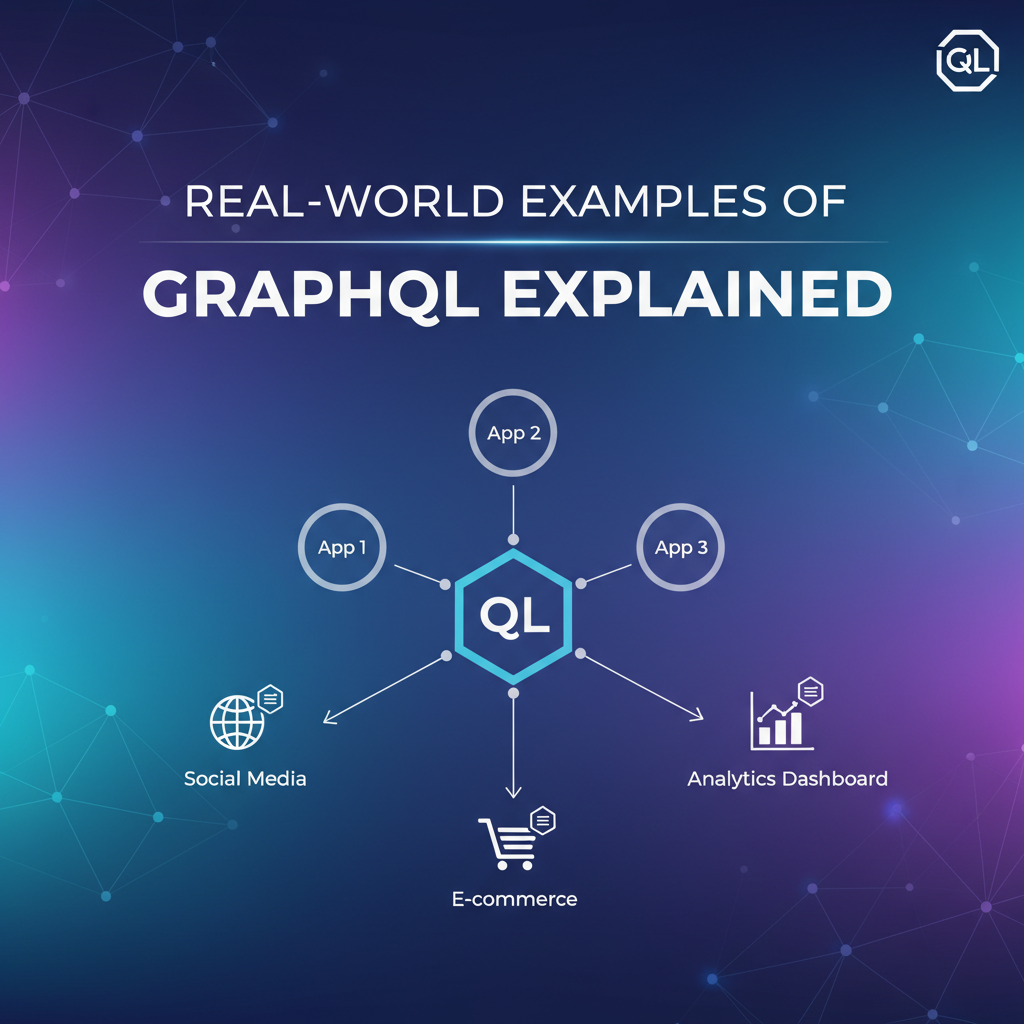
Real-World Examples of GraphQL Explained


In the sprawling and interconnected digital ecosystem of today, the ability to efficiently and precisely retrieve data is paramount. From the intricate weave of social media feeds to the dynamic dashboards of enterprise applications, the demand for tailored data consumption has never been higher. For decades, the Representational State Transfer (REST) architectural style has served as the bedrock for building web apis, providing a robust and widely understood approach to exposing data and functionality. However, as applications grew in complexity, fetching data efficiently for diverse client needs—especially in the era of mobile-first development—began to expose certain limitations. The quest for more flexible, performant, and developer-friendly apis led to the emergence of GraphQL, a powerful query language for your api.
GraphQL, developed internally by Facebook in 2012 and open-sourced in 2015, represents a paradigm shift in how clients interact with servers to retrieve and manipulate data. Unlike REST, where clients typically interact with multiple endpoints, each returning a fixed data structure, GraphQL empowers clients to declare exactly what data they need, no more, no less, often from a single endpoint. This client-driven approach profoundly impacts developer velocity, application performance, and the overall agility of api evolution. This comprehensive guide will delve deep into the core principles of GraphQL, explore its practical advantages, and illuminate its real-world applications across various industries and use cases. We will also examine how GraphQL coexists with and complements existing api technologies, touching upon the critical role of an api gateway and how OpenAPI fits into the broader api management landscape. By the end of this exploration, you will possess a profound understanding of why GraphQL has become an indispensable tool for modern software development.
Part 1: Understanding the Fundamentals of GraphQL
To truly appreciate GraphQL's real-world impact, one must first grasp its foundational concepts. GraphQL is not a database technology, nor is it a programming language in the traditional sense. Instead, it is a query language for your api, alongside a runtime for fulfilling those queries with your existing data. It provides a complete and understandable description of the data in your api, allows clients to ask for exactly what they need, and makes it easier to evolve apis over time.
What is GraphQL? A Paradigm Shift in Data Fetching
At its heart, GraphQL is a specification that defines a powerful and expressive syntax for clients to request data from a server. Imagine a scenario where a mobile application needs a user's name, profile picture, and their three most recent posts, each with its title and a snippet of content. In a traditional RESTful api setup, this might involve multiple requests: one to /users/{id} to get user details, then another to /users/{id}/posts to get posts, followed by client-side filtering. This leads to issues like over-fetching (receiving more data than needed) and under-fetching (requiring multiple requests to gather all necessary data).
GraphQL fundamentally alters this dynamic. With GraphQL, the client sends a single query to a single endpoint, describing the precise structure of the data it requires. The server, equipped with a GraphQL runtime, processes this query, fetches the requested data from various underlying sources (databases, other microservices, external apis), and returns a JSON response that mirrors the shape of the query. This drastically reduces network overhead, streamlines development on the client-side, and provides an unparalleled level of flexibility. It shifts the burden of data aggregation from the client to the server, which is better equipped to handle such complexities.
The GraphQL Schema: The Contract of Your API
The cornerstone of any GraphQL api is its schema. The schema serves as the definitive contract between the client and the server, outlining all the data types and operations (queries, mutations, subscriptions) that clients can perform. It's written using the GraphQL Schema Definition Language (SDL), a human-readable and technology-agnostic language. This explicit contract is what enables GraphQL's powerful introspection capabilities, allowing tools and clients to discover the api's capabilities dynamically.
Within the schema, you define various building blocks:
- Object Types: These represent the fundamental entities in your
api, such asUser,Product, orOrder. Each object type has fields, which are specific pieces of data that can be queried. For example, aUsertype might have fields likeid,name,email, andposts. - Scalar Types: These are the leaves of your GraphQL query—values that can't have further sub-fields. GraphQL comes with built-in scalars like
Int,Float,String,Boolean, andID. Custom scalar types (e.g.,Date,JSON) can also be defined. - Enums: Enumeration types are special scalar types that restrict a field to a specific set of allowed values, ensuring data consistency (e.g.,
OrderStatus: [PENDING, SHIPPED, DELIVERED]). - Interfaces: Similar to interfaces in object-oriented programming, GraphQL interfaces define a set of fields that multiple object types must implement. This is useful for polymorphic data fetching.
- Unions: Union types allow a field to return one of several distinct object types, without requiring them to share any common fields. This provides flexibility for representing diverse data.
- Input Types: These are special object types used as arguments for mutations. They allow clients to send complex, structured data to the server.
A well-designed schema is crucial for a successful GraphQL api. It provides clarity, enables strong type checking, and facilitates robust tooling, significantly enhancing the developer experience. The schema acts as a single source of truth, making it easy for both frontend and backend teams to understand the api's capabilities and collaborate effectively.
Queries: Asking for Exactly What You Need
Queries are the read operations in GraphQL, allowing clients to fetch data. The elegance of GraphQL queries lies in their ability to precisely specify the data structure desired, mirroring the JSON response that will be received.
Consider a simple query for a user:
query GetUserProfile {
  user(id: "123") {
    id
    name
    email
  }
}
This query asks for the user with id: "123" and specifically requests their id, name, and email fields. The response would be a JSON object containing only this requested information.
But GraphQL queries offer far more power and flexibility:
- Arguments: Fields can accept arguments to filter, sort, or paginate data, much like query parameters in REST. E.g.,
posts(first: 10, after: "cursor"). - Aliases: You can rename fields in the response using aliases, which is particularly useful when querying the same field multiple times with different arguments. E.g.,
currentProject: project(id: "A") { name } previousProject: project(id: "B") { name }. - Fragments: Fragments allow you to define reusable sets of fields. This is invaluable for reducing query boilerplate and promoting consistency, especially when multiple parts of your application need to fetch the same subset of fields for a given type.
- Directives: Directives are special identifiers that can be attached to fields or fragments to conditionally include or skip them in the response (
@include(if: Boolean),@skip(if: Boolean)).
The ability to specify nested fields means clients can retrieve deeply related data in a single request, eliminating the need for multiple round trips that are common in REST architectures. For instance, fetching a user and all their posts, along with comments on those posts, can be done with one concise GraphQL query, dramatically improving efficiency, particularly for applications operating over less reliable or high-latency networks.
Mutations: Changing Data on the Server
While queries are for reading data, mutations are the operations used to create, update, or delete data on the server. Similar to queries, mutations are strongly typed and adhere to the schema, ensuring that clients send valid data and receive predictable responses.
A mutation also defines a return payload, allowing the client to receive the updated state of the data immediately after the operation, without needing a subsequent query. This is a crucial feature for ensuring data consistency on the client-side.
Example of a mutation to create a new post:
mutation CreateNewPost($title: String!, $content: String!, $authorId: ID!) {
  createPost(input: { title: $title, content: $content, authorId: $authorId }) {
    id
    title
    createdAt
    author {
      name
    }
  }
}
And the variables passed alongside:
{
  "title": "My First GraphQL Article",
  "content": "This is exciting!",
  "authorId": "456"
}
Here, createPost is the root mutation field. It takes an input argument (an Input Type as defined in the schema) containing the post details. The mutation then specifies which fields of the newly created post should be returned, including nested information about the author. This ensures that the client has immediate access to the fresh data, minimizing UI latency and simplifying state management.
Subscriptions: Real-time Data Streams
Subscriptions are a powerful feature of GraphQL that enable real-time data streams from the server to the client. Built typically on top of WebSocket connections, subscriptions allow clients to "subscribe" to certain events, receiving live updates whenever the underlying data changes. This is invaluable for applications requiring instant feedback, such as chat applications, live dashboards, stock tickers, or notification systems.
When a client initiates a subscription, it sends a query-like request to the server, specifying the type of event and the fields it wants to receive when that event occurs. The server then maintains a persistent connection and pushes data to the client whenever the subscribed event is triggered.
Example of a subscription for new comments:
subscription NewCommentsOnPost($postId: ID!) {
  commentAdded(postId: $postId) {
    id
    content
    author {
      name
    }
    createdAt
  }
}
Once this subscription is established, the client will automatically receive data payloads structured exactly like the commentAdded field whenever a new comment is posted to the specified postId. This push-based model significantly enhances the interactivity and responsiveness of modern applications, moving beyond the traditional poll-based approaches that consume more resources and introduce latency.
Resolvers: The Bridge to Your Data
Behind every field in a GraphQL schema lies a resolver function. Resolvers are the core logic that connects the GraphQL schema to your actual data sources. When a client sends a query, the GraphQL execution engine traverses the query tree, calling the appropriate resolver function for each field requested.
A resolver's job is to fetch the data for its corresponding field. This data can come from virtually anywhere: a database (SQL, NoSQL), an existing REST api, another GraphQL service, a microservice, or even a local file system. This flexibility is a significant advantage, as it allows developers to build a GraphQL api on top of their existing infrastructure without needing to migrate or rewrite entire backend systems.
For example, a User type's name field might resolve directly from a users database table. Its posts field, however, might trigger a call to a separate posts microservice or a different database. Resolvers can be asynchronous, allowing for efficient data fetching even from slow or remote sources. The architecture empowers GraphQL to serve as a unified facade, aggregating data from disparate backend systems into a single, cohesive api experience for clients.
Part 2: The Practical Advantages of GraphQL
The architectural patterns and features intrinsic to GraphQL translate into significant practical benefits for development teams and the end-users of applications. These advantages often address long-standing challenges associated with traditional api designs.
Efficient Data Fetching: Eliminating Over- and Under-fetching
One of GraphQL's most celebrated advantages is its inherent efficiency in data fetching. As discussed, the client's ability to specify exactly what data it needs in a single request resolves the twin problems of over-fetching and under-fetching that plague RESTful apis.
- Over-fetching: In REST, an endpoint like
/users/1might return all fields associated with a user object, even if the client only needs the user's name and avatar. This transmits unnecessary data over the network, wasting bandwidth and processing power, especially critical for mobile users on limited data plans or slow connections. GraphQL eliminates this by allowing the client to prune the response to only the required fields. - Under-fetching: Conversely, if a client needs a user's details, their latest order, and the items within that order, a RESTful approach might necessitate three separate HTTP requests (e.g.,
/users/1,/users/1/orders/latest,/orders/{id}/items). This introduces latency due to multiple network round trips and requires the client to orchestrate data aggregation. GraphQL consolidates these into a single request, fetching nested data efficiently.
This efficiency translates directly into faster load times for applications, particularly mobile apps, and a more responsive user experience. It also reduces server load by only processing and sending the data that is genuinely required, optimizing resource utilization.
Rapid Product Development and Iteration
GraphQL significantly accelerates the pace of product development, especially for frontend teams. With a robust GraphQL schema in place, frontend developers gain a high degree of autonomy. They can adapt their data requirements as UI designs evolve without constantly requesting new endpoints or modifications from the backend team.
- Frontend-Backend Decoupling: The strong contract of the schema allows frontend and backend teams to work more independently. Once the schema is defined, frontend developers can mock data and build UI components knowing exactly what data shape to expect, even before the backend resolvers are fully implemented.
- Iterative Development: As new features are added or existing ones modified, frontend teams can simply adjust their GraphQL queries. There's rarely a need for
apiversioning (e.g.,/v1,/v2), as new fields can be added to the schema non-disruptively, and old fields can be marked as deprecated without breaking existing clients. This flexibility fosters a more agile development process, allowing teams to respond rapidly to changing business requirements. - Reduced Communication Overhead: The explicit nature of the GraphQL schema reduces ambiguity and miscommunication between teams. Frontend developers can explore the schema using introspection tools (like GraphiQL or Apollo Studio) to understand available data and operations, diminishing the need for constant back-and-forth discussions or reliance on external documentation (though good documentation is always a plus).
Strong Typing and Enhanced Developer Experience
The strong type system inherent in GraphQL provides a wealth of benefits for developers, enhancing productivity and reducing errors.
- Validation at Query Time: Because the schema defines all types and relationships, GraphQL queries can be validated against the schema before execution. This means syntax errors or requests for non-existent fields are caught early, often by development tools or the client itself, rather than failing silently at runtime or in production.
- Introspection: GraphQL
apis are self-documenting. Introspection queries allow clients and tools to ask the GraphQL server about its schema, including available types, fields, arguments, and their descriptions. This capability powers powerful developer tools like GraphiQL, which provides an interactive playground for exploringapis, autocompleting queries, validating them, and viewing documentation directly within the interface. - Tooling and Code Generation: The strong typing and introspection capabilities enable an entire ecosystem of tooling. Client libraries (like Apollo Client, Relay) can generate type-safe code for queries, mutations, and subscriptions, allowing developers to catch type mismatches at compile time rather than runtime. This reduces boilerplate code and boosts confidence in the correctness of data interactions.
- Predictable
apiBehavior: Developers can rely on the schema to understand the exact shape of data they will receive, making it easier to structure client-side code and manage application state.
API Aggregation and Federation: A Unified Gateway
In modern microservices architectures, an application's data often resides across numerous independent services, each with its own api. Orchestrating these services to fulfill a single client request can become complex. GraphQL shines brightly in this scenario by serving as an api gateway or a Backend-for-Frontend (BFF) layer.
- Unified Endpoint: Instead of clients needing to know about and interact with multiple microservices, they interact with a single GraphQL endpoint. The GraphQL server then intelligently aggregates data from these disparate microservices, presenting a cohesive and simplified view to the client. This abstracts away the complexity of the backend architecture, shielding clients from internal service boundaries and implementation details.
- Microservices Orchestration: Resolvers can call different microservices to fulfill parts of a single GraphQL query. For example, a query for
userand theirordersmight trigger one microservice foruserdata and another fororderdata, seamlessly stitching the results together before sending them to the client. - GraphQL Federation: For very large organizations with many independent teams building microservices, GraphQL Federation (pioneered by Apollo) takes this concept further. It allows multiple independent GraphQL services (subgraphs) to be composed into a single, unified "supergraph" schema. Clients interact with the supergraph gateway, which then distributes the query to the relevant subgraphs and aggregates their responses. This empowers teams to own and evolve their parts of the
apiindependently while presenting a seamless, unifiedapito consumers. This architecture becomes a powerfulapi gatewaypattern for complex ecosystems.
For enterprises managing a diverse landscape of APIs, from traditional REST endpoints to modern GraphQL services, the challenge lies in unified management and governance. Platforms designed as comprehensive api gateway and management solutions become indispensable here. For instance, an open-source platform like APIPark offers robust capabilities to manage, integrate, and secure various API services. While APIPark is known for its advanced AI integration features, its core strength as an api gateway and API management platform extends to orchestrating all types of apis, ensuring consistent authentication, rate limiting, and monitoring, irrespective of whether they adhere to OpenAPI specifications or GraphQL schemas. Such platforms provide a centralized control plane that drastically simplifies the operational burden associated with managing a myriad of services.
API Evolution Without Versioning
One of the persistent headaches in RESTful api development is api versioning (e.g., /v1, /v2). As requirements change, new fields are added, or existing ones are modified, maintaining compatibility with older clients often necessitates creating entirely new api versions, which can lead to significant overhead in terms of development, documentation, and maintenance.
GraphQL largely sidesteps this problem through its flexible schema evolution capabilities:
- Additive Changes: New fields and types can be added to the schema without affecting existing clients. Clients that don't query the new fields simply won't receive them.
- Deprecation: When a field or type becomes obsolete, it can be marked as
@deprecatedin the schema. This provides a clear signal to client developers that the field should no longer be used, often with a message suggesting alternatives, without immediately breaking existing applications. The server continues to support the deprecated field until all clients have migrated, allowing for a graceful transition period. - No Breaking Changes: Breaking changes (like removing a field or changing its type) are possible but are generally avoided until all clients have migrated away from the affected part of the schema. The deprecation mechanism allows for this managed transition, making
apievolution a far less disruptive process compared to traditional versioning schemes.
This flexibility in schema evolution means fewer api versions to manage, a smoother transition for consumers, and a more sustainable api over its lifecycle.
Part 3: Real-World Examples of GraphQL in Action
The theoretical advantages of GraphQL become profoundly impactful when viewed through the lens of actual applications and industries. Here, we explore how GraphQL is being leveraged to solve complex data challenges and enhance user experiences across various real-world scenarios.
E-commerce Platforms: Powering Dynamic Shopping Experiences
E-commerce platforms are inherently data-rich, dealing with products, users, orders, reviews, recommendations, payments, and much more. A typical product page alone might require fetching product details, pricing, available sizes/colors, images, customer reviews, related items, and inventory status. Fetching all this information efficiently is crucial for a fast, responsive, and engaging shopping experience.
- Complex Product Data: GraphQL excels at handling the intricate relationships within e-commerce data. A single query can fetch a product's name, description, price, available variants (size, color), associated images, average customer rating, and a list of the most helpful reviews, all in one go. This avoids numerous
apicalls that would be required in a REST setup, significantly speeding up page load times. - Personalized User Experiences: For logged-in users, GraphQL can easily retrieve their past orders, wishlists, recently viewed items, and personalized recommendations alongside general product information, tailoring the shopping journey with precision. Imagine a query that gets a user's cart items, along with their current stock levels and any promotional discounts, all in one request.
- Checkout Flow Optimization: During checkout, GraphQL can efficiently gather user shipping addresses, payment methods, and calculate final order totals, potentially integrating with third-party shipping and payment
apis through its resolvers, providing a smooth and consolidated transaction experience.
Example Query for an E-commerce Product Page:
query ProductDetailsPage($productId: ID!) {
  product(id: $productId) {
    id
    name
    description
    price {
      amount
      currency
    }
    images {
      url
      altText
    }
    variants {
      id
      color
      size
      sku
      stockQuantity
    }
    averageRating
    reviews(first: 5, orderBy: RATING_DESC) {
      id
      author {
        name
      }
      rating
      comment
      createdAt
    }
    relatedProducts(first: 3) {
      id
      name
      thumbnail {
        url
      }
      price {
        amount
      }
    }
  }
}
This single query demonstrates how an e-commerce platform can fetch comprehensive product information, including variations, customer reviews, and related products, all optimized for a single page load.
Social Media and Content Platforms: Building Dynamic Feeds and Interactions
Social media platforms are epitomes of dynamic, interconnected data. Users, posts, comments, likes, shares, followers, notifications—the relationships are deep and constantly evolving. GraphQL's ability to navigate these complex graphs of data makes it an ideal fit.
- Aggregated User Feeds: A user's news feed is a prime example of data aggregation. It might include posts from friends, pages they follow, recommended content, and advertisements. Each item in the feed has different data requirements (e.g., a text post needs content, an image post needs a URL and caption, a video post needs a URL, duration, and thumbnail). GraphQL allows the client to define a feed item interface and then query specific fields for each type of content, resulting in a highly optimized and personalized feed.
- Real-time Interactions: Subscriptions are invaluable here. New comments appearing on a post, real-time like counts, or notifications about new friend requests can be pushed to the client instantly, creating a highly interactive and engaging user experience without constant polling.
- Profile Pages: Loading a user's profile might involve fetching their basic info, their recent posts, their followers, and who they are following. GraphQL can consolidate all these into a single query.
Example Query for a Social Media User's Feed:
query UserNewsFeed($userId: ID!, $first: Int = 10, $after: String) {
  user(id: $userId) {
    id
    name
    feed(first: $first, after: $after) {
      pageInfo {
        hasNextPage
        endCursor
      }
      edges {
        node {
          id
          __typename # To identify the type of content
          ... on Post {
            title
            content
            author {
              name
              profilePictureUrl
            }
            likesCount
            comments(first: 2) {
              id
              text
              author {
                name
              }
            }
          }
          ... on ImagePost {
            imageUrl
            caption
            aspectRatio
          }
          ... on VideoPost {
            videoUrl
            duration
            thumbnailUrl
          }
        }
      }
    }
  }
  notifications(unreadOnly: true) {
    id
    message
    isRead
    createdAt
  }
}
This comprehensive query uses fragments (... on Post, ... on ImagePost) and the __typename field to intelligently fetch diverse content types within a user's feed, along with unread notifications, all within a single round trip.
Mobile Applications: Optimizing for Constrained Environments
Mobile applications often operate under less ideal conditions: limited bandwidth, intermittent connectivity, and constrained battery life. GraphQL's data fetching efficiency makes it particularly well-suited for mobile development.
- Reduced Payload Sizes: By requesting only the exact data needed, GraphQL drastically reduces the amount of data transferred over the network. This saves mobile data, speeds up response times, and conserves battery life, all critical factors for user satisfaction.
- Fewer Round Trips: Mobile apps frequently display complex UIs that aggregate data from multiple sources. GraphQL's single-request capability minimizes the number of network calls, which is a major performance bottleneck on mobile networks where latency can be high.
- Client-Side Caching: GraphQL client libraries like Apollo Client and Relay come with sophisticated normalized caches that intelligently store and update data based on GraphQL queries. This further improves perceived performance by serving data instantly from the cache when available.
- Offline First: The predictable nature of GraphQL queries and the structure of responses make it easier to implement offline-first strategies, where data can be pre-fetched and stored locally.
A mobile application fetching only the user's name, profile image, and status for a contact list view, rather than their entire profile object, is a classic example of GraphQL's mobile optimization in action.
Dashboards and Analytics Tools: Visualizing Complex Data
Dashboards and business intelligence tools often need to aggregate and display vast amounts of data from various sources in real-time or near real-time. This data can range from sales figures and customer demographics to operational metrics and system health.
- Aggregating Disparate Data Sources: A single dashboard widget might combine data from a CRM, an ERP, and a marketing automation platform. GraphQL resolvers can seamlessly pull data from these diverse systems, process it, and present it in a unified format for visualization libraries.
- Real-time Updates: Subscriptions are invaluable for live dashboards. Imagine a sales dashboard that updates revenue figures or new customer sign-ups in real-time, or an operational dashboard showing live server metrics and alert statuses. GraphQL subscriptions enable these dynamic capabilities without the inefficiency of constant polling.
- Customizable Views: Different users or teams might require different views of the same underlying data. With GraphQL, each user can define their specific queries to fetch only the metrics and dimensions relevant to their role, empowering highly customizable and personalized dashboards.
Example Query for an Analytics Dashboard Widget:
query SalesOverviewDashboard {
  totalSales(period: LAST_MONTH) {
    amount
    currency
  }
  newCustomers(period: LAST_MONTH) {
    count
    regionBreakdown {
      region
      count
    }
  }
  topProducts(limit: 5) {
    id
    name
    unitsSold
    revenue {
      amount
    }
  }
  # Subscription for real-time new order notifications
  # subscription NewOrders {
  #   orderPlaced {
  #     id
  #     customerName
  #     totalAmount {
  #       amount
  #     }
  #     createdAt
  #   }
  # }
}
This query efficiently fetches various sales and customer metrics for a dashboard. The commented-out subscription demonstrates how real-time updates could be integrated for immediate insights.
Developer Platforms and APIs: Flexibility for Third-Party Integrations
When building a public api for partners or third-party developers, providing flexibility in data consumption is key to developer adoption and satisfaction. GraphQL, with its client-driven approach, is a compelling choice for such platforms.
- Self-Service Data Access: Third-party developers can query exactly the data they need for their specific integrations, reducing the need for
apiproviders to build and maintain numerous specialized endpoints. This empowers developers to build innovative applications on top of the platform more rapidly. - Rich Introspection and Tooling: GraphQL's introspection capabilities mean that developers can use tools like GraphiQL to explore the
apischema, understand its capabilities, and construct queries without extensive external documentation. This significantly lowers the barrier to entry for new integrators. - Consistent
apiExperience: Regardless of the underlying backend services (which might be complex and varied), the GraphQLapipresents a consistent, unified interface to external developers, simplifying their development process.
For developers and enterprises managing a multitude of apis, including public-facing ones, a robust api gateway and comprehensive API management platform are indispensable. Such platforms not only handle routing and security but also offer features crucial for developer experience, like OpenAPI specification hosting for REST APIs, or interactive GraphQL schema explorers. In this context, a platform like APIPark demonstrates its value by centralizing the management of diverse API services. Its capabilities, while highlighting AI model integration, fundamentally provide end-to-end API lifecycle management, which applies equally well to GraphQL APIs seeking governance, security, and consistent exposure alongside traditional RESTful services. This holistic approach ensures that all apis, regardless of their underlying technology or schema definition, are professionally managed and easily discoverable by consumers.
Microservices Architectures: The GraphQL Layer as a Backend-for-Frontend (BFF)
As mentioned earlier, GraphQL is a natural fit for microservices architectures, often serving as the api gateway or BFF layer. This pattern effectively decouples the client applications from the intricate details of the backend microservices, providing a tailored api for each client (or client type).
The GraphQL server acts as a facade, receiving client requests and fanning them out to the appropriate backend microservices. It then aggregates the responses, transforms them if necessary, and sends a single, coherent response back to the client. This offers several benefits:
- Simplified Client Development: Clients interact with a single, consistent
apiendpoint and don't need to be aware of the underlying microservice boundaries or communication protocols. - Backend Resilience: The GraphQL layer can implement caching, error handling, and fallback logic to make the overall
apimore resilient to individual microservice failures. - Microservice Evolution: Backend microservices can evolve independently without impacting clients, as long as the GraphQL schema remains consistent or gracefully deprecated. The GraphQL layer handles the mapping between the stable client-facing schema and the potentially changing backend services.
- Performance Optimization: The GraphQL server can implement data loaders to solve the N+1 problem (where a naive resolver implementation might make N additional requests to fetch related data for N items) by batching and caching requests to backend services.
This design pattern ensures that clients get an optimal api experience, while backend teams maintain the agility and modularity benefits of a microservices architecture.
APIPark is a high-performance AI gateway that allows you to securely access the most comprehensive LLM APIs globally on the APIPark platform, including OpenAI, Anthropic, Mistral, Llama2, Google Gemini, and more.Try APIPark now! 👇👇👇
Part 4: Challenges and Considerations for Adopting GraphQL
While GraphQL offers compelling advantages, its adoption isn't without its challenges. Understanding these considerations is crucial for a successful implementation.
Learning Curve and Mindset Shift
For developers accustomed to the well-established patterns of REST, GraphQL requires a significant mindset shift.
- New Concepts: Grasping concepts like the schema, SDL, resolvers, fragments, and input types requires dedicated learning.
- Schema Design: Designing a robust, scalable, and intuitive GraphQL schema from the ground up is an art that takes practice. It involves thinking about the graph of data rather than isolated resources.
- Backend Implementation: Implementing a GraphQL server involves more than just defining endpoints; it requires writing resolver logic to connect schema fields to actual data sources, which can be complex, especially with disparate backend systems.
- Client-Side Adoption: While powerful, client libraries like Apollo Client or Relay also have their own learning curves, especially regarding their sophisticated caching mechanisms.
Teams adopting GraphQL should invest in thorough training and allow for a ramp-up period to become proficient with the new paradigm.
The N+1 Problem and Data Loader Pattern
One of the most common performance pitfalls in GraphQL is the "N+1 problem." This occurs when a resolver for a list of items (e.g., a list of posts) then, for each item in that list, makes a separate call to fetch related data (e.g., the author of each post). If there are N posts, this results in N+1 database queries or api calls, leading to severe performance degradation.
Solution: The Data Loader Pattern. To combat the N+1 problem, the dataloader library (or similar patterns) is almost universally adopted. Dataloader provides two key optimizations:
- Batching: It queues up all requests for a specific type of data that occur within a single tick of the event loop and then dispatches them in a single batch query to the underlying data source.
- Caching: It caches the results of previously loaded objects, ensuring that if multiple parts of a query request the same object, it's only fetched once.
Implementing dataloader correctly is essential for building a performant GraphQL server, and failure to do so is a common cause of performance issues in early GraphQL adoptions.
Caching Strategies: Different from REST
Traditional HTTP caching mechanisms (like ETags, Cache-Control headers) that work effectively with RESTful apis are less straightforward with GraphQL.
- Single Endpoint: Since all GraphQL queries typically hit a single
/graphqlendpoint, caching based on URL paths becomes ineffective. - Dynamic Queries: GraphQL queries are highly dynamic and client-specific. Two clients might query the same
Postobject but request different fields, making a generic HTTP cache difficult.
Therefore, GraphQL caching primarily shifts to the client-side and application-level:
- Client-Side Caching: GraphQL client libraries (Apollo Client, Relay) implement robust normalized caches that store data by ID and manage relationships. When a query is made, the client first checks its cache. If data is available, it's served instantly; if not, it fetches from the server and then updates the cache. This provides immediate UI updates and reduces network requests.
- Server-Side Caching: On the server, caching strategies might involve caching resolver results, using a distributed cache (like Redis), or implementing query result caching at the
api gatewaylayer. Sophisticated GraphQL gateways can analyze query complexity and cache full query results. - CDN Caching: For static parts of a GraphQL
apiorapis that predominantly serve public, non-personalized data, it's possible to use CDN edge caching for the GraphQL endpoint, but this requires careful configuration to handle query variations.
Understanding and implementing appropriate caching strategies is a critical aspect of GraphQL performance tuning.
File Uploads
Historically, file uploads with GraphQL were somewhat more complex than with REST, as GraphQL's request body is typically JSON. However, standard solutions have emerged.
- Multipart Requests: The
graphql-multipart-request-specstandard allows for sending GraphQL queries (or mutations) alongside binary file data within a singlemultipart/form-dataHTTP request. This enables efficient file uploads directly through GraphQL. - Pre-signed URLs: Another common pattern is to use a GraphQL mutation to request a pre-signed URL from a cloud storage service (e.g., AWS S3, Google Cloud Storage). The client then uploads the file directly to that URL, bypassing the GraphQL server entirely for the binary data transfer. The GraphQL
apiis then used to record metadata about the uploaded file.
While not as inherently simple as sending a file directly to a dedicated REST endpoint, GraphQL offers robust and widely adopted patterns for handling file uploads efficiently.
Rate Limiting and Security Concerns
The flexibility of GraphQL queries can also introduce security and performance challenges if not properly managed. Deeply nested or highly complex queries can be resource-intensive, potentially leading to denial-of-service (DoS) attacks or excessive server load.
- Query Complexity Analysis: Implementations should include mechanisms to analyze the "cost" or "complexity" of an incoming query before execution. This involves traversing the query tree and assigning weights to fields, preventing overly complex queries from consuming excessive resources.
- Query Depth Limiting: A simpler approach is to limit the maximum nesting depth of queries.
- Rate Limiting: Standard
api gatewayrate limiting techniques are still applicable, but they need to be applied at the client level (e.g., perapikey or IP address) rather than perapiendpoint, given that GraphQL typically uses a single endpoint. - Authentication and Authorization: These must be implemented robustly at the resolver level. Each resolver should check if the authenticated user has permission to access the requested data or perform the requested mutation. Field-level authorization is a powerful aspect, allowing fine-grained control over what data users can see.
- Input Validation: Just like with any
api, all input to mutations must be thoroughly validated on the server to prevent malicious data injection or unexpected behavior.
These security considerations are not unique to GraphQL but require a different implementation approach compared to REST, given the api's single-endpoint, client-driven nature.
Tooling and Ecosystem Maturity
While the GraphQL ecosystem has matured significantly since its open-sourcing, it is still evolving compared to the decades-old REST ecosystem.
- Server Implementations: A rich array of server implementations exists across various languages (JavaScript/TypeScript, Python, Ruby, Java, Go, C#), offering different levels of features and maturity.
- Client Libraries: Powerful client libraries like Apollo Client and Relay provide sophisticated caching, state management, and tooling, but they can be opinionated and have a learning curve.
- Monitoring and Observability: Tools for monitoring and observing GraphQL
apis (e.g., query performance, error rates at the field level) are catching up but might require more custom integration compared to off-the-shelf REST monitoring solutions.
The pace of innovation in the GraphQL ecosystem is rapid, with new tools and best practices continually emerging, providing developers with increasingly powerful capabilities.
Part 5: GraphQL in the API Ecosystem: Coexistence and Collaboration
Understanding where GraphQL fits into the broader api landscape is crucial. It's not necessarily a replacement for all other api paradigms but rather a powerful addition to the developer's toolkit.
GraphQL vs. REST: A Symbiotic Relationship, Not a Zero-Sum Game
The discussion often frames GraphQL and REST as competing technologies. In reality, they are different architectural styles designed to solve different problems, and they can often coexist within an organization.
| Feature | GraphQL | REST |
|---|---|---|
| Data Fetching | Client specifies exact data needed | Server defines data structure per endpoint |
| Endpoints | Single endpoint (e.g., /graphql) |
Multiple endpoints (resource-based) |
| Over/Under-fetching | Minimized | Common issues |
| Versioning | Schema evolution with deprecation | Often relies on URL versioning (/v1, /v2) |
| Caching | Primarily client-side, application-level | Leverages standard HTTP caching (CDN, browser) |
| Real-time | Built-in Subscriptions (WebSockets) | Typically uses WebSockets or polling (separate solution) |
| Documentation | Self-documenting via introspection | External documentation (e.g., OpenAPI) |
| Complexity | Higher initial learning curve for server | Easier to get started for simple cases |
| Use Cases | Complex data graphs, mobile, BFF, dashboards | Simpler resource access, public web services |
There are scenarios where REST remains an excellent choice: for simple, resource-oriented apis where the client needs full resource representations, for public-facing apis where strict caching is a priority, or for apis that require straightforward file uploads. Conversely, GraphQL shines in applications with complex and varying data requirements, especially for mobile and web clients interacting with microservices. Many organizations successfully deploy a hybrid approach, using REST for some services and GraphQL as a unified api gateway for others.
The Role of an api gateway in a Multi-API Environment
Regardless of whether an organization primarily uses GraphQL, REST, or a combination, a robust api gateway remains a critical component of api infrastructure. An api gateway acts as a single entry point for all api calls, routing requests to the appropriate backend services. It centralizes common concerns such that individual services don't need to implement them repeatedly.
Key functions of an api gateway include:
- Request Routing: Directing incoming requests to the correct backend service, whether it's a GraphQL server, a REST endpoint, or a microservice.
- Authentication and Authorization: Enforcing security policies, validating
apikeys or tokens, and managing access control. - Rate Limiting and Throttling: Protecting backend services from overload by limiting the number of requests clients can make within a certain timeframe.
- Logging and Monitoring: Providing centralized visibility into
apitraffic, performance metrics, and error rates. - Caching: Implementing response caching to improve performance and reduce backend load.
- Transformation and Protocol Translation: Adapting requests or responses to meet the requirements of different backend services or client types.
In an increasingly complex api ecosystem, where organizations deploy a mix of GraphQL, REST, and even specialized AI services, a robust api gateway becomes the central nervous system for api traffic. It's not just about routing requests; it's about applying policies, security, and analytics across the entire API landscape. Tools like APIPark, an open-source AI gateway and API management platform, exemplify how modern api gateway solutions are evolving. By offering end-to-end API lifecycle management, APIPark helps businesses govern their apis efficiently, from design to decommissioning, supporting various API formats, including potentially managing access to GraphQL endpoints and handling RESTful APIs, often documented with OpenAPI specifications. This unified approach simplifies operations and enhances security for developers and enterprises alike, providing a consistent operational framework for all api assets.
OpenAPI (Swagger) and GraphQL: Different Approaches to API Description
OpenAPI Specification (formerly Swagger Specification) is a widely adopted, language-agnostic standard for describing RESTful apis. It allows both humans and computers to discover and understand the capabilities of a service without access to source code or documentation.
OpenAPIfor REST: AnOpenAPIdocument describes anapi's endpoints, operations (GET, POST, PUT, DELETE), parameters, authentication methods, and response structures. Tools can then use this specification to generate interactiveapidocumentation (like Swagger UI), client SDKs, or server stubs. It's a crucial component for ensuring clear contracts and discoverability in the REST world.- GraphQL's Introspection: GraphQL does not use
OpenAPIfor its specification. Instead, it relies on its native introspection system. As discussed, GraphQL servers can be queried about their own schema, providing a complete, programmatic description of theapi. This introspection is what powers tools like GraphiQL and enables client libraries to generate type-safe code.
While OpenAPI and GraphQL introspection serve similar purposes—providing a machine-readable description of an api's capabilities—they do so in fundamentally different ways, tailored to their respective architectural styles. Organizations often manage both types of specifications within their api ecosystem. For instance, an api gateway might consume an OpenAPI definition for a legacy REST service and simultaneously interrogate a GraphQL endpoint for its schema, providing a unified management experience across diverse api types. This flexibility underscores the adaptability required in modern api management solutions.
Conclusion
GraphQL has emerged as a powerful and indispensable technology for building modern applications, particularly those with complex data requirements, diverse client needs, and microservices-based backends. Its client-driven data fetching, strong type system, and real-time capabilities offer a compelling alternative or complement to traditional RESTful apis. By empowering clients to precisely define their data needs, GraphQL dramatically improves data fetching efficiency, accelerates development cycles, and fosters more agile api evolution without the headaches of traditional versioning.
From optimizing e-commerce shopping experiences and delivering dynamic social media feeds to powering responsive mobile applications and comprehensive analytics dashboards, GraphQL is proving its mettle across a broad spectrum of real-world scenarios. While challenges such as the learning curve, N+1 problem, and caching strategies require thoughtful consideration, the growing maturity of the GraphQL ecosystem and its robust tooling provide effective solutions.
Moreover, GraphQL does not exist in a vacuum. It seamlessly integrates into existing api infrastructures, often serving as an intelligent api gateway or Backend-for-Frontend layer that aggregates data from various sources, including legacy REST APIs potentially documented with OpenAPI specifications. Platforms like APIPark, acting as comprehensive api gateway and management solutions, further facilitate this integration, offering a unified control plane for managing a diverse landscape of apis, ensuring consistency, security, and performance across the entire digital ecosystem.
As applications continue to demand more flexibility, performance, and real-time interaction, GraphQL stands ready as a foundational technology, enabling developers to build sophisticated and efficient data-driven experiences that meet the ever-evolving demands of the digital world. Its continued adoption and innovation promise a future where api interactions are not just functional but truly intuitive and empowering for both developers and end-users alike.
Frequently Asked Questions (FAQs)
Q1: What is the primary difference between GraphQL and REST APIs?
A1: The primary difference lies in how data is fetched. With REST, clients typically interact with multiple fixed endpoints (e.g., /users, /products/123), and each endpoint returns a predefined data structure, often leading to over-fetching (getting more data than needed) or under-fetching (requiring multiple requests for complete data). GraphQL, on the other hand, allows clients to send a single query to a single endpoint, precisely specifying the fields and relationships of the data they require. The server then returns exactly that data, optimizing network usage and reducing the number of requests.
Q2: Is GraphQL a replacement for REST APIs? Should I migrate all my existing REST APIs to GraphQL?
A2: Not necessarily. GraphQL is a powerful alternative or complement to REST, not a universal replacement. Both have their strengths and ideal use cases. REST is often excellent for simple, resource-oriented APIs, public web services where strict HTTP caching is critical, or straightforward file uploads. GraphQL excels in applications with complex, interconnected data graphs, diverse client requirements (especially mobile), and when acting as a Backend-for-Frontend (BFF) or api gateway for microservices. Many organizations successfully use a hybrid approach. The decision to migrate should be based on a thorough analysis of your application's specific data fetching needs, client types, and development priorities.
Q3: How does GraphQL handle real-time data updates?
A3: GraphQL handles real-time data updates through Subscriptions. Subscriptions are long-lived operations, typically implemented over WebSockets, that allow clients to subscribe to specific events occurring on the server. When an event is triggered (e.g., a new message in a chat, a data update in a dashboard), the server pushes the relevant data directly to all subscribed clients. This provides a highly efficient and responsive way to deliver live information, eliminating the need for constant polling from the client side.
Q4: What is the role of an api gateway in a GraphQL architecture, and how does OpenAPI fit in?
A4: In a GraphQL architecture, an api gateway can serve as a crucial component, often acting as the entry point for all client requests. It can perform essential functions such as authentication, authorization, rate limiting, logging, monitoring, and even query caching, centralizing these concerns away from individual backend services. For complex microservices environments, the GraphQL server itself can function as a specialized api gateway or a Backend-for-Frontend (BFF), aggregating data from disparate microservices into a single, unified api for clients.
OpenAPI (formerly Swagger) is a specification primarily used for documenting RESTful apis, describing their endpoints, parameters, and responses. GraphQL, in contrast, uses its native introspection capabilities for self-documentation. While OpenAPI isn't directly used to describe GraphQL apis, an organization with a mixed api landscape (GraphQL alongside REST) might use an api gateway to manage both, consuming OpenAPI definitions for RESTful services and leveraging GraphQL introspection for its GraphQL endpoints. This allows for unified api management and governance across various api types.
Q5: What are some common challenges when implementing GraphQL, and how can they be addressed?
A5: Key challenges include: 1. Learning Curve: Developers need to adjust to a new paradigm of data fetching and schema design. This can be addressed with thorough training and embracing the rich GraphQL tooling ecosystem (e.g., GraphiQL). 2. N+1 Problem: Naive resolver implementations can lead to excessive database queries. The Dataloader pattern is the standard solution, batching and caching requests to underlying data sources to minimize round trips. 3. Caching: Traditional HTTP caching is less effective. Solutions involve robust client-side caching (e.g., Apollo Client's normalized cache) and server-side application-level caching for resolver results. 4. Performance & Security: Deep or complex queries can strain server resources. Implementing query complexity analysis, depth limiting, and comprehensive field-level authorization is crucial to prevent abuse and ensure optimal performance. Addressing these challenges requires careful design, leveraging community best practices, and utilizing the mature tooling available in the GraphQL ecosystem.
🚀You can securely and efficiently call the OpenAI API on APIPark in just two steps:
Step 1: Deploy the APIPark AI gateway in 5 minutes.
APIPark is developed based on Golang, offering strong product performance and low development and maintenance costs. You can deploy APIPark with a single command line.
curl -sSO https://download.apipark.com/install/quick-start.sh; bash quick-start.sh

In my experience, you can see the successful deployment interface within 5 to 10 minutes. Then, you can log in to APIPark using your account.

Step 2: Call the OpenAI API.