Public API Testing: Understanding the Contract Meaning
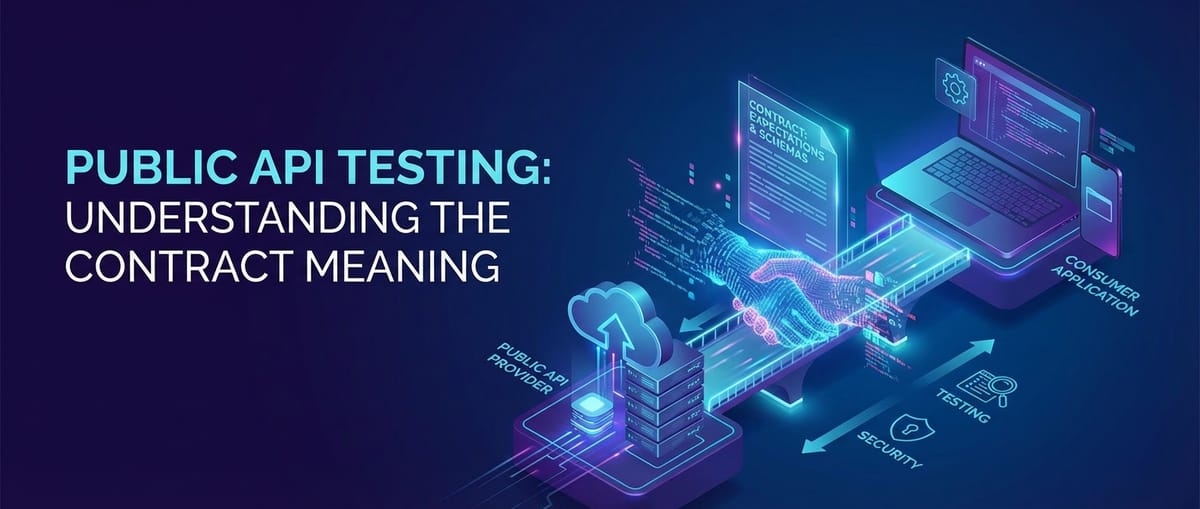


In the vast, interconnected landscape of modern software, Application Programming Interfaces (APIs) serve as the fundamental connective tissue, allowing disparate systems to communicate, share data, and orchestrate complex operations. From mobile applications querying backend services to microservices within a distributed architecture exchanging information, the power and prevalence of APIs are undeniable. Among these, public APIs hold a particularly significant position. They are the open doors to a company's data, services, and capabilities, inviting external developers, partners, and even competitors to build upon their offerings, fostering innovation and extending reach. However, with this openness comes a unique set of challenges, particularly concerning reliability, consistency, and trust. This is where the profound importance of public API testing, rooted in a deep understanding and rigorous enforcement of the API contract, truly comes to the forefront.
Imagine building a skyscraper without a blueprint, or entering a business agreement without a clearly defined contract. The outcomes would range from chaos and structural failure to legal disputes and financial ruin. Similarly, interacting with an api without a clear, immutable contract is an invitation for disaster. The "API contract" is not a mere document; it is the definitive agreement between the API provider and its consumers, stipulating precisely how the API behaves, what it expects, and what it promises in return. For public APIs, where consumers are diverse, geographically dispersed, and often unknown to the provider, this contract becomes the bedrock of interaction. It dictates the structure of requests, the format of responses, authentication mechanisms, error codes, and a multitude of other critical details that ensure predictable and reliable communication. Without a comprehensive understanding of this contract and stringent testing against its specifications, public APIs risk becoming unreliable, difficult to integrate, and ultimately, a liability rather than an asset. This article delves into the intricacies of API contracts, the imperative of robust public API testing, the pivotal role of OpenAPI specifications in defining these contracts, and the overarching necessity of API Governance to ensure their long-term integrity and efficacy.
Chapter 1: The Foundation – What Exactly is an API Contract?
At its core, an API contract is a formal, machine-readable, and human-readable agreement that meticulously defines the behavior and interaction points of an api. It serves as the definitive blueprint, outlining all the expectations a client (consumer) can have when interacting with an API service (provider), and conversely, what the API service expects from its clients. This isn't merely documentation; it's a binding specification that, if violated by either party, can lead to broken integrations, unexpected errors, and significant developer friction. For public APIs, where thousands or even millions of external applications might rely on its stability, the clarity and immutability of this contract are paramount.
The components of an API contract are numerous and granular, collectively painting a complete picture of the API's operational parameters. Firstly, the endpoints and URI structure are specified, detailing the exact path segments and resource identifiers for accessing different functionalities. For instance, /users/{id} clearly indicates a resource for user management where {id} is a path parameter. Complementing this, the allowed HTTP methods (GET, POST, PUT, DELETE, PATCH) for each endpoint are defined, determining the permissible actions clients can perform. A GET request to /users/{id} retrieves user data, while a DELETE request would remove it.
Beyond the basic routing and action verbs, an API contract meticulously outlines the data structures involved in communication. Request headers are specified, including mandatory headers like Content-Type (e.g., application/json), Accept (e.g., application/xml), and security-related headers such as Authorization tokens. The request body schema is another critical component, especially for POST or PUT requests. This schema defines the expected structure of the data payload, specifying data types (string, integer, boolean, array, object), required fields, minimum/maximum lengths for strings, numeric ranges, and regular expressions for validating specific patterns. This ensures that the data sent by the client conforms to the server's expectations, preventing malformed requests. Similarly, query parameters schema defines optional or mandatory parameters passed in the URL, along with their types and constraints, enabling clients to filter, paginate, or sort results.
On the flip side, the API contract is equally explicit about what the client will receive in return. Response headers are documented, indicating information like Content-Type of the response body or rate limit details. Crucially, the response body schema for various HTTP status codes is defined. This includes the successful 2xx responses (e.g., 200 OK, 201 Created), which specify the structure of the data returned upon successful operation. But it also covers error responses for 4xx client errors (e.g., 400 Bad Request, 401 Unauthorized, 404 Not Found) and 5xx server errors (e.g., 500 Internal Server Error). For each error code, the contract specifies the expected error message format, including error codes, descriptive messages, and sometimes even detailed contextual information. This consistency in error handling is vital for clients to gracefully manage failures.
Furthermore, the contract encompasses authentication and authorization mechanisms, detailing how clients should identify themselves and prove they have the necessary permissions to access specific resources. This could involve API keys, OAuth 2.0 flows, or JWTs. Rate limiting policies are also often part of the contract, informing clients about the maximum number of requests they can make within a certain timeframe to prevent abuse and ensure fair resource allocation. A clear versioning strategy is essential, particularly for public APIs, ensuring clients understand how API changes are introduced and how to manage compatibility. Finally, comprehensive error handling mechanisms and error codes are part of this agreement, providing a predictable and actionable framework for clients to respond to different types of operational failures.
Think of the API contract as a meticulously drafted legal document in the digital realm. Just as a legal contract binds two parties to specific terms and conditions, an API contract binds the API provider and consumer to a defined interaction paradigm. It serves as a single source of truth, eliminating ambiguity and fostering seamless communication between different development teams and independent applications. Any deviation from this contract, whether intentional or accidental, by either the provider or the consumer, constitutes a breach, leading to system instability, integration failures, and a breakdown of trust. Understanding and upholding this contract is not just good practice; it is a fundamental requirement for the success and longevity of any public api.
Chapter 2: The Imperative of Testing Public APIs
Testing is an indispensable phase in the software development lifecycle, ensuring quality, functionality, and reliability. However, when it comes to public APIs, the imperative for rigorous testing escalates dramatically. Public APIs are distinct from internal APIs in several critical ways that amplify the consequences of inadequate testing, making it a non-negotiable aspect of their lifecycle. Unlike internal APIs, which are consumed by a known, often controlled set of internal applications and developers, public APIs are exposed to a vast, heterogeneous, and often unpredictable external audience. This audience comprises myriad programming languages, frameworks, operating systems, and diverse use cases, making the margin for error incredibly thin.
The stakes for public APIs are inherently higher. A single broken api endpoint or an undocumented change can disrupt countless client applications, leading to widespread outages, data inconsistencies, and a cascade of negative effects across the digital ecosystem. For the API provider, this translates into severe reputational damage, loss of developer trust, increased support costs, and potentially significant financial repercussions. External developers, after investing time and resources into integrating with a public API, expect stability, consistency, and a reliable contract. When these expectations are not met, they are quick to abandon the problematic API in favor of more dependable alternatives.
To mitigate these risks, a multi-faceted and comprehensive testing strategy is essential for public APIs. This strategy encompasses various types of testing, each addressing a specific dimension of API quality:
- Functional Testing: This is the most basic yet critical form of testing, verifying that each
apiendpoint behaves as expected according to its contract. It checks if inputs are processed correctly, outputs match the defined schema, and the core business logic is sound. Functional tests validate both positive scenarios (expected inputs yielding expected outputs) and negative scenarios (invalid inputs resulting in appropriate error responses as defined in the contract). - Performance Testing: Public APIs must handle varying loads efficiently. Performance testing, including load testing, stress testing, and scalability testing, assesses the API's responsiveness, stability, and resource utilization under various traffic conditions. It identifies bottlenecks, ensures the API can handle peak usage without degrading performance, and verifies that rate limits are enforced correctly.
- Security Testing: Exposing an
apito the public inherently introduces security risks. Security testing probes for vulnerabilities such as injection flaws, broken authentication, sensitive data exposure, cross-site scripting (XSS), and insecure direct object references. It ensures that authentication mechanisms are robust, authorization rules are correctly enforced, and data transmission is encrypted and protected. - Integration Testing: While contract testing (discussed in detail later) focuses on the agreement, integration testing verifies the seamless interaction between the API and its dependent components (databases, other microservices, third-party services). For public APIs, this often means ensuring that backend systems supporting the
apiare correctly integrated and that data flows accurately end-to-end. - End-to-End Testing: These tests simulate real-world user flows that involve multiple API calls and possibly interactions with client applications. While more resource-intensive, they provide high confidence that the entire system, from the client's perspective, functions correctly.
- Contract Testing: This specialized form of testing, central to our discussion, explicitly verifies that the
apiprovider's implementation adheres to the agreed-upon contract and that consumers make calls in accordance with that contract. This ensures compatibility and prevents breaking changes without requiring full-blown, often fragile, integration tests.
The consequences of inadequate testing for public APIs are far-reaching and detrimental. Beyond the immediate impact of broken integrations and frustrated developers, there's a significant risk to the API provider's brand. A reputation for unstable or unreliable APIs can be incredibly difficult to shake off, leading to developer abandonment, reduced adoption, and a failure to achieve the strategic goals associated with public API exposure. Furthermore, poorly tested APIs can become vectors for security breaches, exposing sensitive data or compromising backend systems, leading to compliance issues, hefty fines, and profound damage to trust.
In essence, robust public API testing is not a luxury but a fundamental necessity. It acts as the primary safeguard against contract breaches, performance degradation, and security vulnerabilities. It is an investment that pays dividends in terms of developer satisfaction, market adoption, and the long-term sustainability of the API ecosystem. By proactively and comprehensively testing their public APIs against the explicit terms of their contracts, providers can cultivate a reputation for reliability and quality, fostering a thriving community of developers who trust and build upon their offerings.
Chapter 3: OpenAPI (Swagger) – The Universal Language for API Contracts
For an API contract to be truly effective, it needs to be unambiguous, machine-readable, and easily shareable across diverse teams and tools. This is precisely where the OpenAPI Specification (OAS), formerly known as Swagger Specification, plays a transformative role. OpenAPI has emerged as the de facto standard for defining and documenting RESTful APIs, providing a common, language-agnostic interface description for developers and automated systems alike. It elevates the API contract from a mere human-readable document to a structured, universally understood blueprint.
The OpenAPI Specification defines a standard, language-agnostic interface for REST APIs, allowing both humans and computers to discover and understand the capabilities of a service without access to source code, documentation, or network traffic inspection. When properly defined, a consumer can understand and interact with the remote service with a minimal amount of implementation logic. Think of it as a comprehensive user manual, but one that can be read and interpreted by machines to automate tasks like code generation, testing, and mocking.
At its core, OpenAPI defines an API contract using a human-readable and machine-parseable format, typically YAML or JSON. Within this structured format, it meticulously describes every facet of the api, effectively capturing all the components of an API contract discussed in Chapter 1. These descriptions include:
- API Metadata: Information about the API itself, such as its title, description, version, terms of service, contact information, and licensing details.
- Servers: The base URLs for the API, allowing clients to know where to send requests.
- Paths (Endpoints): A detailed list of all available endpoints (e.g.,
/users,/products/{id}). For each path, it specifies:- HTTP Operations (Methods): Which HTTP methods (GET, POST, PUT, DELETE, PATCH) are supported for that path.
- Parameters: Any path, query, header, or cookie parameters, including their names, data types, whether they are required, and descriptive explanations.
- Request Bodies: The structure and schema of the data expected in the request body for operations like POST or PUT, specifying content types (e.g.,
application/json) and detailed schemas for the data fields. - Responses: The expected responses for each HTTP status code (e.g.,
200 OK,400 Bad Request,500 Internal Server Error). For each response, it defines the response headers and the schema of the response body, ensuring clients know what data to expect back.
- Security Schemes: Definitions of how clients authenticate with the API (e.g., API keys, OAuth2, HTTP Bearer tokens).
- Components/Schemas: Reusable definitions for data models (objects), parameters, headers, or security schemes, promoting consistency and reducing redundancy across the specification. This is particularly powerful for defining complex JSON structures that are used across multiple endpoints.
The benefits of adopting OpenAPI as the universal language for API contracts are profound and multi-faceted, streamlining various stages of the API lifecycle:
- Automated Documentation Generation: An
OpenAPIspecification can be used to automatically generate interactive API documentation (like Swagger UI or Redoc), which allows developers to explore endpoints, parameters, and responses in a user-friendly interface. This ensures that the documentation is always synchronized with the actual API contract. - Client SDK Generation: Tools can consume an
OpenAPIspec to automatically generate client libraries (SDKs) in various programming languages (e.g., Python, Java, JavaScript, Go). This drastically reduces the effort for client developers to integrate with theapi, as they don't have to manually write boilerplate code for HTTP requests and response parsing. - Server Stub Generation: Similarly,
OpenAPIcan be used to generate server-side stubs or mock servers. This allows frontend and backend teams to work in parallel; frontend developers can test against a mockapibased on the contract while backend developers are still building the actual service. - Facilitates Contract-Driven Development (CDD): By defining the contract upfront using
OpenAPI, all development teams (frontend, backend, QA) have a single source of truth. This minimizes miscommunication, ensures alignment, and accelerates development cycles. The contract becomes the central artifact around which development revolves. - Enables Automated Testing Tool Integration: This is where
OpenAPItruly shines in the context of API testing. Many API testing tools (e.g., Postman, Karate, Dredd, Stoplight Studio, SoapUI) can import anOpenAPIspecification to automatically generate test cases, validate requests and responses against the schema, and even perform contract-driven tests. This significantly reduces manual effort and improves the comprehensiveness of testing. - Improves Collaboration:
OpenAPIprovides a common ground for discussions and design reviews among different stakeholders. API designers, developers, QA engineers, and product managers can all understand and contribute to the API definition, ensuring a well-thought-out and consistentapidesign.
The advent of OpenAPI has democratized the process of defining and understanding API contracts. It provides a standardized framework that transforms what could be a nebulous agreement into a concrete, executable specification. For robust API Governance, the adoption of OpenAPI is almost a prerequisite. It provides the necessary structure to define, enforce, and test contracts systematically. Without such a standardized definition, comprehensive and automated API testing, especially contract-driven testing, would be significantly more challenging, if not impossible, to scale across a multitude of public APIs. By embracing OpenAPI, organizations empower their teams to build more reliable, consistent, and user-friendly public api offerings.
APIPark is a high-performance AI gateway that allows you to securely access the most comprehensive LLM APIs globally on the APIPark platform, including OpenAI, Anthropic, Mistral, Llama2, Google Gemini, and more.Try APIPark now! 👇👇👇
Chapter 4: Contract-Driven Testing – Ensuring Mutual Understanding
Having established the critical nature of API contracts and the utility of OpenAPI in defining them, we now arrive at the cornerstone of reliable public API interactions: Contract-Driven Testing. This methodology moves beyond traditional black-box testing by explicitly verifying that both the API provider and its consumers adhere strictly to the shared API contract. It's about ensuring a mutual understanding and upholding the agreed-upon terms, preventing the common pitfalls of integration failures and broken promises that plague complex distributed systems.
What is Contract Testing?
Contract testing is a testing technique that verifies that interactions between a consumer and a provider conform to a shared contract. The contract outlines the format and content of the data that an API (the provider) will produce and that a client (the consumer) expects to receive, as well as the requests the consumer sends and the provider expects to receive. Unlike traditional integration testing, which tests the entire integrated system, contract testing focuses on the interface between two services in isolation. This distinction is crucial because traditional integration tests can be slow, complex, and brittle, often requiring the deployment of multiple services to run. Contract testing, conversely, allows services to be tested independently, dramatically speeding up feedback loops and increasing developer agility.
There are primarily two flavors of contract testing:
- Provider-Side Contract Testing: The API provider defines its API contract (often using
OpenAPI). The provider then writes tests to ensure that its actual implementation strictly adheres to this contract. This ensures that the API behaves exactly as it promises. - Consumer-Driven Contract (CDC) Testing: In this more robust and collaborative approach, the consumer of an API defines its expectations of the provider in a contract. The provider then takes this consumer-defined contract and verifies that its service meets those expectations. This approach ensures that the API provider doesn't make changes that break a consumer's integration, as the consumer's needs are explicitly captured and validated. CDC testing is particularly powerful for public APIs, as it directly addresses the diverse and evolving needs of multiple external consumers.
Benefits of Contract Testing:
The advantages of adopting contract-driven testing, especially for public APIs, are compelling:
- Faster Feedback Loops: Because services are tested in isolation using mocks and stubs generated from the contract, tests run much faster than full integration tests. This allows developers to catch breaking changes early in the development cycle, reducing the cost of fixing defects.
- Reduced Need for Complex End-to-End Integration Tests: While end-to-end tests still have their place, contract testing significantly reduces the scope and number of such tests required. It provides high confidence in the inter-service compatibility without the overhead of orchestrating an entire system.
- Improved Confidence in Deploying Changes: Developers can deploy changes to individual services with greater confidence, knowing that contract tests have validated compatibility with their consumers (or providers). This is critical for continuous delivery pipelines.
- Prevents Breaking Changes from Reaching Production: By continuously validating against the contract in CI/CD pipelines, contract testing acts as a powerful safety net, preventing incompatible changes from being released and disrupting client applications.
- Fosters Collaboration and Clear Communication: The act of defining and sharing contracts necessitates clear communication between consumer and provider teams, aligning expectations and reducing misunderstandings.
- Supports Independent Deployment: Contract testing is a cornerstone of microservices architectures and public API ecosystems, enabling independent deployment of services without fear of breaking other components.
Tools for Contract Testing:
Several excellent tools facilitate contract testing:
- Pact: A widely used framework for Consumer-Driven Contract testing. Consumers write "pacts" (contracts) defining their expectations, which are then published and verified by providers.
- Dredd: A command-line tool for validating an API description (like
OpenAPIor API Blueprint) against its actual implementation. It makes HTTP requests to the API and checks if the responses match the specification. - Karate API: A comprehensive open-source tool that combines API test automation, mocks, and performance testing. It can perform contract testing by validating responses against schemas.
- Spring Cloud Contract: A framework for Spring-based applications that supports both consumer-driven and producer-driven contract approaches.
Practical Workflow for Contract-Driven Testing:
Let's consider a simplified workflow illustrating how contract testing typically operates, ensuring a public api remains stable and predictable:
- Contract Definition (Consumer or Provider-Driven):
- Consumer-Driven: A client developer, using a tool like Pact, writes a consumer test that defines the expected requests to an API and the expected responses. These expectations form the contract.
- Provider-Driven: The API provider explicitly defines the contract using
OpenAPI(or similar specification), detailing all endpoints, request/response schemas, and behaviors.
- Contract Publication: The defined contract (e.g., a Pact file or an
OpenAPIspecification) is published to a shared repository, often called a "Pact Broker" for Pact, or a centralized API registry forOpenAPI. - Consumer Development & Testing (Against Mocks):
- The consumer team generates a mock API server based on the published contract.
- They write their client-side application logic and test it against this mock API. This allows them to develop and test independently without needing the actual provider service to be available.
- Provider Development & Verification (Against Actual Service):
- The provider team retrieves the contract(s) from the shared repository.
- They then run "provider verification tests" against their actual API implementation. These tests make real requests to the provider's service, using the requests defined in the contract, and assert that the responses conform to the expectations specified in the contract.
- If the provider's implementation deviates from the contract, the verification tests fail, indicating a potential breaking change for a consumer.
- Continuous Integration/Continuous Delivery (CI/CD) Integration:
- Both consumer and provider verification tests are integrated into their respective CI/CD pipelines.
- Any code change that breaks a contract test will prevent deployment, ensuring that no breaking changes are introduced without proper awareness and mitigation.
This systematic approach to contract testing ensures that the public api remains a reliable and consistent interface. It shifts the focus from simply "does it work?" to "does it work as promised according to the agreed-upon contract?". By rigorously applying contract-driven testing, organizations can build robust and trustworthy public APIs that foster developer adoption and enable seamless integrations across the digital landscape.
Chapter 5: The Broader Landscape – API Governance and Contract Enforcement
While OpenAPI provides the language for defining contracts and contract testing ensures adherence, these are but pieces of a larger, indispensable puzzle: API Governance. In an increasingly API-driven world, especially with the proliferation of public APIs, managing the entire lifecycle of APIs, from design to deprecation, becomes a complex endeavor. API Governance provides the necessary framework to bring order, consistency, security, and quality to this process, with API contracts serving as its central pillar.
What is API Governance?
API Governance encompasses the set of strategies, policies, processes, and tools implemented to manage the design, development, publication, consumption, and evolution of APIs across an organization. Its primary goals are to:
- Ensure Consistency: Standardize API design patterns, naming conventions, error handling, and authentication mechanisms across all APIs.
- Maintain Quality: Guarantee that APIs are reliable, performant, and meet defined service level agreements (SLAs).
- Enhance Security: Implement robust security measures, manage access controls, and prevent vulnerabilities.
- Improve Discoverability and Reusability: Make it easy for developers to find, understand, and integrate with existing APIs.
- Accelerate Development: Streamline the API lifecycle by providing clear guidelines and automated tools.
- Foster Compliance: Ensure APIs adhere to regulatory requirements (e.g., GDPR, HIPAA) and internal company policies.
How API Contracts are Central to Governance:
API contracts are not just technical specifications; they are the embodiment of an organization's API Governance standards. They encapsulate all the design principles, security policies, and functional requirements that governance aims to enforce.
- Embody Standards: A well-defined API contract, particularly one expressed via
OpenAPI, directly reflects the organization's chosen API style guide, naming conventions, data formatting rules, and error structures. - Basis for Compliance Checks: During design reviews, automated validation, or auditing, the API contract provides a concrete artifact against which compliance with governance policies can be measured. Is the versioning strategy compliant? Are required security headers specified? Are error codes standardized?
- Source of Truth: For governance to be effective, there must be a single, authoritative source of information about each API. The API contract serves this purpose, ensuring everyone works from the same definition.
Mechanisms for Enforcing Contract Adherence:
Effective API Governance requires not just defining standards but actively enforcing them throughout the API lifecycle. This involves a blend of automated tools and organizational processes:
- Design-Time Validation (Linters & Schema Validation):
- API Linters: Tools that analyze
OpenAPIspecifications for adherence to style guides, naming conventions, and best practices before any code is written. They catch design flaws early. - Schema Validation: Ensuring that all data models defined within the
OpenAPIspecification are valid and well-formed. This prevents ambiguity in data structures. - Example: Linting tools can flag if an endpoint name doesn't follow a plural noun convention or if a date format isn't ISO 8601.
- API Linters: Tools that analyze
- Runtime Validation (API Gateways):
- API Gateways play a crucial role in enforcing contracts at runtime. They can intercept incoming requests and outgoing responses, validating them against the
OpenAPIschema. - If an incoming request does not conform to the expected format (e.g., missing a required field, invalid data type), the gateway can reject it before it even reaches the backend service. Similarly, it can validate outgoing responses from the backend, ensuring they adhere to the contract before being sent to the client. This acts as a robust defense against malformed requests and guarantees consistent responses.
- API Gateways play a crucial role in enforcing contracts at runtime. They can intercept incoming requests and outgoing responses, validating them against the
- Automated Testing in CI/CD Pipelines:
- As discussed in Chapter 4, integrating contract tests (both provider and consumer-driven) into continuous integration/continuous deployment (CI/CD) pipelines is a paramount enforcement mechanism. Any code change that breaks the API contract automatically fails the build, preventing non-compliant or breaking changes from being deployed to production. This ensures continuous validation against the contract.
- Code Reviews and Peer Inspections:
- Human oversight remains vital. Code reviews can ensure that the API implementation aligns with the
OpenAPIspecification and that any changes to the code are reflected in the contract. Peer inspections ofOpenAPIdefinitions themselves can catch ambiguities or omissions.
- Human oversight remains vital. Code reviews can ensure that the API implementation aligns with the
- API Management Platforms:
- Platforms designed for comprehensive API lifecycle management offer integrated features that facilitate the enforcement of API contracts. They centralize
OpenAPIspecifications, provide version control, support automated validation at various stages, and integrate with gateways for runtime enforcement.
- Platforms designed for comprehensive API lifecycle management offer integrated features that facilitate the enforcement of API contracts. They centralize
Platforms like APIPark exemplify how robust API management solutions are indispensable for effective API Governance. Such platforms provide an all-in-one AI gateway and API developer portal that assists with managing the entire lifecycle of APIs, from design and publication to invocation and decommission. By centralizing API services, ensuring unified API formats for AI invocation, and supporting features like end-to-end API lifecycle management and detailed call logging, APIPark helps regulate API management processes, manage traffic forwarding, load balancing, and versioning of published APIs. These capabilities directly contribute to upholding API contracts by ensuring consistency, reliability, and security across all managed APIs, making it a crucial component in an effective API governance strategy, particularly for public-facing services.
Best Practices for Effective API Governance around Contracts:
To maximize the impact of API Governance through contracts, organizations should adopt several best practices:
- Centralized Contract Repository: Maintain all
OpenAPIspecifications in a single, version-controlled repository (e.g., Git), making them easily discoverable and manageable. - Clear Versioning Strategy: Define and adhere to a clear API versioning strategy (e.g., semantic versioning) that is communicated through the contract, allowing consumers to anticipate and adapt to changes.
- Automated Tooling for Validation: Leverage linters, schema validators, and contract testing tools as much as possible to automate enforcement and reduce manual overhead.
- Developer Education and Communication: Ensure all API developers, designers, and consumers are well-versed in the organization's
API Governancepolicies and understand the importance of contract adherence. Regular communication channels should be established for updates and feedback. - Design-First Approach: Advocate for a design-first approach where the
OpenAPIcontract is designed and reviewed before implementation begins. This front-loads discussions and helps catch issues early. - Feedback Loops: Establish mechanisms for consumers to provide feedback on API contracts, allowing for iterative improvements and ensuring the contracts meet real-world needs.
In conclusion, API Governance provides the overarching structure for managing an organization's API ecosystem. At its heart lies the API contract, which acts as the detailed rulebook. By implementing strong governance practices, leveraging OpenAPI for contract definition, and employing a combination of design-time, runtime, and automated testing enforcement mechanisms, organizations can build a resilient, scalable, and trustworthy public API landscape that genuinely serves its diverse consumers.
Chapter 6: Practical Strategies for Robust Public API Testing
Building and maintaining robust public APIs requires more than just good intentions; it demands a systematic, multi-layered approach to testing. Merely performing ad-hoc tests or relying solely on a single testing methodology is insufficient for the demands of external consumption. A comprehensive testing strategy, deeply informed by the API contract, is essential to guarantee the reliability, security, and performance of public APIs. This chapter outlines practical strategies to achieve this level of assurance.
1. Embrace a Holistic Testing Approach: No single type of testing can guarantee the complete quality of a public API. Instead, combine the various testing types discussed earlier for maximum coverage: * Unit Tests: Focus on individual functions or methods within the API's codebase. While not directly contract-driven, they ensure the internal logic is sound, forming a strong base. * Functional Tests: Validate each endpoint against its contract for various valid and invalid inputs, ensuring correct behavior and error handling. Tools like Postman, SoapUI, or custom scripts can automate these. * Contract Tests: Crucially, implement both provider-side and consumer-driven contract tests to explicitly verify that the API's implementation adheres to the OpenAPI specification and meets consumer expectations. * Performance Tests: Simulate real-world load scenarios using tools like JMeter, Locust, or k6 to identify bottlenecks, measure response times, and ensure the API can handle anticipated traffic volumes. Also, confirm that rate limits are enforced gracefully. * Security Tests: Conduct penetration testing, vulnerability scanning (e.g., using OWASP ZAP, Burp Suite), and authentication/authorization tests to identify and remediate security flaws before public exposure. * Integration Tests: Verify the seamless interaction between the API and its dependent services (databases, message queues, other microservices) to ensure data integrity and flow.
2. Shift Left: Test Early and Often: The principle of "shifting left" in software development means identifying and addressing issues as early as possible in the lifecycle. For public APIs, this translates to: * Design-First with OpenAPI: Start with defining the OpenAPI contract. Review it thoroughly with all stakeholders (designers, developers, QA, product owners) before any code is written. This catches architectural or contractual flaws at the least expensive stage. * Mocking and Stubbing: Leverage the OpenAPI specification to generate mock servers or stubs. This allows client developers to begin working and testing against the API's contract even before the backend service is fully implemented, enabling parallel development. * Static Analysis and Linting: Use OpenAPI linters and code quality tools to analyze API definitions and code for adherence to governance standards and potential issues during the design and coding phases.
3. Prioritize Automation for Scalability and Repeatability: Manual testing for public APIs is unsustainable and error-prone due to the sheer volume of test cases and the need for frequent regressions. * Automate Everything Possible: Invest heavily in automating functional, contract, performance, and security tests. Use frameworks that allow tests to be written once and run repeatedly with consistent results. * CI/CD Integration: Embed all automated tests into your Continuous Integration/Continuous Deployment (CI/CD) pipelines. Every code commit should trigger a suite of tests, including contract validation, ensuring that no breaking changes or regressions are introduced. If a test fails, the build should fail, preventing deployment. * Automated Test Data Generation: Develop strategies for generating realistic and varied test data to cover different scenarios without manual effort. This includes positive, negative, and edge-case data.
4. Comprehensive Test Suites with Focus on Edge Cases and Negative Scenarios: The API contract defines not just what should happen, but also what shouldn't happen. * Boundary Value Analysis: Test the API with values at the boundaries of valid ranges (e.g., minimum/maximum lengths for strings, min/max numbers). * Equivalence Partitioning: Group inputs into classes that are likely to be processed similarly, then pick one representative from each class. * Negative Testing: Crucially, test how the api handles invalid inputs, unauthorized access, malformed requests, missing mandatory fields, and other error conditions. The API contract should explicitly define the expected error responses for these scenarios, and your tests must validate that these responses are returned correctly. * Rate Limiting and Throttling: Test the API's behavior when rate limits are exceeded, ensuring it responds with appropriate status codes (e.g., 429 Too Many Requests) and headers, without crashing or becoming unresponsive.
5. Monitoring and Observability: Post-Deployment Contract Validation: Testing doesn't stop once the API is in production. * Synthetic Monitoring: Deploy synthetic monitors that periodically make calls to your public APIs from various geographical locations. These monitors can check for uptime, response times, and critically, validate that the responses conform to the OpenAPI contract's schema. This provides real-time alerts if the production API deviates from its agreement. * Real User Monitoring (RUM) & Logging: Collect logs and metrics from actual API consumers. Analyze error rates, latency, and usage patterns to identify unexpected issues or areas where the API might be confusing or difficult to use. Tools like APIPark offer powerful data analysis capabilities, analyzing historical call data to display long-term trends and performance changes, which can help businesses with preventive maintenance before issues occur and provide detailed API call logging, recording every detail of each API call for quick tracing and troubleshooting. * Alerting: Set up robust alerting mechanisms based on monitoring data. Get notified immediately if contract validation fails in production, if error rates spike, or if performance degrades.
6. Iterative Testing and Contract Refinement: API development is an iterative process, and so is testing and contract definition. * Continuous Improvement: Regularly review your test coverage, test results, and API usage patterns. Identify gaps, refine existing tests, and add new ones as the API evolves. * Contract Evolution: As requirements change, the API contract may need to evolve. Ensure a clear versioning strategy is in place and that any contract changes are communicated to consumers and rigorously re-tested. Use a design-first approach for contract updates, just as you would for initial design. * Feedback Loops: Foster open communication channels with your public API consumers. Their feedback is invaluable for understanding real-world usage and identifying areas for improvement in the API's design and contract adherence.
By integrating these practical strategies into the API development lifecycle, organizations can establish a robust testing framework that ensures their public APIs are not only functional but also reliable, secure, performant, and consistently compliant with their agreed-upon contracts. This holistic and proactive approach is the bedrock of building trust and fostering a thriving developer ecosystem around public API offerings.
Conclusion
In the API-driven economy, public APIs represent critical conduits for innovation, collaboration, and value creation. They are the digital handshake between disparate systems, enabling seamless data exchange and composite functionalities that power much of our modern digital experience. However, the very openness and widespread consumption that make public APIs so powerful also underscore the paramount importance of their reliability and consistency. At the heart of this reliability lies the API contract – a meticulously defined agreement that dictates the precise rules of engagement between an API provider and its myriad consumers.
This exploration has highlighted that understanding the contract meaning is not merely an academic exercise; it is the fundamental prerequisite for robust public API testing. The contract, whether implicitly understood or explicitly defined, dictates every expectation: from the structure of request bodies and the parameters allowed, to the schema of successful responses and the format of error messages for every conceivable scenario. Without a clear, unambiguous contract, developers on both sides of the api boundary operate in a vacuum, leading to inevitable miscommunications, integration failures, and a breakdown of trust.
The OpenAPI Specification has emerged as an indispensable tool in this landscape, providing a universal, machine-readable language to formalize these intricate API contracts. By translating human design intentions into a structured format, OpenAPI empowers automated documentation, client SDK generation, server stub creation, and critically, automated testing. It transforms the API contract from a static document into a dynamic, actionable blueprint that can be leveraged across the entire API lifecycle.
Building upon this foundation, contract-driven testing stands out as a powerful methodology to ensure that both API providers and consumers adhere to their mutual agreement. By systematically validating interactions against the shared contract, contract testing offers faster feedback, reduces the need for cumbersome end-to-end integration tests, and provides an unparalleled level of confidence in deploying changes. This preventative approach is vital for public APIs, shielding them from the destabilizing effects of breaking changes and maintaining the trust of their global developer community.
Finally, we've delved into the broader strategic imperative of API Governance. While OpenAPI defines the contract and contract testing validates it, API Governance provides the overarching framework to ensure these practices are consistently applied and enforced across an organization's entire API portfolio. By establishing clear standards, leveraging automated tools like API gateways for runtime validation (as demonstrated by platforms such as APIPark), and integrating testing deeply into CI/CD pipelines, effective API Governance safeguards the long-term health, security, and quality of public APIs.
In summary, a well-defined and rigorously tested API contract is not just a technical detail; it is the bedrock of successful digital ecosystems and trustworthy public interfaces. In an API-first world, the clarity, consistency, and reliability of these contracts directly translate into developer satisfaction, market adoption, and ultimately, the sustained success of businesses that rely on their APIs as strategic assets. As APIs continue to evolve and become even more pervasive, the principles of contract meaning, OpenAPI definition, contract-driven testing, and robust API Governance will remain more crucial than ever in building the resilient, interconnected future of software.
Frequently Asked Questions (FAQs)
1. What is an API Contract and why is it so important for Public APIs? An API contract is a formal agreement between an API provider and its consumers, detailing how the API behaves. It specifies endpoints, request/response formats, data types, authentication, error codes, and more. For public APIs, it's critical because it sets clear expectations for a diverse, external audience, ensuring stability, predictability, and fostering trust. Without it, integrations would be chaotic, leading to broken applications and developer frustration.
2. How does OpenAPI Specification (OAS) relate to API Contracts and testing? OpenAPI Specification (formerly Swagger) is a language-agnostic, machine-readable format (YAML or JSON) for defining RESTful API contracts. It provides a standardized way to describe API endpoints, operations, parameters, and responses. For testing, OpenAPI is invaluable because tools can import these specifications to automatically generate test cases, validate requests and responses against the schema, generate client SDKs, and create mock servers for contract-driven testing, significantly streamlining the testing process.
3. What is Contract-Driven Testing and how is it different from traditional integration testing? Contract-driven testing verifies that interactions between a consumer and a provider adhere to a shared contract. It focuses on the interface between two services in isolation, using mocks and stubs based on the contract. This differs from traditional integration testing, which tests the entire integrated system, often requiring multiple services to be deployed. Contract testing offers faster feedback, reduces the need for complex end-to-end tests, and helps prevent breaking changes.
4. What is API Governance and what role do API Contracts play in it? API Governance refers to the strategies, policies, processes, and tools for managing an organization's APIs throughout their lifecycle to ensure consistency, quality, security, and compliance. API contracts are central to governance because they embody the organization's standards and policies. They serve as the definitive blueprint against which compliance checks can be performed (e.g., design-time validation, runtime enforcement via API gateways, and automated testing in CI/CD pipelines), ensuring all APIs adhere to predefined rules.
5. How can organizations ensure their Public APIs remain stable and reliable in the long term? Ensuring long-term stability and reliability involves a multi-faceted approach: * Design-First Approach: Define API contracts using OpenAPI upfront, involving all stakeholders. * Comprehensive Automated Testing: Implement a suite of tests including functional, performance, security, and especially contract-driven tests, integrated into CI/CD pipelines. * Robust API Governance: Establish clear standards, enforce them through tools (like API gateways and linting), and maintain a centralized contract repository. * Continuous Monitoring: Actively monitor production APIs for uptime, performance, and contract adherence (e.g., using synthetic monitors or platforms like APIPark for detailed logging and data analysis). * Clear Versioning and Communication: Adopt a consistent API versioning strategy and maintain open communication channels with consumers about any changes or updates to the API contract.
🚀You can securely and efficiently call the OpenAI API on APIPark in just two steps:
Step 1: Deploy the APIPark AI gateway in 5 minutes.
APIPark is developed based on Golang, offering strong product performance and low development and maintenance costs. You can deploy APIPark with a single command line.
curl -sSO https://download.apipark.com/install/quick-start.sh; bash quick-start.sh

In my experience, you can see the successful deployment interface within 5 to 10 minutes. Then, you can log in to APIPark using your account.

Step 2: Call the OpenAI API.