Public API Testing: Understanding the API Contract Meaning
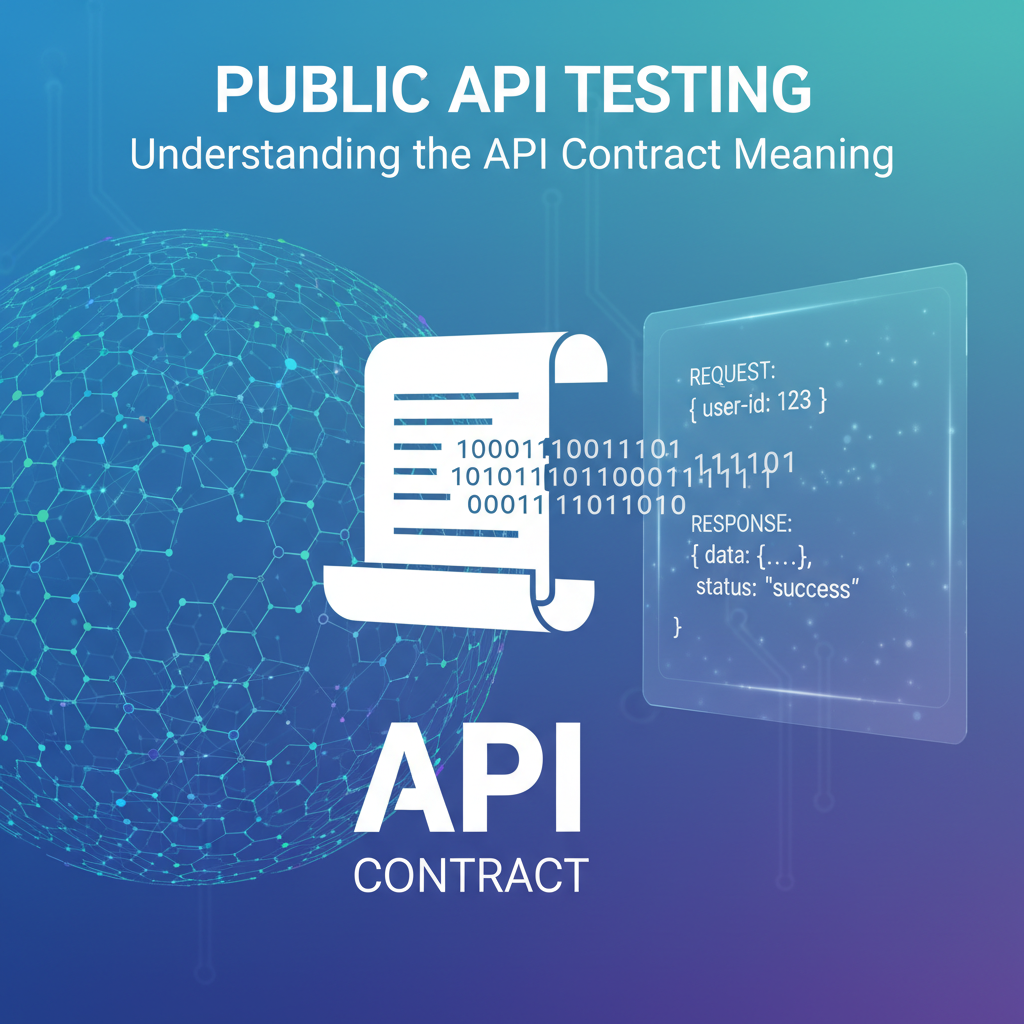


In the intricate tapestry of modern software development, Application Programming Interfaces (APIs) serve as the fundamental threads that connect disparate systems, enabling seamless communication and unlocking unparalleled innovation. From mobile applications fetching real-time data to microservices orchestrating complex business processes, APIs are the silent workhorses powering the digital economy. However, the true power and reliability of these connections, especially when dealing with public APIs exposed to a diverse ecosystem of consumers, hinge entirely on a concept often overlooked in its profound importance: the API contract. This contract is not merely a piece of documentation; it is the foundational agreement that dictates how an API should behave, how it expects to be interacted with, and what responses a consumer can reliably anticipate. Understanding and rigorously testing against this API contract is not just a best practice; it is an imperative for ensuring stability, security, and scalability in any API-driven architecture.
The proliferation of APIs has given rise to an unprecedented need for robust testing methodologies. Public APIs, by their very nature, are designed for external consumption, meaning they operate in an environment where the API provider has limited control over how consumers integrate and utilize them. This lack of direct control elevates the importance of a clear, unambiguous API contract, which acts as the common ground for all interactions. Without a precise understanding of this contract, public API testing becomes a fragmented and often futile exercise, leading to integration headaches, unexpected errors, and a breakdown of trust between providers and consumers. This comprehensive exploration delves deep into the meaning and significance of the API contract, dissecting its components, highlighting its role in effective public API testing, and emphasizing the overarching importance of sound API Governance in maintaining a healthy and reliable API ecosystem. We will journey through various testing paradigms, from functional to performance and security testing, all underpinned by the bedrock of a well-defined API contract, ultimately empowering both API providers and consumers to build more resilient and interoperable systems.
The API Contract: A Blueprint for Interoperability
At its core, an API contract is a formal, explicit agreement between an API provider and its consumers regarding the expected behavior, structure, and communication protocols of an API. Think of it as the legally binding document that governs all interactions, or perhaps more accurately, the architectural blueprint that specifies every detail of how two software components will communicate. This contract transcends mere informal documentation; it is a machine-readable and human-readable specification that leaves no room for ambiguity, ensuring that both parties have a shared understanding of the API's capabilities and limitations. Its existence is paramount in an environment where services are decoupled, and integration happens across different teams, organizations, and even continents. Without this clear contract, every integration effort would be a bespoke, error-prone endeavor, significantly increasing development time and maintenance costs.
The API contract is not a monolithic entity but rather a collection of precisely defined elements that collectively describe the API's interface. These elements, when meticulously detailed, form a comprehensive guide for anyone looking to interact with the API. Let's dissect the key components that constitute a robust API contract:
1. Endpoints and Operations
The most fundamental aspect of any API contract is the clear definition of its endpoints and the operations (HTTP methods) that can be performed on them. An endpoint specifies a unique resource or functionality accessible through a URL path, such as /users or /products/{id}. Each endpoint is typically associated with one or more HTTP methods like GET (retrieve data), POST (create data), PUT (update/replace data), PATCH (partial update), and DELETE (remove data). The contract must explicitly state which methods are supported for each endpoint, along with their intended semantic meaning. For instance, a contract might specify that GET /users retrieves a list of users, while POST /users creates a new user. Any deviation from these defined methods or an attempt to use an unsupported method should result in a predictable error response, typically an HTTP 405 Method Not Allowed. The clarity here is vital, as it dictates the very structure of API calls.
2. Request Parameters and Body
For each operation, the API contract must detail the exact structure and types of data expected in the request. This includes:
- Path Parameters: Variables embedded directly within the URL path (e.g.,
{id}in/products/{id}), specifying their data type (e.g., integer, string) and any constraints (e.g., min/max value, regex pattern). - Query Parameters: Key-value pairs appended to the URL after a
?(e.g.,?sort=name&page=1), used for filtering, sorting, or pagination. The contract should specify their names, data types, whether they are required or optional, and acceptable values. - Header Parameters: Information passed in HTTP request headers (e.g.,
Authorization,Content-Type,Accept). The contract must define which headers are expected, their purpose, and their valid formats. Authentication tokens, for example, are frequently transmitted via header parameters. - Request Body (Payload): For operations like POST, PUT, and PATCH, data is sent in the request body. The contract must provide a complete schema definition for this payload, often using JSON Schema. This schema defines the structure of the data (e.g., an object with specific fields), the data type of each field (e.g., string, number, boolean, array), whether fields are required or optional, and any complex validation rules (e.g., minimum length for a password, enumeration of allowed values for a status field). A precise schema ensures that consumers send well-formed requests, and the API can correctly parse and process them.
3. Response Structure and Status Codes
Equally important is the definition of the responses an API will return for each operation and potential scenario. This includes:
- HTTP Status Codes: A definitive list of all possible HTTP status codes the API might return (e.g., 200 OK, 201 Created, 204 No Content, 400 Bad Request, 401 Unauthorized, 404 Not Found, 500 Internal Server Error). For each status code, the contract should describe its meaning and when it will be returned. Consistency in status code usage is critical for reliable error handling.
- Response Headers: Similar to request headers, the contract should specify any relevant headers returned in the response (e.g.,
Content-Type,Locationfor newly created resources,RateLimit-Limit,RateLimit-Remaining). - Response Body (Payload): For successful operations (e.g., 200 OK, 201 Created), the contract must provide a detailed schema for the data returned in the response body. This schema, often JSON Schema, defines the structure, data types, and constraints of the successful response payload.
- Error Responses: Crucially, the contract must define the structure of error responses for various failure scenarios. A common practice is to have a standardized error object containing details like an error code, a human-readable message, and potentially specific details or links to documentation. This consistency allows consumers to implement robust error handling logic without having to parse unpredictable error formats.
4. Authentication and Authorization
The API contract must clearly specify the authentication and authorization mechanisms required to access protected resources. This includes:
- Authentication Schemes: Details on how consumers identify themselves (e.g., API keys, OAuth 2.0 flows, JWT tokens). This involves explaining how to obtain credentials, where to include them in requests (e.g.,
Authorizationheader), and the expected format. - Authorization Scopes/Roles: If the API uses granular authorization, the contract should define the necessary permissions or scopes required for specific operations (e.g., a
read:usersscope forGET /users,write:usersforPOST /users). This allows consumers to request appropriate permissions and understand why certain actions might be denied.
5. Versioning Strategy
As APIs evolve, new features are added, and existing ones might change. A clear versioning strategy is a critical part of the API contract, informing consumers how to interact with different API versions and what to expect when a new version is released. Common strategies include:
- URL Versioning: Embedding the version number in the URL (e.g.,
/v1/users,/v2/users). - Header Versioning: Specifying the version in a custom HTTP header.
- Media Type Versioning: Using the
Acceptheader to request a specific representation.
The contract should also outline the deprecation policy for older versions, giving consumers ample time to migrate.
6. Rate Limiting and Throttling
Public APIs are often subject to rate limits to prevent abuse and ensure fair usage for all consumers. The API contract should clearly articulate the rate limiting policy, including:
- The maximum number of requests allowed within a specific timeframe (e.g., 100 requests per minute).
- How the limits are communicated (e.g., via
RateLimit-*HTTP headers in responses). - The expected HTTP status code when a limit is exceeded (typically 429 Too Many Requests) and any retry-after mechanisms.
7. Service Level Agreements (SLAs)
While not always explicitly technical components of the API's interface, SLAs are a crucial part of the broader API contract. They define the guaranteed levels of service, such as:
- Uptime Guarantees: The percentage of time the API is expected to be available.
- Response Time Guarantees: Maximum acceptable latency for API calls.
- Support Policies: How and when support is available for issues.
- Data Retention Policies: For APIs that store data.
These operational aspects provide critical context and assurance for consumers, influencing their reliance on the public API.
A well-defined API contract, encompassing all these elements, provides an unambiguous source of truth for all stakeholders. For API providers, it ensures consistent development and clarity in communication. For consumers, it drastically reduces the effort required for integration, minimizes errors, and builds confidence in the API's reliability. It is the bedrock upon which successful public API testing is built, transforming testing from a speculative exercise into a precise validation process against agreed-upon specifications.
The Role of OpenAPI Specification in Defining the API Contract
While the concept of an API contract can exist informally, its true power is unlocked when formalized through a standardized, machine-readable format. This is where the OpenAPI Specification (formerly known as Swagger Specification) steps in as the de facto standard for defining RESTful APIs. OpenAPI provides a language-agnostic, human-readable, and machine-readable interface description language that precisely outlines every aspect of an API's contract, making it indispensable for modern API development and consumption.
OpenAPI Specification enables API providers to describe their API's capabilities in a structured, consistent manner. This description encompasses all the elements discussed previously: available endpoints, HTTP operations, request parameters (path, query, header), request bodies with their schemas, response structures (including various status codes and their associated schemas), authentication methods, and even example payloads. By using a standard like OpenAPI, the API contract moves beyond static, potentially outdated documentation and becomes a dynamic, actionable artifact that can drive various aspects of the API lifecycle.
How OpenAPI Formalizes the API Contract:
- Standardized Description Format: OpenAPI uses YAML or JSON to describe an API, providing a universally understood syntax. This standardization eliminates ambiguity that might arise from free-form text documentation or proprietary description formats. Every element, from the data type of a query parameter to the structure of a complex JSON response, is explicitly defined.
- Machine-Readability: The structured nature of OpenAPI definitions allows machines (tools and software) to "read" and understand the API contract. This capability is transformative, enabling a vast ecosystem of automated tooling.
- Comprehensive Contract Definition: An OpenAPI document acts as a single source of truth for the API contract. It covers:
- Paths and Operations: Each endpoint (
/users,/products/{id}) is mapped to specific HTTP methods (GET, POST, PUT, DELETE). - Parameters: Details for path, query, header, and cookie parameters are specified, including their names, types, descriptions, and whether they are required.
- Request Bodies: Precise schemas (often using JSON Schema) define the expected structure and data types of request payloads.
- Responses: For each operation and potential HTTP status code, the expected response body schema and relevant headers are documented. This allows consumers to reliably anticipate both success and error payloads.
- Security Schemes: Authentication mechanisms (API keys, OAuth2, Bearer Tokens) are clearly defined, along with their application to specific operations.
- Tags and Descriptions: Human-readable descriptions for operations, parameters, and models enhance clarity.
- Examples: Concrete examples of request and response payloads further illustrate the contract, making it easier for developers to understand expected data formats.
- Paths and Operations: Each endpoint (
Benefits of Using OpenAPI for the API Contract:
- Automated Documentation Generation: Tools like Swagger UI can automatically render interactive API documentation directly from an OpenAPI specification. This ensures that documentation is always consistent with the live API contract, eliminating manual update errors.
- Client SDK and Server Stub Generation: The machine-readable nature of OpenAPI allows tools to automatically generate client libraries (SDKs) in various programming languages (e.g., Python, Java, JavaScript) and server stubs. This significantly accelerates integration efforts for consumers and speeds up API implementation for providers.
- Design-First Approach: OpenAPI encourages a design-first API development methodology. By defining the API contract using OpenAPI before writing any code, teams can iteratively refine the interface, gather feedback from potential consumers, and ensure the API meets business requirements and developer expectations. This proactive approach prevents costly redesigns down the line.
- Enhanced API Governance: OpenAPI documents serve as a cornerstone for API Governance. They provide a baseline for adherence to design standards, consistency across APIs, and facilitate reviews. Tools can automatically lint OpenAPI definitions against established style guides and best practices.
- Simplified API Testing: OpenAPI specifications are invaluable for public API testing. Test frameworks can ingest the OpenAPI definition to:
- Generate test cases: Automatically create positive and negative test scenarios based on the defined schemas, parameters, and response structures.
- Validate requests and responses: Ensure that actual API calls and their responses conform precisely to the contract. This includes validating data types, required fields, and the overall structure of payloads.
- Perform contract testing: Directly verify that the API implementation adheres to the specified contract.
- Improved Collaboration: A single, standardized OpenAPI document fosters better collaboration between frontend and backend teams, internal and external developers, and even business analysts, all working from the same precise understanding of the API.
- Facilitates API Discovery: OpenAPI documents can be published in developer portals, making APIs easily discoverable and understandable for potential consumers.
The OpenAPI Specification is more than just a documentation format; it is a powerful tool that formalizes the API contract, making it unambiguous, actionable, and central to the entire API lifecycle. Its widespread adoption underscores its effectiveness in tackling the complexities of modern API development, particularly in the realm of public APIs where clear communication and reliable contracts are paramount for fostering trust and enabling widespread adoption. By embracing OpenAPI, organizations can significantly improve the quality, testability, and maintainability of their public APIs, laying a robust foundation for enduring interoperability.
Why Public API Testing is Crucial
The moment an API is designated as "public," its operational context fundamentally shifts. Unlike internal APIs, which operate within controlled environments and are consumed by known internal systems, public APIs are exposed to the wild, accessible by a multitude of unknown developers, applications, and diverse technological stacks. This external exposure introduces a unique set of challenges and elevates the criticality of comprehensive testing. Public API testing goes far beyond mere functional correctness; it's about ensuring resilience, security, performance, and a superior developer experience in an unpredictable, uncontrolled environment. Neglecting robust public API testing is akin to launching a product without quality assurance—it's a gamble that invariably leads to degraded user experience, security vulnerabilities, reputational damage, and ultimately, a failure to achieve the API's intended value.
1. Ensuring Reliability and Uptime
Public APIs are often critical components of third-party applications and services. If a public API experiences downtime, performance degradation, or unexpected behavior, it directly impacts the functionality and reliability of every application that consumes it. This ripple effect can be devastating, leading to customer dissatisfaction for API consumers and a loss of trust for the API provider. Robust public API testing, including continuous monitoring and automated regression tests, is essential to:
- Verify Uptime: Regular checks confirm the API is accessible and responding.
- Maintain Performance: Ensure the API consistently meets expected response times and handles anticipated load without degrading.
- Guarantee Data Integrity: Validate that data is consistently retrieved, created, updated, and deleted correctly and without corruption.
- Prevent Breaking Changes: Rigorous testing against the API contract ensures that new deployments or updates do not inadvertently introduce changes that break existing integrations.
2. Validating Correctness and Adherence to Contract
The API contract, especially when defined using OpenAPI, serves as the definitive source of truth for how the API should behave. Public API testing is the process of rigorously validating that the API implementation perfectly adheres to this contract. This involves:
- Schema Validation: Ensuring that request payloads conform to input schemas and that response payloads match output schemas, including data types, required fields, and structural integrity.
- Behavioral Correctness: Verifying that API endpoints perform their advertised functions correctly, that business logic is accurately applied, and that edge cases (e.g., invalid inputs, boundary conditions) are handled gracefully and predictably.
- Status Code Semantics: Confirming that the API returns the appropriate HTTP status codes (e.g., 200 for success, 400 for bad requests, 404 for not found) as defined in the contract.
- Error Handling: Testing that error responses are consistently structured, informative, and aligned with the contract, enabling consumers to diagnose and recover from issues effectively.
3. Fortifying Security Posture
Public APIs are prime targets for cyberattacks, as they often expose sensitive data and critical functionalities to the external world. Thorough security testing is non-negotiable for public APIs to protect both the provider's infrastructure and the data of its consumers. This includes:
- Authentication and Authorization Testing: Verifying that only authenticated and authorized users or applications can access protected resources and perform specific operations. This involves testing various authentication flows, token validity, and scope-based access controls.
- Input Validation: Ensuring that the API is resilient to common injection attacks (SQL injection, XSS) by rigorously validating and sanitizing all input data.
- Rate Limit Evasion: Testing the effectiveness of rate limiting mechanisms to prevent denial-of-service (DoS) attacks and resource exhaustion.
- Vulnerability Scanning: Employing automated tools to identify known security vulnerabilities in the API's code and dependencies.
- Data Exposure Testing: Ensuring that the API does not inadvertently expose sensitive or unnecessary information in its responses.
4. Ensuring Performance and Scalability
Public APIs often face unpredictable and fluctuating loads. Performance testing is crucial to ensure the API can handle anticipated traffic volumes without degradation, and also to understand its breaking points. This type of testing helps to:
- Identify Bottlenecks: Pinpoint areas of the API or its underlying infrastructure that become performance inhibitors under load.
- Validate Scalability: Confirm that the API can scale horizontally or vertically to meet increased demand.
- Measure Response Times: Determine average and percentile response times under various load conditions to ensure SLAs are met.
- Assess Stability Under Stress: Understand how the API behaves when pushed beyond its normal operating limits.
5. Enhancing Developer Experience (DX) and Usability
A great API is not just functional and secure; it's also easy and intuitive for developers to use. Public API testing extends to evaluating the developer experience. This aspect includes:
- Documentation Clarity: Ensuring that the API documentation (often generated from the OpenAPI contract) is accurate, comprehensive, and easy to understand.
- Ease of Integration: Assessing how straightforward it is for a developer to integrate with the API, from authentication to handling common use cases.
- Helpfulness of Error Messages: Verifying that error responses provide clear, actionable information that helps developers diagnose and resolve issues.
- Consistency: Ensuring that design patterns, naming conventions, and data structures are consistent across the entire API, reducing the cognitive load on developers.
6. Managing Costs and Reputation
API issues can have significant financial and reputational consequences. Bugs in public APIs can lead to costly outages, customer churn, and security breaches that erode trust. Rigorous testing is a proactive investment that mitigates these risks, leading to:
- Reduced Support Burden: Fewer bugs and clearer error messages mean fewer support tickets and a more efficient support team.
- Faster Development Cycles: Early detection of issues through automated testing prevents bugs from festering and becoming more expensive to fix later in the development cycle.
- Stronger Brand Image: A reliable, high-performing, and secure public API builds a reputation for quality and professionalism, attracting more developers and fostering a vibrant ecosystem.
In summary, public API testing is a multi-faceted discipline that addresses the unique challenges of external API consumption. By systematically validating correctness, reliability, security, performance, and usability against the explicit definitions of the API contract, organizations can transform their public APIs from potential liabilities into powerful assets that drive innovation and foster successful partnerships.
Types of Public API Testing: A Comprehensive Approach
To thoroughly validate a public API against its contract and ensure its fitness for external consumption, a multi-pronged testing strategy is essential. Each type of testing addresses different facets of the API's behavior, performance, and security. By combining these approaches, providers can build a robust safety net that catches issues before they impact consumers.
1. Contract Testing
Contract testing is perhaps the most direct form of public API testing when the API contract is the central artifact. It is designed to verify that the API (the "producer") adheres to its agreed-upon interface as understood by its consumers. This testing approach focuses solely on the interface definitions, ensuring that the structure and data types of requests and responses match the OpenAPI specification or other contract definitions.
- Producer-Side Contract Testing: The API provider writes tests that directly validate the API's implementation against its OpenAPI specification. This ensures that the API actually produces responses and accepts requests in the format it claims. If the code deviates from the specification, these tests will fail. Tools for this might involve libraries that parse the OpenAPI spec and then make calls to the API, validating the results against the spec.
- Consumer-Driven Contract Testing (CDCT): This is a more advanced form where the API consumers define their expectations of the API's interface. Consumers write "pacts" or contracts that specify the requests they will make and the responses they expect to receive. These contracts are then shared with the API provider, who runs automated tests to ensure their API can fulfill all consumer expectations. If the provider makes a change that breaks a consumer's contract, the tests fail, alerting the provider before deployment. Tools like Pact are popular for CDCT, offering significant benefits in distributed microservice architectures by enabling independent deployment and reducing integration risks.
- Benefits:
- Early Detection of Breaking Changes: Catches contract violations early in the development cycle, preventing disruptions for consumers.
- Reduced Integration Friction: Ensures providers and consumers have a consistent understanding of the API.
- Decoupling: Allows API providers and consumers to develop and deploy independently, as long as the contract is maintained.
- Clear Source of Truth: Reinforces the API contract as the authoritative definition.
2. Functional Testing
Functional testing validates that the API performs its intended business functions correctly and that all operations behave as expected according to the API contract. This is about verifying the what and how of the API's actual behavior, beyond just its interface structure.
- Basic CRUD Operations: Testing the fundamental Create, Read, Update, and Delete operations for each resource. For example,
POST /usersshould successfully create a user,GET /users/{id}should retrieve it,PUT /users/{id}should update it, andDELETE /users/{id}should remove it. - Positive and Negative Scenarios:
- Positive: Testing with valid inputs and expected conditions to ensure the API behaves as designed.
- Negative: Testing with invalid inputs, missing parameters, incorrect data types, unauthorized requests, and edge cases (e.g., empty strings, null values, maximum/minimum allowed values) to ensure the API handles errors gracefully and returns appropriate error responses (e.g., 400 Bad Request, 401 Unauthorized, 404 Not Found) as defined in the contract.
- Complex Workflows: Testing sequences of API calls that represent typical user journeys or business processes (e.g., creating a user, then assigning them a role, then retrieving their permissions).
- Data Validation and Transformation: Verifying that data submitted to the API is correctly validated, processed, transformed, and persisted, and that retrieved data is accurate and correctly formatted.
- Business Logic Verification: Ensuring that the underlying business rules and logic are correctly implemented and reflected in the API's responses.
- Tools: Postman, SoapUI, custom scripts using libraries like
requests(Python) oraxios(JavaScript), automated testing frameworks like Karate.
3. Performance Testing
Performance testing evaluates the API's responsiveness, stability, and scalability under various load conditions. For public APIs, this is critical because usage patterns can be unpredictable, and high demand can severely impact availability and user experience.
- Load Testing: Simulating a typical number of concurrent users or requests to measure the API's performance under expected load, typically focusing on response times, throughput, and error rates.
- Stress Testing: Pushing the API beyond its normal operating capacity to determine its breaking point, observe how it recovers, and identify its limits. This helps in understanding the API's resilience and error handling under extreme conditions.
- Soak Testing (Endurance Testing): Running the API under a moderate to high load for an extended period (hours or days) to detect memory leaks, resource exhaustion, or other performance degradation issues that manifest over time.
- Concurrency Testing: Evaluating how the API handles multiple simultaneous requests to the same endpoint or resource, particularly concerning data consistency and race conditions.
- Spike Testing: Simulating sudden, drastic increases and decreases in load to assess the API's ability to quickly scale up and down.
- Tools: JMeter, k6, LoadRunner, Gatling, BlazeMeter.
4. Security Testing
Given their exposure, public APIs are frequent targets for malicious attacks. Security testing aims to uncover vulnerabilities that attackers could exploit. This is a continuous process that should be integrated throughout the API lifecycle.
- Authentication and Authorization Testing:
- Verifying that all protected endpoints require proper authentication (e.g., valid API keys, correct OAuth tokens).
- Testing various invalid credentials, expired tokens, and missing authentication headers to ensure appropriate 4xx errors.
- Ensuring that users/applications can only access data and perform actions for which they are explicitly authorized (e.g., user A cannot access user B's data).
- Testing privilege escalation attempts.
- Injection Attacks: Attempting to inject malicious code or commands through input fields (e.g., SQL Injection, Command Injection, Cross-Site Scripting - XSS) to exploit backend systems or manipulate data.
- Broken Object Level Authorization (BOLA): Testing if an API correctly verifies the user's permission to access every object they request, preventing unauthorized access to another user's resources by simply changing an ID in the URL. This is a common and critical vulnerability in APIs.
- Broken Authentication: Looking for weaknesses in authentication processes, like weak password policies, improper token management, or brute-force vulnerabilities.
- Excessive Data Exposure: Checking if the API returns more data than what is needed by the client, potentially exposing sensitive information.
- Rate Limiting and Throttling Bypass: Attempting to circumvent rate limits to launch DoS attacks or brute-force credentials.
- OWASP API Security Top 10: A comprehensive guide to the most critical security risks facing APIs, providing a checklist for security testing.
- Tools: OWASP ZAP, Burp Suite, Postman (with scripting), specialized API security testing platforms.
5. Compliance Testing
For APIs operating in regulated industries (e.g., healthcare, finance), compliance testing ensures that the API adheres to relevant industry standards, legal requirements, and data privacy regulations.
- GDPR/CCPA Compliance: Verifying that the API handles personal data in accordance with privacy regulations, including data access, rectification, erasure, and consent management.
- HIPAA Compliance (Healthcare): Ensuring that sensitive health information (PHI) is handled, stored, and transmitted securely and in compliance with HIPAA rules.
- PCI DSS Compliance (Payment Industry): If the API handles payment card data, verifying adherence to Payment Card Industry Data Security Standard requirements.
- Industry-Specific Standards: Compliance with other relevant standards like Open Banking APIs, FHIR (healthcare), or local financial regulations.
6. Usability/Developer Experience Testing
While not strictly technical, testing the usability and developer experience (DX) of a public API is paramount for its adoption and success. A technically perfect API with poor DX will struggle to gain traction.
- Documentation Review: Critically assessing the clarity, accuracy, completeness, and navigability of the API documentation (often derived from the OpenAPI spec). Are examples provided? Is it easy to find what you need?
- Onboarding Experience: Evaluating the ease of getting started, from signing up for an API key to making the first successful API call.
- Error Message Clarity: Ensuring that error responses are not just technically correct but also genuinely helpful for developers to diagnose and resolve issues. Do they provide actionable advice?
- SDK/Client Library Usability: If provided, testing the generated SDKs for ease of use and consistency.
- Consistency: Checking for consistent naming conventions, data formats, and design patterns across all endpoints.
Table: Comparison of Public API Testing Types
| Testing Type | Primary Objective | Focus Area | Key Benefits | Examples of What to Test |
|---|---|---|---|---|
| Contract Testing | Verify API adherence to specified interface. | Request/response schemas, parameters, data types. | Early detection of breaking changes, reduced integration friction. | Validation of JSON schema for user creation, ensuring required fields are present. |
| Functional Testing | Verify API performs intended business logic correctly. | Endpoint behavior, business rules, data manipulation. | Ensures API delivers intended value, handles edge cases. | Successful creation/retrieval of resources, error handling for invalid input. |
| Performance Testing | Evaluate API responsiveness, stability, and scalability. | Response times, throughput, error rates under load. | Identifies bottlenecks, ensures scalability, meets SLAs. | API response time under 1000 concurrent users, API behavior during traffic spikes. |
| Security Testing | Uncover vulnerabilities to protect data and systems. | Authentication, authorization, input validation, data exposure. | Prevents breaches, protects data, maintains trust. | Unauthorized access attempts, SQL injection, bypass of rate limits, BOLA. |
| Compliance Testing | Ensure adherence to industry standards and regulations. | Data privacy, security protocols, regulatory frameworks. | Avoids legal penalties, maintains industry trust. | GDPR data handling, HIPAA data protection, PCI DSS for payment APIs. |
| Usability/DX Testing | Assess ease of use and developer experience. | Documentation clarity, error messages, onboarding process. | Boosts adoption, reduces support burden, improves reputation. | Clarity of API documentation, helpfulness of 400 Bad Request error messages. |
By strategically implementing these diverse testing types, public API providers can build confidence in their offerings, mitigate risks, and foster a thriving ecosystem of consumers who trust their APIs for critical functionality. Each test, ultimately, is a validation against the API contract, ensuring that the agreement between provider and consumer is honored at every level.
APIPark is a high-performance AI gateway that allows you to securely access the most comprehensive LLM APIs globally on the APIPark platform, including OpenAI, Anthropic, Mistral, Llama2, Google Gemini, and more.Try APIPark now! 👇👇👇
Strategies and Best Practices for Public API Testing
Effective public API testing is not just about executing tests; it involves a strategic approach encompassing environment management, automation, monitoring, and disciplined data handling. Given the external nature of public APIs, these strategies are even more critical to maintain reliability and build consumer trust.
1. Robust Test Environment Management
Testing public APIs requires careful consideration of the environments used:
- Dedicated Testing Environments: Never test directly against production public APIs for exhaustive or destructive tests. Maintain dedicated staging, QA, or sandbox environments that mirror production as closely as possible. These environments should have their own isolated databases and configurations.
- Data Isolation: Ensure that test data in development and staging environments is distinct from production data, especially for sensitive information. This prevents accidental data corruption or exposure.
- Mocking External Dependencies: Public APIs often rely on other external services. For testing purposes, especially unit or integration tests, consider mocking or stubbing these dependencies. This isolates the API under test, makes tests faster, more reliable, and prevents unintended side effects on third-party systems. However, for end-to-end tests, actual external integrations might be necessary.
- Environment Parity: Strive for maximum parity between testing environments and production. Differences in infrastructure, network configuration, database versions, or even minor code variations can lead to "it worked on my machine" issues that only manifest in production.
2. Comprehensive Automation and CI/CD Integration
Manual testing is insufficient and unsustainable for the complexity and frequency of changes in public APIs. Automation is the cornerstone of effective public API testing.
- Automated Test Suites: Develop extensive automated test suites for all types of testing (contract, functional, performance, security). These suites should cover common use cases, edge cases, and critical security scenarios.
- Continuous Integration/Continuous Deployment (CI/CD): Integrate API test suites directly into your CI/CD pipelines. This ensures that every code commit triggers automated tests, providing immediate feedback on regressions or contract violations. Failing tests should block deployments to production.
- Test Data Management Automation: Automate the creation, provisioning, and cleanup of test data. This ensures tests are repeatable, isolated, and don't interfere with each other. Tools can generate synthetic data or reset databases to a known state before each test run.
- API Test Generation from OpenAPI: Leverage tools that can automatically generate basic test cases directly from your OpenAPI specification. While these won't cover all business logic, they provide a strong baseline for contract validation and basic functional checks.
3. Proactive Monitoring and Alerting
Testing is often a pre-release activity, but public APIs require continuous vigilance post-deployment.
- Real-time API Monitoring: Implement monitoring tools that continuously check the availability, performance, and correctness of your public API endpoints in production. This involves making synthetic calls and validating responses.
- Performance Baselines and Alerts: Establish performance baselines (e.g., average response times, error rates) and configure alerts to notify teams immediately when these baselines are breached.
- Error Logging and Analysis: Implement robust logging for all API requests and responses, especially for errors. Tools like APIPark provide detailed API call logging, recording every detail of each API call. This feature is invaluable for quickly tracing and troubleshooting issues in API calls, ensuring system stability and data security. Analyzing these logs helps identify patterns, anticipate issues, and proactively address problems before they become widespread. APIPark also offers powerful data analysis capabilities, analyzing historical call data to display long-term trends and performance changes, helping businesses with preventive maintenance before issues occur.
- Consumer Feedback Channels: Provide clear channels for API consumers to report issues, bugs, or unexpected behavior. Integrate this feedback loop into your testing and development processes.
4. Disciplined Data Management for Testing
Test data is as critical as the tests themselves. Poor test data management can lead to unreliable, non-reproducible tests.
- Realistic Test Data: Use test data that closely resembles production data in terms of volume, variety, and complexity, but ensure it's anonymized or synthetic to protect privacy.
- Data Isolation: Each test should ideally operate on its own isolated set of data to prevent dependencies and ensure test repeatability.
- Data Seeding and Cleanup: Automate the process of seeding test data before tests and cleaning it up afterward. This ensures a consistent starting state for every test run.
- Edge Case Data: Include data that represents edge cases and boundary conditions (e.g., maximum string lengths, zero values, special characters) to thoroughly test input validation.
5. Version Control for Tests and OpenAPI Specifications
Treat your test code and OpenAPI specification with the same rigor as your application code.
- Store in Version Control: Keep all automated tests and OpenAPI definition files in a version control system (e.g., Git) alongside your API code.
- Sync with API Versions: Ensure that the API contract (OpenAPI spec) and the corresponding tests are versioned in sync with the API itself. When API V2 is released, there should be a clear V2 contract and V2 tests.
- Code Review for Tests: Subject test code to the same code review process as application code to ensure quality, maintainability, and coverage.
6. Embrace Consumer-Driven Contract Testing (CDCT)
For complex microservice architectures or highly distributed API ecosystems, CDCT is a powerful strategy.
- Pact or Similar Tools: Utilize frameworks like Pact where consumers define their expectations (the "contract") of the API. The provider then verifies that their API implementation meets all consumer-defined contracts.
- Benefits: Reduces the need for extensive end-to-end integration tests, allows teams to deploy independently with confidence, and ensures that changes are backward-compatible from the consumer's perspective.
7. Continuous Learning and Adaptation
The API landscape, security threats, and testing tools are constantly evolving.
- Stay Updated: Keep abreast of new testing tools, security vulnerabilities, and best practices in API development and testing.
- Regular Review and Refinement: Periodically review your API testing strategy, tools, and test coverage. Adapt and refine your approach based on new insights, API changes, and feedback.
- Security Audits: Conduct regular third-party security audits or penetration tests for your public APIs to uncover sophisticated vulnerabilities that automated tools might miss.
By diligently applying these strategies and best practices, organizations can establish a robust framework for public API testing that not only validates against the API contract but also ensures long-term reliability, performance, and security for their crucial digital assets. This proactive and comprehensive approach transforms API testing from a mere technical chore into a strategic advantage, fostering trust and enabling widespread adoption of their public APIs.
API Governance in the Context of Public APIs and Contracts
API Governance is the comprehensive framework of policies, standards, processes, and tools used to manage the entire API lifecycle, from design and development to publication, consumption, and deprecation. For public APIs, where consistency, security, and reliability are paramount for external adoption and trust, robust API Governance is not just beneficial—it is absolutely essential. It provides the necessary structure to ensure that all public APIs adhere to the agreed-upon API contract, operate reliably, and contribute positively to the organization's strategic goals.
What is API Governance?
API Governance defines how APIs are created, what standards they must meet, and who is responsible for each stage. It covers:
- Design Guidelines: Establishing consistent naming conventions, data formats, error handling patterns, and authentication mechanisms across all APIs.
- Security Policies: Defining mandatory security practices, vulnerability scanning requirements, and access control policies.
- Versioning Strategies: Prescribing how API versions are managed and communicated to consumers.
- Documentation Standards: Ensuring that API contracts (like OpenAPI specifications) are complete, accurate, and easily accessible.
- Lifecycle Management: Dictating processes for API approval, publication, monitoring, deprecation, and decommissioning.
- Performance Benchmarks: Setting expectations for API response times, throughput, and scalability.
- Compliance: Ensuring APIs meet regulatory requirements (e.g., GDPR, HIPAA).
How API Governance Reinforces the API Contract:
API Governance acts as the enforcement mechanism for the API contract, ensuring that the theoretical agreement translates into practical, consistent implementation across all public APIs.
- Standardizing API Design Principles:
- Consistent Contracts: Governance mandates the use of a standardized format like OpenAPI Specification for defining all API contracts. This ensures that every public API contract is machine-readable and follows a consistent structure, making it easier for consumers to understand and integrate.
- Unified Architectural Patterns: It enforces consistent design patterns (e.g., RESTful principles), data types, and request/response structures, preventing fragmentation and ensuring that all APIs "feel" similar to consumers, even if built by different teams.
- Ensuring Consistent Documentation:
- Governance policies dictate that all public APIs must have up-to-date and comprehensive documentation, usually auto-generated from their OpenAPI specifications. This ensures that the published API contract is always accessible and accurately reflects the API's current state.
- Managing Versioning Strategies:
- API Governance defines a clear, consistent versioning strategy (e.g., URL-based, header-based) and policies for deprecating old versions. This prevents breaking changes from blindsiding consumers and allows for smooth transitions when APIs evolve, upholding the long-term integrity of the contract.
- Defining Security Policies and Enforcement:
- Governance establishes mandatory security requirements (e.g., OAuth 2.0 for authentication, specific encryption protocols). It also ensures that security testing is a mandatory part of the API lifecycle, validating that the security aspects of the API contract are met. This includes ensuring proper authorization checks, input validation, and protection against common vulnerabilities.
- Establishing Performance Benchmarks:
- Governance sets clear performance expectations (e.g., maximum latency, error rates) which are often documented in the broader API contract (SLAs). Monitoring and performance testing under governance ensure these benchmarks are consistently met in production.
- Facilitating Discovery and Reuse:
- A well-governed API ecosystem includes a centralized API catalog or developer portal where all public APIs are documented and discoverable. This makes it easy for internal teams and external consumers to find, understand, and reuse existing APIs, promoting efficiency and preventing redundant development.
APIPark and API Governance
Platforms like APIPark - Open Source AI Gateway & API Management Platform are specifically designed to facilitate and strengthen API Governance, especially for organizations dealing with a high volume of APIs, including AI and REST services. APIPark acts as an all-in-one AI gateway and API developer portal, open-sourced under the Apache 2.0 license, providing a robust suite of tools that directly support the enforcement and management of API contracts and overall API Governance.
Here's how APIPark enhances API Governance and reinforces the API contract:
- End-to-End API Lifecycle Management: APIPark assists with managing the entire lifecycle of APIs, including design, publication, invocation, and decommission. This structured approach directly supports governance policies by regulating API management processes, managing traffic forwarding, load balancing, and versioning of published APIs, ensuring all stages adhere to defined standards.
- Unified API Format for AI Invocation: By standardizing the request data format across all AI models, APIPark ensures that changes in AI models or prompts do not affect the application or microservices. This is a powerful form of contract enforcement, simplifying AI usage and maintenance costs by guaranteeing a consistent interface regardless of the underlying AI model.
- API Service Sharing within Teams: The platform allows for the centralized display of all API services, making it easy for different departments and teams to find and use the required API services. This promotes discovery, reduces duplication, and ensures that developers are working with the latest, governed versions of APIs.
- Independent API and Access Permissions for Each Tenant: APIPark enables the creation of multiple teams (tenants), each with independent applications, data, user configurations, and security policies. This feature directly supports granular governance by allowing fine-grained control over who can access which APIs, enforcing authorization rules as defined in the API contract.
- API Resource Access Requires Approval: APIPark allows for the activation of subscription approval features, ensuring that callers must subscribe to an API and await administrator approval before they can invoke it. This prevents unauthorized API calls and potential data breaches, enforcing strict access controls and security aspects of the API contract.
- Detailed API Call Logging and Data Analysis: As mentioned earlier, APIPark provides comprehensive logging capabilities, recording every detail of each API call, which is crucial for monitoring contract adherence and troubleshooting issues. Its powerful data analysis features help businesses with preventive maintenance by identifying trends and performance changes, ensuring APIs consistently meet their SLAs defined in the contract.
- Quick Integration of 100+ AI Models & Prompt Encapsulation: For AI-driven APIs, APIPark's ability to quickly integrate and encapsulate prompts into REST APIs means that even complex AI functionalities can be exposed with a consistent, well-defined API contract. This simplifies the governance of AI services by enforcing a unified invocation model.
By leveraging platforms like APIPark, organizations can move beyond theoretical governance policies to practical, automated enforcement. This ensures that their public APIs are not only technically sound and secure but also consistently adhere to their defined contracts, fostering a reliable, scalable, and trustworthy API ecosystem for all consumers. Ultimately, robust API Governance, powered by comprehensive tools, is the key to maximizing the value and minimizing the risks associated with public APIs.
Challenges in Public API Testing
Despite the clear benefits and established best practices, public API testing comes with its own set of inherent challenges that teams must proactively address. These challenges often stem from the external nature of public APIs, the complexities of distributed systems, and the dynamic landscape of software development.
1. Managing Third-Party Dependencies
Public APIs rarely operate in isolation. They often depend on other internal services, external third-party APIs (e.g., payment gateways, mapping services), or cloud infrastructure.
- Unpredictable Behavior: External dependencies can have their own outages, performance fluctuations, or unexpected changes, which can cause test failures that are unrelated to the API under test.
- Rate Limits and Costs: Testing against live third-party APIs can incur costs and quickly hit rate limits, making extensive automated testing problematic.
- Data Consistency: Ensuring consistent test data across multiple dependent systems can be extremely difficult.
- Mitigation: Employ judicious use of mocking and stubbing for unit and integration tests, but conduct end-to-end tests with actual dependencies in staging environments. Implement robust error handling and retry mechanisms in the API itself to cope with third-party unreliability, and test these mechanisms thoroughly.
2. Variability of Network Latency and External Environments
Public APIs are accessed over the internet, meaning network conditions can vary wildly for different consumers.
- Inconsistent Test Results: Network latency, packet loss, and firewall rules can introduce variability into test results, particularly for performance tests, making it hard to diagnose actual API issues versus network issues.
- Geo-Distribution: If an API is served globally, testing from different geographical regions is necessary to ensure consistent performance and accessibility.
- Mitigation: Test in environments that simulate real-world network conditions. Isolate network-related issues from API-specific bugs. Utilize geographically distributed monitoring solutions.
3. Data Privacy and Security Concerns in Testing
Working with public APIs, especially those that handle sensitive user data, introduces significant privacy and security concerns during the testing phase.
- Production Data Misuse: Using actual production data for testing, even if anonymized, carries risks of accidental exposure or misuse, which can violate regulations like GDPR or HIPAA.
- Sensitive Credentials: Storing and managing API keys, tokens, and other credentials for accessing public APIs during testing must be done securely to prevent leaks.
- Vulnerability Exposure: Test environments, if not properly secured, can become targets for attackers looking for ways into the production system.
- Mitigation: Use synthetic, anonymized, or fully isolated test data. Implement robust access controls for test environments. Follow strict security protocols for managing test credentials (e.g., environment variables, secret management tools). Conduct regular security audits of testing infrastructure.
4. Keeping Tests Updated with API Changes
APIs evolve. New features are added, existing ones are modified, and sometimes, even with strict API Governance and versioning, breaking changes occur.
- Test Maintenance Overhead: Updating a large suite of automated tests every time the API changes can be a significant time and resource sink, especially if tests are tightly coupled to implementation details rather than the contract.
- Detecting Breaking Changes: Without consumer-driven contract testing, providers might not immediately realize a change is "breaking" from a consumer's perspective.
- Mitigation: Prioritize contract testing and consumer-driven contract testing. Generate tests directly from OpenAPI specifications where possible. Adopt a design-first approach to API development to minimize unexpected changes. Implement robust versioning strategies and communicate deprecations clearly.
5. Handling Rate Limits and Quotas During Testing
Public APIs often enforce rate limits to protect their infrastructure and ensure fair usage. These limits can be problematic for automated testing.
- Test Throttling: Automated test suites, especially performance tests, can easily exceed rate limits, leading to 429 Too Many Requests errors and hindering effective testing.
- Blocked Accounts: Repeatedly hitting rate limits can lead to temporary or permanent blocking of test accounts.
- Mitigation: Use dedicated test API keys or accounts with higher rate limits (if available from the provider). Implement intelligent test frameworks that can pause, retry, or distribute requests to stay within limits. Mock rate limit responses to test client-side retry logic. Test the API's actual rate limiting mechanism as part of security and performance testing, but do so carefully to avoid service disruption.
6. Managing Test Environments for External APIs (When Consuming)
When an organization consumes a public API, testing its own integration code also involves dealing with the external API.
- Dependency on Provider's Stability: The consumer's integration tests depend on the provider's API being available and behaving as expected.
- Provider's Test Data: Consumers often have no control over the test data available in the provider's sandbox environments.
- Mitigation: Create robust mocks or stubs for the external public API within the consumer's test suite. This allows the consumer's code to be tested in isolation. Only use the actual public API for end-to-end integration tests in a dedicated staging environment, and manage test data carefully if the provider allows.
Addressing these challenges requires a combination of strategic planning, robust tooling, disciplined processes, and a deep understanding of the API contract. By acknowledging and proactively mitigating these hurdles, teams can significantly improve the effectiveness and reliability of their public API testing efforts, ultimately leading to more stable integrations and a stronger API ecosystem.
The Future of API Contracts and Testing
The landscape of APIs is in constant flux, driven by advancements in technology, evolving business needs, and the increasing demand for seamless digital experiences. As APIs become even more pervasive, the concepts of API contracts and public API testing are also set to undergo significant transformation, becoming more sophisticated, automated, and intelligently integrated into the entire development lifecycle. The future promises an even tighter coupling between design, contract, and test, ushering in an era of hyper-reliable and inherently secure APIs.
1. AI/ML in API Testing
The advent of Artificial Intelligence and Machine Learning is poised to revolutionize API testing in several profound ways:
- Intelligent Test Case Generation: AI algorithms can analyze API contracts (OpenAPI specs), historical API call logs, and application code to automatically generate more comprehensive and intelligent test cases, including complex scenarios and edge cases that humans might miss. This can significantly reduce the manual effort of test writing.
- Predictive Anomaly Detection: ML models can learn normal API behavior (response times, error rates, traffic patterns) and proactively detect anomalies in real-time. This moves from reactive alerting to predictive maintenance, identifying potential issues before they escalate into major outages.
- Self-Healing Tests: AI could enable tests to automatically adapt to minor, non-breaking API changes (e.g., reordering of fields in a JSON response) without requiring manual test updates, reducing maintenance overhead.
- Smart Security Testing: AI-powered security tools can learn from past attack vectors and constantly evolve to identify new vulnerabilities in API endpoints, making security testing more dynamic and effective.
2. Increased Reliance on Schema Validation and Contract Enforcement
The shift towards a design-first API development approach, heavily reliant on OpenAPI Specification, will only intensify.
- Automated Contract Enforcement Gateways: API gateways and proxies will play a more active role in real-time contract enforcement. They will automatically validate incoming requests and outgoing responses against the API's OpenAPI schema, rejecting non-compliant messages instantly. This moves contract validation from a testing phase into runtime.
- Code Generation from Contracts: More sophisticated tools will emerge for generating not just client SDKs and server stubs, but also entire data models, validation logic, and even parts of the business logic directly from the API contract, further reducing manual coding and ensuring contract adherence.
- GraphQL and Other Contract-Driven APIs: While this article focuses on REST and OpenAPI, other API paradigms like GraphQL are inherently contract-driven (via their schema). The principles of rigorous contract definition and validation will extend and deepen across all API types.
3. More Sophisticated API Monitoring and Observability
Beyond basic uptime checks, API monitoring will become far more intelligent and integrated with the contract.
- Contextual Monitoring: Monitoring tools will leverage the API contract to understand the meaning of API calls, not just their technical success. For example, knowing that a
POST /orderoperation should create an order, monitoring can verify the order creation process end-to-end, rather than just checking for a 201 status code. - Distributed Tracing for API Workflows: Tracing tools will provide deeper insights into multi-step API workflows that span multiple services, allowing for pinpoint accuracy in identifying performance bottlenecks or error origins.
- API Health Dashboards Driven by Contract Metrics: Dashboards will present API health metrics in the context of the API contract and SLAs, providing clear visibility into whether the API is meeting its agreed-upon obligations to consumers.
4. The Evolving Role of Developer Experience in API Success
The developer experience (DX) will continue to be a critical differentiator for public APIs, with a direct impact on adoption.
- Interactive and Personalized Documentation: Documentation will become even more interactive, providing runnable examples, code snippets in multiple languages, and personalized guides based on a developer's chosen technology stack. This will often be generated directly from enhanced API contracts.
- Self-Service Testing Portals: Developer portals will offer integrated sandbox environments and self-service testing tools, allowing consumers to test their integrations against the API contract even before reaching out to the provider.
- Feedback Loops Integrated into the Contract: Mechanisms for developers to provide feedback on specific API operations or documentation sections directly from the contract or developer portal will become standard, fostering a collaborative evolution of the API.
5. Convergence of API Governance and Security by Design
API Governance will become even more ingrained with security, shifting towards "security by design" from the very inception of the API contract.
- Automated Security Policy Enforcement: Governance platforms will automatically scan OpenAPI definitions for adherence to security best practices and policies, flagging potential vulnerabilities at the design stage.
- Identity and Access Management (IAM) Integrated with API Contracts: API contracts will explicitly define required scopes and permissions, and IAM systems will directly leverage these definitions to enforce granular access control at the gateway level.
- Zero-Trust API Architectures: The principle of "never trust, always verify" will become more prevalent, with every API request and response being rigorously authenticated and authorized against the contract, regardless of its origin.
The future of API contracts and testing is one of increased sophistication, automation, and intelligence. As organizations continue to build out their digital ecosystems with APIs, the foundational agreement—the API contract—will become even more central, acting as the intelligent blueprint that guides everything from automated test generation to real-time security enforcement. By embracing these evolving trends, API providers can build more robust, secure, and developer-friendly public APIs, cementing their place in the interconnected digital world.
Conclusion
In the rapidly expanding universe of digital services, where connectivity and data exchange form the bedrock of innovation, Public APIs stand as critical conduits. Their immense value, however, is inextricably linked to their reliability, predictability, and security. At the heart of ensuring these qualities lies a concept often underestimated in its profound impact: the API contract. This contract, meticulously defined through specifications like OpenAPI, is far more than mere documentation; it is the formal, binding agreement that dictates the intricate dance between an API provider and its myriad consumers. It provides the unambiguous blueprint for interaction, setting clear expectations for every request, every response, and every potential error.
Our comprehensive exploration has underscored that understanding the API contract is not just a theoretical exercise but a fundamental prerequisite for effective public API testing. Without a clear contract, testing becomes a speculative, reactive, and ultimately inefficient endeavor. When the contract is well-defined, however, it transforms public API testing into a precise validation process, allowing providers to systematically verify that their APIs meet agreed-upon standards for correctness, performance, security, and usability. From the granular validation of data schemas in contract testing to the rigorous interrogation of business logic in functional tests, and the stress-testing of infrastructure under load, every type of test draws its purpose and effectiveness from the API contract.
Moreover, the significance of robust API Governance in this context cannot be overstated. Governance acts as the steadfast guardian of the API contract, ensuring its consistent application and enforcement across the entire API lifecycle. It establishes the policies, standards, and processes that guide API design, development, publication, and deprecation, thereby cementing the contract as the single source of truth for all stakeholders. Platforms like APIPark exemplify how modern API management solutions facilitate this governance, offering tools for end-to-end lifecycle management, standardized AI invocation, granular access control, and invaluable logging and analytics. Such platforms empower organizations to transform their governance policies from abstract ideals into actionable, automated realities, ultimately fostering a more reliable and secure API ecosystem.
While the journey of public API testing is fraught with challenges—from managing complex third-party dependencies and variable network conditions to safeguarding sensitive test data and continually adapting to evolving API designs—the strategies and best practices outlined herein provide a clear roadmap for success. Embracing automation, integrating testing into CI/CD pipelines, establishing proactive monitoring, and meticulously managing test data are not mere suggestions but imperative disciplines for any organization committed to building high-quality public APIs.
Looking ahead, the future of API contracts and testing promises even greater sophistication, driven by the transformative power of AI and Machine Learning, an intensified reliance on automated contract enforcement, and a heightened focus on holistic API observability and exceptional developer experience. The relentless pursuit of reliable and secure public APIs, underpinned by robust API contracts and comprehensive testing, is no longer a competitive advantage but a fundamental necessity. By investing in these foundational pillars, organizations can not only mitigate risks and reduce operational costs but also unlock the full potential of their digital offerings, fostering innovation, building trust, and driving sustained success in the interconnected world.
5 FAQs on Public API Testing and API Contracts
1. What exactly is an API Contract, and why is it so important for Public API Testing?
An API Contract is a formal, explicit agreement between an API provider and its consumers, detailing how the API should behave, including its endpoints, operations (HTTP methods), expected request formats (parameters, body schemas), anticipated response structures (status codes, response body schemas), authentication mechanisms, and error handling. It's important for public API testing because it serves as the definitive source of truth, allowing testers to validate that the API's actual implementation precisely matches its advertised behavior. This ensures predictability, reliability, and reduces integration friction for external consumers, making tests more accurate and effective in catching deviations or breaking changes.
2. How does OpenAPI Specification (Swagger) relate to the API Contract?
OpenAPI Specification is the widely adopted, language-agnostic, and machine-readable format used to define the API Contract for RESTful APIs. It allows providers to describe every aspect of their API's interface in a structured YAML or JSON file. This formalization makes the API contract actionable: it can automatically generate documentation (like Swagger UI), client SDKs, server stubs, and most crucially, drive automated test case generation and validation. By using OpenAPI, the API contract is no longer just informal text but a precise, executable artifact that ensures consistency across the API lifecycle.
3. What are the key differences between Contract Testing and Functional Testing for public APIs?
- Contract Testing focuses on verifying that the API's interface (requests and responses) strictly adheres to the defined API contract (e.g., OpenAPI specification). It checks data types, required fields, and the structure of payloads. It's about ensuring the API looks and behaves as it promises at the interface level.
- Functional Testing goes deeper, validating that the API performs its intended business logic correctly. It checks the outcome of API operations, verifies business rules, handles edge cases with correct logic, and ensures data is processed and manipulated accurately. While contract testing checks the form, functional testing checks the underlying purpose and correctness. Both are crucial for comprehensive public API quality.
4. Why is API Governance so critical for managing public APIs, and how does it relate to the API Contract?
API Governance is the framework of policies, standards, and processes that guides the entire API lifecycle. It's critical for public APIs because it ensures consistency, security, and reliability across all external-facing services, which is vital for building consumer trust and fostering adoption. API Governance directly reinforces the API Contract by: * Mandating the use of standardized contract definitions (like OpenAPI). * Enforcing consistent API design principles and architectural patterns. * Defining strict security policies and versioning strategies. * Ensuring comprehensive and up-to-date documentation. * Establishing performance benchmarks. In essence, API Governance ensures that the API Contract is not just written but consistently implemented, maintained, and adhered to throughout the API's existence.
5. What are some major challenges in testing public APIs, and how can they be mitigated?
Major challenges include: * Managing Third-Party Dependencies: External services can be unreliable or incur costs. Mitigation: Use mocking/stubbing for isolated tests, and carefully conduct end-to-end tests in staging environments. * Variability of Network Latency: Inconsistent network conditions can skew test results. Mitigation: Test in environments simulating real-world network conditions and use distributed monitoring. * Data Privacy & Security: Using sensitive production data for testing poses risks. Mitigation: Use synthetic, anonymized, or fully isolated test data; secure test environments and credentials. * Keeping Tests Updated with API Changes: API evolution requires constant test maintenance. Mitigation: Prioritize contract testing, generate tests from OpenAPI, and implement robust versioning strategies. * Handling Rate Limits: Automated tests can easily hit API rate limits. Mitigation: Use dedicated test API keys with higher limits, implement intelligent test frameworks to manage request rates, or mock rate limit responses. Mitigating these challenges requires strategic planning, robust automation, disciplined processes, and a clear understanding of the API contract's boundaries.
🚀You can securely and efficiently call the OpenAI API on APIPark in just two steps:
Step 1: Deploy the APIPark AI gateway in 5 minutes.
APIPark is developed based on Golang, offering strong product performance and low development and maintenance costs. You can deploy APIPark with a single command line.
curl -sSO https://download.apipark.com/install/quick-start.sh; bash quick-start.sh

In my experience, you can see the successful deployment interface within 5 to 10 minutes. Then, you can log in to APIPark using your account.

Step 2: Call the OpenAI API.