Product Lifecycle Management for LLM Software Development: Best Practices
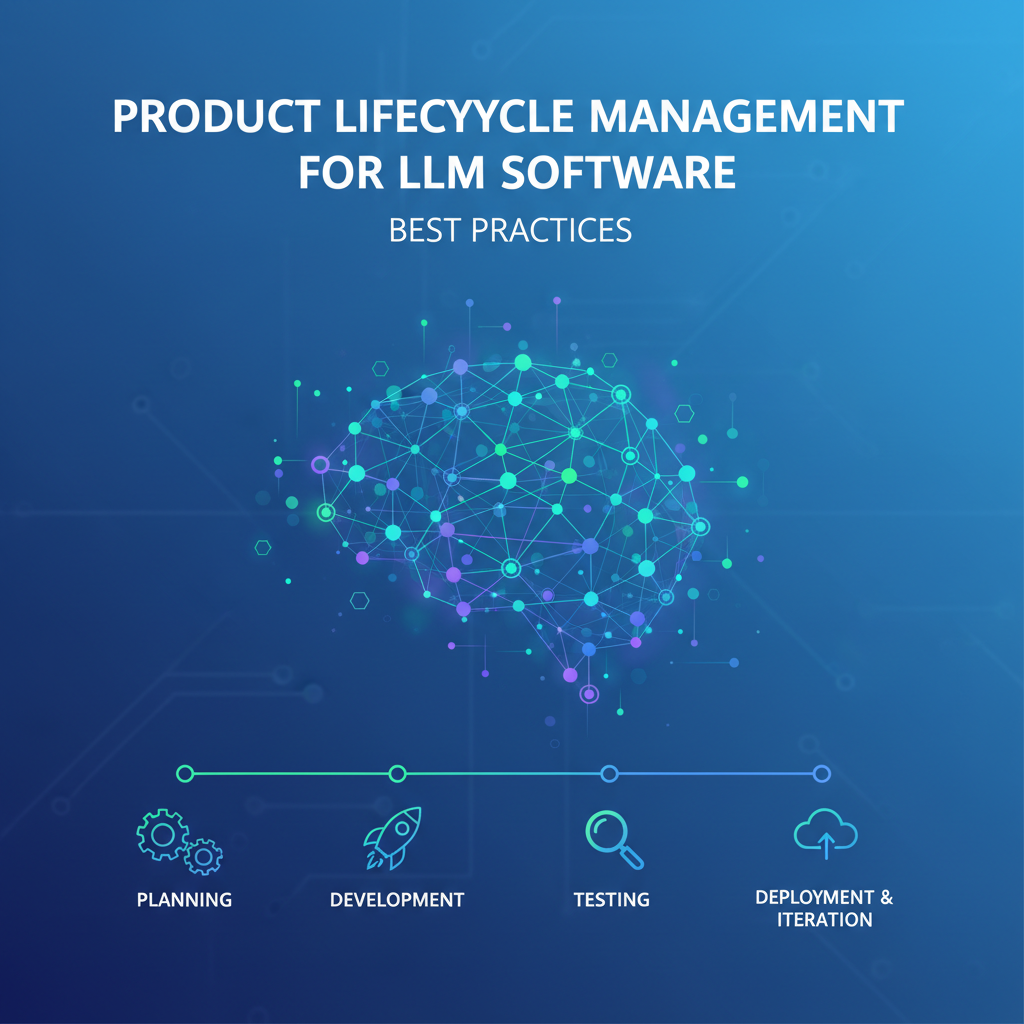


The advent of Large Language Models (LLMs) has undeniably ushered in a new era of software development, profoundly transforming how applications are conceived, built, and interacted with. From sophisticated content generation systems and intelligent virtual assistants to nuanced data analysis tools and highly personalized user experiences, LLMs are at the core of a technological revolution. However, the unique characteristics and inherent complexities of these models – their probabilistic nature, vast data dependencies, rapid evolution, and often opaque decision-making processes – necessitate a fundamentally different approach to their lifecycle management compared to traditional software. Relying on conventional software development lifecycle (SDLC) methodologies alone often falls short, leading to challenges in scalability, maintainability, security, and ethical deployment.
Product Lifecycle Management (PLM) for LLM software development is not merely an adaptation; it is a strategic imperative. It encompasses a holistic framework that guides an LLM-powered product from its initial conceptualization through development, deployment, continuous optimization, and eventual retirement. This specialized PLM acknowledges that an LLM application is a living, breathing entity, constantly learning, evolving, and interacting with dynamic data and user inputs. It demands meticulous attention to data provenance, model versioning, prompt engineering, robust evaluation metrics, and sophisticated deployment strategies that can handle the specific demands of generative AI. Without a well-defined and rigorously implemented PLM, organizations risk falling prey to issues like model drift, escalating inference costs, security vulnerabilities, and a failure to meet user expectations, ultimately undermining the value proposition of their LLM investments.
This comprehensive guide will delve into the critical phases of Product Lifecycle Management tailored specifically for LLM software. We will explore the unique challenges at each stage, from the initial ideation and data strategy to the intricate processes of development, robust deployment, and continuous optimization. We will highlight best practices that empower teams to navigate the complexities of LLM integration, ensuring their applications are not only performant and cost-efficient but also secure, ethical, and aligned with business objectives. Key to this discussion will be the strategic importance of concepts such as the LLM Gateway, the Model Context Protocol, and comprehensive API Governance, which together form the bedrock of scalable and resilient LLM operations. By adopting these advanced PLM practices, organizations can unlock the full potential of large language models, transforming innovative ideas into sustainable, high-impact products that redefine the digital landscape.
Understanding the Unique Challenges of LLM Software Development
The journey of developing software powered by Large Language Models is fraught with unique complexities that distinguish it significantly from traditional software engineering. These challenges demand a specialized approach to Product Lifecycle Management, one that accounts for the inherent nature of generative AI. Ignoring these distinctions can lead to significant roadblocks, ranging from unpredictable model behavior to unsustainable operational costs.
Data Centricity: The Lifeblood and the Burden
At the heart of every LLM lies data—massive datasets for pre-training, smaller, highly curated datasets for fine-tuning, and real-time user data for inference and RAG (Retrieval Augmented Generation). This data-centricity presents a multifaceted challenge. Firstly, data acquisition and curation are monumental tasks. Sourcing high-quality, diverse, and ethically sound data is critical for preventing bias and ensuring robust model performance. The process involves meticulous cleaning, annotation, and validation, often requiring significant human effort and specialized tooling. Poor data quality directly translates to poor model output, making this an upstream bottleneck that impacts the entire lifecycle.
Secondly, data drift is a pervasive issue. The real world is dynamic; user language evolves, new information emerges, and societal norms shift. An LLM trained on historical data can quickly become outdated or irrelevant, leading to degraded performance and accuracy. Managing this drift requires continuous monitoring of input data distributions and output quality, necessitating periodic retraining or fine-tuning, which itself is a resource-intensive endeavor. Furthermore, data governance and privacy are paramount. Handling sensitive user data requires strict adherence to regulations like GDPR and CCPA, demanding robust anonymization, consent management, and secure storage practices. The sheer volume and variety of data involved escalate these privacy concerns, making data lifecycle management a complex ethical and legal tightrope walk.
Model Volatility & Iteration: A Moving Target
Unlike traditional software where code changes are explicit and their effects often predictable, LLMs introduce an element of inherent volatility. Models themselves are constantly evolving: new architectures are released, existing models are updated by their providers (e.g., OpenAI, Anthropic), and organizations might fine-tune their own custom versions. This means the underlying "engine" of an LLM application is a moving target. Prompt engineering, which involves crafting the input text to guide the model's output, is another layer of complexity. Prompts are not static; they are highly iterative, requiring continuous refinement to achieve desired results. A slight change in wording, punctuation, or even the order of instructions can dramatically alter an LLM's response, making prompt versioning and experimentation crucial.
The context window limitations of LLMs also pose a significant design challenge. Managing long conversations or complex interactions requires sophisticated strategies to condense or selectively retrieve information, ensuring the model always has the most relevant context without exceeding its token limit. This influences architectural decisions and data flow. Moreover, the probabilistic nature of LLM outputs means that the same prompt might yield slightly different responses, making deterministic testing challenging. This inherent non-determinism necessitates new approaches to evaluation and quality assurance, moving beyond simple pass/fail criteria to more nuanced metrics of coherence, relevance, and safety.
Performance & Cost Optimization: The Economic Equation
Deploying and operating LLMs, especially at scale, comes with substantial performance and cost implications. Inference costs can quickly skyrocket due to the computational intensity of processing large models for every user request. Factors like the chosen model size, the number of tokens processed (both input and output), and the frequency of API calls directly impact operational expenses. Without careful management, the economic viability of an LLM application can be severely compromised.
Latency is another critical performance metric. Users expect quick responses, and a slow LLM can degrade user experience significantly. Optimizing inference speed involves strategies like efficient model serving, caching mechanisms, and judicious model selection (balancing capability with speed). Resource allocation and management are also complex, particularly in cloud environments. Provisioning adequate computational resources (GPUs, TPUs) while minimizing idle capacity requires sophisticated load balancing and auto-scaling solutions. The dynamic nature of LLM workloads, with potential spikes in usage, adds another layer of complexity to infrastructure planning.
Ethical & Safety Concerns: Navigating the Moral Minefield
The broad capabilities of LLMs also bring significant ethical and safety concerns that demand constant vigilance throughout the PLM. Bias is a major issue, as models can perpetuate or even amplify biases present in their training data, leading to unfair or discriminatory outputs. Identifying and mitigating these biases requires proactive data auditing, robust evaluation frameworks, and continuous monitoring. Hallucination, where LLMs generate factually incorrect yet confidently stated information, poses a direct threat to the trustworthiness and reliability of applications. Strategies to reduce hallucination, such as grounding LLMs with reliable external data sources (RAG), are essential.
Explainability and interpretability are often elusive with LLMs, making it difficult to understand why a model produced a particular output. This lack of transparency can hinder debugging, limit user trust, and complicate regulatory compliance, especially in sensitive domains. Misuse and harmful content generation are also significant risks. LLMs can be prompted to generate hateful speech, misinformation, or even instructions for illegal activities. Implementing robust content moderation filters, red-teaming exercises, and strict usage policies are crucial to prevent such misuse and ensure responsible AI deployment. These ethical considerations are not secondary; they are fundamental design constraints that must be woven into every stage of the LLM product lifecycle.
Deployment & Integration Complexity: Bridging the Gap
Integrating LLMs into existing software ecosystems presents its own set of technical hurdles. Developers often need to interact with various LLM providers, each with different APIs, authentication mechanisms, and rate limits. This fragmentation leads to increased development overhead and vendor lock-in concerns. Managing diverse LLM endpoints—whether they are proprietary cloud APIs (e.g., OpenAI's GPT-4, Anthropic's Claude), open-source models deployed on internal infrastructure (e.g., Llama 2, Mistral), or fine-tuned versions—requires a unified approach.
Furthermore, seamlessly incorporating LLM functionalities into existing microservices architectures or monolithic applications demands careful architectural planning. This includes designing robust data pipelines for feeding context to the LLM, parsing and integrating its outputs, and ensuring fault tolerance across the entire system. Security considerations are paramount, as LLM APIs become new attack vectors. Protecting API keys, implementing robust authentication and authorization, and securing data in transit and at rest are non-negotiable requirements. The very nature of LLM interactions, involving sensitive input prompts and potentially generated confidential information, elevates the importance of robust security measures throughout the integration landscape.
These challenges collectively underscore the need for a specialized and meticulous Product Lifecycle Management framework that can proactively address the intricacies of LLM software development. By understanding and anticipating these hurdles, organizations can design more resilient, ethical, and effective LLM-powered solutions.
Phase 1: Conception and Design – Laying the Foundation
The initial phase of Product Lifecycle Management for LLM software is arguably the most critical, as it lays the strategic and technical groundwork for everything that follows. A well-thought-out conception and design phase can preempt many of the challenges inherent in LLM development, while a rushed or poorly planned approach can lead to significant rework, wasted resources, and even project failure. This phase demands deep understanding, strategic foresight, and meticulous planning, moving beyond traditional software design principles to embrace the unique capabilities and constraints of generative AI.
Problem Definition & Use Case Identification: Beyond the Obvious
The first step is to clearly articulate the problem an LLM is intended to solve and identify specific, valuable use cases. This goes beyond simply thinking, "How can we use an LLM?" to "What specific human or business need can an LLM address more effectively or efficiently than existing solutions?" It requires a nuanced understanding of the LLM's strengths – its ability to generate text, summarize, translate, answer questions, or reason – and its limitations, such as hallucination or contextual window constraints.
Key questions to ask include: * What pain points are we addressing for our users or business? * Is an LLM truly the best tool for this job, or would a simpler heuristic or rule-based system suffice? * What is the desired outcome, and how will we measure success? This requires defining clear, measurable metrics from the outset. * What are the ethical implications of this use case? Are there risks of bias, misinformation, or misuse that need to be mitigated from day one? * What is the target user experience? How will the LLM interact with users, and what level of human oversight is required?
This phase often involves extensive stakeholder interviews, market research, and ideation sessions. The goal is to define a minimal viable product (MVP) that leverages LLM capabilities in a focused, impactful way, allowing for iterative expansion rather than attempting to solve every problem at once.
Data Strategy & Acquisition: Fueling the Intelligence
Given the data-centric nature of LLMs, a comprehensive data strategy is paramount from the very beginning. This strategy must address how the model will be trained, fine-tuned, and continuously updated.
- For Pre-trained Models (API-based): Even when using powerful off-the-shelf models like GPT-4 or Claude, a data strategy is crucial for RAG (Retrieval Augmented Generation). This involves identifying the specific external knowledge bases (e.g., internal documents, databases, web content) that the LLM will need to access to answer questions or generate informed responses. The strategy must outline how this data will be collected, cleaned, indexed, and kept up-to-date.
- For Fine-tuning or Custom Models: If the project requires specialized knowledge or tone not present in general-purpose models, a fine-tuning strategy is essential. This entails:
- Data Sourcing: Identifying proprietary datasets, public domain data, or synthetic data generation methods.
- Data Curation & Cleaning: Defining processes for removing personally identifiable information (PII), sensitive data, noisy entries, and irrelevant information. Ensuring data quality, consistency, and format.
- Data Annotation & Labeling: If supervised fine-tuning is required, this involves defining guidelines for human annotators to label data effectively, ensuring high inter-annotator agreement.
- Ethical Data Sourcing: Ensuring all data is obtained legally and ethically, respecting privacy rights, and avoiding the perpetuation of harmful biases present in source material.
- Data Governance: Establishing clear policies for data ownership, access control, storage, and retention.
The data strategy should also consider future needs, such as continuous learning loops where user interactions or feedback might be used to further improve the model over time.
Model Selection & Prototyping: Choosing the Right Brain
Selecting the appropriate LLM is a critical decision that balances capability, cost, performance, and ethical considerations. This phase typically involves:
- Evaluating Open-source vs. Proprietary Models:
- Proprietary Models (e.g., OpenAI, Anthropic, Google Gemini): Offer high performance, ease of use via APIs, and often robust safety features. However, they come with per-token costs, potential vendor lock-in, and less control over the model's inner workings.
- Open-source Models (e.g., Llama 2, Mistral, Falcon): Provide full control, customization opportunities, and no per-token costs (only infrastructure). However, they require significant infrastructure management, expertise for deployment and fine-tuning, and may have different levels of safety guardrails.
- Model Size and Capability: Matching the LLM's capabilities (e.g., reasoning, code generation, summarization) to the specific use case. Larger models generally offer higher performance but come with increased inference costs and latency.
- Prompt Engineering as Design: In this early stage, prompt engineering isn't just an implementation detail; it's a design activity. Teams prototype various prompts, experimenting with few-shot examples, chain-of-thought prompting, and system instructions to understand the model's behavior and define the optimal interaction patterns. This iterative process helps in understanding the model's strengths and weaknesses for the defined use case.
- Ethical Review: Conducting an early ethical review of potential models and their outputs. This might involve testing for known biases, robustness against adversarial prompts, and ensuring alignment with responsible AI principles.
The outcome of this phase should be a clear recommendation for the core LLM or combination of models, along with preliminary prompt templates and an understanding of their expected performance envelopes.
Defining the LLM Gateway Strategy: The Central Nervous System
As LLM applications mature, interacting directly with multiple, disparate LLM APIs or self-hosted models becomes unwieldy. This is where the concept of an LLM Gateway emerges as a foundational architectural component. From the design phase, it is crucial to conceptualize how applications will interact with the chosen LLMs, not just today, but as the ecosystem evolves.
An LLM Gateway acts as a single, unified entry point for all LLM interactions within an organization. It abstracts away the complexities of different model providers, APIs, and deployment environments. At this design stage, the strategy involves:
- Abstraction Layer: Designing a standardized API interface that applications will use, regardless of the underlying LLM. This provides flexibility to swap models (e.g., move from GPT-3.5 to GPT-4, or even to a self-hosted Llama 2) without modifying application code.
- Routing Logic: Considering how the gateway will intelligently route requests based on factors like cost, latency, model capabilities, load, and availability. For instance, less critical requests might go to a cheaper, smaller model, while premium requests go to the most advanced.
- Policy Enforcement: Planning for the enforcement of security policies (authentication, authorization), rate limits, and potentially content moderation at the gateway level.
- Observability & Monitoring Hooks: Designing the gateway to be a central point for collecting metrics, logs, and traces related to LLM usage, performance, and costs. This foresight is invaluable for future operations and optimization.
Establishing an LLM Gateway strategy early on ensures architectural consistency, reduces technical debt, and provides a powerful lever for future scalability and optimization. It's about designing for a future where LLM integration is dynamic and adaptable.
Establishing Model Context Protocol: Maintaining Coherence
Effective LLM interactions often require more than just a single prompt; they necessitate the management of model context. This context includes conversation history, user preferences, retrieved information from external knowledge bases, and specific application state. Without a robust Model Context Protocol, LLM responses can become disjointed, irrelevant, or repetitive, leading to a frustrating user experience.
In the design phase, establishing a Model Context Protocol involves:
- Defining Context Structure: Specifying the standardized format and data schema for how context information will be stored and transmitted to the LLM. This might include fields for
user_id,session_id,conversation_history(with roles and timestamps),retrieved_documents,user_profile, andapplication_state. - Context Management Strategy: Designing how context will be accumulated, summarized, truncated, or selectively retrieved to fit within the LLM's token window. This could involve techniques like RAG, summarization models, or sliding window approaches.
- Statefulness: Deciding where the context will reside (e.g., in a session store, database, or passed entirely with each request) and how its consistency will be maintained across multiple interactions and potentially different LLMs.
- Security and Privacy: Ensuring that sensitive information within the context is appropriately handled, anonymized, or redacted before being sent to the LLM, particularly when using third-party APIs.
- Integration Points: Identifying how the Model Context Protocol will integrate with the LLM Gateway, the application front-end, and any backend services responsible for data retrieval or user profiling.
A well-defined Model Context Protocol ensures that the LLM always has the necessary information to provide coherent, relevant, and personalized responses, significantly enhancing the quality and usability of the LLM application. It serves as the blueprint for intelligent and stateful interactions with the generative AI core.
Phase 2: Development and Training – Building the Intelligence
With the foundational design elements firmly in place, the PLM transitions into the development and training phase. This is where the theoretical concepts from the design stage are brought to life, involving iterative coding, data preparation, model refinement, and rigorous evaluation. For LLM-powered applications, this phase is distinct from traditional software development due to the unique interplay between code, data, and the models themselves.
Prompt Engineering & Optimization: The Art of Conversation
Prompt engineering is not a one-time task but a continuous, iterative process central to LLM software development. It involves crafting the input queries and instructions that guide the LLM to produce desired outputs.
- Iterative Design and Experimentation: Developers actively experiment with different prompt structures, tones, lengths, and examples (few-shot prompting) to find what elicits the best responses. This is often an empirical process, moving from initial hypotheses to validated prompt templates. Tools for prompt versioning and comparison become indispensable here.
- System Instructions and Role-Playing: Defining clear "system" messages that instruct the LLM on its persona, constraints, and general behavior (e.g., "You are a helpful assistant providing concise answers," or "Act as an expert financial advisor"). This helps steer the LLM towards consistent and appropriate outputs.
- Temperature and Top-P Sampling: Understanding and adjusting parameters like temperature (creativity/randomness) and top-p sampling (diversity of token selection) to fine-tune the output style, balancing creativity with factual accuracy or adherence to specific guidelines.
- Guardrails and Safety Prompts: Integrating explicit instructions to prevent the LLM from generating harmful, biased, or off-topic content. This might involve negative prompts (e.g., "Do not mention X") or structured output requirements.
- Chaining and Tool Use: Developing strategies to break down complex tasks into smaller sub-prompts or integrate external tools/APIs (function calling) to augment the LLM's capabilities. This moves beyond simple question-answering to more sophisticated workflows.
The output of this sub-phase is a robust set of versioned prompts, validated through testing, which can be dynamically selected and assembled based on user input and application state.
Fine-tuning & Custom Model Development (if applicable): Tailoring Intelligence
While powerful, off-the-shelf LLMs may not always meet specific domain, style, or performance requirements. In such cases, fine-tuning or developing custom models becomes necessary.
- Data Preparation for Fine-tuning: This is a highly specialized step. It involves transforming the curated dataset into the specific format required by the chosen fine-tuning method (e.g., instruction-tuning, LoRA – Low-Rank Adaptation). This data must be meticulously formatted as input-output pairs or conversation turns. Quality and consistency are paramount, as models can quickly overfit to noisy or poorly formatted data.
- Training Pipelines: Setting up robust MLOps pipelines for fine-tuning. This includes:
- Resource Management: Allocating and managing computational resources (GPUs) for training.
- Hyperparameter Tuning: Experimenting with learning rates, batch sizes, number of epochs, and other hyperparameters to optimize model performance and prevent overfitting.
- Checkpointing and Resumption: Implementing mechanisms to save model states periodically, allowing for training to be resumed if interrupted and for experimentation with different stages of training.
- Monitoring Training Progress: Tracking metrics like loss, perplexity, and validation set performance in real-time.
- Transfer Learning Strategies: Deciding whether to use full fine-tuning or more parameter-efficient techniques like LoRA or QLoRA, which can significantly reduce computational requirements and storage while achieving comparable performance.
- Ethical Considerations in Fine-tuning: Ensuring that the fine-tuning data does not introduce or amplify biases. Regular audits of the fine-tuning dataset and evaluation of the resulting model for fairness are crucial.
The result is a custom LLM or a fine-tuned version of a base model, specifically tailored to the product's unique requirements, which needs to be integrated into the deployment infrastructure.
Evaluation & Benchmarking: Measuring True Performance
Evaluating LLMs goes far beyond traditional software testing. It requires a blend of quantitative metrics, qualitative assessments, and human judgment to gauge performance, safety, and alignment with user expectations.
- Quantitative Metrics:
- Perplexity: A measure of how well a probability model predicts a sample. Lower perplexity generally indicates a better model, though it's not always a direct proxy for human-perceived quality.
- Factual Accuracy: For tasks requiring factual retrieval, specialized benchmarks (e.g., HELM, MMLU, TriviaQA) are used, often combined with RAG-specific metrics like precision and recall on retrieved documents.
- Coherence and Fluency: While hard to quantify, metrics like ROUGE or BLEU (originally for summarization/translation) can offer some indications, though human evaluation is often superior.
- Latency and Throughput: Measuring the response time and the number of requests the model can handle per second, directly impacting user experience and operational costs.
- Cost Analysis: Tracking token usage and associated costs for different prompts and models.
- Qualitative & Human-in-the-Loop Evaluation:
- Human Annotation: A team of human evaluators assesses LLM outputs based on criteria like relevance, accuracy, helpfulness, tone, safety, and adherence to specific instructions. This is crucial for tasks where subjective quality is paramount.
- Adversarial Testing (Red Teaming): Proactively trying to "break" the LLM by feeding it malicious, ambiguous, or harmful prompts to uncover vulnerabilities related to bias, hallucination, or safety.
- A/B Testing (Post-Deployment): Comparing different model versions, prompt strategies, or RAG configurations in a live environment to measure real-world impact on user engagement and satisfaction.
- Benchmarking Suites: Utilizing established benchmarks specific to LLMs (e.g., GPT-4V, LlamaBench) to compare model performance against industry standards or competing models.
A robust evaluation framework ensures that the LLM is not just "working," but truly delivering value, safely and efficiently.
Version Control & Experiment Tracking: Managing the Evolution
The dynamic nature of LLM development necessitates meticulous version control and comprehensive experiment tracking, encompassing not just code, but also data, models, and prompts.
- Code Versioning (Git): Standard practice for application code, integration logic, and fine-tuning scripts.
- Data Versioning: Managing different versions of training, validation, and test datasets. Tools like DVC (Data Version Control) can link data versions to code versions, ensuring reproducibility.
- Model Versioning: Tracking different iterations of fine-tuned models, including their weights, configurations, and associated evaluation metrics. This is crucial for rollback capabilities and understanding performance changes over time.
- Prompt Versioning: Treating prompts as first-class citizens. Storing prompt templates, system instructions, and few-shot examples in a version-controlled system, allowing developers to track changes, revert to previous versions, and understand the impact of prompt modifications.
- Experiment Tracking Platforms: Utilizing MLOps platforms (e.g., MLflow, Weights & Biases) to log and manage experiments. This includes tracking hyperparameters, training metrics, model artifacts, and evaluation results, providing a comprehensive history of every development iteration. This becomes particularly vital when comparing different fine-tuning runs or prompt strategies.
Comprehensive version control and experiment tracking are the backbone of reproducible and manageable LLM development, enabling teams to understand the lineage of their models and efficiently iterate towards improvement.
Integration with Development Workflows: Bridging AI and Software
The final step in this phase is to seamlessly integrate LLM development into existing CI/CD (Continuous Integration/Continuous Deployment) pipelines and broader software development workflows.
- Automated Testing: Extending CI pipelines to include automated tests for LLM components. This might involve:
- Prompt Validation: Ensuring prompts conform to expected formats and do not trigger safety violations.
- Output Validation: Basic checks on LLM output structure, length, and presence of keywords.
- Integration Tests: Verifying that the application correctly interacts with the LLM via the LLM Gateway and handles its responses.
- Model Deployment Automation: Automating the process of deploying new model versions (fine-tuned models or updated prompts) to staging and production environments, often orchestrated through the LLM Gateway.
- "Shift Left" for AI Ethics: Integrating ethical AI reviews and bias detection tools early into the development process, rather than as an afterthought. This ensures that ethical considerations are part of every iteration.
- Collaboration Tools: Ensuring that prompt engineers, data scientists, and software developers can collaborate effectively, sharing knowledge and artifacts seamlessly.
By robustly integrating LLM development into established software workflows, organizations can maintain agility, reduce deployment risks, and ensure that their LLM-powered applications are continuously delivered with high quality and reliability. This phase transforms raw intelligence into functional, deployable components.
APIPark is a high-performance AI gateway that allows you to securely access the most comprehensive LLM APIs globally on the APIPark platform, including OpenAI, Anthropic, Mistral, Llama2, Google Gemini, and more.Try APIPark now! 👇👇👇
Phase 3: Deployment and Operations – Bringing to Life
Once the LLM components are developed, trained, and thoroughly evaluated, the focus shifts to deployment and ongoing operations. This phase is crucial for ensuring that the LLM application is not only available to users but also performs reliably, scales efficiently, and remains secure in a production environment. The complexities here are amplified by the unique demands of LLMs, requiring specialized strategies for infrastructure, monitoring, and governance.
Deployment Strategies: From Development to Production
Bringing an LLM application to life requires careful consideration of its deployment architecture, which significantly impacts performance, cost, and resilience.
- On-Premise Deployment: For organizations with stringent data privacy requirements, high computational resources, or a need for absolute control, deploying LLMs on proprietary hardware can be a viable option. This provides maximum control over data and model security but demands significant expertise in hardware management, scaling, and MLOps infrastructure. Open-source models (like Llama 2, Mistral) are typically candidates for this approach.
- Cloud Deployment: The most common approach, leveraging public cloud providers (AWS, Azure, GCP) for their scalable compute, managed services, and diverse GPU offerings. This allows for rapid provisioning, auto-scaling, and reduced operational overhead for infrastructure management. Considerations include choosing the right instance types, leveraging serverless functions for inference, and designing for multi-region redundancy.
- Hybrid Deployment: A combination of on-premise and cloud, often used when sensitive data processing needs to remain within the organization's perimeter, while less sensitive or general-purpose tasks are offloaded to cloud-based LLM APIs. This requires sophisticated networking and data synchronization strategies.
- Containerization and Orchestration: Packaging LLM inference services (for self-hosted models) as Docker containers and orchestrating them with Kubernetes is a standard best practice. This ensures portability, scalability, and consistent deployment across different environments. It enables easy updates and rollbacks.
- Edge Deployment: For applications requiring extremely low latency or offline capabilities, deploying smaller, optimized LLMs directly on edge devices (e.g., mobile phones, IoT devices) is gaining traction. This involves techniques like model quantization and distillation to reduce model size and computational requirements.
The chosen strategy must align with performance goals, cost constraints, security policies, and regulatory compliance requirements.
Scalability & Performance Management: Handling Demand
LLM applications can experience highly variable workloads, necessitating robust scalability and performance management strategies to maintain responsiveness and control costs.
- Load Balancing: Distributing incoming requests across multiple LLM instances or endpoints to prevent any single point of failure and ensure optimal resource utilization. This is often handled by the LLM Gateway (as discussed below), which can intelligently route traffic.
- Auto-Scaling: Dynamically adjusting the number of active LLM inference servers based on real-time traffic patterns. Cloud providers offer auto-scaling groups, while Kubernetes Horizontal Pod Autoscalers (HPAs) can manage containerized deployments. This prevents over-provisioning (saving costs) and under-provisioning (maintaining performance).
- Caching Mechanisms: Implementing caching at various layers (e.g., API Gateway, application-level) for frequently requested or deterministic LLM outputs. This significantly reduces inference costs and latency by serving cached responses instead of invoking the LLM every time.
- Rate Limiting: Protecting LLM APIs (especially third-party ones) from abuse, overload, and unexpected cost spikes by limiting the number of requests an application or user can make within a given timeframe. This is a crucial function of the LLM Gateway.
- Efficient Inference: Employing techniques like batching (processing multiple requests simultaneously), quantization (reducing model precision), and model distillation (training a smaller model to mimic a larger one) to optimize inference speed and reduce computational overhead.
- Fallback Strategies: Designing the system to gracefully degrade or switch to alternative, simpler models or pre-defined responses during peak loads or service outages, ensuring a minimal level of user experience.
Effective scalability and performance management are essential for delivering a seamless user experience and maintaining the economic viability of LLM applications.
Monitoring & Observability: Seeing Inside the Black Box
Monitoring LLM applications goes beyond traditional infrastructure metrics; it requires deep visibility into model behavior, data flows, and inference characteristics.
- Real-time Performance Metrics: Tracking key indicators such as:
- Latency: End-to-end response time, including LLM inference time and network overhead.
- Throughput: Requests per second.
- Error Rates: Percentage of failed LLM calls or malformed responses.
- Token Usage: Tracking input and output tokens per request and aggregated costs.
- Resource Utilization: CPU, GPU, memory usage of inference servers.
- LLM-Specific Metrics:
- Model Drift: Monitoring changes in input data distributions or LLM output characteristics over time, which could indicate a decline in performance or relevance.
- Bias Detection: Continuously monitoring LLM outputs for signs of unfairness or discriminatory language, potentially triggering alerts for human review.
- Hallucination Rates: Employing techniques (e.g., comparing LLM output to known facts from RAG sources) to detect and flag instances of hallucination.
- Safety Violations: Logging and alerting on attempts to generate harmful content or bypass safety filters.
- Distributed Tracing & Logging: Implementing comprehensive logging (including prompts, responses, and relevant metadata) and distributed tracing (e.g., OpenTelemetry) to follow the flow of a request through the entire LLM application stack, aiding in debugging and performance bottlenecks.
- Alerting and Dashboards: Setting up automated alerts for critical thresholds (e.g., high error rates, sudden cost spikes, detected bias) and building intuitive dashboards that provide a holistic view of LLM application health and performance.
Robust monitoring and observability are the eyes and ears of an LLM operation, enabling proactive issue detection, rapid debugging, and continuous performance tuning.
LLM Gateway in Action: The Orchestrator
The LLM Gateway, conceptualized in the design phase, truly comes into its own during deployment and operations. It becomes the central orchestrator for all LLM interactions, providing a critical layer of abstraction, control, and intelligence.
Key functions of the LLM Gateway in action include:
- Dynamic Routing: Intelligently routing requests to the optimal LLM backend based on criteria such as:
- Cost: Directing requests to the cheapest available model that meets quality requirements.
- Latency: Prioritizing models with lower response times for time-sensitive applications.
- Availability: Failing over to alternative models or providers if a primary one is down.
- Model Capabilities: Directing complex tasks to more powerful models and simpler tasks to lighter ones.
- Rate Limits: Ensuring adherence to API rate limits of third-party LLM providers.
- Rate Limiting and Quota Management: Enforcing organizational and provider-specific rate limits and managing token quotas for different applications or teams. This prevents runaway costs and ensures fair resource allocation.
- Caching and Response Normalization: Caching common LLM responses to reduce inference costs and latency, and normalizing diverse LLM outputs into a consistent format for downstream applications.
- Security Policies: Implementing centralized authentication (e.g., API keys, OAuth), authorization, and data masking/redaction before prompts are sent to external LLMs.
- Observability and Analytics: Aggregating detailed logs, metrics, and traces from all LLM interactions, providing a unified view for monitoring, cost analysis, and performance tuning. This centralizes valuable insights into LLM usage patterns.
- Prompt Management and Versioning: The gateway can serve specific prompt versions to different applications or conduct A/B tests on prompts directly, decoupled from application code.
A robust LLM Gateway is indispensable for managing the complexity and diversity of LLM ecosystems, providing the flexibility to evolve models and providers without disrupting applications. It acts as a single point of control for optimizing performance, cost, and security across all LLM-powered services.
API Governance for LLM Services: Structure and Control
As LLM applications mature and proliferate, the need for robust API Governance becomes paramount. This is especially true when LLM functionalities are exposed as internal or external APIs, requiring careful management of their lifecycle, security, and usage.
API Governance for LLM services encompasses:
- Standardized API Design: Defining consistent API design principles for all LLM-powered services. This includes uniform naming conventions, data schemas (especially for input prompts and output responses), error handling, and authentication mechanisms. This promotes interoperability and reduces developer friction.
- Versioning and Deprecation: Establishing clear strategies for versioning LLM APIs to handle changes in underlying models, prompt strategies, or output formats. This includes a roadmap for deprecating older versions, providing adequate notice to consumers, and facilitating smooth migrations.
- Security Policies: Implementing stringent security measures, including strong authentication (e.g., API keys, JWTs), fine-grained authorization (e.g., role-based access control), encryption of data in transit and at rest, and regular security audits. This also involves protecting against prompt injection attacks and data leakage.
- Documentation and Developer Portal: Providing comprehensive, up-to-date documentation for all LLM APIs, including examples, use cases, and best practices. A developer portal (often integrated with the LLM Gateway) simplifies discovery, subscription, and testing for API consumers.
- Lifecycle Management: Governing the entire lifecycle of LLM APIs, from design and publication to monitoring, updates, and eventual decommissioning. This includes defining approval workflows for API changes and new API releases.
- Access Control and Subscriptions: Managing who can access which LLM APIs and under what conditions. This might involve subscription models, API keys tied to specific projects or teams, and approval processes for accessing sensitive LLM capabilities.
- Usage Policies and Compliance: Ensuring that LLM API usage adheres to internal policies, ethical guidelines, and external regulations (e.g., data privacy, industry-specific compliance). This involves logging API calls for auditability and enforcing usage limits.
It is at this juncture, where an organization's need for comprehensive LLM Gateway capabilities intertwines with sophisticated API Governance, that solutions like APIPark demonstrate their immense value. As an all-in-one AI gateway and API management platform, APIPark is designed to streamline the complexities inherent in LLM software development. It enables the quick integration of 100+ AI models with a unified management system, standardizing the request data format across all AI models. This means developers can rely on a unified API format for AI invocation, ensuring that changes in underlying LLMs or prompt adjustments do not destabilize applications or microservices. Furthermore, APIPark facilitates end-to-end API Lifecycle Management, assisting with everything from design and publication to invocation and decommissioning of LLM-powered APIs, regulating processes, and managing traffic. Its capabilities extend to API Service Sharing within Teams and robust independent API and access permissions for each tenant, ensuring that complex API Governance requirements for LLM services are met with efficiency and security. By providing these features, APIPark acts as a powerful LLM Gateway, simplifying deployment, enhancing security, and fostering effective collaboration across an organization’s AI initiatives. This integrated approach ensures that the strategic considerations of an LLM Gateway and rigorous API Governance are not merely theoretical best practices but are actively supported by a practical, deployable solution.
Phase 4: Optimization and Evolution – Continuous Improvement
The deployment of an LLM application is not the end of the Product Lifecycle Management journey; rather, it marks the beginning of a continuous cycle of optimization and evolution. The dynamic nature of LLMs, coupled with changing user needs and evolving data, demands constant vigilance and iterative improvement. This phase focuses on leveraging real-world data and feedback to enhance model performance, reduce costs, ensure security, and expand capabilities.
Feedback Loops & Data Collection: Learning from Reality
The most valuable data for optimizing an LLM application comes from its real-world interactions. Establishing robust feedback loops and systematic data collection mechanisms is paramount.
- Implicit Feedback: Automatically collecting data on user behavior, such as:
- Engagement Metrics: How often users interact with the LLM, session duration, and completion rates of tasks.
- Rethink/Edit Actions: If users edit or re-prompt the LLM, it could indicate unsatisfactory initial responses.
- Thumbs Up/Down Ratings: Simple binary feedback on LLM responses.
- Click-Through Rates: For generative search or recommendation systems, tracking if users click on generated links.
- Explicit Feedback: Directly soliciting user input through:
- Surveys and Rating Systems: Asking users to rate the quality, accuracy, and helpfulness of responses.
- Free-form Text Feedback: Allowing users to provide detailed comments on their experience.
- Human-in-the-Loop Annotation: Routing specific LLM interactions (e.g., low confidence responses, flagged content) to human reviewers for correction, labeling, and quality assessment. This corrected data then becomes invaluable for fine-tuning.
- Telemetry and Logs: Continuously collecting detailed logs from the LLM Gateway and application services, including full prompts, generated responses, associated metadata (e.g., user ID, timestamp, session ID, response latency), and any upstream/downstream processing steps. This data forms the basis for analytical insights.
- Data Storage and Archiving: Implementing a secure and scalable infrastructure for storing all collected feedback and telemetry data. This data will serve as the foundation for future model retraining, prompt optimization, and analytical investigations.
These feedback loops provide the raw material for understanding how the LLM performs in the wild, identifying areas for improvement, and detecting emerging issues.
Model Retraining & Updates: Staying Relevant
LLMs are not static; they require periodic updates and retraining to combat model drift, incorporate new knowledge, and improve performance.
- Retraining Schedule: Defining a strategy for when and how often models are retrained. This might be triggered by:
- Performance Degradation: Monitoring metrics indicating a decline in accuracy, relevance, or an increase in bias/hallucination.
- New Data Availability: Accumulation of significant volumes of new, high-quality feedback or domain-specific data.
- Underlying Model Updates: When the base LLM provider releases a new, more capable version (e.g., GPT-4.5, Llama 3).
- Automated Retraining Pipelines: Building automated MLOps pipelines that can:
- Data Preparation: Ingest new feedback data, merge it with existing datasets, and perform necessary cleaning and augmentation.
- Model Training/Fine-tuning: Execute the fine-tuning process with the updated dataset.
- Evaluation: Automatically evaluate the newly trained model against benchmarks and A/B test it against the current production model.
- Deployment Candidate Creation: Prepare the new model version for deployment.
- Deployment Strategies for New Models:
- A/B Testing (Canary Releases): Deploying the new model version to a small subset of users (canary group) to monitor its performance and impact before a full rollout. This minimizes risk.
- Blue/Green Deployment: Running both the old ("blue") and new ("green") model versions simultaneously, with traffic gradually shifted to the new version. If issues arise, traffic can be instantly reverted to the blue version.
- Rollback Mechanisms: Ensuring that the system can quickly revert to a previous, stable model version if critical issues are detected post-deployment.
The goal is to maintain the LLM's relevance and performance without introducing instability, emphasizing continuous delivery of improved intelligence.
Prompt Management & A/B Testing: Iterating on Instructions
Just as models evolve, so too do the prompts that interact with them. Effective prompt management is crucial for continuous optimization.
- Centralized Prompt Repository: Storing all active and experimental prompts in a version-controlled, searchable repository, preferably managed via the LLM Gateway. This ensures consistency and facilitates collaboration.
- Prompt A/B Testing: Leveraging the LLM Gateway to conduct live A/B tests on different prompt versions. For instance, 50% of users might receive responses from Prompt A, and 50% from Prompt B, with performance metrics (e.g., user satisfaction, task completion, follow-up questions) collected for both. This empirical approach validates prompt effectiveness.
- Dynamic Prompt Generation: Developing logic to dynamically construct prompts based on user context, query intent, and available data. This allows for more personalized and adaptive interactions without hardcoding every possible prompt.
- Prompt Templates and Variables: Using templates with placeholders for dynamic variables (e.g., user name, retrieved information) to create flexible and reusable prompts.
- Monitoring Prompt Performance: Tracking which prompts lead to higher user satisfaction, lower error rates, or more efficient token usage. This data informs future prompt refinements.
Treating prompts as a dynamic, tunable component, similar to code or model weights, enables agile iteration and optimization of LLM interactions.
Security & Compliance Updates: Adapting to New Threats
The threat landscape for LLM applications is constantly evolving. Continuous monitoring and adaptation of security and compliance measures are non-negotiable.
- Vulnerability Scanning and Penetration Testing: Regularly scanning the entire LLM application stack (including the LLM Gateway, application code, and infrastructure) for security vulnerabilities. Conducting penetration tests specifically targeting LLM-related attack vectors (e.g., prompt injection, data exfiltration through generated content).
- Prompt Injection Detection and Mitigation: Implementing advanced techniques (e.g., input sanitization, adversarial training, content filters) to detect and mitigate prompt injection attacks, where malicious users try to override the LLM's instructions.
- Data Leakage Prevention: Ensuring that LLMs do not inadvertently leak sensitive information from their training data or from user input in their responses. This requires robust data redaction and masking at the LLM Gateway and application layers.
- Compliance Audits: Regularly auditing the LLM application against relevant regulations (GDPR, HIPAA, SOC 2, etc.) and internal ethical AI guidelines. This includes reviewing data handling practices, model transparency, and fairness.
- Access Control Reviews: Periodically reviewing and updating access permissions for LLM APIs and underlying data sources to adhere to the principle of least privilege. This is often part of robust API Governance.
- Incident Response Planning: Developing and regularly testing an incident response plan specifically for LLM-related security breaches or model failures.
Staying ahead of security threats and maintaining compliance requires continuous effort and adaptation throughout the LLM's operational lifecycle.
Cost Optimization: Maximizing Efficiency
With LLM usage often incurring per-token costs, continuous cost optimization is a critical aspect of sustainable operations.
- Model Selection and Tiering: Dynamically routing requests to the cheapest appropriate LLM via the LLM Gateway. For example, routing simple queries to smaller, less expensive models and only using larger, premium models for complex tasks.
- Prompt Engineering for Efficiency: Optimizing prompts to reduce input and output token count without sacrificing quality. This includes summarizing long contexts before feeding them to the LLM and instructing the LLM to be concise.
- Caching Strategy Refinement: Continuously improving caching mechanisms to serve more requests from cache, thereby reducing direct LLM calls.
- Batching and Concurrent Requests: For self-hosted models, optimizing inference by batching multiple requests and processing them concurrently on GPUs.
- Fine-tuning Smaller Models: If a larger model is being used for a specific task, fine-tuning a smaller, more cost-effective model on high-quality data for that task can lead to significant savings.
- Monitoring and Alerting on Spend: Setting up granular cost monitoring and alerts to detect unusual spikes in LLM API usage, allowing for proactive intervention.
- Provider Negotiation: For high-volume users, negotiating custom pricing or exploring enterprise agreements with LLM providers.
Cost optimization is an ongoing process of balancing performance, quality, and economic efficiency, often facilitated by the intelligent routing and monitoring capabilities of the LLM Gateway.
Evolving API Governance: Adapting to Growth
As LLM capabilities expand and new services are introduced, the framework for API Governance must also evolve.
- Dynamic API Definition Updates: Adapting API definitions and schemas to accommodate new LLM capabilities, output formats, or additional parameters. This requires careful versioning and communication to API consumers.
- Policy Evolution: Updating access policies, rate limits, and security protocols in response to new threats, regulatory changes, or shifting business needs. For instance, stricter policies might be applied to APIs accessing sensitive models.
- Expanding Developer Portal: Continuously updating the developer portal with new LLM APIs, improved documentation, tutorials, and code examples to support developers in leveraging the latest capabilities.
- Sunset Planning: Proactively planning for the deprecation and retirement of older LLM APIs or specific model versions. This includes communicating changes, providing migration paths, and ensuring a graceful transition for consuming applications.
- Automated Governance Checks: Implementing automated tools to enforce API governance policies, such as checking for consistent API design, documentation completeness, and security compliance as part of the CI/CD pipeline.
Robust API Governance ensures that the organization's LLM services remain discoverable, secure, and manageable as they grow in complexity and number. It ensures that the ecosystem of LLM-powered APIs is well-ordered, reliable, and adaptable to future innovations.
This final phase of optimization and evolution underscores that PLM for LLM software is a never-ending journey. It requires a commitment to continuous learning, adaptation, and improvement, driven by data, feedback, and a proactive approach to managing the inherent complexities of generative AI.
Conclusion
The journey of developing and deploying software powered by Large Language Models is a testament to both incredible innovation and profound complexity. As this article has meticulously explored, the unique characteristics of LLMs – their data-centricity, inherent volatility, significant performance and cost considerations, and pressing ethical concerns – demand a Product Lifecycle Management (PLM) framework that is fundamentally different from traditional software development. It's an adaptive, iterative, and continuously evolving process, where the lines between design, development, deployment, and optimization are blurred by the dynamic nature of artificial intelligence.
We began by dissecting the unique challenges that confront LLM software developers, from the burden of data drift and the iterative dance of prompt engineering to the critical need for cost optimization and the intricate navigation of ethical considerations. These foundational understandings illuminate why a bespoke PLM approach is not merely beneficial but absolutely indispensable for achieving sustainable success with generative AI.
The initial phase of Conception and Design underscored the importance of strategic foresight, emphasizing the meticulous definition of problems, the robust crafting of data strategies, and the judicious selection of models. Crucially, this phase highlighted the early architectural considerations for an LLM Gateway – an intelligent abstraction layer designed to unify disparate LLM interactions – and the establishment of a Model Context Protocol to ensure coherent and stateful conversations. These elements, when planned proactively, become the bedrock of a scalable and resilient LLM ecosystem.
Moving into the Development and Training phase, we delved into the art and science of prompt engineering, treating it as a dynamic design activity rather than a mere implementation detail. The complexities of fine-tuning, the rigorous demands of multi-faceted evaluation and benchmarking, and the critical importance of version control for not just code but also data, models, and prompts, were all explored as vital components of building intelligent, reliable systems.
The Deployment and Operations phase brought the LLM applications to life, detailing strategies for scalable deployment, robust performance management, and comprehensive monitoring that reaches deep into the model's behavior. Here, the LLM Gateway transitioned from a design concept to an active orchestrator, managing traffic, enforcing policies, and centralizing observability. Simultaneously, the discussion of API Governance emerged as a critical discipline, ensuring that LLM functionalities, exposed as services, are secure, discoverable, well-documented, and adhere to organizational and regulatory standards. It is within this intricate landscape that solutions like APIPark, with its comprehensive AI gateway and API management capabilities, truly shine, providing the practical tools necessary for seamless integration, unified API invocation, and end-to-end API lifecycle management, thereby fortifying the organizational backbone for effective API Governance across diverse LLM services.
Finally, the Optimization and Evolution phase cemented the understanding that PLM for LLMs is a perpetual cycle. Driven by continuous feedback loops, diligent data collection, and a commitment to model retraining and prompt refinement, this phase ensures that LLM applications remain relevant, performant, cost-efficient, and secure. It demands proactive adaptation to new threats, continuous cost scrutiny, and the iterative evolution of API Governance to match the expanding capabilities and services of LLM deployments.
In summation, successfully navigating the burgeoning landscape of LLM software development requires more than just technical prowess; it demands a strategic, holistic, and adaptive Product Lifecycle Management approach. By embracing best practices for data management, model iteration, robust deployment, and continuous optimization, and by strategically leveraging enabling technologies such as the LLM Gateway, adhering to a strong Model Context Protocol, and implementing stringent API Governance, organizations can not only mitigate risks but also unlock the full, transformative potential of Large Language Models. This structured approach is the compass that guides innovation, ensuring that LLM-powered products are not just fleeting experiments but sustainable, impactful, and ethically responsible contributions to the future of technology.
Frequently Asked Questions (FAQs)
1. What are the primary differences between traditional software PLM and LLM software PLM? Traditional software PLM focuses heavily on code quality, feature development, and bug fixing. LLM software PLM, while including these, places significant emphasis on data management (acquisition, cleaning, versioning, drift), model evaluation (beyond deterministic tests), prompt engineering, managing model volatility, ethical AI considerations (bias, hallucination), and specialized infrastructure for inference (e.g., GPUs) and cost optimization. The iterative nature is amplified by continuous learning from user interactions and frequent model updates.
2. Why is an LLM Gateway considered a best practice in LLM software development? An LLM Gateway provides a crucial abstraction layer between applications and various LLMs. It centralizes functionalities like dynamic routing (based on cost, latency, model capability), rate limiting, caching, security policies (authentication, authorization, data masking), prompt management, and unified logging. This reduces development complexity, prevents vendor lock-in, enables seamless model swapping, and provides a single point of control for optimizing performance, cost, and security across all LLM interactions, significantly improving the scalability and resilience of LLM applications.
3. What role does Model Context Protocol play in LLM applications? The Model Context Protocol defines how conversation history, user preferences, retrieved information, and application state are managed, structured, and transmitted to the LLM during interactions. It ensures that the LLM has the necessary and relevant information to provide coherent, consistent, and personalized responses. Without a robust protocol, LLM outputs can become disjointed or repetitive, leading to a poor user experience. It's key to maintaining statefulness in otherwise stateless LLM calls.
4. How does API Governance specifically apply to LLM services, and why is it important? API Governance for LLM services extends traditional API governance to address the unique aspects of generative AI. It involves standardizing API design for LLM functionalities, managing versioning of models and prompts exposed via APIs, enforcing stringent security (e.g., prompt injection protection, data leakage prevention), defining access control and subscription models, providing comprehensive documentation through a developer portal, and ensuring compliance with ethical AI guidelines and data privacy regulations. It's crucial for ensuring the security, discoverability, reliability, and long-term manageability of an organization's LLM-powered APIs as they scale and evolve.
5. How can organizations effectively manage the continuous optimization and evolution of their LLM applications? Effective continuous optimization relies on establishing robust feedback loops (implicit and explicit user feedback), systematic data collection (telemetry, logs), and continuous monitoring for performance, cost, and ethical metrics (e.g., model drift, bias). This data feeds into automated retraining pipelines for models and iterative A/B testing for prompt strategies, often managed via an LLM Gateway. Regular security audits, cost optimization strategies, and an adaptable API Governance framework are also essential to ensure the LLM application remains secure, efficient, and aligned with business goals over its entire lifecycle.
🚀You can securely and efficiently call the OpenAI API on APIPark in just two steps:
Step 1: Deploy the APIPark AI gateway in 5 minutes.
APIPark is developed based on Golang, offering strong product performance and low development and maintenance costs. You can deploy APIPark with a single command line.
curl -sSO https://download.apipark.com/install/quick-start.sh; bash quick-start.sh

In my experience, you can see the successful deployment interface within 5 to 10 minutes. Then, you can log in to APIPark using your account.

Step 2: Call the OpenAI API.