Product Lifecycle Management for LLM Software Development
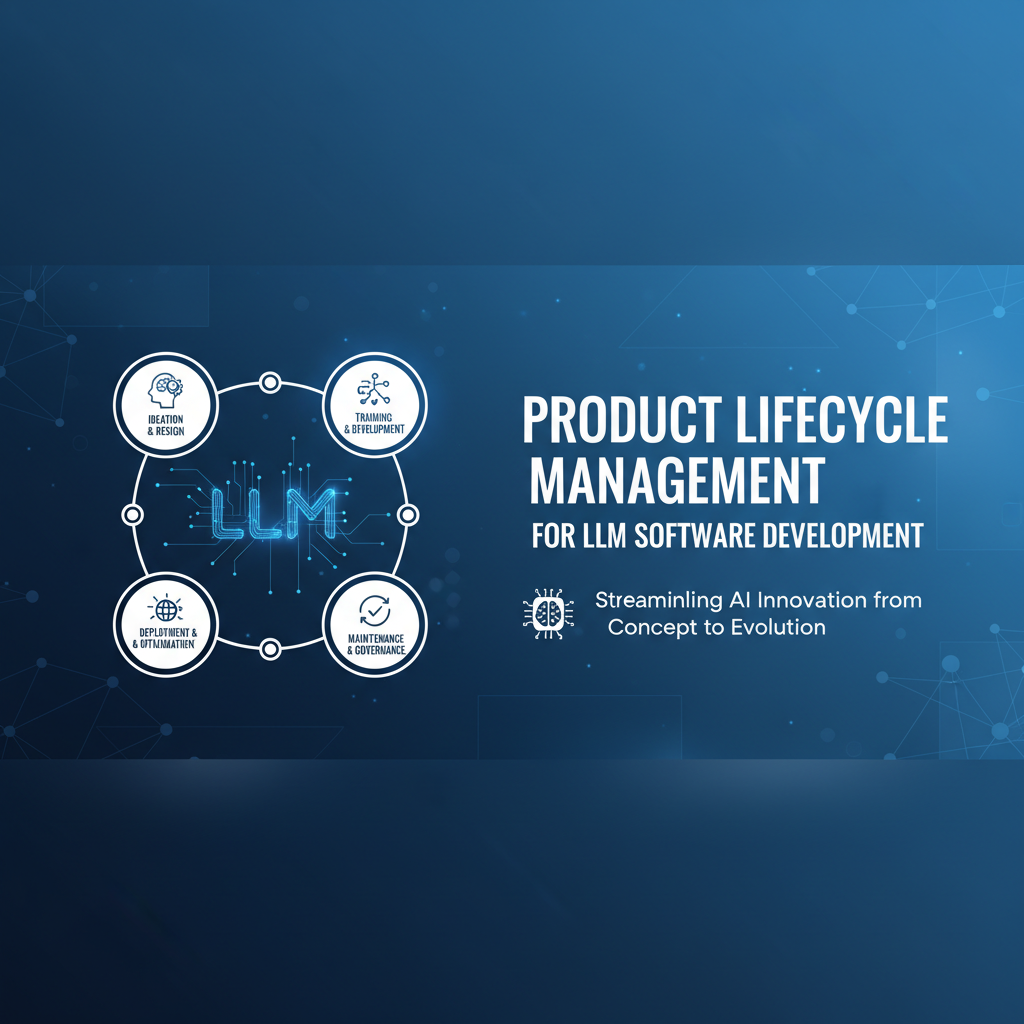


The rapid emergence of Large Language Models (LLMs) has fundamentally reshaped the landscape of software development, opening unprecedented avenues for innovation across virtually every industry. From enhancing customer service with sophisticated chatbots to accelerating research with advanced data analysis tools, LLMs are no longer a theoretical concept but a practical, transformative technology. However, integrating these powerful, yet inherently complex, models into robust, scalable, and secure applications presents a unique set of challenges that traditional software development methodologies are not fully equipped to address. The journey from a nascent LLM concept to a stable, production-ready application requires a disciplined, structured approach, much akin to Product Lifecycle Management (PLM), but tailored specifically for the nuances of AI.
This article delves into the critical importance of adopting a comprehensive Product Lifecycle Management framework for LLM software development. We will explore how traditional PLM principles must be adapted to account for the unique characteristics of LLMs, including their data-driven nature, probabilistic outputs, and rapid evolution. Our discussion will highlight the crucial phases of LLM application development – from initial conception and design through rigorous testing, deployment, and ongoing maintenance. Furthermore, we will underscore the indispensable roles of specialized tools and concepts, such as the LLM Gateway for streamlining model access and operations, the Model Context Protocol for ensuring coherent and effective multi-turn interactions, and robust API Governance for maintaining security, reliability, and compliance across the entire API ecosystem. By understanding and implementing these integrated strategies, organizations can not only harness the immense potential of LLMs but also ensure the long-term viability, scalability, and ethical integrity of their AI-powered solutions, transforming potential hurdles into pathways for sustainable innovation.
The Unique Landscape of LLM Software Development
Developing software with Large Language Models fundamentally diverges from conventional software engineering in several profound ways, necessitating a re-evaluation of established product lifecycle management paradigms. Unlike deterministic software where inputs predictably lead to fixed outputs, LLM-powered applications operate on probabilities, making their behavior inherently less predictable and more nuanced. This introduces a cascade of complexities, from the initial design phase to ongoing operational maintenance, demanding a specialized approach to PLM.
At the heart of this distinction lies the data-centric nature of LLMs. Their performance, capabilities, and even biases are intrinsically tied to the vast datasets on which they were trained. Consequently, the quality, diversity, and ethical implications of the training data become paramount, influencing everything from the model's accuracy to its fairness. This shifts a significant portion of the development burden from purely writing code to meticulously curating, pre-processing, and iterating on data. Furthermore, prompt engineering, the art and science of crafting effective inputs to elicit desired outputs from an LLM, emerges as a critical skill. Unlike traditional function calls with defined parameters, prompts are often natural language expressions, requiring iterative experimentation and a deep understanding of the model's underlying architecture and knowledge base. This iterative refinement of prompts becomes a continuous development activity, impacting performance and user experience throughout the product lifecycle.
Another defining characteristic is the dynamic and rapidly evolving nature of LLM technology itself. New models, improved architectures, and updated versions are released with remarkable frequency, often bringing significant performance enhancements or new capabilities. While this innovation is exciting, it presents a challenge for stability and backward compatibility. A system designed around one LLM version might require substantial re-engineering to leverage the benefits of a newer, more advanced iteration. This constant flux necessitates flexible architectures that can seamlessly integrate or swap out different models without disrupting the entire application. Moreover, the performance variability of LLMs—their tendency to occasionally "hallucinate" incorrect information, exhibit biases, or generate inconsistent responses—requires sophisticated testing, validation, and mitigation strategies that go beyond typical unit or integration tests. Ensuring the safety, reliability, and ethical alignment of these systems becomes an ongoing concern, embedding responsible AI practices throughout every stage of the product lifecycle. The operational costs associated with LLM inference, particularly for high-volume applications, also demand careful management and optimization, adding another layer of complexity that must be addressed from the outset.
Core Phases of Product Lifecycle Management for LLM Applications
Adapting traditional PLM phases to the unique context of LLM software development is crucial for building robust, scalable, and responsible AI applications. Each phase demands specific considerations, tools, and methodologies to account for the probabilistic nature, data dependency, and rapid evolution inherent in LLMs.
Phase 1: Conception & Planning
The genesis of any LLM-powered product begins with a thorough Conception and Planning phase, which is arguably more critical and complex than for traditional software due to the inherent ambiguities of AI. This stage involves deep dives into problem identification, understanding genuine user needs, and rigorously assessing the feasibility of leveraging LLMs to solve those problems. Unlike conventional software where requirements can often be precisely defined, LLM use cases often involve a degree of exploration and iterative discovery. It’s essential to articulate a clear value proposition, identifying what specific pain points an LLM can uniquely address or how it can significantly enhance existing processes. This involves not just technical feasibility but also market viability and strategic alignment.
A cornerstone of this phase is the development of a comprehensive data strategy. Given that LLM performance is inextricably linked to data, organizations must plan for the collection, annotation, storage, and ongoing governance of relevant datasets. This includes considering both the data used for potential fine-tuning and the data that will be processed during inference. Ethical impact assessment is also paramount here, moving beyond a mere checklist to a proactive analysis of potential biases, privacy concerns, and societal implications that the LLM application might introduce or exacerbate. Early identification and mitigation strategies for these risks are far more effective and cost-efficient than addressing them post-deployment. Architectural considerations also come to the fore: will the LLM run on-premises for maximum control and data privacy, in the cloud for scalability and managed services, or in a hybrid configuration? This decision impacts everything from infrastructure costs and latency to security posture. Finally, a detailed cost estimation must factor in not just development resources but also ongoing inference costs, potential fine-tuning expenses, and the overhead associated with continuous monitoring and model updates, which can be substantial for LLM workloads. Resource allocation must reflect these unique demands, ensuring adequate investment in data scientists, ML engineers, prompt engineers, and ethical AI specialists alongside traditional software developers.
Phase 2: Design & Development
Once the foundational planning is complete, the Design and Development phase translates concepts into concrete LLM applications. This stage is characterized by intense iterative experimentation, particularly around prompt engineering. Developing effective prompts is less about writing static code and more about an artful combination of language, context, and experimentation to elicit the desired model behavior. This requires continuous refinement, A/B testing different prompt structures, and leveraging few-shot examples to guide the model. Model selection is another critical decision, weighing factors such as performance, cost, latency, domain specificity, and the ethical profile of various foundational models (e.g., GPT, Claude, Llama). For specialized use cases, strategies for fine-tuning pre-trained models on proprietary datasets might be explored, which then necessitates robust data pipelines for efficient training and inference.
Integration with existing enterprise systems is often a significant challenge. LLM applications rarely operate in isolation; they need to connect with databases, CRM systems, customer support platforms, and other microservices. Designing clean, scalable APIs and interaction patterns is crucial. Modern frameworks like LangChain, LlamaIndex, or Semantic Kernel have emerged to simplify these integrations, providing tools for chaining LLM calls, managing conversational memory, and integrating external knowledge sources (e.g., for Retrieval-Augmented Generation, RAG). Version control extends beyond just code to encompass prompts, model configurations, and even training datasets, ensuring reproducibility and the ability to roll back to previous stable states. A critical component in managing this complexity is the LLM Gateway. An LLM Gateway acts as an abstraction layer, providing a unified interface to interact with various LLM providers (OpenAI, Anthropic, custom models, etc.). This not only simplifies development by decoupling the application from specific model APIs but also offers centralized control over routing, authentication, rate limiting, and cost tracking. By channeling all LLM interactions through a single gateway, development teams can focus on application logic, knowing that the underlying model infrastructure is managed and optimized. Furthermore, the Model Context Protocol becomes vital here. This protocol defines a standardized way to manage and pass conversational context, session state, and user-specific information to the LLM, ensuring that multi-turn interactions remain coherent and relevant. It prevents the model from "forgetting" previous parts of a conversation and allows for more sophisticated, stateful interactions, which is essential for building truly intelligent agents. Without a well-defined Model Context Protocol, complex applications can quickly devolve into disjointed, frustrating user experiences.
Phase 3: Testing & Validation
The Testing and Validation phase for LLM software is arguably the most challenging and distinct from traditional software testing. While functional tests for integration points and user interfaces remain, the core of validation shifts to assessing the probabilistic and generative nature of the LLM itself. Rigorous testing is paramount to ensure the application not only performs as expected but also behaves safely, ethically, and reliably under various conditions.
Quantitative metrics, familiar from traditional machine learning, might be partially applicable for specific tasks (e.g., perplexity for language modeling, BLEU/ROUGE for summarization or translation, F1-score for classification if the LLM is used in such a manner). However, these often fall short when evaluating the nuanced, open-ended responses of generative LLMs. Therefore, qualitative evaluation, often involving "human-in-the-loop" processes, becomes indispensable. Human evaluators assess the relevance, coherence, factual accuracy (to mitigate hallucinations), tone, and safety of LLM outputs. This can involve crowdsourcing, expert review, or internal QA teams providing detailed feedback. Adversarial testing and "red-teaming" are also critical, where specialized teams attempt to probe the model for vulnerabilities, biases, or unsafe behaviors. This includes sophisticated prompt injection attacks, where malicious inputs try to override system instructions or extract sensitive information. Ensuring robust defenses against such attacks is a continuous effort. A/B testing is essential for prompt variations or model updates, allowing developers to objectively compare the performance and user experience of different approaches in a controlled environment before full deployment. This iterative feedback loop helps optimize prompts and model configurations based on real-world interaction data. Security vulnerabilities extend beyond typical code flaws to include the very nature of prompt interactions. Input sanitization, output filtering, and robust access controls are vital to prevent not only prompt injection but also the unintentional leakage of sensitive information or the generation of harmful content. Establishing clear evaluation criteria for success, which encompass not only performance but also ethical considerations and user satisfaction, is a complex but necessary undertaking in this phase. The dynamic nature of LLM outputs means that a single test case is rarely sufficient; instead, a diverse suite of tests and continuous monitoring are required to establish confidence in the application's readiness for production.
Phase 4: Deployment & Operations
The Deployment and Operations phase for LLM applications requires a robust and specialized infrastructure to handle the unique demands of these models, particularly concerning computational resources, latency, and observability. Infrastructure provisioning must account for the significant computational power required for LLM inference, often necessitating GPUs or specialized AI accelerators. Scaling strategies, whether auto-scaling groups in the cloud or Kubernetes-based deployments, are critical to manage fluctuating traffic loads efficiently and cost-effectively.
Monitoring LLM performance in production goes beyond typical system metrics. It involves tracking latency, throughput, error rates, and crucially, the quality of generated outputs. This requires specialized observability tools that can analyze LLM responses for coherence, relevance, and safety, potentially flagging deviations from expected behavior. Cost management is a paramount concern, as API calls to commercial LLMs or inference on self-hosted models can quickly accumulate. Detailed logging and auditing capabilities are essential, not only for debugging and troubleshooting but also for compliance and accountability. Every LLM interaction should be logged, including inputs, outputs, timestamps, and associated metadata, to provide a comprehensive audit trail. Continuous Integration/Continuous Delivery (CI/CD) pipelines for LLMs need to be adapted to handle not just code changes but also prompt updates, model version changes, and dataset refreshes. This ensures that new iterations can be deployed rapidly and reliably. Rollback strategies are equally vital, allowing for immediate reversion to a stable previous state if a deployment introduces unforeseen issues or performance degradation. This agility is crucial in the fast-evolving LLM landscape.
Here, the LLM Gateway plays an absolutely pivotal role. As LLM applications scale and integrate with multiple models or providers, the gateway becomes the central nervous system for all AI interactions. It manages traffic forwarding, load balancing across different model instances or providers, and caching frequent requests to reduce latency and cost. Moreover, it enforces security policies, such as API key management and access controls, ensuring that only authorized applications can interact with the LLMs. For companies seeking an advanced and reliable solution for these needs, APIPark stands out as a powerful open-source AI gateway and API management platform. APIPark simplifies the integration of 100+ AI models, offering a unified API format for AI invocation that ensures consistent interactions regardless of the underlying model. This dramatically streamlines deployment, as applications can interact with a stable API endpoint managed by APIPark, abstracting away the complexities of various LLM providers. Its end-to-end API Lifecycle Management capabilities, including traffic forwarding, load balancing, and versioning of published APIs, directly address the operational challenges of LLM-powered applications. Furthermore, APIPark’s performance, rivaling Nginx with over 20,000 TPS on modest hardware, and its detailed API call logging and powerful data analysis features, provide the robustness and observability essential for demanding LLM operations. By utilizing APIPark, organizations can effectively manage their LLM deployments, optimize performance, control costs, and maintain a high level of operational transparency. You can learn more about APIPark at ApiPark.
Phase 5: Maintenance & Evolution
The Maintenance and Evolution phase is a continuous and often iterative process for LLM applications, fundamentally different from the "set-it-and-forget-it" mentality sometimes associated with traditional software. LLMs are not static; their performance can drift over time as real-world data evolves or new societal trends emerge. Therefore, ongoing model retraining and fine-tuning are essential to adapt to new data distributions, improve accuracy, mitigate newly identified biases, or enhance specific capabilities. This requires a robust MLOps pipeline capable of monitoring model decay and triggering retraining cycles efficiently.
Prompt updates and optimization represent another continuous development activity. As user feedback is gathered, new LLM versions become available, or business requirements shift, prompts must be refined to elicit better, more precise, or safer responses. This might involve A/B testing new prompt templates or developing dynamic prompt generation systems that adapt to user context. Addressing drift and degradation is a proactive effort that involves continuous monitoring of model outputs in production, looking for signs of performance decay, increased hallucinations, or emerging biases. Tools that analyze output quality and compare it against baselines are crucial for identifying when intervention is needed. Security updates and vulnerability patching are also ongoing, not just for the application code but also for the models themselves, as new attack vectors (e.g., advanced prompt injection techniques) are discovered. Regular audits and security assessments are vital. Feature enhancements and iterative improvements are driven by user feedback, market changes, and the availability of new LLM capabilities. This agile approach ensures that the product remains relevant and competitive.
Throughout this phase, robust API Governance is absolutely paramount. As LLM applications evolve, new features are added, models are updated, and underlying APIs change. Effective API Governance ensures that these changes are managed systematically, preventing disruptions to dependent applications and maintaining security. This includes strict version control for APIs, clear deprecation policies, and mechanisms for communicating changes to API consumers. API Governance also covers access control, ensuring that only authorized users and applications can invoke specific LLM functions, and enforcing rate limits to prevent abuse and manage infrastructure load. For organizations managing a growing portfolio of LLM-powered services, a platform with strong API Governance features, like APIPark, becomes invaluable. APIPark assists with managing the entire lifecycle of APIs, from design and publication to invocation and decommissioning. It helps regulate API management processes, manage traffic forwarding, load balancing, and versioning of published APIs. Its features allowing for independent API and access permissions for each tenant, and requiring approval for API resource access, directly contribute to a secure and well-governed API ecosystem, ensuring that the evolving LLM solutions remain compliant, secure, and performant throughout their operational lifespan. This comprehensive approach to API Governance ensures stability, security, and scalability even as LLM technologies continue their rapid evolution.
Key Enablers for Effective LLM PLM
Effective Product Lifecycle Management for LLM applications is not merely a matter of adapting existing frameworks; it relies heavily on specific technological enablers and strategic approaches that address the core complexities of AI. These enablers form the backbone of a resilient and adaptable LLM development ecosystem.
Data Governance and Management
At the core of every LLM application lies data. Therefore, robust data governance and management are not just important; they are foundational to the success and ethical integrity of LLM PLM. Data quality is paramount, as "garbage in, garbage out" applies even more critically to generative models. Ensuring the accuracy, completeness, and consistency of both training and inference data prevents models from learning erroneous patterns or generating misleading information. Data lineage, the ability to trace the origin and transformations of every piece of data, becomes crucial for debugging model behavior, understanding biases, and maintaining auditability. This also supports compliance with data privacy regulations (e.g., GDPR, CCPA) by providing a clear chain of custody for sensitive information.
Security and privacy are non-negotiable, especially when dealing with proprietary or personally identifiable information (PII) that might be used for fine-tuning or passed into prompts. Robust anonymization techniques, access controls, and encryption methods are essential to protect sensitive data at rest and in transit. Furthermore, version control for datasets, much like code versioning, is vital for reproducibility. The ability to revert to a specific dataset version used for a particular model training run ensures that experiments can be replicated and model behaviors understood retrospectively. Active learning and feedback loops are powerful mechanisms for continuous data improvement. By analyzing model outputs and user interactions, new data can be identified, labeled, and incorporated back into the training process, allowing the model to adapt and improve over time. This continuous data-driven refinement is a key differentiator in LLM PLM, ensuring models remain relevant and performant in dynamic environments. Without a meticulously managed data ecosystem, even the most advanced LLM will struggle to deliver consistent, reliable, and ethical results.
Prompt Engineering Lifecycle
Prompt engineering has rapidly evolved from a niche skill to a critical discipline within LLM development, necessitating its own lifecycle management. Unlike traditional code, prompts are often natural language instructions, making their management and versioning a unique challenge. A structured approach to the prompt engineering lifecycle ensures that prompts are treated as first-class citizens in the development process, subject to the same rigor as source code.
This begins with robust version control for prompts. Just as developers use Git for code, prompt engineers need systems to track changes to prompts, experiment with different iterations, and revert to previous versions if needed. This enables reproducibility and facilitates collaborative development. Prompt testing and evaluation frameworks are equally vital. These frameworks allow for systematic assessment of prompt effectiveness across various scenarios and input variations. Metrics might include response relevance, factual accuracy, coherence, conciseness, and adherence to desired tone or safety guidelines. Automated and human-in-the-loop evaluations are often combined to provide a comprehensive assessment. Dynamic prompt generation, where prompts are constructed programmatically based on user input, context, and system state, adds another layer of complexity but also significant power. Managing these dynamic templates and their underlying logic within the prompt engineering lifecycle ensures that the system can adapt to diverse user needs while maintaining consistency. The ability to manage a library of proven prompts, share best practices across teams, and conduct A/B tests on different prompt strategies are all part of an effective prompt engineering lifecycle. This systematic approach transforms prompt engineering from an art into a scalable, manageable discipline, crucial for maintaining the quality and adaptability of LLM applications over time.
Model Versioning and Experiment Tracking
The rapid evolution of LLMs and the continuous experimentation inherent in their development necessitate sophisticated model versioning and experiment tracking capabilities. Without these, reproducibility becomes a nightmare, progress is difficult to measure, and ensuring consistency across deployments is almost impossible. MLOps tools, such as MLflow, Weights & Biases, or Kubeflow, have become indispensable in this regard. These platforms provide centralized systems for tracking every aspect of a machine learning experiment.
This includes logging parameters used for model training or fine-tuning (e.g., learning rates, batch sizes), recording the exact datasets used (linking back to the data governance system), storing model artifacts (the trained model weights and configurations), and documenting evaluation metrics (accuracy, loss, latency, specific LLM-centric metrics). Crucially, these tools enable robust model versioning, allowing developers to tag and store specific model iterations, often with links to the code, data, and prompts that produced them. This ensures that any deployed model can be traced back to its exact origin, which is vital for debugging, auditing, and regulatory compliance. Reproducibility is a core benefit: if a bug is found in a production model, the exact conditions under which it was trained can be recreated, making debugging significantly easier. Experiment management platforms also facilitate collaboration among data scientists and ML engineers, allowing teams to share results, compare different approaches, and build upon each other's work efficiently. For LLMs, this extends to tracking prompt variations and their impact on model outputs, alongside traditional model parameters. The ability to conduct thousands of experiments, track their outcomes systematically, and deploy the most effective models with confidence is a cornerstone of modern LLM PLM, enabling continuous innovation while maintaining control and transparency.
The Role of the LLM Gateway
The LLM Gateway is arguably one of the most transformative enablers for effective LLM PLM, acting as a critical abstraction layer that simplifies, secures, and optimizes interactions with large language models. In a world where multiple LLM providers (OpenAI, Anthropic, Google, open-source models like Llama 3) exist and new ones emerge constantly, an LLM Gateway provides a unified, consistent interface, shielding the application from the underlying complexities and changes of individual model APIs. This abstraction layer is invaluable. Development teams can build applications against a single, stable API endpoint provided by the gateway, rather than needing to integrate with and manage the idiosyncrasies of each LLM provider. This significantly reduces development time and technical debt, making applications more resilient to changes in the LLM ecosystem.
Beyond mere abstraction, an LLM Gateway offers a suite of functionalities crucial for production-grade LLM applications. Rate limiting, for instance, prevents overuse of API quotas and protects backend models from being overwhelmed, ensuring fair usage and cost control. Caching common or repetitive LLM requests can drastically reduce latency and inference costs, particularly for frequently asked questions or highly predictable interactions. Load balancing capabilities allow the gateway to intelligently distribute requests across multiple instances of a self-hosted model or even different LLM providers, optimizing for performance, cost, or availability. Security features are paramount. The gateway becomes a centralized point for managing API keys, tokens, and access controls, preventing unauthorized access to sensitive LLMs. It can also implement input sanitization and output filtering to mitigate prompt injection attacks and prevent the generation of harmful content, adding an extra layer of defense. Crucially, the LLM Gateway centralizes logging and monitoring. By capturing every LLM interaction, including inputs, outputs, tokens used, latency, and costs, the gateway provides invaluable data for debugging, auditing, performance analysis, and cost optimization. This level of observability is essential for understanding how LLMs are being used in production and for continuously improving their deployment.
As highlighted earlier, APIPark serves as an excellent example of a powerful, open-source platform that embodies these LLM Gateway functionalities and extends them with comprehensive API management. APIPark enables quick integration of over 100 AI models, offering a unified API format that standardizes request data across all models. This means that changes in an AI model or prompt do not affect the application or microservices, directly addressing the challenge of dynamic LLM evolution. Furthermore, APIPark allows users to encapsulate prompts with AI models to create new REST APIs, such as sentiment analysis or data analysis APIs, thereby accelerating development and promoting reuse. Its end-to-end API Lifecycle Management capabilities ensure that APIs, including those powered by LLMs, are managed from design to decommissioning, with features like traffic forwarding, load balancing, and versioning. The platform also boasts impressive performance, detailed API call logging for troubleshooting and auditing, and powerful data analysis to track trends and performance changes. By deploying a solution like APIPark, organizations gain a robust, scalable, and secure foundation for their LLM-powered applications, abstracting complexity, optimizing performance, and enforcing critical governance policies across their AI services. This strategic investment in an LLM Gateway is pivotal for transforming experimental LLM projects into reliable, enterprise-grade solutions.
Standardizing with Model Context Protocol
In the realm of LLM applications, particularly those involving multi-turn conversations or complex reasoning, managing contextual information is paramount. The Model Context Protocol emerges as a critical enabler for standardizing how conversational history, session state, and user-specific data are handled, ensuring coherent, consistent, and effective interactions with LLMs. Without a well-defined protocol, applications risk incoherent responses, repetitive questions, or a complete lack of memory, leading to frustrating user experiences.
The core purpose of a Model Context Protocol is to establish a clear, consistent structure for packaging and transmitting all relevant information that an LLM needs to understand the current user request within its broader context. This includes the full history of a conversation, allowing the LLM to "remember" previous turns and build upon them. It also encompasses session-specific data, such as user preferences, past actions, or retrieved information from external knowledge bases. By standardizing this protocol, developers can ensure that context fidelity is maintained not only across different turns within a single conversation but also potentially across different LLM models or even different LLM providers, should the application architecture require it. This is particularly important for advanced architectures like Retrieval-Augmented Generation (RAG), where the LLM's understanding is enhanced by dynamically retrieving relevant information from internal documents or external APIs. A robust Model Context Protocol facilitates the seamless integration of these external tools and knowledge bases, ensuring that the retrieved context is structured and presented to the LLM in a way it can effectively process and utilize. It helps in deciding what to keep, what to summarize, and what to discard from the context to stay within token limits while retaining crucial information. By formalizing how context is managed, applications can achieve greater sophistication, deliver more personalized and accurate responses, and reduce the likelihood of the LLM "hallucinating" or providing irrelevant information due to a lack of situational awareness. This protocol essentially provides the LLM with the necessary "memory" and "understanding" to perform complex tasks, moving beyond single-turn queries to truly intelligent, sustained interactions.
Robust API Governance
For any organization building and deploying LLM-powered applications, robust API Governance is not merely a best practice; it is a fundamental requirement for maintaining security, reliability, scalability, and compliance across its digital landscape. As LLM capabilities are exposed as services – often via APIs – the principles of effective API governance must extend to these new forms of interaction.
Defining API Governance for LLM-powered applications involves establishing clear standards and policies that cover the entire lifecycle of an API, from its initial design to its eventual deprecation. This starts with standardization of API design, ensuring that LLM-powered endpoints adhere to established patterns (e.g., RESTful principles, OpenAPI specifications). Consistent design promotes easier integration for developers, reduces errors, and improves overall usability. Security policies are paramount and must be rigorously enforced. This includes robust authentication mechanisms (API keys, OAuth 2.0, JWTs), granular authorization controls to dictate who can access which LLM functions, and mandatory encryption for all data in transit (TLS/SSL). Given the sensitive nature of information often processed by LLMs, data security and privacy protocols must be embedded at every layer. Version control for APIs is critical, allowing for backward-compatible updates, graceful deprecation of older versions, and clear communication with API consumers about changes. This prevents breaking existing applications when LLMs or underlying logic are updated. Lifecycle management for APIs, facilitated by platforms like APIPark, ensures that APIs are properly designed, published with documentation, monitored for usage and performance, and eventually decommissioned responsibly. Monitoring and analytics for API usage provide insights into performance, adoption, potential misuse, and cost implications. This data is vital for capacity planning, optimization, and identifying anomalies. Compliance and regulatory adherence are increasingly important, especially in regulated industries. API Governance ensures that LLM applications comply with industry-specific regulations, data privacy laws, and internal security policies, mitigating legal and reputational risks. Features such as tenant management and access control, as offered by APIPark, allow for the creation of independent teams or departments (tenants), each with their own applications, data, user configurations, and security policies, while sharing the underlying infrastructure. This enables secure multi-tenancy and efficient resource utilization. Furthermore, the ability to activate subscription approval features, requiring callers to subscribe to an API and await administrator approval before invocation, adds a critical layer of control, preventing unauthorized API calls and potential data breaches. By implementing a comprehensive API Governance framework, organizations can confidently manage their evolving portfolio of LLM-powered services, ensuring they are secure, reliable, and contribute positively to the business.
APIPark is a high-performance AI gateway that allows you to securely access the most comprehensive LLM APIs globally on the APIPark platform, including OpenAI, Anthropic, Mistral, Llama2, Google Gemini, and more.Try APIPark now! 👇👇👇
Challenges and Best Practices in LLM PLM
Navigating the complexities of LLM Product Lifecycle Management involves confronting a unique set of challenges while adopting specific best practices to ensure successful, sustainable, and responsible deployment of AI applications.
Challenges
The rapid pace of innovation within the LLM space presents a paradox: while exciting, it creates tension between leveraging the latest advancements and maintaining stability in production environments. New models, techniques, and research are published constantly, making it difficult for teams to keep up and decide when to adopt new technologies versus sticking with proven, stable solutions. This continuous flux impacts long-term planning and architectural decisions. Cost management is another significant hurdle. LLM inference, especially for large, proprietary models, can be expensive, with costs scaling rapidly with usage. Beyond direct API costs, the computational resources required for fine-tuning, monitoring, and even red-teaming can be substantial, demanding careful budgeting and optimization strategies.
Ensuring ethical AI and fairness is a pervasive and complex challenge throughout the LLM PLM. Models can inherit and amplify biases present in their training data, leading to unfair, discriminatory, or harmful outputs. Proactive identification, mitigation, and continuous monitoring for bias are critical, requiring dedicated effort and specialized expertise. Managing data privacy and security, particularly concerning Personally Identifiable Information (PII) in prompts and responses, poses a significant risk. Protecting sensitive user data from being exposed through model outputs or stored improperly is a constant concern, necessitating robust data sanitization, encryption, and access control measures. Reproducibility and auditability, while challenging in traditional software, become even more so with LLMs due to their probabilistic nature, constant model updates, and reliance on dynamic data. The ability to reconstruct the exact conditions (code, data, model version, prompts) that led to a specific output is crucial for debugging, compliance, and trust. Skill gaps in teams are also common, as the interdisciplinary nature of LLM development requires expertise in data science, ML engineering, prompt engineering, MLOps, and ethical AI, often exceeding the capabilities of traditional software development teams. Finally, the "black box" nature of many LLMs makes explainability and interpretability difficult. Understanding why an LLM produced a particular output, especially when it errs, is vital for debugging, building trust, and meeting regulatory requirements, yet it remains a significant research and engineering challenge.
Best Practices
To overcome these challenges and truly harness the power of LLMs, organizations must adopt a set of strategic best practices that are tailored to the unique demands of AI development.
Firstly, embrace an iterative, agile approach. Given the experimental and rapidly evolving nature of LLMs, a rigid, waterfall methodology is ill-suited. Instead, favor frequent iterations, continuous feedback loops, and a willingness to pivot as new information or model capabilities emerge. This allows for continuous learning and adaptation throughout the product lifecycle.
Secondly, invest heavily in robust MLOps and DevSecOps practices. This means automating the entire pipeline from data ingestion and model training to deployment, monitoring, and model retraining. Tools for experiment tracking, model versioning, continuous integration/delivery (CI/CD) for AI, and automated security checks are non-negotiable. These practices ensure scalability, reliability, and security at speed.
Thirdly, prioritize data quality and ethical considerations from day one. Do not treat ethical AI as an afterthought. Integrate bias detection, fairness metrics, and privacy-preserving techniques into the data collection, model training, and evaluation processes from the very beginning. Continuously audit and refine these aspects.
Fourthly, leverage open-source tools and platforms where appropriate. The LLM ecosystem is rich with open-source models, frameworks (like LangChain), and MLOps tools. Adopting these can accelerate development, reduce vendor lock-in, and benefit from community-driven innovation. Platforms like APIPark, an open-source AI gateway and API management platform, exemplify this, providing enterprise-grade capabilities with the flexibility of open source.
Fifthly, build strong feedback loops for continuous improvement. Establish clear channels for collecting user feedback, monitoring model performance in production, and using this data to inform prompt refinements, model updates, and new feature development. This ensures that the LLM application remains relevant and effective.
Sixthly, implement comprehensive API Governance frameworks. As discussed, this is crucial for managing the security, reliability, and versioning of LLM-powered services. A well-governed API ecosystem ensures stability and control as the number of LLM applications grows.
Seventhly, strategically utilize LLM Gateway solutions for abstraction and control. An LLM Gateway like APIPark simplifies integration, enhances security, optimizes performance, and provides centralized observability, acting as a crucial intermediary between applications and diverse LLMs.
Finally, standardize interaction with a Model Context Protocol. Defining how conversational history and contextual information are passed to LLMs ensures coherent, intelligent, and scalable multi-turn interactions, overcoming one of the trickiest aspects of LLM development.
By diligently applying these best practices, organizations can navigate the inherent challenges of LLM development, moving beyond experimentation to build genuinely impactful, scalable, and responsible AI-powered products.
The Future of LLM PLM
The trajectory of Large Language Model Product Lifecycle Management is one of increasing sophistication, automation, and integration, promising to streamline the development and deployment of AI applications even further. As the LLM landscape matures, we can anticipate several key trends that will shape its future.
One significant trend is the emergence of specialized tools tailored specifically for LLM PLM. While current MLOps platforms provide a solid foundation, there's a growing need for tools that explicitly address prompt versioning, automated prompt testing, context management protocols, LLM-specific evaluation metrics (beyond traditional accuracy), and robust red-teaming frameworks. These specialized tools will abstract away more of the unique complexities of LLM interactions, making it easier for a broader range of developers to build sophisticated AI applications. This specialization will foster greater efficiency and higher quality outputs.
Concurrently, we will see increased automation in MLOps for LLMs. The goal is to move towards "autonomous AI operations," where models are not only continuously monitored for performance and drift but also automatically retrained, re-deployed, and even prompted with optimized strategies based on real-time data and predefined thresholds. This level of automation will significantly reduce manual intervention, accelerate iteration cycles, and ensure that LLM applications remain relevant and performant with minimal human oversight. This will include automated A/B testing for prompt variations and model updates, leading to faster optimization loops.
A central focus in the future will be on verifiable AI and responsible deployment. As LLMs become more pervasive and influential, the demand for transparency, fairness, and accountability will intensify. Future LLM PLM will integrate advanced techniques for explainability (understanding why a model made a decision), bias detection and mitigation at scale, and comprehensive audit trails that can withstand regulatory scrutiny. Tools and processes will evolve to ensure that LLM applications are not only effective but also ethically sound and trustworthy, with clear mechanisms for identifying and rectifying undesirable behaviors throughout their lifecycle.
The role of open standards and protocols will also grow in importance. Just as the internet relies on open standards for interoperability, the LLM ecosystem will benefit from widely adopted protocols for model interaction, context exchange (like enhanced Model Context Protocol versions), and data formatting. This will foster greater interoperability between different models, platforms, and services, reducing vendor lock-in and accelerating innovation across the board. Such standardization will facilitate easier integration of components from various providers and the development of a truly modular LLM architecture.
Finally, we anticipate greater integration of LLM PLM with existing enterprise systems. LLM applications will not exist in isolation but will become deeply embedded within broader business processes, CRM systems, ERPs, and data warehouses. This requires seamless integration capabilities, robust API Governance frameworks that can manage both traditional and LLM-powered APIs within a unified strategy, and comprehensive data management solutions that span across all enterprise data sources. Platforms like APIPark, which offer both AI Gateway functionalities and full API management capabilities, are well-positioned to facilitate this convergence, providing the infrastructure for enterprises to integrate and govern their AI services holistically. The future of LLM PLM is one where the complexities of AI are systematically managed, allowing organizations to consistently deploy innovative, ethical, and highly integrated intelligent applications at scale.
Conclusion
The journey of developing and managing Large Language Model software is a frontier fraught with both immense opportunity and significant challenges. Unlike conventional software, LLM applications are characterized by their data-centricity, probabilistic outputs, rapid evolution, and inherent ethical considerations, demanding a fundamentally adapted approach to product lifecycle management. From the initial glimmer of an idea to the continuous evolution in production, each phase of LLM PLM requires specialized methodologies and tools to ensure success.
We have explored how foundational PLM principles must be re-envisioned for LLMs, emphasizing meticulous planning, iterative prompt engineering, rigorous AI-specific testing, and robust operational frameworks. The critical role of specialized enablers cannot be overstated. The LLM Gateway acts as an indispensable abstraction layer, simplifying model integration, enforcing security, and optimizing performance and cost across diverse LLM providers. The Model Context Protocol is crucial for maintaining conversational coherence and enabling sophisticated, stateful interactions, ensuring that LLMs can deliver intelligent and relevant responses over time. Furthermore, robust API Governance provides the essential framework for managing the security, reliability, and versioning of LLM-powered services, ensuring compliance and preventing chaos in an ever-changing ecosystem. Platforms like APIPark exemplify how these enablers can be bundled into a comprehensive solution, empowering organizations to manage their AI and REST services efficiently and securely throughout their entire lifecycle.
By embracing a disciplined, adaptable Product Lifecycle Management approach for LLM software development – one that strategically leverages an LLM Gateway, standardizes interactions with a Model Context Protocol, and enforces stringent API Governance – organizations can transform the inherent complexities of AI into a structured pathway for innovation. This integrated strategy is not just about building better AI; it is about building AI responsibly, sustainably, and at scale, enabling businesses to unlock the true transformative potential of large language models while mitigating risks and ensuring long-term success in the intelligent era.
Comparison Table: Traditional Software PLM vs. LLM Software PLM
| Feature / Phase | Traditional Software PLM | LLM Software PLM |
|---|---|---|
| Core Output | Deterministic Code & Logic | Probabilistic Model Outputs & Generated Content |
| Primary Inputs | Explicit Requirements, Business Logic | Training Data, Prompts, Explicit Requirements |
| Key Development Skill | Coding, Algorithm Design, Architecture | Prompt Engineering, Data Curation, Model Fine-tuning, MLOps |
| Testing Focus | Functional Correctness, Unit/Integration Tests | Generative Output Quality, Bias, Hallucination, Safety, Robustness, Human-in-the-loop Evaluation |
| Version Control Scope | Code, Configuration, Documentation | Code, Prompts, Model Artifacts, Datasets, Configuration |
| Deployment Complexity | Runtime Environment, Dependencies | Runtime Environment, Dependencies, GPU/TPU Resources, Latency, Cost for Inference |
| Operational Monitoring | System Health, Performance, Error Rates | System Health, Performance, Error Rates, Model Drift, Output Quality, Token Usage, Cost per Inference |
| Maintenance & Evolution | Bug Fixes, Feature Enhancements, Performance Tuning | Bug Fixes, Feature Enhancements, Model Retraining/Fine-tuning, Prompt Optimization, Bias Mitigation |
| Governance Emphasis | Code Standards, Security Policies, Release Management | Code Standards, Security Policies, Release Management, Data Governance, API Governance, Ethical AI Guidelines |
| Abstraction Layer (Key) | API Gateway (for microservices) | LLM Gateway (for model interaction, e.g., APIPark) |
| Interaction Standardization | RESTful/GraphQL APIs | RESTful/GraphQL APIs, Model Context Protocol |
Frequently Asked Questions (FAQs)
1. What is Product Lifecycle Management (PLM) for LLM Software Development and why is it important?
PLM for LLM software development is a structured framework that adapts traditional product lifecycle management principles to the unique challenges and characteristics of Large Language Model-powered applications. It covers every stage from conception and design through development, testing, deployment, and ongoing maintenance and evolution. It's crucial because LLMs are data-driven, probabilistic, and rapidly evolving, requiring specific strategies for data governance, prompt engineering, model versioning, ethical considerations, and continuous operational management. Without a tailored PLM approach, developing LLM applications can lead to unmanageable complexity, unpredictable behavior, security vulnerabilities, and unsustainable costs.
2. How does an LLM Gateway, like APIPark, contribute to effective LLM PLM?
An LLM Gateway is a critical abstraction layer that simplifies and secures the interaction between applications and various Large Language Models. It acts as a single entry point, decoupling the application from specific LLM providers and their unique APIs. For effective PLM, an LLM Gateway (such as APIPark) contributes by: * Simplifying Development: Providing a unified API format across multiple LLMs, reducing integration effort. * Enhancing Security: Centralizing API key management, access controls, and implementing security policies. * Optimizing Performance & Cost: Managing rate limiting, caching, and load balancing across models. * Improving Observability: Centralizing logging, monitoring, and data analysis for all LLM interactions. * Streamlining Operations: Facilitating easier model switching and versioning without application changes. This enables developers to focus on application logic while the gateway handles the complexities of LLM infrastructure and governance.
3. What is the Model Context Protocol and why is it essential for LLM applications?
The Model Context Protocol is a standardized method for managing and transmitting conversational history, session state, and user-specific information to a Large Language Model during multi-turn interactions. It's essential because LLMs, by default, often lack memory beyond a single prompt. This protocol ensures that: * Coherence is Maintained: The LLM "remembers" previous turns in a conversation, preventing repetitive questions and ensuring relevant responses. * Stateful Interactions are Enabled: Complex applications requiring ongoing context, like multi-step assistants or RAG systems, can function effectively. * Consistency is Ensured: Context fidelity is maintained across different sessions, models, or even LLM providers. * Token Limits are Managed: It helps in deciding what context to summarize or prioritize when feeding information to the LLM within its token window. Without a robust Model Context Protocol, LLM applications would deliver fragmented, less intelligent, and frustrating user experiences.
4. Why is API Governance particularly important for LLM-powered applications?
API Governance is crucial for LLM-powered applications because these models are often exposed as services through APIs, and their dynamic, probabilistic nature introduces unique risks. Effective API Governance ensures: * Security: Enforcing authentication, authorization, and encryption to protect sensitive data processed by LLMs and prevent unauthorized access or prompt injection attacks. * Reliability: Establishing standards for API design, versioning, and deprecation to prevent breaking changes as models or features evolve. * Scalability: Managing traffic, enforcing rate limits, and load balancing to ensure the stability and performance of LLM services under varying loads. * Compliance: Adhering to regulatory requirements (e.g., data privacy) and internal policies, especially when LLMs handle sensitive user information. * Visibility & Control: Centralized monitoring and auditing of API usage for troubleshooting, cost management, and accountability. Platforms that offer robust API Governance, like APIPark, become indispensable for managing the entire lifecycle of these evolving, intelligent services.
5. What are the biggest challenges in LLM PLM and what are some best practices to address them?
The biggest challenges in LLM PLM include: * Rapid Pace of Innovation: Constantly evolving models and techniques. * Cost Management: High inference and training costs. * Ethical AI & Bias: Ensuring fairness, transparency, and preventing harmful outputs. * Data Privacy & Security: Protecting sensitive information in prompts and responses. * Reproducibility & Auditability: Tracing outputs back to specific model versions, data, and prompts. * Skill Gaps: The need for diverse expertise in teams. * Explainability: Understanding why an LLM makes certain decisions.
Best practices to address these challenges include: * Adopt an Agile Approach: Embrace iterative development and continuous feedback loops. * Invest in MLOps & DevSecOps: Automate pipelines for data, models, and security. * Prioritize Data Quality & Ethics: Integrate these from day one, with continuous monitoring. * Leverage Open-Source Tools: Utilize community-driven models and platforms (like APIPark). * Build Strong Feedback Loops: Continuously improve models and prompts based on user interaction. * Implement Comprehensive API Governance: Manage security, reliability, and versioning of LLM APIs. * Utilize LLM Gateways: Abstract complexity and centralize control for LLM interactions. * Standardize Context Management: Use a Model Context Protocol for coherent multi-turn interactions.
🚀You can securely and efficiently call the OpenAI API on APIPark in just two steps:
Step 1: Deploy the APIPark AI gateway in 5 minutes.
APIPark is developed based on Golang, offering strong product performance and low development and maintenance costs. You can deploy APIPark with a single command line.
curl -sSO https://download.apipark.com/install/quick-start.sh; bash quick-start.sh

In my experience, you can see the successful deployment interface within 5 to 10 minutes. Then, you can log in to APIPark using your account.

Step 2: Call the OpenAI API.