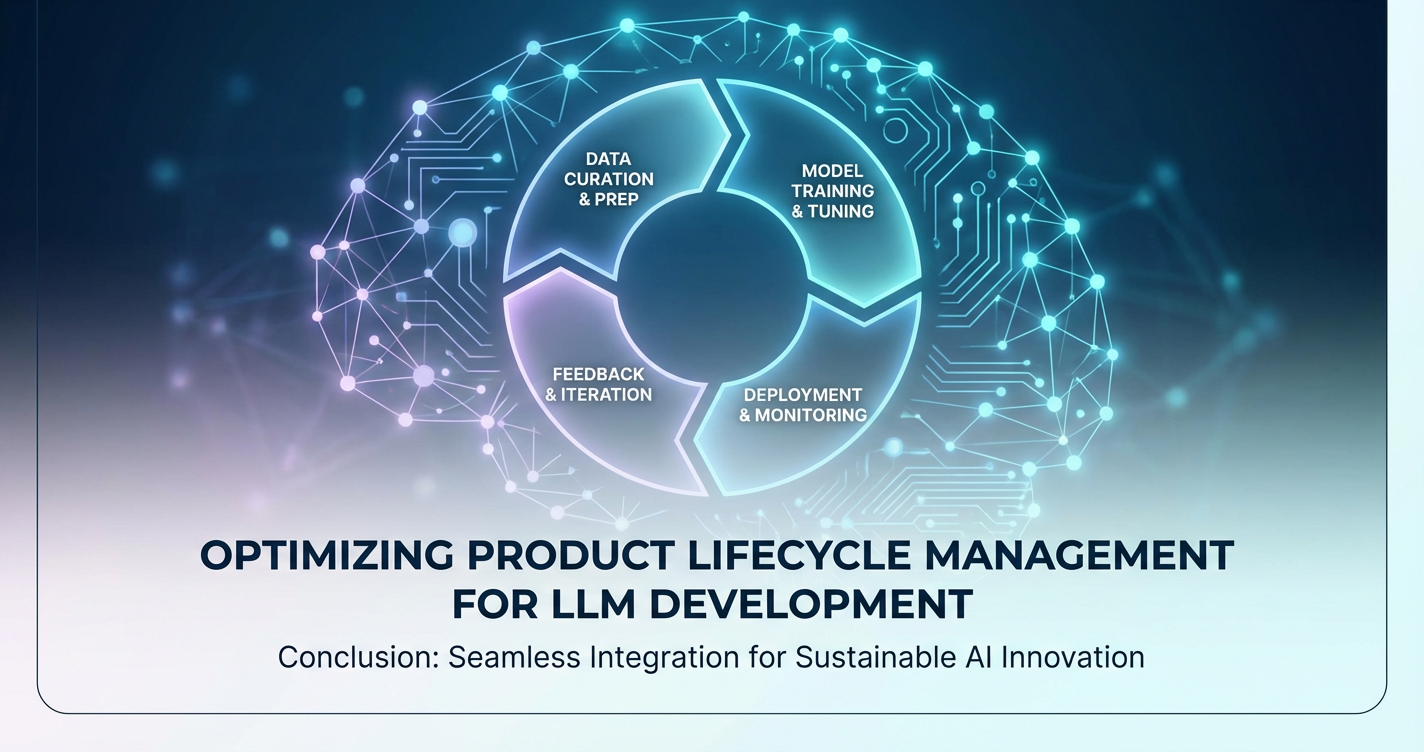
Optimizing Product Lifecycle Management for LLM Development
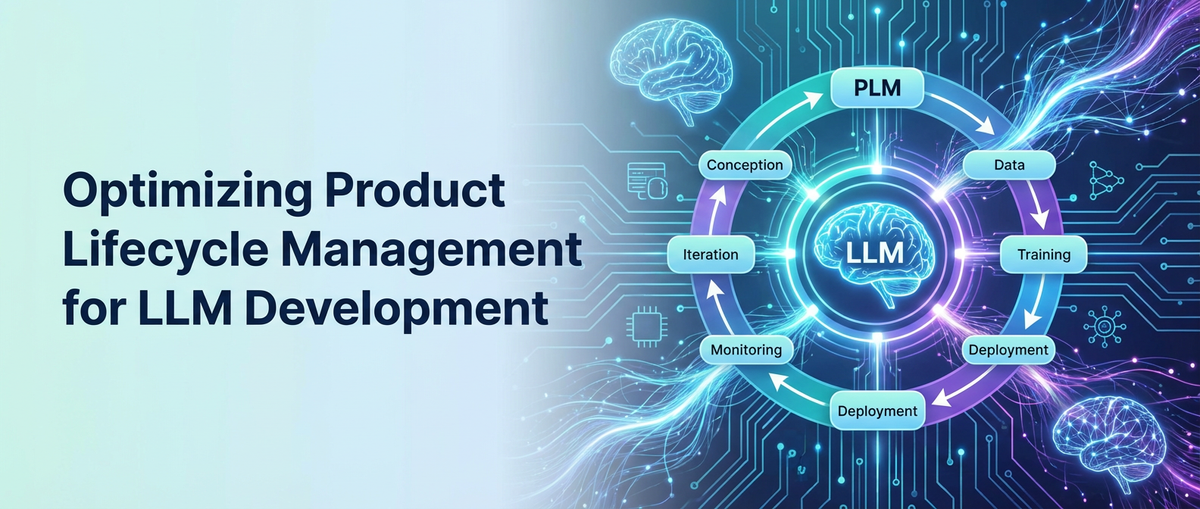


The advent of Large Language Models (LLMs) has heralded a new era of innovation, fundamentally reshaping how businesses interact with data, automate tasks, and create intelligent applications. From sophisticated chatbots and advanced content generation tools to complex data analysis systems, LLMs are no longer just research curiosities but powerful engines driving tangible business value. However, the journey from a nascent LLM concept to a robust, scalable, and maintainable product is fraught with unique challenges that traditional software development lifecycle (SDLC) methodologies are ill-equipped to handle alone. This necessitates a specialized approach to Product Lifecycle Management (PLM) tailored specifically for LLM development.
Optimizing PLM for LLMs is not merely about adapting existing processes; it's about fundamentally rethinking how we design, develop, deploy, operate, and maintain these intelligent systems. It requires a holistic framework that addresses the iterative nature of prompt engineering, the complexities of data management, the ethical considerations inherent in generative AI, and the dynamic landscape of model evolution. Central to this optimized PLM are three interconnected pillars: the LLM Gateway, which acts as the intelligent orchestration layer; the Model Context Protocol, ensuring coherent and effective interactions; and robust API Governance, which establishes the rules and standards for managing these powerful AI services at scale. Without a meticulously planned and executed PLM strategy, organizations risk not only inefficiencies and ballooning costs but also potential reputational damage due to unreliable, biased, or insecure LLM applications. This comprehensive guide will delve deep into each stage of the LLM product lifecycle, illuminating the critical considerations and best practices required to harness the full potential of these transformative technologies.
Chapter 1: The Transformative Power of LLMs and Their Unique Product Lifecycle Challenges
Large Language Models have quickly moved from academic curiosities to foundational technologies, capable of understanding, generating, and manipulating human language with unprecedented fluency and coherence. Their impact spans across industries, from automating customer support with highly personalized responses and accelerating content creation for marketing and media, to aiding scientific research by synthesizing vast amounts of literature and assisting developers with code generation and debugging. This transformative power, however, comes with a distinct set of operational and developmental challenges that demand a re-evaluation of conventional Product Lifecycle Management (PLM) strategies. Unlike traditional software, which often follows predictable logic and deterministic outputs, LLM-based products operate in a realm of probabilistic outcomes, continuous evolution, and profound ethical implications.
One of the most significant distinctions lies in the non-deterministic nature of LLM outputs. A traditional software function, given the same input, will always produce the exact same output. An LLM, conversely, might generate subtly different responses even with identical prompts, influenced by factors like temperature settings, sampling methods, and even internal model state. This probabilistic behavior necessitates entirely new approaches to testing, quality assurance, and user expectation management. It means that traditional unit tests, designed for fixed outcomes, are insufficient, requiring more sophisticated evaluation frameworks that incorporate human judgment and statistical analysis of output quality, relevance, and safety. The inherent variability also complicates debugging and reproducibility, making incident response and root cause analysis considerably more intricate than for conventional software systems.
Furthermore, LLM products are inherently data-centric. Their performance and capabilities are inextricably linked to the quality, quantity, and relevance of the data they were trained on, as well as the data they interact with during inference. This shifts a significant portion of the development focus from purely code-centric activities to robust data pipeline management. Organizations must meticulously manage the lifecycle of training data—from collection and cleaning to annotation, augmentation, and versioning. Data privacy, intellectual property, and compliance with regulations such as GDPR or HIPAA become paramount, as sensitive information could inadvertently be ingested or, worse, generated by the model. The dynamic nature of information also means that models can become "stale" over time, necessitating continuous retraining or fine-tuning with fresh, relevant data to maintain their efficacy and prevent "model drift," where performance degrades on real-world data due to shifts in input distributions.
Prompt engineering emerges as a new, critical development activity, blurring the lines between coding, design, and user interaction. Crafting effective prompts that elicit the desired responses from an LLM is an iterative art and science, requiring deep understanding of the model's capabilities, its underlying biases, and the specific domain it operates within. Prompts are, in essence, a new form of "code" that directly influences product behavior. This demands proper version control for prompts, A/B testing frameworks for prompt variations, and systematic methods for evaluating prompt effectiveness. The evolution of a product often involves significant changes to its prompting strategy, which must be managed with the same rigor as traditional code changes, including testing, deployment, and rollback capabilities.
The rapid model evolution within the LLM ecosystem presents both immense opportunities and significant challenges. New, more powerful, or more efficient models are released at a dizzying pace by various providers, from large tech companies like OpenAI and Google to an increasingly vibrant open-source community. Deciding which model to use, when to migrate, and how to integrate diverse models into a unified product experience becomes a continuous strategic decision. An optimized PLM must account for this fluidity, enabling organizations to swap out underlying models with minimal disruption, fine-tune existing ones, or even ensemble multiple models to achieve superior results. This demands an architectural flexibility that can abstract away the specifics of individual models, a role where an LLM Gateway becomes invaluable.
Finally, the ethical and societal impact of LLMs adds another layer of complexity. Concerns around bias, fairness, transparency, privacy, and safety are not peripheral issues but core considerations that must be integrated into every stage of the PLM. An LLM product might inadvertently perpetuate societal biases present in its training data, generate harmful or toxic content, or "hallucinate" incorrect information with convincing authority. Continuous monitoring, robust guardrails, human-in-the-loop interventions, and clear ethical guidelines are essential to ensure responsible AI development and deployment. The costs associated with LLM inference, particularly for large-scale applications, can also be substantial and highly variable, making efficient cost management and optimization a crucial part of the operational lifecycle. These multifaceted challenges collectively underscore why a purpose-built PLM strategy is not merely beneficial but absolutely essential for successful LLM product development.
Chapter 2: Ideation and Design – Laying the Foundation for LLM Products
The initial phases of Product Lifecycle Management for LLMs, spanning ideation and design, are arguably the most critical. It’s during this stage that the fundamental architecture, user experience, and ethical considerations are laid out, determining the product’s ultimate success and longevity. Unlike traditional software, where design often focuses on explicit functionalities and deterministic workflows, LLM product design must grapple with emergent behaviors, fluid interactions, and the inherent probabilistic nature of generative AI.
The journey begins with problem identification and value proposition, a step that requires astute discernment. Not every business problem is best solved by an LLM, and shoehorning generative AI into an unsuitable use case can lead to over-engineering, poor performance, and wasted resources. The key is to identify areas where LLMs provide a unique, measurable advantage—perhaps by automating complex content generation, personalizing user interactions at scale, summarizing vast amounts of unstructured data, or enabling novel forms of discovery. This involves deeply understanding customer pain points and envisioning how AI can offer a truly differentiated solution, rather than just an incremental improvement. For instance, instead of merely creating a chatbot, perhaps the goal is a personalized learning assistant that adapts its teaching style based on a user's comprehension, leveraging the LLM's ability to understand context and generate adaptive content.
Once a compelling problem space is identified, the focus shifts to User Experience (UX) design for generative AI. This is fundamentally different from designing traditional graphical user interfaces. For LLMs, the primary interface is often conversational, demanding careful consideration of flow, tone, and the user's mental model of interacting with an AI. Setting clear expectations for users is paramount; communicating the AI’s capabilities and limitations can prevent frustration and build trust. Designers must anticipate scenarios where the AI might misinterpret, provide incorrect information (hallucinate), or fail to understand complex prompts, and design elegant fallback mechanisms or clarification prompts. Designing effective feedback loops is also crucial, allowing users to correct the AI, guide its behavior, or provide explicit preferences. This iterative feedback not only improves the immediate user experience but also provides invaluable data for future model fine-tuning and prompt optimization. The UX must also accommodate the potential for long-form, multi-turn interactions, necessitating strategies for managing conversational history and maintaining context across sessions.
A cornerstone of LLM product design is initial prompt design and persona definition. This is where the "personality" and initial behavioral constraints of the LLM are established. Crafting effective system prompts and user prompts requires a blend of linguistic skill and technical understanding. Designers must articulate the LLM’s role, desired tone (e.g., formal, friendly, authoritative), and specific instructions (e.g., "act as a senior financial analyst," "do not give medical advice," "summarize in bullet points"). These initial prompts serve as the guiding principles for the model's behavior and must be versioned and refined as thoroughly as any other design artifact. Furthermore, defining guardrails—explicit instructions or filters to prevent the generation of harmful, biased, or off-topic content—must be an integral part of this early design phase, anticipating potential misuse or unintended consequences. This proactive approach to safety and ethical considerations minimizes reactive firefighting later in the lifecycle.
Simultaneously, a robust data strategy and sourcing plan must be formulated. Even if a product initially relies on a pre-trained foundation model, there will inevitably be a need for specific domain data, whether for fine-tuning, Retrieval Augmented Generation (RAG), or continuous learning. The design phase must identify potential data sources, assess their quality and relevance, and establish clear guidelines for data collection, cleaning, and annotation. Critical considerations include data privacy, intellectual property rights, and compliance with data governance regulations. For instance, if the LLM will process sensitive customer information, the design must incorporate anonymization, encryption, and secure storage solutions from the ground up. The strategy should also consider whether synthetic data can be generated to augment real datasets, especially in scenarios where real-world data is scarce or sensitive.
Finally, architectural blueprinting provides the technical backbone for the LLM product. This involves determining how the LLM will integrate into existing systems, what external APIs it will consume, and how it will expose its capabilities to other services or end-users. Key decisions include whether to use proprietary LLM APIs (e.g., OpenAI, Anthropic), deploy open-source models on private infrastructure, or adopt a hybrid approach. This is where the future need for an LLM Gateway becomes apparent. An initial architectural sketch should consider how multiple models might be orchestrated, how conversational state will be managed, and how security, scalability, and performance requirements will be met. For example, if the product aims to handle high traffic volumes or integrate diverse LLM providers, the design must account for a centralized layer that can abstract these complexities, route requests intelligently, and enforce security policies. By meticulously addressing these elements during the ideation and design phases, organizations can establish a solid foundation, mitigating risks and paving the way for efficient development and successful deployment of their LLM-powered products.
Chapter 3: Development and Iteration – The Dynamic Core of LLM Creation
The development and iteration phase for LLM products is characterized by its dynamic, experimental, and multidisciplinary nature, diverging significantly from traditional software development. Here, the emphasis shifts from purely coding explicit instructions to guiding intelligent systems through iterative refinement, data management, and rigorous evaluation. This chapter delves into the core activities that define this crucial stage, highlighting how an optimized PLM must adapt to the unique requirements of generative AI.
The first and often most continuous activity is the iterative dance of prompt engineering. Unlike traditional code, where functionalities are explicitly written, LLM behavior is heavily influenced by the prompts it receives. This makes prompt engineering a core development activity, requiring systematic approaches. Organizations must implement prompt version control, treating prompts as critical configuration files or even a form of "code" that needs to be tracked, reviewed, and managed using Git-like systems. This ensures reproducibility, allows for rollbacks to previous versions, and facilitates collaborative development. Developers need access to prompt playgrounds and experimentation environments where they can rapidly prototype, test different prompt variations, and observe model responses in real-time. Techniques such as few-shot prompting, chain-of-thought, tree-of-thought, and self-consistency prompting are explored and refined to achieve desired outcomes. A structured input and output mechanism, often facilitated by JSON or XML, becomes vital for guiding the LLM to produce parseable and predictable responses, crucial for downstream processing. This continuous refinement of prompts, coupled with systematic testing, is a hallmark of effective LLM development.
Parallel to prompt engineering, robust data pipeline development and management is indispensable. The quality and relevance of data are paramount for LLM performance, whether it’s for Retrieval Augmented Generation (RAG) systems, fine-tuning, or ongoing model updates. This involves establishing pipelines for data ingestion from various sources, followed by rigorous data cleaning, transformation, and annotation processes. Data cleaning removes irrelevant, noisy, or biased information, while transformation structures data into a format suitable for LLM consumption. Annotation, often a labor-intensive process involving human experts, provides ground truth labels or examples essential for fine-tuning or supervised learning tasks. In scenarios where real-world data is scarce or sensitive, synthetic data generation can play a crucial role, augmenting existing datasets while maintaining privacy. Crucially, all data used for training or fine-tuning must undergo data versioning and lineage tracking. This ensures reproducibility, allows developers to understand the impact of data changes on model performance, and supports compliance audits by tracing the origin and transformations of every data point.
Model selection, adaptation, and fine-tuning represent another critical dimension. Developers face the strategic decision of choosing between powerful proprietary models (e.g., OpenAI's GPT series, Anthropic's Claude) accessed via APIs, and open-source models (e.g., Llama, Mistral, Falcon) that can be deployed on private infrastructure. Each choice carries implications for cost, data privacy, customization, and deployment flexibility. Once a foundational model is chosen, it often needs to be adapted to specific domain knowledge or tasks through fine-tuning. Strategies include domain adaptation (training on domain-specific data) and instruction tuning (training on task-specific examples to follow instructions better). Techniques like Parameter Efficient Fine-Tuning (PEFT), such as LoRA (Low-Rank Adaptation), allow for efficient adaptation without retraining the entire large model, significantly reducing computational costs and time. The PLM must also account for continuous learning loops, enabling models to be updated with new data, user feedback, or emerging knowledge without requiring a full-scale retraining effort, ensuring the product remains current and relevant.
Integrating LLMs into larger applications requires careful consideration of how they fit within existing software architectures. LLMs rarely operate in isolation; they are typically components of a broader system. This often involves orchestrating multiple API calls—some to the LLM itself, others to internal services or external data sources. Here, the concept of an LLM Gateway begins to manifest its importance by providing a unified interface for interacting with various LLMs, abstracting away their distinct APIs and managing critical aspects like authentication, rate limiting, and cost tracking. This intermediary layer simplifies the integration process, allowing developers to focus on the application logic rather than the idiosyncrasies of different model providers.
Finally, testing and evaluation for LLM products extend far beyond traditional metrics. While functional correctness is important, the non-deterministic nature of LLMs demands a broader suite of evaluation methods. * Functional Testing: Verifying that the LLM performs its intended task accurately for specific, well-defined prompts. * Robustness Testing: Assessing how the LLM responds to edge cases, malformed inputs, or adversarial prompts (e.g., prompt injections), ensuring it doesn't break or generate unsafe content under stress. * Bias and Fairness Testing: Crucially, evaluating outputs for implicit biases, stereotypes, or discriminatory language, often requiring specialized datasets and human review. Tools exist to quantify and mitigate these biases. * Safety and Guardrail Testing: Systematically checking that the model adheres to predefined ethical guidelines, avoids generating toxic, hateful, or illegal content, and respects privacy boundaries. * Performance Metrics: Beyond accuracy, key metrics include latency (time to generate a response), throughput (requests per second), and cost-per-token or cost-per-request, which are critical for scaling and budget management. * Human-in-the-Loop (HITL) Evaluation: Given the qualitative nature of generative AI, human reviewers remain indispensable for assessing subjective qualities like coherence, creativity, relevance, and overall user satisfaction. This iterative feedback loop between human evaluators and model improvements is a cornerstone of advanced LLM development.
By embracing these iterative, data-driven, and ethically conscious development practices, organizations can navigate the complexities of LLM creation, transforming innovative ideas into high-quality, impactful products.
APIPark is a high-performance AI gateway that allows you to securely access the most comprehensive LLM APIs globally on the APIPark platform, including OpenAI, Anthropic, Mistral, Llama2, Google Gemini, and more.Try APIPark now! 👇👇👇
Chapter 4: Deployment and Operations – Ensuring Robust, Scalable, and Governed LLM Services
The deployment and operational phases are where the developed LLM product transitions from an experimental artifact to a live, production-ready service, interacting with real users and data. This stage is paramount for realizing the value of LLM development, but it also introduces complex challenges related to scalability, reliability, security, and cost-efficiency. Optimizing PLM here heavily relies on sophisticated infrastructure and robust processes, with the LLM Gateway and comprehensive API Governance emerging as indispensable pillars.
The Indispensable Role of an LLM Gateway
An LLM Gateway is a centralized proxy layer that sits between client applications and the underlying Large Language Models, whether they are hosted externally via third-party APIs or deployed internally. It acts as an intelligent traffic controller and policy enforcement point, abstracting away the complexities of interacting directly with diverse LLM providers and models. Its functions are critical for ensuring the stability, security, and scalability of any LLM-powered product.
- Unified Access & Abstraction: A primary function of an LLM Gateway is to provide a single, consistent API endpoint for applications to interact with various LLMs. This abstracts away the idiosyncrasies of different model providers (e.g., OpenAI, Anthropic, Google, open-source models) that might have distinct API schemas, authentication methods, or rate limits. Developers can code against a unified interface, allowing the underlying model to be swapped, updated, or even A/B tested without requiring changes in the client application code. This significantly reduces integration complexity and future maintenance overhead.
- Load Balancing & Routing: For high-traffic applications or those utilizing multiple LLM instances/providers, the gateway intelligently distributes requests. It can route traffic based on various criteria, such as model availability, cost, latency, geographic location, or specific model capabilities. This ensures optimal resource utilization, prevents bottlenecks, and maintains high availability. For instance, it might dynamically switch to a cheaper, smaller model for simple queries and reserve a more powerful, expensive model for complex tasks.
- Security & Authentication: The gateway serves as a critical security perimeter. It centralizes API key management, enforcing robust authentication and authorization mechanisms (e.g., OAuth, JWT). It can implement rate limiting to protect LLMs from abuse, denial-of-service attacks, and uncontrolled spending. IP whitelisting, input/output sanitization, and content filtering capabilities can also be deployed at the gateway level to prevent prompt injections, ensure data privacy, and filter out harmful or inappropriate content from model responses.
- Cost Management & Optimization: LLM inference costs can escalate rapidly. The gateway provides granular visibility into usage patterns, tracking tokens consumed, requests made, and costs incurred per model, per user, or per application. It can enforce budget caps, implement tiered access, and prioritize requests to manage spending effectively. Furthermore, caching common or deterministic responses at the gateway level can dramatically reduce repeated calls to the LLM, leading to significant cost savings and improved latency.
- Monitoring & Observability: A robust LLM Gateway captures comprehensive metrics (latency, error rates, token usage, throughput), logs every API call, and enables tracing across the LLM interaction chain. This data is invaluable for troubleshooting issues, identifying performance bottlenecks, analyzing usage trends, and proactively detecting anomalies or potential model drift. Detailed logging, for example, allows developers to replay problematic interactions, understand why a model behaved in a certain way, and pinpoint the source of errors, whether it's an invalid prompt or an upstream model issue.
- Prompt & Response Transformation: The gateway can modify prompts before sending them to the LLM (e.g., injecting system instructions, adding context from a database, reformatting user input) and process responses before returning them to the client (e.g., extracting specific data, sanitizing output, enforcing content filters). This capability is crucial for implementing a consistent Model Context Protocol across different LLMs or for dynamic prompt engineering.
- Versioning: The gateway can manage different versions of prompts, models, or even API schemas, allowing for seamless updates and enabling A/B testing of new features or models without impacting all users.
For organizations seeking a robust, open-source solution to manage the complexities of LLM deployment and API Governance, platforms like ApiPark emerge as crucial tools. APIPark functions as an all-in-one AI gateway and API developer portal, designed to streamline the integration, management, and deployment of AI and REST services. Its capability to integrate over 100+ AI models with a unified management system for authentication and cost tracking directly addresses many of the challenges associated with diverse LLM ecosystems. Furthermore, APIPark's feature of standardizing request data formats across AI models ensures that changes in underlying LLM providers or prompts do not disrupt dependent applications, significantly reducing maintenance costs and enhancing operational stability. Its ability to encapsulate prompts into REST APIs, offering end-to-end API lifecycle management, and providing detailed API call logging further solidifies its position as a valuable asset in the modern LLM PLM toolkit, embodying the principles of effective API Governance. APIPark's performance, rivaling Nginx, with capabilities exceeding 20,000 TPS on modest hardware, ensures it can handle the demanding traffic volumes often associated with LLM applications, offering both scalability and reliability.
Robust API Governance for LLM Services
API Governance provides the framework, processes, and tools to manage the entire lifecycle of LLM APIs, ensuring they are discoverable, usable, secure, and compliant. In the context of LLMs, governance extends beyond traditional API management to encompass AI-specific considerations.
- Standardization: Establishing consistent API endpoints, request/response formats, error codes, and authentication methods across all LLM-powered services. This uniformity reduces developer onboarding time, minimizes integration errors, and fosters a coherent ecosystem of AI services within the organization. Standards should also extend to how context is passed and managed, leading into the Model Context Protocol.
- Documentation: Comprehensive, up-to-date, and easily accessible documentation is non-negotiable. For LLM APIs, this documentation must include not just typical API specifications but also examples of effective prompts, expected output structures, common failure modes, rate limits, latency expectations, and clear communication on associated costs per usage tier. A well-maintained developer portal, like that offered by APIPark, allows for self-service discovery and testing of these documented APIs.
- Security Policies: Implementing stringent access controls, data encryption (both in transit and at rest), and robust authorization mechanisms for LLM APIs. Specific policies for LLMs must include prompt injection prevention strategies (e.g., input sanitization at the gateway), output content filtering to prevent the generation of harmful or private information, and strict PII (Personally Identifiable Information) handling guidelines. Subscription approval features, such as those found in APIPark, ensure that callers must explicitly subscribe and await administrator approval before invoking sensitive APIs, acting as another layer of security.
- Versioning Strategy: Managing changes to LLM models, prompts, or API interfaces without breaking existing integrations is crucial. A clear versioning strategy (e.g., semantic versioning for APIs, internal versioning for prompts and models) allows for backward compatibility, graceful deprecation of older versions, and controlled rollouts of new capabilities. The LLM Gateway can play a key role in routing requests to specific API or model versions.
- Lifecycle Management: This encompasses the entire journey of an LLM API: from initial design specification, through development, publication via a developer portal, active invocation and monitoring, to eventual deprecation and decommissioning. API governance ensures a structured, transparent process at each stage, regulating traffic forwarding, load balancing, and versioning of published APIs, as comprehensively facilitated by platforms like APIPark.
- Compliance & Ethics: Adhering to relevant industry regulations (e.g., GDPR for data privacy, sector-specific regulations for financial or healthcare data) and internal ethical guidelines for AI usage. Governance ensures that LLM outputs are regularly audited for bias, fairness, and transparency, and that any PII processed by the models is handled in accordance with legal and ethical standards.
- Developer Portal: Providing a self-service platform where internal and external developers can discover, understand, subscribe to, and test available LLM APIs. This portal streamlines API consumption, fosters collaboration, and accelerates innovation by making AI capabilities easily accessible. APIPark, as an open-source AI gateway and API developer portal, exemplifies this crucial component, allowing for centralized display of API services and independent management for multiple tenant teams.
The combined power of an LLM Gateway and robust API Governance provides the operational backbone for successfully deploying and managing LLM-powered products. They transform what could be a chaotic, insecure, and costly deployment into a streamlined, secure, and efficient ecosystem, critical for sustaining value throughout the product lifecycle.
Table: Core Components and Benefits of an Effective LLM Gateway
| Feature Area | Core Components | Key Benefits for LLM PLM |
|---|---|---|
| Abstraction & Routing | Unified API Endpoints, Model Aggregation, Dynamic Routing Rules, Fallback Logic | Simplifies Integration: Provides a single, consistent interface for diverse LLMs, reducing developer effort. Enables Model Swapping: Allows seamless transition between models or providers without application changes. Optimizes Performance & Cost: Intelligent routing based on latency, cost, or capacity ensures efficient resource utilization. Enhances Resilience: Automatic failover to alternative models or services in case of outages. |
| Security & Access | Centralized Authentication (API Keys, OAuth), Authorization, Rate Limiting, IP Whitelisting, Input Sanitization | Prevents Unauthorized Access: Centralized control over who can call which LLM services. Protects Against Abuse: Rate limits prevent overuse and DoS attacks. Ensures Data Privacy: Filters sensitive information, protects against prompt injection. Compliance: Helps enforce access policies required by regulatory standards. |
| Performance & Scalability | Load Balancing, Caching of Responses, Asynchronous Processing, Circuit Breakers, Auto-Scaling Integration | Improves Responsiveness: Caching and load balancing reduce latency. Reduces Inference Costs: Caching avoids redundant LLM calls. Maintains Availability: Handles high traffic gracefully, prevents cascading failures. Optimizes Resource Usage: Efficient distribution of requests across available model instances. |
| Observability & Analytics | Detailed Request Logging, Comprehensive Metrics Collection (latency, errors, token usage), Tracing, Alerting, Real-time Dashboards | Facilitates Troubleshooting: Pinpoints issues quickly with detailed logs and traces. Enables Cost Analysis: Provides granular data on token and request usage for cost optimization. Performance Tuning: Identifies bottlenecks and areas for improvement. Proactive Issue Detection: Alerts for anomalies, error spikes, or performance degradation. Data-Driven Decisions: Offers powerful data analysis to display long-term trends and performance changes. |
| Policy Enforcement | Input/Output Transformation, Content Filtering, Prompt Augmentation, Version Control Enforcement | Enhances Safety & Ethics: Filters harmful content, enforces brand guidelines. Ensures Consistency: Standardizes prompts and responses across different models. Facilitates Prompt Engineering: Dynamically injects context or system instructions. Manages Evolution: Ensures applications interact with the correct model/prompt versions. |
| Cost Management | Usage Tracking, Budget Limits, Tiered Pricing Enforcement, Cost Visibility per User/Application | Provides Granular Control: Monitor and manage LLM expenditure at a detailed level. Identifies Cost-Saving Opportunities: Highlights areas of high usage or inefficiency. Enforces Budget Adherence: Automatically limits spending or routes to cheaper alternatives when thresholds are met. |
Chapter 5: Maintenance, Evolution, and Decommissioning – Sustaining LLM Value
The journey of an LLM product doesn't end with deployment; in many ways, it's just beginning. The maintenance, evolution, and eventual decommissioning phases are critical for sustaining the product's value, ensuring its continued relevance, and managing its lifecycle responsibly. This dynamic post-deployment stage for LLMs is far more active than for traditional software, driven by the rapid pace of AI innovation, evolving user needs, and the inherent mutability of model performance.
Continuous improvement and re-evaluation form the bedrock of post-deployment LLM PLM. LLMs are not static; their performance can degrade over time due to shifts in user queries, changes in real-world data distributions (model drift), or the emergence of new knowledge that wasn't present in their original training data. This necessitates model retraining strategies that can be scheduled (e.g., quarterly updates), event-driven (e.g., triggered by significant performance drops or new data availability), or even continuous (e.g., online learning with strict safeguards). These retraining efforts must be carefully managed, often involving the re-ingestion of updated data, re-running fine-tuning pipelines, and thorough re-evaluation before deployment. Alongside model updates, prompt optimization is an ongoing process, informed by user feedback, performance metrics collected via the LLM Gateway, and insights from human-in-the-loop evaluations. A/B testing frameworks become indispensable for comparing the effectiveness of new models, updated prompts, or different contextual strategies, ensuring that improvements are data-driven and demonstrably beneficial. Proactive monitoring for model drift or degradation is vital, using techniques like statistical analysis of input-output distributions to detect when an LLM's performance is subtly shifting away from desired benchmarks.
Version control and rollbacks are critically important in this fluid environment. As models are updated, prompts are refined, and configurations are tweaked, managing these changes effectively becomes a complex task. Organizations must maintain rigorous version control for all components: the underlying LLM itself (e.g., model-v1, model-v2), fine-tuning datasets, prompt templates, and even the application code that interacts with the LLM. The ability to quickly and reliably roll back to a previous, stable version in case of unforeseen issues is paramount to minimizing downtime and mitigating negative user experiences. This requires robust deployment pipelines that facilitate atomic updates and clear strategies for associating specific application versions with corresponding model and prompt versions. The LLM Gateway can play a crucial role here, enabling dynamic routing to different model versions based on application version, user segment, or other criteria, thus supporting controlled rollouts and efficient rollbacks.
Cost optimization strategies become increasingly vital as LLM applications scale. Inference costs, especially with large, proprietary models, can quickly become a significant operational expense. Ongoing efforts must focus on identifying and implementing cost-saving measures. This includes intelligently choosing smaller, more efficient LLMs for tasks that don't require the full power of the largest models, batching multiple requests into single API calls where possible to reduce per-call overhead, and continuously refining prompts to be more concise and precise, thereby reducing token usage. Leveraging features of the LLM Gateway, such as intelligent caching of common responses and dynamic routing to the most cost-effective available model, can dramatically reduce unnecessary LLM calls and associated expenses. Detailed cost tracking provided by the gateway allows for identifying cost drivers and implementing targeted optimizations.
Ethical oversight and regulatory compliance are not one-time considerations but continuous responsibilities. As LLM products evolve and interact with new data and users, new ethical challenges or biases might emerge. Regular audits for fairness, transparency, and adherence to new or updated regulations (e.g., emerging AI-specific legislation) are essential. This might involve re-evaluating model outputs against diverse demographic groups, updating content moderation filters, and refining safety guardrails. An integrated feedback loop with legal and ethical review boards ensures that the product remains compliant and operates within accepted societal norms. The governance framework should dictate how often these reviews occur and what metrics are used to assess ethical performance.
Finally, the product lifecycle also includes the often-overlooked phase of decommissioning old models or features. As new, superior LLMs emerge or product functionalities shift, older models or features may become redundant, inefficient, or too costly to maintain. A graceful decommissioning process is crucial. This involves notifying users and dependent applications well in advance, providing clear migration paths to newer alternatives, and carefully archiving data and model artifacts for compliance or future analysis. Simply shutting down an LLM without proper planning can disrupt services, alienate users, and lead to data loss. The LLM Gateway can facilitate this by slowly deprecating old endpoints, redirecting traffic to new versions, and providing clear error messages for legacy calls, ensuring a smooth transition without abrupt interruptions. This systematic approach to maintenance, evolution, and decommissioning ensures that LLM products deliver sustained value while operating responsibly and efficiently throughout their entire lifespan.
Chapter 6: The Nexus of Model Context Protocol and Advanced Governance in LLM PLM
As LLM applications mature beyond simple single-turn prompts, the complexities of managing conversational state and ensuring coherent, personalized interactions become paramount. This is where the Model Context Protocol emerges as a critical enabler, intricately linked with advanced API Governance to define a sophisticated and robust PLM for generative AI. These two concepts work in concert to elevate LLM products from basic utilities to intelligent, responsive, and trustworthy agents.
Deep Dive into Model Context Protocol
The Model Context Protocol refers to a standardized and systematic approach for managing and persisting conversational history, user preferences, and any other relevant contextual information across multiple turns or sessions with a Large Language Model. It dictates how context is structured, transmitted, stored, and utilized to ensure that the LLM's responses are always relevant, consistent, and personalized, extending beyond the immediate prompt-response cycle.
Why it's crucial for advanced LLM applications:
- Coherent Conversations: For chatbots, virtual assistants, or any multi-turn dialogue system, the ability to "remember" previous interactions is fundamental. A robust Model Context Protocol ensures that the LLM has access to the conversation history, allowing it to maintain conversational flow, answer follow-up questions effectively, and avoid repetitive or disjointed responses. Without it, each interaction would be an isolated event, leading to a frustrating and unproductive user experience.
- Personalization and Adaptability: Context management enables personalized experiences. By storing user preferences, historical actions, or explicit profile data within the context, the LLM can tailor its responses, recommendations, or content generation to individual users. For example, a learning assistant can remember a student's weak areas and adapt its explanations accordingly, or a content generator can recall a brand's specific style guide.
- Complex Workflows and Task Completion: Many real-world applications involve multi-step tasks where information from earlier stages is crucial for later steps. A well-defined protocol allows the system to build and maintain a "working memory" for the LLM, enabling it to complete complex tasks that span multiple interactions, such as booking a multi-leg trip or troubleshooting a multi-stage technical issue.
- Reduced Token Usage and Cost Optimization: By intelligently managing what information is included in the context, redundant re-submission of information in every prompt can be avoided. The protocol can define strategies for summarizing past turns, selecting only the most relevant snippets, or using external memory systems to retrieve context efficiently. This minimizes the length of the prompt sent to the LLM, directly translating to reduced token usage and lower inference costs, especially critical for long conversations or complex tasks.
- Reproducibility, Debugging, and Auditability: A standardized context makes it easier to replay specific interactions, understand why an LLM generated a particular response, and debug issues. This is invaluable for quality assurance, compliance audits, and improving the model's reliability and predictability. The protocol provides a clear blueprint for how the LLM perceived its world at any given moment.
Implementation challenges include: managing token limits (as context grows, it can exceed the LLM's input window), efficiently storing and retrieving conversational state, ensuring data privacy within the context, and serializing/deserializing complex context objects. This is where the LLM Gateway and API Governance converge. The gateway can be engineered to enforce, enrich, or transform context according to the defined protocol before forwarding it to the LLM. It can handle context compression, summarization, or retrieval from external databases, ensuring that the LLM always receives an optimal and policy-compliant context payload.
Advanced API Governance for LLMs – Beyond the Basics
Building upon general API Governance principles, advanced governance for LLMs introduces AI-specific policies and oversight mechanisms that are crucial for responsible and effective deployment. These extend beyond standard security and reliability to address the unique behavioral characteristics of generative AI.
- AI-Specific Policy Enforcement: Governance policies must explicitly address content moderation, brand voice adherence, and strategies for mitigating hallucination. This means defining what types of content are acceptable or unacceptable, ensuring the LLM maintains a consistent persona and tone across all interactions, and implementing checks to flag or correct factually incorrect or misleading information. The LLM Gateway can be configured to enforce these policies, filtering both inputs and outputs.
- Robust Prompt Injection Prevention: This is a critical security concern unique to LLMs. Advanced governance mandates specific policies and gateway-level rules to sanitize user inputs, identify and neutralize malicious prompts (e.g., those attempting to override system instructions or extract sensitive data), and provide defensive mechanisms to prevent such attacks. This involves continuous monitoring for new prompt injection techniques and updating the gateway's defenses accordingly.
- Fairness and Bias Auditing Frameworks: Governance should mandate the integration of automated and manual audits into the framework to continuously evaluate LLM outputs for bias, discrimination, or unfairness against specific demographic groups. This includes defining metrics for fairness, establishing review processes, and ensuring that mitigation strategies (e.g., re-prompting, fine-tuning, or output filtering) are applied.
- Explainability & Transparency Requirements: Where possible and necessary, governance policies should mandate logging sufficient information about the prompt, context, and model parameters to allow for post-hoc explanation of LLM decisions. This is particularly important in sensitive domains like finance, healthcare, or legal, where understanding the "why" behind an AI's output is critical for accountability and compliance.
- Observability of AI-Specific Metrics: Beyond standard API metrics, advanced governance requires the tracking and reporting of AI-specific performance indicators through the LLM Gateway. These might include hallucination rate, perplexity (a measure of how well a probability model predicts a sample), bias scores, sentiment analysis of outputs, or adherence to specific content guidelines. This specialized telemetry provides deeper insights into the LLM's actual behavior in production.
- Data Lineage & Provenance Governance: Given the data-centric nature of LLMs, governance must extend to tracking the origin, transformations, and usage of all data employed for training, fine-tuning, and RAG. This ensures transparency, supports intellectual property rights, and simplifies compliance with data privacy regulations by providing a clear audit trail for all data assets feeding the AI.
The synergy between a well-defined Model Context Protocol and comprehensive API Governance creates an environment where LLM products can thrive. The protocol ensures intelligence and coherence, while governance ensures safety, reliability, and ethical operation. Together, they form the advanced scaffolding for an optimized PLM, enabling organizations to build and manage truly intelligent, responsible, and impactful generative AI solutions at scale.
Conclusion
Optimizing Product Lifecycle Management for LLM development is not merely an operational imperative; it is a strategic differentiator in an increasingly AI-driven world. The unique characteristics of Large Language Models—their probabilistic outputs, data-centricity, iterative prompt engineering, and profound ethical implications—demand a departure from conventional PLM methodologies. By embracing a specialized, holistic framework that addresses these nuances, organizations can unlock the transformative potential of generative AI while mitigating inherent risks and ensuring sustainable value.
We have traversed the critical stages of this optimized PLM, from the initial ideation and meticulous design, through the dynamic and iterative development, to the robust deployment, continuous operations, and responsible maintenance and decommissioning. At each juncture, the necessity for specialized tools and processes becomes clear. The LLM Gateway stands out as the indispensable orchestration layer, centralizing access, enforcing security, optimizing costs, and ensuring the reliability and scalability of LLM services. Its ability to abstract complex model interactions and provide comprehensive observability transforms a fragmented ecosystem into a manageable and high-performing one.
Equally vital is the Model Context Protocol, which elevates LLM applications from simple query-response systems to intelligent, coherent, and personalized agents. By providing a standardized mechanism for managing conversational history and contextual information, it unlocks the potential for complex workflows, rich user experiences, and significant cost efficiencies. Finally, robust API Governance acts as the overarching framework, dictating standards, policies, and processes that ensure LLM APIs are discoverable, secure, compliant, and consistently high-quality throughout their lifecycle. From AI-specific policy enforcement to continuous bias auditing and meticulous data lineage tracking, effective governance is the bedrock of responsible and scalable AI deployment.
The future of LLM development promises even greater innovation and complexity. As models become more sophisticated, multimodal, and integrated into critical business processes, the demands on PLM will only intensify. Organizations that proactively invest in optimizing their PLM, leveraging powerful tools like ApiPark as an AI Gateway and API management platform, and meticulously embedding Model Context Protocol and API Governance into their core operations, will be best positioned to lead this new era of intelligent automation. This comprehensive approach is not just about building AI; it's about building trustworthy, efficient, and impactful AI products that truly transform industries and enrich lives.
Frequently Asked Questions (FAQs)
1. What is Product Lifecycle Management (PLM) for LLMs?
Product Lifecycle Management (PLM) for LLMs is a specialized framework for managing the entire journey of an LLM-powered product, from its initial conception and design through iterative development, robust deployment, continuous operation, ongoing maintenance, and eventual decommissioning. It adapts traditional PLM principles to address the unique challenges of generative AI, such as non-deterministic outputs, data-centricity, prompt engineering, rapid model evolution, and inherent ethical considerations. Its goal is to ensure LLM products are developed efficiently, securely, ethically, and sustainably.
2. Why is an LLM Gateway crucial for LLM development and deployment?
An LLM Gateway is crucial because it acts as a centralized, intelligent proxy layer between client applications and various Large Language Models. It provides unified access and abstraction for diverse LLM providers, handles load balancing and intelligent routing for optimal performance and cost, enforces robust security measures (authentication, rate limiting, prompt injection prevention), offers granular cost management and optimization, and provides comprehensive monitoring and observability. Without an LLM Gateway, managing multiple LLMs, ensuring security, controlling costs, and maintaining scalability in production environments becomes exceedingly complex and inefficient.
3. What is the Model Context Protocol, and why is it important?
The Model Context Protocol is a standardized method for managing and persisting conversational history, user preferences, and other relevant contextual information across multiple interactions with an LLM. It's vital because it enables LLMs to have coherent, multi-turn conversations, personalize responses based on user history, support complex multi-step workflows, and reduce token usage by efficiently managing the information sent to the model. This protocol ensures that the LLM's responses are contextually relevant and consistent, significantly enhancing the user experience and application intelligence.
4. How does API Governance specifically apply to LLM-powered services?
API Governance for LLM-powered services extends traditional API management to include AI-specific policies and oversight. It ensures standardization of LLM API endpoints and formats, provides comprehensive documentation (including prompt examples and cost implications), implements stringent security policies (e.g., prompt injection prevention, output content filtering), establishes clear versioning strategies for models and prompts, and manages the entire API lifecycle. Crucially, it also incorporates AI-specific concerns like continuous fairness and bias auditing, requirements for explainability, and governance over data lineage and ethical use of AI outputs.
5. What are the biggest challenges in optimizing PLM for LLM development?
The biggest challenges include: managing the non-deterministic and often unpredictable nature of LLM outputs; handling the rapid evolution of models and prompt engineering techniques; ensuring data quality, privacy, and governance across vast and dynamic datasets; addressing complex ethical considerations such as bias, fairness, and safety throughout the lifecycle; effectively managing and optimizing escalating inference costs; and building robust testing and evaluation frameworks that go beyond traditional software metrics to assess model performance, reliability, and human alignment.
🚀You can securely and efficiently call the OpenAI API on APIPark in just two steps:
Step 1: Deploy the APIPark AI gateway in 5 minutes.
APIPark is developed based on Golang, offering strong product performance and low development and maintenance costs. You can deploy APIPark with a single command line.
curl -sSO https://download.apipark.com/install/quick-start.sh; bash quick-start.sh

In my experience, you can see the successful deployment interface within 5 to 10 minutes. Then, you can log in to APIPark using your account.

Step 2: Call the OpenAI API.