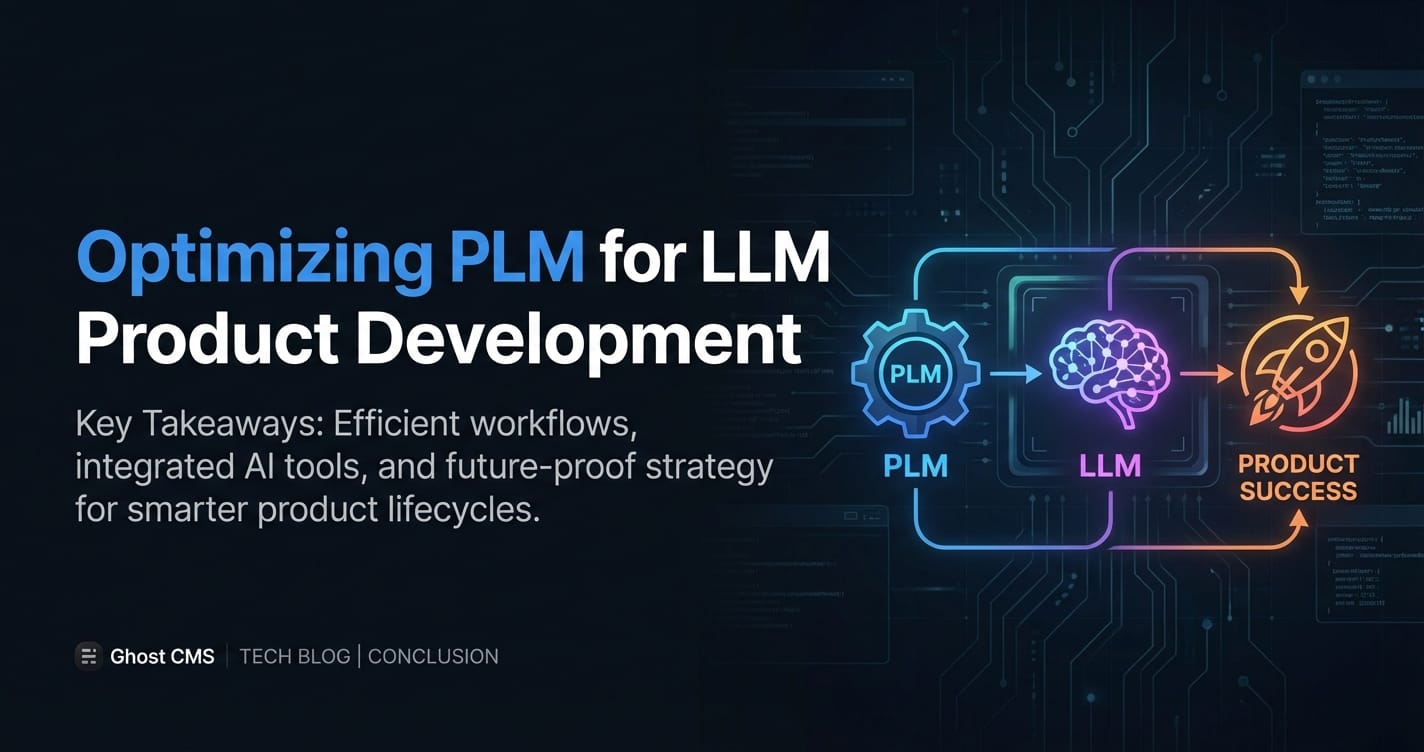
Optimizing PLM for LLM Product Development


The advent of Large Language Models (LLMs) has heralded a transformative era in technology, reshaping how we conceive, design, and interact with software products. From intelligent assistants and sophisticated content generation tools to complex data analysis systems, LLMs are no longer confined to research labs but are rapidly becoming the bedrock of next-generation applications. This paradigm shift, however, brings with it a unique set of challenges and complexities that traditional Product Lifecycle Management (PLM) methodologies, originally sculpted for tangible goods or conventional software, are ill-equipped to fully address. The very nature of LLM products—their reliance on dynamic data, probabilistic outputs, continuous learning, and an intricate interplay of models, prompts, and infrastructure—demands a fundamental re-evaluation and optimization of PLM strategies.
This comprehensive article delves into the critical need for an adapted PLM framework to effectively manage the entire lifecycle of LLM-powered products. We will explore the distinctive phases of LLM product development, from initial ideation and data curation to sophisticated evaluation, deployment, and iterative refinement. Crucially, we will highlight the indispensable roles of specialized components such as a robust Model Context Protocol for managing conversational state, the architectural necessity of an LLM Gateway for efficient and secure model interaction, and the practical considerations of integrating diverse foundational models like Claude into enterprise-grade solutions. By dissecting these elements, we aim to provide a roadmap for organizations to not only harness the immense potential of LLMs but also to bring these innovative products to market with unprecedented efficiency, reliability, and ethical integrity. The journey into LLM product development is complex, but with an optimized PLM strategy, it becomes a path to sustained innovation and competitive advantage.
I. The Dawn of LLM-Powered Innovation and the PLM Imperative
The technological landscape is undergoing a profound metamorphosis, driven by the exponential advancements in artificial intelligence, particularly Large Language Models. These sophisticated neural networks, trained on vast corpora of text and code, possess an astonishing ability to understand, generate, and manipulate human language with a fluency and coherence that was unimaginable just a few years ago. From enhancing customer service through intelligent chatbots to accelerating scientific discovery by sifting through mountains of research, and from automating code generation to personalizing educational experiences, LLMs are not merely tools; they are becoming foundational components that underpin entirely new categories of products and services.
This profound impact necessitates a fundamental shift in how we approach product development. Traditional PLM, a discipline honed over decades to manage the lifecycle of physical products (like automobiles or aerospace components) and later adapted for conventional software applications, provides a structured framework encompassing everything from concept and design to manufacturing, service, and eventual retirement. It emphasizes rigorous version control, quality assurance, regulatory compliance, and cross-functional collaboration. However, the unique characteristics of LLM-powered products introduce dimensions that extend beyond the purview of traditional PLM. Unlike deterministic software, LLMs are probabilistic, their outputs can vary, they are highly sensitive to input phrasing (prompts), they learn and evolve, and their performance is intrinsically tied to the quality and relevance of the data they are trained on or retrieve from. Managing the "bill of materials" for an LLM product isn't just about code libraries; it includes model weights, training datasets, fine-tuning scripts, prompt templates, and evaluation benchmarks.
The imperative to optimize PLM for LLM product development stems from several critical factors. Without a tailored approach, organizations risk falling prey to chaotic development cycles, inconsistent product behavior, escalating operational costs, and significant ethical or safety liabilities. An unmanaged LLM product lifecycle can lead to issues such as "model drift" where performance degrades over time, "prompt leakage" exposing sensitive information, or unexpected biases emerging in outputs. Furthermore, the rapid pace of innovation in the LLM space means that models and techniques are constantly evolving, requiring an agile and adaptable PLM framework that can embrace continuous iteration and experimentation while maintaining stability and control. Therefore, adapting and extending PLM principles to encompass the distinct challenges and opportunities presented by LLMs is not merely an operational luxury; it is a strategic necessity for any organization aspiring to build and sustain competitive, reliable, and responsible AI products. The ultimate goal is to create a robust system that ensures quality, governance, and traceability across the entire, often nebulous, LLM product stack.
II. Understanding the Nuances of LLM Product Development Lifecycle
Developing products powered by Large Language Models is a multi-faceted endeavor that diverges significantly from traditional software development. Each phase of the lifecycle carries its own set of unique considerations, demanding specialized tools, processes, and expertise. A holistic understanding of these nuances is paramount for building an optimized PLM framework.
A. Ideation and Concept Definition
The journey of an LLM product begins, like any other, with a clearly defined business problem or user need. However, for LLMs, the ideation phase requires an additional layer of exploration: identifying where and how an LLM can provide a truly unique and impactful solution. This involves moving beyond mere automation to leveraging the generative and analytical capabilities of LLMs. For instance, instead of just automating customer support FAQs, an LLM product might aim to synthesize personalized responses based on a deep understanding of customer history and product documentation. Defining the core LLM functionalities means determining whether the product needs summarization, translation, code generation, creative writing, or complex reasoning. Early prompt engineering—experimenting with initial prompts to gauge an LLM's capabilities for a specific task—becomes a critical exploratory step. This phase often involves rapid prototyping with various models, including exploring the strengths of models like Claude for particular tasks, to validate feasibility and refine the product's value proposition. A clear vision of the target user experience, including how users will interact with the LLM and the expected quality of its outputs, forms the bedrock of subsequent development.
B. Data Sourcing and Curation
Data is the lifeblood of LLMs, and its management is arguably the most critical and complex aspect of their lifecycle. For foundational models, the training data sets are immense and pre-existing, but for specific applications, custom data becomes crucial. This data can serve multiple purposes: fine-tuning a model for domain-specific knowledge, providing context for Retrieval-Augmented Generation (RAG) systems, or generating evaluation benchmarks. Challenges abound: ensuring data quality (accuracy, completeness, relevance), managing potential biases embedded within the data, addressing privacy concerns (especially with sensitive user information), and handling the sheer scale of modern datasets. A robust PLM framework must incorporate sophisticated data versioning and lineage tracking, enabling developers to trace specific model behaviors back to the data inputs that influenced them. Tools for data annotation, cleaning, de-duplication, and anonymization are essential here, as is a clear strategy for continuous data refresh and maintenance.
C. Model Selection and Integration
The landscape of LLMs is vast and rapidly expanding, offering a spectrum of choices from powerful proprietary models to increasingly capable open-source alternatives. Deciding which foundational model to integrate—whether it's Claude, GPT, Llama, Gemini, or a specialized variant—depends on a myriad of factors: performance requirements (speed, accuracy), cost implications, ethical guidelines, deployment considerations (API access vs. local deployment), and the specific capabilities needed for the product. Each model comes with its own API structure, token limits, and unique characteristics. A robust PLM approach mandates a structured evaluation of these models, not just on raw performance but also on their suitability for the target application and ease of integration. The integration strategy must account for potential model changes or deprecations, ensuring that the application layer is sufficiently abstracted to minimize disruption. This often involves developing adapter layers or relying on intermediary services that standardize model interactions.
D. Prompt Engineering and Orchestration
Prompt engineering has emerged as a distinct discipline, focusing on the art and science of crafting effective prompts to guide an LLM towards desired outputs. This involves understanding an LLM's nuances, iterating on input phrasing, and designing multi-turn conversation flows. For LLM products, prompt management is crucial; it’s not enough to simply write a good prompt. Prompts need to be versioned like code, tested rigorously, and managed systematically across different product features and model versions. This becomes even more complex with prompt orchestration, where multiple prompts are chained together, or dynamic prompts are generated based on user input or external data. To manage the state and history within these complex interactions, particularly in multi-turn conversations or agentic workflows, the implementation of a robust Model Context Protocol becomes indispensable. This protocol defines a standardized way to package and transmit all relevant context—previous messages, user profiles, retrieved information, system instructions—to the LLM, ensuring coherent and consistent responses without exceeding token limits or losing conversational thread. Effective prompt engineering and orchestration directly translate into improved user experience and model reliability.
E. Fine-tuning and Customization
While foundational models are powerful generalists, many LLM products benefit significantly from fine-tuning—a process of further training a pre-trained model on a smaller, domain-specific dataset. This customization imbues the model with specialized knowledge, aligns its tone and style with brand guidelines, or improves its performance on niche tasks where general models might struggle. The decision to fine-tune involves trade-offs in cost, effort, and model complexity. If fine-tuning is chosen, the PLM framework must encompass rigorous processes for dataset preparation (ensuring quality and relevance), defining clear training objectives, and monitoring training runs. This includes tracking hyperparameters, logging performance metrics during training, and managing multiple model checkpoints. Versioning of fine-tuned models and their associated datasets is critical for reproducibility and traceability, allowing developers to revert to previous versions if a new iteration introduces regressions.
F. Evaluation and Benchmarking
Evaluating the performance of LLMs is notoriously challenging due to their generative nature. Unlike traditional software with clear pass/fail criteria, LLM outputs often require subjective assessment. A comprehensive evaluation strategy must define a diverse set of metrics covering fluency, coherence, factual accuracy, relevance, safety (e.g., avoiding toxic or biased outputs), and adherence to instructions. This typically involves a blend of automated metrics (e.g., ROUGE, BLEU for summarization) and, crucially, human evaluation, which remains the gold standard for qualitative assessment. Continuous evaluation is key, integrating feedback loops from real-world usage to identify performance degradation or emergent issues. Establishing robust benchmarking protocols—testing models against a predefined set of tasks and ground truth data—allows for objective comparisons between different model versions, fine-tuned iterations, or even different foundational models like Claude versus other alternatives, ensuring that product improvements are quantifiable and measurable.
G. Deployment and Operations (MLOps for LLMs)
Bringing an LLM product to users involves significant operational considerations, extending traditional MLOps principles. Infrastructure requirements are often substantial, demanding scalable computing resources (GPUs), efficient model serving frameworks, and robust data pipelines. Key operational metrics include latency (how quickly the model responds), throughput (how many requests it can handle per second), and cost-efficiency. Managing these factors in production environments is where the concept of an LLM Gateway becomes not just beneficial, but essential. An LLM Gateway acts as an intermediary layer between applications and the actual LLM providers, centralizing control over model access, routing requests, applying rate limits, and monitoring usage.
This is precisely where solutions like APIPark offer immense value. As an open-source AI gateway and API management platform, APIPark is specifically designed to streamline the deployment and operational aspects of LLM products. It facilitates the quick integration of over 100 AI models, providing a unified management system for authentication and cost tracking. By offering a standardized API format for AI invocation, APIPark ensures that changes in underlying AI models or prompts do not disrupt consuming applications, thereby simplifying maintenance and improving overall system stability. This capability is paramount in the dynamic world of LLMs, enabling developers to seamlessly switch between models like Claude and other providers without extensive re-coding. APIPark's end-to-end API lifecycle management, including design, publication, invocation, and decommission, helps regulate API management processes, manage traffic forwarding, load balancing, and versioning of published APIs—all critical for scalable and reliable LLM deployments.
H. Monitoring, Maintenance, and Iteration
The lifecycle of an LLM product doesn't end at deployment; it enters a phase of continuous monitoring, maintenance, and iterative improvement. Observability is paramount: logging every input and output to the LLM, tracking performance metrics (response times, error rates), and monitoring for signs of "model drift," where the model's performance degrades over time due to changes in input data distribution or user behavior. Establishing effective user feedback loops allows for the collection of valuable qualitative data, which can then be used to identify areas for improvement. This iterative cycle involves analyzing monitoring data and feedback, identifying new data for fine-tuning, refining prompts, or even retraining models. A well-optimized PLM framework supports this continuous learning and adaptation, ensuring that LLM products remain relevant, accurate, and high-performing throughout their operational lifespan.
III. Pillars of an Optimized PLM Framework for LLMs
To effectively manage the complexities of LLM product development, an optimized PLM framework must incorporate several fundamental pillars. These pillars extend traditional PLM concepts to address the unique requirements of AI-driven products, ensuring control, quality, and agility.
A. Version Control and Traceability Across the Stack
In traditional software PLM, version control is primarily applied to source code. For LLM products, this concept must expand dramatically to encompass every constituent component. This means not only versioning the application code that interacts with the LLMs but also the prompts themselves (which are effectively code that instructs the model), the training and fine-tuning datasets, the model weights and configurations, and the evaluation benchmarks. Imagine a scenario where a specific LLM product feature suddenly starts generating undesirable outputs. Without comprehensive versioning and traceability, debugging such an issue becomes a Herculean task. A robust PLM system for LLMs must link these disparate artifacts—a specific application version should be traceable to the exact prompt template version, the specific fine-tuned model version (or even the version of a foundational model like Claude if using an external API), and the dataset used for its training or evaluation. This granular traceability is critical for debugging, auditing, ensuring compliance (e.g., proving data lineage for privacy regulations), and reproducing results, which is often a challenge in the probabilistic world of AI. It allows organizations to understand "what changed where" and attribute behavioral shifts to specific modifications within the complex LLM stack.
B. Collaborative Development Environments
LLM product development is inherently interdisciplinary, requiring seamless collaboration between prompt engineers, data scientists, machine learning engineers, software developers, product managers, and UI/UX designers. Each role brings a unique perspective and set of skills that must converge to create a successful product. An optimized PLM framework facilitates this collaboration through shared workspaces and integrated tooling. This means having platforms where prompt engineers can version, test, and share prompts; where data scientists can curate and manage datasets collaboratively; and where developers can integrate models and prompts into the application layer. Knowledge bases are vital for documenting prompt best practices, model behaviors, and ethical guidelines. Tools that support concurrent development on different prompt variations or model experiments, alongside clear review and approval workflows, are crucial to prevent silos and ensure that all stakeholders are aligned on the product's evolving behavior and capabilities. This collaboration ensures that insights from one area, say a new prompt strategy discovered by a prompt engineer, can quickly be integrated and tested by the wider team.
C. Automated Testing and Continuous Integration/Deployment (CI/CD)
The dynamic and probabilistic nature of LLMs makes automated testing both challenging and indispensable. Traditional unit and integration tests are still relevant for the surrounding application code, but specialized testing strategies are needed for the LLM components. This includes automated prompt testing, where a battery of test prompts with expected outputs is used to validate model behavior across different scenarios. Regression testing for models is crucial; after fine-tuning or updating a model (or even when a foundational model like Claude gets an update), it must be re-evaluated against known benchmarks to ensure that new capabilities haven't inadvertently degraded existing performance. CI/CD pipelines for LLMs must extend beyond code builds to include automated data validation, model training/fine-tuning pipelines, and comprehensive evaluation runs. Safe deployment strategies, such as canary deployments or blue/green deployments, become even more critical for LLM products, allowing new model versions or prompt sets to be gradually rolled out to a small subset of users, monitoring their performance and safety before a full release. This minimizes the risk of negative impacts from unexpected LLM behaviors in production.
D. Data Governance and Ethical AI Considerations
The ethical implications of LLM products are profound and far-reaching, encompassing issues of bias, fairness, privacy, security, transparency, and accountability. An optimized PLM framework must embed robust data governance and ethical AI principles throughout the entire lifecycle. This begins with data governance, ensuring that all data used for training, fine-tuning, or RAG is collected, stored, and utilized in compliance with privacy regulations (e.g., GDPR, CCPA) and internal security policies. It also involves proactive measures to identify and mitigate biases within training data that could lead to unfair or discriminatory LLM outputs. Establishing clear ethical guidelines for LLM behavior is paramount, defining what constitutes acceptable and unacceptable responses, and implementing guardrails to prevent harmful content generation. Transparency mechanisms, such as logging LLM inputs and outputs, and explainability initiatives, which aim to provide insights into why an LLM produced a particular response, contribute to building trust and enabling accountability. This pillar demands a multi-disciplinary approach, involving legal, ethics, and compliance teams alongside technical stakeholders.
E. Specialized Tooling and Infrastructure
Traditional PLM tools, while foundational, often lack the specific functionalities required for LLM development. An optimized framework necessitates an ecosystem of specialized tools and infrastructure components. This includes dedicated prompt management platforms that allow for versioning, collaboration, and A/B testing of prompts. Model registries are essential for tracking different model versions, their metadata, performance metrics, and deployment status. Experiment tracking systems enable data scientists and prompt engineers to log and compare the results of various experiments, whether it’s different prompt strategies, fine-tuning runs, or RAG configurations.
However, the most crucial piece of infrastructure for managing interactions with LLMs, especially external ones like Claude or GPT, is an LLM Gateway. This gateway acts as a central control plane for all LLM API calls, providing a layer of abstraction, security, and optimization. It manages API keys, handles routing to different models, implements rate limiting, and often provides caching to improve performance and reduce costs. The LLM Gateway is vital for implementing a consistent Model Context Protocol across various models, ensuring that context is correctly formatted and transmitted.
APIPark exemplifies this specialized tooling, offering a robust open-source AI gateway and API management platform. Its capabilities align perfectly with the needs of an optimized LLM PLM framework. APIPark’s ability to integrate 100+ AI models, provide a unified API format, and encapsulate prompts into REST APIs simplifies the developer experience and enhances the manageability of LLM-powered products. Furthermore, its comprehensive API lifecycle management, performance rivalling Nginx, and detailed API call logging provide the necessary operational visibility and control that are central to this pillar. By centralizing the management of LLM interactions, APIPark significantly reduces operational overhead, enhances security, and allows engineering teams to focus on core product innovation rather than infrastructure complexities. This holistic approach ensures that the entire lifecycle, from design to monitoring, is well-supported by purpose-built tools.
IV. The Strategic Role of an LLM Gateway in PLM Optimization
In the complex ecosystem of LLM product development, an LLM Gateway emerges not merely as a utility but as a strategic component that profoundly optimizes the entire Product Lifecycle Management process. It acts as an intelligent intermediary, sitting between your applications and the various Large Language Models (both proprietary like Claude and open-source alternatives), transforming what could be a chaotic, fragmented interaction into a streamlined, secure, and highly manageable workflow. Its role in PLM optimization is multi-faceted, addressing critical concerns from centralized control to performance and security.
A. Centralized Management and Control
One of the most immediate and significant benefits of an LLM Gateway is the centralization of LLM interaction management. In an environment where applications might need to utilize multiple LLMs—perhaps Claude for complex reasoning, another model for rapid content generation, and a fine-tuned internal model for domain-specific tasks—managing individual API keys, endpoints, and usage policies for each can quickly become unmanageable. An LLM Gateway consolidates this complexity.
It provides a unified interface for accessing diverse models, abstracting away the idiosyncrasies of each provider. This means developers interact with a single, consistent API, regardless of the underlying LLM. This centralized approach enables: * Unified Authentication and Authorization: All requests pass through the gateway, allowing for a single point of enforcement for security policies. * Rate Limiting and Quota Management: Prevents abuse, controls costs, and ensures fair resource allocation across different applications or teams. * Cost Tracking and Optimization: Detailed logs and analytics enable precise monitoring of token usage and expenditure across various models and features, facilitating budget management and strategic cost reduction.
APIPark directly addresses these needs with its "Quick Integration of 100+ AI Models" and "Unified API Format for AI Invocation." This means that whether you're integrating Claude, GPT, or a custom model, the interaction pattern remains consistent, drastically reducing development effort and improving maintainability. Furthermore, APIPark's "Detailed API Call Logging" and "Powerful Data Analysis" features provide the granular insights necessary for comprehensive cost tracking and performance optimization, which are critical for effective PLM.
B. Enhancing Security and Compliance
Security and compliance are paramount in the age of AI, especially when dealing with sensitive user data. An LLM Gateway provides a crucial layer of defense and control: * Data Anonymization and Filtering: It can be configured to redact or anonymize sensitive information in prompts before they reach the LLM, protecting user privacy. Similarly, it can filter LLM outputs for harmful, biased, or inappropriate content before it's delivered to the end-user. * Auditable Trails: Every request and response passing through the gateway is logged, creating an immutable audit trail. This is invaluable for debugging, understanding model behavior, and demonstrating compliance with regulatory requirements (e.g., proving that no Personally Identifiable Information (PII) was sent to an external model). * Tenant Isolation: For multi-tenant applications or large enterprises, an LLM Gateway like APIPark allows for "Independent API and Access Permissions for Each Tenant," ensuring that different teams or departments have isolated environments, applications, data, and security policies, while sharing underlying infrastructure. This improves resource utilization and prevents unauthorized cross-pollination of data or access. * Access Approval Workflows: APIPark's feature "API Resource Access Requires Approval" adds an extra layer of security, ensuring that callers must subscribe to an API and await administrator approval before invocation. This prevents unauthorized API calls and potential data breaches, which is crucial for sensitive LLM applications.
C. Improving Performance and Scalability
LLM interactions can be resource-intensive and prone to latency issues. An LLM Gateway significantly contributes to performance and scalability: * Load Balancing: Distributes requests across multiple instances of an LLM (if deployed internally) or across different model providers to prevent bottlenecks and ensure high availability. * Caching Strategies: Caches common LLM responses, reducing redundant API calls and significantly improving response times for frequently asked queries, while simultaneously lowering operational costs. * Retry Mechanisms and Circuit Breaking: Implements intelligent retry logic for transient errors and circuit breakers to prevent cascading failures when an LLM service is unavailable, enhancing system resilience. * Performance Rivaling Nginx: APIPark boasts impressive performance, stating it "can achieve over 20,000 TPS with just an 8-core CPU and 8GB of memory," and supports cluster deployment. This level of performance is critical for handling large-scale traffic and ensuring a smooth user experience, even for demanding LLM applications.
D. Facilitating A/B Testing and Experimentation
The iterative nature of LLM development necessitates continuous experimentation. An LLM Gateway simplifies A/B testing and experimentation dramatically: * Traffic Routing: Allows you to intelligently route a percentage of traffic to a new prompt version, a fine-tuned model, or an entirely different foundational model (e.g., routing 10% of users to an application powered by Claude while 90% use GPT). * Comparison Data Collection: By routing traffic through the gateway, detailed logs can be collected for each variant, enabling direct comparison of performance, user satisfaction, and cost, providing data-driven insights for product iteration. This is particularly useful for optimizing prompt effectiveness or evaluating new model releases.
E. Abstracting LLM Complexity
Perhaps one of the most powerful advantages of an LLM Gateway in a PLM context is its ability to abstract away the underlying complexity of LLMs from application developers. * Simplified Integration: Developers no longer need to write custom code for each LLM provider, parse different API responses, or manage individual API keys. The gateway provides a uniform interface. * Future-Proofing Against Model Changes: If you decide to switch from one foundational model to another (e.g., from an open-source model to Claude for enhanced capabilities, or vice versa), or if a model API changes, the application layer remains largely unaffected. The gateway absorbs these changes, ensuring "Unified API Format for AI Invocation" as offered by APIPark, thereby significantly reducing maintenance costs and time. * Prompt Encapsulation: APIPark's feature to "Prompt Encapsulation into REST API" is a game-changer. It allows users to quickly combine AI models with custom prompts to create new, specialized APIs (e.g., a sentiment analysis API, a translation API), which can then be managed and consumed like any other REST service. This accelerates development cycles and fosters modularity in LLM product design.
In conclusion, an LLM Gateway is more than just a proxy; it's a strategic control point that enhances every stage of the LLM product lifecycle. By centralizing management, bolstering security, optimizing performance, enabling rapid experimentation, and abstracting complexity, it provides the robust infrastructure necessary for an optimized PLM framework in the age of AI. Solutions like APIPark offer a compelling platform to realize these benefits, empowering organizations to build, deploy, and manage their LLM-powered products with confidence and efficiency.
APIPark is a high-performance AI gateway that allows you to securely access the most comprehensive LLM APIs globally on the APIPark platform, including OpenAI, Anthropic, Mistral, Llama2, Google Gemini, and more.Try APIPark now! 👇👇👇
V. Implementing a Robust Model Context Protocol for State-Aware Applications
The true power of Large Language Models often lies not just in their ability to generate coherent text, but in their capacity to participate in extended, meaningful interactions. This requires them to maintain an understanding of the ongoing conversation, user preferences, and relevant external information—in essence, to be "state-aware." However, LLMs are fundamentally stateless; each API call is typically an independent transaction. Bridging this gap requires a sophisticated mechanism: a Model Context Protocol. Implementing such a protocol is not just a technical detail; it is a critical component for building intelligent, user-friendly, and reliable LLM-powered products, especially when managing interactions with models like Claude which excel at long-context understanding.
A. Definition and Importance
A Model Context Protocol is a standardized, structured way to package, transmit, and manage all relevant information that an LLM needs to understand the current interaction, remember past turns, and draw upon external knowledge. It's the blueprint for how "memory" and "awareness" are engineered into LLM applications.
Its importance cannot be overstated for complex, stateful LLM applications such as: * Conversational AI Agents: Chatbots, virtual assistants, and customer service bots that need to recall previous questions, user details, or follow-up on earlier statements. * Interactive Tools: Applications where users iteratively refine queries or engage in multi-step processes with the LLM (e.g., co-writing tools, data analysis assistants). * Personalized Experiences: Systems that adapt LLM outputs based on a user's profile, history, or preferences. * Agentic Workflows: Advanced applications where LLMs plan and execute multi-step tasks, requiring them to maintain state about task progress, tool outputs, and intermediate thoughts.
Without a well-defined Model Context Protocol, LLM applications would suffer from "short-term memory loss," leading to disjointed conversations, repetitive questions, and a frustrating user experience. It would be impossible for models like Claude, despite their large context windows, to truly leverage their capabilities if the relevant information isn't presented to them in an organized and consistent manner.
B. Components of a Protocol
A comprehensive Model Context Protocol typically encapsulates several distinct types of information, structured logically to be easily parsable and prioritized by the LLM.
- Conversational History: This is the most obvious component, including:
- User Messages: The actual text inputs from the user.
- System Messages/Instructions: Pre-defined directives to the LLM (e.g., "You are a helpful assistant.", "Always respond in Markdown."). These often set the persona or constraints.
- Assistant Responses: The previous outputs generated by the LLM itself, which serve as context for the next turn.
- Tool Outputs/Observations: In agentic systems, the results of external tools or APIs invoked by the LLM (e.g., "Search results for 'weather in London' are...").
- Metadata and Session Information:
- Timestamp: When each message occurred, useful for ordering and context aging.
- User ID/Session ID: Identifiers to link messages to a specific user or ongoing session.
- Application-Specific State: Any internal state variables that need to be maintained (e.g., current stage in a workflow, selected options).
- External Knowledge (Retrieval-Augmented Generation - RAG):
- Retrieved Documents/Snippets: Chunks of relevant information fetched from a knowledge base (e.g., product manuals, FAQs, internal documents) that are injected into the prompt to ground the LLM's responses and prevent hallucinations.
- Database Query Results: Data fetched from structured databases to answer specific user questions.
- User Profile and Preferences:
- User Settings: Language preference, tone preference, accessibility needs.
- Historical Interactions: Summaries or key takeaways from past, unrelated sessions to provide broader context.
- Pre-defined Behaviors/Constraints:
- Safety Guards: Explicit instructions to avoid certain topics or refuse inappropriate requests.
- Output Format Requirements: Directives to generate JSON, XML, or adhere to specific templates.
C. Design Considerations
Designing an effective Model Context Protocol involves several critical considerations:
- Schema Definition: The protocol needs a clear, consistent structure, often implemented using JSON, YAML, or Protobuf. This schema dictates how different components of the context are organized and ensures that the application and the LLM Gateway (if used) can reliably construct and parse the context. For instance, many LLMs, including Claude, follow a
messagesarray structure (e.g.,[{"role": "user", "content": "..."}]) which can be extended with custom fields for additional metadata. - Compression and Token Management: LLMs have finite context windows (token limits). A key challenge is to include enough context without exceeding these limits. The protocol should support strategies for:
- Summarization: Condensing older parts of the conversation.
- Truncation: Discarding the oldest, least relevant messages.
- Prioritization: Giving more weight to recent messages or crucial external information.
- Token Counting: Dynamically calculating token usage to stay within limits.
- Versioning the Protocol Itself: As your application evolves, so too might the structure or content of your context protocol. Having a versioning strategy for the protocol ensures backward compatibility and allows for seamless upgrades.
- Interaction with an LLM Gateway: An LLM Gateway plays a crucial role in implementing and enforcing the Model Context Protocol. It can:
- Validate Context: Ensure the incoming context adheres to the defined schema.
- Transform Context: Adapt the generic protocol to the specific API requirements of different LLMs (e.g., converting a universal context format into Claude's specific
messagesstructure). - Manage Token Budgets: Automatically apply truncation or summarization logic before forwarding the request to the LLM.
- Enrich Context: Add session-level metadata or RAG data directly to the context before sending it to the model.
D. Impact on User Experience and Model Performance
A well-implemented Model Context Protocol profoundly impacts both user experience and model performance:
- Coherent, Consistent Interactions: Users perceive the LLM as intelligent and "aware," leading to a more natural and satisfying conversational experience. The LLM can pick up where it left off, reference previous statements, and maintain logical flow, greatly enhancing the perceived intelligence of the system.
- Reduced Hallucinations and Improved Factual Accuracy: By explicitly injecting relevant external knowledge (via RAG) into the context, the LLM is less likely to generate fabricated or incorrect information. It grounds its responses in provided facts.
- Improved Task Completion: For multi-step tasks, the LLM can more effectively track progress and guide the user towards completion, remembering intermediate results or decisions.
- Enhanced Personalization: With user-specific preferences and history consistently provided in the context, the LLM can tailor its responses to be more relevant and engaging for individual users.
- More Predictable Model Behavior: By standardizing the input context, you reduce variability in LLM responses, making the system more reliable and easier to test and debug within an optimized PLM framework.
In essence, a robust Model Context Protocol is the engineering solution to endow LLMs with "memory" and "understanding" within an application. It transforms raw LLM capabilities into truly intelligent and useful product features, making the difference between a novelty and a indispensable tool. Its thoughtful design and implementation, often facilitated by an LLM Gateway, are central to optimizing PLM for the development of sophisticated LLM-powered products.
VI. Case Studies and Industry Best Practices
The theoretical frameworks of optimizing PLM for LLM product development are best understood through practical application. Across industries, companies are grappling with these challenges, forging new best practices, and realizing significant gains. Examining these approaches, often involving sophisticated models like Claude, reveals common themes and effective strategies.
One compelling area is customer support and engagement. Companies handling vast volumes of customer inquiries are leveraging LLMs to provide instant, accurate, and personalized assistance. For instance, a major telecommunications provider might employ an LLM-powered virtual assistant to handle routine queries, troubleshoot common issues, and even guide users through complex service configurations. Their PLM for this product would involve:
- Data Sourcing and Curation: Meticulously collecting and anonymizing years of customer service transcripts, product documentation, and internal knowledge base articles. This data is continuously updated to reflect new products or policies, with strict version control on datasets.
- Model Selection: They might start with a general-purpose model, but quickly realize the need for domain-specific knowledge. This could lead them to fine-tune an open-source model or leverage a powerful model like Claude for its strong reasoning capabilities and ability to handle long, complex customer conversations without losing context. The decision to use Claude might be driven by its superior performance in specific benchmarks related to conversational depth and factual accuracy in a constrained domain.
- Prompt Engineering with Model Context Protocol: Instead of simple prompts, they design intricate prompt templates that incorporate the Model Context Protocol. This protocol bundles the customer's full conversational history, their account details (anonymized), relevant retrieved articles (RAG-based on keywords from the current turn), and explicit system instructions ("You are a polite, helpful telecom expert. Prioritize resolving the customer's issue. If unsure, escalate to a human."). This ensures the virtual assistant is always "aware" of the customer's journey and tailored to their specific needs.
- LLM Gateway for Control and Scalability: To manage thousands of simultaneous customer interactions, they deploy an LLM Gateway like APIPark. This gateway acts as the central brain:
- It routes requests to the appropriate LLM (e.g., Claude for complex queries, a lighter model for simple FAQs).
- It manages API keys and rate limits, ensuring cost efficiency.
- It filters PII before prompts reach external models, adhering to strict privacy regulations.
- It provides real-time monitoring and analytics, allowing the product team to detect spikes in error rates or unexpected model behavior and trigger prompt adjustments or model re-evaluations.
- APIPark's "Unified API Format" proves invaluable here, allowing the company to experiment with different LLM backends (e.g., comparing Claude 3 Opus to Claude 3 Sonnet) without rewriting application-level integration code.
- Continuous Evaluation: Beyond automated tests, human evaluators regularly review a sample of LLM-generated responses for accuracy, tone, and compliance, providing critical feedback for iterative improvements. A/B testing through the LLM Gateway allows them to compare new prompt strategies or model versions in live environments with a small user group before wider rollout.
Another example can be found in the creative industries, such as content generation for marketing. A large digital marketing agency might develop an internal tool that generates diverse marketing copy (headlines, ad descriptions, blog outlines) based on client briefs.
- Iterative Prompt Design: Prompt engineers work closely with copywriters to develop, version, and refine prompts that capture different brand voices and marketing objectives. They use prompt management platforms to track hundreds of prompt variations, linking them to performance metrics.
- Integration of Advanced Models: They might leverage the creative and long-form generation capabilities of models like Claude to produce more nuanced and engaging content compared to simpler models. The team benchmarks Claude's output quality against human-written copy and other LLMs.
- PLM for Content Generation: Their PLM system tracks not just the code for the content generation tool, but also the specific version of Claude used, the prompt template version, and the training data (e.g., client brand guidelines, previous high-performing ads) that fine-tuned their internal model or informed their RAG system.
- APIPark's Role in Scalability and Customization: As the demand for content grows, APIPark allows them to scale access to Claude and other models while maintaining consistent quality. Furthermore, the agency uses APIPark's "Prompt Encapsulation into REST API" feature. This allows them to quickly turn a sophisticated prompt for "generating 5 blog titles for a given topic and target audience" into a simple internal REST API. This API can then be easily consumed by different internal tools or even exposed securely to partners, abstracting the LLM complexity and ensuring consistent application of their refined prompt engineering.
These case studies underscore that the optimization of PLM for LLM product development is a pragmatic response to real-world challenges. It necessitates a blend of traditional software engineering rigor with specialized AI tools and methodologies. The strategic deployment of components like a robust Model Context Protocol for managing state, a versatile LLM Gateway (such as APIPark) for centralized control and optimization, and thoughtful integration of advanced models like Claude are not just theoretical constructs but essential building blocks for successful and sustainable LLM-powered innovation. These best practices are continually evolving, but the core principles of versioning everything, continuous evaluation, and intelligent management of LLM interactions remain constant.
VII. The Future of PLM in the LLM Era: Challenges and Opportunities
The journey of optimizing PLM for LLM product development is far from complete; it's an evolving landscape marked by unprecedented challenges and boundless opportunities. As LLMs become more sophisticated, autonomous, and integrated into critical systems, the demands on their lifecycle management will only intensify. Anticipating these future trajectories is crucial for organizations to remain at the forefront of AI innovation.
A. Evolving Regulations and Standards
One of the most significant external forces shaping the future of LLM PLM is the rapid development of AI regulations and ethical standards. Governments worldwide are grappling with how to govern AI, exemplified by initiatives like the EU AI Act, which classifies AI systems by risk level and imposes stringent requirements for high-risk applications. For LLM products, this translates into increased scrutiny on: * Transparency and Explainability: The need to understand why an LLM made a particular decision or generated a specific output, especially in sensitive contexts (e.g., medical diagnosis, legal advice). PLM will need to integrate tools and processes for model interpretability and comprehensive logging that can trace an output back to its input, model version, and even training data. * Bias and Fairness: Regulatory bodies will increasingly demand proof that LLM products are fair and unbiased across different demographic groups. This will necessitate advanced bias detection and mitigation strategies throughout the data curation, model training, and evaluation phases, all meticulously documented within the PLM system. * Accountability and Liability: Determining who is responsible when an LLM causes harm (e.g., generates misinformation, provides incorrect medical advice). PLM will play a vital role in establishing clear accountability frameworks, ensuring full traceability of product versions, development decisions, and operational metrics. * Security and Robustness: Protecting LLMs from adversarial attacks (e.g., prompt injection, data poisoning) will become critical. PLM needs to incorporate security-by-design principles, rigorous penetration testing tailored for LLMs, and continuous monitoring for vulnerabilities.
This regulatory environment will drive the need for more formalized "AI Governance" within the broader PLM framework, requiring dedicated roles, audit trails, and certification processes for LLM products.
B. The Rise of Autonomous Agents
Beyond simple chat interfaces, the future of LLMs points towards autonomous agents capable of planning, executing multi-step tasks, utilizing external tools, and even interacting with other agents. This paradigm shift introduces entirely new dimensions to PLM: * Agent Orchestration PLM: Managing the lifecycle of not just a single LLM, but a network of interconnected agents, each with specific roles, communication protocols, and decision-making capabilities. This involves versioning agent architectures, communication patterns, and tool definitions. * Tool Management: As agents interact with a multitude of APIs and external systems, the PLM system must manage the lifecycle of these tools—their versions, capabilities, and security implications—and how agents learn to use them effectively. * Emergent Behavior Management: Autonomous agents can exhibit emergent behaviors that are difficult to predict during development. PLM needs advanced simulation environments and monitoring tools to observe, understand, and control these behaviors in pre-production and production, ensuring safety and alignment with intended goals. The Model Context Protocol will need to evolve to encapsulate complex internal thought processes and inter-agent communication.
C. Democratization of LLM Development
The increasing accessibility of LLM technology, through user-friendly platforms and low-code/no-code solutions, presents both opportunities and challenges for PLM. * Citizen AI Developers: Non-technical users will be empowered to build LLM applications, accelerating innovation but also increasing the risk of poorly designed or ethically problematic deployments without proper governance. * Scalable Governance: PLM systems will need to provide intuitive interfaces and automated guardrails to enable safe LLM development by a wider audience. This includes template libraries for prompts, automated bias checks, and simplified deployment pipelines that abstract away underlying complexities. * Community-Driven Development: Open-source models and collaborative platforms will foster community-driven LLM development. PLM will need to facilitate the integration of external contributions, manage open-source dependencies, and ensure quality control in a distributed environment.
D. Continuous Learning and Adaptation
The most advanced LLM systems will not be static; they will continuously learn and adapt from new data, user interactions, and environmental changes. * Self-Improving Models: PLM needs to support models that can update their weights or knowledge bases autonomously, potentially blurring the lines between "development" and "operation." This requires robust mechanisms for continuous validation, drift detection, and automated rollback if performance degrades. * Dynamic Data Pipelines: The PLM framework must ensure that data pipelines feeding these continuous learning systems are robust, secure, and compliant, providing high-quality, relevant data in real-time. * Proactive Maintenance: Instead of reactive bug fixes, PLM for self-improving LLMs will shift towards proactive monitoring for anomalies, predicting potential issues before they impact users, and automatically triggering maintenance or retraining cycles.
The future of PLM in the LLM era demands a holistic, adaptable, and ethically-driven approach. It moves beyond managing discrete software components to orchestrating complex, intelligent, and often autonomous systems. Tools like LLM Gateways (such as APIPark) will become even more indispensable as central control points for managing this expanding complexity, ensuring security, optimizing performance, and providing the crucial audit trails required for future compliance. The journey will be iterative, but by embracing these emerging trends, organizations can position themselves to not only navigate the challenges but also seize the immense opportunities presented by the ever-evolving frontier of LLM innovation.
VIII. Conclusion: A New Paradigm for Product Excellence
The landscape of product development has been irrevocably altered by the advent of Large Language Models, ushering in an era where software products are imbued with unprecedented intelligence, adaptability, and communicative prowess. However, merely integrating an LLM into an application is insufficient for sustained success; the true differentiator lies in the systematic and strategic management of the entire LLM product lifecycle. Traditional Product Lifecycle Management (PLM), while foundational, requires a profound re-engineering to encompass the unique demands of these dynamic, data-driven, and often probabilistic systems.
We have traversed the intricate nuances of the LLM product development journey, from the initial spark of an idea to the continuous dance of monitoring and iteration. Each stage, from meticulous data curation and model selection (including advanced options like Claude) to sophisticated prompt engineering and rigorous evaluation, presents distinct challenges that necessitate specialized processes and tools. The imperative for an optimized PLM framework for LLMs stems from the need to ensure not just technical functionality, but also ethical integrity, operational efficiency, and ultimately, a superior user experience.
Central to this optimized PLM paradigm are critical architectural and methodological components that redefine how we interact with and control LLMs. The Model Context Protocol emerges as an indispensable tool for instilling "memory" and "awareness" into LLM applications, allowing for coherent, state-aware interactions that transcend the limitations of stateless API calls. By providing a structured framework for managing conversational history, external knowledge, and system instructions, it transforms raw LLM capabilities into truly intelligent and personalized user experiences.
Equally pivotal is the strategic deployment of an LLM Gateway. More than a mere proxy, it acts as the central nervous system for all LLM interactions, providing centralized management, robust security, enhanced performance, and invaluable abstraction from the inherent complexities of diverse LLM providers. Platforms like APIPark exemplify this critical infrastructure, offering a comprehensive solution for quick integration, unified API formatting, prompt encapsulation into manageable services, and end-to-end API lifecycle governance. Its capabilities for detailed logging, powerful data analysis, and scalable performance are not just features, but essential enablers for maintaining control, optimizing costs, and fostering innovation within the LLM product lifecycle. By leveraging an LLM Gateway, organizations can navigate the evolving ecosystem of models (including specific integrations with powerful options like Claude) with agility and confidence, ensuring that their applications remain resilient, secure, and future-proof.
The journey ahead is one of continuous learning and adaptation. As AI regulations mature, autonomous agents proliferate, and the very nature of LLMs evolves towards self-improvement, so too will the demands on PLM. The ability to embrace these changes, to meticulously version every artifact from prompts to models, to foster seamless collaboration across interdisciplinary teams, and to embed ethical considerations at every turn, will define the leaders in this new era.
In conclusion, optimizing PLM for LLM product development is not merely an operational adjustment; it is a strategic imperative for achieving product excellence in the age of artificial intelligence. By thoughtfully integrating concepts like the Model Context Protocol, deploying robust LLM Gateway solutions, and strategically leveraging advanced models like Claude, organizations can unlock the full transformative potential of LLMs, delivering innovative, reliable, and responsible products that redefine what's possible and set new standards for the future.
Frequently Asked Questions (FAQs)
1. Why is traditional PLM insufficient for LLM Product Development? Traditional PLM, designed for physical products or conventional software, primarily focuses on tangible components and deterministic logic. LLM products, however, are probabilistic, data-dependent, highly sensitive to prompts, and continuously evolving. Their "bill of materials" includes not just code but models, datasets, prompts, and evaluation metrics. Traditional PLM lacks the specific mechanisms for managing model drift, prompt versioning, ethical AI considerations, and the dynamic nature of LLM outputs, requiring a specialized and optimized approach.
2. What is a Model Context Protocol and why is it crucial for LLM applications? A Model Context Protocol is a standardized way to package and transmit all relevant information (conversational history, user preferences, retrieved external data, system instructions) to an LLM for each interaction. It's crucial because LLMs are inherently stateless; without this protocol, they would "forget" previous turns, leading to disjointed conversations and poor user experiences. It allows LLM applications to maintain memory and context, enabling coherent, personalized, and accurate responses, especially in multi-turn interactions or agentic workflows.
3. How does an LLM Gateway contribute to PLM optimization? An LLM Gateway (like APIPark) acts as an intelligent intermediary between applications and LLMs. It optimizes PLM by centralizing management (unified access, authentication, cost tracking across models like Claude), enhancing security (data filtering, audit trails, tenant isolation), improving performance (load balancing, caching), and facilitating A/B testing. It also abstracts away the complexity of integrating diverse LLMs, ensuring that applications are resilient to model changes and easier to develop and maintain, thereby streamlining the entire product lifecycle.
4. What are the key ethical considerations in LLM PLM, and how can they be managed? Key ethical considerations include bias (in training data or model outputs), fairness, privacy (handling sensitive user data), transparency (explaining LLM decisions), and accountability. These can be managed within PLM by integrating robust data governance (data lineage, anonymization), establishing explicit ethical guidelines, implementing bias detection and mitigation strategies, ensuring comprehensive logging for auditability, and developing mechanisms for explainability. Continuous ethical evaluation and human oversight are also vital.
5. How does the integration of specific models like Claude impact LLM Product Development PLM? Integrating specific models like Claude, GPT, or Llama impacts PLM by influencing model selection criteria (performance, cost, ethical stance), requiring specific API integrations, and necessitating tailored prompt engineering strategies that leverage their unique capabilities (e.g., Claude's large context window for complex reasoning). PLM must track the version of the foundational model used, manage its specific licensing and usage terms, and ensure that the LLM Gateway can seamlessly abstract and route requests to it, allowing for easy experimentation and potential switching between different leading models based on product requirements.
🚀You can securely and efficiently call the OpenAI API on APIPark in just two steps:
Step 1: Deploy the APIPark AI gateway in 5 minutes.
APIPark is developed based on Golang, offering strong product performance and low development and maintenance costs. You can deploy APIPark with a single command line.
curl -sSO https://download.apipark.com/install/quick-start.sh; bash quick-start.sh

In my experience, you can see the successful deployment interface within 5 to 10 minutes. Then, you can log in to APIPark using your account.

Step 2: Call the OpenAI API.