OpenAI HQ: Where AI's Future is Built
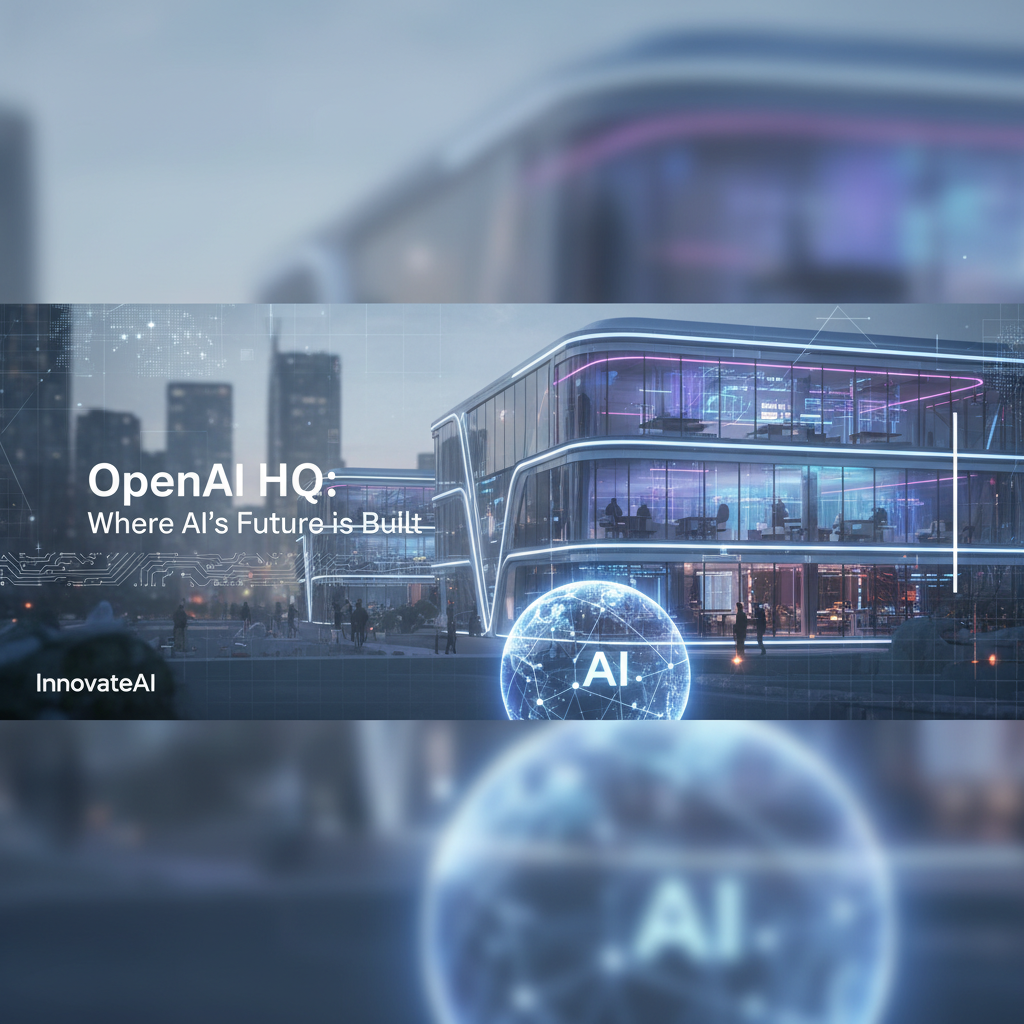


In the bustling heart of San Francisco, amidst the iconic cable cars and tech-driven innovation, stands a building that has rapidly become synonymous with the future of artificial intelligence: the headquarters of OpenAI. More than just a corporate office, this facility represents a crucible where some of the world's brightest minds converge, driven by a singular, ambitious vision: to ensure that artificial general intelligence (AGI) benefits all of humanity. From its humble beginnings as a non-profit endeavor to its current status as a global powerhouse, OpenAI has consistently pushed the boundaries of what AI can achieve, transforming theoretical concepts into tangible tools that are reshaping industries, daily life, and our understanding of intelligence itself. The energy within its walls is palpable, a dynamic blend of intense research, collaborative brainstorming, and an unwavering commitment to both innovation and safety. This is where algorithms are refined, models are trained on colossal datasets, and the ethical implications of unprecedented technological power are rigorously debated, all in pursuit of a future where AI serves as a profound force for good.
The journey of OpenAI is a testament to audacious goals and relentless execution. It’s a story rooted in the belief that AI's potential is too vast and too critical to be left to chance, or to be controlled by a select few. The HQ is not merely a collection of desks and servers; it is a vibrant ecosystem designed to foster breakthroughs, where every whiteboard tells a story of complex problems being unraveled, and every meeting room hums with the discourse of pioneering minds. Here, the abstract concepts of machine learning, neural networks, and deep reinforcement learning are transformed into concrete applications that amaze and challenge us. The impact of their work, from the groundbreaking GPT series to the visually stunning DALL-E and the widely adopted ChatGPT, reverberates globally, instigating conversations about creativity, productivity, education, and the very nature of human intelligence. Understanding the essence of OpenAI HQ means delving into its founding philosophy, its operational ethos, its technological prowess, and its deep-seated commitment to navigating the complex ethical landscape of AI development, all while maintaining a relentless pace of innovation that keeps the world captivated and eager for what comes next.
The Genesis and Vision of OpenAI: A Foundation of Foresight and Ambition
The inception of OpenAI in December 2015 marked a pivotal moment in the history of artificial intelligence. Co-founded by an eclectic group of visionaries including Elon Musk, Sam Altman, Greg Brockman, Ilya Sutskever, and others, the organization's initial charter was remarkably clear and ambitious: to advance digital intelligence in the way that is most likely to benefit humanity as a whole, unconstrained by a need to generate financial return. This founding principle was a direct response to a growing recognition of AI's burgeoning potential and the profound ethical and societal implications that would inevitably follow its development. The founders believed that if AGI, a hypothetical AI capable of understanding, learning, and applying intelligence across a wide range of tasks at a human level or beyond, were to be created, it should be developed as broadly and safely as possible, rather than confined to the interests of a single corporation or government. This commitment to beneficence and safety, rather than profit, distinguished OpenAI from many other AI research labs at its genesis.
The early days at OpenAI HQ were characterized by an intense focus on fundamental research and a strong emphasis on fostering an environment of open collaboration and knowledge sharing. Researchers were encouraged to publish their findings, release open-source code, and engage with the broader scientific community, reflecting the "open" in OpenAI's name. This early ethos attracted top talent, individuals passionate about tackling some of the most challenging problems in computer science and cognitive artificial intelligence. They grappled with foundational questions, exploring novel architectures for neural networks, devising new reinforcement learning algorithms, and pushing the boundaries of what machines could learn and infer from vast datasets. The initial challenges were formidable: securing immense computational resources, attracting and retaining the world's leading AI scientists, and navigating the vast, largely unexplored theoretical landscape of advanced AI. Yet, propelled by a collective sense of purpose, the team laid the groundwork for the innovations that would eventually captivate the world.
Over time, as the scale and cost of training increasingly powerful AI models grew exponentially, OpenAI recognized the need for a structural evolution to sustain its mission. In 2019, it transitioned from a pure non-profit to a "capped-profit" model, establishing a hybrid structure designed to raise capital while maintaining its original mission and ethical guardrails. This innovative corporate structure allowed OpenAI to attract significant investment, notably from Microsoft, by offering investors a capped return, ensuring that the primary focus remained on benefiting humanity rather than maximizing shareholder profit. This strategic shift was crucial; the sheer computational power required to train models like GPT-3 and subsequent iterations demanded investments on a scale that a pure non-profit could not easily secure. The leadership articulated this change as a necessary step to accelerate their progress towards safe AGI, arguing that access to vast resources was essential to compete with other well-funded labs and to ensure that the development of powerful AI was guided by their safety-first principles. The vision remained steadfast: to develop highly autonomous systems that outperform humans at most economically valuable work, and to distribute these benefits as widely as possible, preventing concentrations of power and promoting global prosperity. This complex, evolving strategy reflects the profound responsibility OpenAI shoulders as it charts a course towards an uncertain, yet potentially transformative, future.
Inside the Walls: A Hub of Innovation and Collaborative Genius
Stepping into OpenAI HQ is akin to entering a futuristic laboratory where the air thrums with intellectual energy and the pursuit of groundbreaking discoveries. The physical space itself is meticulously designed to foster both intense individual focus and seamless collaborative exchange. Spanning multiple floors, the layout prioritizes open-plan workspaces interspersed with numerous breakout rooms, cozy nooks, and expansive common areas. Whiteboards, large and small, are ubiquitous, serving as the primary medium for impromptu brainstorming sessions, complex algorithmic derivations, and the mapping of intricate neural network architectures. You'll find them covered top-to-bottom with equations, diagrams, and hastily scribbled ideas, constantly being erased and refilled, reflecting the dynamic, iterative nature of AI research. The aesthetic combines industrial chic with touches of comfort, ensuring that while the work is demanding, the environment remains conducive to long hours of deep thought and creative problem-solving. High ceilings and abundant natural light aim to reduce the sense of confinement, creating an airy, expansive feeling that mirrors the boundless ambition of the projects undertaken within.
The atmosphere inside OpenAI HQ is a unique blend of academic rigor, startup agility, and visionary zeal. It's a place where leading researchers in machine learning, neuroscientists, philosophers, ethicists, and engineers from diverse backgrounds converge, each contributing their specialized expertise to the overarching goal of safe AGI. The culture is one of relentless curiosity, intellectual humility, and radical transparency among peers. Debates are not just tolerated but actively encouraged, as the team understands that challenging assumptions and scrutinizing every detail is essential for building robust and reliable AI systems. Imagine walking through a corridor and overhearing a spirited discussion about the nuances of reinforcement learning from human feedback (RLHF) or the latest insights into emergent capabilities of large language models – this is the daily soundtrack of OpenAI. There's a palpable sense of mission, where individuals are not just executing tasks but genuinely believe they are shaping the future of humanity. This attracts an unparalleled caliber of talent, individuals who are not only technically brilliant but also deeply committed to the ethical implications of their work.
The research and development process at OpenAI is characterized by its iterative nature, combining theoretical breakthroughs with practical, empirical validation. Projects often begin with a bold hypothesis, followed by the rigorous formulation of mathematical models and the design of novel algorithms. These are then translated into code, executed on vast supercomputing clusters, and trained on immense datasets that can span petabytes of information. The results are meticulously analyzed, leading to further refinements, new hypotheses, and repeated cycles of experimentation. Safety protocols are woven into every stage of this process, from initial model design to extensive red-teaming exercises where internal and external experts attempt to break or misuse the AI system. This includes probing for biases, vulnerabilities, and potentially harmful emergent behaviors. The sheer scale of compute power and data involved is staggering, representing an infrastructure capable of handling computational loads that were once unimaginable. This robust infrastructure, combined with a culture that champions deep dives into complex problems and fosters relentless iteration, is what allows OpenAI to transform nascent ideas into revolutionary AI models that push the boundaries of what machines can do, ensuring that each step forward is carefully considered, not just for its capabilities, but for its potential impact on the world.
Landmark Achievements and Their Profound Impact on Society
OpenAI's journey from a research lab to a global AI leader is punctuated by a series of landmark achievements that have not only captivated the public imagination but also fundamentally altered the trajectory of artificial intelligence and its applications across society. At the forefront of these innovations are the Large Language Models (LLMs) from the GPT series, each iteration marking a significant leap in capability.
The evolution from GPT-1 to GPT-4 and beyond represents a remarkable progression in machine understanding and generation of human language. GPT-1, released in 2018, showed early promise in understanding relationships within text. GPT-2, though initially held back due to concerns about misuse, demonstrated an unprecedented ability to generate coherent and contextually relevant prose. GPT-3, with its 175 billion parameters, truly astonished the world with its versatility, capable of writing articles, coding, translating languages, and answering questions with a fluency that often blurred the lines between human and machine. The subsequent release of GPT-4 further refined these capabilities, exhibiting more advanced reasoning, creativity, and multimodal input acceptance. These models have revolutionized various sectors: in creative industries, they assist writers, marketers, and designers; in education, they offer personalized learning experiences and aid in research; and in information access, they make complex data more digestible. The sheer power of these generative models has shifted paradigms, moving from AI as a tool for analysis to AI as a partner in creation, raising profound questions about authorship, originality, and the future of knowledge work.
Beyond text, OpenAI's exploration into generative AI extended to the visual domain with DALL-E. Unveiled in 2021, DALL-E, and its successor DALL-E 2, represented a groundbreaking advancement in image generation from natural language prompts. Users could simply describe an image—"an astronaut riding a horse in a photorealistic style" or "a watercolor painting of a sad elephant"—and the AI would conjure remarkably detailed and often artistic images. This technology quickly democratized art and design, enabling individuals without traditional artistic skills to create unique visuals for anything from presentations and social media to product prototypes and personal projects. Its impact on creative workflows, advertising, and even digital art markets has been immense, opening new avenues for expression and visual communication. However, DALL-E also introduced new ethical considerations, particularly regarding the generation of synthetic media, deepfakes, and copyright issues, prompting OpenAI to implement strict usage policies and safety filters to mitigate potential harms.
Perhaps no other OpenAI product has achieved the ubiquitous recognition and immediate impact of ChatGPT. Launched in November 2022, this conversational AI interface, built upon the GPT-3.5 and later GPT-4 models, brought advanced AI directly into the hands of millions globally. ChatGPT rapidly became a cultural phenomenon, showcasing the ability of LLMs to engage in nuanced dialogue, answer complex questions, generate essays, debug code, and even simulate role-playing scenarios. Its user-friendly interface made AI accessible to the masses, transforming it from a niche technological pursuit into a mainstream tool. This rapid adoption highlighted AI's immense potential for boosting productivity across virtually all professions, from customer service and content creation to software development and personal assistance. Simultaneously, ChatGPT ignited widespread discussions about the future of education, the potential for misinformation, and the ethical responsibilities of deploying such powerful, generalized AI systems. Its release undeniably marked the moment AI became a household name, propelling conversations about its benefits and challenges to the forefront of global discourse.
While the GPT series, DALL-E, and ChatGPT are the most visible achievements, OpenAI's research extends into other critical areas. The organization is actively involved in robotics research, exploring how AI can enable robots to learn and adapt in complex physical environments, moving beyond programmed movements to intelligent interaction. Furthermore, a substantial portion of their efforts is dedicated to fundamental AI safety research, including alignment problems (ensuring AI systems act in accordance with human values), interpretability (understanding how AI makes decisions), and robustness (making AI systems resilient to adversarial attacks). This diverse portfolio underscores OpenAI's commitment not only to advancing the state of the art in AI but also to proactively addressing the multifaceted challenges and responsibilities that accompany the development of increasingly powerful artificial intelligence.
The Technological Stack and Infrastructure: Powering the AI Revolution
The groundbreaking achievements emanating from OpenAI HQ are underpinned by an awe-inspiring technological stack and an infrastructure of unprecedented scale. At the heart of this formidable setup lies an insatiable demand for computational power, primarily driven by the training of large language models and other sophisticated AI systems. These models, with billions or even trillions of parameters, require immense parallel processing capabilities, making Graphics Processing Units (GPUs) the cornerstone of OpenAI's compute infrastructure. Thousands upon thousands of state-of-the-art GPUs are clustered together, forming supercomputers capable of performing quadrillions of operations per second. This isn't just about having many GPUs; it's about connecting them efficiently, managing heat, and orchestrating their collective effort to process vast quantities of data. OpenAI's strategic partnership with Microsoft Azure provides access to one of the world's largest cloud supercomputers, offering the necessary scale, reliability, and cutting-edge hardware to push the boundaries of AI research. The sheer energy and resource demands are astronomical, requiring sophisticated power management and cooling systems, effectively transforming the infrastructure into a data center operating at the cutting edge of high-performance computing.
Equally critical to the development of powerful AI models is the meticulous management and curation of colossal datasets. These datasets, comprising petabytes of text, images, code, and other modalities, serve as the raw material from which AI models learn patterns, relationships, and "knowledge" about the world. The process of data acquisition and preparation is arduous and highly specialized. It involves not only gathering publicly available information from the internet but also implementing sophisticated strategies for data cleaning, filtering out noise, identifying and mitigating biases, and ensuring ethical sourcing. OpenAI invests heavily in techniques to improve data quality, recognizing that "garbage in, garbage out" applies emphatically to AI training. This includes developing advanced algorithms to identify harmful content, ensuring diverse representation in training data to reduce systemic biases, and implementing robust annotation processes to provide high-quality feedback for techniques like reinforcement learning from human feedback (RLHF). The challenges in data bias and representation are complex and continuous, requiring ongoing research and refinement to build AI systems that are fair, robust, and reflect the diversity of human experience.
The methodologies and tools employed by OpenAI researchers represent the vanguard of AI development. They leverage advanced deep learning frameworks, often building upon and extending open-source libraries, but also developing proprietary tools and platforms tailored to their specific research needs. Reinforcement learning, particularly RLHF, has proven instrumental in aligning AI model behavior with human preferences and values, transforming raw generative models into more helpful and less harmful conversational agents. This involves a complex feedback loop where human annotators rate AI responses, and these ratings are then used to fine-tune the model's behavior. The rapid prototyping of experimental models, coupled with rigorous testing and evaluation, is a continuous cycle.
As developers and enterprises increasingly integrate sophisticated AI services into their applications, the complexities of managing diverse model APIs, authentication, usage tracking, and cost optimization become a significant challenge. This is where specialized tools come into play, serving as an AI Gateway. These platforms are crucial for organizations looking to streamline their AI infrastructure, providing a unified point of control for accessing and managing various AI models, including those from OpenAI. A product like ApiPark, an open-source AI gateway and API management platform, offers capabilities to quickly integrate numerous AI models, unify API formats, and manage the end-to-end API lifecycle. Such solutions exemplify how the broader tech ecosystem is evolving to support and optimize the deployment of advanced AI like that developed at OpenAI HQ, enabling businesses to leverage these powerful tools efficiently and securely, abstracting away much of the underlying complexity of direct model interaction.
APIPark is a high-performance AI gateway that allows you to securely access the most comprehensive LLM APIs globally on the APIPark platform, including OpenAI, Anthropic, Mistral, Llama2, Google Gemini, and more.Try APIPark now! 👇👇👇
Navigating the AI Frontier: Challenges and Responsibilities at OpenAI HQ
The pursuit of artificial general intelligence at OpenAI HQ is not solely a technical endeavor; it is deeply intertwined with profound ethical, security, and policy challenges that demand continuous vigilance and proactive engagement. As AI models become increasingly powerful and autonomous, the responsibility to develop them safely and ethically grows exponentially.
One of the foremost challenges is ensuring Ethical AI Development. This encompasses a broad spectrum of concerns, including bias, fairness, transparency, and accountability. AI models, particularly those trained on vast internet datasets, can inadvertently learn and perpetuate societal biases present in the data, leading to unfair or discriminatory outcomes. OpenAI invests heavily in research to detect, measure, and mitigate these biases, employing techniques like data curation, adversarial training, and fairness-aware algorithms. Transparency, or the ability to understand how an AI system arrives at its decisions, remains a formidable challenge, especially for complex deep learning models often referred to as "black boxes." While full transparency is difficult, efforts are made towards interpretability, helping researchers and users gain insights into model behavior. Accountability frameworks are also being developed to define who is responsible when AI systems make mistakes or cause harm. The role of human oversight in AI systems is crucial; OpenAI emphasizes keeping humans in the loop, especially for high-stakes applications, ensuring that AI remains a tool under human control rather than an autonomous decision-maker without recourse. Dedicated teams within OpenAI HQ focus exclusively on AI safety and alignment research, striving to ensure that advanced AI systems act in accordance with human values and intentions, a complex and evolving problem.
The potential for Security and Misuse of powerful AI systems represents another critical area of concern. As AI capabilities expand, so does the risk of malicious actors exploiting them for harmful purposes. This could range from generating highly convincing misinformation and propaganda, creating sophisticated phishing attacks, to potentially developing autonomous cyber weapons. OpenAI implements robust security measures around its models and infrastructure, but also engages in extensive "red-teaming" exercises, where internal and external experts attempt to find and exploit vulnerabilities in their systems. This proactive approach aims to identify potential misuse vectors before models are widely deployed. Furthermore, research into techniques like watermarking AI-generated content and developing provenance tracking mechanisms is ongoing to help distinguish between human-made and AI-generated outputs, combating the spread of synthetic media that could blur reality. The cybersecurity implications of advanced AI are vast, requiring constant innovation to stay ahead of potential threats and ensure the integrity and safety of information ecosystems.
The rapid advancement of AI also necessitates active engagement with the Regulatory Landscape and Policy Advocacy. Governments and international bodies worldwide are grappling with how to effectively govern AI, balancing innovation with safety and societal well-being. OpenAI proactively engages with policymakers, researchers, and civil society organizations globally, sharing insights from their cutting-edge research and advocating for thoughtful, proportionate AI governance. This includes participating in expert panels, contributing to whitepapers, and advising on policy frameworks that address issues such as data privacy, algorithmic discrimination, and the responsible deployment of AI. The debate between open-source and proprietary AI models, often discussed as part of the broader "Open Platform" concept, is a nuanced area. While OpenAI's foundational research was rooted in open science, the sheer power and potential risks of their most advanced models have led them to carefully consider when and how to release their technology. They strive to be an "Open Platform" in the sense of providing API access to a broad developer community, fostering innovation, while retaining some control over the most powerful models to manage safety risks. This delicate balance reflects the immense responsibility that comes with building technology that could fundamentally reshape society, requiring a continuous dialogue between technological progress and ethical foresight.
Collaboration and the Ecosystem: The Role of an Open Platform
OpenAI's influence extends far beyond the confines of its San Francisco headquarters, largely due to its commitment to fostering a vibrant developer community and embracing the ethos of an Open Platform. While the core, most advanced models might be proprietary, OpenAI's strategic decision to provide extensive API access to its powerful AI models has democratized access to cutting-edge AI, enabling a vast ecosystem of developers, startups, and enterprises to build innovative applications on its foundational research. This approach recognizes that the true potential of AI is realized when it is leveraged by a diverse range of creators who can apply it to unforeseen problems and unique contexts.
Fostering a Developer Community is central to this strategy. OpenAI provides comprehensive documentation, SDKs (Software Development Kits) for various programming languages, and robust APIs, making it relatively straightforward for developers to integrate models like GPT-3.5 or GPT-4 into their own software. This openness allows for rapid experimentation and the creation of novel AI-powered solutions across countless domains, from specialized content generation tools and intelligent customer service agents to data analysis platforms and educational aids. OpenAI frequently hosts hackathons, offers research grants, and engages in direct collaborations with external researchers, creating a symbiotic relationship where external innovation both validates and extends the utility of OpenAI's models. This collaborative spirit ensures that the feedback loop from real-world applications informs future model development, making the platform more robust and versatile. The power of this external innovation means that the collective intelligence of thousands of developers globally is harnessed, pushing the boundaries of what AI can achieve at a pace that would be impossible for any single organization.
Partnerships and Enterprise Adoption have also been instrumental in expanding OpenAI's reach and impact. The most prominent example is Microsoft's multi-billion dollar investment and deep integration of OpenAI's technologies across its product suite, from Azure cloud services to Microsoft 365 and Bing search. This partnership provides OpenAI with invaluable computational resources and market reach, while allowing Microsoft to infuse its offerings with state-of-the-art AI capabilities. Beyond Microsoft, countless businesses, from small startups to Fortune 500 companies, are leveraging OpenAI's models via its API to enhance their operations, create new products, and gain competitive advantages. This widespread adoption highlights a significant shift in how businesses approach AI: rather than developing complex models from scratch, many are opting to utilize powerful pre-trained models accessible through an API, focusing their resources on building innovative applications on top of this robust foundation.
As the AI landscape diversifies, with numerous models, providers, and integration points, the role of an AI Gateway or LLM Gateway becomes paramount. These platforms provide a unified point of control for managing access, security, cost, and performance across multiple AI services. Developers and enterprises, building on OpenAI's foundational models, often seek robust solutions to streamline their AI infrastructure, ensuring seamless integration and efficient operation. An excellent example of such a comprehensive solution is ApiPark. As an open-source AI Gateway and API management platform, APIPark empowers organizations to quickly integrate over 100 AI models, standardize AI invocation formats, and encapsulate prompts into REST APIs, thereby simplifying the consumption and management of complex AI functionalities. It truly enables an Open Platform approach for internal and external AI service consumption, offering features like end-to-end API lifecycle management, team sharing, and robust security controls, which are vital for harnessing the full potential of AI advancements from places like OpenAI HQ. This kind of gateway technology bridges the gap between powerful AI models and practical enterprise deployment, allowing companies to leverage advanced AI without the inherent complexities of managing disparate systems.
The Concept of an Open Platform vs. Controlled Access is a delicate balance that OpenAI continuously navigates. While the company aims for broad access through its APIs, the immense power and potential risks of its most advanced models necessitate careful control. This involves implementing rate limits, usage policies, and pricing structures that manage resource consumption and prioritize responsible use. The strategic decision-making behind API access and pricing is complex, reflecting a commitment to democratizing access to powerful AI tools while simultaneously safeguarding against misuse and managing the colossal computational demands. Ultimately, the goal is to make AI a universally beneficial tool, and establishing an accessible, yet controlled, Open Platform is seen as the most effective pathway to achieve this, allowing innovation to flourish responsibly.
The Future from OpenAI HQ: Towards AGI and Beyond
The horizon viewed from OpenAI HQ is defined by an unwavering pursuit of Artificial General Intelligence (AGI)—a concept that represents the ultimate frontier of AI research. AGI is envisioned as a hypothetical AI that can understand, learn, and apply intelligence across a broad range of tasks at or beyond human cognitive levels, not just excelling at specific, narrow functions. This goal, enshrined in OpenAI's founding charter, guides every research initiative and strategic decision. While the exact timeline for achieving AGI remains a subject of intense debate and speculation, OpenAI researchers are systematically addressing the technical, theoretical, and ethical prerequisites. Their current progress with large language models and multimodal AI offers tantalizing glimpses into this future, as models demonstrate increasingly sophisticated reasoning, problem-solving, and creative capabilities that were once thought exclusive to human cognition. The path forward involves continuous breakthroughs in model architecture, training methodologies, data efficiency, and, crucially, robust alignment with human values. The philosophical implications of superintelligence are profound, sparking discussions about consciousness, humanity's role in a world with superior intellect, and the very definition of intelligence itself. OpenAI's commitment is not just to build AGI, but to do so in a way that maximizes its potential to benefit all of humanity, preparing for a future where such advanced intelligence could solve some of the world's most intractable problems.
Beyond the immediate pursuit of AGI, OpenAI HQ is also deeply engaged in pioneering research that extends far beyond the current capabilities of language models. This includes significant efforts in Multimodal AI, where models learn to integrate and reason across different forms of data—text, images, audio, video, and even tactile information. Imagine an AI that can not only understand a written description of a scene but also interpret the visual cues in an accompanying image, listen to the sounds within it, and respond in a way that synthesizes all this information. This approach is critical for building AI that can interact with the world in a more holistic and human-like manner. Robotics remains another active area, with research focused on developing AI that enables robots to learn complex motor skills, adapt to unstructured environments, and collaborate effectively with humans. The goal is to move beyond rigid programming to truly intelligent robotic systems capable of performing diverse physical tasks. Furthermore, OpenAI is exploring how AI can accelerate scientific discovery, assisting researchers in fields like biology, chemistry, and material science by identifying patterns in vast datasets, generating hypotheses, and simulating complex experiments. Personalized AI assistants that deeply understand individual users' needs, preferences, and contexts are also on the evolving research roadmap, promising a future where AI acts as a highly effective, tailored co-pilot in various aspects of life, from learning and work to personal well-being.
The long-term vision from OpenAI HQ encompasses nothing less than Global Impact and Societal Transformation. The advent of advanced AI is expected to usher in significant economic shifts, impacting job markets by automating routine tasks while potentially creating new industries and roles that demand uniquely human skills. OpenAI's research is mindful of these societal changes, contributing to dialogues about educational reform to prepare future generations for an AI-powered world. Moreover, AI is seen as a powerful tool for solving some of the grandest challenges facing humanity. From accelerating the development of new climate change solutions and sustainable energy technologies to revolutionizing medicine through advanced diagnostics, drug discovery, and personalized treatments, the potential applications are immense. AI could enhance global communication by breaking down language barriers, improve resource allocation, and even contribute to more effective governance models. However, realizing this positive future requires a continuous, global dialogue about humanity's evolving relationship with AI—a dialogue that includes ethical considerations, regulatory frameworks, and broad societal participation. OpenAI HQ is not just building technology; it is actively shaping this dialogue, advocating for a future where AI serves as a powerful, beneficial extension of human capabilities, ensuring that the incredible advancements made within its walls contribute to a more prosperous, equitable, and sustainable world for all.
Conclusion
OpenAI HQ stands as a beacon of innovation and profound responsibility in the rapidly evolving landscape of artificial intelligence. From its strategic location in San Francisco, its founders envisioned a future where Artificial General Intelligence benefits all of humanity, a mission that continues to drive its dedicated teams. The headquarters is more than just a physical space; it's a dynamic ecosystem where brilliant minds converge, fueled by intense curiosity, rigorous research, and a collaborative spirit. Within its walls, groundbreaking models like the GPT series, DALL-E, and ChatGPT have been conceived and refined, profoundly impacting how we interact with information, create content, and perceive the capabilities of machines.
The journey has been one of continuous technological advancement, underpinned by immense computational power, meticulous data management, and pioneering methodologies. It is also a journey fraught with complex ethical dilemmas, security challenges, and the critical need for thoughtful policy engagement. OpenAI's commitment to being an Open Platform—providing broad API access and fostering a vibrant developer ecosystem—is balanced with a deep understanding of the risks associated with powerful AI. Solutions like an AI Gateway or LLM Gateway become crucial enablers in this ecosystem, allowing developers and enterprises to integrate and manage these sophisticated models effectively and responsibly. As showcased by platforms like ApiPark, an open-source AI Gateway and API management platform, the broader tech community is building the necessary infrastructure to harness the full potential of advancements from places like OpenAI HQ.
Looking ahead, OpenAI remains singularly focused on the long-term goal of AGI, while simultaneously exploring multimodal AI, robotics, and AI's role in scientific discovery. The ultimate aim is to ensure that these transformative technologies lead to a future where humanity thrives, with AI serving as a powerful force for good, addressing global challenges and enhancing human potential. The work at OpenAI HQ is a testament to the transformative power of human ingenuity, meticulously guided by a profound sense of purpose and a shared vision for an AI-powered future that is both intelligent and benevolent.
OpenAI Key Milestones and Impact Areas
To further illustrate the scope and impact of OpenAI's work, the following table outlines some key milestones and their respective areas of influence.
| Year | Milestone/Product | Description | Primary Impact Area |
|---|---|---|---|
| 2015 | OpenAI Founded | Established as a non-profit AI research company with the mission to ensure AGI benefits all humanity. | Foundational Research, Ethical AI Governance |
| 2018 | GPT-1 Released | Introduced the first Generative Pre-trained Transformer, demonstrating the power of transformers for natural language processing. | Natural Language Understanding & Generation |
| 2019 | Transition to Capped-Profit | Changed corporate structure to attract significant investment (notably from Microsoft) while retaining its original mission and ethical governance. | Funding & Resource Acquisition, Strategic Partnerships |
| 2019 | GPT-2 Released | Showcased advanced text generation, prompting initial concerns about AI misuse and responsible disclosure policies. | Advanced Text Generation, AI Safety & Ethics Discussions |
| 2020 | GPT-3 Released | A 175-billion parameter model capable of remarkable few-shot learning across diverse language tasks, accessible via API. | Broad AI Application Development, Natural Language Processing, Code Generation |
| 2021 | DALL-E Released | Pioneering AI model that generates images from textual descriptions, demonstrating multimodal AI capabilities. | Generative Art, Design, Visual Content Creation |
| 2022 | ChatGPT Public Release | A conversational AI chatbot built on GPT-3.5, achieving viral adoption and bringing advanced AI to mainstream users globally. | Conversational AI, Productivity Tools, Public Awareness & Engagement, Education |
| 2023 | GPT-4 Released | Successor to GPT-3.5, demonstrating enhanced reasoning, creativity, and multimodal input capabilities (accepting images as input). | Advanced Reasoning, Multimodal AI, Complex Problem Solving |
| 2024 | Sora Introduced | Text-to-video AI model capable of generating realistic and imaginative scenes from text instructions. | Generative Video, Content Creation, Film & Media Production (future potential) |
Frequently Asked Questions (FAQs)
1. What is the primary mission of OpenAI? OpenAI's primary mission is to ensure that artificial general intelligence (AGI)—a hypothetical AI capable of understanding, learning, and applying intelligence across a wide range of tasks at or beyond human cognitive levels—benefits all of humanity. This mission prioritizes safety, broad access, and responsible development over purely financial returns.
2. How does OpenAI manage the ethical challenges of powerful AI? OpenAI actively addresses ethical challenges through dedicated safety research, including work on bias mitigation, AI alignment with human values, and interpretability. They engage in "red-teaming" exercises to identify potential misuse, implement strict usage policies for their models, and proactively engage with policymakers and the global community to foster responsible AI governance and develop robust safety protocols.
3. What is the significance of OpenAI's "capped-profit" model? The "capped-profit" model, adopted in 2019, allows OpenAI to attract substantial investment (like from Microsoft) necessary for the immense computational resources and top talent required to develop advanced AI. However, it caps the financial returns for investors, ensuring that the organization's core mission of benefiting humanity remains paramount and preventing profit motives from solely dictating research directions.
4. How does OpenAI facilitate external innovation as an "Open Platform"? OpenAI operates as an "Open Platform" by providing extensive API access to its powerful AI models (like the GPT series and DALL-E) to developers and businesses worldwide. This allows external parties to integrate OpenAI's AI into their own applications, build new products, and contribute to a diverse ecosystem of AI solutions. They also support this community through documentation, SDKs, and collaborations, despite the core models themselves not being fully open-source.
5. How are AI Gateway solutions relevant to using OpenAI's models? AI Gateway or LLM Gateway solutions are highly relevant for organizations integrating OpenAI's models, especially as they scale their AI adoption. These platforms provide a unified interface to manage access, authentication, usage tracking, cost optimization, and security across multiple AI models and providers. They simplify the complexity of interacting with different AI APIs, allowing developers to focus on building innovative applications rather than managing underlying infrastructure, thereby enabling more efficient and responsible deployment of powerful AI like that developed at OpenAI.
🚀You can securely and efficiently call the OpenAI API on APIPark in just two steps:
Step 1: Deploy the APIPark AI gateway in 5 minutes.
APIPark is developed based on Golang, offering strong product performance and low development and maintenance costs. You can deploy APIPark with a single command line.
curl -sSO https://download.apipark.com/install/quick-start.sh; bash quick-start.sh

In my experience, you can see the successful deployment interface within 5 to 10 minutes. Then, you can log in to APIPark using your account.

Step 2: Call the OpenAI API.