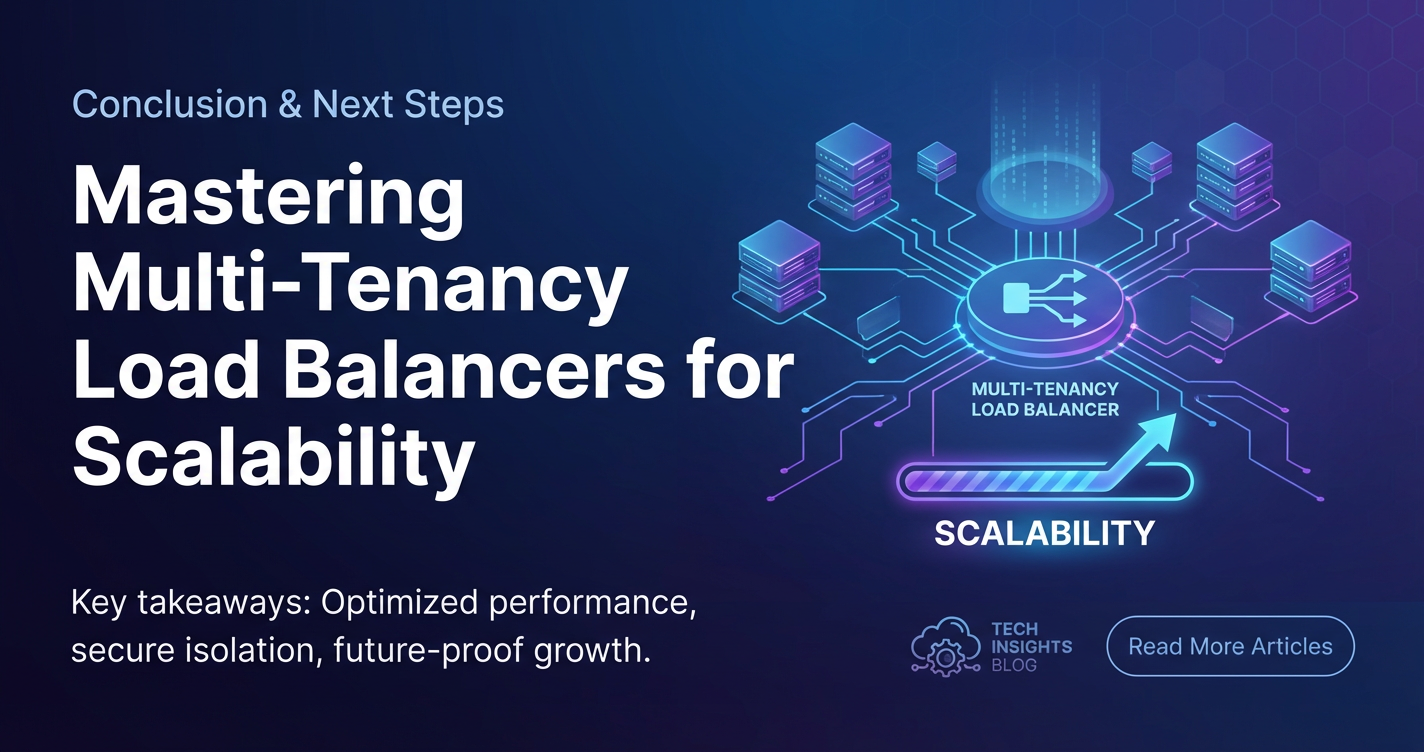
Mastering Multi-Tenancy Load Balancers for Scalability
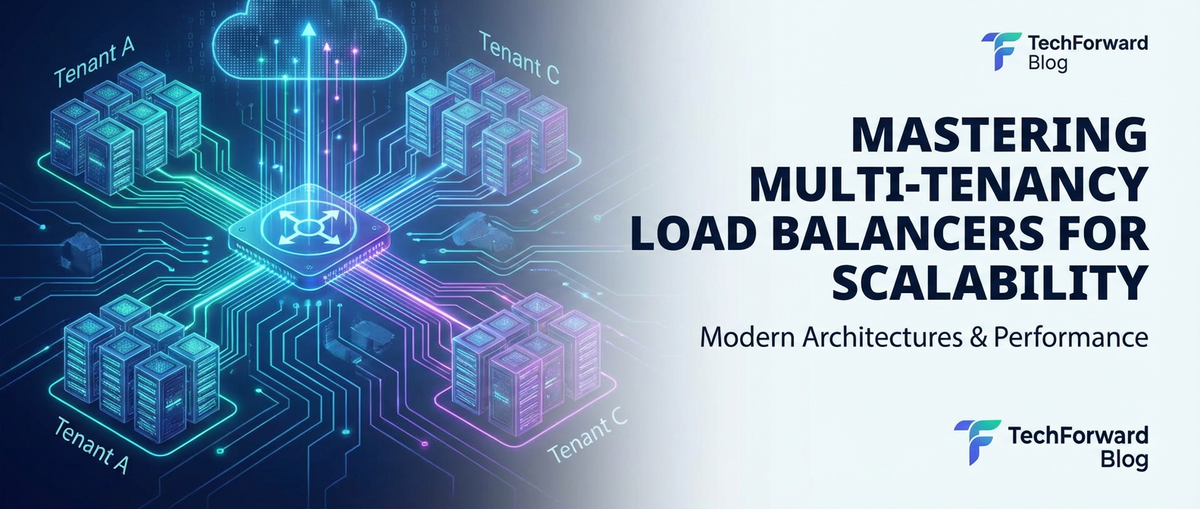


In the evolving landscape of cloud computing and software-as-a-service (SaaS), the paradigm of multi-tenancy has become a cornerstone for achieving efficiency, reducing operational costs, and accelerating innovation. Multi-tenancy, at its core, is an architectural approach where a single instance of a software application serves multiple distinct user groups, or "tenants," sharing the same underlying infrastructure. While this model offers undeniable advantages, it also introduces a sophisticated array of challenges, particularly when it comes to ensuring robust performance, stringent security, and elastic scalability for each tenant independently. At the heart of solving these complex challenges, especially concerning network traffic distribution and application availability, lies the sophisticated orchestration of load balancers. This article will embark on a comprehensive exploration of multi-tenancy load balancers, dissecting their fundamental principles, examining critical design considerations, and illuminating advanced strategies for architects and engineers striving to build highly scalable, resilient, and cost-effective multi-tenant systems.
The journey towards mastering multi-tenancy load balancers requires a deep understanding not only of load balancing mechanics but also of the unique demands placed upon infrastructure when resources are shared among disparate entities. From optimizing resource utilization and preventing the "noisy neighbor" problem to enforcing strict data isolation and upholding service level agreements (SLAs) for every tenant, the role of an intelligently configured load balancer transcends mere traffic distribution; it becomes a critical enabler of the entire multi-tenant ecosystem. We will delve into how these crucial components can be architected to dynamically adapt to varying tenant demands, safeguard against potential security threats, and provide the bedrock for an always-on, performant experience across a diverse clientele.
The Foundation: Understanding Multi-Tenancy
Before we can appreciate the nuanced role of load balancers in a multi-tenant environment, it's imperative to establish a clear and comprehensive understanding of multi-tenancy itself. Multi-tenancy is an architectural pattern predominantly used in cloud environments and SaaS applications, where a single software instance running on a server (or a cluster of servers) serves multiple distinct customers or organizations. Each of these customers is referred to as a "tenant." Crucially, despite sharing the same application instance and infrastructure, each tenant's data and configurations remain isolated and invisible to other tenants.
The Allure of Multi-Tenancy: Benefits Explored
The adoption of multi-tenancy is driven by several compelling advantages that significantly impact operational efficiency and economic viability:
- Cost Efficiency: By sharing a single application instance and its underlying infrastructure (compute, storage, network), vendors can drastically reduce per-tenant operational costs. This consolidation eliminates the need to provision and maintain separate environments for each customer, leading to lower hardware, software licensing, and administrative expenses. For example, instead of running 100 separate virtual machines for 100 customers, a multi-tenant architecture might run a single cluster, amortizing the fixed costs across all tenants.
- Operational Simplicity and Scalability: Managing updates, patches, and maintenance becomes significantly simpler when applied to a single application instance rather than hundreds or thousands of individual installations. This streamlined operational model inherently supports easier scaling. When demand increases, resources can be added to the shared environment, benefiting all tenants collectively, often leveraging auto-scaling capabilities of cloud providers.
- Faster Deployment and Innovation: New features, bug fixes, and security updates can be rolled out to all tenants simultaneously, accelerating the pace of innovation and ensuring that all customers are on the latest version of the software. This agility fosters a more competitive and responsive service offering.
- Resource Optimization: Multi-tenancy allows for better utilization of underlying hardware resources. Instead of dedicating resources to individual tenants that might fluctuate in usage, the pooled resources can be dynamically allocated to wherever demand is highest, evening out peaks and troughs and minimizing idle capacity.
- Environmental Impact: By consolidating infrastructure, multi-tenancy contributes to a smaller carbon footprint, consuming less energy and requiring fewer physical servers compared to an equivalent number of single-tenant deployments.
The Intricacies of Multi-Tenancy: Challenges and Considerations
While the benefits are substantial, multi-tenancy introduces a unique set of challenges that demand meticulous architectural planning and robust infrastructure solutions. Overlooking these complexities can lead to significant issues in performance, security, and tenant satisfaction.
- Tenant Isolation and Data Security: This is arguably the most critical challenge. Each tenant's data must be completely isolated from others, both logically and physically where necessary. Breaching this isolation can lead to severe security vulnerabilities, data leakage, and regulatory non-compliance. Robust access control mechanisms, encryption, and secure data partitioning are paramount.
- The "Noisy Neighbor" Problem: In a shared environment, one tenant's unusually high resource consumption (e.g., CPU, memory, network bandwidth) can negatively impact the performance experienced by other tenants. This phenomenon, known as the "noisy neighbor" problem, can lead to degraded service quality, inconsistent performance, and potential SLA breaches for innocent bystanders. Effective resource governance and QoS (Quality of Service) mechanisms are essential.
- Customization and Configuration: While sharing a core application, tenants often require specific customizations or unique configurations. Balancing these individual needs with the principle of a single application instance requires flexible configuration management systems that can apply tenant-specific settings without compromising the shared core.
- Backup and Recovery: Performing backups and recoveries in a multi-tenant environment needs to be granular enough to handle individual tenant data, yet efficient enough to operate on the shared infrastructure. Restoring one tenant's data without affecting others is a complex operation.
- Compliance and Regulatory Requirements: Different tenants may operate under diverse regulatory frameworks (e.g., GDPR, HIPAA, PCI DSS). Ensuring that the shared infrastructure and application comply with all applicable regulations for all tenants can be a formidable task, often requiring advanced security controls and audit trails.
- Onboarding and Offboarding: The process of adding new tenants and removing old ones must be automated, secure, and efficient, ensuring that resources are provisioned and de-provisioned cleanly without impacting existing tenants.
Navigating these challenges requires sophisticated infrastructure components, and this is precisely where the role of load balancers transcends basic traffic distribution to become an indispensable element in a successful multi-tenant architecture. They are the initial point of contact for all incoming requests, and their ability to intelligently route, secure, and manage traffic is fundamental to addressing many of these multi-tenancy specific hurdles.
The Indispensable Role of Load Balancers
At its most fundamental level, a load balancer acts as the first point of contact for client requests destined for a group of servers or application instances. Instead of clients directly accessing specific servers, they send their requests to the load balancer, which then intelligently distributes these requests across the available backend resources. This distribution is based on a variety of algorithms and health checks, ensuring optimal resource utilization, high availability, and consistent application performance.
Core Functions of a Load Balancer
- Traffic Distribution: The primary function is to efficiently distribute incoming network traffic across multiple servers or application instances. This prevents any single server from becoming a bottleneck and ensures that the workload is evenly spread, improving overall system responsiveness.
- High Availability and Fault Tolerance: Load balancers continuously monitor the health of backend servers. If a server fails or becomes unresponsive, the load balancer automatically stops sending traffic to it and redirects requests to healthy servers. This failover mechanism ensures that the application remains available even if individual components experience issues.
- Scalability: By allowing new servers to be added to the backend pool without disrupting service, load balancers facilitate horizontal scaling. As demand grows, more instances can be brought online, and the load balancer seamlessly integrates them into the traffic distribution, enabling the application to handle increased loads.
- Session Persistence (Sticky Sessions): For applications that require user sessions to be maintained on a specific server (e.g., for shopping carts or user authentication), load balancers can be configured to direct subsequent requests from the same client to the same backend server.
- SSL/TLS Termination: Many modern load balancers can offload the CPU-intensive task of encrypting and decrypting SSL/TLS traffic. This not only improves the performance of backend servers but also centralizes certificate management.
- Content-Based Routing: Advanced load balancers (especially application layer, or Layer 7, load balancers) can inspect the contents of a request (e.g., URL path, HTTP headers) and route it to different backend server pools based on specific rules. This is particularly powerful for microservices architectures or applications serving diverse types of content.
- DDoS Protection: By acting as a front-end proxy, load balancers can help mitigate certain types of Distributed Denial of Service (DDoS) attacks by absorbing malicious traffic, filtering out bad requests, or rate-limiting traffic before it reaches the backend application servers.
Types of Load Balancers
Load balancers can be categorized in several ways, most commonly by the layer of the OSI model they operate on and their deployment model.
- Layer 4 (Transport Layer) Load Balancers: These operate at the transport layer, primarily inspecting IP addresses and port numbers. They are fast and efficient but have limited visibility into the application-level content of requests. They typically distribute traffic based on simple algorithms like round-robin or least connections. Examples include network load balancers (NLBs) in cloud environments.
- Layer 7 (Application Layer) Load Balancers: These operate at the application layer and can inspect the full content of a request, including HTTP headers, cookies, and URL paths. This allows for more intelligent routing decisions, such as content-based routing, URL rewriting, and advanced traffic manipulation. They can also perform SSL termination and act as Web Application Firewalls (WAFs). Examples include application load balancers (ALBs) in cloud environments and many modern API gateways.
- Hardware Load Balancers: These are dedicated physical appliances (e.g., F5 BIG-IP, Citrix ADC) that offer high performance and reliability, often used in large enterprise data centers.
- Software Load Balancers: These run on standard servers (physical or virtual) and can be highly flexible and cost-effective. Examples include HAProxy, Nginx, and cloud-native load balancers (AWS ELB, Azure Load Balancer, GCP Load Balancing).
- DNS Load Balancing: While not a true load balancer in the same sense, DNS-based load balancing distributes traffic by returning different IP addresses for a given hostname. It's a high-level form of load distribution but lacks health checks and fine-grained control over individual request routing.
In the context of multi-tenancy, the choice and configuration of a load balancer become significantly more complex, moving beyond simple traffic distribution to encompass sophisticated routing, security, and isolation mechanisms tailored to the demands of diverse tenants.
The Intersection: Multi-Tenancy and Load Balancing
When multi-tenancy meets load balancing, the interplay becomes intricate, elevating the load balancer's role from a simple traffic distributor to a critical enforcement point for tenant isolation, security, and performance. The challenge lies in efficiently routing requests for potentially thousands of distinct tenants through a shared entry point while ensuring each tenant perceives a dedicated and highly performant service.
Unique Challenges at the Multi-Tenant Load Balancer Level
The multi-tenant nature introduces specific complexities that a load balancer must adeptly handle:
- Tenant Identification and Routing: The load balancer must be able to identify which tenant an incoming request belongs to. This identification can happen based on various attributes:
- Hostname/Domain: Each tenant might have a unique subdomain (e.g.,
tenantA.your-saas.com,tenantB.your-saas.com) or even a custom domain. - URL Path: Requests might contain a tenant identifier in the path (e.g.,
/api/v1/tenantA/resource). - HTTP Headers: Custom headers can carry tenant IDs.
- API Keys/Tokens: In an API-driven context, API keys or authentication tokens often encode tenant information. Once identified, the request must be routed to the correct backend pool or application logic specific to that tenant, which might involve a specific microservice instance or a particular configuration within a shared service.
- Hostname/Domain: Each tenant might have a unique subdomain (e.g.,
- Resource Allocation and QoS: To prevent the "noisy neighbor" problem, the load balancer might need to implement Quality of Service (QoS) mechanisms. This could involve rate-limiting requests per tenant, prioritizing traffic for premium tenants, or allocating specific bandwidth or connection limits to ensure fair resource distribution across the shared infrastructure.
- Security and Isolation: Beyond basic SSL termination, a multi-tenant load balancer must enforce tenant-specific security policies. This includes:
- Access Control: Ensuring that a tenant can only access their designated resources.
- Web Application Firewall (WAF) Rules: Applying different WAF policies based on the tenant, potentially blocking specific types of attacks targeting one tenant without affecting others.
- DDoS Mitigation: Applying tenant-specific rate limits or filtering rules to protect individual tenants from targeted attacks.
- Data Segregation: While data isolation primarily happens at the application and database layers, the load balancer's routing rules are the first line of defense to ensure requests reach the correct, isolated processing logic.
- Observability and Monitoring per Tenant: For effective management and troubleshooting, it's crucial to monitor performance metrics (latency, error rates, throughput) not just for the entire system, but broken down by individual tenant. The load balancer, being the entry point, is ideally positioned to collect this granular data.
- Dynamic Scaling: As tenants are onboarded or their usage patterns change, the backend resources need to scale elastically. The load balancer must be able to dynamically adjust its routing tables and health checks to incorporate new instances or remove decommissioned ones seamlessly.
Architectural Patterns for Multi-Tenant Load Balancing
Designing a multi-tenant architecture involves making fundamental decisions about how much infrastructure is shared versus dedicated. This directly impacts the load balancing strategy. There are generally three main patterns, each with its own trade-offs regarding cost, isolation, and complexity.
1. Shared Load Balancer, Shared Backend (Maximum Sharing)
- Description: In this pattern, a single load balancer instance serves all tenants, and the backend application instances are also shared across all tenants. Tenant identification and routing logic are handled either by the load balancer itself (e.g., Layer 7 routing based on host headers) or by the application behind the load balancer.
- Pros:
- Maximum Cost Efficiency: Significant cost savings due to shared infrastructure for both load balancing and application layers.
- Simplified Management: A single point of control for traffic management, scaling, and updates for the load balancer.
- Resource Pooling: Optimal utilization of resources as aggregate demand drives scaling, smoothing out individual tenant peaks.
- Cons:
- Lower Isolation: Potential for "noisy neighbor" issues if not properly mitigated at the application layer. One tenant's traffic surge can impact others.
- Complex Application Logic: The application itself must be highly multi-tenant aware, responsible for data segregation and tenant-specific logic.
- Security Risk: A vulnerability in the shared application could potentially expose multiple tenants. Strict logical isolation is crucial.
- Limited Customization: Harder to provide tenant-specific load balancer rules or policies.
- Best For: Startups, applications with homogeneous tenant needs, where cost is a primary concern, and the application is designed from the ground up to be multi-tenant.
2. Shared Load Balancer, Dedicated Backend Pools (Hybrid Approach)
- Description: A single, shared load balancer acts as the entry point for all tenants. However, based on tenant identification (e.g., hostname, API key), the load balancer routes traffic to dedicated backend server pools or microservices instances for each tenant or a group of tenants. This might mean "premium" tenants get their own pool, while "standard" tenants share a larger pool.
- Pros:
- Improved Isolation: Better performance isolation for tenants, as their traffic goes to dedicated resources. Reduces the "noisy neighbor" problem significantly.
- Enhanced Security: A breach in one tenant's backend pool is less likely to directly affect another's.
- Flexibility: Allows for tenant-specific scaling and resource allocation. Different tenants can have different SLAs and underlying infrastructure.
- Easier Compliance: Can more easily isolate sensitive data for compliance requirements by routing it to specific, hardened environments.
- Cons:
- Higher Cost: More backend resources (servers, databases) are required, increasing infrastructure costs.
- Increased Management Complexity: Managing multiple backend pools and their respective configurations is more involved.
- Potential for Underutilization: Dedicated pools might sit idle during low usage times for a specific tenant.
- Best For: Applications with diverse tenant needs, where some tenants require higher performance guarantees or strict isolation, and the budget allows for more dedicated resources. This pattern balances cost efficiency with better isolation.
3. Dedicated Load Balancer per Tenant (Maximum Isolation)
- Description: Each tenant receives their own dedicated load balancer instance and often, their own dedicated backend application infrastructure. This means each tenant has a completely separate network entry point and processing environment.
- Pros:
- Maximum Isolation and Security: Complete network and resource isolation, virtually eliminating the noisy neighbor problem and offering the highest level of data and security segregation.
- Ultimate Customization: Each tenant can have a load balancer configured with entirely unique rules, security policies, and even different load balancer types.
- Simplified Compliance: Easiest to meet stringent compliance requirements as environments are fully separate.
- Simplified Application Logic: The application itself doesn't need to be as multi-tenant aware in terms of resource segregation, as the infrastructure handles much of it.
- Cons:
- Highest Cost: Significantly higher infrastructure costs due to redundant load balancers and backend environments for each tenant.
- Increased Operational Overhead: Managing and updating numerous load balancer instances and dedicated environments can be complex and labor-intensive.
- Less Resource Efficiency: Lower overall resource utilization due to dedicated, potentially underutilized, instances.
- Best For: Enterprises with extremely stringent security, compliance, or performance requirements; very large "anchor" tenants willing to pay a premium for dedicated infrastructure; or legacy applications not easily refactored for multi-tenancy.
A Note on Layer 4 vs. Layer 7 Load Balancers in Multi-Tenancy
The choice between Layer 4 and Layer 7 load balancers is particularly important in multi-tenant contexts.
- Layer 4 Load Balancers: While fast and efficient, their lack of application-level visibility makes tenant identification and content-based routing challenging. They can work if tenants are differentiated purely by IP address/port or if a higher-level proxy (like an API Gateway or Ingress Controller) sits behind the L4 LB to handle tenant-specific routing. They are primarily good for distributing raw TCP traffic.
- Layer 7 Load Balancers: These are often preferred for multi-tenant applications due to their ability to inspect HTTP headers, hostnames, and URL paths. This allows them to make intelligent routing decisions based on tenant identifiers embedded in the request. They can also perform SSL termination, WAF functions, and more granular rate-limiting per tenant, which are critical for security and QoS in multi-tenant environments. Many cloud-native load balancers and API gateways operate at Layer 7.
The decision of which pattern to implement hinges on a careful balancing act between cost, performance, security, isolation requirements, and operational complexity, tailored to the specific needs of the SaaS offering and its target clientele.
APIPark is a high-performance AI gateway that allows you to securely access the most comprehensive LLM APIs globally on the APIPark platform, including OpenAI, Anthropic, Mistral, Llama2, Google Gemini, and more.Try APIPark now! 👇👇👇
Key Design Considerations for Multi-Tenancy Load Balancers
Crafting a robust multi-tenant load balancing solution requires a holistic approach, considering a myriad of factors beyond just traffic distribution. These considerations form the bedrock of a scalable, secure, and manageable system.
1. Isolation and Security Enforcement
This is paramount in multi-tenant environments. The load balancer is the first line of defense and a crucial enforcement point.
- Tenant-Aware Routing: As discussed, the load balancer must accurately identify the tenant and route requests to the correct backend. Misconfiguration here could lead to data leakage between tenants. Using unique subdomains (e.g.,
tenant1.your-saas.com) or custom domains for each tenant is a common and effective strategy, allowing Layer 7 load balancers to route based on theHostheader. - Access Control and Authentication: While full authentication often occurs at the application level or an API gateway, the load balancer can enforce initial access controls, such as IP whitelisting or blocking malicious IPs identified globally or for specific tenants. It can also manage SSL/TLS certificates for each tenant's domain, ensuring secure communication from the client to the load balancer.
- Web Application Firewall (WAF) Integration: Deploying a WAF in front of or as part of the load balancer is critical. In a multi-tenant setup, the WAF should ideally be configurable with tenant-specific rulesets. This allows for tailored protection against common web vulnerabilities (SQL injection, XSS) based on the specific application logic or security posture required by individual tenants.
- DDoS and Rate Limiting: Load balancers are excellent at mitigating DDoS attacks by absorbing large volumes of traffic and applying rate limits. In a multi-tenant context, it's essential to implement tenant-specific rate limits. This prevents one tenant's legitimate or malicious traffic surge from exhausting shared resources and impacting other tenants. For example, a "silver" tier tenant might have a lower API request limit per minute than a "gold" tier tenant.
- Network Segmentation: While not directly a load balancer function, the load balancer's routing decisions should ideally integrate with underlying network segmentation strategies, ensuring that traffic for different tenants is directed to isolated network segments or VLANs where applicable.
2. Scalability and Performance
A multi-tenant system must scale efficiently to accommodate the aggregated demand of all tenants, as well as handle sudden spikes from individual tenants.
- Elastic Scaling of Load Balancer: The load balancer itself must be able to scale elastically. Cloud-native load balancers (like AWS ALB, Azure Application Gateway, GCP Load Balancing) automatically scale to handle traffic fluctuations. For self-hosted solutions (e.g., Nginx, HAProxy), active-passive or active-active clusters with auto-scaling groups are necessary.
- Backend Auto-Scaling: The load balancer must seamlessly integrate with backend auto-scaling mechanisms. When tenant demand increases, new application instances should automatically provision, register with the load balancer, and begin receiving traffic. Conversely, instances should de-register and scale down when demand subsides.
- Connection Management: Efficiently handling a large number of concurrent connections is crucial. Load balancers can optimize TCP connections, keep-alives, and connection pooling to backend servers, reducing overhead and improving throughput.
- Caching: Integrating a caching layer at or behind the load balancer can significantly reduce the load on backend servers for frequently accessed static or semi-static content, improving performance for all tenants. This cache should be tenant-aware if caching tenant-specific data.
- Performance Monitoring: Detailed metrics on request latency, throughput, error rates, and connection counts are essential. These metrics should ideally be aggregated at the overall system level but also granularly available per tenant to identify and troubleshoot "noisy neighbor" issues or performance bottlenecks specific to certain tenants.
3. Cost Efficiency
Multi-tenancy's primary appeal is cost reduction. The load balancing strategy must align with this goal.
- Resource Sharing: Maximizing the sharing of load balancer resources across tenants (e.g., using a single L7 load balancer for all tenants) significantly reduces costs compared to dedicated instances per tenant.
- Optimized Configuration: Efficient load balancer configuration can reduce the number of backend instances required. For example, intelligent routing can direct traffic to the least utilized instance, preventing hotspots.
- Cloud-Native Services: Leveraging cloud provider load balancers often provides a cost-effective solution as they offer pay-as-you-go models and managed service benefits, reducing operational overhead.
- Tiered Services: Different load balancing patterns can be offered as tiered services. Basic tenants might share a general load balancer and backend, while premium tenants might pay for dedicated backend pools or even dedicated load balancers for guaranteed performance and isolation.
4. Observability and Monitoring
Understanding the behavior of the system, especially on a per-tenant basis, is critical for debugging, capacity planning, and maintaining SLAs.
- Tenant-Specific Metrics: The load balancer should ideally expose metrics that can be segmented by tenant. This includes request counts, error rates, latency, and bandwidth usage for each tenant.
- Comprehensive Logging: Detailed access logs from the load balancer, including tenant identifiers, request details, and response codes, are invaluable for auditing, debugging, and security analysis. These logs should be easily ingestible into a centralized logging system.
- Distributed Tracing Integration: For complex multi-service architectures, integrating with distributed tracing tools (e.g., OpenTelemetry, Jaeger) at the load balancer entry point helps track a request's journey across various backend services, enabling quicker identification of performance bottlenecks specific to a tenant.
- Alerting: Setting up alerts based on tenant-specific thresholds (e.g., high error rates for a particular tenant, excessive requests from another) ensures proactive issue resolution.
5. Management and Automation
The sheer scale of managing multiple tenants necessitates a high degree of automation.
- API-Driven Configuration: The load balancer should expose APIs for configuration management. This allows for automated provisioning of new tenant routing rules, SSL certificates, and security policies as tenants are onboarded.
- Infrastructure as Code (IaC): Defining load balancer configurations using IaC tools (e.g., Terraform, CloudFormation, Pulumi) ensures consistency, version control, and repeatable deployments.
- Self-Service Portals: For certain configurations (e.g., custom domain setup, WAF rule adjustments for their own traffic), providing tenants with a controlled self-service portal can reduce administrative overhead.
- Certificate Management: Automated certificate provisioning and renewal (e.g., via Let's Encrypt integration or cloud certificate managers) is crucial for managing potentially hundreds or thousands of tenant domains.
6. Compliance and Governance
Depending on the industry and target market, specific regulatory requirements must be met.
- Data Residency: If certain tenants require their data to reside in specific geographical regions, the load balancer's routing logic must be capable of directing their traffic to backend infrastructure deployed in those regions.
- Audit Trails: Comprehensive logging and monitoring (as discussed above) provide the necessary audit trails to demonstrate compliance with various regulations.
- Security Certifications: The underlying load balancing service (whether cloud-managed or self-hosted) should ideally possess relevant security certifications (e.g., ISO 27001, SOC 2, HIPAA compliance) if required by the target tenants.
By meticulously addressing these design considerations, architects can build multi-tenant load balancing solutions that not only effectively distribute traffic but also uphold the promises of isolation, security, and performance inherent in the multi-tenancy model.
Advanced Concepts and Technologies for Enhanced Multi-Tenancy
As multi-tenant architectures grow in complexity, particularly with the adoption of microservices and containerization, traditional load balancing capabilities need to be augmented by more advanced technologies.
1. API Gateways: The Multi-Tenant Front Door
An API gateway often serves as a specialized type of Layer 7 load balancer and a critical component in multi-tenant architectures, especially those built on microservices. It sits at the edge of the system, acting as a single entry point for all API requests, providing a unified gateway to backend services.
- Centralized Request Handling: An API gateway can perform a multitude of functions essential for multi-tenancy:
- Authentication and Authorization: Verifying API keys, tokens, and user credentials, often integrating with identity providers. It can enforce tenant-specific authorization rules before requests even hit backend services.
- Rate Limiting: Applying granular rate limits per API, per user, or critically, per tenant, preventing abuse and ensuring fair usage.
- Request Routing: Intelligent routing based on URL paths, HTTP headers, query parameters, or even the content of the request body, allowing requests to be directed to the correct tenant-specific backend service or microservice version.
- Request/Response Transformation: Modifying requests or responses on the fly, such as adding tenant identifiers to headers or transforming data formats.
- Logging and Monitoring: Centralized logging of all API calls, collecting metrics, and enabling detailed per-tenant analytics.
- Security Policies: Enforcing WAF rules, IP whitelisting/blacklisting, and other security measures.
- Protocol Translation: Enabling communication between clients and backend services using different protocols.
In a multi-tenant setup, an API gateway can simplify backend services by abstracting away the multi-tenancy logic, allowing backend microservices to focus solely on their business domain. The gateway handles the initial tenant identification, authentication, and routing, passing a tenant ID to the downstream services, which then use it to access tenant-specific data or configurations.
This is precisely where solutions like APIPark shine. As an open-source AI gateway and API management platform, APIPark is built to tackle the complexities of API governance in scalable, multi-tenant environments. It integrates quick connections to over 100 AI models, crucial for modern applications, and standardizes API invocation formats. For multi-tenancy, its "Independent API and Access Permissions for Each Tenant" feature is particularly powerful, enabling the creation of multiple teams (tenants) each with independent applications, data, user configurations, and security policies, all while sharing underlying applications and infrastructure to optimize resource utilization and reduce operational costs. APIPark's end-to-end API lifecycle management also assists with traffic forwarding and load balancing of published APIs, reinforcing its role as a robust api gateway solution that can handle the performance demands of multi-tenant systems, rivalling the performance of Nginx. Its detailed API call logging and powerful data analysis features also align perfectly with the observability needs of complex multi-tenant systems.
2. Service Mesh: Inter-Service Communication and Load Balancing
In microservices architectures, a service mesh (e.g., Istio, Linkerd) provides a dedicated infrastructure layer for managing service-to-service communication. While not a direct replacement for edge load balancers or API gateways, it complements them by handling load balancing, traffic management, and observability between microservices within the application's boundaries.
- Microservice-Level Load Balancing: A service mesh injects sidecar proxies next to each microservice instance. These proxies handle outgoing requests, performing intelligent load balancing to target healthy instances of the destination service. This can be more granular than a central load balancer.
- Per-Service Traffic Control: The mesh allows for fine-grained control over traffic, such as canary deployments, A/B testing, and fault injection, often with rules that can be applied conditionally based on tenant identifiers embedded in request headers.
- Policy Enforcement: Security policies (e.g., mTLS between services, authorization rules) can be enforced at the service mesh layer, adding another dimension of isolation and security.
- Advanced Observability: Service meshes provide deep insights into inter-service communication, including request tracing, metrics, and logs, which can be invaluable for diagnosing performance issues in complex multi-tenant microservices deployments.
3. Ingress Controllers in Kubernetes: Orchestrating External Access
For multi-tenant applications deployed on Kubernetes, an Ingress Controller acts as the edge load balancer, providing HTTP/HTTPS routing to services within the cluster. It’s essentially a specialized Layer 7 load balancer for Kubernetes.
- Hostname-Based Routing: Ingress Controllers excel at routing traffic based on hostnames. Each tenant can have a unique hostname (e.g.,
tenantA.example.com), and the Ingress Controller maps these hostnames to specific Kubernetes services or namespaces. - Path-Based Routing: It can also route based on URL paths, directing
example.com/tenantAto one service andexample.com/tenantBto another. - SSL/TLS Termination: Ingress Controllers can manage SSL certificates for multiple domains, simplifying secure communication for various tenants.
- Integration with Cloud Load Balancers: Many Ingress Controllers integrate with cloud provider load balancers (e.g., AWS ALB Ingress Controller, GCP Ingress), abstracting the underlying cloud infrastructure for Kubernetes users.
- Network Policies: Alongside network policies within Kubernetes, the Ingress Controller forms a critical part of the network isolation strategy for multi-tenant applications in containerized environments.
4. Global Server Load Balancing (GSLB): Geo-Distributed Multi-Tenancy
For global multi-tenant applications, Global Server Load Balancing (GSLB) extends load balancing capabilities across multiple data centers or geographical regions.
- Geo-Proximity Routing: GSLB directs a user's request to the closest available data center, minimizing latency and improving performance. In a multi-tenant context, this means a tenant in Europe accesses European infrastructure, while a tenant in Asia accesses Asian infrastructure.
- Disaster Recovery: If an entire data center fails, GSLB can automatically redirect traffic to another healthy region, ensuring business continuity for all tenants.
- Data Residency: GSLB can be used to enforce data residency requirements, routing tenant traffic to specific regions where their data is legally required to be stored and processed. This is achieved by having tenant-specific DNS records or routing policies.
Combining these advanced technologies – API gateways for robust edge management, service meshes for intelligent inter-service communication, Ingress Controllers for Kubernetes-native routing, and GSLB for global distribution – allows architects to build highly sophisticated, resilient, and performant multi-tenant applications that can meet the demanding requirements of a diverse and global user base. Each layer adds a distinct set of capabilities, working in concert to abstract complexity, enforce policies, and ensure seamless operation.
Practical Implementation Strategies and Best Practices
Implementing multi-tenancy load balancing effectively requires a blend of architectural foresight, careful configuration, and continuous operational vigilance. Here are key strategies and best practices.
1. Choose the Right Load Balancing Pattern for Your Needs
As discussed in architectural patterns, the choice between fully shared, hybrid, or dedicated load balancing instances is fundamental.
- Start Lean, Scale Smart: For new SaaS products, starting with a shared load balancer and shared backend (Pattern 1) is often the most cost-effective and simplest approach. As your tenant base grows and specific performance/isolation needs emerge, evolve towards a hybrid model (Pattern 2) where premium tenants or specific services get dedicated backend pools. Dedicated load balancers (Pattern 3) are typically reserved for the highest-tier enterprise clients with strict requirements.
- Cloud-Native vs. Self-Managed: Leverage cloud-native load balancers (AWS ALBs, Azure Application Gateways, GCP Load Balancers) whenever possible. They offer high availability, automatic scaling, managed security, and deep integration with other cloud services, significantly reducing operational overhead compared to self-managed solutions like Nginx or HAProxy.
2. Implement Robust Tenant Identification
The ability to accurately identify the tenant for every incoming request is non-negotiable.
- Hostname-Based Routing: This is the most common and robust method. Assign each tenant a unique subdomain (e.g.,
tenant-a.myproduct.com). The Layer 7 load balancer or API Gateway can then use theHostheader to route requests to the correct backend and pass the tenant ID downstream. For custom domains, ensure your load balancer can handle multiple SSL certificates and map them correctly. - API Key/Token-Based Identification: For API-driven multi-tenant applications, tenant IDs can be embedded within API keys or JWT tokens. The
api gatewayor load balancer (if it has the capability) can validate these tokens and extract the tenant ID for routing or policy enforcement. - Path-Based Routing (Use with Caution): While possible (e.g.,
myproduct.com/tenant-a/api), this can be less flexible and harder to manage for a large number of tenants. It might be suitable for a small, predefined set of tenants or specific sub-services.
3. Prioritize Security and Isolation
Security breaches in multi-tenant systems are catastrophic.
- SSL/TLS Everywhere: Enforce HTTPS/TLS from the client to the load balancer, and ideally, from the load balancer to the backend services (end-to-end encryption). Manage certificates efficiently, especially for custom tenant domains.
- Web Application Firewall (WAF): Always deploy a WAF in front of your applications, preferably integrated with the load balancer or API Gateway. Configure tenant-specific WAF rules where necessary.
- Tenant-Specific Rate Limiting and DDoS Protection: Configure granular rate limits based on tenant usage tiers or historical patterns. This prevents individual tenants from consuming excessive resources and protects against DDoS attacks targeting specific tenants.
- Least Privilege: Ensure that the load balancer (and its service account if applicable) only has the necessary permissions to route traffic and perform its functions, nothing more.
4. Optimize Performance and Resource Utilization
Preventing the "noisy neighbor" problem and ensuring consistent performance is key to tenant satisfaction.
- Intelligent Load Balancing Algorithms: Beyond simple round-robin, use algorithms like "least connections" or "weighted least connections" to direct traffic to the least busy or most capable backend instances.
- Backend Health Checks: Configure rigorous and frequent health checks for backend services. These should ideally test application-level responsiveness, not just port availability, to ensure that unhealthy instances are quickly removed from the rotation.
- Connection Pooling and Keep-Alives: Configure the load balancer and backend servers to use connection pooling and HTTP keep-alive mechanisms to reduce the overhead of establishing new TCP connections for every request.
- Content Caching: Utilize the load balancer's caching capabilities for static assets or frequently accessed, non-sensitive data. This offloads backend servers and improves response times for all tenants.
- Resource Quotas and Burst Limits: Implement resource quotas and burst limits at the application or container orchestration layer (e.g., Kubernetes resource limits) to prevent any single tenant from monopolizing shared resources.
5. Embrace Observability and Monitoring
You cannot manage what you cannot measure.
- Granular Metrics: Collect detailed metrics from your load balancer, including total requests, requests per tenant, error rates per tenant, latency, and bandwidth usage.
- Centralized Logging: Aggregate all load balancer logs (access logs, error logs) into a centralized logging system (e.g., ELK stack, Splunk, Datadog). Ensure tenant identifiers are present in these logs for easy filtering and analysis.
- Distributed Tracing: Implement distributed tracing (e.g., Jaeger, Zipkin, OpenTelemetry) to track requests across your entire multi-tenant system, from the load balancer through all backend services. This is invaluable for pinpointing performance issues.
- Alerting: Set up alerts based on deviations from normal tenant-specific behavior (e.g., unusually high error rates for a specific tenant, sudden spike in latency) to proactively address issues.
6. Automate, Automate, Automate
Manual configuration is error-prone and scales poorly.
- Infrastructure as Code (IaC): Manage all load balancer configurations (listeners, target groups, routing rules, SSL certificates) using IaC tools like Terraform, CloudFormation, Pulumi, or Ansible. This ensures consistency and enables version control.
- Automated Provisioning/Deprovisioning: Integrate tenant onboarding and offboarding processes with automated scripts or pipelines that provision/deprovision necessary load balancer rules, SSL certificates, and backend resources.
- GitOps for Configuration: Store load balancer configurations in a Git repository and use a GitOps workflow to apply changes, ensuring a single source of truth and auditable changes.
7. Leverage API Gateways for Advanced Management
For modern microservices-based multi-tenant applications, an api gateway is almost a necessity.
- Centralized Policy Enforcement: Use the
api gatewayto enforce authentication, authorization, rate limiting, and other security policies consistently across all tenants and APIs. - Unified
APIInterface: Provide a single, consistentapiinterface to your tenants, even if your backend microservices are diverse. Theapi gatewaycan handle transformations and orchestrations. - Developer Portal: A developer portal, often accompanying an
api gateway, allows tenants to discover, subscribe to, and manage theirapiaccess, reducing support overhead. APIPark, for instance, provides an all-in-one AI gateway and API developer portal, centralizing the display of allAPIservices for easy discovery and use within teams, perfectly complementing the load balancing layer. Its features like prompt encapsulation into RESTAPIs further empower tenant-specific customizations without complex backend changes.
By adhering to these strategies and best practices, organizations can build a robust, scalable, secure, and cost-effective multi-tenant architecture where the load balancer plays a pivotal role in ensuring a high-quality experience for every tenant.
Challenges and Future Trends in Multi-Tenancy Load Balancing
While current technologies provide powerful solutions, the landscape of multi-tenancy and load balancing continues to evolve, presenting new challenges and promising innovations.
Emerging Challenges
- Serverless and Function-as-a-Service (FaaS): As applications move towards serverless architectures (e.g., AWS Lambda, Azure Functions), the traditional concept of load balancers distributing traffic to persistent backend servers shifts. Load balancing becomes more integrated into the platform's invocation model, where the platform itself manages scaling and routing of individual function calls. The challenge lies in applying multi-tenant policies (rate limiting, WAF) directly at the serverless
gatewayor function invocation layer, rather than a separate load balancer. - Edge Computing and Distributed Multi-Tenancy: With the rise of edge computing, multi-tenant applications may need to distribute their services closer to users at the edge. This implies a more distributed and intelligent load balancing model, potentially involving global server load balancing (GSLB) with complex routing rules to direct tenants to the nearest edge location while maintaining data residency requirements.
- Increased Security Threats: The sophistication of cyber threats continues to grow. Multi-tenant load balancers will need to incorporate more advanced threat detection (AI/ML-driven anomaly detection), proactive mitigation, and dynamic security policies that can adapt to evolving attack vectors on a per-tenant basis.
- Hybrid and Multi-Cloud Environments: Many enterprises operate in hybrid or multi-cloud scenarios. Managing multi-tenant load balancing across disparate on-premise, private cloud, and multiple public cloud environments introduces significant complexity in terms of consistent configuration, unified policy enforcement, and seamless traffic failover.
- Data Governance and Compliance at Scale: As data privacy regulations become more stringent and localized, ensuring tenant-specific data governance and compliance across a globally distributed, multi-tenant infrastructure will require highly sophisticated, policy-driven load balancing and routing that can enforce data residency and access controls at a granular level.
Future Trends
- AI/ML-Driven Load Balancing: The future will likely see load balancers that leverage artificial intelligence and machine learning to make more intelligent routing decisions. This could include predictive scaling based on anticipated tenant demand, real-time anomaly detection to identify and mitigate "noisy neighbor" issues, and dynamic optimization of resource allocation for better cost efficiency and performance.
- Programmable Infrastructure and Network Functions: Load balancers will become even more programmable, allowing for highly customized routing logic, policy enforcement, and integration with other services through APIs. This aligns with the "infrastructure as code" movement, enabling more agile and flexible multi-tenant deployments.
- Service Mesh Evolution: Service meshes will continue to mature, offering deeper integration with underlying infrastructure and broader capabilities for multi-tenant policy enforcement, observability, and traffic management within microservices architectures, potentially extending their reach to the edge.
- Consolidated
API Gatewayand Edge Functionality: The line between a traditional load balancer, anapi gateway, and edge compute functions will continue to blur. Future solutions may offer a more consolidated platform for ingress,apimanagement, security, and even lightweight serverless function execution at the very edge of the network, simplifying the stack for multi-tenant applications. Solutions like APIPark, with its focus on being an AIgatewayand comprehensiveAPImanagement platform, are indicative of this trend, aiming to provide a unified solution for managing diverseapineeds, including those for AI models, within a multi-tenant context. - Enhanced Native Cloud Provider Capabilities: Cloud providers will continue to enhance their native load balancing and
api gatewayservices, offering more advanced multi-tenancy features, deeper integration with their ecosystems, and potentially specialized services for specific multi-tenant use cases (e.g., specialized IoT multi-tenant gateways).
The journey to mastering multi-tenancy load balancers is ongoing. It demands continuous adaptation to new technologies and a proactive approach to addressing emerging challenges. By staying abreast of these trends and continuously refining their architectural strategies, organizations can ensure their multi-tenant offerings remain robust, scalable, secure, and competitive in an ever-evolving digital landscape.
Conclusion
The architecture of multi-tenant systems is a testament to the pursuit of efficiency and scalability in modern software delivery. At the very forefront of this intricate design stands the load balancer, evolving from a simple traffic distributor to a sophisticated orchestrator of tenant isolation, security, and performance. We have delved into the profound benefits that multi-tenancy offers, from drastic cost reductions to streamlined operations, alongside the significant challenges it poses, particularly concerning the "noisy neighbor" problem, data segregation, and stringent security requirements.
We explored the critical distinctions between various architectural patterns for multi-tenant load balancing—from the highly efficient but less isolated shared model to the more secure but costlier dedicated approach—emphasizing that the optimal choice is a nuanced decision based on specific business needs and risk appetites. Furthermore, the discussion illuminated key design considerations, stressing the paramount importance of tenant isolation, robust security measures like WAF integration and DDoS mitigation, and elastic scalability. The crucial role of observability, with its need for granular, per-tenant metrics and logging, was highlighted as essential for maintaining operational excellence and meeting service level agreements.
The integration of advanced technologies such as api gateways, service meshes, Ingress Controllers, and Global Server Load Balancing has been shown to augment the capabilities of traditional load balancers, providing specialized functions vital for complex, microservices-driven, and globally distributed multi-tenant applications. In this context, platforms like APIPark emerge as pivotal solutions, offering a comprehensive API management and api gateway functionality that directly addresses many multi-tenancy challenges, including tenant isolation, unified api formats, and robust performance for AI and REST services.
Ultimately, mastering multi-tenancy load balancers is not merely a technical exercise; it's a strategic imperative for any organization aiming to deliver high-quality, cost-effective SaaS solutions. By understanding the intricate interplay of these components, embracing best practices for security and automation, and continuously adapting to emerging trends, architects and engineers can build resilient, high-performing multi-tenant systems that empower diverse users while leveraging shared infrastructure to its fullest potential. The future of multi-tenancy will undoubtedly continue to push the boundaries of load balancing, demanding ever more intelligent, programmable, and context-aware solutions to meet the relentless demand for scalable and secure digital services.
Frequently Asked Questions (FAQ)
1. What is multi-tenancy, and why is a load balancer crucial for it?
Multi-tenancy is an architecture where a single instance of a software application serves multiple distinct customer organizations (tenants), sharing the same underlying infrastructure. A load balancer is crucial because it acts as the initial entry point for all tenant traffic. It intelligently distributes these requests across shared backend resources, ensures high availability by routing around failed servers, and critically, can enforce tenant-specific routing, security policies (like rate limiting and WAF rules), and resource allocation to prevent one tenant from negatively impacting others (the "noisy neighbor" problem). Without a sophisticated load balancer, managing traffic, ensuring isolation, and scaling efficiently in a multi-tenant environment would be incredibly complex.
2. What's the difference between a Layer 4 and Layer 7 load balancer in a multi-tenant context?
A Layer 4 (L4) load balancer operates at the transport layer, primarily inspecting IP addresses and port numbers. It's fast and efficient but has limited visibility into application-level content. In multi-tenancy, it might distribute traffic evenly but struggles with tenant-specific routing based on hostnames or URL paths without a higher-level proxy. A Layer 7 (L7) load balancer, on the other hand, operates at the application layer and can inspect the full HTTP request (headers, URLs, cookies). This allows it to identify tenants based on their unique domain names or API keys and route requests to specific backend services or configurations for that tenant. L7 load balancers are generally preferred for multi-tenant applications due to their intelligent routing capabilities, SSL termination, and integrated security features like WAF.
3. How does an API Gateway enhance multi-tenancy load balancing?
An api gateway acts as a specialized Layer 7 load balancer and a central gateway for all API requests. In a multi-tenant setup, it significantly enhances load balancing by providing a dedicated layer for: * Tenant Authentication and Authorization: Verifying API keys/tokens and enforcing tenant-specific access rules. * Granular Rate Limiting: Applying request limits per tenant, preventing abuse and ensuring fair resource usage. * Intelligent Routing: Directing requests to specific backend services or microservice instances based on tenant IDs or other context. * Request/Response Transformation: Modifying traffic on the fly for tenant compatibility. * Centralized Logging and Monitoring: Collecting detailed per-tenant metrics and logs. It offloads these crucial multi-tenancy concerns from backend services, allowing them to focus purely on business logic. Platforms like APIPark exemplify this, providing robust API management specifically tailored for multi-tenant environments with features like independent API access permissions for each tenant.
4. What are the main challenges when implementing multi-tenant load balancing?
The primary challenges include: * Tenant Isolation: Ensuring complete data and resource separation between tenants to prevent data leakage and security breaches. * "Noisy Neighbor" Problem: Preventing one tenant's high resource usage from degrading performance for others. This requires effective resource governance and QoS mechanisms. * Security Enforcement: Applying tenant-specific security policies (WAF, DDoS protection, rate limiting) at scale. * Scalability: Dynamically scaling the load balancer and backend resources to handle the aggregate and individual tenant demands efficiently. * Observability: Collecting and analyzing granular performance metrics and logs broken down by individual tenant for effective troubleshooting and SLA adherence. * Cost Efficiency: Balancing the need for isolation and performance with the cost benefits of resource sharing.
5. What are some best practices for securing a multi-tenant load balancer?
Securing a multi-tenant load balancer requires a multi-faceted approach: * End-to-End SSL/TLS Encryption: Encrypt all traffic from clients to the load balancer, and ideally, from the load balancer to backend services. * Tenant-Specific WAF Rules: Deploy a Web Application Firewall (WAF) that can apply different security policies based on the identified tenant, protecting against common web vulnerabilities. * Granular Rate Limiting & DDoS Protection: Configure dynamic rate limits and DDoS mitigation strategies that can be applied per tenant to prevent individual tenants from being overwhelmed or from causing resource exhaustion for others. * Robust Tenant Identification: Ensure the load balancer accurately identifies each tenant, typically using hostnames, API keys, or JWT tokens, to prevent misrouting and unauthorized access. * Access Control: Implement strong access controls for managing the load balancer itself, adhering to the principle of least privilege. * Automated Certificate Management: Use automated systems for provisioning and renewing SSL certificates for all tenant domains to ensure continuous secure communication.
🚀You can securely and efficiently call the OpenAI API on APIPark in just two steps:
Step 1: Deploy the APIPark AI gateway in 5 minutes.
APIPark is developed based on Golang, offering strong product performance and low development and maintenance costs. You can deploy APIPark with a single command line.
curl -sSO https://download.apipark.com/install/quick-start.sh; bash quick-start.sh

In my experience, you can see the successful deployment interface within 5 to 10 minutes. Then, you can log in to APIPark using your account.

Step 2: Call the OpenAI API.