Inside OpenAI HQ: Where the Future of AI is Built
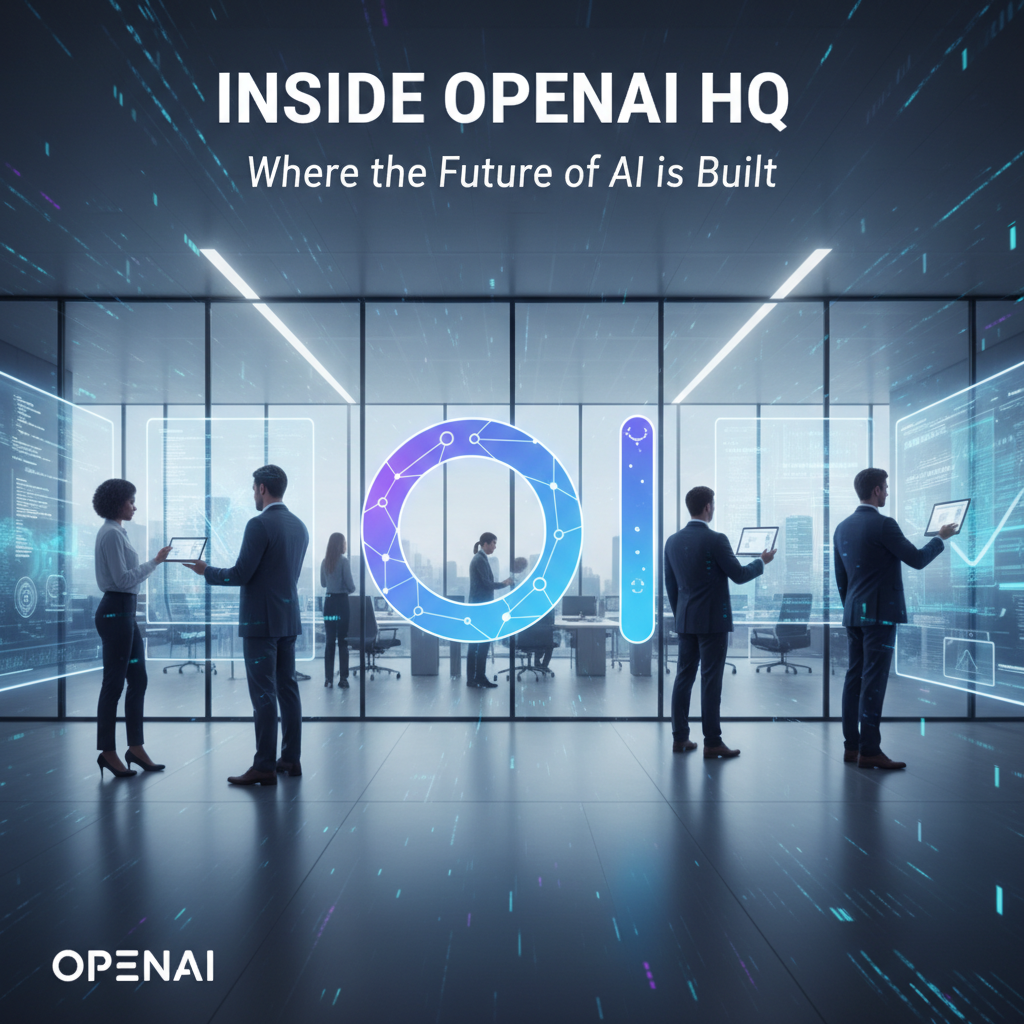


The hum of innovation often goes unheard by the general public, existing in the quiet, focused intensity of research labs and development hubs. Yet, some places resonate with an energy so profound that it vibrates through the very fabric of our technological landscape, fundamentally altering our perception of what’s possible. OpenAI's headquarters, nestled in the vibrant heart of San Francisco, is undeniably one such locus. It is not merely an office building, a collection of desks, or a space where code is written; it is a crucible where the molten iron of nascent ideas is forged into the foundational technologies that are redefining industries, challenging philosophical tenets, and pushing the boundaries of human-computer interaction. Stepping inside, one can almost sense the palpable weight of future possibilities being sculpted, refined, and brought to life, making it a truly unique epicenter for the development of artificial intelligence. This exploration delves deep into the essence of OpenAI, peeling back the layers to reveal the vision, the environment, the people, and the groundbreaking work that collectively delineate "where the future of AI is built."
The Genesis and Vision of OpenAI: Crafting a New Epoch
The story of OpenAI begins not with a grand corporate strategy, but with a deeply philosophical premise: how can humanity ensure that the development of powerful artificial intelligence, particularly Artificial General Intelligence (AGI), benefits all of mankind rather than a select few? This profound question served as the bedrock for its founding in late 2015. Visionaries like Elon Musk, Sam Altman, Ilya Sutskever, and others came together, united by a shared conviction that AI, while holding immense promise, also harbored significant existential risks if not guided by responsible principles. They envisioned an organization dedicated to open research, collaboration, and a transparent approach to AI development, a stark contrast to the closed-door, competitive environment often found in high-stakes technological races. This initial commitment to being an "open platform" was central to its very identity, aiming to prevent the monopolization of AGI by any single entity.
From its inception, OpenAI declared its mission to be "to ensure that artificial general intelligence benefits all of humanity." This wasn't merely a corporate slogan; it was a directive that shaped every research initiative, every hiring decision, and every strategic pivot. The early days were marked by intense foundational research, exploring various facets of machine learning, reinforcement learning, and neural networks. Initial projects included efforts in robotics, game-playing AI (like OpenAI Five for Dota 2), and natural language processing. These early milestones, while perhaps less globally recognized than their later achievements, were crucial in building the intellectual capital, computational infrastructure, and a culture of relentless pursuit of scientific breakthroughs that would underpin their more famous successes. The organization committed to publishing its research findings, open-sourcing its tools, and engaging with the wider scientific community, embodying the spirit of an Open Platform designed for shared progress.
However, the rapid acceleration of AI capabilities, particularly with the emergence of truly powerful large language models, brought a new set of challenges and considerations. The sheer computational expense and the vast talent required to push the frontier of AI research demanded a shift in organizational structure. In 2019, OpenAI transitioned from a pure non-profit to a "capped-profit" model, a hybrid structure designed to attract significant investment while maintaining its core mission. This innovative approach allowed investors to receive a limited return, incentivizing the necessary capital infusion, but crucially, it ensured that the overarching goal of broad benefit remained paramount, preventing the profit motive from overshadowing ethical and safety considerations. This strategic pivot was a testament to the organization's adaptability and foresight, recognizing that to truly build AGI for all, it needed sustainable resources without compromising its fundamental values. The philosophical underpinnings of collaboration and shared progress continue to define OpenAI's journey, even as the scale and scope of its ambition have grown exponentially, solidifying its place as a unique entity in the global AI landscape.
A Glimpse into the Physical Space: Architecture and Atmosphere
The physical manifestation of OpenAI's ambition is its headquarters, situated amidst the bustling, innovative energy of San Francisco. It occupies a substantial presence, its architecture a blend of understated modernity and functional purpose, reflecting the serious, groundbreaking work conducted within. From the outside, it might appear as another contemporary office building in a city teeming with tech giants, yet its discreet facade belies the profound intellectual activity happening behind its walls. There are no flashy corporate logos emblazoned across the skyline, no ostentatious displays of wealth; instead, a subtle professionalism permeates its exterior, hinting at the focused, high-stakes endeavors unfolding inside. This deliberate lack of ostentation perhaps reflects a conscious decision to prioritize function and purpose over outward showmanship, allowing the work itself to be the loudest statement.
Upon entering, one is immediately struck by an atmosphere that is both intensely collaborative and deeply focused. The interior design prioritizes natural light, open spaces, and versatile workstations, all meticulously crafted to foster an environment conducive to deep thinking and spontaneous interaction. High ceilings, expansive windows, and a thoughtful layout prevent the feeling of being confined, even as the density of brilliant minds within suggests a hive of activity. There’s a palpable sense of intellectual energy, an almost electric hum that suggests minds are constantly grappling with complex problems, yet it’s often accompanied by a surprising quietude. Researchers might be seen deep in concentration, headphones on, immersed in lines of code or complex mathematical equations, while others engage in animated discussions around whiteboards filled with intricate diagrams and formulas. This duality—intense individual focus alongside vibrant group synergy—is a hallmark of the OpenAI experience.
The workspaces themselves are varied, designed to accommodate different modes of working. Open-plan areas encourage easy communication and idea exchange, allowing researchers and engineers to quickly tap into each other's expertise, vital for interdisciplinary projects where breakthroughs often emerge from unexpected connections. Alongside these communal zones, there are ample private offices and dedicated research labs, offering quiet sanctuaries for individuals or small teams requiring uninterrupted concentration for tasks demanding immense cognitive load. Common areas, featuring comfortable seating, well-stocked kitchens, and recreational zones, serve as vital decompression spaces and informal meeting points, recognizing the human need for respite and casual interaction amidst demanding intellectual pursuits. Every element, from the ergonomic furniture to the carefully curated art, seems to be chosen with the intent of maximizing productivity and well-being.
Given the sensitive nature of their work—dealing with cutting-edge AI research and proprietary models—security measures are robust, yet implemented with discretion to avoid creating an overly sterile or restrictive environment. Access control, data protection protocols, and confidentiality agreements are standard, ensuring the integrity and security of their research and models. However, these measures are integrated seamlessly into the daily operations, becoming an almost invisible part of the infrastructure, allowing the focus to remain firmly on innovation rather than bureaucracy. The overall impression is one of a meticulously engineered ecosystem, a vibrant intellectual incubator where every detail is considered to support the ambitious goal of advancing AI responsibly and effectively. The physical space itself acts as a silent partner in their mission, a carefully constructed container for the extraordinary intellectual ferment occurring within its walls.
The People Behind the Progress: Teams and Culture
The true engine of OpenAI, more than its cutting-edge infrastructure or its well-designed offices, lies in the caliber and commitment of its people. It is a testament to the organization's vision that it has consistently attracted some of the brightest minds from across the globe, forming a diverse and extraordinarily talented workforce. This assemblage includes leading researchers in machine learning, deep learning, and reinforcement learning, alongside highly skilled software engineers, data scientists, ethicists, policy experts, and even philosophers. The diversity isn't just in their academic backgrounds, but also in their cultural origins and perspectives, enriching the intellectual tapestry and fostering a more holistic approach to AI development. The hiring philosophy is notoriously rigorous, seeking not just technical prowess but also a profound passion for the mission, a collaborative spirit, and a deep sense of responsibility regarding the implications of their work. Candidates often undergo extensive evaluations, not merely for their coding abilities or theoretical understanding, but for their problem-solving acumen, their ability to think creatively under pressure, and their capacity to contribute positively to a high-stakes, collaborative environment.
At the core of OpenAI's operational success is its profoundly collaborative culture. Silos are actively discouraged; instead, interdisciplinary teams are the norm. Researchers might work alongside engineers to implement novel algorithms, while ethicists engage with both to ensure responsible deployment and mitigate potential biases. Knowledge sharing is not just encouraged; it's ingrained in the daily rhythm through regular seminars, internal presentations, and open communication channels. The rapid pace of AI innovation demands such fluidity and cross-pollination of ideas, as breakthroughs often emerge at the intersection of different domains. This environment fosters a collective intelligence, where individual brilliance is amplified by synergistic teamwork, leading to insights that might be elusive in more fragmented organizational structures. The goal is to create a dynamic feedback loop where theoretical advancements quickly inform practical applications, and real-world challenges drive new research directions.
Crucially, given the transformative power of AI, ethical considerations are not an afterthought but an integral part of the development process. OpenAI dedicates significant resources to AI safety research, employing teams specifically tasked with understanding and mitigating risks such as bias, misuse, alignment problems, and potential unintended consequences of increasingly autonomous systems. These safety teams work in close conjunction with research and engineering groups, ensuring that ethical frameworks and safety protocols are woven into the very fabric of model design and deployment. This proactive approach reflects a deep understanding that building powerful AI is not just a technical challenge but also a profound societal responsibility. Discussions around fairness, transparency, and accountability are commonplace, demonstrating a commitment to developing AI that serves humanity broadly and equitably.
While the intensity of the mission often demands long hours and immense intellectual dedication, there's also an understanding of the human element. The leadership, including figures like CEO Sam Altman, CTO Mira Murati, and Chief Scientist Ilya Sutskever, are not just strategic thinkers but also embody the values of the organization. They foster a culture of open dialogue, encouraging employees to voice concerns, propose audacious ideas, and challenge existing paradigms. The vision they articulate is not just about building the most advanced AI but about doing so with a clear moral compass. This blend of intellectual rigor, collaborative spirit, ethical vigilance, and passionate leadership creates a unique workplace culture that thrives on innovation while remaining grounded in a profound sense of purpose. It is this combination of exceptional talent and an empowering culture that allows OpenAI to continuously push the frontiers of artificial intelligence.
The Research Engine: From GPT to DALL-E and Beyond
The heart of OpenAI’s operations pulsates with an relentless drive for research and development, a journey that has redefined the landscape of artificial intelligence through a series of groundbreaking projects. From its early forays into reinforcement learning to its now-famous generative models, the organization has consistently pushed the boundaries of what machines can achieve. The trajectory is perhaps best exemplified by the GPT (Generative Pre-trained Transformer) series, which began with GPT-1 as a modest but significant step in natural language understanding and culminated in the multimodal capabilities of GPT-4 and beyond. These models, trained on vast corpora of text and code, demonstrated an unprecedented ability to generate coherent, contextually relevant, and even creative human-like text, revolutionizing fields from content creation to coding assistance. The progression wasn't linear; each iteration involved refining architectures, scaling up parameters, and employing increasingly sophisticated training methodologies, often requiring novel approaches to data curation and computational efficiency.
Beyond natural language processing, OpenAI extended its generative prowess into the visual domain with DALL-E. This project captivated the world by demonstrating an AI's ability to create stunning, original images from simple text prompts, seamlessly blending concepts, styles, and attributes in ways that were previously unimaginable for a machine. Whether it was "an astronaut riding a horse in a photorealistic style" or "a teapot that looks like a cat," DALL-E showcased a nascent form of visual creativity and conceptual understanding. The underlying research involved complex diffusion models and transformer architectures adapted for image generation, demanding immense computational resources and innovative algorithmic design. Following DALL-E, projects like Sora pushed this further into video generation, promising to transform content creation and storytelling by allowing users to generate realistic and imaginative scenes from text descriptions, demonstrating an ever-deepening understanding of multimodal data.
The computational infrastructure supporting these monumental projects is nothing short of staggering. OpenAI operates at the forefront of supercomputing, leveraging vast clusters of GPUs (Graphics Processing Units) housed in sprawling data centers. Training models like GPT-4 required computational power equivalent to what would have been deemed impossible just a few years prior, consuming enormous amounts of energy and necessitating cutting-edge cooling and power management systems. This infrastructure isn't just about raw power; it's about efficient parallelization, robust fault tolerance, and sophisticated software stacks that can orchestrate billions of parameters across thousands of interconnected processors. The sheer scale of data – petabytes of text, images, and video – that these models are trained on also presents a formidable challenge in terms of storage, retrieval, and preprocessing. The iterative process of research and development involves constant experimentation: new architectures are proposed, trained on subsets of data, evaluated, refined, and then scaled up if promising. This cycle is often painstakingly long, fraught with unexpected challenges, and requires a high degree of perseverance and ingenuity from the research teams.
The relentless pursuit of scalable AI has not been without its obstacles. Pushing the boundaries of model size and complexity introduces new challenges related to training stability, interpretability, and the emergence of unforeseen behaviors. For instance, fine-tuning large language models to perform specific tasks or adhere to safety guidelines requires meticulous data preparation and careful alignment techniques. The journey from a conceptual model to a deployable, robust system is a complex dance between theoretical breakthroughs, engineering ingenuity, and pragmatic problem-solving. It's a continuous cycle of hypothesis, experimentation, failure, learning, and eventual triumph. This unwavering commitment to pushing the envelope, coupled with an unparalleled computational backbone, firmly establishes OpenAI's HQ as a pivotal engine driving the global AI revolution, continually unveiling new capabilities that reshape our technological future.
APIPark is a high-performance AI gateway that allows you to securely access the most comprehensive LLM APIs globally on the APIPark platform, including OpenAI, Anthropic, Mistral, Llama2, Google Gemini, and more.Try APIPark now! 👇👇👇
Democratizing AI: The "Open Platform" and API Ecosystem
OpenAI's founding ethos, as previously discussed, revolves around ensuring that artificial general intelligence benefits all of humanity. A cornerstone of this mission is the democratization of AI, moving beyond academic papers and internal prototypes to make powerful AI capabilities accessible to developers, businesses, and individuals worldwide. This commitment manifests most powerfully through their concept of an "Open Platform" and the sophisticated API ecosystem they have painstakingly built. While the term "open" here has evolved from its initial meaning of fully open-source code to a more nuanced approach of open access to models via APIs, the underlying principle of broad utility remains paramount. They recognize that the fastest way for AI to permeate and positively impact society is by providing robust, scalable, and user-friendly interfaces for external integration.
Developers are the vanguard of this democratization. OpenAI has engineered a comprehensive set of apis that allow external applications to interact with their state-of-the-art AI models, including the GPT series, DALL-E, and more. This means that a startup can integrate a powerful language model into its customer service chatbot, a content creator can generate unique images for their projects, or a developer can build sophisticated coding assistants, all without needing to train their own multi-billion-parameter models from scratch. The beauty of this approach lies in its simplicity and power: developers send input data (a prompt, an image, a piece of code) to the api, and in return, they receive AI-generated output. This abstraction layer handles the immense complexity of running large neural networks, allowing innovators to focus on building creative applications rather than managing intricate AI infrastructure.
The importance of well-documented apis cannot be overstated in this context. OpenAI provides extensive documentation, code examples, and SDKs (Software Development Kits) in multiple programming languages, significantly lowering the barrier to entry for developers. This meticulous attention to developer experience ensures that the power of their models is not locked behind arcane technical knowledge but is readily available to anyone with programming skills. This commitment fosters a vibrant ecosystem of innovation, where countless applications and services are being built on top of OpenAI's foundational models, demonstrating the true potential of an Open Platform. Use cases span an astonishing range of industries: education (personalized tutoring and learning tools), healthcare (assisting with medical research and diagnostics), finance (market analysis and fraud detection), media (content generation and summarization), and many more. The proliferation of these applications underscores the transformative impact of accessible AI capabilities.
However, as developers leverage OpenAI's powerful apis and integrate them with other AI models or proprietary services, the complexity of managing these interactions can escalate significantly. Enterprises, in particular, often deal with a multitude of AI services – some from OpenAI, others from different providers, and perhaps even internal custom models. Each might have its own authentication schemes, rate limits, data formats, and monitoring requirements. This is where tools like an AI Gateway become indispensable. An AI Gateway acts as a unified entry point, simplifying authentication, request formatting, and lifecycle management for a myriad of apis. For instance, APIPark (ApiPark), an open-source AI gateway and API management platform, excels in this domain. It allows quick integration of 100+ AI models, unifies API formats for invocation, and even encapsulates prompts into REST APIs, streamlining the entire process for enterprises and developers alike. With APIPark, managing the entire lifecycle of APIs, from design and publication to invocation and decommission, becomes seamless. It also provides essential features like robust traffic management, load balancing, detailed API call logging, and powerful data analysis tools, which are crucial for maintaining system stability, ensuring security, and optimizing performance when dealing with high-volume AI api calls. This kind of robust API management infrastructure, whether through specialized AI Gateway solutions or other sophisticated platforms, is crucial for scaling AI applications securely and efficiently, transforming a collection of disparate apis into a cohesive, manageable open platform that truly empowers broad innovation.
Table: Key OpenAI Models and Their Core Applications
To illustrate the breadth and impact of OpenAI's contributions, the following table summarizes some of their most prominent models and their primary applications:
| Model Series | Release Date (Initial) | Primary Modality | Core Capabilities | Example Applications |
|---|---|---|---|---|
| GPT-3/GPT-3.5 | 2020 | Text | Advanced natural language understanding and generation | Chatbots, content creation, summarization, code generation, language translation, creative writing, data extraction, Q&A systems. |
| DALL-E 2/3 | 2022 | Image/Text | Generating diverse images from text descriptions, image editing. | Digital art creation, marketing visuals, design mockups, illustration, conceptualization, creative exploration, asset generation for games. |
| Codex | 2021 | Code/Text | Translating natural language to code, code completion. | Automated coding, debugging assistance, code generation in various languages, educational tools for programming, API integration scripting. |
| CLIP | 2021 | Image/Text | Connecting text and images, zero-shot image classification. | Image search, content moderation, visual recommendation systems, understanding image context, object recognition without explicit training. |
| Whisper | 2022 | Audio/Text | Robust multilingual speech recognition and translation. | Transcription services, voice assistants, meeting notes automation, podcast summarization, real-time translation for global communication. |
| Sora | 2024 | Video/Text | Generating realistic and imaginative video scenes from text. | Film pre-visualization, marketing campaigns, virtual reality content, educational simulations, creative storytelling, animation assistance. |
This table clearly demonstrates how OpenAI has diversified its research outputs, moving beyond single-modality AI to embrace multimodal systems that can understand and generate various forms of data, continually expanding the scope of what an Open Platform for AI can achieve.
Navigating the Ethical Minefield and Future Horizons
The development of increasingly powerful AI models at OpenAI and elsewhere is not merely a technical race; it is a profound ethical journey. As AI systems become more capable and autonomous, the questions surrounding their impact on society, economy, and human agency grow ever more pressing. OpenAI explicitly recognizes this "ethical minefield" and has embedded responsible AI development as a core tenet of its mission. Issues such as algorithmic bias, where AI models inadvertently reflect and amplify societal prejudices present in their training data, are actively researched and addressed. Ensuring fairness, transparency, and accountability in AI decision-making processes is paramount. This involves developing methods to detect and mitigate bias, creating explainable AI (XAI) techniques to understand why models make certain predictions, and establishing robust accountability frameworks for AI systems in critical applications.
A significant portion of OpenAI's research is dedicated to AI safety. This field focuses on ensuring that advanced AI systems, particularly those approaching Artificial General Intelligence, behave in alignment with human values and intentions, even in unforeseen circumstances. Key areas of safety research include: 1. Alignment: How do we ensure that AI systems optimize for the goals we intend, rather than finding adversarial shortcuts or unintended consequences? This involves complex work on reward modeling, human feedback loops (Reinforcement Learning from Human Feedback - RLHF), and constitutional AI. 2. Interpretability: Can we understand the internal workings of complex neural networks to predict their behavior and diagnose issues? 3. Robustness: How can we make AI systems resilient to adversarial attacks, novel inputs, or distribution shifts? 4. Long-term Risks: Exploring potential existential risks from highly advanced AI and developing strategies for safe deployment and governance. These are not trivial challenges; they demand a multidisciplinary approach involving computer science, cognitive science, philosophy, and policy. OpenAI's commitment here is to publish research and collaborate globally to foster a collective understanding and solution to these complex problems, embodying the spirit of an Open Platform for safety research.
Beyond internal research, OpenAI actively engages with policymakers, academics, and the public to inform and shape the regulatory landscape for AI. They advocate for thoughtful governance frameworks that balance innovation with safety, recognizing that regulation will play an increasingly crucial role in guiding AI development responsibly. Their stance on AGI safety and governance often involves advocating for international cooperation, robust oversight mechanisms, and public discourse to collectively manage the transition to a world with superintelligent AI. This proactive engagement is critical for building public trust and ensuring that the benefits of AI are widely shared while mitigating its risks.
Looking towards the future, OpenAI's research horizons extend far beyond current capabilities. The next frontiers include: * Multimodal AI: Further integrating capabilities across text, image, audio, and video to create AI that can understand and generate information in a holistic, human-like manner. Sora is a significant step in this direction, but deeper, more flexible multimodal understanding remains a grand challenge. * Embodied AI: Developing AI that can interact with the physical world through robotics, learning from real-world experiences, and performing complex tasks that require dexterity and contextual awareness. * Personalized AI: Creating AI assistants that can deeply understand individual preferences, contexts, and needs, offering highly tailored support and interaction across various domains. * Scientific Discovery: Leveraging AI to accelerate scientific research, from discovering new materials and drugs to unraveling fundamental mysteries of the universe.
The ultimate goal, as always, remains the safe and beneficial development of AGI. This isn't just about building smarter machines; it's about building intelligence that can help humanity solve its most pressing challenges, from climate change and disease to poverty and inequality. The vision is an AGI that acts as a force multiplier for human ingenuity, augmenting our capabilities and unlocking unprecedented progress across all facets of human endeavor. This grand vision, tempered by a deep sense of responsibility, defines the ongoing work at OpenAI, making their HQ not just a workplace, but a beacon for humanity's future with AI.
Impact and Influence: OpenAI's Role in the AI Revolution
OpenAI's trajectory, from a philosophical non-profit to a leading force in AI development, has profoundly reshaped the technological landscape and ignited a global AI revolution. Its release of models like GPT-3, DALL-E, and particularly ChatGPT, did not just showcase impressive technological feats; it fundamentally altered public perception of AI's capabilities and accelerated its adoption across virtually every industry. Before these models, AI was often seen as a domain for specialists, a powerful but abstract concept. OpenAI's products made AI tangible, interactive, and immediately useful, ushering in an era where generative AI is a household term. This widespread exposure forced businesses, from small startups to established corporations, to confront the transformative potential of AI and re-evaluate their strategies. The race to integrate AI into existing products and develop new AI-powered services intensified dramatically, largely catalyzed by OpenAI's accessible apis and the viral spread of its user-friendly interfaces.
The influence extends beyond just adoption; OpenAI has become a significant catalyst for innovation. Startups leveraging OpenAI's apis have emerged in droves, building novel applications ranging from automated legal assistance to personalized marketing campaigns. Existing companies are rapidly retooling their product lines, incorporating generative AI for tasks like content creation, customer support, data analysis, and software development. The availability of powerful pre-trained models, accessible through an Open Platform approach, has significantly lowered the barrier to entry for developing sophisticated AI applications, democratizing access to capabilities that previously required immense computational resources and specialized expertise. This has spurred a vibrant ecosystem of developers and entrepreneurs, pushing the boundaries of what can be achieved with AI in practical, real-world scenarios.
The economic and societal implications of OpenAI's work are vast and multifaceted. On the economic front, AI is poised to enhance productivity, create new job categories, and redefine existing ones. OpenAI's models, for instance, are augmenting human creativity and efficiency in writing, coding, and design, leading to new paradigms of human-AI collaboration. Societally, the rapid advancement of AI sparks crucial conversations around job displacement, the future of work, ethical implications, and the need for robust educational and policy frameworks to navigate this transition. OpenAI actively contributes to these discussions, aiming to guide the narrative towards a future where AI serves as a tool for empowerment and progress rather than disruption and inequality.
Globally, OpenAI has set a benchmark for AI research and development, inspiring both competition and collaboration. Nations and companies worldwide are now investing heavily in AI, striving to replicate or surpass the capabilities demonstrated by OpenAI. This competitive drive, while accelerating technological progress, also highlights the importance of international collaboration on AI safety and governance. OpenAI frequently engages with governments, academic institutions, and other AI companies to share insights, discuss best practices, and work towards common standards for responsible AI development, reinforcing its commitment to an Open Platform philosophy, even if the "openness" is now carefully managed to balance innovation with safety. Their leadership position means they bear a significant responsibility in shaping the global discourse and direction of AI.
In essence, OpenAI is not just building AI; it is fundamentally altering the trajectory of the AI revolution itself. Its headquarters is more than a physical space; it's a symbolic representation of where cutting-edge research, ethical considerations, and a grand vision for humanity's future converge. It stands as a testament to the power of human ingenuity and collaboration, driving forward an era where artificial intelligence moves from the realm of science fiction to a tangible, transformative force in our daily lives. The impact is profound, and the influence undeniable, making OpenAI a pivotal player in defining the next chapter of human progress.
Conclusion
OpenAI's headquarters is far more than an assembly of offices and labs; it is a crucible where the future of artificial intelligence is not merely theorized but actively built, brick by digital brick. From its inception rooted in the profound ethical question of how to ensure AI benefits all of humanity, OpenAI has navigated a complex path, evolving its structure and strategies to meet the escalating demands of frontier AI research. The very atmosphere within its walls vibrates with a unique blend of intense focus and collaborative energy, fostering an environment where exceptional minds can grapple with the most intricate challenges of our time. It is a place where multidisciplinary teams, driven by an unwavering commitment to both innovation and safety, push the boundaries of machine capabilities, consistently delivering groundbreaking models like GPT, DALL-E, and Sora that have already begun to reshape our world.
The organization's strategic shift to make its powerful models accessible through a robust api ecosystem epitomizes its commitment to democratizing AI, transforming what was once academic esoterica into practical tools for countless developers and businesses. This "Open Platform" approach has ignited a vibrant ecosystem of innovation, allowing unprecedented access to advanced AI capabilities and catalyzing a global technological revolution. As companies integrate these powerful AI services, the need for sophisticated management solutions becomes apparent. Tools like APIPark, functioning as an AI Gateway and API management platform, become indispensable, simplifying the integration, management, and deployment of a multitude of AI apis, thereby ensuring scalability, security, and efficiency for enterprises leveraging this new wave of intelligence.
Yet, this relentless march of progress is tempered by a deep sense of responsibility. OpenAI continuously navigates the intricate ethical landscape of AI, dedicating substantial resources to safety research, bias mitigation, and proactive engagement with policymakers to foster thoughtful governance. The journey towards Artificial General Intelligence is fraught with both immense promise and significant perils, and OpenAI stands at the forefront of this journey, not just as a builder of powerful technologies, but as a conscientious steward of humanity's technological destiny. The work undertaken within its unassuming headquarters today will undoubtedly cast a long shadow over the future, defining not only the capabilities of tomorrow's machines but also the very contours of human progress in the decades to come. It is, unequivocally, where the future of AI is being architected, debated, and brought to life.
5 FAQs about OpenAI HQ and its Work
1. What is the primary mission of OpenAI? OpenAI's primary mission is to ensure that artificial general intelligence (AGI) benefits all of humanity. This involves developing advanced AI in a safe and responsible manner, making its capabilities accessible, and actively engaging in discussions about AI ethics, governance, and safety to guide its development for broad societal benefit.
2. How does OpenAI make its AI models accessible to a wider audience? OpenAI makes its AI models accessible primarily through its robust API ecosystem. Developers and businesses can integrate OpenAI's state-of-the-art models (like GPT, DALL-E, Whisper, etc.) into their own applications and services via well-documented APIs, transforming these powerful tools into an Open Platform for innovation across various industries.
3. What role does an AI Gateway play in leveraging OpenAI's APIs? An AI Gateway like APIPark is crucial for managing the complexity that arises when enterprises integrate multiple AI models, including those from OpenAI, into their systems. It acts as a unified entry point for all AI APIs, simplifying authentication, standardizing request formats, managing traffic, tracking costs, and ensuring the secure and efficient deployment of AI services across an organization.
4. How does OpenAI address the ethical considerations and risks associated with advanced AI? OpenAI addresses ethical considerations and risks through dedicated AI safety research teams, actively working on problems like algorithmic bias, alignment, interpretability, and long-term risks of AGI. They also engage extensively with policymakers and the public to shape responsible AI governance frameworks, advocating for collaboration and transparency in development to mitigate potential harms.
5. What are some of the key breakthroughs and projects developed by OpenAI? OpenAI has been responsible for several groundbreaking projects, including the GPT (Generative Pre-trained Transformer) series (GPT-3, GPT-4, etc.) for advanced natural language understanding and generation, DALL-E (and DALL-E 2/3) for generating images from text, Codex for translating natural language into code, Whisper for robust multilingual speech recognition, and Sora for generating realistic video from text descriptions.
🚀You can securely and efficiently call the OpenAI API on APIPark in just two steps:
Step 1: Deploy the APIPark AI gateway in 5 minutes.
APIPark is developed based on Golang, offering strong product performance and low development and maintenance costs. You can deploy APIPark with a single command line.
curl -sSO https://download.apipark.com/install/quick-start.sh; bash quick-start.sh

In my experience, you can see the successful deployment interface within 5 to 10 minutes. Then, you can log in to APIPark using your account.

Step 2: Call the OpenAI API.