Inside OpenAI HQ: The Innovation Hub of AI
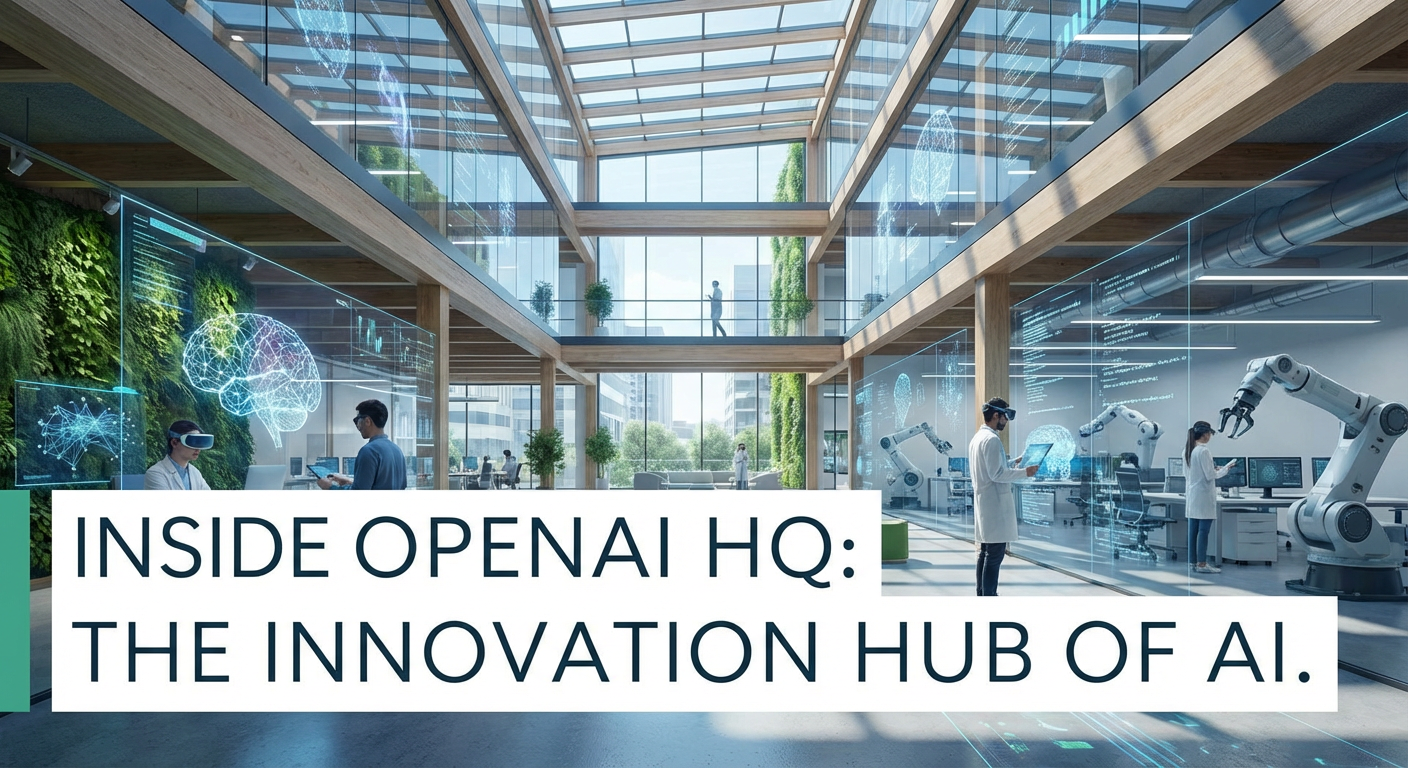


The quiet hum of innovation often emanates from unassuming places, yet few locations on Earth resonate with the promise and peril of the future quite like the headquarters of OpenAI. Nestled in the vibrant heart of San Francisco, this isn't merely an office building; it is a veritable crucible where the most brilliant minds converge to forge the very fabric of artificial intelligence, shaping technologies that are rapidly transforming industries, societies, and the human experience itself. From its foundational mission to ensure that artificial general intelligence (AGI) benefits all of humanity, to its groundbreaking models like GPT-4 and DALL-E, OpenAI stands as a testament to audacious ambition, rigorous scientific inquiry, and an unwavering commitment to pushing the boundaries of what machines can achieve. Stepping inside, one doesn't just observe a workplace; one witnesses the intricate dance between abstract theoretical research and the concrete development of tools that are redefining human capability, all within an environment meticulously designed to foster an unparalleled culture of collaboration, curiosity, and relentless progress. This journey into OpenAI HQ is an exploration of not just a physical space, but of the philosophies, technologies, and human endeavors that are collectively crafting tomorrow's world.
The Genesis and Vision of OpenAI: From Ambition to Reality
OpenAI's story began with an audacious vision, a stark acknowledgment of the transformative power of artificial intelligence, and a profound sense of responsibility for its future trajectory. Founded in December 2015 by a consortium of Silicon Valley luminaries including Elon Musk, Sam Altman, Ilya Sutskever, and others, the organization was initially conceived as a non-profit entity. Its primary mission was crystal clear: to ensure that artificial general intelligence (AGI)—hypothetical AI that matches or exceeds human cognitive abilities—benefits all of humanity, rather than concentrating power in the hands of a few. This altruistic principle was a direct response to growing concerns about the potential existential risks posed by unchecked AI development, aiming to establish a counterweight to purely commercial or state-controlled AI endeavors. The founders understood that such a powerful technology, if mismanaged, could have catastrophic consequences, and thus, a collaborative, open-source approach was seen as the most responsible path forward.
In its nascent stages, OpenAI operated with a lean but incredibly talented team, driven by the intellectual curiosity and idealism that characterized its founding. Early efforts focused on fundamental research in reinforcement learning and robotics, laying the groundwork for more complex systems. The initial challenges were formidable: attracting top-tier talent in a highly competitive market, securing the immense computational resources required for cutting-edge AI research, and navigating the vast, uncharted waters of AGI development. Unlike many startups driven by immediate market demands, OpenAI could afford the luxury of long-term, foundational research, allowing its scientists to pursue avenues that might not yield immediate commercial returns but were crucial for advancing the field. This early period was characterized by a fervent belief in the potential of AI, tempered by a deep-seated caution about its ethical implications, a dual perspective that continues to define the organization's ethos.
Over time, OpenAI's vision has undergone a nuanced evolution, adapting to the rapidly changing landscape of AI research and deployment. While the core mission of benefiting humanity remains sacrosanct, the organization recognized the practical necessity of greater resources and a more flexible structure to achieve its ambitious goals. In 2019, OpenAI transitioned to a "capped-profit" model, establishing OpenAI LP as a for-profit entity governed by the non-profit OpenAI Inc. This strategic shift allowed it to attract significant investment, notably from Microsoft, enabling the acquisition of supercomputing infrastructure and the recruitment of an even larger cohort of world-class researchers. This hybrid structure was designed to balance the need for substantial capital to pursue expensive AGI research with the foundational commitment to safety and broad benefit. The organization moved from primarily publishing academic papers to developing and deploying powerful AI models accessible via APIs, acknowledging that the most effective way to ensure AI's broad benefit is to make its capabilities widely available, while carefully managing its deployment to mitigate risks. This evolution underscores a dynamic approach to an unprecedented challenge, demonstrating OpenAI's agility in navigating the complex interplay between scientific advancement, ethical responsibility, and real-world impact.
Architecture and Atmosphere of the HQ: The Crucible of Creation
The physical embodiment of OpenAI's mission is found within its headquarters, a space meticulously designed not just for work, but as a dynamic incubator for revolutionary ideas. Unlike the stereotypical sterile corporate office, OpenAI's HQ in San Francisco radiates a sense of controlled chaos and intense focus, reflecting the demanding yet exhilarating nature of its inhabitants' work. The architectural philosophy prioritizes openness, encouraging spontaneous interactions and cross-pollination of ideas. Large, open-plan workspaces are punctuated by a mosaic of smaller, acoustically treated rooms for deep concentration and confidential discussions. Natural light floods through expansive windows, connecting the interior world of complex algorithms and neural networks with the bustling cityscape outside, a subtle reminder of the real-world impact of their digital creations. Whiteboards are ubiquitous, adorned with intricate mathematical equations, conceptual diagrams, and the scribbled remnants of spirited brainstorming sessions, serving as a collective memory of evolving thoughts and collaborative problem-solving. Every corner, from the communal kitchens to the impromptu meeting nooks, seems designed to spark dialogue, foster interdisciplinary exchange, and remove artificial barriers between teams.
Beyond the physical layout, the atmosphere within OpenAI HQ is palpable with an almost electric energy, a unique blend of intellectual rigor and playful experimentation. The culture is one of radical transparency and intellectual humility, where every idea, regardless of its origin, is subjected to rigorous scrutiny and open debate. It's common to see researchers from vastly different backgrounds—computer scientists, linguists, philosophers, ethicists, and even artists—engaging in spirited discussions, each contributing their unique perspective to the multifaceted challenge of building safe and beneficial AGI. This interdisciplinary approach is not merely a preference; it is a foundational pillar, recognized as essential for tackling problems as complex and far-reaching as artificial intelligence. The organization actively cultivates an environment where failure is not just tolerated but seen as an integral part of the learning process, encouraging bold experimentation and rapid iteration. This psychological safety allows teams to push boundaries without fear, knowing that the collective goal of advancing AI responsibly outweighs individual setbacks. The prevailing ethos is one of shared purpose, where the pursuit of groundbreaking discoveries is balanced with a profound sense of collective responsibility for the implications of their work.
Central to OpenAI's operational capability are its advanced tools and infrastructure, a formidable technological backbone that underpins all its research and development efforts. The headquarters is a hub for accessing and managing immense computational power, primarily through large-scale GPU clusters and partnerships with cloud providers like Microsoft Azure. This infrastructure is not just about raw processing power; it’s about creating an optimized environment for training and deploying massive neural networks. Internally, OpenAI leverages sophisticated data management systems, proprietary research platforms, and custom-built libraries that allow researchers to rapidly prototype, test, and refine their AI models. The efficient management of these vast computing resources, often involving thousands of GPUs crunching petabytes of data, is a monumental task in itself, requiring robust internal systems for orchestration, monitoring, and security. For researchers needing to interact with these powerful internal models, or even external ones, there's a constant need for efficient and secure interfaces. This is where advanced solutions, often taking the form of an AI Gateway, become indispensable. Such gateways streamline access, manage authentication, track usage, and provide a unified interface to a diverse array of AI services, ensuring that the computational prowess is accessible yet controlled, enabling seamless experimentation while maintaining operational integrity. These infrastructural capabilities are not just supporting elements; they are active participants in the innovation process, empowering the researchers to transform theoretical breakthroughs into tangible, world-changing technologies.
Key Research Areas and Breakthroughs: Shaping the AI Landscape
OpenAI's impact on the artificial intelligence landscape is largely defined by its audacious ventures into fundamental research, yielding a series of groundbreaking models that have not only pushed the boundaries of machine capability but also profoundly reshaped public perception of AI. Their pioneering work spans several critical domains, each contributing to a broader vision of AGI.
Large Language Models (LLMs): The Dawn of Generative AI
Perhaps OpenAI's most globally recognized contribution has been its relentless pursuit and refinement of Large Language Models (LLMs), culminating in the revolutionary GPT (Generative Pre-trained Transformer) series. The journey began with foundational models, learning from vast swathes of internet text to predict the next word in a sequence. GPT-1 demonstrated initial capabilities, but it was the successive iterations, GPT-2 and especially GPT-3, that truly captured the world's attention. GPT-3, with its 175 billion parameters, exhibited an unprecedented ability to generate human-like text, answer questions, translate languages, summarize documents, and even write creative content like poetry or code, often with minimal "few-shot" examples. Its release democratized access to highly sophisticated natural language processing (NLP) capabilities, empowering developers and researchers to build novel applications that were previously unimaginable. This model showcased the emergent properties that arise from scaling neural networks to immense sizes, revealing that sheer scale can unlock new levels of intelligence and generalization.
The subsequent release of GPT-4 further solidified OpenAI's leadership in LLMs, showcasing enhanced reasoning capabilities, better instruction following, and multimodal input understanding (though primarily outputting text). GPT-4’s capacity for complex problem-solving, its nuanced understanding of context, and its ability to maintain coherence over extended dialogues represented a significant leap forward. The impact of these LLMs on various sectors has been profound: content creation industries have seen tools capable of drafting articles, marketing copy, and scripts; software development has been accelerated by AI assistants that can generate code, debug, and explain complex concepts; and customer service has been transformed by more sophisticated chatbots and virtual agents. However, managing access to such powerful and complex models, especially when integrating them into enterprise applications, presents its own set of challenges. Organizations often require a robust LLM Gateway to centralize management, enforce access controls, optimize costs, handle rate limiting, and ensure compliance for invocations of these large language models, providing a critical layer of control and efficiency for businesses leveraging these cutting-edge AI capabilities. Without such a gateway, integrating LLMs into existing tech stacks could be fraught with complexities, security vulnerabilities, and unmanaged costs.
Computer Vision and Generative AI for Imagery: The Artistic Revolution
Beyond text, OpenAI has also made monumental strides in the domain of computer vision and generative AI for imagery, most notably with DALL-E and its successor, DALL-E 2. Building on the transformer architecture, DALL-E demonstrated an astonishing ability to generate novel images from natural language descriptions. Users could simply type prompts like "a professional photograph of a raccoon astronaut with an intense gaze, wearing a fitted leather jacket and aviator helmet, standing on a desert alien planet" and DALL-E would conjure remarkably accurate and often highly creative visual interpretations. This innovation broke down significant barriers in creative fields, allowing artists, designers, and marketers to rapidly prototype visual ideas, generate unique assets, and explore boundless imaginative concepts without requiring traditional artistic skills or extensive design software knowledge. DALL-E 2 refined this capability, producing higher-resolution, more realistic images with greater fidelity to the prompts, and also introduced features like inpainting (modifying specific parts of an image) and outpainting (extending an image beyond its original borders).
The significance of DALL-E and similar models like Midjourney or Stable Diffusion lies not just in their artistic output, but in their demonstration of multimodal understanding—the ability of an AI to connect concepts across different data types (text and images). This cross-modal understanding is a crucial step towards more generally intelligent AI, capable of comprehending and interacting with the world in a richer, more human-like manner. The advent of these tools has sparked vigorous discussions about the nature of creativity, copyright, and the future of artistic professions, underscoring the broad societal implications of OpenAI's work beyond purely technological advancement.
Reinforcement Learning and General-Purpose Agents: Mastering Complex Environments
OpenAI’s early foundation was heavily rooted in reinforcement learning (RL), a branch of machine learning where agents learn to make decisions by performing actions in an environment to maximize a cumulative reward. Their research in this area led to several landmark achievements, showcasing AI's ability to master complex strategic games and simulated environments. One of the most prominent examples was OpenAI Five, a team of five neural networks trained to play Dota 2, a highly complex real-time strategy video game. After hundreds of years of simulated game time, OpenAI Five defeated world-champion human players, demonstrating unparalleled teamwork, strategic planning, and adaptive decision-making in a dynamic, multi-agent environment. This accomplishment was not merely a gaming feat; it showcased the potential of RL agents to learn intricate collaboration and long-term planning, skills critical for real-world applications in areas like logistics, robotics, and autonomous systems.
Furthering their RL endeavors, OpenAI also developed general-purpose robot manipulators and explored methods for teaching robots complex tasks through simulation and real-world transfer. The goal here is to develop agents that can learn a wide variety of skills and adapt to novel situations, moving beyond single-task specialization towards more versatile, general-purpose intelligence. This research is instrumental in bridging the gap between theoretical AI and tangible physical applications, paving the way for more capable and autonomous robotic systems that can assist humans in diverse settings, from manufacturing to healthcare.
Safety and Alignment: The Ethical Core of AI Development
Crucially, interwoven with all of OpenAI's research is an unwavering commitment to AI safety and alignment. Recognizing that increasingly powerful AI systems could pose significant risks if not properly controlled or aligned with human values, a substantial portion of OpenAI's efforts is dedicated to addressing these challenges head-on. This involves multiple facets: * Interpretability and Explainability: Developing methods to understand how complex AI models make decisions, moving beyond "black box" behavior to ensure transparency and trust. * Robustness and Adversarial Attacks: Building models that are resilient to deliberate attempts to trick or mislead them, ensuring reliability in critical applications. * Bias Detection and Mitigation: Actively identifying and reducing biases in training data and model outputs to prevent AI systems from perpetuating or amplifying societal inequalities. * Red Teaming and Safety Elicitation: Proactively testing models for dangerous capabilities, vulnerabilities, and undesired behaviors before deployment, often involving specialized teams (red teams) attempting to "break" the AI in various ways. * Value Alignment Research: Working on techniques to ensure that AI systems optimize for human preferences, ethical principles, and societal well-being, even in unforeseen circumstances. This is arguably the most challenging aspect, as human values are complex, diverse, and often contradictory.
This focus on safety is not an afterthought but an integral part of the development process, reflecting a profound ethical stance that acknowledges the immense responsibility accompanying the creation of such transformative technologies. OpenAI strives to lead by example, demonstrating that accelerating AI progress can, and must, go hand-in-hand with robust safety protocols and a deep commitment to societal benefit.
The People Behind the Breakthroughs: The Human Element of AI
The spectacular breakthroughs emanating from OpenAI are not merely the product of advanced algorithms and powerful computing clusters; they are fundamentally the result of an extraordinary congregation of human intellect, creativity, and dedication. Stepping beyond the technological marvels, understanding the human element behind OpenAI is crucial to grasping its unique innovative capacity.
Multidisciplinary Teams: A Symphony of Minds
OpenAI's success is deeply rooted in its embrace of a profoundly multidisciplinary approach. The organization actively seeks out and nurtures talent from an incredibly diverse array of backgrounds, extending far beyond traditional computer science. While brilliant machine learning engineers and researchers form the core, they are seamlessly integrated with experts in mathematics, physics, linguistics, neuroscience, cognitive science, philosophy, ethics, public policy, and even fields like art and creative writing. This deliberate intermingling of disciplines is not a mere organizational formality; it is a fundamental strategy for tackling the multifaceted challenges of AGI.
For instance, when developing a new language model, linguists provide critical insights into syntactic structures and semantic nuances, ethicists scrutinize potential biases and misuse cases, and cognitive scientists help frame the understanding of emergent properties. Philosophers engage in deep discussions about consciousness and the nature of intelligence, influencing the ethical guardrails and long-term research directions. This rich tapestry of perspectives ensures that AI development at OpenAI is not conducted in a vacuum but is continually informed by a holistic understanding of intelligence, its societal implications, and its profound impact on humanity. This fusion of diverse expertise allows for a more comprehensive problem-solving approach, leading to more robust, ethical, and broadly beneficial AI systems. The whiteboard discussions within the HQ are not just about code; they are often vibrant debates spanning ethics, philosophy, and the very definition of intelligence.
Leadership and Mentorship: Guiding the Vanguard
The intellectual horsepower and collaborative spirit at OpenAI are powerfully amplified by its visionary leadership team. Figures like Sam Altman, the CEO, bring a strategic and entrepreneurial acumen, driving the organization's trajectory, securing critical resources, and navigating complex partnerships, such as the crucial alliance with Microsoft. Altman's leadership style emphasizes speed, bold experimentation, and a clear focus on the long-term AGI mission, while also ensuring the organization remains grounded in its safety commitments.
Ilya Sutskever, the Chief Scientist and a co-founder, stands as one of the world's foremost experts in deep learning. His deep theoretical insights and pioneering research have been instrumental in pushing the boundaries of neural networks and large language models. Sutskever often steers the scientific direction, fostering an environment of rigorous research and challenging the status quo, ensuring that OpenAI remains at the cutting edge of scientific discovery.
Mira Murati, the CTO, oversees the research, product, and safety teams, playing a pivotal role in translating groundbreaking research into deployable products and ensuring these technologies are developed and released responsibly. Her focus on engineering excellence, product strategy, and safety implementation is crucial for bridging the gap between theoretical breakthroughs and real-world impact. Beyond these core leaders, a strong culture of mentorship permeates the organization, where experienced researchers guide emerging talent, fostering the next generation of AI innovators. This hierarchical yet collaborative structure ensures that groundbreaking ideas are not only generated but also effectively nurtured, refined, and brought to fruition.
Talent Acquisition and Development: Cultivating Excellence
OpenAI is renowned for attracting some of the brightest minds globally, a testament to its compelling mission, challenging research problems, and unparalleled resources. The hiring process is notoriously rigorous, designed to identify individuals who not only possess exceptional technical skills but also demonstrate a deep passion for the mission, a collaborative spirit, and a strong ethical compass. Candidates are often put through extensive technical interviews, coding challenges, and discussions that delve into their problem-solving approaches and philosophical stances on AI.
Once onboard, employees are immersed in an environment geared towards continuous learning and professional development. They have access to cutting-edge computational resources, collaborate with world leaders in the field, and are encouraged to pursue ambitious, long-term research projects. Regular internal seminars, workshops, and hackathons further foster a culture of shared knowledge and rapid skill acquisition. OpenAI also champions a policy of "being open by default" (within safety constraints), where internal research and progress are widely shared, enabling everyone to stay abreast of developments across different teams. This commitment to cultivating excellence and empowering its people is not just a human resources strategy; it is a core tenet that ensures OpenAI continues to be a magnet for talent and a fertile ground for the innovations that will shape the future of AI.
APIPark is a high-performance AI gateway that allows you to securely access the most comprehensive LLM APIs globally on the APIPark platform, including OpenAI, Anthropic, Mistral, Llama2, Google Gemini, and more.Try APIPark now! 👇👇👇
OpenAI's Ecosystem and Impact: Architecting the Future
OpenAI is not an isolated research lab; it operates as a central node within a rapidly expanding global ecosystem, exerting influence through its technological advancements, its developer programs, and its strategic partnerships. Its impact extends far beyond the confines of its San Francisco headquarters, touching industries, societies, and stimulating profound ethical debates worldwide.
API Economy and Developer Outreach: Democratizing AI Power
One of OpenAI's most significant contributions to the broader tech landscape is its deliberate strategy to make its powerful AI models accessible to a vast developer community through well-documented APIs. This approach has democratized access to capabilities that would otherwise require immense computational resources and specialized expertise. By providing an API Open Platform for models like GPT-3, GPT-4, and DALL-E, OpenAI has catalyzed an explosion of innovation. Developers, from individual entrepreneurs to large enterprises, can now integrate state-of-the-art AI into their applications, products, and services without having to train complex models from scratch. This has led to a flourishing ecosystem of AI-powered tools for content generation, coding assistance, customer support, data analysis, and much more. The platform provides a standardized way for developers to interact with the models, manage their usage, and scale their applications based on demand.
However, as the AI landscape expands and organizations increasingly rely on multiple AI models—be they from OpenAI, other providers, or internally developed—the complexities of managing these integrations multiply. This necessitates robust API management, and sophisticated tools like ApiPark emerge as crucial components for enterprises. APIPark, an open-source AI gateway and API management platform, provides a unified way to integrate over 100 AI models and manage the entire API lifecycle. It standardizes the request format across diverse AI models, encapsulates prompts into reusable REST APIs, offers end-to-end API lifecycle management, and enables secure API service sharing within teams, with independent permissions for each tenant. Such platforms are vital for companies looking to harness the power of AI efficiently and securely, offering features like performance rivaling Nginx with over 20,000 TPS, detailed API call logging, and powerful data analysis tools to ensure system stability and optimize usage. APIPark's ability to quickly integrate a variety of AI models with unified authentication and cost tracking provides an efficient solution for enterprises looking to leverage cutting-edge AI without being overwhelmed by integration challenges. This kind of robust AI Gateway is essential for turning the promise of an API Open Platform into a secure, manageable, and scalable reality for businesses of all sizes.
Partnerships and Collaborations: Amplifying Reach and Resources
OpenAI’s strategic partnerships are another cornerstone of its ecosystem, designed to amplify its reach, secure critical resources, and accelerate its research. The most prominent example is its long-standing and deepening collaboration with Microsoft. This partnership, which began with a significant investment and continued with further multi-billion-dollar commitments, provides OpenAI with access to Microsoft's vast Azure cloud infrastructure, including specialized supercomputing clusters optimized for large-scale AI training. This access to unparalleled computational power is fundamental to developing models as massive and complex as GPT-4. Beyond infrastructure, the collaboration involves integrating OpenAI's models directly into Microsoft's product suite, such as Azure OpenAI Service, Bing Search, and Microsoft 365 Copilot, effectively bringing AI capabilities to hundreds of millions of users worldwide.
In addition to industry giants, OpenAI also engages in collaborations with academic institutions, government bodies, and other research organizations. These partnerships often focus on shared research challenges, ethical considerations, and the development of best practices for safe AI deployment. By fostering an open dialogue and sharing insights across different sectors, OpenAI aims to build a broader consensus around responsible AI development and ensure that the benefits of its research are widely disseminated and understood. These collaborations are essential for accelerating progress while simultaneously addressing the complex societal and ethical dimensions of AI.
Societal Impact and Ethical Debates: Navigating the AI Frontier
The rapid advancements driven by OpenAI have precipitated intense societal discussions and ethical debates that are reshaping public discourse globally. The widespread availability of powerful generative AI models has raised profound questions across numerous domains:
- Job Displacement: Concerns about AI's potential to automate tasks currently performed by humans, leading to job losses in various sectors, from creative industries to administrative roles.
- Bias and Fairness: The realization that AI models, trained on vast internet datasets, can inadvertently learn and perpetuate societal biases present in that data, leading to unfair or discriminatory outcomes. OpenAI actively researches and implements strategies to mitigate these biases.
- Misinformation and Disinformation: The capability of LLMs to generate highly convincing text and images at scale raises fears about the proliferation of fake news, propaganda, and deepfakes, potentially undermining trust in information and democratic processes.
- Copyright and Authorship: As AI generates creative works, questions arise about intellectual property ownership, the definition of authorship, and the economic implications for human creators.
- AI Safety and Control: The ultimate goal of AGI development ignites existential concerns about controlling superintelligent systems, ensuring their alignment with human values, and preventing unintended catastrophic consequences. This "alignment problem" is a central focus for OpenAI's safety research teams.
- Regulation and Governance: Governments and international bodies are grappling with how to regulate AI, balancing innovation with safety, privacy, and ethical considerations. OpenAI actively participates in these discussions, advocating for thoughtful, proportionate regulatory frameworks.
OpenAI acknowledges these profound challenges and actively contributes to the discourse, both through its dedicated safety research division and through public engagement. The organization believes that open discussion, transparency, and collaborative problem-solving are essential to navigate these complex ethical terrains responsibly. By both pioneering advanced AI and openly confronting its potential downsides, OpenAI aims to shape not just the technology itself, but also the societal frameworks necessary for humanity to thrive alongside increasingly intelligent machines.
The Future of AI from OpenAI's Vantage Point: Charting the Unseen
Standing at the forefront of artificial intelligence research, OpenAI possesses a uniquely informed perspective on the future trajectory of AI. Their vision is not confined to incremental improvements; it is a bold, long-term quest to unlock artificial general intelligence (AGI) and ensure its beneficial integration with humanity. This forward-looking stance influences every aspect of their research, from model development to safety protocols.
Beyond GPT-4: The Horizon of Multimodal and Advanced LLMs
While GPT-4 represents a significant leap, OpenAI's researchers are already peering beyond its current capabilities, envisioning the next generation of large language models and multimodal AI. The future will likely see LLMs that are not only more capable in text generation and understanding but also deeply integrated with other modalities like vision, audio, and even physical interaction. Imagine an AI that can not only read a scientific paper but also analyze its accompanying graphs, understand spoken critiques, and formulate a new experiment plan that manipulates robotic arms. This pursuit of truly multimodal AI aims to create systems that perceive and interact with the world in a more holistic, human-like manner, moving beyond single-sense processing to truly integrated understanding.
Future LLMs are also expected to exhibit vastly improved reasoning capabilities, moving from pattern recognition to genuine symbolic manipulation and common-sense understanding. This means models that can not only answer questions but also explain their reasoning, plan multi-step actions, and adapt to novel situations with greater flexibility. The development of more memory-efficient architectures, personalized AI agents, and systems capable of continuous learning (lifelong learning) are also key areas of focus. The goal is to build models that are not just knowledge repositories, but active, adaptive, and increasingly autonomous agents that can learn and evolve within complex environments, collaborating with humans on an unprecedented scale.
Pushing AGI Boundaries: The Ultimate Quest
The long-term, overarching goal for OpenAI remains the development of Artificial General Intelligence (AGI)—AI systems that can understand, learn, and apply intelligence across a wide range of intellectual tasks, at or beyond human levels. This isn't just about building a better chatbot; it's about creating a foundational technology that could potentially solve some of humanity's most pressing challenges, from climate change and disease to poverty and scientific discovery. However, the path to AGI is fraught with immense scientific and engineering challenges. It requires breakthroughs in areas like truly autonomous learning, robust common-sense reasoning, deep causal understanding, and the ability to transfer knowledge across vastly different domains.
Moreover, the AGI quest brings with it profound ethical and safety considerations. The more powerful an AI system becomes, the more critical it is to ensure its alignment with human values and intentions. This involves solving the "alignment problem"—how to design AI systems that robustly pursue human-beneficial goals, even if their capabilities far exceed human comprehension. OpenAI's commitment to AGI is inextricably linked to its unwavering focus on safety, recognizing that the very pursuit of superintelligence mandates an equal or greater emphasis on control and beneficial deployment. This involves continuous research into interpretability, control mechanisms, and the development of robust red-teaming protocols to anticipate and mitigate potential risks.
Responsible Innovation: The Guiding Star
As AI capabilities grow exponentially, OpenAI’s commitment to responsible innovation becomes not just a policy but an existential imperative. The organization understands that with great power comes great responsibility, and this principle guides every stage of their work, from initial research to model deployment. This means:
- Proactive Safety Measures: Continuously investing in research dedicated to AI safety, alignment, and interpretability, ensuring that safeguards are built into the core architecture of future models.
- Transparency and Open Dialogue: Engaging with policymakers, academics, and the public about the capabilities and limitations of AI, fostering an informed discussion about its implications.
- Gradual Deployment: Carefully rolling out powerful AI models, often in phases, to allow for thorough testing, feedback loops, and adaptation of safety measures in real-world contexts.
- Ethical Frameworks: Developing and adhering to robust ethical guidelines that address issues like fairness, privacy, accountability, and the prevention of misuse.
- Community Engagement: Actively working with the broader AI community to establish best practices, share research, and collectively navigate the challenges of advanced AI.
The Evolving Role of AI Gateway and LLM Gateway Technologies
In this future landscape of ever-more powerful and pervasive AI models, the role of foundational infrastructure like AI Gateway and LLM Gateway technologies will become even more critical. As AI models grow in complexity, become multimodal, and are distributed across various providers and internal systems, efficient and secure access management will be paramount. An AI Gateway will not only handle authentication and rate limiting but will also need to manage sophisticated prompt engineering, enforce complex policy rules across different modalities, and provide unified observability into distributed AI operations. Similarly, LLM Gateway solutions will evolve to cater to advanced LLM capabilities, managing contextual memory across conversations, orchestrating calls to multiple specialized LLMs for different tasks, and ensuring robust safety filters are applied at the point of interaction.
Furthermore, the concept of an API Open Platform will continue to mature, enabling seamless integration of an even broader range of AI services, fostering an ecosystem where diverse AI capabilities can be easily discovered, accessed, and combined to create new, intelligent applications. Solutions like ApiPark will play an increasingly vital role, offering the robust, scalable, and secure infrastructure necessary for enterprises to effectively leverage the next generation of AI, ensuring that the benefits of these advanced systems are realized responsibly and efficiently across the global economy. These technologies are not merely conduits; they are essential enablers of the future AI ecosystem, ensuring that the innovation born within OpenAI's walls can be harnessed safely and effectively by the world.
Key OpenAI Models and Their Applications
To illustrate the breadth and depth of OpenAI's contributions, the following table summarizes some of their most significant models and their primary applications:
| Model Name | Primary Focus Area | Key Capabilities | Example Applications |
|---|---|---|---|
| GPT-3 | Large Language Model (LLM) | Generating human-like text, answering questions, summarization, translation, code generation. | Content creation, chatbots, customer support, data analysis, ideation tools. |
| GPT-4 | Advanced LLM | Enhanced reasoning, instruction following, multimodal understanding (text/image input, text output), improved factual accuracy. | Advanced virtual assistants, complex problem-solving, educational tools, creative writing, nuanced code generation and debugging. |
| DALL-E 2 | Generative AI (Vision) | Creating realistic images and art from text descriptions, inpainting (modifying images), outpainting (extending images). | Graphic design, marketing campaigns, artistic expression, rapid prototyping for visual concepts, storytelling. |
| Whisper | Speech-to-Text (Audio AI) | Highly accurate multilingual speech recognition and translation. | Transcription services, voice commands, accessibility tools, meeting summaries, multilingual communication. |
| Codex | Code Generation (LLM) | Translating natural language to code, code completion, debugging, code explanation. | Software development acceleration, automated coding assistants, learning programming languages, rapid prototyping of applications. |
| OpenAI Five | Reinforcement Learning | Mastering complex multiplayer strategy games (Dota 2) through self-play, demonstrating teamwork and strategic planning. | Research into multi-agent systems, complex decision-making, game AI, potential for real-world robotics and autonomous systems. |
| Jukebox | Generative AI (Audio) | Generating music with singing in various genres and artist styles. | Music composition assistance, sound design, exploring creative audio generation. |
This table highlights the diverse array of AI capabilities that OpenAI has brought to the fore, each model addressing distinct challenges and opening up new avenues for innovation across various sectors.
Conclusion: The Enduring Legacy of OpenAI HQ
The journey inside OpenAI HQ reveals more than just a cluster of offices; it unveils a vibrant, dynamic ecosystem where the future is not merely observed but actively constructed. From its audacious founding mission to ensure AI benefits all of humanity, to its continuous stream of groundbreaking models like GPT-4 and DALL-E, OpenAI stands as a beacon of innovation and responsibility in the rapidly evolving landscape of artificial intelligence. The physical architecture of its headquarters, designed for open collaboration and deep focus, perfectly mirrors the intellectual openness and rigor of its diverse, multidisciplinary teams. These individuals, guided by visionary leadership and an insatiable curiosity, are collectively pushing the boundaries of what machines can achieve, while simultaneously grappling with the profound ethical implications of their creations.
OpenAI’s impact extends globally, democratizing access to powerful AI tools through an API Open Platform and fostering a vibrant developer ecosystem. Tools like ApiPark, an open-source AI Gateway and API management platform, become indispensable in this new paradigm, enabling businesses to efficiently and securely integrate, manage, and scale their use of these advanced AI and LLM Gateway technologies. The strategic partnerships, particularly with Microsoft, amplify its reach and resources, bringing cutting-edge AI to countless users worldwide. Yet, with every breakthrough, OpenAI remains deeply engaged in critical societal debates surrounding job displacement, bias, misinformation, and the paramount importance of AI safety and alignment.
Looking ahead, OpenAI's vision stretches far beyond current capabilities, towards a future of multimodal AI and ultimately, Artificial General Intelligence (AGI). This pursuit is underpinned by an unwavering commitment to responsible innovation, ensuring that as AI grows in power, it remains a force for good. The ongoing evolution of AI Gateway and LLM Gateway technologies will be crucial in this future, providing the necessary infrastructure for secure, efficient, and scalable access to these increasingly sophisticated systems. In essence, OpenAI HQ is more than a workplace; it is a profound testament to human ingenuity, ambition, and a collective commitment to shaping a future where intelligence, both human and artificial, can thrive together for the betterment of all. The legacy being forged within its walls will undoubtedly redefine what it means to be intelligent, creative, and human in the decades to come.
5 FAQs about OpenAI and its HQ
1. What is the primary mission of OpenAI? OpenAI's primary mission is to ensure that artificial general intelligence (AGI)—hypothetical AI that matches or exceeds human cognitive abilities—benefits all of humanity. This includes developing advanced AI safely and responsibly, conducting groundbreaking research, and making its capabilities widely accessible through platforms like its API, while also actively addressing the ethical and societal implications of powerful AI.
2. How does OpenAI fund its extensive research and development efforts? Initially founded as a non-profit, OpenAI transitioned to a "capped-profit" model in 2019, forming OpenAI LP. This hybrid structure allows it to attract significant investment, notably from Microsoft, while maintaining its core non-profit mission. The revenue generated through its commercial API services and partnerships helps fund its massive computational needs and research endeavors, ensuring that it can continue to pursue expensive, long-term AGI development.
3. What are some of OpenAI's most notable AI models and their applications? OpenAI is renowned for several pioneering AI models. Its Large Language Models (LLMs) like GPT-3 and GPT-4 are famous for generating human-like text, answering questions, coding, and summarization, impacting content creation, software development, and customer service. DALL-E 2 is a generative AI model that creates realistic images from text descriptions, revolutionizing graphic design and artistic expression. Other significant models include Whisper for highly accurate speech-to-text translation and Codex for code generation.
4. How does OpenAI address the ethical concerns and potential risks associated with advanced AI? OpenAI prioritizes AI safety and alignment as a core part of its mission. It has dedicated research teams focused on interpretability (understanding AI decisions), robustness (making AI resilient to attacks), bias mitigation, and "red-teaming" (proactively testing models for dangerous capabilities). The organization also actively engages with policymakers, academics, and the public to foster informed discussions and develop responsible regulatory frameworks, ensuring that AI development goes hand-in-hand with robust ethical considerations.
5. How can developers and businesses integrate OpenAI's models into their own applications? OpenAI makes its powerful AI models accessible through an API Open Platform. Developers and businesses can sign up for API access, allowing them to integrate models like GPT-4 or DALL-E into their software, websites, or internal systems. For complex integrations, especially when managing multiple AI models and APIs, solutions like an AI Gateway or LLM Gateway are crucial. Platforms like ApiPark provide comprehensive API management, ensuring secure, efficient, and scalable access to a diverse array of AI services, streamlining integration and operational oversight.
🚀You can securely and efficiently call the OpenAI API on APIPark in just two steps:
Step 1: Deploy the APIPark AI gateway in 5 minutes.
APIPark is developed based on Golang, offering strong product performance and low development and maintenance costs. You can deploy APIPark with a single command line.
curl -sSO https://download.apipark.com/install/quick-start.sh; bash quick-start.sh

In my experience, you can see the successful deployment interface within 5 to 10 minutes. Then, you can log in to APIPark using your account.

Step 2: Call the OpenAI API.