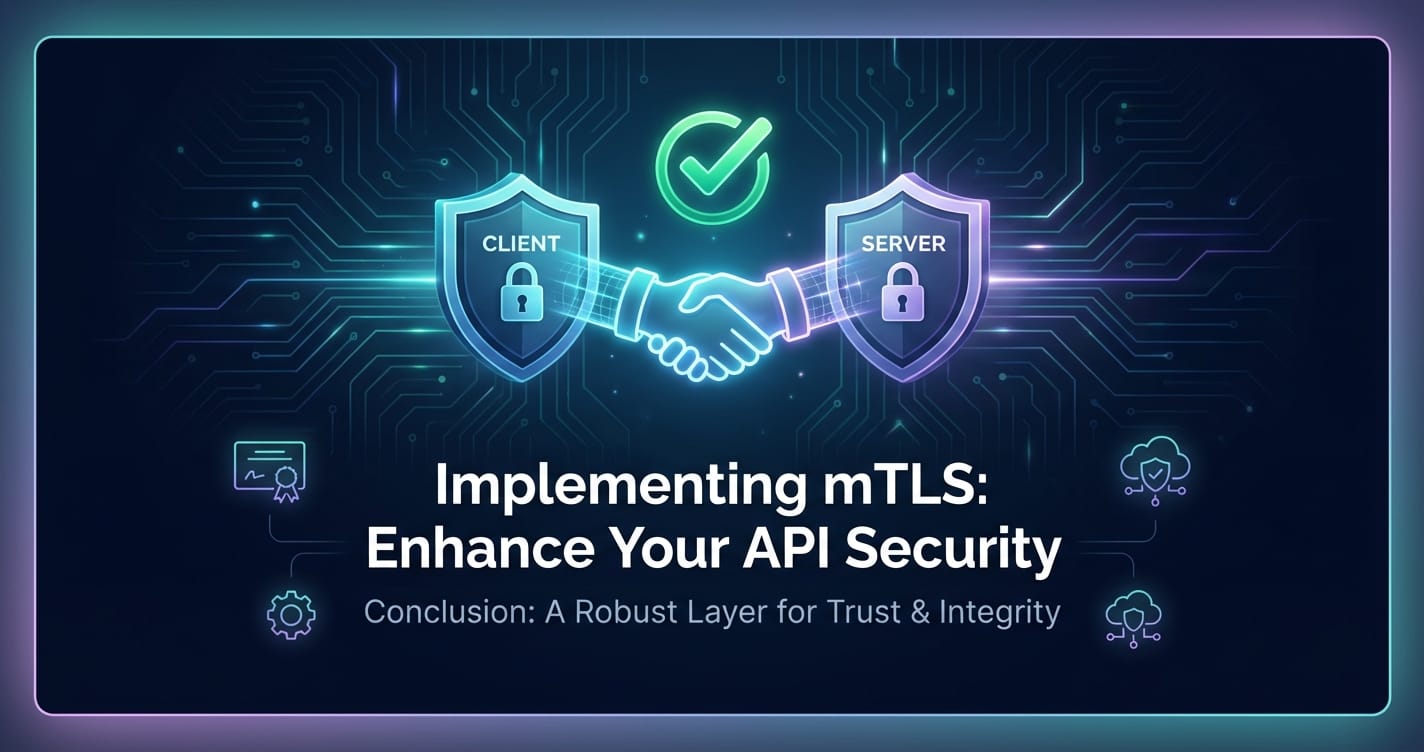
Implementing mTLS: Enhance Your API Security
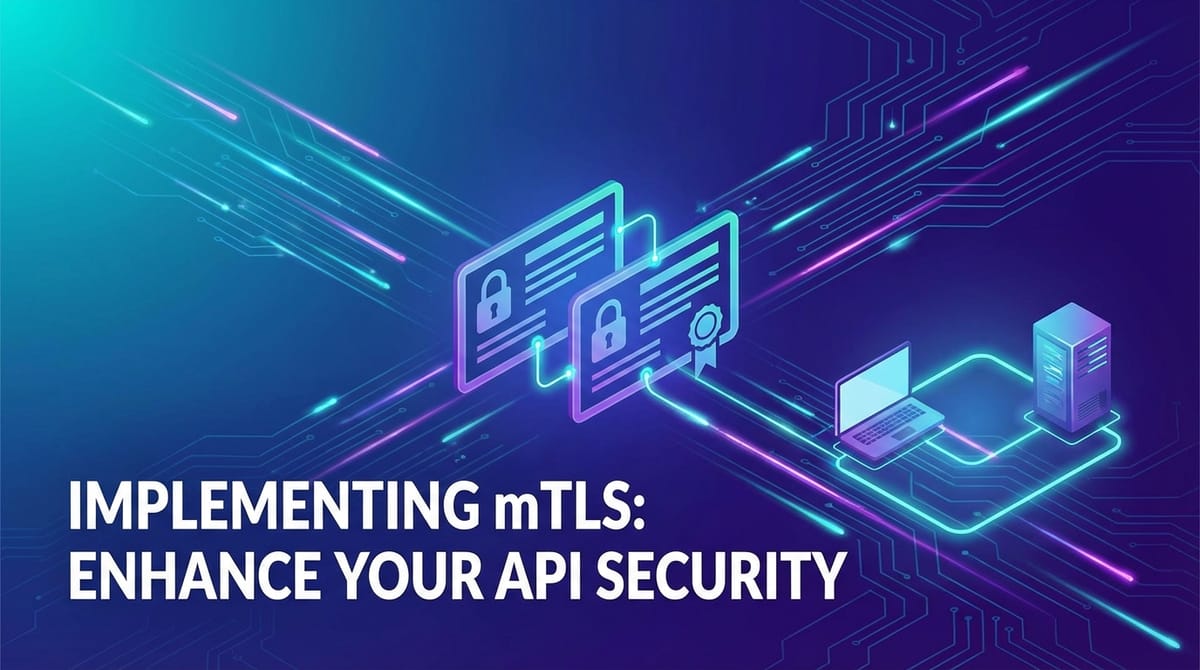


In the increasingly interconnected digital landscape, the bedrock of modern applications and services lies in their ability to communicate seamlessly and securely through Application Programming Interfaces (APIs). APIs are no longer just technical interfaces; they are the circulatory system of the digital economy, enabling innovation, fostering collaboration, and driving business growth. However, this omnipresence also makes APIs prime targets for cyberattacks, ranging from data breaches and unauthorized access to denial-of-service attempts. The sophistication of these threats escalates daily, demanding equally sophisticated and robust security countermeasures. While traditional security mechanisms like API keys, OAuth 2.0, and JSON Web Tokens (JWTs) provide essential layers of protection, they often operate at higher application layers, leaving a critical vulnerability at the transport level: the identity of the client itself. This is where Mutual Transport Layer Security (mTLS) emerges as a transformative solution, offering an unparalleled level of trust and authentication.
This comprehensive article will embark on an in-depth exploration of mTLS, dissecting its fundamental principles, elucidating its operational mechanics, and articulating its profound benefits for fortifying API security. We will navigate through the practicalities of its implementation, address the inherent challenges, and delineate best practices essential for a resilient deployment. Furthermore, we will contextualize mTLS within the broader framework of API Governance, demonstrating how it underpins a holistic security strategy for organizations of all scales. By the conclusion, readers will possess a profound understanding of how to leverage mTLS to construct an impenetrable defense around their valuable API assets, ensuring not just compliance, but also enduring trust and operational integrity.
Understanding the Fundamentals of API Security
The proliferation of APIs has irrevocably altered the architectural paradigms of software development, moving towards microservices, serverless computing, and interconnected ecosystems. Every mobile application, every web application, and every inter-service communication within a modern enterprise often relies heavily on APIs. This ubiquitous reliance, while enabling unprecedented agility and innovation, simultaneously expands the attack surface for malicious actors. Consequently, robust API security is not merely a desirable feature; it is an absolute imperative, directly impacting an organization's financial stability, brand reputation, and regulatory compliance.
The stakes associated with API security failures are exceptionally high. A single API vulnerability can lead to catastrophic data breaches, exposing sensitive customer information, proprietary business intelligence, or critical operational data. Such incidents not only incur significant financial penalties under regulations like GDPR, CCPA, and HIPAA but also erode customer trust, which can be far more damaging in the long term. Beyond data exposure, compromised APIs can be exploited to disrupt services, inject malicious code, or even gain unauthorized access to an entire internal network, threatening business continuity and operational integrity. Therefore, understanding and mitigating these risks is paramount for any entity operating in the digital domain. Effective API Governance demands a proactive stance, embedding security considerations from the API's inception through its entire lifecycle.
Traditionally, organizations have relied on a suite of security mechanisms to protect their APIs. These often include:
- API Keys: At their simplest, API keys are unique identifiers used to authenticate an application or user when calling an API. They are typically short strings included in the request header or URL. While easy to implement and deploy, API keys primarily serve for identification and simple access control rather than strong authentication. They are prone to being stolen, hardcoded, or exposed in client-side code, offering limited protection against sophisticated attacks. They provide no inherent mechanism for verifying the client's identity beyond the key itself, making them less suitable for highly sensitive operations.
- OAuth 2.0/OpenID Connect (OIDC): These are industry-standard protocols for authorization (OAuth 2.0) and authentication (OIDC). OAuth 2.0 allows a user to grant a third-party application limited access to their resources on another server without sharing their credentials. It uses tokens (access tokens, refresh tokens) to grant and manage permissions. OIDC builds on OAuth 2.0 to provide an identity layer, allowing clients to verify the identity of the end-user and obtain basic profile information. These protocols offer significant improvements over API keys by introducing scopes, token expiration, and refresh mechanisms, making them suitable for delegating access securely. However, their primary focus is on authorizing an application or user after a connection is established, not on authenticating the underlying communication channel itself.
- JSON Web Tokens (JWTs): JWTs are compact, URL-safe means of representing claims to be transferred between two parties. They are typically used in conjunction with OAuth 2.0/OIDC as access tokens. A JWT comprises a header, a payload (containing claims like user ID, roles, expiration time), and a signature. The signature ensures the token's integrity and authenticity – that it hasn't been tampered with. While JWTs are excellent for conveying authenticated identity and authorization context securely after a client has been authenticated, they do not intrinsically authenticate the client at the network transport layer.
- Firewalls and Web Application Firewalls (WAFs): Network firewalls regulate traffic based on IP addresses and ports, while WAFs provide an additional layer of protection by filtering, monitoring, and blocking HTTP traffic to and from a web application. They can defend against common web vulnerabilities such as SQL injection, cross-site scripting (XSS), and API-specific attacks. These are crucial perimeter defenses but are general-purpose and do not provide deep client identity verification at the connection establishment phase specific to an API interaction.
Despite the efficacy of these traditional methods in their respective domains, they share a common limitation when viewed through the lens of comprehensive API security: they primarily focus on authentication and authorization after a connection has been successfully initiated and often operate at the application layer (Layer 7 of the OSI model). This means that while they verify who is making the request (user or application) and what they are authorized to do, they do not inherently verify the identity of the client itself at the transport layer (Layer 4/5) before any application data is exchanged. A malicious actor might still be able to establish a connection, even if they are ultimately denied access at the application layer, potentially exposing the API endpoint to reconnaissance or brute-force attempts. This gap underscores the need for a mechanism that can establish trust and verify client identity even before higher-level authentication schemes come into play, a role perfectly suited for mTLS.
The Core Concept of TLS and Its Evolution
Before delving into the intricacies of Mutual TLS, it is essential to firmly grasp the foundation upon which it is built: Transport Layer Security (TLS). TLS is the cryptographic protocol that ensures privacy and data integrity between two communicating computer applications. It is the successor to the now-deprecated Secure Sockets Layer (SSL) protocol, and it is ubiquitous in securing internet communications, from browsing secure websites (HTTPS) to email and instant messaging. Without TLS, the vast majority of our digital interactions would be susceptible to eavesdropping, tampering, and impersonation.
The primary objective of TLS is to provide three critical security guarantees for data transmitted over a network:
- Confidentiality: It encrypts the data exchanged between the client and server, making it unreadable to anyone but the intended recipient. This prevents unauthorized interception and snooping.
- Integrity: It ensures that the data has not been tampered with during transit. Any modification would be detected, and the communication would be terminated.
- Authenticity: It verifies the identity of the server to the client, assuring the client that they are communicating with the legitimate server and not an imposter. This prevents man-in-the-middle (MITM) attacks where an attacker might try to masquerade as the legitimate server.
The magic of TLS unfolds during what is known as the TLS Handshake. This is a complex series of steps that occur before any application data is exchanged, allowing the client and server to establish a secure, encrypted connection. A simplified overview of a standard TLS handshake (where only the server is authenticated) typically involves:
- ClientHello: The client initiates the connection by sending a "ClientHello" message to the server. This message includes the client's supported TLS versions, cipher suites (encryption algorithms and hashing functions), and a random number.
- ServerHello: The server responds with a "ServerHello" message, selecting the best TLS version and cipher suite supported by both parties, along with its own random number.
- Server's Certificate: The server then sends its digital certificate to the client. This certificate contains the server's public key, information about the server (e.g., domain name), and a digital signature from a trusted Certificate Authority (CA).
- Client Verification: The client receives the server's certificate and performs a series of validations. It checks the certificate's authenticity by verifying the CA's signature against its own list of trusted root CAs. It also verifies that the certificate has not expired, that the domain name in the certificate matches the server it is trying to connect to, and that the certificate has not been revoked. If any of these checks fail, the client terminates the connection, indicating a potential security risk.
- Key Exchange (ClientKeyExchange): If the server's certificate is valid, the client generates a pre-master secret, encrypts it using the server's public key (obtained from the certificate), and sends it to the server.
- Key Generation: Both the client and the server independently use the pre-master secret (decrypted by the server using its private key), along with the random numbers exchanged earlier, to generate a shared symmetric session key. This session key will be used for all subsequent data encryption and decryption.
- ChangeCipherSpec & Finished: Both parties send "ChangeCipherSpec" messages, indicating that they will now switch to encrypted communication using the newly derived session key. They then exchange "Finished" messages, encrypted with the session key, to verify that the key exchange was successful and that they can communicate securely.
Once the handshake is complete, all subsequent application data (e.g., HTTP requests and responses for an API) is encrypted using the shared symmetric key. This ensures confidentiality and integrity throughout the session.
While standard TLS is incredibly powerful and forms the backbone of internet security, it has a crucial limitation for scenarios requiring high-assurance API security: it primarily focuses on verifying the server's identity to the client. The client trusts the server, but the server, in a standard TLS setup, does not inherently verify the identity of the client at the transport layer. The server might know the client's IP address, but this is often insufficient for robust authentication. Higher-layer authentication mechanisms (like API keys, OAuth tokens) are then used to identify the client, but this occurs after the basic TLS connection is established. For many API interactions, especially those within a zero-trust architecture or highly sensitive B2B integrations, this one-way authentication is simply not enough. This limitation directly paves the way for the necessity and elegance of Mutual TLS.
Demystifying Mutual TLS (mTLS)
Building upon the robust foundation of standard TLS, Mutual Transport Layer Security (mTLS) introduces a pivotal enhancement: mutual authentication. Where standard TLS ensures the client verifies the server's identity, mTLS goes a step further by ensuring that both the client and the server authenticate each other at the very beginning of the communication handshake. This symmetrical verification establishes a profound level of trust, creating an inherently more secure communication channel.
At its core, mTLS operates on the same cryptographic principles as TLS, relying on digital certificates and public-key infrastructure (PKI). The key difference lies in the direction of authentication. In mTLS, the client is also required to possess and present a valid digital certificate during the TLS handshake, which the server then validates. If the client fails to present a valid and trusted certificate, the server can simply refuse to establish the connection, effectively denying access at the network layer before any application-level processing even begins.
Let's dissect the mTLS handshake process, highlighting how it extends beyond the standard TLS flow:
- ClientHello: Just like in standard TLS, the client initiates the connection, proposing TLS versions and cipher suites.
- ServerHello, Server's Certificate, ServerKeyExchange (Optional), CertificateRequest: The server responds with its "ServerHello," its own digital certificate, and optionally a ServerKeyExchange if ephemeral Diffie-Hellman is used. Crucially, the server then sends a "CertificateRequest" message. This message informs the client that it requires a client certificate for authentication and specifies which Certificate Authorities (CAs) the server trusts to issue such certificates.
- Client's Certificate & ClientKeyExchange: Upon receiving the "CertificateRequest," the client locates its appropriate digital certificate and private key. It then sends its "Client's Certificate" to the server, followed by the encrypted pre-master secret (as in standard TLS, encrypted with the server's public key) in the "ClientKeyExchange" message. If the client does not have a suitable certificate or chooses not to present one, the handshake can fail at this point.
- Server Verification of Client's Certificate: The server receives the client's certificate and undertakes a rigorous validation process, mirroring what the client did for the server's certificate. The server checks:
- Trust Chain: Is the client's certificate signed by a CA that the server trusts (as indicated in the "CertificateRequest" or its own trust store)?
- Validity Period: Is the certificate within its valid date range?
- Revocation Status: Has the certificate been revoked (checking Certificate Revocation Lists - CRLs or Online Certificate Status Protocol - OCSP)?
- Certificate Attributes: The server might also inspect specific attributes within the client certificate, such as the Common Name (CN), Subject Alternative Name (SAN), or Organizational Unit (OU), to map the certificate to a known identity or role within its system.
- Key Generation & Finished Messages: If the client's certificate is successfully validated, both client and server proceed to generate the shared symmetric session key. They then exchange "ChangeCipherSpec" and "Finished" messages, now encrypted with the session key, confirming the successful establishment of the secure, mutually authenticated channel.
Only after the successful completion of this entire mTLS handshake, where both parties have cryptographically verified each other's identities, is the encrypted application data (e.g., API requests) allowed to flow.
Key Components for mTLS
To implement mTLS, several critical components are essential, all revolving around the Public Key Infrastructure (PKI):
- Digital Certificates (X.509): These are the cornerstone of mTLS. An X.509 certificate is a digital document that binds a public key to an identity (like a server, a client application, or an organization). Key attributes include:
- Public Key: Used for encryption by the sender and verification of signatures.
- Subject: The entity that owns the public key (e.g.,
api.example.comfor a server,client_app_id_123for a client). - Issuer: The Certificate Authority (CA) that issued the certificate.
- Validity Period: The dates between which the certificate is considered valid.
- Digital Signature: The CA's signature over the certificate's content, proving its authenticity.
- Key Usage Extensions: Indicate what the certificate can be used for (e.g., client authentication, server authentication).
- Certificate Authorities (CAs): A CA is a trusted entity that issues digital certificates. They act as guarantors of identity. In a PKI hierarchy, there are typically:
- Root CAs: Highly trusted entities whose certificates are typically pre-installed in operating systems and browsers. They sign intermediate CA certificates.
- Intermediate CAs: Issued by Root CAs, they are used to sign end-entity certificates (server or client certificates). This provides a layer of security, as the root CA's private key is kept offline and highly protected. A full "trust chain" involves verifying an end-entity certificate back to a trusted root.
- For mTLS, organizations might use public CAs for external-facing APIs or establish their own private CAs for internal services, offering greater control over the issuance and management of client certificates.
- Private Keys: Every certificate is associated with a unique private key. This key must be kept absolutely secret by its owner. The private key is used to decrypt data encrypted with the corresponding public key and to create digital signatures. Its compromise completely invalidates the security of the certificate and the identity it represents. Secure storage and management of private keys are paramount for both servers and clients participating in mTLS.
Why mTLS is Superior for API Security
The architectural shift provided by mTLS offers several distinct advantages that elevate API security to a significantly higher level:
- Strong Client Identity Verification: Unlike higher-layer authentication schemes, mTLS authenticates the client at the very beginning of the communication process. This provides cryptographically verifiable proof of the client's identity before any application-level data is even processed. It’s akin to requiring a government-issued ID at the front door before even considering granting entry.
- Enhanced Data Confidentiality & Integrity: While standard TLS already provides these, mTLS reinforces them by ensuring that the secure channel is established only between two mutually trusted parties. This reduces the risk of malicious entities establishing seemingly secure connections that might later be exploited.
- Defense Against Impersonation & Man-in-the-Middle (MITM) Attacks: By requiring a valid client certificate, mTLS makes it significantly harder for attackers to impersonate legitimate clients. An attacker would not only need to intercept traffic but also steal a valid client certificate and its corresponding private key, which is a much higher bar than merely obtaining an API key or an expired token.
- Zero-Trust Architecture Alignment: mTLS is a cornerstone technology for implementing a Zero-Trust security model. In a Zero-Trust environment, no entity (user, device, application) is inherently trusted, regardless of whether it's inside or outside the network perimeter. Every connection, every access request, must be verified. mTLS provides this crucial verification at the transport layer, ensuring that even internal microservices authenticate each other before communication, minimizing the risk of lateral movement by attackers.
In essence, mTLS doesn't just encrypt the communication; it encrypts the communication only between entities that can cryptographically prove their identities to each other. This fundamental shift from one-way to two-way authentication provides an unprecedented layer of assurance, making it an indispensable tool for securing modern API ecosystems and strengthening overall API Governance.
Benefits of Implementing mTLS for API Security
Implementing Mutual TLS (mTLS) transforms the security posture of an API ecosystem, moving beyond conventional perimeter defenses and application-layer authentication to establish a deep, cryptographic trust between communicating parties. The advantages derived from this robust security mechanism are manifold, impacting various facets of an organization's operations, from preventing breaches to streamlining regulatory adherence and enhancing overall API Governance.
Unparalleled Authentication Strength
The most direct and significant benefit of mTLS is the exceptional strength it brings to client authentication. Unlike API keys, which are essentially shared secrets, or OAuth tokens, which rely on an identity provider, mTLS utilizes cryptographically verifiable digital certificates. A client's certificate, signed by a trusted Certificate Authority (CA), serves as a digital identity card that is nearly impossible to forge without compromising the CA itself or stealing the client's private key. This elevates authentication from mere credential validation to a robust, identity-based verification at the transport layer, ensuring that only authenticated and authorized clients can even initiate a connection. This is particularly crucial for machine-to-machine communication, where human interaction for authentication isn't present, making strong machine identity paramount. The identity is bound to the certificate, not just a transient token or easily copied key, making it a much more resilient form of authentication for any API.
Reduced Attack Surface
By enforcing mTLS, organizations drastically reduce their API's attack surface. Unauthorized or untrusted clients are simply denied connection at the TLS handshake stage, long before they can interact with the API's application logic. This preemptive denial prevents a multitude of attacks, including:
- Reconnaissance and Port Scanning: Attackers cannot even establish a basic connection to probe for vulnerabilities.
- Brute-Force Attacks: Since a valid client certificate is required, attackers cannot easily attempt to guess credentials or tokens.
- Distributed Denial of Service (DDoS) Attacks: While not a complete silver bullet, mTLS can help mitigate certain types of DDoS by rejecting unauthenticated connections early in the network stack, conserving server resources that would otherwise be spent processing potentially malicious requests.
- API Misuse: If an API requires mTLS, even if an API key or token is compromised, a malicious actor without the corresponding client certificate and private key will be unable to use it to connect to the API.
This pre-emptive filtering acts as a powerful deterrent, forcing attackers to overcome a significantly higher technical barrier just to begin interacting with the API.
Simplified Authorization (in conjunction with other methods)
While mTLS primarily handles authentication, it can significantly simplify subsequent authorization decisions. Once a client's identity is established and verified via mTLS, attributes from their certificate (e.g., Common Name, Organizational Unit, Subject Alternative Name) can be used to inform or streamline authorization logic. For instance, a certificate issued to a specific internal service or partner could inherently grant a certain level of access, which can then be refined by higher-level authorization policies (e.g., OAuth scopes, role-based access control). This allows for a more streamlined flow: strong identity at the connection layer, followed by granular permission checks at the application layer. This also reduces the overhead of continuously re-authenticating clients at every request, as the trust established by mTLS can persist for the duration of the secure session.
Compliance & Regulatory Adherence
Many industry regulations and compliance frameworks, particularly in highly sensitive sectors like finance (e.g., PCI DSS), healthcare (e.g., HIPAA), and government, mandate stringent security controls for data in transit and access control. mTLS, with its strong mutual authentication and cryptographic guarantees, helps organizations meet and exceed these requirements. By providing undeniable proof of client identity and secure communication, mTLS simplifies auditing processes and demonstrates a commitment to best-in-class security practices, reducing the risk of non-compliance penalties and fostering trust with auditors and regulators. The ability to control and track every client certificate also provides an excellent audit trail.
Seamless Integration with Microservices
In modern cloud-native architectures, applications are often decomposed into numerous small, independent microservices that communicate frequently with each other (East-West traffic). Securing these internal API calls is just as critical, if not more so, than securing external-facing APIs, as a compromise in one microservice can lead to lateral movement across the entire system. mTLS is ideally suited for microservice environments, allowing each service to cryptographically authenticate its peers before engaging in any data exchange. This is a core tenet of the Zero-Trust model, where even internal network traffic is treated as potentially hostile until proven otherwise. Integrating mTLS into a service mesh (e.g., Istio, Linkerd) can automate and simplify this complex inter-service authentication, making it an indispensable tool for securing distributed applications.
Improved API Governance
Effective API Governance encompasses the entire lifecycle of an API, from design and development to deployment, management, and decommissioning. It involves establishing policies, standards, and processes to ensure that APIs are secure, reliable, performant, and aligned with business objectives. mTLS significantly enhances API Governance by enforcing strong identity at the earliest possible stage of an API interaction.
- Policy Enforcement: mTLS provides a mechanism to enforce access policies uniformly across all APIs. By requiring specific certificate attributes or issuance by particular CAs, organizations can dictate exactly which clients are permitted to connect.
- Centralized Control: When managed through an API Gateway, mTLS configurations (trusted CAs, revocation lists) can be centralized, ensuring consistent security posture across all published APIs. This simplifies the management overhead inherent in sophisticated security measures.
- Auditing and Traceability: With mTLS, every client connection attempt requires a verifiable certificate. This provides a robust audit trail, allowing
API Governanceteams to track who (which client application or service) is connecting to what API, when, and from where. This visibility is invaluable for security monitoring, incident response, and compliance reporting. - Tiered Access: Organizations can issue different classes of client certificates, enabling nuanced
API Governancestrategies. For example, internal applications might receive certificates from an internal CA, while trusted partners might receive certificates from a specific intermediate CA, each configured with distinct access privileges enforced at the API Gateway.
By integrating mTLS, organizations not only bolster their technical security defenses but also strengthen their overarching API Governance framework, fostering a more controlled, transparent, and resilient API ecosystem. The cryptographic proof of identity provided by mTLS is an invaluable asset in a world where verifiable trust is paramount for all api interactions.
Practical Implementation Strategies for mTLS
Implementing mTLS, while offering profound security benefits, requires careful planning and execution. It involves not just configuring software but establishing a robust Public Key Infrastructure (PKI) and managing a lifecycle of certificates and keys. The successful deployment of mTLS for API security relies heavily on understanding the necessary infrastructure, establishing rigorous certificate management practices, and integrating it seamlessly into your existing API Governance frameworks.
Infrastructure Requirements
The successful implementation of mTLS is deeply tied to the underlying infrastructure that hosts and manages your APIs. Key components include:
- API Gateway: This is arguably the most critical component for enforcing mTLS in an API ecosystem. An
api gatewayacts as the single entry point for all API requests, centralizing security policies, traffic management, and authentication/authorization. When mTLS is enabled on anapi gateway, it becomes the first line of defense, validating client certificates before forwarding requests to backend services. Gateways like Nginx, Kong, Apache APISIX, or specialized commercialapi gatewaysolutions are capable of handling mTLS termination. They simplify mTLS implementation by offloading the certificate validation logic from individual backend services, ensuring consistent enforcement and reducing the operational burden on developers. This centralization also aids significantly inAPI Governance, as all mTLS policies are managed at a single, critical control point. - Load Balancers: In high-traffic environments, load balancers often sit in front of
api gateways or direct to backend services. If the load balancer is configured for SSL/TLS termination, it can also be the point where mTLS is enforced. However, it's generally recommended to push mTLS termination as close to the service orapi gatewayas possible to maintain encryption across internal networks where appropriate, especially in a Zero-Trust context. If the load balancer terminates mTLS, it must then securely convey the client's validated identity (e.g., via HTTP headers) to downstream services. - Certificate Management System (CMS): Managing numerous client and server certificates (issuance, renewal, revocation) across a complex ecosystem is a daunting task. A robust CMS or automated PKI solution is essential. This can be an internal solution (e.g., using HashiCorp Vault's PKI secrets engine, OpenSSL for smaller setups, or dedicated PKI software) or a cloud-based service (e.g., AWS Certificate Manager, Google Certificate Authority Service). The CMS handles:
- Certificate Signing Requests (CSRs): Generating and processing requests for new certificates.
- Certificate Issuance: Signing new certificates for clients and servers.
- Key Management: Securely generating, storing, and managing private keys (or facilitating their generation by end entities).
- Certificate Renewal: Proactively managing certificate expirations and automating renewal processes.
- Certificate Revocation: Handling the invalidation of compromised or unwanted certificates.
- Identity Provider (IdP): While mTLS establishes the identity of the client at the transport layer, an IdP (e.g., Okta, Auth0, Keycloak) still plays a crucial role for higher-level authentication of users or applications. mTLS provides the assurance that "this is indeed client X," while the IdP verifies "client X is permitted to access this resource based on user Y's credentials or application Z's authorization." The mTLS client certificate can contain identifiers that link back to identities managed by an IdP, creating a cohesive security picture.
Certificate Management Lifecycle
The lifecycle of certificates is central to mTLS operations. Neglecting any phase can introduce significant security risks or operational disruptions.
- Issuance:
- Internal CAs: For internal APIs and microservices, an organization typically operates its own private CA. This provides full control over the trust chain, allows for faster issuance, and avoids reliance on external parties. The private CA signs both server and client certificates.
- Public CAs: For external-facing APIs, particularly those consumed by third-party applications or partners who might not trust an internal CA, using certificates issued by well-known public CAs (e.g., Let's Encrypt, DigiCert) is often necessary for server certificates. For client certificates for external partners, a dedicated intermediate CA under a public root might be used, or a private CA whose root is shared securely with partners.
- The process usually involves the client (or server) generating a private key and a Certificate Signing Request (CSR), which is then submitted to the CA for signing.
- Distribution: Securely distributing client certificates and their corresponding private keys to client applications is critical. This must be done through trusted, encrypted channels. Methods include:
- Automated provisioning tools.
- Secure secrets management systems (e.g., HashiCorp Vault).
- Manual out-of-band delivery for highly sensitive cases, though this is less scalable.
- The private key should ideally never leave the client device/environment where it was generated.
- Renewal: Certificates have a finite lifespan. Proactive and automated renewal processes are vital to prevent service outages due to expired certificates. A good CMS will send notifications and facilitate automated renewal requests and issuance of new certificates.
- Revocation: If a private key is compromised, a certificate is misused, or a client application is decommissioned, its certificate must be immediately revoked. Two primary mechanisms exist:
- Certificate Revocation Lists (CRLs): The CA publishes a list of revoked certificates. Clients/servers periodically download and check this list. CRLs can be large and have latency issues (updates are not instantaneous).
- Online Certificate Status Protocol (OCSP): Clients/servers query an OCSP responder in real-time to check a certificate's status. OCSP provides more up-to-date revocation information but adds a slight latency to the handshake and requires the OCSP responder to be highly available. For performance-critical systems, OCSP stapling (where the server proactively fetches and "staples" an OCSP response to its certificate) can be used.
Configuration Steps (Conceptual)
Implementing mTLS involves configuration on both the server (API Gateway/Service) and client side.
Server-Side (API Gateway/Service):
- Enable mTLS: Configure the
api gatewayor web server (e.g., Nginx, Envoy, or a dedicatedapi gatewaylike APIPark) to require client certificates for incoming connections. This usually involves a directive likessl_verify_client onin Nginx. - Specify Trusted Client CA Certificates (Trust Store): The server needs a "trust store" containing the public certificates of the Certificate Authorities (CAs) that it trusts to issue client certificates. If a client presents a certificate signed by an untrusted CA, the connection will be rejected. This is often configured as a bundle of
.pemfiles. - Configure Revocation Checking: Enable CRL or OCSP checking to ensure that presented client certificates have not been revoked. This adds a crucial layer of security, especially when certificates might be compromised.
- Map Client Certificate Attributes to Internal Identities/Roles: Once a client certificate is validated, the
api gatewaycan extract attributes like the Common Name (CN), Subject Alternative Name (SAN), or custom extensions. These attributes can then be injected into HTTP headers (e.g.,X-Client-Cert-CN) and forwarded to backend services. Backend services can then use these headers for granular authorization decisions, linking the cryptographic identity to internal user/application roles. This is whereAPI Governancepolicies truly come into play, mapping certificate identity to permissible actions.
Client-Side:
- Install Client Certificate and Private Key: The client application needs access to its unique digital certificate and its corresponding private key. These should be securely stored (e.g., in a secure enclave, a protected file system, or a secrets manager).
- Configure Client Application to Present the Certificate: The client application (e.g., an HTTP client library in Python, Java, Node.js, or a command-line tool like
curl) must be configured to present its client certificate and private key during the TLS handshake when connecting to the mTLS-enabled API. This typically involves specifying the paths to the certificate file and the key file.
Integration with Existing API Governance Frameworks
mTLS should not be an isolated security measure but an integral part of an organization's overall API Governance strategy.
- Policy Definition: Define clear policies for which APIs require mTLS, which CAs are trusted for different types of clients (internal vs. external partners), and what certificate attributes are required for access.
- API Design Standards: Incorporate mTLS requirements into your
apidesign guidelines. For example, specify that all mission-critical internal APIs must use mTLS for inter-service communication. - Developer Onboarding: Provide clear documentation and tools for developers to generate, obtain, and utilize client certificates for
apiconsumption. This might involve self-service portals integrated with the CMS. - Monitoring and Auditing: Establish logging and monitoring for mTLS handshake successes and failures. Integrate these logs into your central security information and event management (SIEM) system to track compliance with
API Governancepolicies and detect potential security incidents. - Lifecycle Management: Align the certificate lifecycle management processes (issuance, renewal, revocation) with your
apilifecycle stages. For instance, when anapiis decommissioned, ensure all associated client certificates are revoked.
By meticulously planning and executing these steps, organizations can effectively implement mTLS, creating a foundation of strong, verifiable trust that significantly enhances their api security posture and strengthens their API Governance capabilities.
APIPark is a high-performance AI gateway that allows you to securely access the most comprehensive LLM APIs globally on the APIPark platform, including OpenAI, Anthropic, Mistral, Llama2, Google Gemini, and more.Try APIPark now! 👇👇👇
Challenges and Considerations in mTLS Deployment
While Mutual TLS (mTLS) offers unparalleled security benefits for APIs, its implementation is not without its complexities and challenges. Organizations embarking on an mTLS journey must be prepared to address these considerations to ensure a smooth deployment and maintain a robust security posture without introducing undue operational friction or performance bottlenecks.
Complexity
The primary challenge associated with mTLS is its inherent complexity, particularly compared to simpler authentication mechanisms like API keys. This complexity stems from several areas:
- Public Key Infrastructure (PKI) Management: Setting up and maintaining a PKI, especially an internal one for issuing client certificates, requires specialized knowledge. This includes managing root and intermediate CAs, defining certificate policies, and handling certificate signing requests. For organizations without dedicated PKI teams, this can be a significant hurdle.
- Certificate Lifecycle Management: Beyond initial issuance, the ongoing management of client and server certificates (renewal, revocation) for potentially hundreds or thousands of clients can be daunting. Manual processes are prone to errors and can lead to outages if certificates expire unexpectedly. Automating this lifecycle requires investment in tools and processes.
- Private Key Protection: Securely generating, storing, and managing private keys for all client applications is paramount. Compromise of a private key nullifies the security of its associated certificate. Implementing strong key management practices across diverse client environments (e.g., backend services, mobile apps, IoT devices) can be challenging.
Performance Overhead
Although modern hardware and TLS stack optimizations have significantly reduced the performance impact of TLS, mTLS does introduce a slightly higher overhead compared to standard TLS or unencrypted HTTP.
- Additional Handshake Steps: The mTLS handshake involves more cryptographic operations and network round-trips (client sending its certificate, server validating it) than a standard TLS handshake. This can add a few milliseconds to the connection establishment time.
- Certificate Revocation Checks: If CRLs are used, clients/servers need to download and parse potentially large lists. If OCSP is used, real-time queries to an OCSP responder add latency. While minor for individual requests, this can accumulate under high traffic loads.
- CPU Usage: Cryptographic operations, particularly during the handshake, are CPU-intensive. While generally manageable for most
apiworkloads, very high-throughput, latency-sensitive APIs might need careful tuning and potentially specialized hardware (e.g., crypto accelerators) if mTLS is implemented at scale. - Network Bandwidth: Certificates, especially with full trust chains, can add a small amount of data to the handshake, potentially impacting bandwidth slightly, though this is usually negligible.
The performance impact is often negligible for most applications but warrants consideration and testing for high-performance or low-latency apis.
Client Compatibility
Implementing mTLS requires client applications to be capable of presenting a client certificate during the TLS handshake. This might not be straightforward for all types of clients:
- Legacy Systems: Older client applications or systems might not have native support for mTLS or may require significant code modifications to handle certificate provisioning and presentation.
- Third-Party Integrations: If your API is consumed by external partners, they must also implement mTLS on their client side. This often necessitates close collaboration, clear documentation, and potentially custom tooling or support from your side, which can introduce friction and delays.
- Browser-Based Clients: Web browsers typically do not natively support client certificates for
apicalls in the same seamless way as server-side applications, due to complexities in certificate management in a browser environment. While there are some solutions (e.g., WebAuthn, smart card integration), mTLS is generally less suitable for public-facing APIs consumed directly by browsers unless specific enterprise browser configurations are enforced. It is primarily effective for server-to-server, machine-to-machine, or mobile app-to-server communications where the client has full control over its environment.
Key Management
The secure management of private keys is paramount. If a private key associated with a client certificate is compromised, the security benefits of mTLS are entirely undermined, as an attacker can then impersonate the legitimate client. Challenges include:
- Storage: Private keys must be stored securely, protected from unauthorized access. This can involve using hardware security modules (HSMs), secure enclaves, encrypted file systems, or dedicated secrets management solutions. Storing keys directly in application code or unsecured configuration files is a critical vulnerability.
- Distribution: As mentioned earlier, securely distributing private keys to client applications is a complex process that demands robust, encrypted channels and strict access controls.
- Rotation: While certificates expire, it's also good practice to periodically rotate private keys to mitigate the risk of long-term compromise. This adds another layer of operational complexity.
- Revocation: Ensuring that compromised keys or certificates can be quickly and effectively revoked and that revocation status is accurately checked by servers is vital for maintaining the integrity of the system.
Revocation Management
Effective revocation is a critical but often overlooked aspect of PKI and mTLS. If a client certificate or its private key is compromised, it must be instantly revoked to prevent unauthorized access.
- Latency of CRLs: Certificate Revocation Lists (CRLs) can suffer from latency, as servers might only download updated lists periodically. A compromised certificate could be valid for a window of time until the new CRL is processed.
- Performance of OCSP: While OCSP provides real-time checks, it introduces an additional network call for each handshake, potentially impacting latency and requiring highly available OCSP responders.
- Operational Overhead: Managing CRLs or OCSP responders, especially for an internal CA, adds significant operational overhead. Organizations need robust infrastructure to support these services.
Developer Experience
A heavily secured API, while protecting the organization, can inadvertently create friction for developers trying to integrate with it.
- Onboarding: Developers need clear guidance, tools, and potentially automated processes to obtain, install, and configure client certificates for their applications. Poor documentation or complex manual steps can lead to frustration and adoption barriers.
- Debugging: Troubleshooting mTLS handshake failures can be challenging, as the errors often occur at a low level in the network stack and might not provide clear diagnostic information.
- Tooling: Standard development tools and libraries might not always provide intuitive ways to handle client certificates, requiring custom code or workarounds.
To mitigate these challenges, organizations need to invest in robust tooling, comprehensive documentation, and a focus on developer experience. While mTLS introduces complexity, the significant security enhancements it provides often outweigh these operational challenges, especially for mission-critical APIs and those requiring stringent API Governance. Strategic implementation, often leveraging an api gateway and automated certificate management, can significantly alleviate these deployment hurdles.
Best Practices for Robust mTLS Implementation
Implementing mTLS effectively requires more than just enabling a setting; it demands a comprehensive strategy encompassing automation, secure key management, vigilant monitoring, and continuous integration with your broader API Governance framework. Adhering to best practices is crucial to maximize the security benefits of mTLS while minimizing operational overhead and potential pitfalls.
1. Automate Certificate Lifecycle Management
Manual certificate management is a recipe for disaster in any scalable environment. Expired certificates lead to outages, and poorly managed revocations create security holes. Automation is paramount for:
- Issuance: Utilize automated tools or scripts to generate Certificate Signing Requests (CSRs) and submit them to your Certificate Authority (CA). Integrate this with your CI/CD pipelines for service deployments.
- Renewal: Implement automated certificate renewal processes that proactively request and deploy new certificates before existing ones expire. Solutions like Cert-Manager (for Kubernetes) or dedicated PKI automation tools can handle this seamlessly. Ensure that renewal processes are tested regularly.
- Revocation: Automate the process of revoking certificates upon compromise or decommissioning of a client. Integrate revocation requests directly into your incident response and asset management workflows.
- Distribution: Securely distribute new or renewed certificates and their corresponding private keys to client applications using secrets management systems (e.g., HashiCorp Vault, AWS Secrets Manager, Azure Key Vault) rather than manual transfer or hardcoding.
2. Segregate CAs and Establish Trust Boundaries
For larger organizations or those with diverse api ecosystems, it's beneficial to establish multiple CAs or intermediate CAs to define clear trust boundaries:
- Internal vs. External: Use a dedicated internal CA for your microservices and internal client applications (East-West traffic). For external partners or publicly exposed APIs requiring mTLS, consider using an intermediate CA specifically for partner-issued client certificates, or carefully manage a whitelist of trusted public CAs.
- Purpose-Specific CAs: You might have separate CAs for different environments (e.g., development, staging, production) or for different types of clients (e.g., IoT devices, backend services, partner applications). This limits the blast radius if one CA is compromised and allows for more granular
API Governancepolicies. - Root CA Security: Keep your root CA's private key offline, air-gapped, and under extreme physical security. It should only be brought online for signing intermediate CAs or in emergency recovery scenarios.
3. Strong Private Key Protection
The security of mTLS hinges entirely on the secrecy of private keys. Any compromise of a private key invalidates the certificate and allows an attacker to impersonate the legitimate client or server.
- Hardware Security Modules (HSMs): For critical server private keys and potentially for high-value client keys, use HSMs. HSMs are tamper-resistant physical or cloud-based devices that generate, store, and manage cryptographic keys, ensuring that the private key never leaves the secure hardware.
- Secure Enclaves/Key Vaults: For client applications, especially in cloud environments, leverage cloud provider key management services (KMS) or secure enclaves (e.g., Intel SGX) to store and manage private keys.
- Least Privilege Access: Restrict access to private keys to only the necessary processes or individuals. Implement strong authentication and authorization controls for key access.
- Never Hardcode: Under no circumstances should private keys be hardcoded into application source code or stored in unencrypted configuration files.
4. Principle of Least Privilege for Certificates
Just like with user accounts, apply the principle of least privilege to your certificates.
- Short Lifespan: Issue certificates with the shortest practical validity period. This limits the window of exposure if a certificate or key is compromised. Automated renewal processes make shorter lifespans feasible.
- Specific Usage: Limit certificate usage through extensions (e.g.,
Key Usage,Extended Key Usage) to only what is necessary (e.g.,clientAuthfor client certificates,serverAuthfor server certificates). - Granular Roles: If certificate attributes are used for authorization, ensure that the attributes in the certificate accurately reflect the minimum necessary permissions for the client.
5. Robust Logging and Monitoring
Visibility into your mTLS operations is crucial for security and operational health.
- Log Handshake Events: Configure your
api gatewayor servers to log mTLS handshake successes, failures, and detailed error messages (e.g., "client certificate expired," "untrusted CA," "certificate revoked"). - Monitor Certificate Expiry: Implement alerts for impending certificate expirations to prevent outages.
- Track Revocation Status: Monitor the status of your CRLs or OCSP responders to ensure they are available and up-to-date.
- Integrate with SIEM: Push mTLS-related logs to your Security Information and Event Management (SIEM) system for centralized analysis, correlation with other security events, and long-term auditing. This enables rapid detection of anomalous behavior or security incidents.
6. Regular Audits
Periodically audit your mTLS implementation to ensure its ongoing effectiveness.
- Certificate Review: Regularly review issued certificates, their validity periods, and associated permissions.
- Trust Store Review: Audit the trust stores on your servers/
api gateways to ensure they only contain trusted CA certificates and no unnecessary or outdated ones. - Policy Enforcement: Verify that mTLS policies are being correctly enforced by your
api gatewayand backend services. - Key Management Audit: Review your private key storage and management practices for compliance with internal security policies and industry standards.
7. Combine mTLS with Other Security Layers
mTLS is a powerful foundational security layer, but it is not a silver bullet. It must be integrated into a layered security approach.
- Authorization: After mTLS authenticates the client, use higher-layer mechanisms (e.g., OAuth 2.0 with scopes, JWT-based authorization, Role-Based Access Control - RBAC) to determine what the authenticated client is permitted to do.
- Input Validation: Continue to validate all API inputs to prevent injection attacks (SQL injection, XSS).
- Rate Limiting/Throttling: Implement rate limiting on your
api gatewayto protect against abuse, even from authenticated clients. - Web Application Firewalls (WAFs): WAFs provide an additional layer of protection against common web vulnerabilities.
8. Embrace API Governance as an Overarching Strategy
Integrate mTLS into your holistic API Governance strategy. This means:
- Standardization: Establish organizational standards for mTLS implementation, including chosen CAs, certificate profiles, and revocation procedures.
- Documentation: Provide comprehensive, easy-to-understand documentation for developers and partners on how to interact with mTLS-secured APIs.
- Training: Educate development, operations, and security teams on the principles and practices of mTLS.
- Tools and Platforms: Leverage modern
api gatewayandapimanagement platforms that simplify mTLS configuration and integration.
Modern api gateway platforms are indispensable for centralizing API Governance and security policies, including mTLS. They act as the front door to your services, enforcing access controls and authentication mechanisms before requests reach your backend apis. For organizations looking for a robust, open-source solution that combines AI gateway capabilities with comprehensive api management, platforms like APIPark provide an excellent foundation. APIPark, as an all-in-one AI gateway and API developer portal, helps manage the entire lifecycle of APIs, from design and publication to security enforcement. Its features, such as end-to-end API lifecycle management, unified API format for AI invocation, and independent API and access permissions for each tenant, are critical for establishing strong API Governance and ensuring that mTLS policies can be effectively applied across diverse services and teams. By leveraging such platforms, enterprises can streamline the integration and deployment of AI and REST services while maintaining a high standard of security, making api interactions not just efficient but also demonstrably secure.
By diligently applying these best practices, organizations can successfully deploy and manage mTLS, transforming it from a complex cryptographic concept into a powerful, automated, and indispensable component of their API security and API Governance strategy.
mTLS in a Modern API Gateway Ecosystem
The role of an api gateway is central to the successful and scalable implementation of mTLS. In modern api architectures, an api gateway serves as the primary enforcement point for security policies, routing, and traffic management, effectively acting as the front door to your entire api landscape. When it comes to mTLS, the api gateway takes on an even more critical function: it becomes the central arbiter of trust, validating client identities at the network edge before any request is allowed to proceed further into the internal network.
Here's how an api gateway streamlines and enhances mTLS implementation:
- Centralized mTLS Enforcement: Instead of configuring mTLS on each individual backend service, the
api gatewaycentralizes this responsibility. All incomingapirequests from clients (whether internal microservices, partner applications, or mobile apps) first hit the gateway. The gateway then performs the mTLS handshake, validating the client's certificate against its trusted CA store and checking for revocation. This ensures consistent mTLS policy enforcement across allapis exposed through the gateway, regardless of the underlying backend technology or team. This centralized control is a cornerstone of effectiveAPI Governance. - Offloading Cryptographic Operations: Handling mTLS handshakes and certificate validations can be CPU-intensive, especially under high traffic loads. An
api gatewayis typically optimized for these types of operations, offloading the cryptographic burden from backendapis. This allows backend services to focus purely on business logic, improving their performance and scalability. - Simplified Backend Integration: Once the
api gatewayhas successfully authenticated a client via mTLS, it can inject validated client identity information (e.g., Common Name, Subject Alternative Name from the client certificate) into HTTP headers. These headers are then forwarded to the backend services. Backend services no longer need to perform their own mTLS validation; they simply trust theapi gatewayand consume the identity information from the headers for authorization decisions. This significantly simplifies development and reduces the security complexity of individual services. - Flexible Policy Configuration: Modern
api gateways offer rich policy engines that allow administrators to define granular rules for mTLS. For example, you can configure different mTLS requirements based on the API endpoint, the client's IP address, or even attributes within the client's certificate. This flexibility enables sophisticatedAPI Governancestrategies, allowing for varying levels of security and access control for different types of APIs and client segments. - Enhanced Observability and Auditing: By centralizing mTLS enforcement, the
api gatewaybecomes a single point for logging all mTLS handshake events, successes, and failures. These logs are invaluable for security monitoring, troubleshooting, and auditing. They provide a clear record of which clients attempted to connect, whether they presented valid certificates, and if not, why the connection failed. This data is critical for compliance and incident response, offering a holistic view ofapiaccess. - Seamless Integration with PKI: Many
api gatewaysolutions offer built-in integrations or plugins for certificate management systems (CMS) and Public Key Infrastructure (PKI) services. This simplifies the process of updating trusted CA bundles, managing CRLs, or configuring OCSP stapling, ensuring that the gateway's mTLS configuration remains current and secure.
For organizations looking for a robust, open-source solution that combines AI gateway capabilities with comprehensive api management, platforms like APIPark provide an excellent foundation. APIPark, as an all-in-one AI gateway and API developer portal, helps manage the entire lifecycle of APIs, from design and publication to security enforcement. Its features, such as end-to-end API lifecycle management, unified API format for AI invocation, and independent API and access permissions for each tenant, are critical for establishing strong API Governance and ensuring that mTLS policies can be effectively applied across diverse services and teams. By leveraging such platforms, enterprises can streamline the integration and deployment of AI and REST services while maintaining a high standard of security, making api interactions not just efficient but also demonstrably secure. For instance, APIPark’s robust traffic management and security features at the gateway level make it an ideal candidate for terminating mTLS connections, enforcing client certificate policies, and then forwarding authenticated requests to a myriad of backend AI or REST services. Its capability for detailed API call logging and powerful data analysis also greatly assists in monitoring mTLS-related events and ensuring compliance with API Governance requirements, providing a transparent and secure environment for all API consumers and providers.
Case Studies and Real-World Scenarios
The theoretical advantages of mTLS translate into tangible security enhancements across a variety of real-world use cases, demonstrating its versatility and critical importance in securing diverse API interactions.
1. Securing Microservices (East-West Traffic)
In a microservices architecture, applications are broken down into numerous smaller, independently deployable services that communicate with each other over the network. This "East-West" traffic (communication within the data center or cloud region) is often considered implicitly trusted, but a Zero-Trust security model dictates that no traffic should be trusted by default. If an attacker breaches one microservice, they can potentially use that foothold to move laterally across the entire network, compromising other services.
mTLS Solution: By implementing mTLS for all inter-service communication, each microservice instance must present a valid client certificate to any other service it wishes to communicate with. The api gateway or service mesh (e.g., Istio, Linkerd) handles the mTLS handshake transparently, ensuring that service A can only talk to service B if both have valid, mutually trusted certificates. This means:
- Strong Machine Identity: Each microservice instance gets a cryptographically verified identity.
- Preventing Lateral Movement: If an attacker compromises one service, they cannot simply masquerade as another service to access sensitive data or perform unauthorized actions without stealing a valid client certificate and its private key for the target service.
- Enhanced Auditability: Every service-to-service communication is authenticated and can be traced back to specific service identities, improving
API Governanceand incident response capabilities.
Example: A payment processing microservice needs to communicate with an inventory management microservice. With mTLS, the payment service must present its certificate to the inventory service, which validates it before allowing any transaction updates. This ensures that only the authorized payment service can modify inventory records, even if a different, compromised internal service attempts to do so.
2. B2B Integrations: Partner API Access
Many businesses rely on APIs to integrate with partners, suppliers, or customers (B2B integrations). These APIs often expose sensitive data or critical business functionalities, making robust security paramount. While OAuth 2.0 can provide token-based authorization, mTLS adds an invaluable layer of transport-layer client authentication.
mTLS Solution: When a partner application connects to your external-facing api, your api gateway can be configured to require a client certificate from that partner. You would establish an intermediate CA (or a specific trust store) for your partners, issuing unique client certificates to each.
- High-Assurance Partner Authentication: You gain cryptographically verifiable assurance that the connection is originating from the legitimate partner application, not an imposter.
- Preventing Impersonation: An attacker who manages to steal an OAuth token or API key for a partner application would still be unable to access your
apiwithout the corresponding mTLS client certificate and private key, significantly raising the bar for impersonation. - Auditing and Compliance: mTLS provides a strong audit trail for partner interactions, crucial for regulatory compliance and dispute resolution. It clearly demonstrates "who" connected, authenticated by cryptographic proof.
Example: A financial institution exposes an api for its trusted partners to query customer account information. By requiring mTLS, the institution ensures that only partner applications with valid, pre-issued certificates can establish a connection, significantly reducing the risk of unauthorized access to sensitive financial data.
3. IoT Devices: Authenticating Devices at Scale
The Internet of Things (IoT) involves a vast and growing number of devices, often operating in potentially insecure environments. Authenticating these devices securely and at scale is a significant challenge. IoT devices can be compromised, and their credentials stolen, potentially leading to large-scale network breaches or data manipulation.
mTLS Solution: mTLS is an excellent fit for IoT device authentication. Each IoT device can be provisioned with a unique client certificate and private key during manufacturing or initial deployment. When a device attempts to connect to a cloud backend or a local api endpoint, it presents its certificate for mutual authentication.
- Strong Device Identity: Each device has a cryptographically verifiable identity, preventing rogue devices from connecting or compromised devices from masquerading as others.
- Secure Over-the-Air (OTA) Updates: Ensuring that firmware updates originate from a trusted source and are delivered to trusted devices can be secured using mTLS.
- Lifecycle Management: Certificates for IoT devices can be managed, renewed, and revoked throughout their operational lifespan, allowing for granular control over device access and decommissioning.
Example: A smart city sensor network sends environmental data to a central data platform via an api. Each sensor is provisioned with a unique client certificate. The data platform's api gateway requires mTLS, ensuring that only authenticated and authorized sensors can submit data, preventing data poisoning from malicious or compromised devices. If a sensor is deemed compromised, its certificate can be revoked, immediately cutting off its access.
Table: Comparison of TLS vs. mTLS for API Security
To further clarify the distinction and benefits, let's look at a comparative table.
| Feature / Aspect | Standard TLS (One-Way TLS) | Mutual TLS (mTLS) | Implication for API Security |
|---|---|---|---|
| Authentication Direction | Client authenticates Server | Client authenticates Server; Server authenticates Client | mTLS: Stronger client identity verification at transport layer, before application logic. |
| Client Identity Proof | None at transport layer; relies on higher-layer auth | Client presents a digital certificate (public key) | mTLS: Cryptographically verifiable client identity. |
| Trust Establishment | Client trusts server's certificate signed by a trusted CA | Both client and server trust each other's certificates | mTLS: Establishes deep, symmetrical trust. |
| Required Components | Server certificate, Server private key | Server certificate, Server private key, Client certificate, Client private key | mTLS: Adds PKI complexity for client-side certificate management. |
| Man-in-the-Middle (MITM) | Protects client from impersonated server | Protects both client and server from impersonation | mTLS: Harder for attackers to impersonate either side. |
| Zero-Trust Alignment | Partially supports (server identity verified) | Fundamental component (all connections verified) | mTLS: Ideal for Zero-Trust, securing East-West traffic. |
| Complexity | Simpler to implement | More complex due to client certificate management | mTLS: Higher operational overhead but yields greater security. |
| Attack Surface Reduction | Limited (only server protected from impersonation) | Significant (unauthorized clients rejected at connection) | mTLS: Reduces reconnaissance, brute-force attacks at an early stage. |
| Use Cases | Public websites (HTTPS), most general web services | Microservices, B2B integrations, IoT, highly sensitive APIs | mTLS: Best for high-assurance, machine-to-machine, or internal API security. |
These case studies and the comparison table clearly illustrate that mTLS is not just an academic concept but a practical, robust solution addressing critical security needs in diverse, real-world API environments. Its ability to provide strong, cryptographically verified identity at the transport layer makes it an indispensable tool for securing the modern digital landscape.
The Future of API Security with mTLS
As the API economy continues its explosive growth, and cyber threats become ever more sophisticated, the role of mTLS in API security is not just significant but destined to become even more pervasive and integrated. Its foundational strength in establishing verifiable trust at the connection layer positions it as a key enabler for future security paradigms.
Integration with Service Mesh Technologies
One of the most impactful trends shaping the future of mTLS is its deep integration with service mesh technologies (e.g., Istio, Linkerd, Consul Connect) in cloud-native environments. Service meshes provide a dedicated infrastructure layer for handling service-to-service communication within a microservices architecture. They are ideally suited for managing and enforcing mTLS across potentially hundreds or thousands of microservices transparently.
- Automated mTLS: Service meshes can automate the entire mTLS lifecycle for inter-service communication. They handle the automatic issuance, rotation, and revocation of workload certificates (often using short-lived certificates) without requiring any changes to the application code. This radically simplifies the operational burden associated with mTLS.
- Identity-Aware Networking: By integrating mTLS, service meshes establish a strong cryptographic identity for each service workload. This enables fine-grained, identity-aware authorization policies, where communication is permitted not just based on network segmentation but on verifiable service identity.
- Transparent Encryption: All inter-service communication is automatically encrypted and mutually authenticated, securing East-West traffic by default, a core tenet of Zero-Trust.
This integration transforms mTLS from a manual configuration task into an intrinsic, automated security feature of the underlying infrastructure, making secure microservices communication the default rather than an add-on.
Hardware-Backed Certificates and Trusted Platform Modules (TPMs)
For critical applications and high-security environments, the future will likely see increased adoption of hardware-backed certificates and private keys.
- Trusted Platform Modules (TPMs): TPMs are secure cryptoprocessors designed to secure hardware by integrating cryptographic keys into devices. For server-side mTLS and particularly for high-value client applications or IoT devices, storing private keys within a TPM provides a high level of tamper resistance and protection against software-based attacks. The private key never leaves the secure hardware, enhancing the overall security posture.
- Hardware Security Modules (HSMs): Cloud-based HSMs and physical HSMs will continue to play a crucial role for CAs and for protecting the private keys of
api gateways and critical backend services, ensuring the integrity of the entire PKI chain.
This hardware-level protection elevates the security of private keys, making it significantly harder for attackers to compromise the root of trust in an mTLS system.
Quantum-Resistant Cryptography for Certificates (Long-Term View)
While not an immediate threat, the advent of quantum computing poses a long-term challenge to current public-key cryptography (like RSA and ECC) used in certificates and TLS. Quantum computers could theoretically break these algorithms, rendering existing mTLS implementations vulnerable.
- Post-Quantum Cryptography (PQC): Research and standardization efforts are underway to develop quantum-resistant cryptographic algorithms. The future of mTLS will involve migrating to these new algorithms for certificate signing and key exchange.
- Hybrid Approaches: Initially, hybrid approaches that combine classical and post-quantum algorithms might be deployed to provide a graceful transition and hedge against future quantum threats while maintaining compatibility with existing systems.
This proactive evolution of cryptographic foundations ensures that mTLS remains a viable and secure solution far into the future, adapting to emerging technological challenges.
AI-Driven Threat Detection Combined with mTLS
The synergy between mTLS and Artificial Intelligence (AI) for enhanced threat detection represents a powerful future direction.
- Behavioral Analytics: While mTLS verifies identity at the transport layer, AI and machine learning can analyze authenticated
apicall patterns (e.g., frequency, data volume, endpoints accessed, time of day). Deviations from established baselines, even from an mTLS-authenticated client, could indicate a compromised client or an insider threat. - Automated Anomaly Detection: AI can process the vast amounts of mTLS handshake logs (successful and failed attempts) and
apitraffic data collected byapi gateways or service meshes to detect subtle anomalies that human analysts might miss. - Proactive Threat Response: Combining mTLS for identity with AI-driven behavioral analysis can enable more proactive and intelligent threat responses. For example, if an mTLS-authenticated client starts exhibiting highly unusual
apicall patterns, an AI system could flag it, trigger further authentication challenges, or even temporarily suspend its access, enforcing a dynamic form ofAPI Governance.
This integration creates a more intelligent and adaptive security posture, where foundational trust (mTLS) is continuously monitored and reinforced by intelligent threat analysis.
In conclusion, mTLS is not a static technology but a dynamic and evolving solution. Its inherent strength in mutual authentication, combined with ongoing advancements in infrastructure automation (service mesh), hardware security, cryptographic resilience, and intelligent threat detection, ensures its continued centrality in building robust and future-proof api security architectures. Organizations that strategically embrace and evolve their mTLS implementations will be well-positioned to navigate the complex security challenges of the API-driven world, ensuring trust, integrity, and resilience across their digital ecosystems.
Conclusion
In the intricate tapestry of the modern digital world, APIs serve as the vital conduits for data exchange and service orchestration, underpinning everything from mobile applications to global enterprise operations. The imperative to secure these critical interfaces has never been more pressing, given the relentless evolution of cyber threats and the escalating costs of data breaches. While traditional API security mechanisms offer valuable layers of defense, they often leave a crucial gap: the unambiguous, cryptographic verification of the client's identity at the transport layer. This is precisely the void that Mutual Transport Layer Security (mTLS) so elegantly and effectively fills.
This extensive exploration has illuminated mTLS as a transformative technology, moving beyond the one-way authentication of standard TLS to establish a profound, symmetrical trust between communicating parties. We've delved into its meticulous handshake process, where both the client and the server present and validate each other's digital certificates, thereby ensuring that only cryptographically verified entities can even initiate a connection. This fundamental shift provides unparalleled authentication strength, significantly reduces the attack surface, and forms a cornerstone of modern Zero-Trust architectures.
The myriad benefits of mTLS extend far beyond mere technical security. It bolsters compliance with stringent regulatory requirements, simplifies authorization logic when integrated with higher-level schemes, and proves indispensable for securing the burgeoning East-West traffic within microservices architectures. Crucially, mTLS is a powerful enabler of robust API Governance, providing organizations with an auditable, policy-driven mechanism to control, monitor, and manage access to their api assets with cryptographic certainty.
While the implementation of mTLS introduces complexities related to Public Key Infrastructure management, certificate lifecycle automation, and secure private key handling, these challenges are surmountable with careful planning, strategic tooling, and adherence to best practices. Leveraging advanced api gateway solutions, such as APIPark, can significantly streamline the deployment and management of mTLS policies, centralizing enforcement and simplifying the integration for developers. Such platforms provide the essential capabilities for end-to-end API Governance, ensuring that security measures like mTLS are not isolated technical implementations but integrated components of a cohesive, organizational strategy.
Looking to the future, mTLS is set to become even more pervasive, seamlessly integrated into service meshes for automated microservices security, fortified by hardware-backed certificates, and eventually adapted to quantum-resistant cryptography. Combined with AI-driven threat detection, mTLS will form an increasingly intelligent and resilient defense against evolving threats.
In an API-driven world, where every interaction is a potential entry point for adversaries, robust security is not merely an option—it is an existential necessity. Implementing mTLS is a strategic investment in that necessity, empowering organizations to build digital ecosystems founded on verifiable trust, fortified against compromise, and resilient in the face of an ever-changing threat landscape. Embrace mTLS not just as a security feature, but as a foundational pillar for enduring trust and operational integrity in your API journey.
Frequently Asked Questions (FAQs)
1. What is the fundamental difference between TLS and mTLS for API Security? The fundamental difference lies in the direction of authentication. Standard TLS (one-way TLS) primarily authenticates the server to the client, ensuring the client is connecting to the legitimate server. mTLS (mutual TLS) goes a step further: it requires both the server and the client to authenticate each other using digital certificates. This means the server verifies the client's identity, and the client verifies the server's identity, establishing a deeper, bidirectional trust. For api security, mTLS provides cryptographically verifiable proof of client identity at the transport layer, preventing unauthorized clients from even establishing a connection.
2. Why is an api gateway crucial when implementing mTLS for apis? An api gateway acts as a centralized enforcement point for mTLS. It offloads the complex task of mTLS handshake processing, certificate validation, and revocation checking from individual backend services. This simplifies development, ensures consistent security policies across all apis, and allows the gateway to inject validated client identity information into headers for downstream services. It also centralizes logging and monitoring of mTLS events, which is critical for API Governance and auditing. Platforms like APIPark exemplify how a modern api gateway can streamline mTLS implementation and api lifecycle management.
3. What are the main challenges when deploying mTLS in a large enterprise environment? Deploying mTLS at scale presents several challenges: * PKI Management Complexity: Setting up and maintaining Certificate Authorities (CAs) for issuing and managing thousands of client certificates. * Certificate Lifecycle Automation: Automating the issuance, renewal, and timely revocation of certificates to prevent outages or security gaps. * Private Key Protection: Securely generating, storing, and distributing private keys for numerous client applications and services. * Client Compatibility: Ensuring all client applications (including legacy systems or external partners) can correctly implement mTLS. * Operational Overhead: Managing increased logging, monitoring, and troubleshooting associated with mTLS failures. These challenges necessitate robust tooling and adherence to best practices.
4. How does mTLS contribute to a Zero-Trust security model for APIs? mTLS is a foundational component of a Zero-Trust security model. In a Zero-Trust environment, no entity (user, device, application) is trusted by default, regardless of its network location. mTLS enforces this by requiring every api client (even internal microservices) to cryptographically prove its identity to the server before any communication occurs. This "never trust, always verify" principle, enforced at the transport layer, significantly reduces the attack surface and prevents unauthorized lateral movement within networks, even if an initial perimeter defense is breached.
5. Can mTLS replace OAuth 2.0 or API Keys for api authentication? No, mTLS does not typically replace OAuth 2.0 or API Keys; rather, it complements them, creating a stronger, layered security approach. mTLS provides transport-layer client authentication, verifying who is connecting based on a digital certificate. OAuth 2.0 and API Keys, on the other hand, provide application-layer authentication and authorization, determining what the authenticated client (or user) is allowed to do. mTLS ensures a trusted connection, while OAuth/API Keys handle subsequent permission and resource access. Combining them provides robust security by validating both the identity of the client application and its authorization to access specific api resources.
🚀You can securely and efficiently call the OpenAI API on APIPark in just two steps:
Step 1: Deploy the APIPark AI gateway in 5 minutes.
APIPark is developed based on Golang, offering strong product performance and low development and maintenance costs. You can deploy APIPark with a single command line.
curl -sSO https://download.apipark.com/install/quick-start.sh; bash quick-start.sh

In my experience, you can see the successful deployment interface within 5 to 10 minutes. Then, you can log in to APIPark using your account.

Step 2: Call the OpenAI API.