How to Asynchronously Send Information to Two APIs
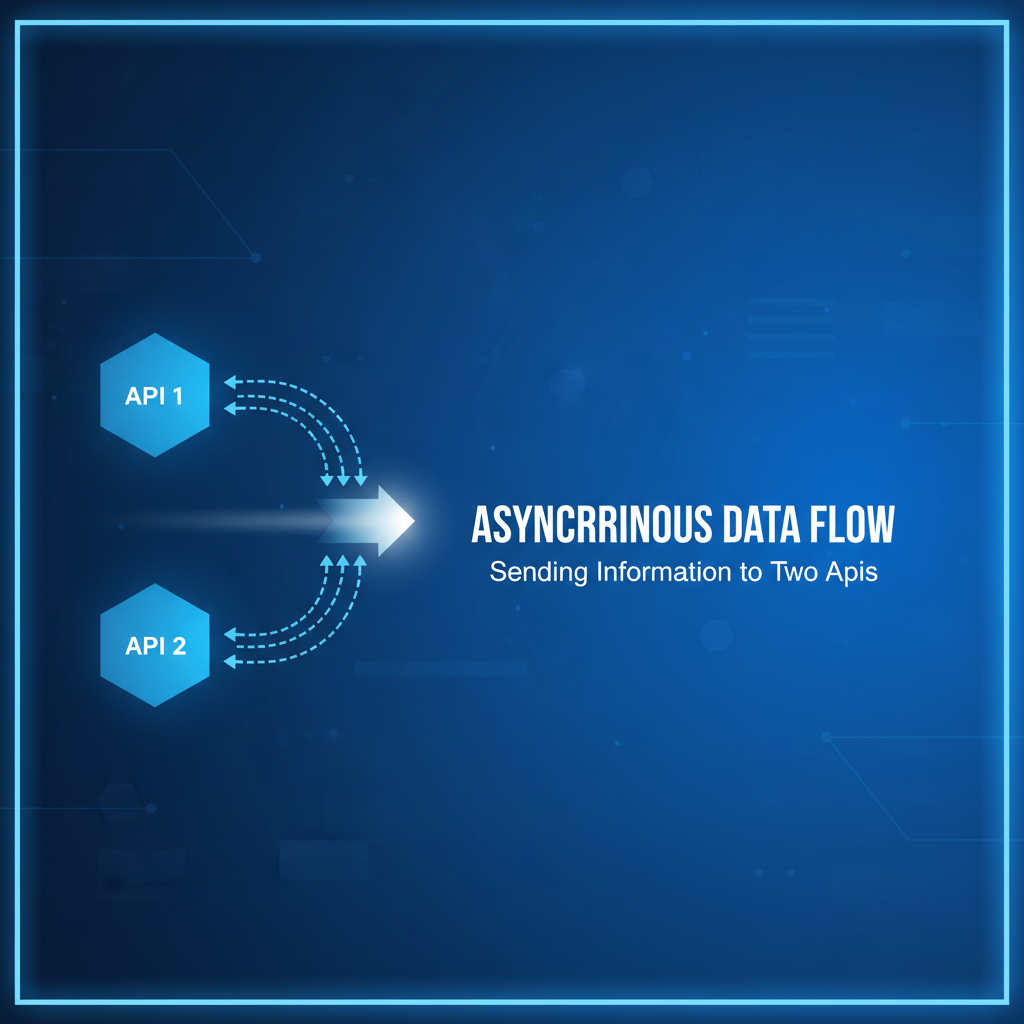


In the intricate tapestry of modern software architecture, the ability to communicate efficiently and reliably between disparate services is not merely a desirable feature but a foundational requirement. As applications grow in complexity, moving from monolithic structures to distributed microservices, the need for robust inter-service communication becomes paramount. One of the most common and challenging scenarios developers face is how to effectively send information to multiple Application Programming Interfaces (APIs) in a non-blocking, resilient manner. This article delves deep into the methodologies, patterns, and critical considerations for asynchronously sending information to two distinct APIs, a task that, while seemingly straightforward, underpins the stability and scalability of countless contemporary systems.
The digital landscape is increasingly defined by real-time interactions, immediate feedback loops, and the seamless flow of data across a multitude of platforms. Whether updating inventory in one system while simultaneously triggering a customer notification in another, or logging an event for analytics while concurrently initiating a long-running background process, the need to interact with multiple services in parallel without impeding the primary user experience is ubiquitous. Synchronous calls, while simpler to reason about in isolation, quickly become bottlenecks, leading to unresponsive applications, cascaded failures, and a poor user experience when dealing with external dependencies. This is precisely where asynchronous communication shines, offering a pathway to build more responsive, resilient, and scalable systems.
This comprehensive exploration will dissect the core principles of asynchronous communication, elucidate the compelling reasons why one might need to interact with two APIs concurrently, and then meticulously examine various architectural patterns and technological solutions that enable such interactions. From message queues and event buses to serverless functions and sophisticated API Gateways, we will uncover the nuances of each approach, providing practical insights into implementation, error handling, monitoring, and security. Our aim is to equip developers and architects with a robust understanding, allowing them to confidently design and implement solutions that master the art of asynchronous dual API communication.
Understanding Asynchronous Communication: The Foundation of Modern Interactions
Before we delve into the specifics of sending data to two APIs, it's crucial to solidify our understanding of asynchronous communication itself. In computing, operations can fundamentally be categorized as either synchronous or asynchronous, a distinction that has profound implications for system design, performance, and user experience.
Synchronous vs. Asynchronous: A Fundamental Distinction
Synchronous Communication: In a synchronous interaction, the sender (client) sends a request to the receiver (server) and then blocks, waiting for a response before it can proceed with any other tasks. This is akin to making a phone call and waiting on the line until the other person answers and provides all the necessary information. While conceptually simple and easy to debug in straightforward scenarios, synchronous calls introduce several critical drawbacks in distributed systems:
- Blocking Operations: The client is idle while waiting, wasting valuable computational resources. If the server is slow or unresponsive, the client remains blocked, potentially leading to timeouts and a degraded user experience.
- Cascaded Failures: A failure in one service can quickly propagate upstream, causing other services to fail as they wait indefinitely for a response.
- Limited Scalability: Each client connection ties up resources, limiting the number of concurrent requests a server can handle effectively.
- Poor User Experience: For end-users, this translates to slow interfaces, loading spinners, and perceived unresponsiveness.
Asynchronous Communication: Conversely, in an asynchronous interaction, the sender initiates a request but does not wait for an immediate response. Instead, it proceeds with other tasks and is notified later (or polls) when the response is ready. This is analogous to sending an email or a text message: you send it, continue with your day, and expect a reply to arrive at some point. The key characteristics and benefits include:
- Non-Blocking Operations: The sender remains responsive, freeing up resources to perform other work while the request is being processed elsewhere.
- Improved Responsiveness: Applications can maintain a fluid user experience, even when backend operations are lengthy or involve multiple external dependencies.
- Enhanced Fault Tolerance: If a downstream service is temporarily unavailable or slow, the sender isn't blocked. Requests can be retried, queued, or handled gracefully without impacting the calling service.
- Greater Scalability: By decoupling the sender from the receiver, systems can handle a higher volume of requests more efficiently. Senders can rapidly produce messages, and consumers can process them at their own pace, scaling independently.
- Decoupling: Services become independent of each other's immediate availability, leading to more modular, maintainable, and evolvable architectures.
The Inherent Complexity of Asynchronous Systems
While the benefits are compelling, asynchronous communication introduces its own set of complexities that demand careful design and robust error handling:
- Eventual Consistency: Data might not be immediately consistent across all systems. Understanding and managing this eventual consistency is crucial.
- Ordering Guarantees: The order in which messages are sent might not be the order in which they are processed, especially across multiple consumers or queues. Explicit mechanisms are often needed if strict ordering is a requirement.
- Error Handling and Retries: Failures in asynchronous systems can be harder to detect and recover from. Robust retry mechanisms, dead-letter queues, and comprehensive logging are indispensable.
- Monitoring and Observability: Tracing the flow of a request across multiple asynchronous services can be challenging without proper instrumentation and distributed tracing tools.
- Idempotency: Designing operations to be idempotent (producing the same result regardless of how many times they are executed) is vital to prevent unintended side effects from retries.
Despite these challenges, the advantages of asynchronous communication in building resilient, scalable, and high-performance distributed systems far outweigh the complexities, especially when dealing with the need to interact with multiple external services.
Why Send Information to Two APIs Asynchronously? The Driving Use Cases
The necessity of sending data to not just one, but often two or more, APIs asynchronously arises from a diverse set of architectural and business requirements. This pattern is fundamental to many modern distributed systems, enabling parallel processing, data synchronization, event-driven workflows, and enhanced resilience. Let's explore the primary drivers behind this common requirement.
1. Data Duplication and Replication Across Systems
One of the most straightforward reasons to send information to two APIs is to duplicate or replicate data across different systems for distinct purposes.
- Operational Database vs. Analytics Database: A common scenario involves an operational API service that updates its primary database (e.g., a PostgreSQL or MongoDB instance) for transactional consistency. Simultaneously, the same data, or a subset thereof, needs to be sent to a separate analytics database (e.g., a data warehouse like Snowflake or Google BigQuery, or a search index like Elasticsearch). This allows business intelligence tools to query analytical data without impacting the performance of the core operational system. Sending this synchronously could slow down critical write operations.
- Caching and Primary Storage: An update to a primary data store might also trigger an update to a caching layer (like Redis) or an edge cache through a separate API call. This ensures data consistency across different tiers.
- Legacy System Integration: In large enterprises, new systems often need to coexist with legacy ones. A single operation might require updating a modern microservice's database while also mirroring a relevant piece of information into a legacy system via its API.
2. Fan-out and Event Distribution
The fan-out pattern is a cornerstone of event-driven architectures, where a single event or piece of information needs to trigger multiple independent actions or be consumed by multiple services.
- Notifications and Logging: When a significant event occurs (e.g., a user signs up, an order is placed, a critical system error), the primary service might process the event, and then asynchronously fan out the information to:
- A notification service (to send an email, SMS, or push notification via an API).
- A logging or audit service (to record the event for compliance and debugging via another API).
- A metrics service (to update dashboards and performance indicators).
- Workflow Orchestration: A single incoming request might need to initiate parallel processing in different domains. For example, processing a new user registration might involve:
- Calling an identity management API to create the user account.
- Calling a billing API to set up subscription details.
- Calling a CRM API to create a customer record. All these can happen concurrently to speed up the overall user onboarding process.
3. Microservices Choreography and Decoupling
In a microservices architecture, services communicate by exchanging events or messages. Sending information to two APIs asynchronously is a natural outcome of this decoupled approach.
- Order Fulfillment Example: When an order service processes a new order, it might:
- Publish an "Order Placed" event to an event bus (which implicitly allows multiple consumers).
- One consumer (e.g., an inventory service) might receive this event and call its own API to reserve stock.
- Another consumer (e.g., a payment service) might receive the same event and call its API to process the payment. The order service doesn't need to know the details of how inventory or payments are handled, only that the event has been published.
4. Enrichment and Subsequent Processing
Sometimes, an initial piece of information needs to be processed by one API to enrich it, and then the enriched data is sent to a second API for further action, potentially in parallel with other original data streams.
- Image Processing Pipeline: An API might receive an image upload. It could then send the raw image to an object storage API. Simultaneously, it might trigger an image processing API (e.g., for resizing, watermarking, or AI-based tagging), which then stores its results via a separate API call or directly back into object storage.
5. Redundancy and Failover Mechanisms
For mission-critical operations, sending data to multiple redundant systems can provide robust failover capabilities.
- Geographical Redundancy: Replicating critical data or events to physically separate data centers or cloud regions via distinct API endpoints ensures business continuity in the event of a regional outage.
- Active-Active vs. Active-Passive: Data might be sent to two active systems, with a mechanism to switch traffic if one fails, or to an active primary and a passive backup for immediate recovery.
6. Cross-Domain Integration and System Bridging
In large enterprises, different departments often operate their own specialized systems. Bridging these domains requires transmitting data across their respective APIs.
- HR System and Payroll System: An update to an employee's record in the HR system might need to trigger an update in the payroll system and also an internal communication API to notify relevant managers. Each of these systems likely exposes its own distinct API.
In all these scenarios, the common thread is the need to execute multiple, often independent, operations without blocking the initial request, thereby maximizing efficiency, improving user experience, and building more resilient and scalable architectures. The asynchronous nature is key to managing the dependencies and potential latencies inherent in interacting with external API services.
Core Concepts and Technologies for Asynchronous API Interactions
Achieving reliable asynchronous communication, especially when targeting multiple APIs, requires a judicious selection of tools and architectural patterns. The landscape of available technologies is rich and varied, each offering distinct advantages and trade-offs. This section explores the fundamental concepts and prevalent technologies that form the backbone of asynchronous API interactions.
1. Message Queues: The Workhorse of Decoupling
Message queues are perhaps the most widely adopted technology for implementing asynchronous communication patterns. They act as intermediaries, enabling independent services (producers and consumers) to exchange messages without direct, real-time coordination.
How They Work:
- Producers: Services that generate and send messages to the queue. They "fire and forget," knowing the message will eventually be processed.
- Consumers: Services that retrieve and process messages from the queue. They operate independently, pulling messages at their own pace.
- Queue: A durable buffer that stores messages until they are processed. It ensures that messages are not lost if a consumer is temporarily unavailable.
Key Benefits:
- Decoupling: Producers and consumers are completely decoupled in time and space. They don't need to be aware of each other's existence or availability.
- Reliability: Messages are persisted in the queue, meaning they won't be lost even if consumers crash. Mechanisms like acknowledgements ensure messages are only removed once successfully processed.
- Load Balancing and Scaling: Multiple consumers can process messages from the same queue in parallel, effectively distributing the load and allowing independent scaling of processing capacity.
- Spike Handling: Queues can absorb bursts of traffic, smoothing out message processing rates and protecting downstream services from being overwhelmed.
Implementation Considerations for Dual API Calls:
When using a message queue for dual API calls, the typical pattern involves a single producer sending a message to a queue. A dedicated consumer then retrieves this message and is responsible for making the two (or more) asynchronous API calls.
- Message Structure: The message payload must contain all necessary information for both downstream API calls.
- Consumer Logic: The consumer needs robust logic to handle potential failures in either of the two API calls. This includes retry mechanisms, potentially exponential backoff, and decision-making on whether to re-queue the message or move it to a dead-letter queue if both API calls fail or if one succeeds and the other consistently fails.
- Transactionality (Saga Pattern): For scenarios where both API calls represent parts of a larger business transaction, a saga pattern might be necessary within the consumer to ensure eventual consistency or to compensate for failures (e.g., if API A succeeds but API B fails, API A's changes might need to be rolled back or compensated for).
Popular Message Queue Technologies:
- RabbitMQ: An open-source message broker implementing the Advanced Message Queuing Protocol (AMQP). Highly flexible with various messaging patterns.
- Apache Kafka: A distributed streaming platform, often used for high-throughput, fault-tolerant real-time data feeds and event sourcing. While technically an event stream, it serves message queue functions for many use cases.
- AWS SQS (Simple Queue Service): A fully managed message queuing service by Amazon, offering standard queues for high throughput and FIFO queues for strict message ordering.
- Azure Service Bus: A fully managed enterprise integration message broker by Microsoft, supporting queues and topics for publish/subscribe patterns.
2. Event Buses/Event Streams: The Backbone of Event-Driven Architectures
While closely related to message queues, event buses (or event streams) emphasize the publication and consumption of "events" – immutable facts that something has occurred. They are foundational for event-driven architectures and event sourcing.
How They Work:
- Publishers: Services emit events to a topic or stream.
- Subscribers: Services subscribe to topics of interest, processing events as they arrive.
- Topics/Streams: A categorized log of events, often durable and replayable.
Key Differences from Message Queues:
- Persistence and Replayability: Event streams (like Kafka) typically persist events for a longer duration, allowing consumers to replay historical events.
- Multiple Consumers: Events on a topic can be consumed by multiple independent consumers without being removed, enabling true fan-out.
- Ordering: Within a partition, strong ordering guarantees are usually provided.
Use Cases for Dual API Calls:
When an event occurs that requires updates to two different systems via their respective APIs, the event bus is an ideal solution. A single event published to a topic can be consumed by two separate services, each responsible for calling one of the target APIs. This offers maximum decoupling.
- Example: An "Order Placed" event is published.
- Service A (e.g., Inventory Service) consumes the event and calls the Inventory API to deduct stock.
- Service B (e.g., Notification Service) consumes the same event and calls the Notification API to send a confirmation email.
Popular Event Stream Technologies:
- Apache Kafka: Dominant for event streaming, distributed, fault-tolerant, and high-throughput.
- AWS Kinesis: Amazon's managed streaming data service, similar to Kafka.
- Google Cloud Pub/Sub: Google's managed real-time messaging service, designed for high throughput and scalability.
3. Webhooks: Push Notifications for External Systems
Webhooks provide a way for one application to send real-time notifications to another application whenever a specific event occurs. They are essentially user-defined HTTP callbacks.
How They Work:
- Registration: A client (subscriber) registers a URL with a service (publisher).
- Event Trigger: When a relevant event occurs in the publisher service, it makes an HTTP POST request to all registered URLs, sending event data in the request body.
Use Cases for Dual API Calls:
While primarily used for external integrations where you want to notify another system, webhooks can be part of a broader asynchronous strategy. For instance, if your service receives a webhook from a third party, your service might then asynchronously call two internal APIs to process the incoming event. Or, if your service is a publisher, it might send webhooks to two different external systems in parallel.
Challenges:
- Reliability: The publisher needs robust retry mechanisms if the subscriber's webhook endpoint is unavailable.
- Security: Webhook endpoints must be secured to prevent malicious calls.
- Scalability: Managing a large number of webhook subscriptions and ensuring timely delivery can be complex.
4. Serverless Functions: Event-Driven Compute
Serverless functions (FaaS - Function as a Service) like AWS Lambda, Azure Functions, and Google Cloud Functions are inherently event-driven and provide a powerful mechanism for asynchronous processing.
How They Work:
- Functions are small, stateless pieces of code triggered by events (e.g., an HTTP request, a message in a queue, a file upload to storage).
- The cloud provider manages the underlying infrastructure, scaling functions automatically based on demand.
Implementation for Dual API Calls:
Serverless functions are excellent for implementing the consumer side of an asynchronous interaction.
- Asynchronous Orchestration: A common pattern is for a function to be triggered by an event (e.g., a message in SQS). This function then contains the logic to call the two target APIs concurrently using language-specific asynchronous constructs (e.g.,
async/await). - Fan-out from a Single Event: A single event (e.g., an S3 object creation) can trigger multiple Lambda functions in parallel, each responsible for interacting with a different API.
- Step Functions (AWS) / Logic Apps (Azure): For more complex workflows involving multiple steps, retries, and conditional logic, orchestration services can be used to coordinate multiple function calls and API interactions.
Benefits:
- Scalability: Functions scale automatically to handle varying loads.
- Cost-Effectiveness: You pay only for the compute time consumed.
- Reduced Operational Overhead: No servers to manage.
5. Asynchronous Programming Constructs: Language-Level Concurrency
Modern programming languages offer built-in constructs to facilitate asynchronous operations, allowing developers to write non-blocking code directly.
How They Work:
async/await(JavaScript, Python, C#, TypeScript): Keywords that simplify the writing of asynchronous code, making it appear almost synchronous while internally managing event loops or threads.- Goroutines (Go): Lightweight threads managed by the Go runtime, enabling highly concurrent programming.
- Futures/Promises (Java, JavaScript): Objects representing the result of an asynchronous operation that may or may not have completed yet.
Implementation for Dual API Calls:
Within a single application or service, these constructs allow you to initiate multiple API calls concurrently without blocking the main execution thread.
import asyncio
import httpx # A modern asynchronous HTTP client for Python

async def call_api(url, payload):
    async with httpx.AsyncClient() as client:
        response = await client.post(url, json=payload)
        response.raise_for_status() # Raise an exception for HTTP errors
        return response.json()

async def send_to_two_apis(data):
    api1_url = "https://api.example.com/service1"
    api2_url = "https://api.anotherservice.com/service2"

    payload_api1 = {"message": data, "source": "main_app"}
    payload_api2 = {"event_data": data, "timestamp": "..."}

    try:
        # Initiate both API calls concurrently
        result1_task = asyncio.create_task(call_api(api1_url, payload_api1))
        result2_task = asyncio.create_task(call_api(api2_url, payload_api2))

        # Wait for both tasks to complete
        result1 = await result1_task
        result2 = await result2_task

        print("API 1 response:", result1)
        print("API 2 response:", result2)
        return True
    except httpx.HTTPStatusError as e:
        print(f"API call failed: {e.request.url} - {e.response.status_code}")
        # Implement retry logic, logging, dead-lettering here
        return False
    except httpx.RequestError as e:
        print(f"An error occurred while requesting {e.request.url}: {e}")
        return False

# Example usage
# asyncio.run(send_to_two_apis("some important data"))
Considerations:
- Scope: These constructs are typically used within a service. For inter-service communication, you'll still need message queues, event buses, or API Gateways to handle decoupling and cross-process communication.
- Error Handling: Proper error handling (try-except blocks, graceful degradation if one API fails) is essential.
Each of these technologies and concepts plays a vital role in building robust asynchronous systems. The choice depends on factors like required throughput, latency, reliability, existing infrastructure, and the level of decoupling desired between services. Often, a combination of these approaches is used to create a comprehensive asynchronous architecture.
Architectural Patterns for Asynchronous Dual API Calls
Beyond the individual technologies, specific architectural patterns guide how these tools are orchestrated to effectively send information to two APIs asynchronously. These patterns provide established blueprints for tackling common distributed system challenges, focusing on reliability, scalability, and maintainability.
1. The Fire-and-Forget Pattern (with Underlying Reliability)
The purest form of asynchronous communication is "fire-and-forget," where the sender sends a message or initiates a task and immediately continues its work, without waiting for a response or even confirmation of successful delivery. However, for critical business operations, a naive fire-and-forget approach can lead to lost data. Therefore, this pattern is almost always implemented with an underlying mechanism that guarantees delivery.
How it Works:
- Producer (Sender): Receives the initial request and immediately publishes a message (containing data for both APIs) to a durable message queue or an event bus.
- Message Queue/Event Bus: Acts as a buffer, reliably storing the message. The producer's responsibility ends here, allowing it to respond quickly to the initial client.
- Consumer (Worker Service): A dedicated service subscribes to the queue/bus. When it receives a message, it extracts the necessary data and then makes the two independent API calls. This consumer is responsible for error handling, retries, and potentially compensating actions for these downstream calls.
Why it's Ideal for Dual API Calls:
- Maximum Decoupling: The producer doesn't know or care about the specifics of the two target APIs or even if they are available. Its sole responsibility is to publish the message.
- High Responsiveness: The initial client request receives an immediate response, as the primary service only needs to queue the message.
- Resilience: If one or both target APIs are down, or if the consumer worker experiences an issue, the message remains in the queue and can be retried later without affecting the producer.
- Scalability: The consumer service can be scaled independently to handle varying message loads.
Example Scenario: An e-commerce website receives an order. The "Order Service" (producer) immediately publishes an "Order Placed" message to a Kafka topic. A "Fulfillment Worker" (consumer) consumes this message. It then asynchronously calls the "Inventory API" to deduct stock and the "Notification API" to send a confirmation email. The initial user is immediately shown an "Order Confirmed" page.
2. The API Gateway Fan-out Pattern
An API Gateway acts as a single entry point for all client requests, routing them to the appropriate backend services. In a fan-out scenario, the gateway receives a single request and then, internally, makes multiple calls to different downstream APIs. This pattern centralizes the logic for multi-API interactions at the edge.
How it Works:
- Client: Makes a single request to the API Gateway.
- API Gateway: Receives the request. Based on its configuration, it internally transforms the request and initiates multiple, often asynchronous, calls to different backend services or external APIs. It then aggregates the results (if needed) and returns a single response to the client.
- Backend APIs: Receive requests from the API Gateway.
Advantages:
- Centralized Control: All logic for routing, authentication, rate limiting, caching, and fan-out is handled in one place.
- Reduced Client Complexity: Clients only need to interact with a single endpoint, simplifying their logic.
- Performance Optimization: An efficient API Gateway can handle concurrent backend calls much faster than a client making sequential calls.
- Security: The API Gateway can enforce security policies before requests reach backend services.
APIPark's Role in API Gateway Fan-out:
This is precisely where an advanced API Gateway solution like APIPark becomes invaluable. APIPark, as an open-source AI gateway and API management platform, is designed to manage, integrate, and deploy AI and REST services with ease. Its capabilities directly address the needs of an API Gateway fan-out pattern:
- End-to-End API Lifecycle Management: APIPark assists with managing the entire lifecycle of APIs, including design, publication, invocation, and decommission. This makes it ideal for defining how a single incoming request should fan out to multiple internal APIs, managing their versions, and ensuring their stability.
- Traffic Forwarding and Load Balancing: APIPark can intelligently route incoming requests and balance the load across multiple instances of your downstream APIs, even when fanning out.
- Performance Rivaling Nginx: With its high-performance capabilities, APIPark can efficiently handle concurrent calls to multiple backend services, achieving over 20,000 TPS on modest hardware, ensuring the fan-out process does not become a bottleneck.
- Detailed API Call Logging and Data Analysis: For operations involving multiple API calls, comprehensive monitoring is crucial. APIPark provides detailed logging of every API call and powerful data analysis, allowing you to trace individual fan-out requests, identify bottlenecks, and troubleshoot issues quickly. This is essential when one of the two API calls in a fan-out scenario might fail.
- Unified API Format: While primarily for AI models, APIPark's ability to standardize request formats could simplify the creation of gateway-level fan-out logic, especially if the target APIs have slightly different input requirements.
Example Scenario: A mobile app needs to create a new user profile and immediately subscribe them to a newsletter. The app sends a single request to the API Gateway (/users/register). The API Gateway internally: 1. Calls the "User Management API" to create the user account. 2. Calls the "Newsletter Subscription API" to add the user to the mailing list. Both calls happen concurrently. The gateway then aggregates the success or failure of both operations and sends a unified response back to the mobile app.
3. Event Sourcing with Process Managers (Sagas)
For highly complex business processes that span multiple services and require transactional integrity (even eventual consistency), event sourcing combined with a process manager (often implemented as a "saga") is a powerful pattern.
How it Works:
- Event Sourcing: Instead of storing the current state, the system stores a sequence of all events that have occurred. The current state can be derived by replaying these events.
- Process Manager (Saga): A dedicated service that orchestrates a multi-step business process. It listens for events, triggers actions (which might involve calling APIs), and then listens for subsequent events to decide the next step. If an action fails, the process manager initiates compensating actions to reverse previous steps.
Why it's Relevant for Dual API Calls:
While more heavyweight, this pattern handles situations where the two API calls are interdependent and require a higher degree of consistency or rollback capability. The "sending to two APIs" becomes a step within a larger, stateful workflow.
Example Scenario: A "Complex Order Processing" system. * Event: "Order Placed" * Process Manager (Saga) picks up the event: * Step 1: Calls "Payment API" to charge the customer. * If payment succeeds, Step 2: Calls "Inventory API" to reserve items. * If Inventory reservation fails, compensates by calling "Payment API" to refund. * If Inventory reservation succeeds, Step 3: Calls "Shipping API" to schedule delivery. This shows how multiple API calls are orchestrated, often with asynchronous steps in between, and how failures in one step trigger actions in another API to maintain consistency.
4. Sidecar/Proxy Pattern
In microservices deployments, a sidecar container runs alongside the main application container within the same pod (e.g., in Kubernetes). This sidecar can intercept outgoing requests and augment their functionality.
How it Works:
- Application: Makes an API call, often to
localhostor a designated internal proxy. - Sidecar Proxy: Intercepts the call. It then forwards the original request to the primary target API and concurrently sends a modified or identical request to a second target API (e.g., for logging, metrics, or data replication).
Advantages:
- Transparent to Application: The main application code doesn't need to be aware it's sending data to two places.
- Centralized Logic: The dual-send logic is encapsulated in the sidecar, which can be reused across multiple services.
Example Scenario: A microservice needs to send data to a primary data store API. A sidecar proxy intercepts this call. It forwards the data to the primary data store and, in parallel, sends a subset of the data to an auditing API for compliance purposes. The application only thinks it's interacting with one service.
The choice of pattern depends heavily on the specific requirements for decoupling, reliability, consistency, and complexity of the workflow. For many common dual API call scenarios, the Fire-and-Forget pattern with a reliable message queue or the API Gateway Fan-out pattern (especially with a robust solution like APIPark) offers an excellent balance of performance, resilience, and ease of implementation.
APIPark is a high-performance AI gateway that allows you to securely access the most comprehensive LLM APIs globally on the APIPark platform, including OpenAI, Anthropic, Mistral, Llama2, Google Gemini, and more.Try APIPark now! 👇👇👇
Implementing Asynchronous Dual API Calls - Practical Considerations
Successfully implementing asynchronous communication with two APIs involves more than just selecting a technology or an architectural pattern. It requires meticulous attention to practical details, particularly concerning error handling, data consistency, security, and observability. Neglecting these aspects can lead to unreliable systems that are difficult to debug and maintain.
1. Choosing the Right Tool and Pattern: A Decision Framework
The first practical step is to select the most appropriate technology and pattern for your specific use case. Consider the following factors:
- Required Decoupling: How independent do the calling service and the target APIs need to be? (High decoupling -> Message Queues/Event Buses; Moderate -> API Gateway; Low ->
async/awaitwithin service). - Latency Requirements: How quickly does the initial request need to respond? (Immediate -> Fire-and-Forget; Near-realtime aggregation -> API Gateway).
- Reliability Guarantees: Is "at-least-once" delivery acceptable, or is "exactly-once" (which is harder to achieve and often means "effectively once" through idempotency) mandatory? Message queues offer strong delivery guarantees.
- Data Consistency Model: Can the two APIs be eventually consistent, or do they require strong transactional consistency across both? (Eventual -> most async patterns; Strong -> Sagas or distributed transactions, which are complex).
- Scalability Needs: What volume of requests do you anticipate? (All listed technologies offer good scalability, but managed services like AWS SQS/Kinesis/Lambda excel here).
- Complexity of Workflow: Is it a simple parallel send, or a multi-step conditional process? (Simple ->
async/await, API Gateway; Complex -> Serverless Workflows/Sagas). - Existing Infrastructure & Team Expertise: Leverage what your team already knows and what your organization has invested in.
2. Robust Error Handling and Retries: The Pillars of Resilience
Failures are inevitable in distributed systems. A robust asynchronous system must anticipate and gracefully handle them.
- Transient vs. Permanent Errors:
- Transient (Retryable) Errors: Network glitches, temporary service unavailability, rate limiting. These should trigger retries.
- Permanent (Non-Retryable) Errors: Invalid input, authentication failures, business rule violations. Retrying these is futile and can exacerbate problems. They should typically be moved to a dead-letter queue for manual investigation.
- Exponential Backoff: When retrying transient errors, waiting for an exponentially increasing period between attempts (e.g., 1s, 2s, 4s, 8s) prevents overwhelming a struggling service and allows it time to recover.
- Jitter: Add a small random delay to exponential backoff to prevent multiple retrying instances from all hitting the service at the exact same time after a delay.
- Circuit Breakers: Implement circuit breakers to prevent continuous retries against a failing service. If a service consistently fails, the circuit breaker "opens," immediately failing subsequent requests for a period, giving the service time to recover and preventing resource exhaustion on the caller's side. After a cool-down period, it enters a "half-open" state to test if the service has recovered.
- Dead-Letter Queues (DLQ): Messages that fail after a maximum number of retries, or that encounter permanent errors, should be moved to a DLQ. This prevents them from blocking the main queue and allows operators to inspect, fix, and potentially reprocess them.
- Partial Failures: What happens if API A succeeds but API B fails?
- Loose Coupling (Eventual Consistency): If the two operations are truly independent, then API A's success is fine, and API B's failure can be handled separately (retried, logged).
- Compensation (Sagas): If the operations are coupled, a failure in B might require compensating action in A (e.g., rolling back a change made by API A). This points towards a Saga pattern.
3. Idempotency: Preventing Unintended Side Effects from Retries
Because asynchronous systems inherently involve retries and the potential for messages to be delivered multiple times ("at-least-once" delivery), operations must be designed to be idempotent. An idempotent operation produces the same result whether it's called once or multiple times with the same input.
- Unique Identifiers: Include a unique, client-generated ID (often a UUID or a correlation ID) in every request to the target APIs.
- Receiver-Side Checks: The target APIs should check if an operation with that unique ID has already been successfully processed. If so, they should simply return the previous result (or a success status) without re-executing the side effect.
- Database Constraints: Utilize unique constraints in databases to prevent duplicate records (e.g., a unique constraint on
order_idfor aninsert orderoperation).
4. Ordering Guarantees: When Sequence Matters
In many scenarios, the exact order in which messages are processed is critical.
- FIFO Queues: Some message queue services (like AWS SQS FIFO) provide strict First-In, First-Out ordering within a message group.
- Partitioning: For high-throughput systems like Kafka, messages related to the same entity (e.g.,
user_id,order_id) can be sent to the same partition. Consumers processing a single partition will receive messages in order. - Sequence Numbers: Include a sequence number in the message payload. Consumers can then sort messages or discard out-of-order messages if an earlier one is still pending.
If the two API calls need to happen in a specific order, or if the order of processing for a given entity across multiple messages matters, explicit measures must be taken. For simple fan-out where the two API calls are independent, strict ordering might not be necessary.
5. Monitoring and Observability: Seeing Inside the Black Box
Asynchronous systems, particularly those spanning multiple services, can be notoriously difficult to debug without proper observability.
- Logging: Implement comprehensive logging at every step:
- When the initial request is received.
- When the message is published to the queue.
- When the message is consumed.
- Before and after each of the two API calls.
- Any errors, retries, or successful responses. This is where APIPark's "Detailed API Call Logging" feature can be immensely beneficial. It records every detail of each API call that passes through the gateway, providing a centralized and consistent view, crucial for debugging complex asynchronous interactions.
- Distributed Tracing: Use tracing tools (e.g., OpenTelemetry, Jaeger, Zipkin) to propagate a correlation ID across all services involved in a request. This allows you to visualize the entire flow, from the initial request through the queue, to the two API calls, and identify where delays or failures occur.
- Metrics: Collect metrics on:
- Queue depth (number of messages waiting).
- Message processing time.
- Success/failure rates of each of the two API calls.
- Latency of API calls.
- Throughput of messages. APIPark's "Powerful Data Analysis" capabilities can analyze historical call data, display long-term trends, and identify performance changes, helping with preventive maintenance for API-driven workflows.
- Alerting: Set up alerts for critical issues:
- High queue depth (indicates slow consumers).
- High error rates on API calls.
- Stalled messages in dead-letter queues.
6. Security: Protecting the Entire Asynchronous Chain
Every component in the asynchronous communication chain presents a potential security vulnerability.
- Authentication and Authorization:
- The service sending to the message queue must be authorized.
- The consumer service must be authorized to read from the queue.
- Each of the two target APIs must authenticate and authorize the consumer service making the calls.
- APIPark offers features like "API Resource Access Requires Approval" and "Independent API and Access Permissions for Each Tenant," which are essential for securing your APIs, especially when they are part of a complex asynchronous workflow involving multiple internal or external consumers.
- Data Encryption: Encrypt messages at rest in the queue and in transit (TLS/SSL for API calls).
- Input Validation: Thoroughly validate all data received by your services and before sending it to external APIs to prevent injection attacks and data corruption.
- Least Privilege: Grant only the minimum necessary permissions to each service and component.
7. Scalability: Designing for Growth
Asynchronous patterns inherently promote scalability, but specific design choices further enhance it.
- Horizontal Scaling: Design consumers to be stateless and independently scalable. Add more consumer instances as message volume increases.
- Partitions and Sharding: For event streams (like Kafka), judiciously using partitions can improve throughput and parallelism.
- Rate Limiting: Protect your downstream APIs from being overwhelmed by implementing rate limiting at the consumer level or at the API Gateway.
By meticulously addressing these practical considerations, developers can build asynchronous systems that are not only efficient in sending information to two APIs but also resilient, secure, observable, and capable of evolving with future demands.
Conceptual Case Studies: Asynchronous Dual API Calls in Action
To ground these theoretical patterns and considerations, let's explore a few conceptual scenarios where asynchronously sending information to two APIs is a vital design choice, highlighting the "why" and "how."
Case Study 1: E-commerce Order Processing and Notification
Scenario: A customer places an order on an e-commerce website. Upon successful order submission, the system needs to: 1. Update the inventory for the purchased items. 2. Send an order confirmation email to the customer.
Why Asynchronous & Dual APIs? * Responsiveness: The customer expects immediate confirmation that their order has been placed, not to wait for inventory updates and email sending, which can take several seconds. * Decoupling: The "Order Service" shouldn't be tightly coupled to the "Inventory Service" or the "Notification Service." If the email service is temporarily down, it shouldn't prevent order placement. * Scalability: High traffic peaks during sales events require the ability to process orders quickly and scale inventory and notification processing independently.
Implementation (Fire-and-Forget with Message Queue):
- Order Service (Producer):
- Receives the order submission request.
- Validates the order and stores its initial state in its database (e.g., "Order Received").
- Publishes an "Order Placed" message (containing
order_id,items,customer_email, etc.) to an Apache Kafka topic (e.g.,orders_events). - Immediately returns a "202 Accepted" or "Order Confirmed" response to the customer.
- Inventory Service (Consumer 1):
- Subscribes to the
orders_eventsKafka topic. - When an "Order Placed" message is consumed, it calls the "Inventory Management API" (
/api/inventory/deduct) to decrement the stock for each item. - Error Handling: If the Inventory API call fails (e.g., temporary network issue), the message is retried with exponential backoff. If it fails after max retries (e.g., item out of stock), the message is moved to a DLQ, and potentially a "compensating event" ("Order Failed - Inventory") is published.
- Subscribes to the
- Notification Service (Consumer 2):
- Also subscribes to the same
orders_eventsKafka topic. - When an "Order Placed" message is consumed, it constructs an email and calls the "Email Sending API" (
/api/email/send) with the customer's email and order details. - Error Handling: Similar retry logic for transient failures. If the email API consistently fails, the event might go to a DLQ for manual review.
- Also subscribes to the same
Benefits: The customer gets instant feedback, and the core order processing remains fast. Inventory and notification updates happen reliably in the background, decoupled from each other.
Case Study 2: User Activity Logging and Real-time Analytics
Scenario: A web application tracks various user activities (e.g., page views, button clicks, searches). This activity data needs to be: 1. Stored in a long-term data warehouse for historical analysis and reporting. 2. Sent to a real-time analytics dashboard API for immediate operational insights.
Why Asynchronous & Dual APIs? * Performance: Sending activity data synchronously to two potentially slow downstream systems would significantly degrade the user experience. * Different Purposes: The data warehouse requires bulk inserts and complex queries, while the real-time dashboard needs fast, low-latency updates. Separate APIs optimize for these distinct needs. * Scalability: User activity can generate huge volumes of data. The logging mechanism must be highly scalable.
Implementation (API Gateway Fan-out with APIPark):
- Client Application (Frontend/Backend Service):
- When a user performs an action, the client sends a single, lightweight HTTP POST request containing the activity details (e.g.,
user_id,event_type,timestamp,metadata) to the API Gateway endpoint (e.g.,/api/user-activity).
- When a user performs an action, the client sends a single, lightweight HTTP POST request containing the activity details (e.g.,
- APIPark (API Gateway):
- Receives the
/api/user-activityrequest. - Configured to fan out this single incoming request.
- Call 1 (Async): Calls the "Data Warehouse Ingestion API" (
/internal/data-warehouse/ingest) with the full activity payload. This API might queue data for batch inserts. - Call 2 (Async): Transforms the payload slightly (e.g., extracts key metrics) and calls the "Real-time Dashboard API" (
/internal/dashboard/update-metrics) with the relevant data for immediate visualization. - APIPark can handle the concurrent execution of these two internal calls.
- Returns a "202 Accepted" response to the client application immediately.
- Monitoring: APIPark's "Detailed API Call Logging" and "Powerful Data Analysis" provide comprehensive visibility into the success rates, latencies, and any errors of both downstream API calls, crucial for operational monitoring.
- Receives the
Benefits: The client application remains highly responsive. APIPark centralizes the fan-out logic, security, and monitoring. The two downstream systems process the data optimally for their specific needs, without exposing their internal endpoints directly to the client.
Case Study 3: IoT Device Data Processing
Scenario: An IoT device periodically sends sensor readings (temperature, humidity, pressure). This data needs to be: 1. Stored in a time-series database for long-term storage and anomaly detection. 2. Sent to a specialized alerting service if certain thresholds are exceeded.
Why Asynchronous & Dual APIs? * High Throughput: Thousands or millions of devices can generate continuous streams of data. Synchronous processing would quickly overwhelm the system. * Real-time Response (Alerting): Critical alerts need to be triggered immediately, without waiting for the time-series database to acknowledge storage. * Different Processing Needs: One API optimizes for storage, the other for rapid rule evaluation.
Implementation (Serverless Fan-out with Message Bus):
- IoT Device:
- Sends sensor readings to a central ingress endpoint, typically an API Gateway.
- API Gateway (e.g., AWS API Gateway):
- Receives the sensor data.
- Forwards the data to an AWS Kinesis Data Stream (acting as a high-throughput message bus).
- Returns an immediate 200 OK to the device.
- AWS Lambda Function 1 (Time-series Ingester):
- Triggered by the Kinesis stream.
- Consumes sensor data records in batches.
- Calls the "Time-series Database API" (
/api/tsdb/ingest) to store the raw readings. - Error Handling: Retries, DLQ for persistent failures.
- AWS Lambda Function 2 (Threshold Alerting):
- Also triggered by the same Kinesis stream (separate consumer group or stream processing application).
- Consumes sensor data records.
- Applies predefined rules to check if thresholds are exceeded (e.g., temperature > 80°C).
- If a threshold is breached, it calls the "Alerting Service API" (
/api/alerts/trigger) to send notifications (SMS, PagerDuty). - Error Handling: Prioritizes quick retries for alerting, potentially with different DLQ policies.
Benefits: Highly scalable and resilient data ingestion. Real-time alerts are decoupled from long-term storage. Each function is specialized for its task, optimizing resource usage and development.
These case studies illustrate how asynchronous dual API communication isn't just a technical detail but a strategic architectural choice that directly impacts performance, resilience, and the overall functionality of distributed systems. The patterns and technologies discussed provide robust frameworks for building such systems effectively.
Challenges and Best Practices Summary for Asynchronous Dual API Calls
Designing and implementing systems that asynchronously send information to two APIs is a powerful approach for building responsive, scalable, and resilient applications. However, it introduces a distinct set of challenges that, if not addressed diligently, can lead to complex debugging nightmares and operational instability. Here, we summarize the key challenges and distill a set of best practices to navigate them successfully.
Key Challenges in Asynchronous Dual API Interactions
- Complexity of Distributed State: Managing state across multiple services and asynchronous boundaries is inherently more complex than within a single, synchronous transaction. Understanding eventual consistency becomes critical.
- Error Handling and Retries: Failures in any part of the asynchronous chain (message queue, consumer, one of the two target APIs) need robust handling. Distinguishing transient from permanent errors and implementing effective retry strategies is difficult.
- Monitoring and Debugging: Tracing the flow of a single logical request through multiple queues, services, and API calls is challenging. Traditional debugging tools often fall short.
- Idempotency: The "at-least-once" delivery guarantee of most asynchronous messaging systems means that operations might be executed multiple times. Ensuring that duplicate executions don't cause unintended side effects requires careful design.
- Ordering Guarantees: If the sequence of operations or messages is important, specific measures must be taken to preserve order, which adds complexity.
- Partial Failures: What happens if one API call succeeds but the other fails? This requires clear policies for compensation, retry, or graceful degradation.
- Data Consistency: Achieving strong consistency across two separate services asynchronously is generally not feasible or desirable. Embracing eventual consistency and designing for it is key.
- Security: Securing multiple integration points (message queues, each API) requires a comprehensive security strategy.
- Resource Management: Ensuring that queues don't overflow, consumers don't get overwhelmed, and downstream APIs are protected from excessive load requires careful tuning and rate limiting.
Best Practices for Robust Asynchronous Dual API Interactions
To mitigate these challenges and build highly reliable systems, adhere to the following best practices:
- Embrace Eventual Consistency: Design your system expecting that data across the two APIs might not be immediately consistent. Communicate this effectively to stakeholders and build compensating mechanisms where necessary.
- Implement Robust Retry Logic with Exponential Backoff and Jitter: Use libraries or built-in features that handle retries for transient errors. Always include exponential backoff and jitter to prevent thundering herd problems.
- Utilize Dead-Letter Queues (DLQs) Extensively: For messages that repeatedly fail or encounter permanent errors, send them to a DLQ for manual inspection and reprocessing. This prevents message loss and system blockage.
- Design Idempotent Operations: Crucially, ensure that each of your target APIs can safely process the same request multiple times without causing duplicate side effects. Use unique correlation IDs for this purpose.
- Implement Comprehensive Monitoring and Distributed Tracing:
- Logging: Ensure detailed logs at every stage (producer, queue, consumer, before/after each API call). Use correlation IDs to link logs across services. APIPark's "Detailed API Call Logging" is an excellent example of the level of detail required.
- Metrics: Track queue depth, message processing times, API call latencies, and success/failure rates.
- Tracing: Implement distributed tracing (e.g., OpenTelemetry) to visualize the entire asynchronous flow and pinpoint bottlenecks or failures. APIPark's "Powerful Data Analysis" can then help analyze these trends and aid in proactive maintenance.
- Prioritize API Security: Secure every endpoint and interaction point. Use strong authentication and authorization mechanisms for both the consumer and the target APIs. APIPark's robust API management features, including access control and approval workflows, are designed to enhance security for all your API interactions.
- Isolate Responsibilities with Separate Consumers: If your two API calls perform distinct business functions, consider using separate consumers (even if they read from the same event stream) for each API call. This improves modularity, independent scaling, and fault isolation.
- Graceful Degradation: Decide if one API's failure should impact the other. For instance, if sending an email fails, should it prevent inventory updates? Often, the answer is no, allowing for partial success and continued operation.
- Validate Inputs Rigorously: Validate data at every boundary—from the initial client request to the consumer processing the message, and before sending to each target API.
- Test for Failure Scenarios: Don't just test happy paths. Actively simulate network failures, API outages, message processing errors, and ensure your error handling and retry mechanisms behave as expected.
By diligently applying these best practices, developers can harness the immense power of asynchronous communication to build highly performant, resilient, and scalable systems that can reliably send information to two, or indeed many, APIs.
Table: Comparison of Asynchronous Patterns for Dual API Calls
To help contextualize the different approaches discussed, the following table offers a comparative overview of the primary patterns for asynchronously sending information to two APIs, highlighting their strengths, weaknesses, and ideal use cases.
| Feature / Pattern | Fire-and-Forget (with Message Queue) | API Gateway Fan-out (e.g., APIPark) | Event Sourcing w/ Process Manager (Saga) | Sidecar/Proxy Pattern | Async Language Constructs (e.g., async/await) |
|---|---|---|---|---|---|
| Primary Use Case | Decoupled, reliable background processing. | Centralized edge routing, external exposure. | Complex, long-running, transactional workflows. | Transparent augmentation of existing calls. | In-service concurrency for I/O bound tasks. |
| Decoupling Level | High (Producer doesn't know consumers/APIs). | Moderate (Gateway knows backend APIs). | High (Services communicate via events). | High (App doesn't know sidecar's actions). | Low (Within same service/process). |
| Latency to Client | Very Low (Immediate return after queueing). | Low (Gateway handles concurrent calls). | Low (Initial event acknowledged quickly). | Low (Sidecar handles concurrency). | Varies (Immediate if async, but still in-process). |
| Error Handling | Consumer handles retries/DLQ for both APIs. | Gateway handles retries, circuit breakers to APIs. | Process Manager orchestrates retries and compensations. | Sidecar handles retries to both APIs. | Code must explicitly handle errors, retries. |
| Idempotency | Crucial at Consumer and both target APIs. | Crucial at Gateway and both target APIs. | Crucial at each step, managed by Saga. | Crucial at Sidecar and both target APIs. | Crucial in code for repeated calls. |
| Ordering Guarantees | Message queue specific (FIFO queues, Kafka partitions). | Configurable (Gateway may guarantee order of internal calls). | Event stream ordering + Process Manager state. | Usually preserved (sidecar passes through). | In-process order, but concurrent operations may complete out of order. |
| Scalability | Excellent (Independent scaling of producers/consumers). | Excellent (Gateway scales, internal services scale). | Excellent (Event streams + scalable process managers). | Excellent (Sidecar scales with app instance). | Good (Language runtime handles concurrency). |
| Complexity | Moderate (Setting up queue, consumer logic). | Moderate (Gateway config, transformation rules). | High (Stateful Saga logic, event modeling). | Low-Moderate (Sidecar logic, deployment). | Moderate (Requires careful async/await handling). |
| Example Technologies | RabbitMQ, Kafka, AWS SQS, Azure Service Bus. | APIPark, AWS API Gateway, Nginx, Kong. | Kafka + Custom Process Manager, AWS Step Functions. | Envoy Proxy, Dapr Sidecar. | Python asyncio, JavaScript Promise/async, C# Task/await. |
| APIPark Relevance | Can manage the target APIs (security, performance). | Directly applicable (core functionality). | Can manage the APIs called by the saga. | Can manage the target APIs (security, performance). | Can manage the target APIs called by the async code. |
This table provides a quick reference for evaluating which pattern might best fit your specific requirements when designing systems that asynchronously interact with two distinct APIs. The choice is rarely absolute and often involves combining elements of these patterns to create a robust and efficient solution.
Conclusion: Mastering the Art of Asynchronous Dual API Communication
The journey through asynchronously sending information to two APIs reveals a fascinating intersection of modern architectural principles, cutting-edge technologies, and meticulous design considerations. In an era dominated by distributed systems, microservices, and event-driven paradigms, the ability to decouple services, enhance responsiveness, and bolster resilience through asynchronous communication is not merely a technical skill but a strategic imperative.
We've explored the fundamental shift from synchronous to asynchronous interactions, highlighting how the latter addresses the critical challenges of latency, fault tolerance, and scalability that plague tightly coupled systems. The myriad reasons to send data to two APIs concurrently—from data duplication and fan-out to microservices orchestration and failover mechanisms—underscore the pervasive nature of this requirement across diverse business domains.
Our deep dive into core technologies like message queues, event buses, serverless functions, and language-level asynchronous constructs has provided a rich toolkit for implementation. Furthermore, we've dissected architectural patterns such as the Fire-and-Forget, API Gateway Fan-out, and Event Sourcing with Sagas, each offering a distinct blueprint for solving specific challenges. It's in these patterns that the strategic value of tools like APIPark truly shines. As a robust AI gateway and API management platform, APIPark offers the centralized control, performance, security, and observability features (like "End-to-End API Lifecycle Management," "Performance Rivaling Nginx," "Detailed API Call Logging," and "Powerful Data Analysis") that are crucial for managing complex interactions involving multiple APIs, streamlining not just the technical implementation but also the operational governance of such systems.
Beyond the technical choices, the emphasis on practical considerations—robust error handling, idempotency, strict ordering when needed, comprehensive monitoring, and unyielding security—cannot be overstated. These are the cornerstones of building systems that not only function but thrive under real-world conditions, gracefully handling failures and scaling with demand.
In mastering the art of asynchronous dual API communication, developers and architects are empowered to construct systems that are not only more efficient and responsive but also inherently more adaptable to change, more resilient to failure, and ultimately, more capable of meeting the ever-evolving demands of the digital age. This continuous evolution of system capabilities demands a thoughtful approach, where the strategic integration of patterns and platforms transforms complex problems into elegant, scalable solutions.
5 Frequently Asked Questions (FAQs)
Q1: Why is asynchronous communication generally preferred when sending information to multiple APIs compared to synchronous calls?
A1: Asynchronous communication is preferred primarily for improved responsiveness, resilience, and scalability. With synchronous calls, your application would block and wait for a response from the first API, and then the second, causing delays and potential bottlenecks. If one API is slow or fails, the entire process halts, impacting user experience and potentially leading to cascaded failures. Asynchronous methods allow your application to initiate calls to both APIs without waiting for immediate responses, enabling parallel processing, quick feedback to the user, and graceful handling of failures or delays in downstream services. It decouples the calling service from the immediate availability of the target APIs.
Q2: What is the main difference between using a Message Queue and an API Gateway for asynchronous dual API calls?
A2: A Message Queue (like Kafka or SQS) focuses on decoupling producers and consumers in time and space. A service publishes a message to the queue and immediately returns, while separate worker services (consumers) later pick up the message to call the two target APIs. This offers high resilience and scaling of processing. An API Gateway (like APIPark) acts as a centralized entry point. A client makes a single request to the gateway, and the gateway itself then internally fans out that request to the two target APIs concurrently, aggregating results if necessary, before returning a unified response to the client. The gateway handles the immediate asynchronous dispatch to multiple internal services, offering centralized control over routing, security, and performance at the edge. Both facilitate asynchronous interactions but at different architectural layers and with different emphasis on decoupling versus centralized management.
Q3: How do I handle partial failures (e.g., one API succeeds, the other fails) in an asynchronous dual API call scenario?
A3: Handling partial failures requires careful design based on the interdependence of the two API operations. 1. Independent Operations (Eventual Consistency): If the two operations are truly independent (e.g., updating inventory and sending an email), a failure in one might not necessitate a rollback of the other. The failed operation can be retried independently or moved to a dead-letter queue for manual intervention. 2. Dependent Operations (Saga/Compensation): If the operations are coupled and require a higher degree of consistency (e.g., updating an order and processing payment), you might need a "saga" pattern. If API A succeeds but API B fails, the system would then initiate a compensating action (e.g., a refund) for the change made by API A. This adds significant complexity but ensures transactional integrity over distributed operations. Comprehensive logging and monitoring (like APIPark's "Detailed API Call Logging") are crucial to detect and diagnose partial failures.
Q4: What is idempotency, and why is it crucial when sending information to two APIs asynchronously?
A4: Idempotency means that an operation can be executed multiple times without changing the result beyond the initial execution. It's crucial in asynchronous systems because messaging guarantees are often "at-least-once" delivery, meaning messages (and thus API calls) can occasionally be delivered and processed more than once due to retries, network issues, or system restarts. Without idempotency, a duplicate API call could lead to unintended side effects like double-charging a customer, creating duplicate records, or incorrect inventory deductions. To ensure idempotency, include a unique correlation ID (e.g., a UUID) with each request. The receiving APIs should check this ID; if an operation with that ID has already been successfully processed, they should simply acknowledge success without re-executing the action.
Q5: How can a platform like APIPark assist in managing asynchronous interactions with multiple APIs?
A5: APIPark, as an AI Gateway and API Management Platform, provides several features that are highly beneficial for managing asynchronous dual API calls, particularly within an API Gateway fan-out pattern: 1. Centralized Routing and Management: It can act as a single entry point, receiving a request and routing it concurrently to your two internal or external APIs. This centralizes the logic for multi-API interactions. 2. Performance: With its high-performance capabilities, APIPark can efficiently handle concurrent calls to multiple backend services, preventing bottlenecks. 3. Security: It provides robust authentication, authorization, and access control ("API Resource Access Requires Approval," "Independent API and Access Permissions") to secure all API endpoints involved in the asynchronous flow. 4. Observability: APIPark offers "Detailed API Call Logging" and "Powerful Data Analysis" capabilities, which are essential for tracing complex asynchronous flows, monitoring the performance and success rates of individual API calls, and quickly troubleshooting any issues that arise. 5. Lifecycle Management: It helps manage the entire lifecycle of your APIs, including versioning and publishing, which is critical when iterating on the backend services involved in your asynchronous processes.
🚀You can securely and efficiently call the OpenAI API on APIPark in just two steps:
Step 1: Deploy the APIPark AI gateway in 5 minutes.
APIPark is developed based on Golang, offering strong product performance and low development and maintenance costs. You can deploy APIPark with a single command line.
curl -sSO https://download.apipark.com/install/quick-start.sh; bash quick-start.sh

In my experience, you can see the successful deployment interface within 5 to 10 minutes. Then, you can log in to APIPark using your account.

Step 2: Call the OpenAI API.