How Fast Can a Gorilla Run? The Surprising Truth
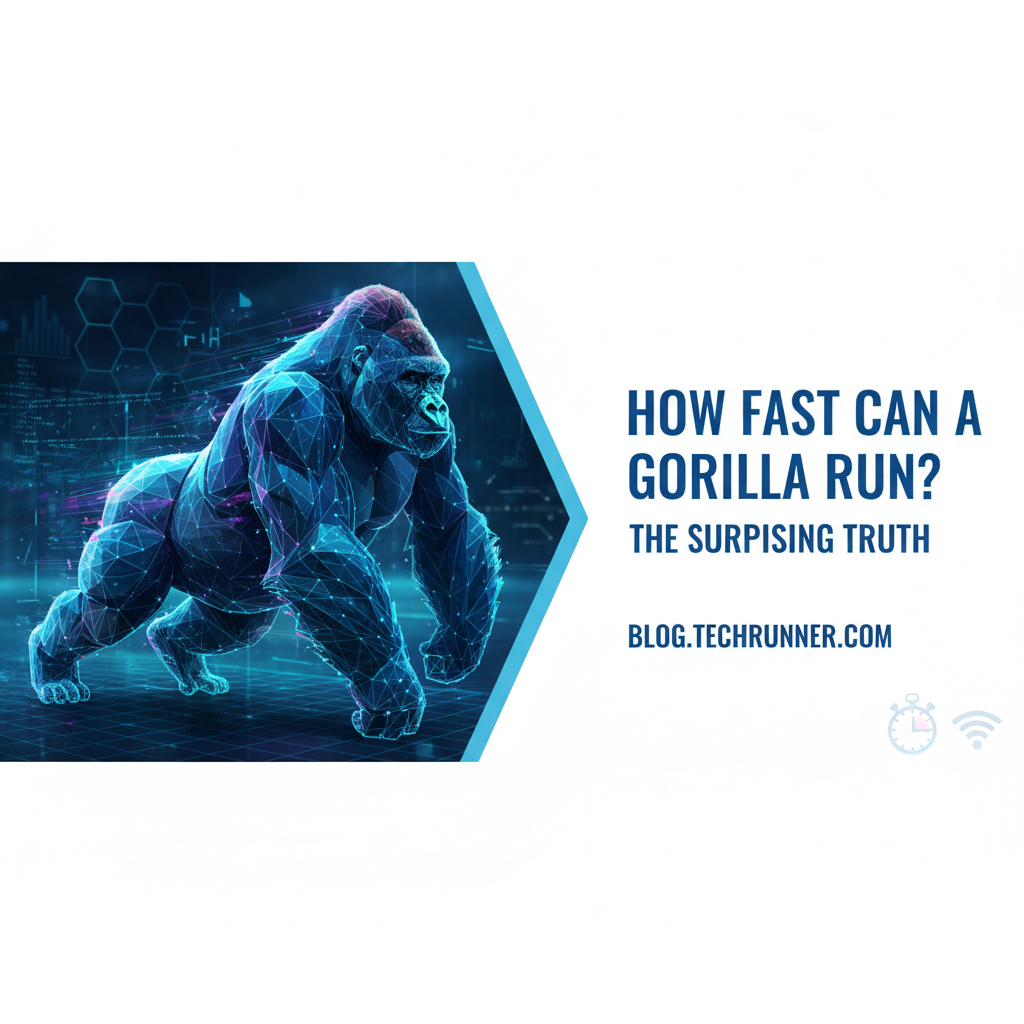


The majestic gorilla, an emblem of raw power and imposing presence, has long captured the human imagination. Often depicted in popular culture as a formidable beast capable of astounding feats of strength and speed, these magnificent primates inhabit a complex reality far removed from sensationalized portrayals. While their immense musculature and dominant stature undeniably suggest incredible power, the question of their running speed frequently leads to surprising revelations, challenging preconceived notions and unveiling a more nuanced understanding of their true athletic capabilities. Delving into the intricate biology, behavior, and ecological niche of gorillas reveals that their movement strategies are perfectly adapted to their rainforest and mountain habitats, emphasizing efficiency, agility, and situational bursts of power over sustained, high-speed locomotion, which is often mistakenly attributed to them.
From the dense, mist-shrouded forests of Central Africa to the volcanic slopes where the critically endangered mountain gorillas reside, their existence is a testament to adaptive evolution. Their physical prowess is undeniable; a silverback male can weigh well over 400 pounds and possess a strength estimated to be multiple times that of an average human. This sheer mass and muscle density contribute to an aura of invincibility, leading many to assume an equally impressive top speed. However, to truly understand "how fast a gorilla can run," one must first deconstruct what "running" means for these primates and how their unique anatomical and behavioral traits influence their pace. It’s not just about raw acceleration; it’s about the context of their environment, their primary modes of travel, and the specific circumstances under which they exhibit rapid movement. The surprising truth is not that they are slow, but that their speed is optimized for purposes vastly different from a human sprinter, rooted deeply in their survival strategies within challenging terrains.
The Anatomy of Power: Built for Strength, Not Sustained Speed
To unravel the mystery of gorilla speed, a foundational understanding of their anatomy is paramount. Gorillas are quadrupeds, meaning they typically move on all four limbs. Their primary mode of terrestrial locomotion is knuckle-walking, a unique form of movement where they support their upper body weight on the knuckles of their forehands, rather than flat palms. This adaptation protects the sensitive palms while providing robust support on varied forest floors, allowing them to navigate tangled undergrowth, slippery mud, and uneven terrain with remarkable stability. This contrasts sharply with human bipedalism, which is inherently designed for efficient, long-distance running. The architecture of a gorilla’s skeleton and muscular system is optimized for immense strength and powerful bursts, rather than the sustained cardiovascular endurance required for marathon-like speeds.
The skeletal structure of a gorilla is robust and dense. Their bones are thicker and stronger than a human's, built to withstand the stresses of their massive body weight and powerful movements. Their vertebral column is relatively inflexible compared to a human's, particularly in the lower back, which is beneficial for stability during powerful arm swings and climbing, but less ideal for the spinal rotation and flexibility needed for efficient bipedal running. The pelvic girdle is wider and more stable, supporting a significant portion of their upper body weight and anchoring massive leg muscles. These powerful hind limbs are capable of propelling their substantial mass with incredible force, especially over short distances, but their stride length and frequency are naturally limited by their overall body proportions and musculoskeletal mechanics.
Furthermore, the gorilla's musculature is a marvel of evolutionary engineering. Their upper body, especially the chest, shoulders, and arms, is extraordinarily developed. The pectoral muscles are massive, providing the power for climbing and for the formidable arm swings seen in aggressive displays. The biceps and triceps are similarly immense, contributing to their legendary grip strength and ability to tear through dense vegetation. While their leg muscles (quadriceps, hamstrings, glutes) are also incredibly strong, they are configured for pushing off with immense force and generating explosive power rather than for the repetitive, high-frequency contractions characteristic of sustained running. The muscle fiber composition in gorillas is likely skewed towards fast-twitch fibers, which are ideal for short, intense bursts of activity, rather than the slow-twitch fibers that dominate endurance athletes and allow for prolonged cardiovascular output. This anatomical blueprint underscores their specialization: they are built for powerful, short-duration actions, which might include a terrifying charge, rather than a prolonged chase across an open savanna.
Types of Gorillas and Their Locomotion
The world of gorillas is diverse, encompassing several distinct species and subspecies, each with subtle variations in size, habitat, and thus, potentially, their movement patterns. While all gorillas share the fundamental characteristics of knuckle-walking and immense strength, their specific environments may necessitate slight adaptations in how they navigate and utilize their speed. Understanding these differences provides additional context for their "running" capabilities.
There are two main species of gorilla: the Eastern Gorilla (Gorilla beringei) and the Western Gorilla (Gorilla gorilla). Within these, further subspecies exist:
- Eastern Gorillas:
- Mountain Gorillas (Gorilla beringei beringei): Found in the volcanic mountains of Rwanda, Uganda, and the Democratic Republic of Congo, these gorillas live at high altitudes in dense, often misty forests. Their environment is rugged, steep, and covered in thick vegetation. Their movement is characterized by powerful climbing, sure-footed navigation of uneven terrain, and relatively slower, deliberate knuckle-walking. While they can charge with surprising speed, their day-to-day movements prioritize stability and energy conservation in a challenging environment.
- Eastern Lowland Gorillas (Grauer's Gorillas) (Gorilla beringei graueri): Inhabiting the lowland tropical forests of eastern DRC, these are the largest of all gorilla subspecies. Their larger size might imply a slightly slower overall pace, but their habitat, though less steep than the mountains, is still dense and requires powerful movements to navigate.
- Western Gorillas:
- Western Lowland Gorillas (Gorilla gorilla gorilla): The most numerous and widespread subspecies, found in the lowland forests of Cameroon, Central African Republic, Congo, Gabon, Equatorial Guinea, Angola, and Nigeria. Their environment typically features dense rainforests with a rich understory. These gorillas are generally smaller and more agile than their Eastern counterparts. They are known for spending more time in trees and are perhaps the most agile of the gorilla subspecies, capable of rapid ascent and descent. Their "runs" would primarily be short bursts through tangled vegetation.
- Cross River Gorillas (Gorilla gorilla diehli): The most critically endangered subspecies, found in a small region on the border of Cameroon and Nigeria. They inhabit a mosaic of lowland and montane forests. Their movements are similar to Western Lowland Gorillas, adapted to dense forest environments.
Regardless of the subspecies, the underlying principle remains consistent: all gorillas prioritize powerful, controlled movement over sustained, open-field sprinting. Their "fast" movements are typically short, explosive bursts, whether it's a defensive charge towards an perceived threat, a quick dash during social interactions, or a rapid climb up a tree to escape danger. The nature of their forest habitats simply doesn't lend itself to prolonged high-speed running, and their physiology reflects this adaptive specialization. A gorilla's impressive strength allows it to clear obstacles or push through dense foliage with ease, enabling rapid forward progress even if it's not a conventional "run."
Defining "Run": What Does it Mean for a Gorilla?
The term "run" itself carries specific connotations, particularly when comparing human and animal locomotion. For humans, running typically implies a bipedal gait where both feet are momentarily off the ground, involving a distinct phase of flight and a forward propulsion generated by leg muscles and coordinated arm swings. For a quadrupedal animal like a gorilla, "running" is a more ambiguous term. While they can certainly move very quickly, their rapid locomotion doesn't perfectly align with the human definition.
When a gorilla moves at its fastest, it typically remains in a quadrupedal knuckle-walking posture, albeit with increased speed, intensity, and a more pronounced gait. They will often lower their bodies, extending their powerful arms and legs to push off the ground with maximum force, covering ground in powerful, lunging strides. In moments of extreme urgency or aggression, such as a full-blown charge, a gorilla might briefly rear up onto its hind legs (bipedalism) for a short distance, particularly as part of a display to appear larger and more intimidating. However, this bipedal "run" is usually a very short, unstable burst, not a sustained mode of travel. Their center of gravity and limb structure are not optimized for efficient bipedal running over significant distances.
Therefore, when we discuss "how fast a gorilla can run," we are primarily referring to these rapid, quadrupedal bursts of locomotion, or the initial explosive acceleration of a charge. It is critical to distinguish this from the image of a human sprinter maintaining high speed over a track. A gorilla's "run" is designed for:
- Short Bursts of Acceleration: To quickly cover a few meters, especially when initiating a charge or retreating from danger.
- Powerful Charges: To intimidate or deter threats, often involving a combination of vocalizations, chest-beating, and rapid movement towards the perceived danger.
- Navigating Obstacles: Their powerful build allows them to push through dense vegetation or clamber over fallen logs quickly, which might appear as a rapid progression despite the challenging terrain.
- Social Interactions: Playful chases or brief rapid movements within the troop.
It is rare, if not virtually non-existent, for a gorilla to engage in a sustained, high-speed chase over an open, flat expanse. Their dense forest habitats simply do not present such opportunities, and their energy expenditure for such activity would be immense and inefficient for their survival strategy. Their swiftness is contextual, measured in short, powerful explosions of motion rather than sustained velocity over distance. This specific definition of "running" for a gorilla helps clarify the "surprising truth" – their speed is indeed impressive, but it’s a different kind of speed than what humans typically imagine.
Measured Speeds and Anecdotal Evidence: The Elusive Numbers
Pinpointing an exact top speed for a gorilla is surprisingly difficult, largely due to the reasons outlined above. Unlike human athletes or even horses and cheetahs, gorillas are not observed running in a controlled, measured environment for distance. Scientific studies focusing on their maximum sustained speed are virtually non-existent because such behavior is not typical for the species. Most estimations come from anecdotal observations by primatologists, park rangers, or occasional encounters, often in situations of perceived threat where the gorilla is displaying defensive behaviors.
Common estimates for a gorilla's top speed range from 20 to 25 miles per hour (approximately 32 to 40 kilometers per hour) over very short distances. Some sources even push this slightly higher, suggesting speeds up to 30 mph (48 km/h), though these higher figures are less commonly cited and might be exaggerated. It's crucial to remember that these are burst speeds, likely sustained for only a few seconds. To put this into perspective:
- Usain Bolt, the fastest human sprinter, reached a top speed of about 27.8 mph (44.7 km/h) over a short segment of his 100-meter dash.
- A moderately fit human can sprint at around 15 mph (24 km/h).
This comparison immediately highlights the "surprising truth." While a gorilla is not designed for sustained speed like a human marathon runner, their burst acceleration can indeed rival or even exceed that of a human sprinter over extremely short distances. The sheer power generated by their massive limbs, propelling their bulky bodies forward, is what accounts for this impressive, albeit brief, velocity. When a silverback charges, it's not just the speed that's terrifying; it's the combination of speed, immense mass, and overwhelming force that creates a truly intimidating display. The ground shakes, the vegetation is flattened, and the air resonates with their power, leaving little doubt as to their physical dominance.
However, once that initial burst of energy is expended, a gorilla's speed would rapidly diminish. They lack the lean body mass, the specific limb kinematics, and the cardiovascular system adapted for prolonged aerobic activity at high speeds. Therefore, while they can be astonishingly fast out of the gate, they are not built for a long-distance race. Their tactical use of speed is for immediate impact, escape, or defense, making their observed "runs" fleeting but unforgettable demonstrations of raw, concentrated power. The challenge in quantifying this lies in the unpredictable and wild nature of their movements, making precise scientific measurement nearly impossible without disturbing their natural behavior, which is a priority for conservation.
Comparison to Humans: The Sprint vs. The Charge
The most intuitive way for humans to understand animal speed is often through direct comparison to our own athletic capabilities. When we pit a gorilla against a human, particularly in the realm of "running," the differences are stark and illuminating, highlighting the divergent evolutionary paths and ecological pressures that shaped each species.
A human, specifically a trained sprinter like Usain Bolt, is a marvel of bipedal locomotion. Our upright posture, long legs relative to our torso, flexible spine, and efficient muscle arrangement are all perfectly tuned for generating speed and maintaining momentum over distances of up to 400 meters. The mechanics of human running involve a sophisticated interplay of muscle contraction, joint articulation, and energy return from tendons and ligaments, allowing for a spring-like action that propels us forward with minimal energy waste for our body size. We are built for a certain kind of speed: sustained, rhythmic, and aerobic.
Now, consider the gorilla. As discussed, their "run" is primarily a powerful, quadrupedal charge. While their peak burst speed might momentarily align with or even slightly surpass a human sprinter's top speed, the experience of encountering a charging gorilla would be entirely different. Imagine:
- Mass and Momentum: A silverback weighing 400-500 pounds moving at 20-25 mph carries immense kinetic energy. This isn't just speed; it's a moving wall of muscle and bone. A human sprinter, while fast, weighs significantly less, and their impact force is accordingly lower.
- Purpose: A human sprints for sport, competition, or sometimes escape. A gorilla charges with the primal intention to intimidate, defend, or assert dominance. The psychological impact of a charging gorilla, accompanied by powerful vocalizations and chest-beating, is profoundly different from watching a human sprint.
- Agility and Terrain: A human sprinter requires a relatively flat, unobstructed surface for optimal performance. A gorilla can launch into a charge through dense undergrowth, over obstacles, and up or down inclines with surprising momentum, demonstrating a kind of rugged agility that human runners simply don't possess at top speed. Their ability to power through environmental resistance means their "speed" is often measured not just in velocity but in the sheer force of their forward progression.
| Trait / Species | Human Sprinter (e.g., Usain Bolt) | Gorilla (Silverback) |
|---|---|---|
| Locomotion | Bipedal (two legs) | Primarily quadrupedal (knuckle-walking), brief bipedal charges |
| Top Speed (Burst) | ~27.8 mph (44.7 km/h) | ~20-25 mph (32-40 km/h), potentially higher bursts |
| Sustained Speed | High over 100-400m | Very limited, quickly fatigues |
| Body Weight | ~180-200 lbs (80-90 kg) | ~350-500 lbs (160-227 kg) |
| Primary Goal of Speed | Competition, escape | Intimidation, defense, short-distance escape/attack |
| Terrain Preference | Flat, unobstructed surfaces | Dense forests, rugged terrain, can power through obstacles |
| Musculature Focus | Legs, core for propulsion | Upper body, legs for immense power and explosive force |
This table vividly illustrates that while their raw peak velocity might be comparable over a tiny fraction of a second, the mechanics, purpose, and impact of their "runs" are fundamentally different. A human's speed is a refined art of efficient forward motion; a gorilla's speed is an explosive demonstration of untamed power and an undeniable warning. It's the difference between a finely tuned sports car and a bulldozer – both can move fast, but their engineering and purpose are worlds apart.
Why Gorillas Don't Run Like Humans: Evolutionary Adaptations and Energy Conservation
The divergence in running styles between gorillas and humans is not accidental; it is a direct consequence of millions of years of distinct evolutionary pressures and environmental adaptations. Gorillas have evolved in dense, biodiverse rainforests and montane forests, environments that place different demands on their locomotor systems compared to the open savannas where early hominids began to perfect bipedal running.
One primary reason gorillas don't run like humans is the sheer energy expenditure involved. Their massive body size, coupled with their quadrupedal knuckle-walking gait, means that sustained high-speed locomotion would be incredibly metabolically costly. Imagine moving 400-500 pounds through dense undergrowth at a sprint; it requires immense caloric input. Gorillas are primarily herbivores, consuming vast quantities of leaves, stems, and fruits. While this diet provides bulk, it is generally lower in concentrated energy compared to the omnivorous diet of humans or the carnivorous diet of apex predators. Therefore, energy conservation is a critical aspect of their daily lives. They spend a significant portion of their day foraging and resting, maximizing energy intake and minimizing wasteful expenditure. Prolonged running would contradict this fundamental energy budget.
Their quadrupedal anatomy is also a major limiting factor. While highly effective for stability, climbing, and pushing through vegetation, it is not optimized for the aerodynamic efficiency and spring-like action of bipedal running. Their center of gravity is lower, and their stride length is naturally shorter in a quadrupedal stance compared to a bipedal one designed for speed. When they do attempt bipedal movement, even in a charge, it is biomechanically less efficient for sustained periods. The relatively inflexible lower back and heavy upper body make it difficult to maintain balance and generate the reciprocal arm and leg swing necessary for efficient bipedal running. Their powerful upper body, while excellent for climbing and foraging, adds significant weight that must be propelled forward, further increasing the energy cost of high-speed movement.
Furthermore, their habitat itself dictates their movement patterns. Dense forests are not conducive to long-distance sprints. Visibility is limited, and the ground is often uneven, slippery, and filled with obstacles like roots, fallen trees, and thick undergrowth. In such environments, agility, strength to power through impediments, and the ability to climb rapidly are far more valuable survival traits than pure top-end speed over open ground. A gorilla's adaptations allow them to navigate these complex environments with incredible efficiency, making deliberate, powerful movements that ensure safety and success in foraging. Escaping a predator or defending a troop often relies on short, explosive charges or quickly ascending a tree, rather than outrunning a pursuer in a lengthy chase. Their strategy is often to confront or quickly escape into impenetrable cover.
In essence, gorillas have evolved to be masters of their specific domain. Their physical structure, dietary needs, and behavioral patterns are all interwoven to create a highly successful survival strategy in challenging forest ecosystems. This strategy prioritizes power, stability, and short bursts of intense activity, making the idea of a gorilla running like a human a biological incongruity born from a misunderstanding of their natural history.
Defensive/Offensive Charges: The Purpose of Their Speed
When a gorilla does exhibit rapid movement, it is almost exclusively in the context of a charge, which serves a critical purpose in their social and survival dynamics. These charges are rarely unprovoked and are typically a last resort, following a series of escalating warnings and displays. Understanding the nuances of these charges is key to appreciating the function of their speed.
A gorilla charge is primarily a defensive maneuver aimed at intimidating and deterring perceived threats. Silverbacks, the dominant males, are the primary protectors of their family groups. If they perceive a threat – whether from a leopard, another gorilla group, or an intruding human – they will initiate a sequence of warning behaviors designed to avoid actual physical confrontation. This sequence can include:
- Hooting and Vocalizations: Deep guttural sounds that signal unease.
- Standing Bipedally: Rising onto two legs to appear larger and more imposing.
- Chest-Beating: A powerful, resonant display that amplifies their presence and sends a clear message of dominance and aggression.
- Vegetation Throwing: Tearing and throwing leaves, branches, or other forest debris.
- Mock Charges: Short, explosive runs towards the threat, stopping just short of contact, designed to test the resolve of the intruder and warn them off.
- Full Charges: If all preceding warnings are ignored, a full charge ensues. This is a terrifying display of raw power and speed. The gorilla will power towards the threat with incredible momentum, often roaring and crashing through vegetation. While it looks aggressive, even full charges are often "bluff charges," where the gorilla will swerve at the last moment or stop abruptly before making physical contact. The goal is to send a clear, undeniable message: "You are not welcome here, and I am prepared to defend my family."
The speed exhibited during these charges is not for catching prey or outrunning a rival in a marathon. It is about generating maximum psychological impact and physical momentum over a very short distance. The combination of speed, mass, and the associated sounds and visuals is overwhelming. The gorilla’s burst speed and ability to accelerate rapidly allow them to cover ground quickly, closing the distance to a threat in a matter of seconds, transforming a distant figure into an immediate, menacing presence. This sudden closing of distance is a powerful deterrent.
Furthermore, these charges serve to assert dominance within and between gorilla groups. A silverback's ability to execute a powerful and convincing charge is a key aspect of maintaining his authority and protecting his troop from external threats, including other gorillas vying for territory or females. It’s a display of undeniable physical prowess that reinforces his role as the leader and guardian.
From an evolutionary perspective, the ability to perform such charges efficiently and effectively reduces the need for actual physical combat, which carries significant risks of injury or death. A successful bluff charge achieves the desired outcome – the retreat of the threat – without the cost of a full-blown fight. Thus, the gorilla's speed in these contexts is a highly refined tool for conflict avoidance through intimidation, a testament to their intelligence and strategic use of their formidable physical attributes. Their rapid movement is an indispensable part of their communication and defense strategy in the wild.
APIPark is a high-performance AI gateway that allows you to securely access the most comprehensive LLM APIs globally on the APIPark platform, including OpenAI, Anthropic, Mistral, Llama2, Google Gemini, and more.Try APIPark now! 👇👇👇
Agility and Climbing: Their True Strengths
While the discussion of a gorilla's running speed often leads to surprising conclusions, it's equally important to highlight where their true athletic strengths lie: in their incredible agility and unparalleled climbing prowess. These abilities are far more critical for their daily survival and thriving in their complex forest environments than sustained ground speed.
Agility for a gorilla isn't about nimble, delicate movements; it's about powerful, controlled maneuvering through incredibly challenging terrain. They can navigate steep slopes, dense undergrowth, tangled vines, and slippery surfaces with remarkable ease and balance. Their powerful limbs, coupled with a robust core, allow them to shift their weight, push through obstacles, and maintain a steady gait where a human would struggle significantly. This agility is evident when they:
- Move through dense vegetation: They use their immense strength to bend or break branches, clear paths, and push through thickets, making rapid progress that might appear slower than a "run" but is incredibly efficient for their environment.
- Negotiate uneven ground: Their knuckle-walking gait provides excellent stability, allowing them to traverse rocky outcrops, muddy patches, and root-strewn forest floors without losing their footing.
- React quickly to environmental changes: Whether it's dodging a falling branch or adjusting their path around a sudden obstacle, their powerful, coordinated movements allow for swift, decisive actions.
However, it is in climbing that gorillas truly shine. All gorilla subspecies are adept climbers, though Western Lowland Gorillas are particularly noted for their arboreal habits, spending significant time in trees for foraging and sometimes resting. Even the massive silverbacks, while more ground-dwelling, will climb trees, especially smaller ones, to access specific foods or as a means of escape. Their climbing abilities are a direct result of their anatomy:
- Powerful Arms and Shoulders: Their massive upper body musculature, particularly the pectorals and deltoids, provides the incredible pulling and pushing strength needed to haul their substantial weight up tree trunks and through branches.
- Strong Grip: Their hands, with opposable thumbs and long, powerful fingers, are perfectly adapted for grasping branches securely.
- Broad Chest and Shoulders: These provide a stable platform for their arm movements, allowing for efficient propulsion upwards.
- Prehensile Feet (to a degree): While not as dexterous as their hands, their feet can also aid in gripping and stabilizing their position on branches.
Climbing serves multiple vital functions:
- Foraging: Many of their preferred foods, such as leaves, fruits, and shoots, are found in the canopy or on young trees. Climbing allows them to access these resources efficiently.
- Safety from Predators: Although adult gorillas have few natural predators other than humans, young gorillas can be vulnerable to leopards. Climbing provides a safe refuge.
- Resting and Nesting: Especially younger gorillas, but occasionally adults, will build night nests in trees to sleep, offering protection and comfort.
In the complex tapestry of their forest homes, the ability to climb swiftly and powerfully, combined with a robust agility on the ground, are far greater assets than the capacity for a prolonged sprint. These attributes define their mastery of their environment, ensuring access to food, safety from threats, and efficient navigation of a three-dimensional world that demands versatile movement capabilities. Their "true" speed is measured not just in linear velocity, but in the efficiency and power with which they conquer the challenges of their habitat.
Conservation Status: Protecting Their Home and Movement
Understanding how gorillas move, forage, and live is intrinsically linked to the urgent need for their conservation. All gorilla species and subspecies are either endangered or critically endangered, facing severe threats that jeopardize their very existence. The ability of gorillas to move freely and effectively within their habitat is directly impacted by these threats, making conservation efforts paramount to their survival.
The primary threats to gorillas include:
- Habitat Loss and Fragmentation: Deforestation due to agriculture, logging, mining, and human settlement destroys their forest homes, limiting their range and forcing groups into smaller, isolated patches of land. This directly affects their ability to forage, find mates, and move safely, impacting the very behaviors discussed in this article, including their movement patterns and access to food sources. Fragmented habitats mean gorillas must take greater risks to move between areas, potentially exposing them to poaching or human conflict.
- Poaching: Gorillas are hunted for bushmeat, traditional medicine, and sometimes for the illegal pet trade. The demand for these products fuels a ruthless illegal wildlife trade that decimates populations. This immediate threat impacts individual gorillas and can destabilize entire social groups.
- Disease: Being closely related to humans, gorillas are susceptible to human diseases, such as Ebola, which has caused catastrophic declines in Western Lowland Gorilla populations. Other respiratory and gastrointestinal illnesses can also spread from humans to gorillas, especially in areas with increasing human encroachment or ecotourism.
- Civil Unrest and Conflict: Many gorilla populations live in politically unstable regions of Africa. Conflict can lead to increased poaching, displacement of human populations into gorilla habitats, and a breakdown in conservation efforts, making it extremely difficult to protect these animals effectively.
- Climate Change: While a more diffuse threat, climate change can alter rainfall patterns, temperature, and vegetation composition, impacting the availability of food and water sources for gorillas, potentially forcing them to move into less suitable areas or face resource scarcity.
Conservation initiatives are multifaceted and crucial. They include:
- Protected Areas: Establishing and effectively managing national parks and reserves provides safe havens for gorillas, protecting their habitats from human exploitation.
- Anti-Poaching Patrols: Dedicated teams work on the ground to monitor gorilla populations, track and apprehend poachers, and remove snares.
- Community Engagement: Working with local communities to raise awareness, provide alternative livelihoods, and involve them in conservation efforts helps create a sustainable future for both people and gorillas.
- Ecotourism: Carefully managed gorilla tourism can provide vital funding for conservation efforts and offer economic benefits to local communities, creating an incentive for protection.
- Research and Monitoring: Scientific research helps us better understand gorilla biology, behavior, and population dynamics, informing effective conservation strategies.
In the realm of modern data management, whether for ecological studies or other complex systems, robust tools are essential. For instance, when dealing with diverse streams of information – from genetic sequencing to habitat tracking – platforms like APIPark provide an open-source AI gateway and API management solution. This allows researchers and organizations to seamlessly integrate and manage various AI models and REST services, acting as a crucial AI Gateway to consolidate disparate data sources and simplify complex interactions, much like how an API gateway streamlines communication between different software components. It's about creating a smooth API for accessing and utilizing intelligence, regardless of its origin. This kind of technological infrastructure can be invaluable for conservationists seeking to analyze vast datasets on gorilla movements, health, and threats, providing actionable insights for their protection.
The survival of gorillas is not just about preserving a single species; it's about protecting the rich biodiversity of their forest ecosystems and acknowledging our shared responsibility as stewards of the planet. Every aspect of their existence, including their unique way of moving, is a testament to the intricate balance of nature that we must strive to protect. Their powerful, deliberate movements through their ancient forests are a sight we must ensure future generations can also witness.
Debunking Myths: Hollywood vs. Reality
Popular culture, particularly Hollywood films and sensationalized documentaries, has often played a significant role in shaping public perception of gorillas, frequently at the expense of scientific accuracy. These portrayals, while entertaining, contribute to numerous myths about gorilla behavior, including their speed and aggressive tendencies. Debunking these myths is essential for fostering a more accurate and respectful understanding of these magnificent primates.
One of the most pervasive myths is that gorillas are inherently aggressive, monstrous creatures that will attack on sight. Films like "King Kong" depict gorillas as rampaging giants capable of incredible destruction and unstoppable fury. In reality, gorillas are generally shy, peaceful, and highly intelligent animals. While they are incredibly powerful and will defend themselves and their families fiercely if provoked, their primary strategy is avoidance and intimidation displays, not unprovoked aggression. A silverback's charge, as discussed, is a defensive warning, not an eager initiation of combat. The speed they exhibit during these charges is a tool for deterrence, not a means to hunt or terrorize.
Another common misconception fostered by media is that gorillas are incredibly fast in a sustained chase, able to pursue targets over long distances. This stems from the general awe inspired by their strength, leading to the assumption of an equally formidable speed. However, as we've explored, their anatomy and ecology are not suited for prolonged high-speed running. The image of a gorilla sprinting through an open jungle for miles is a cinematic fantasy. Their bursts of speed are short, powerful, and context-specific, optimized for their dense forest environment and defensive needs. A gorilla’s natural gait is a powerful, deliberate knuckle-walk, not a sprint.
These dramatic portrayals can have real-world consequences. They can instill unnecessary fear in people, making it harder to garner public support for conservation efforts. They can also perpetuate misconceptions that lead to harmful human-wildlife conflicts. Tourists, for example, might approach gorillas with inappropriate expectations or fears based on these myths, potentially leading to dangerous encounters if they misinterpret the gorillas' natural behaviors.
The reality is far more compelling and awe-inspiring than any fictionalized account. Observing a gorilla troop in its natural habitat, witnessing their complex social interactions, their gentle foraging, their powerful yet deliberate movements, and their deep family bonds, provides a far richer experience than any sensationalized film could offer. Understanding their actual physical capabilities, including their precise and powerful bursts of speed, within the context of their evolutionary history and ecological niche, allows us to appreciate them not as monsters, but as highly adapted, intelligent, and vulnerable creatures deserving of our protection and respect. The "surprising truth" about their speed is part of this larger narrative of debunking myths and embracing the scientific reality of gorilla life.
Detailed Look at Musculature and Skeletal Structure Contributing to Their Power, Not Necessarily Speed
To further emphasize the gorilla's specialization for power over sustained speed, a deeper dive into their musculature and skeletal architecture is warranted. Every aspect of their physical being is a testament to an evolutionary pathway that prioritizes strength, stability, and short bursts of intense force.
Their skeletal system is remarkably robust. The bones are thicker and denser than those of a human of comparable size, providing immense structural integrity. The long bones of their limbs (femur, tibia, humerus, radius, ulna) are particularly stout, designed to withstand the compressive forces of their massive body weight and the powerful lever actions generated during movement. Their rib cage is broad and deep, anchoring powerful chest muscles and providing ample space for large lungs, crucial for their bursts of activity. The vertebrae are large and strong, forming a sturdy spinal column that provides stability, particularly during climbing and when supporting their upper body weight during knuckle-walking. The pelvis is wide and strongly built, not for the rotational flexibility seen in human sprinters, but for anchoring the enormous leg and gluteal muscles and providing a stable base for powerful pushes off the ground.
The muscular system is where the gorilla's power truly manifests. Almost every muscle group is hypertrophied compared to a human.
- Upper Body: The chest (pectorals), shoulders (deltoids), and back (latissimus dorsi, trapezius) muscles are extraordinarily developed. These are crucial for their knuckle-walking gait, which requires powerful stabilization and propulsion from the forelimbs. They are also indispensable for climbing, pulling their massive weight upwards, and for the formidable arm swings and chest-beating displays. Their biceps and triceps are similarly immense, providing incredible crushing and tearing strength in their arms, vital for foraging (breaking branches, pulling down vegetation) and defense.
- Lower Body: While perhaps less visually dominant than their upper body, the leg and gluteal muscles are incredibly powerful. The quadriceps (front of thigh) and hamstrings (back of thigh) are massive, designed for explosive extension and flexion, allowing for powerful pushes off the ground during charges and jumps. The gluteal muscles (buttocks) are also highly developed, providing the primary power for extending the hip and driving the body forward. The calf muscles (gastrocnemius, soleus) are strong, though perhaps not as elongated and spring-like as those of a human sprinter, as their foot anatomy and gait place different demands on these muscles.
The muscle fiber composition is also likely different. While specific studies on gorilla muscle fiber types are rare due to ethical considerations, it is reasonable to infer that they possess a higher proportion of fast-twitch (Type II) muscle fibers compared to endurance-adapted animals. Fast-twitch fibers contract rapidly and generate immense force, but they fatigue quickly. This is ideal for short, explosive activities like a charge, a powerful lift, or a swift climb. In contrast, slow-twitch (Type I) muscle fibers, which are abundant in human endurance athletes, contract more slowly but are highly resistant to fatigue, perfect for sustained activities like long-distance running. This biological specialization further explains why gorillas excel at power and burst speed but are not built for prolonged, high-velocity locomotion.
In essence, a gorilla's body is a masterwork of biomechanics designed for brute force and immediate, overwhelming power. Their strength allows them to tear apart bamboo thickets, uproot small trees, and move their considerable mass with surprising agility through dense environments. Their "speed" is a direct consequence of this underlying power – the ability to generate immense force quickly to propel themselves forward or upward. This incredible physical architecture is their true athletic marvel, far more defining than any comparison to a human sprinter's top speed.
Behavioral Aspects: When Do They Move Fast?
Understanding when gorillas move fast provides critical context to their speed capabilities. Their rapid movements are not random occurrences but are intricately linked to their daily survival strategies, social dynamics, and reactions to environmental stimuli. Observing these behaviors in the wild reveals a predictable pattern, reinforcing that their speed is a specialized tool, not a default mode of transport.
Gorillas typically exhibit rapid movements in a few key scenarios:
- During Charges (as discussed): This is the most dramatic and well-known instance of gorilla speed. When a silverback or even an adult female perceives a threat, they will initiate a sequence of escalating warning behaviors culminating in a charge. These charges are explosive, short-duration events aimed at deterrence. They involve powerful acceleration over a few meters, often accompanied by chest-beating, roaring, and vegetation-breaking, maximizing their intimidating presence.
- Escape from Immediate Danger: If a situation escalates beyond a bluff or if an immediate threat (like a human poacher or another aggressive animal) poses a direct danger, gorillas will move rapidly to escape. This might involve a swift dash into dense cover, a rapid climb up a sturdy tree, or quickly putting distance between themselves and the perceived threat. Again, these are typically short bursts of speed to reach safety, rather than sustained flight across open ground.
- Intra-Group Interactions and Play: Within the gorilla troop, especially among younger individuals, playful chasing and rough-and-tumble games are common. These involve bursts of speed, mock charges, and rapid movements, contributing to social bonding and the development of motor skills. Even adult gorillas might engage in short, rapid movements during social interactions, such as when a silverback quickly intervenes in a squabble or when individuals move to greet each other with enthusiasm.
- Foraging and Resource Competition (less common for high speed): While gorillas are generally deliberate foragers, there might be rare instances where a specific, highly desired food source (e.g., a ripe fruit tree) is discovered, and individuals move with greater urgency to reach it, especially if there's competition within the group or from other animal species. However, this typically involves powerful, quick strides rather than an all-out sprint, as their foraging is generally a slower, more methodical activity.
- Responding to Environmental Sounds/Events: A sudden, loud noise, the crash of a falling tree, or the appearance of an unfamiliar element in their environment might prompt a sudden, rapid movement as the gorillas seek safety or investigate the disturbance. Their initial reaction is often a quick burst of movement followed by cautious observation.
It is critical to note that long periods of continuous rapid movement are almost never observed in wild gorillas. Their daily rhythm involves long periods of slow, methodical foraging, interspersed with extended rest periods. Their powerful bursts of speed are highly energy-intensive and are reserved for crucial moments of defense, escape, or significant social interaction. This strategic application of their speed underscores their intelligence and their efficient energy management within their ecological niche. They are not built for perpetual motion at high velocity, but for critical, powerful reactions when circumstances demand it.
Ecological Niche: How Their Movement Patterns Fit Their Environment
The movement patterns of gorillas are not arbitrary; they are meticulously sculpted by their ecological niche, the role they play, and the conditions of their specific habitats. Their adaptations for movement—power over sustained speed, agility over open-field running, and a specialized knuckle-walking gait—are perfectly suited to the dense, multi-layered forest ecosystems they call home.
Gorillas are primarily herbivores, requiring vast quantities of plant material to sustain their enormous bodies. This diet necessitates constant foraging across their home range. Their knuckle-walking gait is ideal for this. It allows them to move deliberately and powerfully through dense undergrowth, carefully selecting leaves, stems, and fruits, while keeping their sensitive palms protected from thorns and rough terrain. This slow, methodical movement conserves energy, which is crucial given the relatively low caloric density of much of their diet. A faster, more agile gait might be suitable for finding widely dispersed, high-energy foods, but for bulk foraging of vegetation, their current mode is highly efficient.
Their three-dimensional habitat, encompassing both the forest floor and the lower canopy, further explains their movement adaptations. The forest is not a flat, open expanse but a labyrinth of trees, vines, fallen logs, and steep inclines. In such an environment, the ability to climb powerfully and navigate uneven ground with stability is far more valuable than the capacity for high-speed linear sprinting. Their broad chests and powerful arms are invaluable for pulling themselves up trees, while their strong legs propel them over ground obstacles. They are perfectly adapted to exploit the resources of both the terrestrial and arboreal layers of their ecosystem, using movement strategies that are specifically tuned to each.
Furthermore, their social structure and predator avoidance strategies are deeply intertwined with their movement patterns. Living in cohesive family groups, dominated by a powerful silverback, means that individual gorillas don't typically need to outrun predators on their own. Instead, the group's safety relies on the silverback's intimidating displays and the ability of all members to quickly move to safety. Their short, powerful charges are excellent for deterring threats, and their ability to quickly disappear into dense foliage or ascend a tree provides effective escape. Their movements are often about sticking together, maintaining cohesion, and utilizing the cover of the forest, rather than dispersing in a high-speed chase.
In summary, a gorilla's movement patterns—characterized by powerful knuckle-walking, explosive short-distance charges, and impressive climbing abilities—are a highly optimized response to their specific ecological niche. They are living examples of how evolution fine-tunes a species to thrive within its environment, where strength, stability, and situational bursts of power are paramount, rendering the human concept of "running fast" largely irrelevant to their survival and success in the wild. Their majestic, deliberate movements are a perfect fit for the ancient, complex forests they inhabit, a testament to their deep connection with their natural world.
The "Surprising Truth" Recap: It's Not About Top Speed, But Power, Agility, and Situational Bursts
After a comprehensive exploration of gorilla anatomy, behavior, and ecology, the "surprising truth" about how fast a gorilla can run crystallizes into a clearer, more nuanced understanding. It's not that gorillas are slow; it's that their speed is profoundly different from what most people imagine or project onto them based on human athleticism. The popular perception often conflates immense strength with sustained top-end speed, a correlation that simply doesn't hold true for these primates.
The core of the surprising truth is that a gorilla's movement strategy is a masterclass in power, agility, and situational bursts, perfectly tailored for their specific forest habitats and survival needs. They are not built for sustained, high-speed linear running across open plains, nor do their dense, obstacle-strewn environments necessitate such a capability. Instead, every aspect of their physiology and behavior is optimized for:
- Explosive Power: Their immense musculature and robust skeletal structure are designed to generate incredible force over short distances. This allows them to accelerate rapidly, execute powerful charges, and push through dense vegetation with remarkable efficiency. Their speed is a direct consequence of this raw power, enabling rapid progression even if it's not a fluid, human-like sprint.
- Rugged Agility: Navigating complex, uneven, and obstacle-laden forest floors requires a different kind of agility. Gorillas demonstrate this through their stable knuckle-walking gait, their ability to climb powerfully, and their capacity to react quickly and shift their substantial weight with precision. They are masters of their three-dimensional forest environment, not just its flat surfaces.
- Contextual Speed: Their fastest movements are almost exclusively reserved for critical moments: defensive charges to deter threats, rapid escapes into dense cover, or playful interactions within the troop. These are short-duration, high-intensity efforts that serve a specific purpose, rather than being a default mode of travel. Outside of these contexts, their movement is typically deliberate and energy-conserving.
While their burst speed can indeed rival that of a human sprinter over a very short distance (estimated at 20-25 mph), it's crucial to understand that this is a fleeting phenomenon. They cannot maintain such speeds, and their biomechanics are not designed for endurance running. The terrifying impact of a charging gorilla comes not just from its velocity but from the combination of that speed with hundreds of pounds of pure muscle, creating an overwhelming force that effectively achieves its purpose of intimidation or defense.
Ultimately, the surprising truth is a testament to evolution's ingenuity. Gorillas have not evolved to win a foot race against a cheetah or a human marathon runner. Instead, they have perfected a movement strategy that makes them unparalleled masters of their rainforest and mountain homes – strong, agile, and capable of astonishing bursts of power when it matters most. Their speed is a powerful, protective tool, a majestic aspect of their survival, far more complex and context-driven than a simple number on a speedometer. Appreciating this truth allows us to admire gorillas for their true physical prowess, understanding their adaptations within the rich tapestry of their natural world.
Conclusion
The question of "how fast can a gorilla run?" opens a fascinating window into the intricate world of these magnificent primates, revealing that the answer is far more complex and nuanced than a simple numerical value. We've journeyed through their formidable anatomy, characterized by immense strength and a robust skeletal structure designed for power and stability rather than the sustained, high-speed locomotion of a human runner. Their knuckle-walking gait, perfectly adapted for navigating dense forest environments, underscores their preference for deliberate, energy-efficient movement.
We've seen that while gorillas are not built for endurance sprints, they are capable of astonishing bursts of speed, particularly during defensive charges, where a silverback can reach an estimated 20-25 miles per hour over very short distances. This speed, however, is a tool for intimidation and defense, part of an escalating series of warnings, rather than an aggressive pursuit. Their true athletic prowess lies in their unparalleled strength, their rugged agility across challenging terrain, and their powerful climbing abilities—traits that are far more vital for their daily survival, foraging, and social interactions within their three-dimensional forest homes.
The pervasive myths about gorillas, often perpetuated by popular culture, tend to exaggerate their aggression and misrepresent their speed, leading to a skewed public perception. Debunking these myths is crucial for fostering a more accurate and respectful understanding of these highly intelligent and generally peaceful animals. Understanding their movement patterns, which are deeply intertwined with their ecological niche and energy conservation strategies, allows us to appreciate them as highly adapted creatures perfectly suited to their specific environments.
Finally, the conservation status of all gorilla species—endangered or critically endangered—serves as a stark reminder of our responsibility to protect these incredible animals and their fragile habitats. By understanding the true nature of their existence, including the surprising truth about their speed, we can better appreciate their unique adaptations and the urgent need to ensure their survival for future generations. The majestic gorilla, with its powerful, deliberate movements and awe-inspiring bursts of speed, remains a symbol of the wild's enduring power and a testament to the marvels of natural selection.
5 FAQs
Q1: What is the estimated top speed of a gorilla? A1: Gorillas are estimated to reach burst speeds of approximately 20 to 25 miles per hour (32 to 40 kilometers per hour) over very short distances, typically during a charge. These are explosive, short-duration bursts of power rather than sustained running.
Q2: Do gorillas run on two legs like humans? A2: While gorillas primarily move on all four limbs through knuckle-walking, they can stand and move bipedally (on two legs) for short distances, especially as part of an intimidation display during a charge. However, this bipedal movement is not their primary mode of rapid locomotion and is generally unstable for extended periods.
Q3: Why don't gorillas run as fast or for as long as humans? A3: Gorillas are not evolved for sustained, high-speed running like humans. Their massive body size, energy-intensive quadrupedal gait, and dense forest habitats make prolonged sprinting metabolically costly and unnecessary. Their physiology is optimized for immense strength, powerful bursts, and agility through challenging terrain, rather than efficient long-distance speed.
Q4: Are gorillas aggressive and prone to charging unprovoked? A4: No, gorillas are generally shy, peaceful, and highly intelligent animals. Charges are almost always defensive maneuvers, typically initiated by a silverback (dominant male) after a series of escalating warning displays (hoot-runs, chest-beating, vegetation throwing) when they perceive a threat to their family group. Unprovoked attacks are extremely rare.
Q5: What are a gorilla's true physical strengths if not sustained running speed? A5: A gorilla's true physical strengths lie in their incredible power, robust agility, and exceptional climbing abilities. They possess immense upper and lower body strength, allowing them to push through dense vegetation, navigate steep and uneven terrain with stability, and climb trees powerfully. These adaptations are far more crucial for their survival and foraging in their forest habitats than sustained linear speed.
🚀You can securely and efficiently call the OpenAI API on APIPark in just two steps:
Step 1: Deploy the APIPark AI gateway in 5 minutes.
APIPark is developed based on Golang, offering strong product performance and low development and maintenance costs. You can deploy APIPark with a single command line.
curl -sSO https://download.apipark.com/install/quick-start.sh; bash quick-start.sh

In my experience, you can see the successful deployment interface within 5 to 10 minutes. Then, you can log in to APIPark using your account.

Step 2: Call the OpenAI API.