GraphQL: Empowering User Flexibility
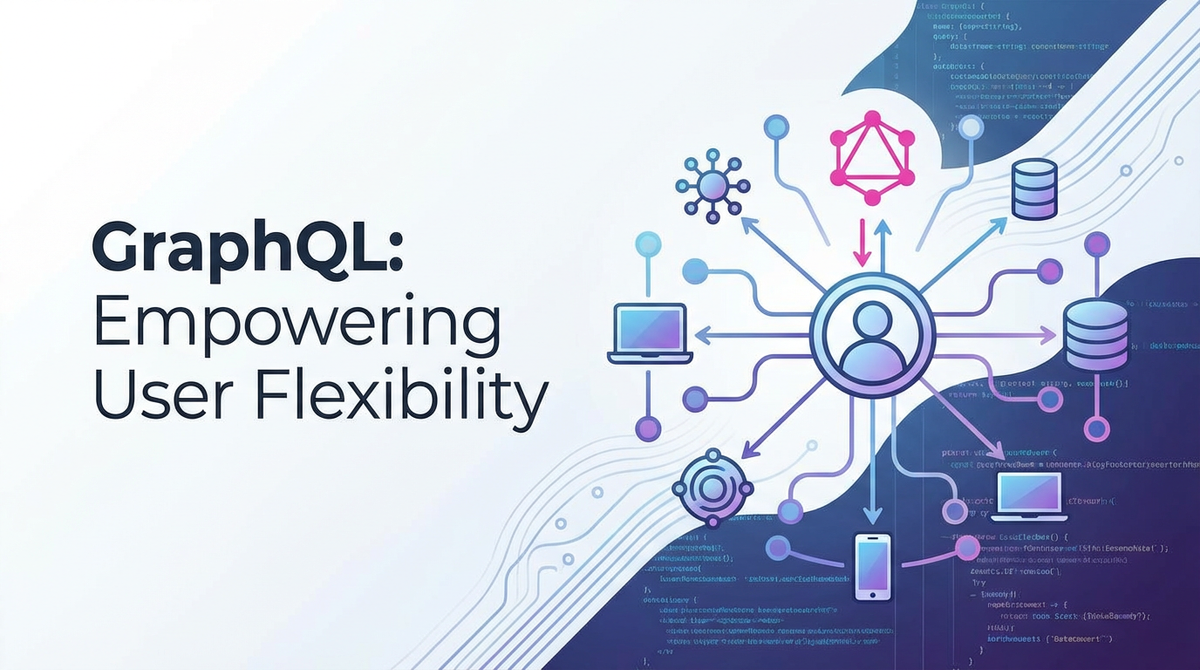


In the relentless march of technological progress, the way applications communicate and exchange data stands as a foundational pillar. For decades, the Representational State Transfer (REST) architecture has served as the de facto standard for building web services, offering a simple and stateless approach to API design. Its ubiquity has been undeniable, shaping much of the internet we interact with daily. However, as applications have grown exponentially in complexity, diversity, and user expectations, the inherent limitations of traditional RESTful APIs have become increasingly apparent. Developers and businesses alike have grappled with issues such as over-fetching (receiving more data than needed), under-fetching (requiring multiple requests to gather sufficient data), and the rigid versioning headaches that arise when adapting a backend API to serve a myriad of client platforms – from web browsers and mobile apps to smart devices and IoT sensors.
The modern application landscape demands unparalleled agility and efficiency. Users expect instant, tailored experiences, while developers strive for frictionless integration and rapid iteration cycles. It is within this dynamic environment that GraphQL emerged not merely as an alternative, but as a transformative paradigm shift in how we conceive, design, and interact with APIs. Born out of Facebook's internal struggles to manage data for their evolving mobile applications, GraphQL offers a powerful, flexible, and efficient approach to data fetching. At its core, GraphQL is a query language for your API, and a server-side runtime for executing those queries by using a type system you define for your data. This revolutionary model empowers the client to declare precisely what data it needs, resulting in a significantly more efficient and adaptable data exchange. It shifts the power dynamic from the server dictating the data structure to the client being able to sculpt its own data requirements, thereby unlocking an unprecedented level of user flexibility and developer productivity in the vast and interconnected world of modern apis. This fundamental change not only streamlines data retrieval but also profoundly impacts the entire lifecycle of API development and consumption, leading to more resilient, performant, and user-centric applications. Understanding GraphQL is no longer just an academic exercise; it is becoming an essential skill for navigating the intricacies of the contemporary API economy.
The Genesis of GraphQL: A Response to Evolving Needs
The story of GraphQL is intimately intertwined with the challenges faced by Facebook in the early 2010s. As the social media giant expanded its platform from a primarily desktop web experience to a mobile-first strategy, its existing API infrastructure, largely built on REST principles, began to creak under the strain. Mobile applications, by their very nature, demand highly optimized data transfer. They often operate on limited bandwidth, require swift response times, and display diverse views of the same underlying data. A user's profile on a mobile app might only show their name, profile picture, and recent posts, while the desktop version could display a much richer set of information including mutual friends, groups, and detailed activity logs.
With traditional REST APIs, developers would typically define fixed endpoints, each serving a specific resource or collection of resources. For instance, /users/{id} might return a user's full profile, and /posts/{id} would return a single post. To construct a complex view, such as a user's profile along with their last five posts and three mutual friends, a mobile application would often have to make multiple discrete requests to different endpoints. This "n+1 problem" for data fetching, where 'n' additional requests are made for related data, led to increased network latency, higher data consumption, and a more complex client-side logic to stitch together disparate pieces of information. This problem was particularly exacerbated on mobile networks, where each additional round trip introduced noticeable delays and consumed precious battery life.
Furthermore, RESTful APIs often struggled with the issue of over-fetching. Even if a single endpoint could return a user's full profile, the mobile application might only need a small subset of that data – perhaps just the user's name and avatar. The server, unaware of the client's specific needs, would send the entire data payload, wasting bandwidth and processing power on both ends. Conversely, under-fetching occurred when a single endpoint did not provide enough information, necessitating subsequent calls to retrieve related data. These inherent inefficiencies forced front-end developers to either accept bloated payloads or engage in complex client-side filtering and data manipulation, which added significant overhead and reduced development velocity.
Facebook's internal teams recognized that this one-size-fits-all approach to API design was no longer sustainable for their rapidly evolving product and diverse client base. They needed a more flexible API that could precisely cater to the specific data requirements of each view and each client platform. The conceptual leap they made was to re-imagine data fetching not as a series of requests for predefined resources, but as a query against a unified graph of data. Instead of thinking about endpoints, they started thinking about the relationships between data entities – users, posts, comments, friends – and how these relationships formed a connected graph.
This fundamental shift led to the development of GraphQL in 2012, eventually open-sourced in 2015. GraphQL moved away from the resource-oriented design of REST, where different URLs represent different resources, to a model where a single endpoint exposes a "graph" of data. Clients could then traverse this graph, specifying exactly what data they needed, how deep they wanted to go, and in what shape they desired it, all within a single request. This approach dramatically simplified client-side development, reduced network overhead, and provided a powerful mechanism for evolving APIs without breaking existing clients. It represented a paradigm shift from server-driven data delivery to client-driven data specification, promising a new era of flexibility and efficiency in API interactions.
Core Concepts of GraphQL
At its heart, GraphQL is a powerful specification built around a few fundamental concepts that collectively enable its unique approach to data fetching and manipulation. Understanding these concepts is crucial for anyone looking to harness the full potential of this API technology.
Schema Definition Language (SDL)
The cornerstone of any GraphQL API is its schema, defined using the Schema Definition Language (SDL). The SDL acts as a contract between the client and the server, meticulously outlining all the data types, fields, and relationships available through the API. It is the single source of truth that dictates what queries clients can make and what data they can expect in return. This strongly typed system is one of GraphQL's most significant advantages, providing clear expectations and enabling powerful tooling.
Within the SDL, you define: * Object Types: These are the most basic components of a GraphQL schema, representing a kind of object you can fetch from your service. For example, a User type might have fields like id, name, and email. * Scalar Types: These are the leaves of the graph, representing atomic units of data that can't be broken down further. GraphQL comes with built-in scalars like Int, Float, String, Boolean, and ID (a unique identifier often serialized as a string). Developers can also define custom scalar types (e.g., Date, DateTime) to enforce specific data formats. * Enums: Enumeration types are a special kind of scalar that is restricted to a particular set of allowed values. For instance, a UserStatus enum might have values like ACTIVE, PENDING, INACTIVE. * Interfaces: Similar to interfaces in object-oriented programming, GraphQL interfaces define a set of fields that multiple object types must include. This is useful for polymorphic data where different types share common characteristics but also have unique ones. For example, a Media interface could define url and description fields, which both Image and Video types would then implement. * Unions: Union types allow an object to be one of several possible GraphQL types. Unlike interfaces, union types don't share any common fields. They are useful when a field might return different kinds of objects. For example, a SearchResult union could return either a Post or a User depending on the search query. * Input Types: These are special object types used as arguments for mutations. Unlike regular object types, all their fields must be scalar or other input types, preventing complex nested queries from being passed as input.
The SDL ensures that both client and server are aware of the precise data structures, making development more predictable and reducing communication errors.
Fields and Resolvers
Every type in a GraphQL schema has fields, which are essentially the pieces of data that type can expose. For example, the User type might have a name field that returns a String. These fields can also be other object types, allowing for complex nested structures and relationships, forming the "graph."
The real magic happens on the server side with resolvers. A resolver is a function that tells the GraphQL server how to fetch the data for a particular field. When a client sends a query, the GraphQL execution engine traverses the schema, calling the appropriate resolver for each requested field. These resolvers can retrieve data from any source – a database, a REST API, a microservice, an external API gateway, or even a local file system. The beauty of resolvers is that they abstract away the underlying data storage mechanisms, allowing the GraphQL API to act as a unified facade over diverse backend systems. This capability is incredibly powerful for integrating disparate data sources and presenting them as a cohesive whole to the client.
Queries: Requesting Data
Queries are how clients request data from a GraphQL server. Unlike REST, where you typically hit different endpoints for different resources, in GraphQL, you send a single query to a single endpoint (typically /graphql). The client specifies exactly what data it needs, including nested relationships, in a JSON-like structure.
For example, to get a user's name and their last three posts' titles:
query GetUserData {
  user(id: "123") {
    name
    posts(first: 3) {
      title
    }
  }
}
The server then returns precisely this data, and nothing more:
{
  "data": {
    "user": {
      "name": "Alice Wonderland",
      "posts": [
        { "title": "My First GraphQL Post" },
        { "title": "Exploring New Technologies" },
        { "title": "A Day in the Park" }
      ]
    }
  }
}
This client-driven approach to data fetching is the core mechanism by which GraphQL eliminates over-fetching and under-fetching.
Mutations: Modifying Data
While queries are for reading data, mutations are used for writing, updating, or deleting data. They are conceptually similar to POST, PUT, and DELETE operations in REST. A mutation also allows you to specify what data you want back after the operation is performed, ensuring that the client receives immediate feedback on the state change.
For example, to create a new post:
mutation CreateNewPost($title: String!, $content: String!) {
  createPost(title: $title, content: $content) {
    id
    title
    author {
      name
    }
  }
}
And the server might respond with:
{
  "data": {
    "createPost": {
      "id": "456",
      "title": "My New Article",
      "author": {
        "name": "Bob The Builder"
      }
    }
  }
}
The arguments ($title, $content) are passed as variables, separating the query structure from the input data, which enhances security and readability.
Subscriptions: Real-time Data
Subscriptions are a powerful feature that enables real-time data updates. They allow clients to subscribe to specific events and receive data pushed from the server whenever that event occurs. This is particularly useful for applications requiring live data, such as chat applications, live dashboards, or stock tickers. Subscriptions typically use WebSocket connections to maintain a persistent link between the client and server.
For example, a client could subscribe to new comments:
subscription NewComments {
  commentAdded(postId: "123") {
    id
    content
    author {
      name
    }
  }
}
Whenever a new comment is added to post "123", the server pushes the commentAdded data to the subscribed client.
The Single Endpoint Advantage
One of the most striking differences from REST is GraphQL's reliance on a single endpoint. Instead of a multitude of resource-specific URLs, a GraphQL server typically exposes a single /graphql endpoint (or similar). All queries, mutations, and subscriptions are sent to this one endpoint. This architectural choice simplifies client-side logic significantly, as clients don't need to manage or discover various URL paths. The schema itself acts as the definitive map of available data and operations, which client libraries can leverage for introspection and automatic code generation. This consolidation greatly streamlines the client-server interaction model and enhances the discoverability of the API's capabilities.
How GraphQL Empowers User Flexibility
The core concepts of GraphQL coalesce to deliver a profound level of flexibility for both the consumers and the providers of APIs. This flexibility manifests in several critical areas, fundamentally reshaping how applications are built and how data is exchanged.
Client-Driven Data Fetching: Precision and Efficiency
Perhaps the most celebrated aspect of GraphQL is its ability to empower clients to dictate their exact data requirements. This client-driven approach directly addresses the inefficiencies inherent in many traditional API designs.
- Eliminating Over-fetching: In a RESTful API, an endpoint like
/users/1might return a comprehensiveUserobject, containing fields such asid,name,email,address,phone_number,date_of_birth,preferences, and a list offriends. If a mobile application's UI only needs to display the user'snameandemailon a particular screen, the client still receives the entire payload. This means unnecessary data is transferred over the network, consuming bandwidth, increasing deserialization time on the client, and potentially exposing more data than necessary. With GraphQL, the client simply requests:graphql query UserSummary { user(id: "1") { name email } }The server responds with precisely these two fields, minimizing payload size and network strain. This granular control is particularly vital for mobile clients operating on metered data plans or unreliable network conditions, where every kilobyte counts. It directly translates to faster loading times and a smoother user experience, reducing the friction that often plagues less optimized applications. - Eliminating Under-fetching: Conversely, if a REST API has very granular endpoints (e.g.,
/users/{id},/users/{id}/posts,/users/{id}/friends), assembling a complex view often requires multiple distinct requests. To display a user's name, their last three posts, and their three closest friends, a client might need to make three separate HTTP requests: one for the user details, one for the posts, and one for the friends. This "waterfall" effect of sequential requests introduces significant latency due to multiple network round-trips. GraphQL elegantly solves this by allowing clients to express their need for related data within a single query:graphql query UserDashboard { user(id: "1") { name email posts(first: 3) { title createdAt } friends(first: 3) { name profilePicture } } }The GraphQL server, through its resolvers, efficiently gathers all this data from various backend sources (databases, other microservices) and composes a single, perfectly structured response. This dramatically reduces the number of network requests, leading to lower latency and a more responsive application, especially beneficial for complex dashboards or dynamic content feeds. - Tailoring Data for Different Clients (Web, Mobile, IoT): The beauty of GraphQL lies in its ability to serve a multitude of client platforms from a single API. A desktop web application might require rich, detailed data views with many fields and deep nesting. A mobile app might need a stripped-down, optimized subset for quick glances. An IoT device might only need a single data point. Instead of maintaining separate REST endpoints or different API versions for each client type (e.g.,
/api/v1/mobile/users,/api/v1/web/users), a single GraphQL API can dynamically adapt. Each client crafts its own specific query, pulling exactly what it needs from the universal graph. This vastly simplifies backend development and maintenance, as the server doesn't need to concern itself with client-specific formatting or filtering logic. The same underlying data sources can be exposed through a flexible GraphQL schema, providing immense development agility. - Schema Evolution and Backward Compatibility: One of the most persistent headaches in API management is versioning. When a new field is added to a resource or an existing field's type changes, RESTful APIs often resort to versioning (e.g.,
/api/v1,/api/v2) to prevent breaking existing clients. This leads to code duplication, increased maintenance overhead, and a prolonged transition period. GraphQL, by design, offers a much more graceful approach to schema evolution. Adding new fields to an existing type in the schema is inherently non-breaking, as existing clients simply won't request the new fields. Deprecating fields can be handled by marking them as@deprecatedin the schema, providing clear signals to client developers through introspection without immediately breaking their applications. This allows for continuous API evolution and greater backward compatibility, reducing the operational burden on backend teams and providing a smoother experience for client developers.
Improved Developer Experience (DX): Frictionless Development
GraphQL's structured nature and client-driven philosophy significantly enhance the developer experience, making API consumption and integration far more intuitive and efficient.
- Introspection: Every GraphQL server supports introspection, meaning clients can query the schema itself to discover what types, fields, and operations are available. This self-documenting nature is incredibly powerful. Tools like GraphiQL or Apollo Studio leverage introspection to provide interactive API explorers, auto-completion for queries, real-time validation, and even automatic documentation generation. This eliminates the need for external, often outdated, API documentation, providing developers with an always-up-to-date and interactive reference for the API. This dramatically reduces the learning curve for new developers and increases the productivity of experienced ones.
- Type Safety: Because GraphQL APIs are built on a strongly typed schema, both client and server can rely on predictable data structures. This type safety catches many common data-related errors at development time rather than runtime. Client-side tools can generate code (e.g., TypeScript interfaces) directly from the GraphQL schema, ensuring that client-side data models perfectly align with the server's capabilities. This reduces debugging time, improves code reliability, and instills greater confidence in the data being exchanged.
- Self-documenting APIs: As mentioned, the schema is the documentation. Any change to the API's capabilities is immediately reflected in the schema, which is then available via introspection. This ensures that documentation is always accurate and synchronized with the actual API implementation, a stark contrast to many traditional APIs where documentation often lags behind development.
- Rapid Prototyping and Iteration: Front-end developers can move much faster with GraphQL. They can design their UI, determine the exact data shape required, and then write a GraphQL query to fetch it, often without waiting for backend modifications. If a new data point is needed, they simply adjust their query; they don't need a new endpoint from the backend team. This decoupling allows front-end and backend teams to work more independently and concurrently, accelerating product development cycles and fostering a more agile workflow.
- Reduced Backend Logic for Specific Client Needs: With GraphQL, the backend's primary responsibility shifts to defining the data graph and implementing resolvers that fetch data from various sources. The backend is less concerned with tailoring responses for specific client UIs. This simplifies backend codebases, making them more modular, easier to maintain, and less prone to accumulating client-specific logic that often becomes a technical debt burden in monolithic RESTful APIs.
Enhanced Performance and Efficiency: Speed and Responsiveness
GraphQL's design inherently leads to more performant and efficient data exchange, which translates directly to a better user experience and reduced operational costs.
- Fewer Network Requests: By allowing clients to fetch all necessary data in a single request, GraphQL drastically reduces the number of HTTP round-trips. Each round-trip introduces network latency, especially over mobile or high-latency connections. Minimizing these trips means data arrives faster, making applications feel more responsive and snappy. This is a critical factor for perceived performance and user satisfaction in today's demanding digital landscape.
- Optimized Data Transfer: Eliminating over-fetching means smaller data payloads. Less data transmitted translates to faster transfer times, lower bandwidth consumption (which can reduce costs for both users and providers), and quicker deserialization on the client. This optimization is particularly beneficial for large-scale applications with millions of users or high data throughput requirements, as it yields tangible savings in network infrastructure and processing power.
- Caching Strategies: While GraphQL queries themselves are typically sent via POST requests (making traditional HTTP caching challenging for individual queries), GraphQL client libraries (like Apollo Client or Relay) implement sophisticated client-side caching mechanisms. These libraries manage a normalized data store, caching data by its ID and serving subsequent requests from this local cache whenever possible. This "read-through" caching at the client level provides excellent performance for repeated data access within an application, ensuring that the user experience remains fast even when querying frequently accessed data. Server-side caching can still be applied at the resolver level, caching results from expensive database queries or external API calls.
Agility in Microservices Architectures: A Cohesive Data Layer
The rise of microservices has brought immense benefits in terms of scalability, resilience, and independent team development. However, it also introduces complexity in data aggregation. A single user-facing feature might require data from several different microservices. GraphQL serves as an excellent API gateway for these distributed systems.
- API Gateway Pattern: In a microservices architecture, a GraphQL server can act as an API gateway or a "BFF" (Backend for Frontend). Instead of clients needing to know about and interact with multiple microservice APIs, they interact solely with the GraphQL gateway. The GraphQL server then aggregates data from various underlying microservices, database, or legacy systems using its resolvers, presenting a unified, coherent graph to the client. This abstraction layer shields clients from the internal complexities of the microservice architecture, allowing backend teams to refactor or change microservices without impacting front-end applications, provided the GraphQL schema remains stable. This architectural pattern greatly simplifies client development and enhances the maintainability of complex distributed systems.
- Decoupling Front-end and Back-end Development: The clear contract provided by the GraphQL schema, coupled with the client's ability to specify data, fosters a more decoupled development process. Front-end teams can mock data and develop their UI components against the schema even before the backend resolvers are fully implemented. Backend teams can focus on building robust data services without being constrained by specific UI requirements. This parallel development reduces dependencies and bottlenecks, allowing teams to progress more efficiently and independently, fostering greater collaboration and faster delivery cycles.
APIPark is a high-performance AI gateway that allows you to securely access the most comprehensive LLM APIs globally on the APIPark platform, including OpenAI, Anthropic, Mistral, Llama2, Google Gemini, and more.Try APIPark now! 👇👇👇
Implementing GraphQL: Tools, Best Practices, and Considerations
Adopting GraphQL is not merely about writing queries; it involves a holistic approach to building and managing a robust API ecosystem. Successful implementation hinges on selecting the right tools, adhering to best practices, and thoughtfully addressing potential challenges.
Server Implementations
A GraphQL server is responsible for parsing queries, validating them against the schema, executing resolvers, and returning the structured data. The ecosystem offers mature server implementations across various programming languages: * JavaScript/TypeScript: Apollo Server is arguably the most popular and feature-rich server, offering robust caching, error handling, and integration with various Node.js frameworks. GraphQL.js is the reference implementation and provides the core functionality. * Python: Graphene and Ariadne are excellent choices, allowing developers to build GraphQL APIs with Python's expressive syntax. * Java/JVM: graphql-java is the foundational library, with frameworks like Netflix DGS providing opinionated, production-ready solutions. * C#/.NET: Hot Chocolate is a powerful and performant GraphQL server for the .NET ecosystem. * Go: gqlgen and graphql-go offer strong type-safety and efficient execution for Go applications.
Choosing a server implementation often depends on your existing technology stack, team expertise, and specific performance requirements. Most modern server libraries come with built-in support for introspection, subscriptions, and batching, simplifying the development process.
Client Libraries
While you can send raw GraphQL queries over HTTP, client libraries significantly enhance the developer experience by providing features like caching, state management, normalization, and UI integration. * Apollo Client: Dominant in the React ecosystem (and popular for Vue, Angular, plain JS), Apollo Client offers robust caching, declarative data fetching, and excellent integration with GraphQL subscriptions. It effectively manages local and remote data, simplifying complex data flows. * Relay: Developed by Facebook, Relay is optimized for large-scale, performance-critical applications. It's heavily opinionated, leveraging compile-time query analysis to ensure optimal data fetching and caching, though it has a steeper learning curve than Apollo Client. * Urql: A lightweight and highly customizable GraphQL client, often favored for its smaller bundle size and hooks-based API, making it easy to integrate into modern React applications.
These libraries handle much of the boilerplate associated with data fetching, error handling, and UI updates, allowing developers to focus on building features rather than managing data synchronization.
Authentication and Authorization
Integrating authentication and authorization into a GraphQL API is a critical security concern. * Authentication: This typically happens before the GraphQL query reaches the resolvers. You can use standard methods like JWTs (JSON Web Tokens), session cookies, or OAuth. The GraphQL server will usually have middleware or an initial context function that validates the incoming request's credentials and attaches user information to the context object, which is then accessible by all resolvers. * Authorization: Once a user is authenticated, authorization determines what data they are allowed to access or modify. This logic is implemented within the resolvers. Each resolver can check the user's roles or permissions (available from the context) before fetching or manipulating data. For example, a post.author field might only be resolvable if the requesting user is an administrator or the author of the post. Field-level authorization ensures fine-grained control over data exposure, upholding data privacy and security policies.
Error Handling
GraphQL's approach to error handling is distinct from REST. Instead of HTTP status codes (like 404 for not found or 401 for unauthorized), GraphQL typically returns a 200 OK status for any valid query syntax, even if some data fetching fails. Errors are then included in a dedicated errors array in the response payload, alongside any successfully fetched data. This structured error reporting allows clients to render partial data and handle specific errors gracefully. Best practices include providing clear, actionable error messages and potentially custom error codes to help clients understand and respond to issues effectively.
N+1 Problem and Data Loaders
The "N+1 problem" for data fetching can still occur in GraphQL if resolvers are not optimized. If a query requests a list of items, and each item's resolver then makes a separate database call to fetch related data, you end up with N+1 database queries (one for the list, N for each item's related data). This can significantly degrade performance. Dataloader is a widely adopted pattern (originally from Facebook) designed to solve the N+1 problem. It works by batching and caching. When multiple resolvers request the same data within a single GraphQL execution, Dataloader collects all those requests over a short period (e.g., during a single tick of the event loop) and then dispatches them as a single batched request to the underlying data source. It then intelligently distributes the results back to the individual resolvers. This dramatically reduces the number of database queries or API calls, optimizing performance.
Batching and Caching
Beyond Dataloader, other caching strategies are vital. Server-side caching can involve memoizing expensive resolver results or caching responses from external services. HTTP caching for GraphQL responses is trickier due to the POST method, but can be managed by using unique query IDs or implementing custom caching proxies. Client-side caching, as provided by libraries like Apollo Client, plays a crucial role in reducing redundant network requests and improving responsiveness.
Monitoring and Analytics
As GraphQL APIs become more complex and serve as the central nervous system for applications, robust monitoring and analytics are indispensable. Tracking query performance, error rates, resolver execution times, and overall API health is crucial for identifying bottlenecks, troubleshooting issues, and ensuring system stability. Specialized GraphQL monitoring tools can provide deep insights into query usage patterns, allowing developers to optimize their schema and resolvers.
For managing the operational aspects of a GraphQL API alongside other traditional RESTful APIs, a comprehensive API management platform becomes incredibly valuable. Platforms like APIPark offer features like detailed API call logging and powerful data analysis that are essential for governing complex APIs, including those powered by GraphQL. With APIPark, businesses can quickly trace and troubleshoot issues in API calls, monitor performance trends over time, and gain insights into API usage, thereby ensuring the security, reliability, and efficiency of their entire API portfolio. This unified approach to API governance ensures that the flexibility offered by GraphQL doesn't come at the cost of manageability or observability.
Rate Limiting
Rate limiting is essential to protect your API from abuse and ensure fair usage. For GraphQL, implementing rate limiting can be more nuanced than for REST because a single GraphQL query can be very complex and expensive to execute. Instead of simply counting requests per endpoint (as in REST), GraphQL rate limiting often involves analyzing the "cost" or "depth" of a query. You might assign a cost score to each field and limit the total cost a client can incur within a given time frame. Alternatively, you can limit the maximum query depth or the number of unique fields a query can request. These strategies prevent clients from crafting excessively complex queries that could overload your server.
GraphQL vs. REST: A Comparative Perspective
While GraphQL often receives attention as a "replacement" for REST, it's more accurate to view it as an alternative or complementary API paradigm, each with its strengths and optimal use cases. Both are fundamental approaches to building web APIs, facilitating communication between disparate software systems over HTTP.
Similarities: * HTTP-based: Both predominantly rely on HTTP as the underlying transport protocol. * Stateless: Both are typically stateless, meaning the server doesn't store client session information between requests. * Resource-centric (conceptually): While GraphQL queries are client-driven, the underlying data still represents resources and their relationships. * JSON data exchange: Both commonly use JSON for sending and receiving data payloads.
Key Differences:
The fundamental divergence lies in their architectural philosophies: REST is resource-oriented, while GraphQL is graph-oriented and client-driven.
| Feature | RESTful API | GraphQL API |
|---|---|---|
| Architectural Philosophy | Resource-oriented; server defines fixed resources at specific URLs. | Graph-oriented; client queries a graph of data defined by a schema. |
| Data Fetching | Predefined endpoints, returns full resources. Prone to over-fetching/under-fetching. | Client-driven queries; requests exactly what is needed. Eliminates over/under-fetching. |
| Endpoints | Multiple, resource-specific URLs (e.g., /users, /posts/123). |
Single endpoint (e.g., /graphql) for all data operations. |
| Request Method Usage | Leverages HTTP verbs (GET, POST, PUT, DELETE) for different operations. | Primarily uses POST for queries and mutations; GET for introspection. |
| Caching | Leverages standard HTTP caching mechanisms (e.g., ETag, Last-Modified headers). | Relies heavily on client-side caching (e.g., Apollo Client) and server-side resolver caching. |
| Versioning | Often requires explicit versioning (e.g., /v1/users, /v2/users) to avoid breaking changes. |
Schema evolution; new fields can be added without breaking existing clients. Deprecation mechanism. |
| Schema/Contract | Often implicit or relies on external documentation (OpenAPI/Swagger). | Explicit, strongly typed schema (SDL) that serves as the single source of truth and documentation. |
| Complexity | Simpler for basic CRUD operations. Can become complex for nested data or diverse client needs. | Higher initial learning curve due to schema design and new query language. Simplifies complex data aggregation. |
| Real-time Capabilities | Typically achieved through WebSockets or polling, separate from the core API. | Built-in subscriptions for real-time data push. |
| Monitoring | Standard HTTP logging and API gateway metrics. | Requires specialized GraphQL monitoring tools to track resolver performance and query complexity. |
| Primary Keyword Focus | Emphasizes the management and interaction with distinct API resources. | Focuses on flexible and efficient API data retrieval and manipulation through querying. |
When to Choose GraphQL: * Complex and diverse client needs: When you have multiple client platforms (web, mobile, IoT) each requiring different subsets or shapes of data. * Microservices architecture: As an API gateway to unify data from disparate backend services. * Rapidly evolving front-ends: When front-end teams need agility to iterate quickly without constant backend changes. * Performance-critical applications: Where minimizing network requests and payload size is paramount (e.g., mobile apps). * Real-time data requirements: When subscriptions are a core part of the application functionality.
When to Stick with REST: * Simple CRUD operations: For basic resource manipulation where the client always needs the full resource. * Public-facing APIs for external consumption: Where simplicity, wide adoption, and standard HTTP semantics are beneficial, making it easier for a broad range of developers to integrate. * Legacy systems: When integrating with existing systems that are already RESTful and do not present the aforementioned GraphQL challenges. * Strict caching requirements: Where existing HTTP caching infrastructure is heavily relied upon. * Limited backend resources/expertise: If the development team lacks the expertise or resources to implement and maintain a GraphQL server effectively.
It's also important to note that GraphQL and REST are not mutually exclusive. Many organizations adopt a hybrid approach, using REST for simpler, resource-centric operations and GraphQL as a facade over more complex data aggregation layers or for specific client-facing APIs. The choice ultimately depends on the specific project requirements, team expertise, and the overall architectural goals.
Future Trends and Evolution of GraphQL
GraphQL is a relatively young technology, yet its adoption continues to grow at an impressive pace, fueled by its inherent flexibility and the increasing demands of modern application development. The ecosystem is vibrant and constantly evolving, with several key trends shaping its future.
One of the most significant advancements is GraphQL Federation, particularly championed by Apollo. Federation addresses the challenges of building and scaling GraphQL APIs across large organizations with many independent teams and microservices. Instead of a single monolithic GraphQL server or a manually maintained gateway, Federation allows multiple independent GraphQL "subgraphs" (each owned by a different team or microservice) to be composed into a single, unified "supergraph." Clients query this supergraph as if it were a single GraphQL API, while the federation gateway intelligently routes requests to the appropriate subgraphs, stitches data together, and handles schema coordination. This approach provides stronger separation of concerns, improves organizational scalability, and allows teams to operate with greater autonomy, making GraphQL an even more compelling choice for enterprise-level API architectures and distributed data landscapes. It moves beyond a simple API gateway pattern to a truly distributed GraphQL layer.
The integration of GraphQL with serverless architectures is another burgeoning area. Serverless functions (like AWS Lambda, Google Cloud Functions, Azure Functions) are ideal for hosting GraphQL resolvers, as they can scale automatically based on demand and are billed on a pay-per-execution basis. This combination allows for highly scalable, cost-effective, and resilient GraphQL deployments, perfectly aligning with the on-demand nature of cloud computing. This synergy makes it easier to build and deploy complex APIs without managing underlying server infrastructure.
Furthermore, the GraphQL ecosystem continues to mature with advancements in tooling, performance optimization, and security. Improved static analysis tools, code generation capabilities (for both client and server), and specialized monitoring solutions are making GraphQL development even more efficient and robust. Research and development in areas like persistent queries, automatic batching, and smarter caching mechanisms are continuously pushing the boundaries of what's possible, further solidifying GraphQL's position as a cutting-edge API technology. As the world moves towards even more interconnected and data-intensive applications, GraphQL's principles of explicit data graphs and client-driven fetching are becoming increasingly relevant, positioning it as a pivotal technology in the ongoing evolution of the api landscape and data mesh initiatives. The future of api development will undoubtedly see GraphQL play an even more central role in empowering developers and delivering exceptional user experiences.
Conclusion
In an era defined by rapid technological shifts and ever-increasing user expectations, the underlying mechanisms that power our applications must be as agile and adaptable as the applications themselves. Traditional API paradigms, while foundational, have often struggled to keep pace with the demands of highly dynamic, data-intensive, and multi-platform environments. GraphQL has emerged as a compelling answer to these challenges, offering a paradigm shift that redefines the interaction between client and server.
By placing the power of data specification directly into the hands of the client, GraphQL fundamentally transforms how we retrieve and manipulate information. It effectively addresses the pervasive issues of over-fetching and under-fetching, leading to leaner network payloads, fewer round-trips, and ultimately, faster and more responsive applications. Beyond raw performance, GraphQL significantly elevates the developer experience, providing a self-documenting, strongly typed contract between front-end and back-end teams. This clarity, combined with powerful introspection capabilities and robust tooling, accelerates development cycles, reduces integration friction, and fosters greater collaboration.
From seamlessly serving diverse client platforms from a single API to acting as an elegant data aggregation layer over complex microservices, GraphQL empowers teams with unprecedented flexibility and efficiency. Its commitment to graceful schema evolution further ensures that APIs can adapt and grow without constantly breaking existing clients – a truly transformative advantage in the long-term maintenance of complex systems. As we continue to navigate the intricate landscape of the modern api economy, GraphQL stands out not just as an alternative, but as a forward-thinking solution capable of unlocking new levels of agility and performance. Embracing GraphQL is not merely adopting a new technology; it is investing in a future where apis are inherently more flexible, powerful, and perfectly tailored to the evolving needs of both developers and end-users, ensuring that the promise of truly dynamic and engaging digital experiences is fully realized.
Frequently Asked Questions (FAQs)
1. What problem does GraphQL primarily solve? GraphQL primarily solves the problems of over-fetching and under-fetching data that are common with traditional RESTful APIs. Over-fetching occurs when a client receives more data than it needs, wasting bandwidth and processing power. Under-fetching happens when a client needs to make multiple requests to different endpoints to gather all the required data for a specific view, leading to increased network latency. GraphQL addresses this by allowing clients to specify exactly what data they need, thereby minimizing payload size and the number of network requests.
2. Is GraphQL a replacement for REST? Not necessarily a direct replacement, but rather an alternative or complementary API paradigm. While GraphQL can certainly replace REST in many scenarios, especially for complex applications with diverse client needs, REST remains a robust and widely used standard for simpler APIs, public-facing APIs, or when strict HTTP caching semantics are a priority. Many organizations adopt a hybrid approach, using both GraphQL and REST where each is most appropriate.
3. What are the main benefits of using GraphQL? The main benefits include: * Client-driven data fetching: Clients request exactly what they need, eliminating over-fetching and under-fetching. * Improved performance: Fewer network requests and smaller payloads lead to faster applications, especially on mobile. * Enhanced developer experience (DX): Self-documenting, strongly typed schemas, and powerful tooling (like GraphiQL) make API consumption intuitive. * Schema evolution: Easier to add new fields without breaking existing clients, reducing versioning headaches. * Flexibility for diverse clients: A single API can serve various platforms (web, mobile, IoT) efficiently. * Unified data graph: Acts as an excellent API gateway for microservices, simplifying data aggregation.
4. Are there any downsides to using GraphQL? Yes, like any technology, GraphQL has its challenges: * Steeper learning curve: Developers need to learn GraphQL's Schema Definition Language (SDL) and query syntax. * Caching complexity: Traditional HTTP caching for GraphQL POST requests is not straightforward, requiring client-side caching strategies. * Query complexity management: Complex queries can put a heavy load on the server, requiring careful implementation of query cost analysis and rate limiting. * Monitoring challenges: Specialized tooling is often needed to effectively monitor and analyze GraphQL query performance and error rates. * File uploads: Handling file uploads can be more complex compared to standard REST multipart form data.
5. How does GraphQL handle real-time data? GraphQL handles real-time data through a feature called Subscriptions. Subscriptions allow clients to subscribe to specific events (e.g., a new comment being added or a status update) and receive data pushed from the server in real-time whenever those events occur. This is typically implemented over WebSocket connections, providing a persistent, bi-directional communication channel between the client and the GraphQL server.
🚀You can securely and efficiently call the OpenAI API on APIPark in just two steps:
Step 1: Deploy the APIPark AI gateway in 5 minutes.
APIPark is developed based on Golang, offering strong product performance and low development and maintenance costs. You can deploy APIPark with a single command line.
curl -sSO https://download.apipark.com/install/quick-start.sh; bash quick-start.sh

In my experience, you can see the successful deployment interface within 5 to 10 minutes. Then, you can log in to APIPark using your account.

Step 2: Call the OpenAI API.