Future-Proof Your IoT: Next Gen Smart AI Gateway
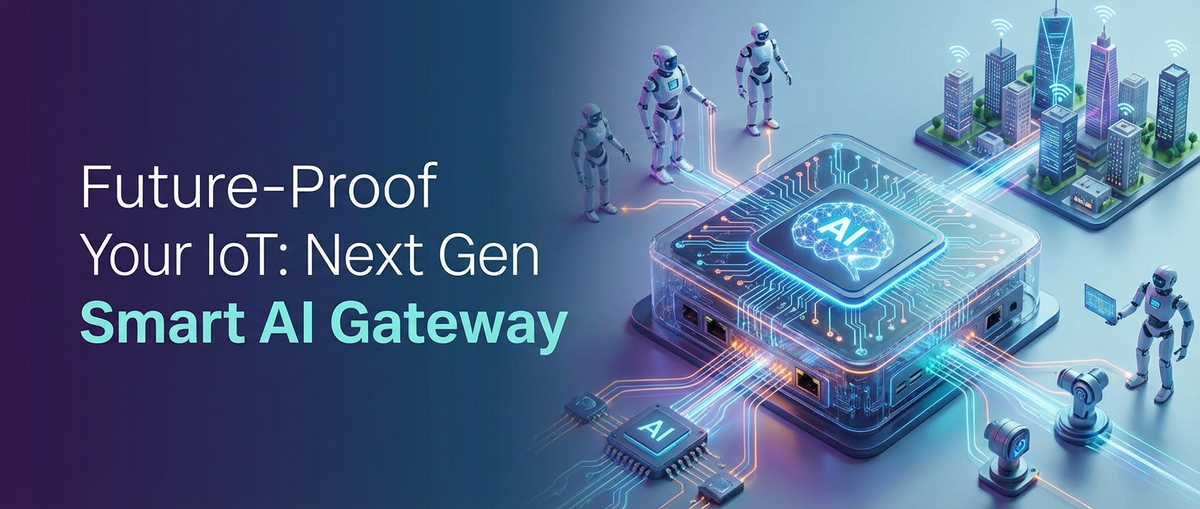


The Internet of Things (IoT) has rapidly transitioned from a futuristic concept to an indispensable backbone of modern society, fundamentally reshaping industries, urban infrastructures, and daily life. From smart homes anticipating our needs to industrial sensors optimizing manufacturing lines, the proliferation of connected devices has unleashed an unprecedented torrent of data. However, this explosive growth brings with it a complex tapestry of challenges: managing vast data volumes, ensuring real-time responsiveness, upholding stringent security, and navigating the intricate landscape of device heterogeneity. Simply connecting devices is no longer sufficient; the imperative now is to extract actionable intelligence, secure every interaction, and ensure the resilience of these interconnected ecosystems against an ever-evolving threat landscape. This foundational shift mandates a rethinking of how we manage and process IoT data, giving rise to the critical importance of the next-generation smart AI Gateway. These sophisticated hubs are not just data conduits; they are intelligent processors, decision-makers, and security enforcers at the very edge of the network, transforming raw data into profound insights and enabling truly autonomous, responsive, and future-proof IoT deployments.
The Unfolding Tapestry of IoT and its Evolving Demands
The current IoT landscape is characterized by its sheer scale and diversity. Billions of sensors, actuators, and devices are constantly generating data, ranging from minuscule temperature readings to high-definition video streams. This data deluge, however, is often fragmented, residing in silos, and communicated through myriad protocols – a Babel of digital languages. Enterprises, urban planners, and consumers alike are grappling with the complexities of integrating these disparate elements into a cohesive, functional system. The sheer volume of data overwhelms traditional cloud-centric architectures, leading to bottlenecks, increased latency, and exorbitant bandwidth costs. More critically, many IoT applications, such as autonomous vehicles, critical infrastructure monitoring, and remote surgical assistance, demand instantaneous decision-making capabilities that simply cannot tolerate the round-trip latency associated with cloud processing. Furthermore, the distributed nature of IoT devices presents a vast attack surface, making robust and adaptive security paramount. Interoperability, the ability for devices and systems from different manufacturers to communicate and collaborate seamlessly, remains a significant hurdle, often requiring bespoke solutions that hinder scalability and innovation. These challenges collectively underscore the urgent need for a more intelligent, agile, and secure intermediary layer at the edge of the network, capable of addressing these multifaceted demands directly at the source of data generation.
Edge Intelligence: The Imperative for Local Processing
The traditional paradigm of sending all IoT data to the cloud for processing is increasingly unsustainable. Bandwidth limitations, privacy concerns, and the need for immediate responses are pushing computation closer to the data source. Edge intelligence, powered by AI, represents a paradigm shift where data processing, analysis, and decision-making occur locally on the devices or at the network edge, rather than relying solely on centralized cloud servers. This approach dramatically reduces latency, making real-time applications viable and robust. Imagine a manufacturing plant where anomaly detection on machinery needs to happen in milliseconds to prevent catastrophic failures; waiting for data to travel to a distant cloud server and back is simply not an option. Furthermore, processing data at the edge often enhances privacy by minimizing the transmission of raw, sensitive information to the cloud, allowing only aggregated or anonymized insights to be shared. This local processing capability also offers significant cost savings by reducing the volume of data sent upstream, optimizing bandwidth utilization, and alleviating the computational load on cloud infrastructure. Edge intelligence, therefore, is not merely an optimization; it is a fundamental requirement for unlocking the full potential of IoT, enabling truly autonomous and resilient systems that can operate effectively even in environments with limited or intermittent connectivity.
Security at the Perimeter: Protecting a Vulnerable Ecosystem
The distributed and pervasive nature of IoT significantly expands the attack surface for cyber threats. Each connected device, from a simple sensor to a complex industrial controller, represents a potential entry point for malicious actors. Traditional perimeter-based security models are proving inadequate in this highly decentralized environment. The challenge is compounded by the fact that many IoT devices are resource-constrained, making it difficult to implement sophisticated security measures directly on them. Therefore, robust security at the network perimeter, specifically at the gateway level, becomes absolutely critical. An effective AI Gateway must act as a vigilant gatekeeper, inspecting incoming and outgoing traffic, identifying anomalous patterns indicative of attacks, and enforcing security policies in real-time. This involves not just basic firewall functions but also AI-driven threat detection, behavioral analytics to spot deviations from normal device operations, and adaptive security measures that can respond dynamically to new threats. Protecting data integrity, ensuring device authentication, and managing access permissions across a vast and diverse ecosystem are monumental tasks that require intelligence and automation embedded directly into the network's most critical junctures. Without a strong, intelligent security posture at the edge, the promise of IoT can quickly devolve into a nightmare of vulnerabilities and data breaches.
From Simple Connectors to Intelligent Co-Pilots: The Evolution of Gateways
The journey of gateways in the IoT ecosystem is a fascinating tale of continuous innovation, driven by the escalating demands of connectivity, data processing, and intelligence. What began as rudimentary data conduits has rapidly evolved into sophisticated, intelligent co-pilots for our digital infrastructure.
The Era of Traditional Gateways: Basic Connectivity and Translation
In the nascent stages of IoT, gateways primarily served as fundamental communication bridges, tasked with simple but essential functions. Their core role was to provide basic connectivity between often isolated, low-power devices and the broader internet or local network. This involved protocol translation, converting device-specific communication standards (like Zigbee, Z-Wave, Modbus, or proprietary industrial protocols) into more universally understood network protocols such as TCP/IP. They would buffer data, aggregate messages from multiple devices, and forward them upstream to central servers or cloud platforms. Security was often rudimentary, relying on basic authentication and encryption, and largely reactive. These early gateways were essentially "dumb pipes," devoid of significant processing power or intelligence. They were vital for bringing diverse devices online but offered little in terms of data optimization, real-time analytics, or proactive security. Their limitations became glaringly apparent as IoT deployments scaled, data volumes exploded, and the need for immediate, intelligent responses at the edge intensified. They were effective for simple data collection but inherently incapable of handling the complex, dynamic requirements of advanced IoT applications.
The Advent of Smart Gateways: Introducing Local Processing and Filters
The limitations of traditional gateways spurred the development of "smart gateways," marking a significant leap forward. These devices began to incorporate more powerful processors and memory, enabling them to perform basic local processing and analytics. Instead of merely forwarding all raw data to the cloud, smart gateways could filter out redundant or irrelevant information, aggregate data points, and even perform rudimentary analytics directly at the edge. This capability helped reduce network traffic, conserve bandwidth, and improve the efficiency of data transmission. For instance, a smart gateway might be programmed to only send temperature readings to the cloud if they exceed a certain threshold, or to average sensor data over a period before transmission. They introduced more sophisticated rule-based engines, allowing for some level of automated decision-making based on predefined conditions. Security also saw improvements, with enhanced encryption capabilities and more robust authentication mechanisms. While a substantial improvement, these smart gateways were still largely reactive and rule-bound. Their "intelligence" was hard-coded, lacking the adaptability and learning capabilities required to address unforeseen scenarios or to evolve with changing environmental conditions. They paved the way, however, for the next, truly revolutionary step: the integration of artificial intelligence.
The Dawn of the AI Gateway: Intelligence at the Forefront
The true transformation arrived with the integration of artificial intelligence, giving birth to the AI Gateway. This is where the gateway transcends its role as a mere conduit or filter, evolving into an intelligent, autonomous, and adaptive decision-making node at the edge. AI Gateway devices are equipped with potent processing units, often including specialized AI accelerators (like GPUs or NPUs), enabling them to run complex machine learning (ML) and deep learning (DL) models directly on-device. This capability facilitates advanced edge intelligence, such as real-time anomaly detection, predictive maintenance, complex pattern recognition, natural language processing, and even sophisticated image and video analysis.
The defining characteristic of an AI Gateway is its ability to learn from data, make inferences, and adapt its behavior over time without constant human intervention or cloud dependence. This dramatically reduces latency for critical applications, enabling instantaneous responses in scenarios where milliseconds matter. Furthermore, AI-powered security features allow these gateways to proactively detect and mitigate threats by identifying unusual patterns in network traffic or device behavior, far beyond what rule-based systems can achieve. They can optimize data flow to the cloud, prioritizing critical information and performing advanced aggregation, thus significantly reducing operational costs and bandwidth strain. The AI Gateway represents the ultimate evolution, transforming the edge from a passive data collection point into an active, intelligent, and secure frontier for the entire IoT ecosystem. It is the cornerstone for building truly resilient, responsive, and future-proof IoT deployments that can not only react to but also anticipate and proactively manage complex environments.
Unpacking the "AI Gateway": Core Principles and Transformative Capabilities
The AI Gateway stands as a pivotal component in the architecture of modern IoT, distinguished by its inherent intelligence and expansive capabilities. It's more than just a bridge; it's a brain at the edge, meticulously designed to imbue IoT ecosystems with autonomy, efficiency, and enhanced security. Understanding its core principles reveals why it's indispensable for future-proofing IoT.
Edge Intelligence and Advanced Analytics: Deciphering Data at the Source
At the heart of an AI Gateway lies its capacity for robust edge intelligence and advanced analytics. Unlike traditional systems that shunt all raw data to the cloud, an AI Gateway brings sophisticated computational power directly to where the data originates. This allows for real-time processing of sensor data, video feeds, and other telemetry. For instance, in an industrial setting, an AI Gateway can continuously monitor the vibrations and acoustic signatures of machinery. Using embedded machine learning models, it can detect subtle anomalies that signify impending equipment failure, triggering alerts for predictive maintenance long before a catastrophic breakdown occurs. This localized processing significantly reduces the reliance on cloud infrastructure, slashing bandwidth costs and ensuring critical insights are generated with ultra-low latency. Furthermore, it can perform complex tasks like image recognition for quality control on a manufacturing line, analyzing product defects in real-time without sending sensitive visual data off-site. The ability to filter, aggregate, and analyze data at the source not only optimizes resource utilization but also ensures that only pertinent, actionable intelligence is transmitted further up the chain, making the entire IoT pipeline leaner and more efficient.
Real-time Decision Making: Enabling Autonomous Responses
One of the most profound benefits of an AI Gateway is its enablement of real-time decision-making capabilities. In scenarios like autonomous vehicles, smart grid management, or critical patient monitoring, delays of even a few milliseconds can have severe consequences. By embedding AI models that can analyze data and make inferences instantly, the gateway transforms from a data forwarder into an active decision-maker. For example, in smart traffic management, an AI Gateway could analyze live video feeds from intersections, identify congestion patterns, and autonomously adjust traffic light timings to optimize flow, all within moments. This level of responsiveness is unachievable with cloud-dependent architectures due to network latency. The gateway's ability to act immediately on local data empowers IoT systems to operate with a higher degree of autonomy and resilience, critical for applications that cannot afford to wait for cloud round-trips. This translates into increased safety, operational efficiency, and the ability to maintain critical services even during network outages.
Enhanced and Adaptive Security: A Proactive Shield at the Edge
Security is paramount in IoT, and the AI Gateway provides a formidable, proactive shield. Leveraging AI, these gateways can move beyond traditional, static security measures to offer adaptive and intelligent protection. They can continuously monitor network traffic and device behavior, employing machine learning algorithms to detect anomalies that signify potential cyber threats, such as unauthorized access attempts, data exfiltration, or malware infections. For example, if a temperature sensor suddenly begins transmitting data at an unusual frequency or attempts to communicate with an unknown IP address, the AI Gateway can identify this deviation from baseline behavior and automatically isolate the compromised device, preventing the spread of an attack. This behavioral analysis is far more effective than signature-based detection, which often fails against novel threats. Furthermore, AI Gateways can enforce dynamic access policies, segment networks based on device roles, and even perform real-time threat intelligence updates to stay ahead of emerging vulnerabilities. They can also integrate with comprehensive API management platforms, ensuring that all API calls to and from connected devices are authenticated, authorized, and rate-limited, creating a truly layered security posture.
Optimized Resource Utilization: Streamlining Data Flow
The sheer volume of data generated by billions of IoT devices poses significant challenges for network bandwidth and cloud storage. An AI Gateway intelligently addresses this by optimizing resource utilization. Through advanced data filtering, compression, and aggregation, it ensures that only essential and processed information is transmitted to the cloud. Imagine a smart city deployment with thousands of environmental sensors; an AI Gateway can aggregate data from clusters of sensors, identify trends, and send only summarized reports or critical alerts to the central platform, rather than every individual reading. This drastically reduces bandwidth consumption and the associated operational costs. Moreover, by offloading computational tasks from the cloud to the edge, the gateway lessens the processing burden on centralized servers, leading to more efficient cloud resource allocation. This strategic approach to data management not only saves costs but also enhances the overall scalability and sustainability of large-scale IoT deployments, making them more manageable and cost-effective in the long run.
Protocol Agnostic Communication and Interoperability: Bridging the Digital Divide
The IoT ecosystem is notoriously fragmented, with myriad devices communicating using a vast array of proprietary and open protocols (MQTT, CoAP, Zigbee, LoRaWAN, Bluetooth Low Energy, Modbus, etc.). This lack of standardization creates significant interoperability challenges, making it difficult for devices from different vendors or even different generations to communicate seamlessly. The AI Gateway acts as a universal translator and protocol converter. It can ingest data from devices using diverse protocols, normalize the data format, and then translate it into a unified, consumable format (often JSON or XML over HTTP/HTTPS) that can be easily understood by backend applications or cloud platforms. This capability is critical for integrating legacy systems with newer IoT deployments, breaking down data silos, and simplifying complex multi-vendor environments. By providing a consistent communication interface, the AI Gateway abstracts away the underlying protocol complexities, enabling developers to focus on building applications rather than wrestling with integration headaches. This significantly accelerates deployment times and reduces development costs, fostering a more cohesive and adaptable IoT landscape.
Model Deployment and Management: AI on the Front Lines
A crucial function of the AI Gateway is its ability to deploy, manage, and update AI/ML models directly at the edge. This is not a trivial task, as edge devices often have limited computational resources and connectivity. The gateway provides the infrastructure to securely push new model versions, monitor their performance, and roll back if necessary. This capability is vital for maintaining the intelligence of the IoT ecosystem over time. For example, a predictive maintenance model might need to be retrained periodically with new data to improve its accuracy as machine wear patterns evolve. The AI Gateway facilitates this continuous learning cycle, ensuring that the edge intelligence remains current and effective. Furthermore, it enables techniques like federated learning, where models are trained locally on device data and only aggregated insights (not raw data) are sent to the cloud for global model improvement, enhancing privacy. Platforms designed to streamline this process, such as ApiPark, offer quick integration of numerous AI models and provide a unified management system for authentication and cost tracking across these models. This empowers organizations to rapidly deploy and manage a diverse portfolio of AI capabilities directly where they are needed most.
Self-Learning and Adaptation: Evolving with the Environment
Perhaps the most advanced capability of an AI Gateway is its capacity for self-learning and adaptation. Unlike static, rule-based systems, these intelligent gateways can continuously learn from the data they process and the outcomes of their decisions. This enables them to improve their performance over time, adjusting to changing environmental conditions or new operational parameters without requiring constant human intervention. For instance, in a smart building, an AI Gateway managing HVAC systems can learn the optimal energy consumption patterns based on occupancy, weather forecasts, and user preferences, progressively refining its control strategies for maximum efficiency. In a factory, it can learn to distinguish between different types of machine anomalies, becoming more accurate in its predictive maintenance alerts. This adaptive intelligence makes IoT deployments more resilient, efficient, and capable of operating autonomously in dynamic and unpredictable environments, truly embodying the "smart" in smart gateway. This continuous feedback loop ensures that the IoT system not only reacts but also proactively evolves, making it truly future-proof.
The Strategic Importance of the API Gateway in Modern IoT Architectures
While the advent of AI gateways represents a significant leap forward, it is crucial to recognize that they often build upon and integrate the foundational functionalities of a robust API Gateway. The API Gateway has long been an indispensable component in modern distributed architectures, serving as the single entry point for a multitude of API calls and acting as a central control plane for service consumption. In the context of IoT, its strategic importance is amplified, providing structure, security, and scalability to device interactions.
API Management: The Backbone of Connectivity and Control
At its core, an API Gateway provides comprehensive API management capabilities that are critical for any scalable and secure IoT deployment. This includes robust authentication and authorization mechanisms, ensuring that only legitimate devices and applications can access specific services or data streams. It enforces rate limiting, preventing individual devices or rogue applications from overwhelming backend systems with excessive requests, thereby safeguarding system stability. Furthermore, an API Gateway offers invaluable monitoring and logging features, tracking every API call, its origin, destination, and outcome. This data is essential for troubleshooting, performance analysis, and security auditing, providing granular visibility into the intricate web of IoT interactions. Without such a central point of control, managing the myriad API endpoints generated by thousands or millions of devices would be an unmanageable chaos, leading to security vulnerabilities, performance degradation, and operational complexities.
Decoupling Clients from Backend Services: Enhancing Agility
A key architectural benefit of an API Gateway is its ability to decouple client applications (including IoT devices and edge applications) from the underlying backend services. Instead of devices needing to know the specific endpoints and intricacies of multiple microservices, they interact solely with the gateway. The gateway then intelligently routes these requests to the appropriate backend service, translating protocols or data formats as needed. This abstraction layer provides immense agility; backend services can be independently developed, deployed, scaled, or even replaced without requiring changes to the IoT devices or edge applications. For instance, if a data analytics service is upgraded or moved, the gateway can seamlessly redirect traffic without any downtime or modification on the device side. This decoupling fosters a more resilient and modular IoT architecture, allowing for continuous innovation and easier maintenance of complex systems.
Traffic Management and Load Balancing: Ensuring Performance and Reliability
In large-scale IoT deployments, managing the sheer volume and variability of traffic from diverse devices is a monumental task. An API Gateway is equipped with sophisticated traffic management and load balancing capabilities, ensuring optimal performance and high availability. It can distribute incoming API requests across multiple backend service instances, preventing any single server from becoming a bottleneck. This is crucial for applications where sudden spikes in data generation or command requests are common. Beyond simple round-robin distribution, advanced gateways can employ intelligent load balancing algorithms that consider server health, current load, and response times to route traffic most efficiently. They can also implement circuit breakers to gracefully handle service failures, redirecting traffic away from unhealthy instances to maintain system reliability. This proactive management of traffic ensures that the IoT ecosystem remains responsive and robust, even under heavy load or partial service degradation.
AI Gateways as Enhanced API Gateways: The Convergence
The convergence of AI capabilities with traditional API Gateway functionalities results in a powerful hybrid: the AI Gateway often embodies and extends the core features of an API Gateway. While an API Gateway focuses on managing the interface to backend services, an AI Gateway adds an intelligent layer that can process, analyze, and make decisions on the data before it even reaches the backend, or before a response is sent to the device. This means an AI Gateway can not only perform authentication and authorization but also intelligently filter data based on content, prioritize critical alerts using machine learning, or even generate dynamic responses at the edge. Solutions that combine AI gateway capabilities with robust API management, such as ApiPark, exemplify this integration. APIPark serves as an open-source AI gateway and API management platform, designed to help developers and enterprises manage, integrate, and deploy AI and REST services with ease. It provides comprehensive API lifecycle management, enabling users to design, publish, invoke, and decommission APIs while regulating traffic forwarding, load balancing, and versioning, all while integrating AI intelligence. This holistic approach ensures that the entire lifecycle of IoT interactions, from device to cloud and back, is managed intelligently, securely, and efficiently.
Leveraging LLM Gateways for Advanced Edge AI
The explosion of Large Language Models (LLMs) has revolutionized artificial intelligence, bringing unprecedented capabilities in natural language understanding, generation, and complex reasoning. While initially cloud-centric due to their immense computational requirements, the demand for conversational AI and sophisticated language processing at the very edge of the network is growing exponentially. This is where the concept of an LLM Gateway becomes profoundly significant, bridging the gap between resource-intensive LLMs and the constraints of edge environments.
The Challenge of Deploying LLMs at the Edge
Deploying full-fledged LLMs directly on edge devices presents formidable challenges. These models typically boast billions, even trillions, of parameters, requiring massive computational power (GPUs, TPUs), significant memory, and substantial energy consumption. Most IoT devices, designed for efficiency and often battery-powered, simply do not possess these resources. Even a more powerful AI Gateway might struggle with the largest models. The latency involved in sending every natural language query to a distant cloud-based LLM is often unacceptable for real-time interactive applications, leading to a poor user experience. Furthermore, privacy concerns dictate that sensitive user conversations should ideally not leave the local network for processing, making edge-based solutions more appealing.
The Role and Functionality of the LLM Gateway
An LLM Gateway is a specialized form of an AI Gateway that focuses on optimizing the access, management, and deployment of large language models, either by running smaller, optimized models locally or by intelligently routing and managing requests to cloud-based LLMs. Its primary goal is to make advanced natural language capabilities accessible and efficient at the edge.
Key functionalities of an LLM Gateway include:
- Model Optimization and Quantization: The gateway can host smaller, fine-tuned, or quantized versions of LLMs. Quantization reduces the precision of model weights, significantly shrinking model size and computational demands while retaining acceptable accuracy. This allows more powerful language models to run on resource-constrained hardware.
- Prompt Engineering at the Edge: Instead of sending raw user input directly to a cloud LLM, the gateway can perform local prompt engineering. This involves adding context, instructions, or filtering sensitive information before forwarding the optimized prompt to a larger, more powerful LLM in the cloud. This reduces the data transmitted and can improve the relevance of responses.
- Intelligent Routing and Caching: For scenarios where local LLM inference isn't feasible, the LLM Gateway acts as a smart proxy. It can intelligently route natural language queries to the most appropriate (and potentially cheapest) cloud LLM service, manage API keys, and cache common responses to reduce latency and API call costs.
- Secure and Efficient Inference: The gateway ensures that interactions with LLMs, whether local or remote, are secure and efficient. It can enforce access controls, encrypt communication, and monitor usage to prevent abuse.
- Offline Capability: By hosting smaller models, an LLM Gateway can provide basic natural language understanding and generation capabilities even when disconnected from the internet, crucial for remote or intermittent connectivity environments.
- Unified API Format for AI Invocation: This standardization simplifies AI usage and maintenance, a core philosophy behind platforms like ApiPark which unify API formats for AI invocation and encapsulate prompts into REST APIs. This means a developer can interact with various LLMs using a consistent API, abstracting away the underlying differences and simplifying integration.
Use Cases: Bringing Conversational AI to the Edge
The implications of LLM Gateways for IoT are profound:
- Natural Language Interaction in Smart Homes/Factories: Imagine speaking naturally to your smart home system or factory equipment, asking it to adjust settings, report status, or troubleshoot issues. An LLM Gateway enables this intuitive, voice-controlled interface without relying on constant cloud connectivity for every command.
- Complex Query Processing for Field Technicians: A technician in a remote area could ask complex, open-ended questions to a local LLM Gateway about equipment manuals or troubleshooting guides, receiving immediate, context-aware answers even offline.
- Real-time Summarization and Anomaly Reporting: In security or surveillance applications, an LLM Gateway could process textual incident reports from multiple sources, summarize key events, and highlight anomalies in natural language, providing actionable intelligence without human review of every log entry.
- Personalized Customer Experiences: In retail environments, an edge-based LLM could provide highly personalized recommendations or answer customer queries in natural language, improving the shopping experience.
By integrating LLM Gateway functionalities into a broader AI Gateway framework, organizations can deploy advanced conversational AI and sophisticated language processing capabilities directly at the edge, unlocking new levels of automation, user experience, and intelligence across their IoT ecosystems while respecting privacy and minimizing latency. This represents a significant step towards truly intelligent and intuitive human-machine interaction in the IoT era.
APIPark is a high-performance AI gateway that allows you to securely access the most comprehensive LLM APIs globally on the APIPark platform, including OpenAI, Anthropic, Mistral, Llama2, Google Gemini, and more.Try APIPark now! 👇👇👇
Architectural Design Patterns for Next-Gen Smart AI Gateways
Designing and deploying a robust, scalable, and secure next-gen smart AI Gateway requires adherence to modern architectural principles. The goal is to create a flexible, resilient, and high-performance intermediary that can handle the diverse and demanding requirements of contemporary IoT ecosystems.
The Edge-to-Cloud Continuum: A Harmonious Orchestration
Modern IoT architectures are rarely purely edge-based or purely cloud-based; instead, they operate on an "edge-to-cloud continuum." The AI Gateway plays a central role in orchestrating this continuum. It manages the judicious distribution of workloads, deciding which data processing tasks are best performed locally (for low latency, privacy, or bandwidth conservation) and which are better suited for the vast computational and storage capabilities of the cloud (for long-term analytics, model retraining, or global aggregation). This pattern ensures that each component—edge device, gateway, and cloud—is utilized for its optimal purpose. The gateway acts as an intelligent traffic cop, routing data, commands, and even AI models between the edge and cloud seamlessly. This allows for hybrid deployments that leverage the best of both worlds, providing immediate responsiveness at the edge while benefiting from the scalability and comprehensive services of the cloud.
Microservices Architecture for Gateway Functions: Modularity and Scalability
To achieve flexibility and maintainability, AI Gateways are increasingly designed using a microservices architecture. Instead of a monolithic application, the gateway's functionalities (e.g., protocol translation, data filtering, AI inference, security module, API management) are broken down into small, independent, and loosely coupled services. Each microservice can be developed, deployed, and scaled independently. For instance, the MQTT ingestion service can be scaled up during peak device connectivity without affecting the anomaly detection service. This modularity makes the gateway more resilient; a failure in one microservice does not bring down the entire system. It also allows for easier updates and maintenance, as individual components can be upgraded or replaced without disrupting other functionalities. This approach is vital for the dynamic and evolving nature of IoT, where new protocols or AI models might need to be integrated frequently.
Containerization (Docker, Kubernetes) for Flexible Deployment: Portability and Isolation
Containerization, particularly using technologies like Docker and orchestration platforms like Kubernetes (K3s for edge), has become a standard practice for deploying microservices within an AI Gateway. Each microservice can be packaged into an isolated container, which includes all its dependencies, ensuring consistent behavior across different deployment environments (from development to production, and across various gateway hardware). This provides unparalleled portability, allowing gateway functionalities to be easily deployed on diverse hardware, from embedded systems to powerful industrial PCs. Kubernetes at the edge (often in lightweight distributions like K3s) then manages the deployment, scaling, and networking of these containers. It ensures high availability by automatically restarting failed containers and distributing workloads. This combination of microservices and containerization makes AI Gateways highly resilient, scalable, and adaptable to varying edge computing resources, simplifying management in complex, distributed IoT environments.
Data Orchestration and Stream Processing: Managing the Data Deluge
The immense volume and velocity of data generated by IoT devices necessitate sophisticated data orchestration and stream processing capabilities within the AI Gateway. The gateway must be able to ingest data from thousands of sources simultaneously, often in real-time. This involves implementing robust message queuing systems (e.g., Kafka at the edge, MQTT brokers) and stream processing engines (e.g., Flink, Spark Streaming, or lightweight edge alternatives) that can filter, transform, aggregate, and enrich data streams on the fly. For instance, a stream processing module within the gateway might join sensor readings with contextual data, apply an AI model for anomaly detection, and then route the processed data to different destinations—a low-latency alert to an actuator and an aggregated summary to the cloud. This intelligent data orchestration prevents bottlenecks, ensures data integrity, and maximizes the value extracted from raw IoT data by turning it into actionable intelligence without delay.
Federated Learning at the Edge: Collaborative Intelligence, Enhanced Privacy
Federated learning is an advanced architectural pattern that significantly enhances the intelligence and privacy aspects of AI Gateways. Instead of sending raw, sensitive data from individual devices to a central cloud server for model training, federated learning enables local models to be trained directly on the edge devices or on the AI Gateway using local data. Only the learned model updates (e.g., weight adjustments), not the raw data itself, are then sent to a central server, where they are aggregated to improve a global model. This global model is then sent back to the gateways for further local refinement. This pattern offers significant privacy advantages by keeping sensitive data localized. It also reduces bandwidth consumption associated with sending large datasets to the cloud. AI Gateways serve as crucial intermediaries in this process, managing the distribution of global models, orchestrating local training, and securely aggregating updates, thereby enabling collaborative intelligence across a vast network of IoT devices while upholding stringent privacy standards.
Security, Privacy, and Trust in the AI-Powered IoT Edge
In the age of pervasive IoT and ubiquitous AI at the edge, security, privacy, and trust are not optional add-ons but fundamental pillars. The integration of AI into gateways, while offering immense benefits, also introduces new layers of complexity and potential vulnerabilities that must be rigorously addressed.
Layered Security Approach: Defense in Depth
Effective security for AI Gateways and the broader IoT ecosystem necessitates a multi-layered, "defense in depth" approach. No single security measure is sufficient; instead, multiple interlocking safeguards are deployed across different layers of the architecture. This begins at the hardware level, with secure boot mechanisms ensuring that only authenticated and untampered firmware can load. Hardware Security Modules (HSMs) or Trusted Platform Modules (TPMs) embedded in the gateway can protect cryptographic keys and perform secure operations. The operating system and software stack must be hardened, with regular patching and vulnerability management. Network security is critical, involving firewalls, intrusion detection/prevention systems, and network segmentation to isolate devices and services. Application-level security ensures that APIs and services exposed by the gateway are properly authenticated, authorized, and free from common vulnerabilities. Each layer acts as a barrier, increasing the difficulty for attackers to breach the system and providing resilience against various attack vectors.
Data Encryption: Protecting Information at Rest and In Transit
Data encryption is non-negotiable for safeguarding sensitive IoT data. AI Gateways must implement robust encryption protocols for data both at rest and in transit. Data at rest, such as cached sensor readings, configuration files, or AI models stored on the gateway's memory, should be encrypted to prevent unauthorized access if the device is physically compromised. More crucially, all data transmitted between IoT devices and the gateway, between gateways and the cloud, and between different services within the gateway itself, must be encrypted using strong cryptographic protocols like TLS/SSL. This ensures confidentiality and integrity, preventing eavesdropping, tampering, or man-in-the-middle attacks. The management of encryption keys is also vital; secure key storage and rotation mechanisms must be in place to prevent their compromise, forming a continuous chain of trust from the device to the cloud.
AI for Threat Detection: Proactive and Adaptive Security
The integration of AI into the gateway itself transforms security from a reactive to a proactive and adaptive discipline. AI-powered threat detection leverages machine learning algorithms to continuously analyze network traffic patterns, device behavior, and system logs for anomalies that could indicate a cyberattack. For example, an AI model can establish a baseline of "normal" behavior for each connected device (e.g., usual data transmission frequency, destination IP addresses, power consumption patterns). Any significant deviation from this baseline, such as an unusual data burst, communication with an unrecognized server, or an attempt to access restricted resources, can trigger an alert or even an automated response, like isolating the potentially compromised device. This behavioral analytics approach is highly effective against zero-day exploits and novel threats that signature-based systems would miss. Furthermore, AI Gateways can implement adaptive security policies, dynamically adjusting firewall rules or access controls in response to detected threats or changes in the security landscape, creating a truly intelligent and resilient defense system.
Secure Boot and Hardware-Level Security: Trust from the Ground Up
The foundation of trust in an AI Gateway starts at the hardware level. Secure boot ensures that the gateway's firmware and operating system are genuine and untampered with before they are loaded. This process typically involves cryptographic signatures that verify the integrity of each software component in the boot chain. If any component is found to be compromised, the boot process is halted, preventing malicious software from taking control. Hardware Security Modules (HSMs) or Trusted Platform Modules (TPMs) provide a secure environment for storing cryptographic keys, performing cryptographic operations, and protecting sensitive data. These hardware-backed security features make it significantly more difficult for attackers to tamper with the gateway's core functions or extract sensitive information, providing a robust root of trust for the entire IoT system.
Privacy by Design: Minimizing Data Exposure
In an era of increasing data privacy regulations (e.g., GDPR, CCPA), AI Gateways must be designed with privacy in mind from the outset. "Privacy by Design" principles mean that data privacy considerations are integrated into every stage of the gateway's development and deployment. This includes data minimization, collecting and processing only the data absolutely necessary for a given purpose. Techniques such as data anonymization and pseudonymization can be applied at the edge, transforming identifiable data into non-identifiable forms before it leaves the local network, greatly reducing privacy risks. Differential privacy, another advanced technique, adds noise to data to prevent individual records from being re-identified in aggregated datasets. The AI Gateway can act as a privacy enforcement point, ensuring that data egress adheres to predefined privacy policies and user consents, thereby safeguarding sensitive information and building trust with end-users.
Compliance with Regulations: Navigating the Legal Landscape
IoT deployments often span multiple jurisdictions, each with its own set of data privacy, security, and industry-specific regulations. AI Gateways play a crucial role in helping organizations achieve and maintain compliance. By implementing features like fine-grained access controls, comprehensive logging, audit trails, and data anonymization capabilities, the gateway can provide the necessary mechanisms to meet regulatory requirements. For example, API resource access requiring approval, a feature offered by ApiPark, ensures that callers must subscribe to an API and await administrator approval before invocation, preventing unauthorized API calls and potential data breaches, which is crucial for compliance with various data protection acts. The detailed logging capabilities of an advanced API Gateway can also provide the verifiable records needed for audits, demonstrating adherence to data handling and security protocols, thus mitigating legal and reputational risks for enterprises.
Performance, Scalability, and Reliability: The Engineering Imperatives
For any next-gen smart AI Gateway to be truly effective in a demanding IoT environment, it must excel in performance, scalability, and reliability. These engineering imperatives ensure that the gateway can handle the exponential growth of connected devices, process data at the required speeds, and remain operational under various stresses.
High-Throughput Processing Capabilities: Handling the Data Deluge
The sheer volume of data generated by billions of IoT devices necessitates that AI Gateways possess high-throughput processing capabilities. They must be able to ingest, process, and route data from thousands, if not millions, of concurrent connections without becoming a bottleneck. This requires optimized software architectures, efficient network stacks, and often specialized hardware accelerators (like GPUs or NPUs) to handle computationally intensive AI/ML inference tasks at the edge. The ability to perform real-time data filtering, aggregation, and analytics on vast streams of incoming data is paramount. A performant gateway can process gigabytes of data per second, ensuring that insights are generated and actions are taken without delay, even during peak loads. This prevents data backlogs and ensures that the entire IoT system remains responsive and efficient.
Low-Latency Requirements: Speed is Paramount
Many critical IoT applications, from industrial automation to autonomous driving, have ultra-low latency requirements. Decisions need to be made in milliseconds, and any delay can have severe consequences. AI Gateways are specifically designed to minimize latency by performing processing and decision-making at the edge, close to the data source. This eliminates the round-trip delay to the cloud, which can range from tens to hundreds of milliseconds. Achieving low latency requires highly optimized software, efficient communication protocols, and strategic placement of computational resources. The gateway's ability to run AI models locally means that real-time predictive analytics, anomaly detection, and control commands can be executed almost instantaneously, providing the responsiveness essential for mission-critical IoT deployments.
Horizontal Scalability for Distributed Deployments: Growing with Demand
IoT deployments are rarely static; they grow, evolve, and expand. A truly future-proof AI Gateway architecture must be horizontally scalable, meaning that capacity can be increased by adding more gateway instances rather than upgrading existing ones. This allows organizations to scale their IoT infrastructure cost-effectively and seamlessly as the number of connected devices or the volume of data grows. Horizontal scalability often relies on microservices architectures deployed within container orchestration platforms (like Kubernetes), enabling new gateway instances to be spun up and integrated into the network with minimal effort. This elastic scaling ensures that the gateway infrastructure can adapt to fluctuating demands, preventing performance degradation during periods of high load and optimizing resource utilization during quieter times.
Fault Tolerance and Resilience: Uninterrupted Operation
Reliability is non-negotiable for IoT systems, especially in industrial, healthcare, or public safety applications where downtime can be catastrophic. AI Gateways must be built with fault tolerance and resilience in mind. This means incorporating mechanisms to prevent single points of failure, such as redundant components, hot-swappable modules, and automatic failover capabilities. If one gateway instance fails, another should seamlessly take over its responsibilities without interruption to service. This also extends to software resilience, with robust error handling, self-healing capabilities (e.g., automated service restarts), and graceful degradation strategies to maintain core functionality even under partial system failure. The ability of a gateway to operate reliably in challenging environments, often with intermittent connectivity or harsh physical conditions, is a testament to its engineering integrity.
Monitoring, Logging, and Powerful Data Analysis for Operational Insights
To ensure continuous performance, scalability, and reliability, AI Gateways must provide comprehensive monitoring, logging, and data analysis capabilities. This allows operators to gain deep insights into the gateway's health, performance metrics, and the behavior of connected devices and services. Detailed API call logging, for instance, records every aspect of each API interaction, providing crucial data for troubleshooting, performance optimization, and security audits. ApiPark offers comprehensive logging capabilities, recording every detail of each API call, which allows businesses to quickly trace and troubleshoot issues and ensure system stability. Furthermore, advanced data analysis tools can process historical call data and operational metrics to identify long-term trends, predict potential issues before they occur, and inform proactive maintenance. Solutions like ApiPark demonstrate remarkable performance, rivalling Nginx, with just an 8-core CPU and 8GB of memory achieving over 20,000 TPS, and offer powerful data analysis alongside detailed API call logging to ensure stability and aid in predictive maintenance. This proactive approach to operational intelligence is vital for maintaining the health and efficiency of large-scale, distributed IoT ecosystems and ensuring their long-term viability.
Real-World Applications and Transformative Use Cases
The power of next-gen smart AI Gateways, combining the capabilities of AI Gateway, LLM Gateway, and robust API Gateway functionalities, is most vividly demonstrated through their transformative impact across a diverse range of industries and applications. They are the catalyst for truly intelligent, autonomous, and responsive IoT ecosystems.
Smart Cities: Orchestrating Urban Intelligence
In the context of smart cities, AI Gateways are critical for orchestrating a myriad of interconnected sensors and systems to enhance urban living. * Traffic Management: Gateways can analyze real-time video feeds from intersections to detect traffic density, pedestrian movements, and parking availability. Using embedded AI models, they can dynamically adjust traffic light timings, reroute vehicles to less congested paths, and guide drivers to available parking spaces, significantly reducing urban sprawl and commute times. This localized intelligence means decisions are made instantaneously, without relying on central cloud systems for every adjustment. * Public Safety: AI-enabled gateways can process data from surveillance cameras, acoustic sensors (detecting gunshots, screams), and environmental monitors. They can identify suspicious activities, unusual crowd gatherings, or environmental hazards (like gas leaks) in real-time, alerting emergency services and potentially preventing incidents or mitigating their impact. * Environmental Monitoring: Gateways can aggregate data from air quality, noise pollution, and water level sensors across different city zones. They can perform localized analysis to identify pollution hotspots or flood risks, triggering alerts and enabling immediate responses from municipal authorities. * Smart Street Lighting: AI Gateways can optimize street lighting based on real-time pedestrian and vehicle traffic, ambient light levels, and even weather conditions, significantly reducing energy consumption while ensuring public safety.
Industrial IoT (IIoT): Revolutionizing Manufacturing and Operations
For Industrial IoT, AI Gateways are the cornerstone of Industry 4.0, driving automation, efficiency, and safety. * Predictive Maintenance: Gateways collect data from machinery sensors (vibration, temperature, pressure, current draw). AI models at the edge can analyze this data to detect subtle anomalies indicative of impending equipment failure, predicting breakdowns days or weeks in advance. This allows for scheduled maintenance, avoiding costly unplanned downtime and maximizing asset lifespan. * Process Optimization: In manufacturing plants, gateways can monitor production lines, analyze throughput, quality metrics, and energy consumption. AI can identify inefficiencies or bottlenecks in real-time and recommend adjustments to machinery settings or material flow to optimize production processes and reduce waste. * Quality Control: AI-powered gateways equipped with computer vision can inspect products on the assembly line for defects with superhuman speed and accuracy, immediately identifying and rejecting faulty items, thereby improving product quality and reducing recall risks. * Worker Safety: Gateways can monitor worker movements, detect unsafe conditions (e.g., workers entering hazardous zones without proper PPE), or identify potential falls or accidents, triggering immediate alerts to ensure worker safety.
Healthcare: Transforming Patient Care and Operational Efficiency
In healthcare, AI Gateways are enabling more personalized, proactive, and efficient patient care, particularly in remote monitoring scenarios. * Remote Patient Monitoring: Gateways connected to wearable sensors and medical devices can continuously collect vital signs (heart rate, blood pressure, glucose levels) from patients at home. AI models at the edge can analyze this data for alarming trends or sudden changes, immediately alerting healthcare providers in case of a critical event, thus reducing hospital readmissions and enabling proactive intervention. * Smart Diagnostics: In clinics or remote healthcare facilities, gateways can assist in initial diagnostics by processing medical images (e.g., X-rays, ECGs) through embedded AI models, flagging potential anomalies for physician review, accelerating diagnosis, especially in areas with limited specialist access. * Asset Tracking and Management: In large hospitals, gateways can track the location and status of critical medical equipment, ensuring devices are available when needed, improving operational efficiency and patient outcomes.
Retail: Enhancing Customer Experience and Operational Intelligence
Retail environments are increasingly leveraging AI Gateways to personalize customer experiences, optimize store operations, and enhance security. * Inventory Management: Gateways can integrate data from smart shelves (weight sensors, RFID) and overhead cameras to monitor stock levels in real-time. AI can predict demand fluctuations, identify misplaced items, and automate reordering processes, minimizing out-of-stock situations and reducing waste. * Personalized Customer Experiences: By analyzing in-store traffic patterns, dwell times at different displays, and even anonymized demographic data, gateways can trigger personalized digital signage, special offers, or direct staff to assist customers, enhancing the shopping experience. * Loss Prevention: AI-powered video analytics at the gateway can detect suspicious behavior (e.g., loitering, unusual movements near exits, product concealment) and alert staff, significantly reducing shrink and enhancing store security. * Queue Management: Gateways can monitor checkout lines and predict queue lengths, dynamically opening new registers or alerting staff to manage customer flow, improving efficiency and customer satisfaction.
Autonomous Systems: The Foundation for Self-Governing Machines
For autonomous systems, whether vehicles, drones, or robots, AI Gateways (often integrated directly into the system) are absolutely fundamental for real-time decision-making and safety. * Autonomous Vehicles: In self-driving cars, the AI Gateway processes vast amounts of sensor data (Lidar, radar, cameras) from the vehicle's environment. It performs object detection, pedestrian recognition, lane keeping, and hazard assessment in milliseconds, enabling the vehicle to make instantaneous driving decisions crucial for safety. * Robotics: Industrial robots or autonomous drones rely on edge AI for real-time navigation, object manipulation, and interaction with their environment. The gateway processes sensory input, executes AI models for path planning and task execution, and ensures safe operation. * Drone Delivery: For drone delivery systems, the gateway handles real-time navigation, obstacle avoidance, and package drop-off decisions, crucial for safe and efficient operations in complex urban or rural environments.
In all these diverse applications, the next-gen smart AI Gateway acts as the intelligent intermediary, transforming raw data into actionable insights, enabling real-time autonomous decisions, and providing the robust security and connectivity that are essential for future-proofing our increasingly intelligent and interconnected world.
Challenges and The Horizon: Charting the Future of AI Gateways
While the promise of next-gen smart AI Gateways is immense, their widespread adoption and full potential realization are not without significant hurdles. Addressing these challenges will pave the way for a more robust, intelligent, and interconnected future. Simultaneously, emerging trends and technologies are continually pushing the boundaries of what these gateways can achieve.
Interoperability Standards: Unifying a Fragmented Ecosystem
One of the most persistent challenges in IoT is the lack of universal interoperability standards. The market is fragmented with numerous proprietary protocols, data formats, and communication methodologies. While AI Gateways act as powerful translators, a proliferation of custom integrations can still create complexity and hinder scalability. Developing and adopting widely accepted open standards for data exchange, device communication, and AI model deployment at the edge is crucial. Initiatives like Matter for smart home devices, OPC UA for industrial automation, and standardized API specifications are steps in the right direction. A more unified ecosystem would simplify gateway development, reduce integration costs, and accelerate the deployment of intelligent IoT solutions across industries.
Ethical AI at the Edge: Ensuring Fairness and Transparency
As AI Gateways become more autonomous and make critical decisions, the ethical implications of AI at the edge come into sharp focus. This includes concerns around algorithmic bias (where AI models trained on unrepresentative data might make unfair or discriminatory decisions), data privacy (especially when processing sensitive personal information locally), and accountability for decisions made by AI. Ensuring that AI models deployed on gateways are fair, transparent, and explainable is paramount. This requires robust testing, continuous monitoring for bias, and the development of mechanisms to audit and understand the reasoning behind AI-driven decisions. Establishing clear ethical guidelines and regulatory frameworks for edge AI will be critical to building public trust and ensuring responsible deployment.
Hardware Limitations: Balancing Power and Constraints
Despite advancements, edge devices and even many AI Gateways still operate under significant hardware constraints compared to cloud data centers. Limited computational power, memory, storage, and power consumption budgets pose challenges for deploying complex AI models, especially large language models. While techniques like model quantization, pruning, and efficient inference engines help, there's a constant trade-off between model sophistication and resource consumption. Innovation in edge-optimized AI hardware (e.g., specialized NPUs with lower power draw), efficient AI frameworks, and continuous advancements in model compression techniques will be essential to overcome these limitations and enable even more powerful AI to run directly on the gateway.
Skill Gap for Deployment and Management: Bridging Expertise Divides
The deployment and ongoing management of sophisticated AI Gateways require a unique blend of skills spanning embedded systems, networking, cloud computing, machine learning operations (MLOps), and cybersecurity. There is currently a significant skill gap in the workforce, making it challenging for many organizations to effectively design, implement, and maintain these complex systems. Investing in education, training programs, and fostering collaborative ecosystems (like open-source communities) will be vital to develop the talent pool required to fully leverage the capabilities of next-gen AI Gateways. Simplifying deployment through tools and platforms, such as ApiPark which offers quick deployment with a single command line, also helps bridge this gap by making advanced capabilities more accessible.
The Rise of Explainable AI (XAI) at the Edge: Trust Through Transparency
Building upon the ethical AI challenge, the future will see a greater emphasis on Explainable AI (XAI) at the edge. For critical applications, merely making a correct decision is not enough; the AI Gateway must also be able to explain why it made that decision. For instance, in an industrial setting, if a gateway's AI model flags a machine for predictive maintenance, operators need to understand the underlying data and reasoning (e.g., "vibration pattern in frequency band X indicates bearing wear") to trust the recommendation and act upon it. XAI techniques will allow AI Gateways to provide insights into their decision-making process, fostering greater trust, facilitating troubleshooting, and enabling better human oversight and collaboration with intelligent systems.
Quantum Computing's Potential Impact: A Long-Term Shift
While still largely in its early stages, the long-term future might see quantum computing begin to influence edge AI, albeit indirectly at first. Quantum-resistant cryptography will become essential to secure communications against future quantum attacks. More speculatively, lightweight quantum algorithms or quantum-inspired optimization techniques could eventually find their way to specialized edge processors, potentially enabling new forms of data analysis or model training on AI Gateways. This is a distant horizon, but one that developers of future-proof AI Gateways will need to monitor.
The Continued Convergence of Gateway Functionalities: A Unified Platform
The most significant trend shaping the future of gateways is the continued convergence of AI Gateway, LLM Gateway, and comprehensive API Gateway functionalities into unified, holistic platforms. Organizations will increasingly seek single solutions that can manage all aspects of API lifecycle, integrate diverse AI models (including LLMs), perform edge intelligence, ensure robust security, and provide end-to-end observability. Platforms like ApiPark are already moving in this direction, offering an open-source AI gateway and API management platform that integrates quick AI model integration, unified API formats, prompt encapsulation, and full API lifecycle management. This integration will simplify architecture, reduce vendor lock-in, and provide a more cohesive and powerful framework for building and managing intelligent IoT ecosystems that are truly prepared for the challenges and opportunities of tomorrow.
| Feature | Traditional Gateway | Smart Gateway | AI Gateway (Next-Gen) |
|---|---|---|---|
| Primary Function | Protocol Translation, Data Forwarding | Basic Local Processing, Filtering | Intelligent Processing, Real-time Decision Making |
| Intelligence Level | None / Reactive | Rule-based, Static | Machine Learning, Deep Learning, Adaptive, Autonomous |
| Processing Location | Primarily Cloud (Raw Data) | Edge (Basic Filters), Cloud (Deep Analytics) | Edge (Advanced Analytics), Cloud (Global Training) |
| Latency | High (Cloud dependency) | Moderate | Ultra-low (Edge decision-making) |
| Security | Basic Authentication/Encryption | Enhanced Security Features | AI-powered Threat Detection, Adaptive Policies |
| Data Handling | Raw Data Forwarding | Basic Filtering, Aggregation | Advanced Filtering, Compression, Predictive Analysis |
| Model Management | Not applicable | Limited (Pre-programmed rules) | Deploy, Manage, Update AI/ML Models at Edge |
| Interoperability | Basic Protocol Conversion | Improved Protocol Handling | Multi-protocol Support, Data Normalization, API Mgmt |
| Scalability | Limited | Moderate | Highly Scalable (Microservices, Containerization) |
| Examples | Home Router, Industrial PLC | Advanced Edge Router, Data Logger | Edge Inference Device, LLM Gateway, Predictive Hub |
Conclusion: The Indispensable Role of Next-Gen Smart AI Gateways
The trajectory of the Internet of Things is unequivocally towards greater intelligence, autonomy, and security at the edge. As the volume, velocity, and variety of data from billions of connected devices continue to escalate, traditional architectural paradigms are proving insufficient. The future-proofing of IoT ecosystems hinges upon the strategic adoption and sophisticated deployment of next-gen smart AI Gateway technology. These advanced gateways transcend the capabilities of their predecessors, transforming from mere data conduits into intelligent decision-makers, proactive security enforcers, and crucial orchestrators of edge-to-cloud computing.
By integrating powerful AI capabilities, these gateways enable real-time analytics, instantaneous decision-making, and adaptive security directly at the source of data generation. They are adept at handling the complexities of protocol translation and data interoperability, effectively acting as an advanced API Gateway to manage and secure a vast array of interconnected services. Furthermore, with the advent of large language models, the evolution towards the LLM Gateway component ensures that sophisticated natural language processing and conversational AI can be efficiently and privately deployed at the very perimeter of our networks, opening up new frontiers for human-machine interaction.
The strategic imperative for organizations is clear: to remain competitive, resilient, and innovative in the hyper-connected world, investing in AI Gateways is not just an upgrade, but a necessity. They are the linchpin that will unlock the full potential of IoT across smart cities, industrial operations, healthcare, retail, and autonomous systems. By meticulously addressing challenges related to interoperability, ethical AI, hardware constraints, and skill gaps, and by embracing the continuous convergence of intelligent functionalities, we can forge IoT ecosystems that are not only robust and efficient but also truly intelligent, secure, and prepared for whatever the future may hold. The next-gen smart AI Gateway is not just a component; it is the intelligent heart of tomorrow's interconnected world, an indispensable tool for turning the boundless promise of IoT into tangible, transformative reality.
Frequently Asked Questions (FAQs)
1. What is the fundamental difference between an AI Gateway, an LLM Gateway, and a traditional API Gateway?
A traditional API Gateway primarily functions as a single entry point for API calls, managing authentication, authorization, rate limiting, and routing to backend services. It focuses on the mechanics of API management. An AI Gateway builds upon this by embedding AI/ML capabilities at the edge. It can perform real-time data processing, analytics, inference, and make intelligent decisions locally, reducing latency and cloud dependence. An LLM Gateway is a specialized form of an AI Gateway focused specifically on optimizing the access, management, and deployment of Large Language Models (LLMs) at the edge, whether by running smaller models locally or intelligently managing requests to cloud-based LLMs for natural language processing tasks. Essentially, an AI Gateway adds intelligence to API management, and an LLM Gateway adds advanced language intelligence to the AI Gateway.
2. Why is an AI Gateway crucial for future-proofing IoT deployments, especially regarding security?
An AI Gateway is crucial for future-proofing IoT because it shifts intelligence and decision-making closer to the data source (the "edge"). This drastically reduces latency for critical applications, optimizes bandwidth usage by processing data locally, and enhances privacy by minimizing sensitive data transmission to the cloud. Regarding security, AI Gateways are transformative. They leverage AI and machine learning to proactively detect anomalous behavior and potential threats in real-time, going beyond static rule-based systems. This adaptive security helps identify zero-day exploits and novel attack vectors, making IoT ecosystems far more resilient against an evolving threat landscape. They also enforce dynamic access policies and integrate with comprehensive API management features, like those offered by ApiPark, to create a layered defense.
3. Can an AI Gateway replace the need for cloud computing in IoT?
No, an AI Gateway does not entirely replace cloud computing; rather, it complements and optimizes it within an "edge-to-cloud continuum." While AI Gateways excel at real-time local processing, immediate decision-making, and preliminary data filtering, the cloud remains indispensable for large-scale data storage, complex global analytics, model retraining with vast datasets, and comprehensive long-term data archival. The gateway intelligently offloads tasks from the cloud, reducing bandwidth and latency, but often works in conjunction with cloud platforms, sending aggregated insights or critical data for broader analysis and strategic decision-making.
4. What kind of hardware is typically required for a robust AI Gateway, and are there solutions for quick deployment?
The hardware requirements for an AI Gateway can vary significantly depending on the complexity of the AI models it needs to run and the volume of data it processes. Basic AI Gateways might use powerful ARM-based processors or embedded systems, while more demanding applications (e.g., real-time video analytics, large LLMs) may require more powerful industrial PCs equipped with specialized AI accelerators like GPUs or NPUs. Key considerations include CPU power, RAM, storage, and connectivity options. For quick deployment and setup, many platforms offer streamlined installation processes. For instance, ApiPark facilitates rapid deployment in just 5 minutes with a single command line, making advanced AI gateway capabilities accessible without extensive configuration.
5. How do AI Gateways contribute to data privacy and regulatory compliance (e.g., GDPR)?
AI Gateways significantly enhance data privacy and compliance by implementing "Privacy by Design" principles directly at the edge. They can perform data minimization, collecting only necessary information, and apply techniques like anonymization or pseudonymization locally before any data leaves the device or local network. This minimizes the exposure of sensitive raw data to the cloud. Furthermore, AI Gateways can enforce granular access controls, encrypt data at rest and in transit, and provide detailed audit logs of all data access and processing activities. Features like API resource access requiring approval, found in platforms like ApiPark, also ensure that data access is strictly controlled and auditable, which is vital for demonstrating compliance with regulations such as GDPR, CCPA, and other industry-specific standards.
🚀You can securely and efficiently call the OpenAI API on APIPark in just two steps:
Step 1: Deploy the APIPark AI gateway in 5 minutes.
APIPark is developed based on Golang, offering strong product performance and low development and maintenance costs. You can deploy APIPark with a single command line.
curl -sSO https://download.apipark.com/install/quick-start.sh; bash quick-start.sh

In my experience, you can see the successful deployment interface within 5 to 10 minutes. Then, you can log in to APIPark using your account.

Step 2: Call the OpenAI API.