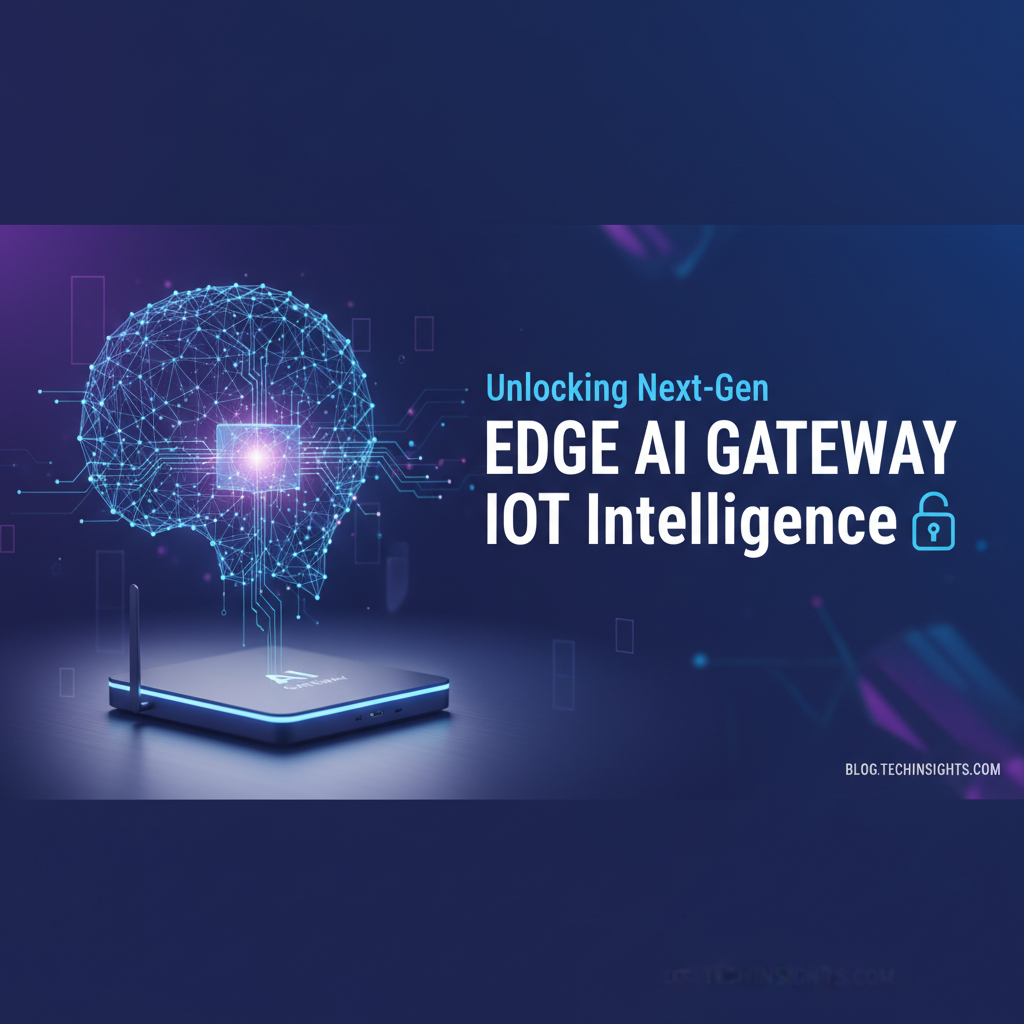
Edge AI Gateway: Unlocking Next-Gen IoT Intelligence


In an era defined by ubiquitous connectivity and an ever-expanding digital footprint, the Internet of Things (IoT) has rapidly transitioned from a futuristic concept to an indispensable reality, fundamentally reshaping industries, societies, and daily lives. From smart cities bustling with interconnected infrastructure to vast industrial complexes where machines communicate autonomously, and from precision agriculture leveraging sensor data to smart homes anticipating every need, IoT devices are generating an unprecedented torrent of data. This deluge of information, however, presents both an immense opportunity and a significant challenge. The promise of IoT lies not merely in data collection, but in the intelligent extraction of actionable insights from that data, often in real-time and at the point of origin. This monumental task necessitates a paradigm shift from traditional cloud-centric processing to a more distributed, responsive, and efficient architecture: enter Edge AI.
While cloud computing has undeniably been the engine driving much of the digital transformation, its inherent limitations—latency, bandwidth costs, privacy concerns, and reliance on constant connectivity—become pronounced when dealing with the scale and velocity of IoT data. The notion of sending every byte from every sensor and device to a centralized cloud for processing and analysis is not only economically unfeasible for many applications but also technically impractical for scenarios demanding instantaneous decisions. Imagine an autonomous vehicle needing to identify a sudden obstruction or an industrial robot requiring immediate fault detection; microseconds matter, and the round trip to the cloud simply isn't an option. This is precisely where Edge AI steps in, bringing the formidable power of artificial intelligence closer to the data source, transforming raw data into intelligence right where it's created.
The true enabler of this intelligent edge, however, is not just the presence of AI models on local devices, but the sophisticated infrastructure that orchestrates their operation, manages connectivity, ensures security, and facilitates seamless interaction between the physical and digital realms. This critical piece of the puzzle is the Edge AI Gateway. More than just a simple data aggregator, an Edge AI Gateway acts as a central nervous system for localized IoT ecosystems, serving as a powerful intermediary that preprocesses data, executes AI inference, and intelligently filters information before transmission, if any, to the cloud. It’s a robust computational hub that bridges diverse IoT protocols with standard network infrastructures, bolsters security postures, and crucially, provides an AI Gateway for various machine learning models to be deployed and managed right at the edge. This advanced functionality extends beyond mere data forwarding; it encompasses sophisticated api gateway capabilities to expose local AI services and data securely, facilitating integration with other systems, both on-premises and in the cloud. Furthermore, as AI models grow in complexity, particularly with the advent of large language models (LLMs), the demand for specialized processing even closer to the source gives rise to the emerging concept of an LLM Gateway at the edge, offering localized inference and prompt management for applications demanding immediate, context-aware AI interactions. The Edge AI Gateway, therefore, is not just an incremental improvement; it is the foundational component unlocking the next generation of truly intelligent, responsive, and autonomous IoT applications, poised to redefine efficiency, safety, and innovation across every sector.
The Landscape of IoT and the Emergence of Edge Computing
The Internet of Things (IoT) has ushered in an era of unprecedented connectivity, transforming inanimate objects into intelligent data points and weaving a complex web of interconnected devices across every conceivable environment. We live in a world where billions of sensors, actuators, cameras, and embedded systems are constantly collecting data, from the subtle vibrations of industrial machinery to the intricate patterns of human movement in smart cities, and from the vital signs of patients in remote healthcare settings to the environmental conditions within smart agricultural fields. This pervasive deployment of IoT devices has created a vast, intricate network, generating an astronomical volume of data that grows exponentially by the day. Businesses and organizations across various sectors are eagerly tapping into this data stream, seeking to derive competitive advantages, enhance operational efficiencies, improve safety, and create entirely new services and user experiences.
However, the sheer scale and velocity of this data generation have exposed inherent limitations within traditional, centralized cloud computing architectures. While the cloud offers immense computational power, scalability, and storage capabilities, the very act of transmitting every byte of raw data from countless edge devices to distant data centers introduces several critical bottlenecks and challenges. Firstly, latency becomes a significant impediment for real-time applications. In scenarios such as autonomous driving, real-time industrial control, or immediate threat detection in surveillance systems, decisions must be made in milliseconds. The time required for data to travel from an edge device to the cloud, be processed, and for an instruction to travel back, often renders cloud-only solutions impractical or even dangerous. Every millisecond of delay can have severe consequences, from system malfunction to safety hazards.
Secondly, the bandwidth costs and limitations associated with continuously uploading petabytes, or even terabytes, of raw data are staggering. Not only is it economically prohibitive for many large-scale IoT deployments, but reliable high-bandwidth connectivity isn't always available, especially in remote industrial sites, rural agricultural areas, or moving vehicles. This creates a data bottleneck, where the potential insights locked within the raw data remain inaccessible due to infrastructure constraints. Moreover, the constant data transfer consumes significant energy, impacting the battery life of devices and the overall carbon footprint of large-scale IoT operations.
Thirdly, security and privacy concerns are paramount. Transmitting sensitive operational data, personal health information, or proprietary industrial processes over public networks to the cloud inherently increases the attack surface and potential for data breaches. Regulatory compliance, such as GDPR or HIPAA, often mandates that certain types of data be processed and stored locally to protect privacy and ensure data sovereignty. Cloud environments, while highly secured, cannot fully mitigate the risks associated with data in transit or the implications of data residency laws across different geographical regions.
Finally, reliability and autonomy are compromised by heavy reliance on cloud connectivity. In critical infrastructure or remote deployments, intermittent internet access or complete network outages can cripple operations if devices are solely dependent on the cloud for processing and decision-making. The ability for edge devices to operate autonomously, even when disconnected, is a crucial requirement for many mission-critical IoT applications.
It is against this backdrop of challenges that edge computing has rapidly ascended as a transformative paradigm. Edge computing represents a distributed computing topology that brings computation and data storage closer to the sources of data generation – the "edge" of the network. Instead of sending all data to a centralized cloud, edge computing advocates for processing data where it is created, whether that's on the device itself, a local server, or a specialized gateway. This fundamental shift delivers substantial benefits by directly addressing the limitations of cloud-centric models. It drastically reduces latency, enabling near real-time decision-making vital for time-sensitive applications. It conserves network bandwidth and reduces associated costs by processing, filtering, and aggregating data locally, sending only critical insights or summary data to the cloud. Furthermore, by keeping sensitive data localized, edge computing significantly enhances data privacy and security, aligning with stringent regulatory requirements. It also bolsters the reliability of IoT systems, allowing them to function autonomously even during network disruptions. In essence, edge computing is not replacing the cloud but rather complementing it, creating a powerful, hybrid architecture that distributes intelligence and optimizes resource utilization across the entire IoT ecosystem. This distributed intelligence is the fertile ground from which Edge AI truly blossoms.
Deep Dive into Edge AI
Edge AI represents the cutting edge of distributed intelligence, bringing the formidable power of artificial intelligence and machine learning models out of distant data centers and directly into the localized environments where data is generated. At its core, Edge AI refers to the deployment of AI algorithms and inference engines on edge devices themselves, or on specialized edge gateways located geographically close to the data sources. This means that instead of raw data being streamed to the cloud for processing by large AI models, the trained AI models are executed locally on the edge device, enabling immediate analysis and decision-making without the round-trip delay to a central server. This fundamental shift is not just an optimization; it's a revolutionary re-architecture of how AI interacts with the physical world, empowering devices with a degree of autonomy and responsiveness previously unimaginable.
The reasons why Edge AI is rapidly becoming a game-changer for modern IoT deployments are multifaceted and compelling:
Firstly, real-time processing is perhaps its most significant advantage. For applications where immediate action is critical – such as an autonomous drone detecting a hazard, a manufacturing robot performing quality control, or a medical device monitoring a patient's vital signs for anomalies – the milliseconds saved by local AI inference can be the difference between success and failure, or even life and death. Edge AI enables instantaneous insights and actions, transforming reactive systems into proactive, intelligent agents within their operational environments.
Secondly, enhanced data privacy and security are inherent benefits. By processing sensitive data locally, Edge AI minimizes the exposure of private information during transmission to the cloud. This is particularly crucial for applications dealing with personal identifiable information (PII), confidential industrial processes, or classified government data. Local processing helps organizations comply with stringent data residency and privacy regulations, mitigating the risks associated with data breaches and unauthorized access during transit or storage in remote data centers.
Thirdly, Edge AI leads to reduced operational costs by significantly cutting down on bandwidth consumption. Instead of continuously uploading massive streams of raw video, audio, or sensor data, only aggregated insights, critical alerts, or metadata are sent to the cloud, if at all. This drastically lowers data transfer costs, especially in environments where connectivity is expensive or limited. Furthermore, by processing data closer to the source, the overall energy footprint associated with data transmission can also be reduced.
Fourthly, it offers robust offline capabilities. Edge AI devices can continue to operate intelligently and make decisions even when internet connectivity is intermittent or completely absent. This is vital for deployments in remote locations, maritime environments, or critical infrastructure that must maintain functionality regardless of network availability. This autonomy ensures uninterrupted operation and maintains the integrity of the system's intelligence, fostering greater reliability.
Finally, energy efficiency is a critical consideration for battery-powered or resource-constrained edge devices. While deploying large, complex AI models directly on tiny devices might seem challenging, significant advancements in model optimization techniques – such as quantization, pruning, and knowledge distillation – have enabled the creation of highly efficient, smaller AI models specifically designed to run on low-power edge hardware. These optimized models consume less power during inference, extending battery life and reducing the energy requirements for continuous operation. Specialized hardware accelerators like Neural Processing Units (NPUs) and AI chips are also contributing to this efficiency by performing AI computations with minimal energy expenditure.
The applications of Edge AI are incredibly diverse and continue to expand across industries:
- Predictive Maintenance: In industrial settings, Edge AI can analyze sensor data from machinery (vibrations, temperature, acoustic patterns) in real-time to predict equipment failures before they occur, scheduling maintenance proactively and preventing costly downtime.
- Anomaly Detection: From cybersecurity monitoring at network perimeters to identifying unusual patterns in financial transactions or detecting defects on a manufacturing assembly line, Edge AI can flag abnormalities instantaneously.
- Real-time Object Recognition and Tracking: Security cameras can use Edge AI for instant facial recognition, intruder detection, or object classification without sending continuous video streams to the cloud. Autonomous vehicles leverage Edge AI for immediate perception of their surroundings, identifying pedestrians, other vehicles, and road signs.
- Autonomous Systems: Robots, drones, and autonomous vehicles rely heavily on Edge AI for perception, navigation, and real-time decision-making, allowing them to operate safely and effectively in dynamic environments.
- Personalized Healthcare: Wearable devices and in-home sensors can use Edge AI to monitor health parameters, detect emergencies, and provide personalized insights while keeping sensitive health data localized and private.
- Smart Retail: Edge AI analyzes in-store video feeds to understand customer behavior, manage inventory, detect shoplifting, and personalize shopping experiences, all without constant cloud connectivity.
In essence, Edge AI is not just about bringing computation closer to the data; it's about embedding intelligence directly into the fabric of the IoT ecosystem. It transforms passive data collectors into active, intelligent participants, capable of immediate analysis, autonomous decision-making, and proactive responses, thus laying the groundwork for truly intelligent and responsive next-generation IoT applications.
The Pivotal Role of the Edge AI Gateway
At the heart of any sophisticated Edge AI deployment lies the Edge AI Gateway – a critical piece of infrastructure that acts as the intelligent orchestrator, conductor, and protector of data and AI models at the very perimeter of the network. It is far more than a simple router or a basic data aggregator; it is a powerful, localized computational hub designed to manage, process, and secure the vast streams of data flowing from myriad IoT devices, enabling the seamless execution of AI inference and bridging the operational technology (OT) world with the information technology (IT) world. The architecture of an Edge AI Gateway typically involves a robust hardware platform equipped with sufficient processing power (CPUs, GPUs, NPUs), memory, and storage, coupled with a sophisticated software stack that provides a rich set of functionalities.
The Edge AI Gateway's pivotal role stems from its ability to perform several key functions, each contributing to unlocking the full potential of next-gen IoT intelligence:
Data Ingestion & Pre-processing
One of the primary tasks of an Edge AI Gateway is to efficiently ingest raw data from a diverse array of IoT sensors and devices. These devices often communicate using a multitude of protocols, such as MQTT, CoAP, Zigbee, Bluetooth Low Energy (BLE), Modbus, BACnet, and proprietary industrial protocols. The gateway acts as a universal translator, normalizing these disparate data formats into a unified structure that AI models can understand. Beyond simple translation, the gateway performs crucial pre-processing steps: * Filtering: Removing redundant, noisy, or irrelevant data to reduce the processing load and bandwidth requirements. * Aggregation: Combining data from multiple sources or over specific time intervals to create meaningful datasets. * Normalization and Scaling: Ensuring data consistency and preparing it for AI model input. * Edge Analytics: Performing basic statistical analysis or anomaly detection directly on the raw data stream before it even reaches the AI model, providing initial insights or flagging critical events. This intelligent pre-filtering significantly reduces the data volume that needs further AI processing or cloud transmission.
AI Model Deployment & Management
This is where the "AI" in Edge AI Gateway truly shines. The gateway serves as a local runtime environment for deploying, executing, and managing various AI and machine learning models. It essentially acts as a localized AI Gateway, handling the entire lifecycle of AI inference at the edge: * Model Deployment: Securely pushing pre-trained AI models (e.g., for object detection, anomaly prediction, natural language processing) from a central management platform to the gateway. * Inference Execution: Running these models against the pre-processed data streams to generate real-time insights and predictions. This requires optimized inference engines that can leverage the gateway's hardware accelerators. * Model Versioning and Updates: Managing different versions of AI models, enabling A/B testing, and facilitating seamless over-the-air (OTA) updates to improve model performance or adapt to changing conditions. * Resource Allocation: Optimizing the use of the gateway's computational resources (CPU, GPU, NPU) to efficiently run multiple AI models concurrently without performance degradation. * Model Monitoring: Continuously monitoring the performance and health of deployed models, detecting drift, and reporting metrics back to a central system for analysis and retraining.
Connectivity Management
Edge AI Gateways are masters of connectivity, acting as a crucial bridge between the often-isolated world of IoT devices and the broader IP network. They provide: * Protocol Translation: As mentioned, translating various IoT-specific protocols into standard IP-based communication (e.g., HTTP, WebSockets) for seamless integration with enterprise systems or cloud platforms. * Network Bridging: Supporting diverse network interfaces – Wi-Fi, Ethernet, Cellular (4G/5G), LoRaWAN, NB-IoT, Satellite – to ensure robust and resilient communication, often with failover capabilities. * Device Management: Discovering, onboarding, and managing the lifecycle of connected IoT devices, including firmware updates and configuration management.
Security & Authentication
Given their position at the network perimeter and their handling of potentially sensitive data, Edge AI Gateways are critical enforcers of security: * Device Authentication: Authenticating all connected IoT devices to prevent unauthorized access and data injection. * Data Encryption: Encrypting data at rest on the gateway and data in transit between devices, the gateway, and the cloud, protecting against eavesdropping and tampering. * Access Control: Implementing granular access controls to define which users or systems can interact with the gateway and its exposed services. * Secure Boot & Firmware Integrity: Ensuring that only trusted software runs on the gateway and that firmware updates are authenticated and tamper-proof. * Threat Detection: Employing localized intrusion detection systems or behavioral analytics to identify and respond to potential cyber threats at the edge.
Local Data Storage & Persistence
Edge AI Gateways often incorporate local storage capabilities to enhance reliability and efficiency: * Data Buffering: Storing data temporarily during network outages to prevent data loss, automatically syncing with the cloud once connectivity is restored. * Local Databases: Maintaining short-term historical data for localized trend analysis, dashboards, or quick retrieval by edge applications. * Edge Data Lakes: In more advanced scenarios, creating mini-data lakes at the edge for deeper local analytics.
API Management and Service Exposure
Crucially, an Edge AI Gateway also functions as a sophisticated api gateway for the edge ecosystem. It doesn't just process data internally; it also needs to expose the insights and services it generates to other applications, microservices, or cloud platforms in a controlled and secure manner. This includes: * Service Exposure: Publishing the results of AI inference, aggregated sensor data, or control functionalities as easily consumable APIs. This allows other systems or applications to leverage the intelligence generated at the edge without needing direct access to the underlying devices or AI models. * Authentication and Authorization: Securing these APIs by enforcing strict authentication mechanisms (e.g., API keys, OAuth tokens) and authorization policies to ensure that only legitimate callers can access specific edge services. * Rate Limiting and Throttling: Protecting the gateway's resources by controlling the number of API calls within a given timeframe, preventing abuse or denial-of-service attacks. * Traffic Management: Routing API requests efficiently, potentially load balancing across multiple edge services if the gateway manages a cluster of edge resources. * Usage Monitoring: Tracking API calls for auditing, billing, or performance analysis.
The complexity of managing a diverse array of AI models and API services at the edge demands a robust and flexible platform. This is where solutions like APIPark become invaluable. APIPark, an open-source AI gateway and API management platform, is specifically designed to help developers and enterprises manage, integrate, and deploy AI and REST services with remarkable ease. It provides a unified management system for authentication and cost tracking across over 100+ AI models, offering a standardized API format for AI invocation. This means that an Edge AI Gateway, equipped with a system like APIPark, can quickly integrate various AI models, encapsulate custom prompts into REST APIs (e.g., turning a local AI model into a sentiment analysis or translation API), and manage the entire API lifecycle from design to invocation. This streamlines the process of making edge intelligence accessible and manageable, whether for internal microservices or external integrations. APIPark's official website, ApiPark, offers more details on how it empowers robust API and AI service management, a critical function for modern Edge AI Gateways.
Orchestration & Workflow Automation
Beyond passive processing, Edge AI Gateways can actively orchestrate workflows and automate responses based on local events: * Event-Driven Actions: Triggering specific actions (e.g., turning on a pump, activating an alarm, adjusting a machine setting) based on real-time insights from AI models, without waiting for cloud instructions. * Local Control Loops: Implementing closed-loop control systems where the gateway processes data, makes decisions, and sends commands directly back to actuators. * Complex Event Processing (CEP): Analyzing multiple data streams and events to identify patterns and initiate sophisticated, multi-step automated workflows.
Cloud Integration
While promoting local autonomy, Edge AI Gateways are not isolated. They play a crucial role in intelligent cloud integration: * Insight Uplink: Sending only aggregated data, summarized insights, or critical alerts to the cloud, significantly reducing bandwidth. * Model Telemetry: Transmitting performance metrics, resource utilization, and operational health data of edge AI models back to the cloud for centralized monitoring and management. * Hybrid AI Architectures: Facilitating scenarios where initial data processing and simple AI tasks happen at the edge, while more complex analytics, global model retraining, or long-term storage occur in the cloud.
In summary, the Edge AI Gateway is the nerve center for intelligent IoT at the perimeter. It is the sophisticated engine that transforms raw sensor data into actionable intelligence, ensures secure and reliable operation, manages complex AI models, exposes edge services through robust api gateway functionality, and intelligently bridges the gap between the physical and digital worlds. Without this pivotal component, the vision of truly responsive, autonomous, and efficient next-generation IoT intelligence would remain largely unfulfilled. Its evolution continues to incorporate new demands, such as enabling localized large language model inference through a specialized LLM Gateway concept, further solidifying its role as an indispensable element in the future of distributed AI.
Architectural Considerations and Design Principles
Designing and deploying an effective Edge AI Gateway requires careful consideration of various architectural components and adherence to specific design principles. The diversity of IoT environments, from harsh industrial settings to resource-constrained consumer devices, means that a one-size-fits-all solution is rarely sufficient. Instead, a modular, scalable, and secure approach is paramount.
Hardware Requirements: The Foundation of Edge Intelligence
The choice of hardware for an Edge AI Gateway is foundational, directly impacting its performance, power consumption, cost, and environmental resilience. * Processors (CPUs, GPUs, NPUs, ASICs): While traditional CPUs can handle general-purpose computing and some basic AI inference, more demanding AI workloads, especially those involving deep learning for vision or complex data analysis, necessitate specialized accelerators. GPUs (Graphics Processing Units) are excellent for parallel processing, making them suitable for many AI tasks. Increasingly, dedicated NPUs (Neural Processing Units) and ASICs (Application-Specific Integrated Circuits) are emerging, offering superior energy efficiency and inference performance for AI models tailored to specific edge use cases. These purpose-built AI chips are designed to accelerate matrix multiplications and convolutions, which are the core operations of neural networks, consuming significantly less power than general-purpose CPUs or GPUs for the same AI workload. * Memory (RAM): Sufficient RAM is crucial for loading AI models, processing data streams, and running multiple services concurrently. Edge AI Gateways typically require between 4GB to 32GB of RAM, depending on the complexity and number of AI models, and the volume of data being processed. * Storage: Reliable and fast storage (e.g., eMMC, SSD, industrial-grade SD cards) is needed for the operating system, AI models, application software, and local data buffering. The size varies based on data retention policies and the scale of local data processing, often ranging from 32GB to several terabytes. * Connectivity Options: A robust Edge AI Gateway must support a wide array of network interfaces to communicate with both IoT devices and the wider network. This includes multiple Ethernet ports, Wi-Fi (2.4/5GHz), Bluetooth (for short-range device communication), and various cellular options (4G LTE, 5G) for remote deployments. Industrial protocols like RS-232/485, CAN bus, and USB ports are also common for connecting to legacy industrial equipment. * Ruggedization: For deployment in harsh environments (e.g., factories, outdoor installations), gateways must be ruggedized, featuring fanless designs, wide operating temperature ranges, resistance to shock and vibration, and IP ratings for dust and water ingress protection.
Software Stack: The Brains of the Operation
The software stack transforms raw hardware into an intelligent Edge AI Gateway. * Operating System (OS): Linux-based distributions (e.g., Ubuntu Core, Yocto Linux, Debian) are prevalent due to their open-source nature, flexibility, security features, and extensive community support. Real-time operating systems (RTOS) might be used for deterministic, time-critical control applications. * Containerization (Docker, Kubernetes for Edge): Container technologies like Docker are essential for packaging applications and AI models with their dependencies, ensuring consistency and portability across different gateways. For managing multiple containers and orchestrating distributed services at scale, lightweight Kubernetes distributions like K3s or EdgeX Foundry (which also offers a robust microservices framework for edge computing) are gaining traction, providing powerful deployment, scaling, and management capabilities at the edge. * AI Frameworks and Runtimes: Optimized versions of popular AI frameworks are crucial. TensorFlow Lite, OpenVINO, ONNX Runtime, and PyTorch Mobile are designed for efficient inference on resource-constrained devices. These runtimes often include tools for model optimization (quantization, pruning) to reduce model size and accelerate inference speed. * Middleware and SDKs: Robust middleware is needed for protocol translation, data ingestion, and managing device communication. Software Development Kits (SDKs) and APIs facilitate integration with cloud platforms (AWS IoT Greengrass, Azure IoT Edge, Google Cloud IoT Core) and enterprise systems. * Security Modules: Integrated security features such as hardware root of trust (e.g., TPM modules), secure boot loaders, encryption libraries, and access control mechanisms are paramount.
Scalability and Resilience: Building for the Future
Edge AI deployments can range from a handful of gateways to thousands, demanding scalable and resilient architectures. * Distributed Deployment: Gateways must be capable of operating independently while being managed centrally. This requires robust remote management capabilities for configuration, monitoring, and software updates. * Fault Tolerance: Mechanisms for detecting and recovering from hardware or software failures are vital. This includes redundancy, automatic failover for critical services, and self-healing capabilities. * Remote Management and Orchestration: A centralized platform for remotely monitoring the health, performance, and security of all deployed gateways and their applications is essential. This platform should facilitate over-the-air (OTA) updates for software, firmware, and AI models. * Fleet Management: Tools for managing large fleets of edge devices and gateways, including inventory management, configuration management, and lifecycle management.
Security Best Practices: Protecting the Perimeter
Security is not an afterthought but a fundamental design principle for Edge AI Gateways, given their proximity to sensitive data and critical operational systems. * Hardware Root of Trust (HRoT): Utilizing hardware-backed security features like Trusted Platform Modules (TPMs) to ensure secure boot, cryptographic operations, and secure key storage. * Secure Boot: Verifying the integrity of the boot process from the firmware up to the operating system to prevent unauthorized software execution. * Data Encryption: Implementing strong encryption for data at rest on the gateway's storage and data in transit across all network interfaces. * Access Control and Least Privilege: Enforcing strict authentication and authorization policies for all users, applications, and devices accessing the gateway. Adhering to the principle of least privilege, granting only the necessary permissions. * Network Segmentation: Isolating the gateway's network from other IT or OT networks to limit the blast radius of potential attacks. * Continuous Monitoring and Auditing: Implementing robust logging and monitoring systems to detect suspicious activities, track access, and ensure compliance. Regular security audits and vulnerability assessments are also crucial. * Software Updates and Patch Management: Establishing a secure and reliable mechanism for pushing security patches and software updates to gateways to address newly discovered vulnerabilities.
Interoperability: The Key to Integration
An Edge AI Gateway must be highly interoperable to integrate seamlessly with existing IoT devices, enterprise systems, and cloud platforms. * Open Standards and APIs: Adopting open standards for communication protocols, data formats (e.g., JSON, Protocol Buffers), and APIs (e.g., RESTful APIs, gRPC) promotes easier integration. * Modular Architecture: A microservices-based architecture allows for flexible integration of different modules and services, enabling customization and easier maintenance.
To illustrate the distinct value proposition of an Edge AI Gateway, especially compared to its predecessors and cloud-only solutions, consider the following table:
| Feature/Aspect | Basic IoT Gateway | Edge AI Gateway | Cloud AI Services |
|---|---|---|---|
| Primary Function | Data aggregation, protocol translation | Local AI inference, data pre-processing, API management | Centralized AI inference, global analytics, long-term storage |
| Computational Power | Low (microcontrollers, ARM Cortex-M) | Moderate to High (ARM Cortex-A, x86, GPUs, NPUs) | Very High (scalable server farms, specialized accelerators) |
| AI Capabilities | None or very basic rule-based analytics | Real-time ML inference (vision, NLP, anomaly detection) | Complex ML training, large model inference, extensive data mining |
| Data Processing Location | Edge (raw data aggregation) | Near data source (pre-processing, inference) | Remote data center (full processing) |
| Latency | Low (for data forwarding) | Very Low (milliseconds for inference) | High (network round trip delay) |
| Bandwidth Usage | High (for raw data uplink) | Low (only insights/metadata uplink) | Very High (for continuous raw data uplink) |
| Offline Operation | Limited (basic device control) | High (autonomous AI decision-making) | None (requires constant connectivity) |
| Security Focus | Device connectivity, basic authentication | Comprehensive edge security, data privacy | Data center security, data in transit security |
| Cost Implications | Hardware + connectivity costs | Hardware + optimized AI model costs, reduced bandwidth | Cloud compute, storage, egress costs |
| Typical Use Cases | Smart home hubs, simple data logging | Predictive maintenance, autonomous vehicles, real-time QC, smart city surveillance | Global market analysis, complex model training, large-scale data warehousing |
By adhering to these architectural considerations and design principles, organizations can build robust, secure, and highly intelligent Edge AI Gateway solutions that effectively unlock the next generation of IoT capabilities, driving unprecedented levels of automation, efficiency, and insight generation directly at the source of data.
APIPark is a high-performance AI gateway that allows you to securely access the most comprehensive LLM APIs globally on the APIPark platform, including OpenAI, Anthropic, Mistral, Llama2, Google Gemini, and more.Try APIPark now! 👇👇👇
The Rise of LLM Gateways at the Edge
The advent of Large Language Models (LLMs) has marked a revolutionary leap in artificial intelligence, demonstrating unprecedented capabilities in understanding, generating, and manipulating human language. Models like GPT, LLaMA, and their derivatives have transformed how we interact with information, power sophisticated chatbots, summarize vast documents, generate creative content, and even assist in coding. However, the sheer scale and computational demands of these foundational models have largely confined their deployment and inference to massive cloud data centers, where specialized hardware and virtually limitless resources are available. The typical LLM requires enormous amounts of memory and processing power, making direct deployment on traditional edge devices an insurmountable challenge.
This cloud-centric nature of LLMs presents significant hurdles when attempting to integrate their power into edge computing environments, particularly for IoT applications that demand low latency, data privacy, and offline functionality. * Resource Intensity: Full-sized LLMs often comprise billions or even trillions of parameters, requiring hundreds of gigabytes of memory and staggering computational throughput for inference. Standard edge gateways or IoT devices simply lack the necessary hardware. * Model Size: The sheer file size of these models makes them impractical to store or update on resource-constrained edge devices. * Latency for Real-time Inference: Even if an edge device could run a full LLM, the inference time could still be too slow for real-time interactions required by many edge applications. * Data Privacy: Sending sensitive conversational data or proprietary operational information to a public cloud LLM API raises significant privacy and compliance concerns for many enterprises. * Connectivity Dependency: Continuous high-bandwidth connectivity to cloud LLMs is not always guaranteed or affordable at the edge.
Despite these challenges, the immense potential of localized, context-aware language understanding and generation at the edge is undeniable. Imagine smart factory robots that can understand natural language commands, home assistants that respond intelligently without sending every query to the cloud, or field technicians who can query local knowledge bases using natural language even without internet access. This burgeoning demand has given rise to a new frontier: Edge-optimized LLMs and the concept of an LLM Gateway at the edge.
The breakthrough in bringing LLMs to the edge has come through several innovative approaches: * Model Quantization: Reducing the precision of the numerical representations within the model (e.g., from 32-bit floating point to 8-bit integers or even 4-bit) drastically shrinks model size and speeds up inference with minimal impact on accuracy. * Knowledge Distillation: Training a smaller, "student" model to mimic the behavior of a larger, more powerful "teacher" model. The student model is much lighter and faster, suitable for edge deployment. * Pruning and Sparsification: Removing redundant weights or connections in the neural network without significantly impacting performance, thereby reducing model size and computational requirements. * Smaller, Specialized Models: Developing entirely new, more compact LLMs (e.g., TinyLlama, Phi-2, Mistral variants) specifically designed for efficient inference on less powerful hardware while still retaining impressive capabilities for specific tasks. These models are often fine-tuned for particular domains, making them highly effective for localized applications. * Hardware Accelerators: The ongoing development of specialized AI chips (NPUs, custom ASICs) with architectures optimized for LLM inference at the edge, providing significant boosts in performance and efficiency.
These advancements pave the way for the LLM Gateway concept at the Edge. An LLM Gateway at the edge is a specialized component, often integrated within or alongside a broader Edge AI Gateway, that specifically handles the deployment, management, and inference of these optimized, smaller language models. Its functions include:
- Localizing LLM Inference: Running optimized LLMs directly on the gateway or on nearby powerful edge devices for specific tasks. This enables immediate, private, and offline conversational AI, local document summarization, industrial anomaly explanation (e.g., generating natural language descriptions of machine faults), or natural language querying of local sensor data.
- Reducing Cloud Dependency: For many common queries or specific domain tasks, the edge LLM Gateway can provide answers without needing to contact a cloud-based LLM, thus saving bandwidth, reducing latency, and enhancing privacy.
- Orchestrating Hybrid LLM Architectures: The LLM Gateway can intelligently decide whether a query can be handled locally by a smaller, specialized LLM or if it requires forwarding to a more powerful cloud LLM for broader knowledge or more complex reasoning. It can also perform initial processing or prompt engineering at the edge before sending a refined query to the cloud.
- Managing Prompts and Fine-tuning: For edge-deployed LLMs, the gateway can manage different prompt templates, allow for localized fine-tuning based on edge-specific data (e.g., adapting to a particular accent or technical jargon), and facilitate efficient model updates.
- Security Implications: Running LLMs locally introduces new security considerations. The LLM Gateway must provide robust isolation for LLM models, protect against prompt injection attacks, ensure secure data handling, and manage access to the local LLM services.
- Cost Efficiency: By offloading many LLM queries from expensive cloud APIs to local inference, the LLM Gateway significantly reduces operational costs associated with API usage and data transfer.
The future prospects for LLM Gateways at the edge are incredibly exciting. We anticipate: * Further Model Miniaturization: Continued innovation in compressing LLMs and developing even more efficient architectures. * Specialized Edge LLMs: A proliferation of domain-specific LLMs tailored for particular industrial, medical, or consumer applications at the edge. * Federated Learning for Edge LLMs: Training LLMs across a distributed network of edge devices without centralizing private data, allowing models to learn from diverse edge contexts while preserving privacy. * Multimodal LLMs at the Edge: Integrating vision, audio, and language models on edge gateways to create truly intelligent, context-aware systems that can understand and respond to the world around them in a holistic manner.
In conclusion, while full-scale LLMs remain primarily cloud-bound, the emergence of optimized models and the concept of the LLM Gateway are democratizing access to powerful language AI, bringing its transformative capabilities directly to the edge. This will enable a new class of intelligent, responsive, and privacy-preserving IoT applications, further cementing the Edge AI Gateway's role as the indispensable orchestrator of next-generation intelligence.
Real-World Applications and Use Cases
The transformative power of Edge AI Gateways is best illustrated through their diverse and impactful real-world applications across a multitude of industries. By bringing intelligence closer to the data source, these gateways are enabling unprecedented levels of automation, efficiency, safety, and innovation.
Industrial Automation (IIoT)
The industrial sector is one of the earliest and most significant adopters of Edge AI Gateways, leveraging them to digitalize and optimize complex manufacturing processes. * Predictive Maintenance: Sensors on critical machinery (turbines, pumps, CNC machines) collect data on vibration, temperature, acoustic signatures, and current draw. An Edge AI Gateway processes this data in real-time, running machine learning models to predict equipment failures days or weeks in advance. This allows for proactive maintenance scheduling, preventing costly unplanned downtime, optimizing resource allocation, and extending the lifespan of assets. For instance, an AI model could detect subtle anomalies in a motor's vibration pattern that indicate impending bearing failure, triggering an alert to maintenance teams before a catastrophic breakdown occurs. * Quality Control: In manufacturing assembly lines, high-speed cameras capture images of products. Edge AI Gateways analyze these images instantaneously using computer vision models to detect defects, verify assembly correctness, and ensure product quality at every stage. This real-time inspection system can identify flaws like scratches, misalignments, or missing components with superhuman speed and accuracy, reducing scrap rates and ensuring consistent product standards without human intervention, which is both faster and more reliable than manual inspection. * Worker Safety: Edge AI Gateways can process video feeds from factory floors to monitor for safety violations, such as workers entering restricted areas, not wearing appropriate PPE (Personal Protective Equipment), or detecting falls. These systems can issue immediate alerts, preventing accidents and improving overall workplace safety. They can also track the movement of autonomous forklifts and robots, ensuring they operate safely alongside human workers by predicting and avoiding collisions in dynamic environments.
Smart Cities
Edge AI Gateways are instrumental in creating more efficient, sustainable, and safer urban environments. * Traffic Management: Cameras and sensors deployed at intersections feed data to Edge AI Gateways. These gateways analyze traffic flow, detect congestion, identify accidents, and monitor pedestrian activity in real-time. AI models can dynamically adjust traffic light timings, reroute traffic, or dispatch emergency services faster, significantly reducing commute times and improving urban mobility. For example, during peak hours, an Edge AI Gateway could prioritize traffic flow on major arterial roads based on live conditions. * Public Safety and Surveillance Analytics: For public safety, Edge AI Gateways enhance surveillance systems by performing real-time object detection, facial recognition (where permissible), and anomaly detection from CCTV feeds. They can identify suspicious behavior, detect abandoned packages, or track individuals of interest, alerting law enforcement to potential threats much faster than human operators, thereby increasing public safety and aiding in crime prevention and investigation. * Environmental Monitoring: Sensors monitoring air quality, noise levels, and waste bins can transmit data to Edge AI Gateways. These gateways process the data to identify pollution hotspots, optimize waste collection routes based on fill levels, and provide insights for urban planning decisions, contributing to a healthier and more sustainable city.
Connected Health
In healthcare, Edge AI Gateways are revolutionizing patient care, particularly in remote monitoring and elderly care, while ensuring data privacy. * Remote Patient Monitoring: Wearable sensors and in-home medical devices collect vital signs (heart rate, blood pressure, glucose levels). Edge AI Gateways process this data locally to detect anomalies, predict health deteriorations, or identify emergency situations (e.g., a fall). Only critical alerts or aggregated health summaries are sent to healthcare providers, safeguarding patient privacy by keeping sensitive raw data localized. This enables proactive intervention and reduces hospital readmissions. * Elder Care: For seniors living independently, Edge AI Gateways connected to motion sensors and cameras (with privacy-preserving techniques) can monitor daily routines. AI models can detect unusual inactivity, falls, or deviations from normal patterns, immediately alerting caregivers or family members. This provides peace of mind and enables timely assistance, enhancing the safety and independence of the elderly. * Smart Hospitals: Within hospital settings, Edge AI can optimize patient flow, track medical assets, and enhance security. Gateways can analyze video streams to monitor patient rooms for potential risks (e.g., patient attempting to get out of bed unaided if they are a fall risk) or manage access to sensitive areas, improving both patient safety and operational efficiency.
Retail
Edge AI Gateways are transforming the retail experience by providing real-time insights into customer behavior and optimizing store operations. * Inventory Management: Cameras equipped with Edge AI can monitor shelf stock levels, identifying empty shelves and automatically triggering restocking alerts to staff. This reduces out-of-stock situations and improves sales. They can also track product movement to deter theft. * Customer Experience Analytics: Edge AI analyzes video feeds to understand customer foot traffic patterns, popular product displays, and queue lengths. This data helps retailers optimize store layouts, staff allocation, and merchandising strategies to enhance the shopping experience and boost sales, all without transferring personally identifiable video to the cloud. * Personalized Recommendations: In a more advanced scenario, limited, anonymized facial recognition or gesture analysis at the edge could infer customer demographics or sentiment, allowing in-store digital signage to display personalized promotions in real-time.
Autonomous Vehicles/Robotics
Edge AI is absolutely fundamental to the operation of autonomous vehicles and mobile robotics, where immediate decision-making is non-negotiable. * Real-time Perception: Cameras, LiDAR, and radar sensors generate massive amounts of data. Edge AI Gateways (or onboard Edge AI computers) fuse and process this data instantaneously to perceive the vehicle's surroundings – identifying other vehicles, pedestrians, road signs, lane markings, and obstacles. This perception layer is critical for safe navigation. * Decision-Making: Based on real-time perception, Edge AI algorithms make immediate decisions regarding acceleration, braking, steering, and path planning. Every millisecond counts for safety and responsiveness. * Navigation: While high-level route planning might involve cloud resources, detailed local navigation and obstacle avoidance are handled by Edge AI to ensure precise and safe movement.
Agriculture (Smart Farming)
Edge AI is bringing precision and efficiency to farming operations. * Crop Health Monitoring: Drones or ground-based robots equipped with multi-spectral cameras capture images of crops. Edge AI Gateways analyze these images on-the-fly to detect signs of disease, pest infestation, or nutrient deficiencies in real-time. This allows farmers to apply treatments precisely where needed, reducing pesticide and fertilizer usage and improving yields. * Automated Irrigation: Sensors measure soil moisture levels, and Edge AI Gateways analyze this data along with weather forecasts to optimize irrigation schedules, conserving water and ensuring optimal growing conditions for different crop zones. * Livestock Monitoring: Edge AI can monitor individual animals, identifying signs of illness or unusual behavior, and tracking their location, leading to healthier herds and improved farm management.
Energy Management
Edge AI is critical for modernizing energy infrastructure and optimizing consumption. * Smart Grid Optimization: Edge AI Gateways deployed in substations or at critical points in the grid can analyze power flow, detect anomalies, and predict demand fluctuations in real-time. This enables dynamic load balancing, faster fault isolation, and more efficient integration of renewable energy sources, enhancing grid stability and reliability. * Demand Response: In buildings, Edge AI can learn occupancy patterns and energy consumption trends to optimize HVAC systems, lighting, and other appliances, reducing energy waste and responding intelligently to grid demand signals.
These diverse applications underscore the versatility and indispensable nature of Edge AI Gateways. By acting as intelligent intermediaries that process data, execute AI models, and enable rapid decision-making at the source, they are not merely enhancing existing systems but fundamentally reimagining what is possible across industries, propelling us towards a future of truly intelligent and autonomous operations.
Challenges and Future Outlook
While Edge AI Gateways are undeniably a cornerstone for unlocking next-generation IoT intelligence, their widespread adoption and full potential are not without significant challenges. Addressing these hurdles will be crucial for the continued evolution and success of distributed AI. Concurrently, the future outlook for Edge AI is incredibly promising, driven by relentless innovation and the increasing demand for intelligent, real-time, and private solutions.
Key Challenges Facing Edge AI Gateways:
- Computational Constraints vs. AI Complexity: The fundamental tension in Edge AI is balancing the ever-increasing complexity and resource demands of modern AI models (especially deep learning) with the inherent computational, memory, and power constraints of edge hardware. While model optimization techniques exist, continually pushing the boundaries of what can run efficiently on compact, low-power devices remains a significant engineering challenge.
- Model Optimization and Specialization: Developing and optimizing AI models specifically for edge deployment requires specialized skills and tools. Techniques like quantization, pruning, and knowledge distillation are complex to apply effectively, often requiring careful trade-offs between model accuracy and performance. There's also a need for more "edge-native" AI architectures that are designed for efficiency from the ground up, rather than simply shrinking cloud-trained models.
- Security at Scale and in Heterogeneous Environments: Securing potentially millions of distributed Edge AI Gateways, each with different hardware, software, and operational environments, is a monumental task. Protecting against physical tampering, ensuring secure over-the-air (OTA) updates, managing cryptographic keys, and continuously monitoring for threats across a vast, heterogeneous network presents complex logistical and technical challenges. The attack surface for an edge deployment is significantly larger than a centralized cloud.
- Interoperability and Standardization: The IoT and Edge AI ecosystem is highly fragmented, with numerous vendors offering proprietary hardware, software platforms, communication protocols, and AI frameworks. This lack of universal standards creates interoperability issues, complicates integration, and slows down development. Efforts towards open standards and common APIs are ongoing but require broad industry collaboration.
- Deployment and Management Complexity: Deploying, configuring, updating, and maintaining large fleets of Edge AI Gateways remotely can be incredibly complex. Issues like remote debugging, patching vulnerabilities, rolling back failed updates, and ensuring consistent configurations across diverse hardware types demand sophisticated fleet management tools and automated orchestration capabilities.
- Data Management and Governance at the Edge: While Edge AI reduces data movement, it introduces new challenges for managing and governing data that resides locally. Ensuring data consistency, provenance, lifecycle management, and compliance with privacy regulations (like GDPR) across distributed edge nodes requires robust data governance strategies.
- Skills Gap: There is a growing demand for engineers and data scientists with specialized skills in edge computing, embedded systems, optimized AI model development, and distributed systems architecture. The current talent pool often struggles to keep pace with the rapid advancements in Edge AI technologies.
Future Outlook for Edge AI Gateways:
Despite these challenges, the trajectory for Edge AI Gateways is overwhelmingly positive, driven by several key trends and technological advancements:
- More Powerful and Efficient Edge AI Chips: The silicon industry is pouring massive investments into developing highly specialized, low-power AI accelerators (NPUs, custom ASICs) designed explicitly for edge inference. These chips will deliver significantly greater computational power per watt, enabling more complex AI models to run efficiently on even smaller form factors. This will also make the implementation of LLM Gateway capabilities at the edge more feasible and powerful.
- Standardization of Edge AI Platforms: Industry alliances and open-source initiatives (e.g., EdgeX Foundry, Linux Foundation Edge) will continue to drive efforts towards common frameworks, APIs, and deployment models for Edge AI. This will reduce fragmentation, foster greater interoperability, and accelerate development.
- Greater Convergence of AI, IoT, and 5G/6G: The rollout of 5G and future 6G networks will provide ultra-low latency, high-bandwidth connectivity at the edge, further enhancing the capabilities of Edge AI Gateways. This will enable seamless communication between edge nodes, faster data synchronization with the cloud, and support for hybrid AI architectures that dynamically leverage both edge and cloud resources.
- Hybrid Cloud-Edge AI Architectures Becoming Dominant: The future is not edge OR cloud, but edge AND cloud. Hybrid architectures, where initial processing and critical real-time inference occur at the edge, while broader analytics, model training, and long-term data storage reside in the cloud, will become the prevailing paradigm. Edge AI Gateways will be the intelligent orchestrators of this distributed intelligence, dynamically allocating workloads and data flows.
- Democratization of Edge AI Development: As tools and platforms mature, developing and deploying Edge AI solutions will become more accessible to a broader range of developers. Low-code/no-code platforms and user-friendly SDKs will simplify the process of bringing AI to the edge, abstracting away much of the underlying complexity.
- The Critical Role of AI Gateway and API Gateway Solutions: As the number of AI models, edge services, and connected devices explodes, the importance of robust management platforms will skyrocket. Solutions that provide an efficient AI Gateway for model deployment and lifecycle management, combined with powerful api gateway functionality for secure and managed exposure of edge-generated insights, will become indispensable. These platforms will ensure that the intelligence generated at the edge is discoverable, accessible, and consumable by other applications and systems in a controlled manner. They will also manage the complex interactions within a distributed AI ecosystem, facilitating the integration of specialized LLM Gateway functions as they become more prevalent at the edge.
- Increased Focus on Privacy-Preserving AI: Techniques like federated learning, differential privacy, and homomorphic encryption will become more integrated into Edge AI Gateways, enabling AI models to learn from sensitive edge data without compromising privacy, further strengthening the value proposition of localized intelligence.
In conclusion, while the journey for Edge AI Gateways is fraught with intricate challenges, the relentless pace of innovation in hardware, software, and AI algorithms paints a vibrant picture of the future. These intelligent gateways are poised to become the crucial nerve centers of the digital world, driving unprecedented levels of automation, responsiveness, and privacy in countless applications, ultimately transforming every aspect of how we live, work, and interact with technology.
Conclusion
The profound transformation brought about by the Internet of Things has ushered in an era where data is the new oil, and artificial intelligence is the refinery that extracts invaluable insights. However, the sheer volume, velocity, and variety of data generated at the network's perimeter have exposed the inherent limitations of a purely cloud-centric approach. This challenge has catalyzed the emergence of Edge AI, a paradigm shift that decentralizes intelligence, bringing the power of machine learning closer to the data source. At the very nexus of this intelligent revolution stands the Edge AI Gateway, an indispensable piece of infrastructure that is fundamentally reshaping the landscape of modern IoT deployments.
We have explored how the Edge AI Gateway transcends the capabilities of traditional IoT gateways, evolving into a sophisticated computational hub that orchestrates a multitude of critical functions. From ingesting and meticulously pre-processing raw, disparate IoT data to deploying, managing, and executing complex AI models directly at the edge, these gateways act as the intelligent custodians of localized data. They are masters of connectivity, bridging diverse protocols, and unyielding guardians of security, protecting sensitive data and systems at the very perimeter of the network. Crucially, they serve as powerful AI Gateway solutions, enabling the seamless integration and operation of various machine learning models where they are most needed. Furthermore, their robust api gateway capabilities ensure that the invaluable insights and services generated at the edge are securely exposed and consumable by other applications, fostering an ecosystem of interconnected intelligence. As the frontier of AI expands to include large language models, the Edge AI Gateway is also evolving to incorporate specialized LLM Gateway functions, pushing the boundaries of real-time, privacy-preserving natural language processing even closer to the user.
The benefits derived from this distributed intelligence are manifold and transformative. By processing data locally, Edge AI Gateways drastically reduce latency, enabling instantaneous decision-making vital for mission-critical applications such as autonomous vehicles and industrial control systems. They significantly cut down on bandwidth costs by intelligently filtering and aggregating data, sending only actionable insights to the cloud. Moreover, by keeping sensitive information localized, they enhance data privacy and bolster security postures, aiding compliance with stringent regulatory requirements. Their ability to operate autonomously ensures continuous functionality, even in the face of network outages, thereby guaranteeing unparalleled reliability for critical infrastructure.
The impact of Edge AI Gateways is already being felt across a diverse spectrum of industries. In industrial automation, they power predictive maintenance and real-time quality control, preventing costly downtime and ensuring product excellence. Smart cities leverage them for dynamic traffic management and enhanced public safety. In connected health, they enable remote patient monitoring with unprecedented privacy. Retailers utilize them for optimizing inventory and personalizing customer experiences, while autonomous vehicles rely on their split-second perception and decision-making for safe navigation. From smart farming to intelligent energy grids, Edge AI Gateways are not merely optimizing existing processes but unlocking entirely new possibilities, fostering innovation and driving efficiencies that were once considered unattainable.
While challenges remain, particularly concerning computational constraints, model optimization, security at scale, and interoperability, the future trajectory for Edge AI Gateways is unequivocally bright. Advancements in specialized AI chips, growing standardization efforts, the synergistic convergence with 5G/6G networks, and the maturation of hybrid cloud-edge architectures promise to further cement their indispensable role. As the digital world continues its relentless expansion, Edge AI Gateways will serve as the crucial nerve centers, transforming raw data into intelligent action, securing the perimeter, and ultimately, unlocking the full, transformative potential of next-generation IoT intelligence, making our world safer, more efficient, and profoundly smarter.
5 FAQs about Edge AI Gateways
1. What exactly is an Edge AI Gateway, and how does it differ from a regular IoT Gateway?
An Edge AI Gateway is a specialized device or software platform located at the "edge" of a network, close to IoT devices. Unlike a basic IoT Gateway that primarily aggregates data and translates protocols for transmission to the cloud, an Edge AI Gateway possesses significant computational power (often including AI accelerators like GPUs or NPUs) to process data, run AI/machine learning models, and make intelligent decisions locally. It also includes advanced API management (acting as an api gateway) and robust security features, reducing latency, bandwidth usage, and enhancing data privacy by performing real-time inference at the source, rather than solely relying on the cloud.
2. Why are Edge AI Gateways becoming so important for IoT deployments?
Edge AI Gateways are crucial because they address key limitations of purely cloud-centric IoT architectures. They enable: * Real-time Decision Making: By processing data locally, they drastically reduce latency, essential for autonomous systems and critical industrial applications. * Reduced Bandwidth Costs: Only processed insights or critical alerts are sent to the cloud, significantly cutting data transfer costs. * Enhanced Data Privacy & Security: Sensitive data can be processed and stored locally, aiding compliance with privacy regulations. * Offline Operation: Devices can continue to function intelligently even without internet connectivity, ensuring reliability. * Improved Efficiency: Local processing optimizes resource utilization and can lead to faster response times. They also act as an AI Gateway orchestrating various models efficiently.
3. What kind of AI tasks can an Edge AI Gateway perform?
Edge AI Gateways can perform a wide range of AI tasks, leveraging optimized machine learning models. Common applications include: * Computer Vision: Object detection, facial recognition, anomaly detection in video streams (e.g., for quality control, security, traffic management). * Predictive Analytics: Analyzing sensor data (vibration, temperature, sound) to predict equipment failures or maintenance needs. * Natural Language Processing (NLP): Localized speech recognition, command processing, or basic text summarization, particularly with emerging LLM Gateway capabilities for smaller, optimized models. * Anomaly Detection: Identifying unusual patterns in data streams to flag security threats, system malfunctions, or critical events. * Sensor Fusion: Combining data from multiple sensor types for a more comprehensive understanding of an environment.
4. How does an Edge AI Gateway handle data privacy and security?
Data privacy and security are paramount for Edge AI Gateways. They incorporate robust features such as: * Local Processing: Minimizing data exposure by keeping sensitive information on-site, reducing transmission risks. * Encryption: Encrypting data at rest (on storage) and in transit (during communication). * Secure Boot & Hardware Root of Trust: Ensuring that only authorized software runs and protecting cryptographic keys. * Authentication & Authorization: Strictly controlling who or what can access the gateway and its resources. * Network Segmentation: Isolating the gateway's network to limit potential attack vectors. * API Management (via its role as an api gateway): Securely exposing edge services with authentication, rate limiting, and access control.
5. How do Edge AI Gateways integrate with existing cloud infrastructure and services?
Edge AI Gateways are not meant to replace the cloud but to complement it, forming hybrid AI architectures. They integrate with cloud infrastructure by: * Intelligent Data Uplink: Sending only filtered, aggregated, or critical insights to the cloud for global analytics, long-term storage, or further processing by more powerful cloud AI models. * Model Management: Receiving updated AI models and configuration changes from cloud-based management platforms. * Telemetry & Monitoring: Reporting their own health, performance metrics, and AI model telemetry back to the cloud for centralized oversight. * Hybrid Workflows: Orchestrating workflows where initial, time-sensitive tasks are handled at the edge, while complex, less time-critical tasks or global model training occur in the cloud. Solutions like APIPark can facilitate this hybrid integration, providing a unified management platform for both edge and cloud AI services.
🚀You can securely and efficiently call the OpenAI API on APIPark in just two steps:
Step 1: Deploy the APIPark AI gateway in 5 minutes.
APIPark is developed based on Golang, offering strong product performance and low development and maintenance costs. You can deploy APIPark with a single command line.
curl -sSO https://download.apipark.com/install/quick-start.sh; bash quick-start.sh

In my experience, you can see the successful deployment interface within 5 to 10 minutes. Then, you can log in to APIPark using your account.

Step 2: Call the OpenAI API.