eBPF & Routing Tables: Advanced Network Control
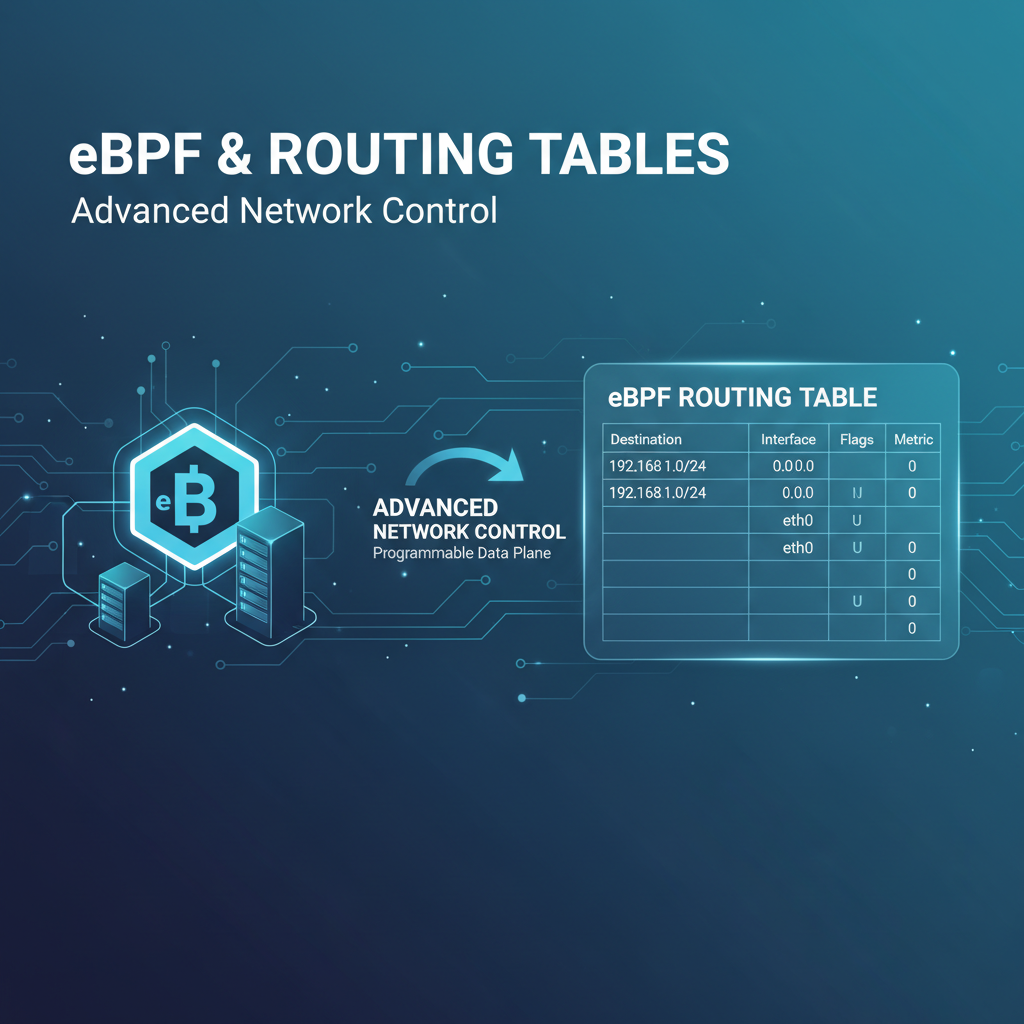


The intricate dance of data packets across global networks forms the backbone of our digital world. Beneath the surface of every web request, every streaming video, and every online interaction, a complex system of rules and decisions dictates the path these packets will take. At the heart of this system lies the humble routing table, a cornerstone of network infrastructure that has, for decades, efficiently directed traffic. Yet, as networks grow exponentially in scale, complexity, and the demands placed upon them, traditional routing mechanisms, while robust, can often feel rigid and slow to adapt. This rigidity has spurred a quest for greater agility, deeper visibility, and more granular control within the network fabric itself.
Enter eBPF (extended Berkeley Packet Filter), a revolutionary technology that is transforming how we interact with the Linux kernel and, by extension, how we manage and control network operations. By allowing user-defined programs to run safely and efficiently within the kernel, eBPF has opened unprecedented avenues for innovation in performance optimization, security, and observability. When combined with the foundational principles of routing tables, eBPF creates a powerful synergy, enabling a new paradigm of advanced network control that is dynamic, context-aware, and highly performant. This article will embark on a comprehensive exploration of this powerful combination, delving into the intricacies of routing tables, the transformative potential of eBPF, and how their integration is reshaping the landscape of modern network management, from the granular control of individual packets to the overarching architecture of sophisticated network gateways and distributed servers.
Part 1: The Foundation - Understanding Routing Tables
At its core, a computer network is a system designed to move data from one point to another. The crucial mechanism that enables this movement across different networks is routing. When a data packet needs to travel beyond its local subnet, it relies on routing tables to find its way. Without them, packets would wander aimlessly, never reaching their intended destination.
1.1 What are Routing Tables?
A routing table is essentially a set of rules, often organized in a tabular format, that a network device (like a router or a host operating system) uses to determine where to send data packets. When a packet arrives at a device, the device examines the packet's destination IP address and consults its routing table to find the best path to that destination. This process is fundamental to how IP networks function, ensuring that traffic can traverse complex interconnections and reach servers across the globe.
The primary purpose of a routing table is to provide the next-hop information for a given destination. It doesn't necessarily know the entire path to the destination but rather points to the immediate next device or interface that can forward the packet closer to its final goal.
The core components of an entry in a typical routing table include:
- Destination Network/Host: This specifies the IP address range (network) or a specific IP address (host) that this entry applies to. It's often represented in CIDR notation (e.g.,
192.168.1.0/24for a network, or10.0.0.1/32for a single host). - Gateway (Next Hop): This is the IP address of the next device to which the packet should be sent to reach the destination. If the destination is on the local network, this field might indicate the local interface itself or be omitted, as the packet can be delivered directly. For remote networks, this is typically the IP address of an adjacent router or network
gateway. - Genmask (Netmask): This specifies the subnet mask associated with the destination network, defining which part of the IP address represents the network and which part represents the host. In CIDR, this is implicitly included in the destination field (e.g.,
/24). - Flags: These provide additional information about the route, such as whether it's an active route (
Ufor Up), agatewayroute (G), a host route (H), or a default route (D). - Metric: A numerical value that indicates the "cost" of using this route. Lower metrics are generally preferred. This is used when multiple paths to the same destination exist to select the optimal route based on factors like hop count, bandwidth, or delay.
- Interface: The local network interface (e.g.,
eth0,wlan0) through which the packet should be sent to reach the next hop or directly deliver to the destination.
When a packet arrives, the router performs a "longest prefix match." It compares the packet's destination IP address with all the destination entries in its routing table. The entry with the most specific match (i.e., the longest matching prefix) is chosen as the appropriate route. This ensures that more specific routes take precedence over broader ones, allowing for granular control and efficient traffic steering. For instance, a route for 192.168.1.0/24 would be preferred over a route for 192.168.0.0/16 if the destination IP is 192.168.1.10. The ultimate fallback is often the default route (0.0.0.0/0), which points to the default gateway for all traffic not explicitly matched by any other route. This default gateway is crucial for enabling connectivity to the internet or other external networks.
1.2 Traditional Routing Protocols and Mechanisms
While static routing tables, where entries are manually configured, are suitable for small, stable networks, they quickly become unmanageable in larger, more dynamic environments. This is where dynamic routing protocols come into play. These protocols allow routers to automatically discover network topologies, exchange routing information, and update their routing tables in response to changes in the network.
- Static Routing: Involves manually configuring each route on a router. This provides complete control and is simple for small networks or specific scenarios (e.g., a default route to an upstream
gateway). However, it lacks scalability and fault tolerance; any network change requires manual updates, and if a link fails, traffic will not automatically reroute. - Dynamic Routing: Routers use dynamic routing
protocols to automatically share routing information. This makes networks more robust and scalable. Common dynamic routingprotocols include:- RIP (Routing Information
Protocol): One of the oldest distance-vectorprotocols. It uses hop count as its metric and has a small maximum hop count (15), making it suitable for smaller networks. It’s relatively simple to configure but can be slow to converge. - OSPF (Open Shortest Path First): A link-state
protocolwidely used in large enterprise networks. Routers using OSPF maintain a complete map of the network topology, allowing them to calculate the shortest path to any destination. It converges quickly and supports hierarchical designs but is more complex to configure. - BGP (Border Gateway
Protocol): The de facto standard exteriorgatewayprotocolthat powers the internet. BGP is a path-vectorprotocolthat exchanges routing information between autonomous systems (AS). It's highly scalable and flexible, allowing for complex policy-based routing decisions, but it is also exceptionally complex to manage.
- RIP (Routing Information
Beyond these fundamental protocols, Policy-Based Routing (PBR) offers a way to deviate from the standard destination-based forwarding. PBR allows network administrators to define rules based on criteria other than just the destination IP, such as source IP address, protocol type, application port, or even packet size. For instance, PBR might direct all voice traffic through a high-priority link while sending general web traffic over a less expensive, lower-priority link. While PBR provides more flexibility than standard routing, it is typically implemented via static configurations on routers and firewalls. This means that PBR rules, once set, are largely static and do not dynamically adapt to real-time network conditions or application-specific demands, leading to limitations in highly dynamic or cloud-native environments.
The challenges with traditional routing mechanisms stem from several factors: * Scalability: As the number of connected devices and servers grows, maintaining and updating routing tables, especially in large-scale data centers or cloud infrastructures, becomes increasingly burdensome. * Flexibility: Traditional routing is primarily destination-based. While PBR adds some flexibility, it's still relatively static. It struggles to adapt to dynamic network conditions, application-specific requirements, or rapidly changing traffic patterns. * Real-time Adaptability: Changes in network state (e.g., congestion, link failures, new servers coming online) are often propagated slowly through dynamic routing protocols, leading to suboptimal routing paths or temporary outages. * Ossification of Kernel Space: Network functions implemented deep within the kernel are highly optimized but notoriously difficult to modify or extend. Introducing new routing logic or optimizing packet processing often requires kernel recompilation or significant patches, which is a slow and risky process.
These limitations highlight a growing need for more programmable, agile, and performant network control mechanisms—a need that eBPF is uniquely positioned to address.
1.3 The Role of the Network Gateway
In the context of networking, a gateway is a crucial device or function that acts as an entry and exit point for a network. It's the literal "gate" that allows traffic to flow between two different networks, especially between a local network and a larger external network like the internet. Every time your computer accesses a website, the traffic first travels to your local gateway (typically your home router) before venturing further out onto the internet.
The gateway's role is critical in inter-network communication. Without a gateway, devices on one network would be isolated from devices on other networks. For instance, a gateway translates protocols if necessary, performs NAT (Network Address Translation) to allow multiple private IP addresses to share a single public IP, and often includes firewall functionality for security.
Routing tables play a fundamental role in guiding packets to the correct gateway. Every device on a network needs to know its default gateway. This is typically an entry in its routing table that specifies 0.0.0.0/0 (the default route) pointing to the IP address of the local router. When a device needs to send a packet to a destination outside its immediate network, it checks its routing table. If no specific route matches the destination, the packet is forwarded to the default gateway. This gateway then takes responsibility for forwarding the packet further, consulting its own, often much larger, routing table to determine the next hop.
In more complex environments, like data centers or enterprise networks, there can be multiple gateways. For example: * Default Gateway: The primary gateway for general internet access. * Border Gateways: Devices at the edge of an autonomous system that connect to other autonomous systems (often using BGP). * Application Gateways: Specialized gateways that operate at higher layers of the OSI model, focusing on application-level traffic (e.g., reverse proxies, API gateways). These can make routing decisions based on URLs, headers, or other application-specific criteria, directing requests to specific backend servers.
The proper configuration and functioning of gateways, driven by accurate routing tables, are paramount for ensuring continuous connectivity, efficient traffic flow, and network security. Any misconfiguration in a gateway or its associated routing entry can lead to network blackholes, inaccessible servers, or severe performance degradation.
Part 2: The Revolution - Introduction to eBPF
While routing tables and traditional protocols have served us well, the demands of modern computing, particularly in areas like cloud-native applications, microservices, and high-performance computing, have pushed their limits. This is where eBPF emerges as a groundbreaking technology, offering an unprecedented level of programmability and control deep within the Linux kernel.
2.1 What is eBPF? An Overview
eBPF, or extended Berkeley Packet Filter, is a powerful technology that allows custom programs to run safely and efficiently inside the Linux kernel. Evolving from the classic BPF (cBPF) which was initially designed for packet filtering (hence "Packet Filter"), eBPF dramatically expands its scope to encompass a wide array of system events and functionalities beyond just networking. It's not merely a network-specific tool but a general-purpose execution engine within the kernel.
At its heart, eBPF functions as a in-kernel virtual machine. Developers write programs in a restricted C-like language, which is then compiled into eBPF bytecode. Before these programs are loaded into the kernel, they undergo a rigorous verification process by the eBPF verifier. This verifier ensures that the program is safe to execute, won't crash the kernel, won't loop indefinitely, and adheres to strict security rules (e.g., no out-of-bounds memory access). Once verified, the eBPF bytecode is typically Just-In-Time (JIT) compiled into native machine code for the host architecture, allowing it to execute at near-native speed, comparable to compiled kernel modules.
The brilliance of eBPF lies in its event-driven architecture and its ability to attach to various "hook points" within the kernel. These hook points are specific locations where eBPF programs can be invoked when a particular event occurs. For networking, these include:
- XDP (eXpress Data Path): Allows eBPF programs to run at the earliest possible point in the network driver, even before the kernel's network stack fully processes the packet. This enables extreme performance for tasks like high-speed packet filtering, load balancing, and DDoS mitigation.
- TC (Traffic Control): Provides hooks for eBPF programs in the kernel's traffic control layer, allowing for sophisticated packet classification, modification, redirection, and shaping. This is ideal for implementing custom quality of service (QoS) policies or advanced routing logic.
- Socket filters: Programs can be attached to sockets to filter incoming or outgoing packets, perform custom parsing, or redirect traffic.
protocolhandlers: Hooks withinprotocolstacks to customize their behavior.
Beyond networking, eBPF can also attach to: * Kprobes/Uprobes: Allows tracing and modifying kernel and user-space functions, respectively, providing deep observability into system behavior. * Tracepoints: Predefined instrumentation points in the kernel for stable tracing. * Security hooks (LSM): For custom security policies.
Key features that make eBPF revolutionary include: * Safety: The verifier prevents malicious or buggy programs from compromising kernel stability. * Performance: JIT compilation to native code ensures minimal overhead, often outperforming traditional kernel modules for specific tasks. * Flexibility: Its ability to attach to numerous hook points and access kernel data structures provides unparalleled control and observability. * Dynamic Loading/Unloading: eBPF programs can be loaded and unloaded without rebooting the kernel, enabling agile updates and experimentation.
2.2 eBPF's Core Principles and Mechanisms
Understanding how eBPF programs interact with the kernel requires delving into its core principles and components:
- eBPF Program Types: The specific behavior and available helper functions for an eBPF program depend heavily on its type. Examples relevant to networking include:
- XDP Programs: Attached to network device drivers. Can
REDIRECTpackets to another interface/CPU,DROPpackets,PASSto the normal network stack, orTX(send back out the same interface). They operate directly onsk_buff(socket buffer) data. - TC Programs: Attached to a traffic control ingress or egress queue. Offer more fine-grained control than XDP, allowing modification of
sk_buffmetadata, redirection to namespaces, or even encapsulation/decapsulation of packets. - Socket Programs: Attached to specific sockets to filter or process data specific to that application.
- cgroup Programs: Used for network control and security based on cgroup membership, allowing different policies for different groups of
serversor applications.
- XDP Programs: Attached to network device drivers. Can
- eBPF Maps: A critical component of eBPF, maps are shared data structures that allow eBPF programs to store and retrieve data. They are the primary mechanism for:Various map types exist, each optimized for different use cases: *
BPF_MAP_TYPE_HASH: General-purpose hash tables for key-value storage. *BPF_MAP_TYPE_ARRAY: Fixed-size arrays for fast indexed lookups. *BPF_MAP_TYPE_LRU_HASH/LRU_PERCPU_HASH: Hash tables with Least Recently Used eviction policies, useful for caches. *BPF_MAP_TYPE_LPM_TRIE(Longest Prefix Match Trie): Specifically designed for routing table lookups, enabling efficient longest prefix matching similar to traditional routing tables but programmable by eBPF. This is crucial for custom routing logic. *BPF_MAP_TYPE_PROG_ARRAY: An array of eBPF programs, allowing one program to jump to another, useful for building complex state machines orprotocolparsing pipelines.- Stateful Operations: eBPF programs are inherently stateless across packet events, but maps allow them to maintain state. For example, a map could store connection tracking information,
servershealth, orprotocolcounters. - Communication between eBPF programs: Multiple eBPF programs can read from and write to the same map.
- Communication between kernel and user space: User-space applications can interact with eBPF maps to configure program behavior, extract telemetry data, or update policies dynamically.
- Stateful Operations: eBPF programs are inherently stateless across packet events, but maps allow them to maintain state. For example, a map could store connection tracking information,
- eBPF Helpers: These are a set of functions provided by the kernel that eBPF programs can call to perform specific tasks. Helpers provide a controlled and safe interface to kernel functionalities. Examples include:
bpf_map_lookup_elem()/bpf_map_update_elem()/bpf_map_delete_elem(): For interacting with eBPF maps.bpf_trace_printk(): For debugging (thoughbpf_perf_event_outputis generally preferred for production logging).bpf_ktime_get_ns(): To get current kernel time.bpf_redirect(): To redirect packets to different network interfaces or otherservers(used heavily in XDP/TC for routing/load balancing).bpf_skb_store_bytes(): To modify packet data (e.g., rewriting headers).bpf_l3_csum_replace()/bpf_l4_csum_replace(): To update IP/TCP/UDP checksums after packet modification.
These elements collectively empower eBPF to implement highly sophisticated and customized network logic directly within the kernel's data path, offering a level of flexibility and performance previously unattainable without modifying the kernel source code itself.
2.3 Why eBPF for Networking?
The rise of eBPF in networking is a direct response to the limitations of traditional approaches and the growing demands for dynamic, high-performance, and observable networks.
- Programmable Data Plane: Traditional kernel networking functions are fixed. eBPF transforms the kernel's network stack into a programmable data plane. This means network engineers and developers can inject custom logic at various stages of packet processing, enabling highly specialized behaviors that are difficult or impossible with standard tools. This flexibility is crucial for cloud-native architectures where network requirements are often application-specific and rapidly evolving.
- Reduced Kernel Bypass (XDP): Technologies like DPDK (Data Plane Development Kit) achieve high performance by completely bypassing the kernel's network stack, which brings its own complexities (e.g., driver compatibility, integration with existing tools). XDP, powered by eBPF, offers near-kernel bypass performance by processing packets in the driver before the full stack, but still allows seamless integration with the Linux networking ecosystem. This provides the best of both worlds: extreme speed and full kernel interoperability. This is vital for
servershandling high-volume traffic, such as front-end webserversor critical infrastructure components. - Granular Control and Visibility: eBPF can inspect and modify packets at a byte-level and attach to nearly any
protocollayer, providing an unprecedented level of control. Simultaneously, it offers deep, real-time visibility into kernel operations, network events, and application behavior. This granular control and visibility are essential for fine-tuning network performance, implementing sophisticated security policies, and diagnosing complex issues. For example, specificprotocolflows can be prioritized or isolated based on dynamic conditions. - Improved Performance and Efficiency: By executing custom logic directly in the kernel, often JIT-compiled to native code, eBPF minimizes context switching overhead and avoids data copying between kernel and user space. This results in significant performance gains for tasks like packet filtering, load balancing, and traffic steering, leading to more efficient utilization of CPU resources and higher throughput for
servers. - Solving the "Ossified Kernel" Problem: Historically, extending kernel functionality required writing kernel modules, a complex, error-prone process that risked system instability. eBPF provides a safe, stable, and dynamic way to extend the kernel's capabilities without modifying its source code or requiring reboots. This "hot-patching" ability allows for rapid iteration and deployment of new network features and optimizations, accelerating innovation.
In essence, eBPF allows network architects and developers to treat the Linux kernel as a customizable network operating system, empowering them to build highly efficient, secure, and intelligent network infrastructures that can adapt to the ever-changing demands of the digital landscape. It provides the tools to rewrite the rules of routing and network control, moving beyond the static limitations of the past.
Part 3: eBPF & Routing Tables - A Symbiotic Relationship for Advanced Control
The true power of eBPF in networking emerges when it is leveraged to augment, enhance, and, in some cases, even redefine the traditional role of routing tables. By integrating eBPF programs into the packet processing pipeline, networks can achieve a level of dynamism, intelligence, and performance that was previously unimaginable. This symbiotic relationship transforms routing from a static lookup mechanism into an adaptive, policy-driven decision engine.
3.1 Enhancing Routing Decisions with eBPF
Traditional routing is primarily concerned with forwarding packets based on their destination IP address using the longest prefix match. While effective, this approach can be blind to the nuances of application requirements, network conditions, or security policies beyond simple IP-based rules. eBPF allows us to inject intelligence into this process, enabling far more sophisticated routing decisions.
Dynamic Policy-Based Routing (dPBR) with eBPF
Policy-Based Routing (PBR) allows routing decisions to be made based on criteria other than just the destination IP, such as source IP, protocol type, or port number. However, traditional PBR implementations are often static and require manual configuration updates. eBPF elevates PBR to a dynamic, real-time capability.
With eBPF, network administrators can implement Dynamic Policy-Based Routing (dPBR), where routing decisions adapt in real-time based on a multitude of contextual factors. eBPF programs, typically attached at the TC ingress/egress points, can inspect incoming packets and dynamically determine the optimal next hop or gateway based on:
- Application Identity: Identifying traffic belonging to a specific application (e.g., video streaming, voice-over-IP, database queries) using deep packet inspection (DPI) or metadata, and routing it through a dedicated high-bandwidth or low-latency link.
- User/Tenant Identity: Directing traffic from specific users or tenants to isolated network segments or specific
serversfor enhanced security or performance isolation, especially relevant in multi-tenant cloud environments. - Load and Latency: Monitoring the real-time load or latency of different network paths or
gateways, and dynamically steering traffic away from congested routes or failing links. - Time of Day/Week: Implementing time-sensitive routing policies, such as prioritizing backup traffic during off-peak hours or routing critical business traffic through dedicated
gateways during working hours. - Security Context: Rerouting traffic from known malicious sources to a honeypot or security appliance, or enforcing specific routing for encrypted traffic.
Example: Imagine an eBPF program attached to a network interface. This program could maintain an eBPF map that stores the current latency to two different upstream Internet gateways. For every outgoing packet, the eBPF program looks up the destination. If the destination is internet-bound, it queries the map for the current latency to gateway A and gateway B. Based on this real-time data, it could then use bpf_redirect() to steer the packet towards the gateway with lower latency. This goes beyond simple PBR because the routing decision is not fixed but continuously updated based on live network performance data, ensuring optimal user experience and efficient resource utilization for servers sending requests. Another scenario could involve routing specific application traffic (e.g., video conferencing) through a dedicated VPN tunnel or a gateway with a guaranteed QoS protocol based on current network conditions or business policies.
Customizing Packet Forwarding Logic
Beyond augmenting PBR, eBPF allows for the implementation of entirely custom packet forwarding logic that can override or supplement the kernel's default routing behavior. This opens up possibilities for highly specialized network functions:
- Implementing Custom Routing Algorithms: Network engineers can develop and deploy new routing algorithms that are not natively supported by the Linux kernel. For instance, a bespoke load-balancing algorithm that considers specific application metrics gathered via eBPF probes on backend
serversbefore making a forwarding decision. - Micro-segmentation and Security
protocolEnforcement: eBPF programs can enforce granular micro-segmentation policies directly in the data path. Instead of relying solely on firewalls at network perimeters, eBPF can inspect every packet as it traverses the kernel and enforce access control rules between individualserversor containers, based on their identity,protocol, or even application-level attributes. For example, allowing only specificprotocols (like PostgreSQLprotocol) between a web server and a database server, and dropping all other traffic, even if they are on the same subnet. - Virtual Network Functions (VNFs): eBPF can be used to build lightweight, high-performance virtual network functions like virtual routers, firewalls, or NAT
gateways, directly within the kernel. This reduces the need for dedicated virtual appliances, improving efficiency and simplifying management.
By deploying eBPF programs at critical points like XDP (for early filtering and redirection) or TC (for more complex sk_buff manipulation), network architects can create a truly programmable data plane that responds intelligently to network dynamics, application needs, and security threats.
3.2 eBPF for Advanced Load Balancing and Traffic Engineering
Load balancing is essential for distributing network traffic efficiently across multiple servers to ensure high availability, scalability, and optimal performance. Traditional load balancers are often dedicated hardware appliances or software proxies. eBPF provides an alternative paradigm, enabling highly efficient, in-kernel load balancing and sophisticated traffic engineering.
Service-aware Load Balancing
eBPF's ability to inspect packets at a very low level and integrate with user-space control planes allows for incredibly intelligent and service-aware load balancing. Instead of just distributing connections based on a simple round-robin or least-connection algorithm, eBPF can consider a wealth of contextual information:
- Application-level Metrics: eBPF programs can gather metrics directly from backend
servers, such as CPU utilization, memory pressure, current active connections for a specific service, or even application-specific health checks. This data, stored in eBPF maps, can then inform load balancing decisions. For example, directing new connections to theserverthat has the lowest current application load, rather than just the lowest network load. - Layer 4/Layer 7 Load Balancing: While XDP typically operates at Layer 3/4, eBPF programs can be crafted to perform more sophisticated Layer 7 (application layer) load balancing. By parsing application
protocolheaders (e.g., HTTP headers likeHostorUser-Agent), eBPF can direct requests to different sets ofserversbased on the requested service or content type. This can effectively replace or augment traditional application load balancers, often with significantly higher performance and lower latency. For example, a request for/api/v1/usersmight go to a differentserverpool than/images/. - Maglev-like Load Balancing: Large-scale data centers often employ advanced load balancing techniques like Google's Maglev, which uses consistent hashing to map incoming connections to backend
servers. eBPF can implement similar highly efficient and distributed load balancing schemes directly in the kernel, reducing the need for expensive hardware load balancers and improving the scalability ofservers. This ensures that even if a backendserverfails, disruption is minimized, and existing connections are consistently re-routed. - Connection Tracking: eBPF programs can maintain connection state in maps, ensuring that all packets belonging to an existing connection are consistently routed to the same backend
server, which is crucial for many applicationprotocols.
Intelligent Traffic Steering
Traffic engineering involves optimizing the performance of a network by intelligently routing traffic. eBPF enables powerful, dynamic traffic steering capabilities that go far beyond what traditional routing tables can offer:
- Real-time Congestion Avoidance: eBPF programs can monitor network conditions (e.g., interface queue lengths,
protocolerrors, packet drops) in real-time. If congestion is detected on a particular path orgateway, eBPF can dynamically reroute traffic to an alternative, less congested path. This can be critical for maintaining QoS for sensitive applications. - Path Selection based on SLAs: For mission-critical applications, different Service Level Agreements (SLAs) might exist. eBPF can implement policies that prioritize traffic for high-SLA services, ensuring they always use the best available path, even if it's more expensive or typically less preferred for general traffic. For example, a critical financial transaction
protocolmight always take the path with guaranteed low latency. - Multi-Path TCP Optimization: eBPF can be used to intelligently manage and optimize Multi-Path TCP (MPTCP) connections, allowing a single connection to use multiple network paths simultaneously. This can be used to aggregate bandwidth or improve resilience, with eBPF dynamically selecting sub-paths based on real-time metrics.
ProtocolTunneling and Encapsulation: eBPF can perform on-the-fly encapsulation and decapsulation of packets (e.g., for VXLAN, Geneve, GRE), allowing for the creation of virtual overlays and complex network topologies without relying on specialized hardware. This is fundamental for building cloud-native networking solutions like service meshes.
By placing this intelligence directly into the kernel's data path, eBPF minimizes latency and maximizes throughput, making it an ideal choice for high-performance load balancing and advanced traffic engineering in modern data centers and cloud environments. It essentially allows the network to self-optimize and adapt in real-time, delivering superior performance for all connected servers and applications.
3.3 eBPF for Network Observability and Troubleshooting
One of eBPF's most compelling features is its unparalleled ability to provide deep, granular visibility into kernel operations and network traffic. This transforms network observability and troubleshooting, moving beyond aggregate statistics to real-time, per-packet insights.
Deep Packet Inspection and Telemetry
Traditional network monitoring often relies on SNMP, netflow, or packet captures, which can be resource-intensive, provide limited context, or introduce significant latency. eBPF allows for non-intrusive, high-performance data extraction directly from the kernel:
- Rich Metadata Extraction: eBPF programs can be attached at various points within the network stack (XDP, TC, socket filters) to inspect packets and extract a wealth of metadata without copying the entire packet to user space. This can include source/destination IPs and ports,
protocolheaders (TCP, UDP, HTTP, DNS),protocolflags, payload characteristics, and even application-level attributes. - Custom Counters and Metrics: Instead of relying on predefined kernel statistics, eBPF can implement custom counters for virtually any network event. For instance, counting packets dropped due to specific firewall rules, tracking latency for particular application
protocols, or monitoring the number of connections to specific backendservers. These counters can be stored in eBPF maps and exposed to user space for real-time dashboards and alerting. - Tracing Routing Table Lookups: eBPF can trace the kernel's internal routing table lookup process, providing insight into which route was chosen for a specific packet and why. This is invaluable for verifying complex routing policies and debugging unexpected traffic paths.
- Flow and Session Monitoring: By leveraging eBPF maps for connection tracking, eBPF can build detailed flow records, capturing information about an entire communication session, including byte counts, packet counts, latency, and
protocolstates, across differentservers.
This rich telemetry can be streamed efficiently to user-space applications (e.g., Prometheus, Grafana, custom monitoring tools) via perf_event_output or directly accessed from eBPF maps, enabling real-time network visibility and historical analysis.
Real-time Network Diagnostics
When network issues arise, traditional troubleshooting often involves a "black box" approach, relying on indirect clues and lengthy packet captures. eBPF changes this by providing a "white box" view into the kernel's operations:
- Identifying Routing Blackholes and Loops: eBPF programs can be used to detect packets that are dropped due to routing failures, misconfigured
gateways, or that are caught in routing loops. By tracing a packet's journey through the kernel, eBPF can pinpoint the exact stage where it was dropped or incorrectly forwarded. - Pinpointing Performance Bottlenecks: Is the latency due to the network interface, the kernel stack, a particular firewall rule, or a slow application on the backend
servers? eBPF can provide the answer by measuring latency between different points in the packet processing pipeline, helping to isolate the root cause of performance degradation. For example, measuring the time a packet spends waiting in agateway's egress queue. - Enhanced
ProtocolDebugging: For custom or complexprotocols, eBPF can be used to parseprotocolheaders and payloads, validating correctness and detecting errors in real-time. This is particularly useful for debugging interoperability issues betweenserversor different network devices. - Dynamic Logging and Alerting: Based on specific network events or thresholds detected by eBPF programs (e.g., an unusual number of dropped packets, an unauthorized
protocolattempt), custom alerts can be triggered or detailed logs generated, providing immediate notification of potential issues.
Tools like bpftrace and BCC (BPF Compiler Collection) leverage eBPF to provide powerful, dynamic tracing capabilities, allowing administrators to ask arbitrary questions about kernel behavior without modifying source code. This real-time, on-demand diagnostic capability dramatically reduces the Mean Time To Resolution (MTTR) for network incidents, ensuring higher availability and reliability for critical servers and services.
3.4 Security Implications and Enhancements
Network security is a constant battle against evolving threats. eBPF offers a powerful new arsenal for defending networks, enabling highly performant, granular, and dynamic security controls directly within the kernel.
Stateless Firewalling and DDoS Mitigation
The earliest point a packet can be processed in the Linux kernel is often at the XDP layer. This makes XDP-based eBPF programs exceptionally effective for high-performance security tasks:
- Extreme Performance Packet Filtering: XDP programs can inspect incoming packets and drop malicious traffic (e.g., known attack signatures, invalid
protocolheaders, malformed packets) before they consume significant kernel or CPU resources. This is far more efficient than allowing traffic to traverse the full network stack to a traditional firewall. - DDoS Mitigation: In the face of a Distributed Denial of Service (DDoS) attack, every CPU cycle and every packet matters. XDP eBPF can provide a first line of defense, filtering out large volumes of attack traffic at line rate, protecting backend
serversfrom being overwhelmed. For example, rapidly dropping SYN floods or UDP amplification attacks. eBPF maps can track source IPs,protocols, and connection rates to identify and block attack patterns dynamically. - Stateful Connection Tracking for Attackers: While XDP itself is stateless, eBPF maps can be used to implement custom stateful logic. For example, tracking the number of connection attempts from a suspicious IP address and dynamically blocking it after a threshold is exceeded.
This early-stage filtering significantly reduces the attack surface and preserves valuable resources for legitimate traffic.
Enforcing Micro-segmentation Policies
Micro-segmentation is a security strategy that divides data centers into smaller, isolated segments down to the workload level. eBPF enhances micro-segmentation by enforcing these policies directly within the kernel:
- Granular Access Controls: eBPF programs, often attached to TC or cgroups, can enforce highly granular access control policies between individual
servers, containers, or even specificprotocols within a workload. For instance, a policy might dictate that a web server can only communicate with a database server onprotocolport 5432 (PostgreSQL) and with a caching server on port 11211 (Memcached), blocking all other traffic between them, even if they reside on the same host or subnet. - Dynamic Policy Updates: Security policies can be dynamically updated by user-space control planes interacting with eBPF maps. This allows for rapid response to security incidents or changes in application topology without reconfiguring network devices or restarting
servers. - Identity-Aware Policies: By leveraging process information or container labels, eBPF can implement identity-aware security policies, ensuring that only authorized processes or containers can send/receive specific types of traffic, regardless of their IP address.
This in-kernel enforcement creates a zero-trust environment where every communication is explicitly authorized, significantly limiting the lateral movement of attackers within a network.
Anomaly Detection
eBPF's deep observability makes it an ideal tool for real-time anomaly detection related to network and routing behavior:
- Detecting Routing Misconfigurations: eBPF can monitor routing table updates and packet forwarding decisions, flagging unusual changes or suspicious
gatewayredirections that might indicate a misconfiguration or a malicious route injection. - Unusual
ProtocolBehavior: Programs can detect deviations from normalprotocolusage patterns (e.g., an unexpectedprotocolbeing used on a specific port, unusual packet sizes for a givenprotocol) which could signal an attack or malware activity. - Unexpected Traffic Flows: By monitoring all network connections, eBPF can identify traffic flows that violate expected patterns, such as a
serverunexpectedly initiating connections to an external IP, or an unusual volume of data being exfiltrated. - Resource Abuse Detection: eBPF can track resource consumption (CPU, memory, bandwidth) on a per-process or per-container basis, identifying instances where a malicious process might be attempting to consume excessive resources or generate abnormal network traffic.
By combining its powerful data plane control with unparalleled observability, eBPF provides a robust, high-performance foundation for advanced network security, protecting servers, applications, and data from a wide array of threats.
APIPark is a high-performance AI gateway that allows you to securely access the most comprehensive LLM APIs globally on the APIPark platform, including OpenAI, Anthropic, Mistral, Llama2, Google Gemini, and more.Try APIPark now! 👇👇👇
Part 4: Practical Implementations and Use Cases
The theoretical capabilities of eBPF in conjunction with routing tables translate into tangible benefits across diverse networking environments. From sprawling data centers to compact edge devices, eBPF is proving to be a game-changer for advanced network control.
4.1 Data Centers and Cloud Environments
Modern data centers and cloud platforms are characterized by massive scale, dynamic workloads, and a strong emphasis on automation and software-defined networking (SDN). eBPF is perfectly suited for these environments:
- Customizing Network Fabric for Specific Tenant Requirements: In multi-tenant clouds, each tenant might have unique network requirements for isolation, performance, or security. eBPF allows cloud providers to implement highly customized network policies directly within the kernel of each host, without relying on traditional, inflexible hardware-based networking. For example, creating virtual network segments that precisely match a tenant's application architecture, with specific
protocolallowances and traffic steering rules to dedicatedservers. - High-performance Service Meshes: Service meshes like Istio, Linkerd, and Cilium use sidecar proxies to manage inter-service communication. Cilium famously leverages eBPF to offload much of its data plane logic from the sidecar proxy into the kernel. This drastically reduces latency and overhead, leading to higher performance for microservices communication. eBPF handles load balancing between microservice instances, enforces network policies between pods, and provides deep observability into
protocolinteractions, all with minimal CPU impact on the applicationservers. This allows for millions ofprotocolrequests per second to be handled efficiently betweenserverswithin the mesh. - Optimizing Inter-
serversCommunication: Within a data center, the volume of east-west (server-to-server) traffic often dwarfs north-south (client-to-server) traffic. eBPF can optimize this communication by implementing intelligent load balancing across backendservers, dynamic routing based onserverhealth and load, and high-performance packet filtering to ensure only authorized traffic flows between them. This is critical for scaling distributed applications and maintaining low latency between tightly coupled services. - Efficient Overlay Networking: Technologies like VXLAN and Geneve create virtual overlay networks to abstract the underlying physical network. eBPF programs can perform highly efficient encapsulation and decapsulation of these
protocols in the kernel, reducing the CPU overhead compared to traditional software implementations and enabling large-scale, flexible virtual networks.
4.2 Edge Computing and IoT
Edge computing brings computation and data storage closer to the data sources, often involving resource-constrained devices and dynamic network conditions. eBPF's lightweight and efficient nature makes it ideal for these scenarios:
- Lightweight and Dynamic Routing at the Edge: Edge
gateways and IoT devices often need to route traffic dynamically based on available connectivity (e.g., cellular, Wi-Fi, satellite), application priority, or device status. eBPF can implement custom, lightweight routing logic directly on these devices, allowing them to adapt quickly to changing network conditions without the overhead of full-fledged routingprotocols. For example, an eBPF program could monitor the quality of different uplinks and dynamically switch the defaultgatewaybased on real-time latency or bandwidth. - Efficient Resource Utilization on Constrained Devices: IoT devices typically have limited CPU, memory, and battery life. eBPF's in-kernel execution and minimal overhead mean that complex network control and security functions can be implemented efficiently without draining precious resources. This allows for smarter, more secure edge devices without requiring significant hardware upgrades.
- Adapting to Changing Network Conditions for Reliable Connectivity: An IoT
gatewaymight need to prioritize critical sensor data over less urgent telemetry based on the current network capacity. eBPF can dynamically adjust QoS policies and traffic shaping rules to ensure vitalprotocols reach their destination even under intermittent or congested network conditions, maintaining reliable connectivity to backendserversor cloud services. - Local Packet Processing and Filtering: To reduce bandwidth consumption and improve privacy, eBPF can perform local filtering and aggregation of data packets directly on edge devices before sending them to the cloud. For instance, dropping duplicate sensor readings or filtering out irrelevant
protocols.
4.3 Telco and Service Provider Networks
Telecommunications networks are undergoing a massive transformation, driven by 5G, network function virtualization (NFV), and software-defined networking (SDN). eBPF offers a powerful platform for building the next generation of programmable telco infrastructure.
- Programmable Network Functions (PNFs): Instead of deploying monolithic, often proprietary network appliances, telcos are moving towards disaggregated, software-defined network functions. eBPF can be used to implement high-performance, programmable network functions (PNFs) like virtual firewalls, load balancers, and packet
gateways directly within standard Linuxservers. This provides unprecedented flexibility and cost efficiency, allowing new features to be deployed rapidly. - Custom Traffic Steering for 5G Core Networks: 5G networks require extremely low latency, high bandwidth, and the ability to slice the network for different services (e.g., IoT, enhanced mobile broadband, ultra-reliable low-latency communication). eBPF can implement highly specific traffic steering policies within the 5G user plane function (UPF), ensuring that different types of traffic are routed optimally based on their QoS requirements, dynamically selecting the best
gatewayorserversfor each flow. - Enhanced QoS for Different Service Types: eBPF can apply fine-grained Quality of Service (QoS) policies to distinguish and prioritize traffic based on application, user, or service slice. For example, guaranteeing bandwidth and low latency for voice and video calls while providing best-effort service for general internet browsing, all implemented at the kernel level with minimal overhead. This ensures that critical communication
protocols are always prioritized. - Real-time Network Monitoring and Troubleshooting: Telco networks are incredibly complex. eBPF's deep observability capabilities provide service providers with real-time insights into network performance, congestion, and subscriber traffic patterns. This enables proactive troubleshooting and optimized resource allocation across a vast array of
serversand network elements.
4.4 Integration with Existing Network Infrastructure
While eBPF represents a revolutionary shift, it's not a rip-and-replace solution. Its power often comes from its ability to integrate seamlessly with and enhance existing network infrastructure.
Table 1: Comparison of Traditional vs. eBPF-Enhanced Network Control
| Feature/Aspect | Traditional Network Control (Routing Tables, ACLs, PBR) | eBPF-Enhanced Network Control |
|---|---|---|
| Flexibility | Relatively static, primarily destination-based. PBR offers some policy, but often configured manually. | Highly dynamic and context-aware. Programmable at kernel-level based on various metrics. |
| Adaptability | Slow to adapt to real-time network conditions. Requires protocol convergence or manual updates. |
Real-time adaptation. Policies can change based on live telemetry, server load, etc. |
| Performance | Optimized, but every packet goes through full kernel stack. Hardware acceleration for specific functions. | Near-native speed, XDP bypasses much of the stack. Minimal context switching. |
| Granularity | IP/Port-level rules, VLANs, broad subnets. | Byte-level inspection, application/process-aware, per-flow policies. |
| Observability | Netflow, SNMP, packet captures. Often aggregate or post-hoc. | Deep, real-time, per-packet/per-flow telemetry directly from kernel. |
| Security | Firewalls, ACLs, often at choke points. Policy enforcement can be coarse. | In-kernel micro-segmentation, high-performance DDoS mitigation at driver level. |
| Deployment Model | Fixed firmware, configuration files. Requires device-specific commands. | Software-defined. Programs loaded/unloaded dynamically without reboot. |
| Complexity | Protocol-specific knowledge, vendor-specific CLI. | Requires kernel knowledge, C/BPF, but offers powerful abstractions (e.g., Cilium). |
| Use Cases | Inter-network routing, basic load balancing, fixed access control. | Dynamic traffic steering, advanced load balancing, service meshes, DDoS, custom protocols. |
eBPF programs can run alongside traditional routing tables, enhancing their decisions or adding capabilities that aren't natively supported. For instance, an eBPF program might act as a "smart overlay" on top of standard routing. It could intercept packets, make a more intelligent decision (e.g., based on application protocol or real-time server load), and then redirect the packet back into the kernel's normal routing path with an altered destination or via a specific interface. This allows eBPF to improve efficiency or enforce policies without having to completely rewrite the underlying network stack.
In a broader sense, advanced network control isn't just about moving packets efficiently; it's also about managing access to the services that these packets are ultimately trying to reach. Many modern services are exposed through APIs, and routing these API calls correctly to the appropriate backend servers is a critical aspect of overall network control. This is where platforms like APIPark, an open-source AI gateway and API management platform, become indispensable. APIPark offers sophisticated mechanisms for routing API requests, load balancing across backend servers, applying security policies (e.g., authentication, authorization), and managing the entire lifecycle of APIs. While eBPF provides the low-level, high-performance control for individual packets and network flows, an API gateway like APIPark operates at the application layer, ensuring that API calls are intelligently directed, secured, and managed. The two technologies can be seen as complementary: eBPF optimizes the underlying network infrastructure that APIPark leverages to deliver highly efficient and reliable API services to consumers and servers. The flexibility eBPF brings to the network layer sets a powerful foundation for the advanced API routing and management capabilities offered by platforms like APIPark, ensuring seamless integration and robust performance from the kernel up to the application protocol layer.
The careful integration of eBPF with existing network infrastructure ensures that organizations can gradually adopt this transformative technology, augmenting their current systems rather than facing a disruptive overhaul. This hybrid approach leverages the strengths of both traditional, proven network mechanisms and the cutting-edge capabilities of eBPF.
Part 5: Challenges and Considerations
While eBPF offers unprecedented opportunities for advanced network control, its implementation is not without its challenges. Adopting eBPF requires careful consideration of complexity, security, tooling, and compatibility.
5.1 Complexity and Learning Curve
One of the primary hurdles for widespread eBPF adoption is its inherent complexity and the steep learning curve associated with it:
- Need for Specialized Skills: Developing eBPF programs requires a deep understanding of C programming, specifically the restricted C dialect used for eBPF, and familiarity with the eBPF instruction set. Moreover, effective eBPF development necessitates intimate knowledge of Linux kernel internals, including network stack components, data structures (
sk_buff), and variousprotocolimplementations. This is a specialized skill set not commonly found among traditional network engineers or even many application developers. Organizations looking to leverage eBPF must invest in training or hire talent with kernel-level expertise. - Debugging eBPF Programs: Debugging eBPF programs can be challenging. Unlike user-space applications that benefit from rich debugging tools, eBPF programs run within the kernel, making traditional debugging techniques difficult. While tools like
bpftool,bpf_trace_printk(for simple logging), andlibbpfprovide some capabilities, understanding verifier errors, runtime issues, and optimizing program performance often requires significant experience and intuition. The restricted nature of eBPF (e.g., no arbitrary loops, limited stack size) also adds to the debugging complexity. - Mental Model Shift: Network engineers are accustomed to declarative configurations (e.g., "route traffic for X to Y," "block Z
protocol"). eBPF requires a more programmatic, imperative approach ("if packet has X, then do Y"). This shift in mental model can be significant and takes time to master.
5.2 Security Risks
Despite the rigorous eBPF verifier, security remains a critical concern, especially when executing custom code directly within the kernel:
- Verifier Limitations: While highly effective, the eBPF verifier is not infallible. Historically, minor vulnerabilities (bugs) have been found in the verifier itself, which, if exploited, could potentially allow malicious eBPF programs to bypass safety checks and gain unauthorized kernel access. Continuous auditing and updates of the kernel and eBPF infrastructure are essential.
- Ensuring Isolation and Preventing Malicious Programs: Even perfectly valid eBPF programs could, if misused, lead to denial-of-service (DoS) attacks by consuming excessive resources, or unintended network behavior. For instance, a buggy eBPF program could inadvertently drop legitimate packets, causing outages for
servers. Strict access controls are necessary to determine who can load eBPF programs and what capabilities (e.g.,CAP_BPFandCAP_NET_ADMINprivileges) they require. In multi-tenant environments, robust isolation mechanisms must be in place to prevent one tenant's eBPF program from affecting others. - Supply Chain Security: The source of eBPF programs and their associated tooling must be trusted. Injecting malicious eBPF code through compromised build pipelines or third-party libraries poses a significant risk. Secure development practices and code signing are crucial.
5.3 Tooling and Ecosystem Maturity
The eBPF ecosystem is vibrant and rapidly evolving, but its maturity still varies:
- Evolving Tools (BCC, bpftrace, libbpf): While powerful, the core tools for developing, compiling, and managing eBPF programs (like BCC, bpftrace, and libbpf) are constantly under development. This means APIs can change, and documentation might lag, requiring developers to keep up with the latest advancements. For example,
libbpfwith BTF (BPF Type Format) has significantly improved developer experience by providing stable kernel ABI, but adopting it still requires changes to existing workflows. - Community Support: The eBPF community is highly active, with strong support from major companies like Google, Meta, and Isovalent (Cilium). This ensures rapid innovation and problem-solving. However, compared to older, more established technologies, finding immediate solutions for niche problems or deep troubleshooting might still require diving into source code or engaging directly with maintainers.
- High-Level Abstractions: To address the complexity, higher-level frameworks like Cilium and projects within the
cloud-native eBPFecosystem are emerging, providing user-friendly abstractions over raw eBPF. These tools make it easier for developers and network engineers to leverage eBPF without needing deep kernel expertise. However, choosing the right abstraction and understanding its underlying eBPF behavior still requires a certain level of conceptual understanding.
5.4 Kernel Compatibility and Upgrades
eBPF's direct interaction with the kernel introduces specific considerations regarding compatibility and kernel upgrades:
- Dependencies on Specific Kernel Versions: eBPF features are continuously being added and improved in newer Linux kernel versions. Many advanced functionalities, new helper functions, or map types might only be available in recent kernels. This means organizations might need to run relatively modern kernel versions (e.g., 4.9+ for basic features, 5.x+ for advanced networking features like XDP and
LPM_TRIEmaps, and 5.8+ forBPF_PROG_TYPE_STRUCT_OPS). This can be a challenge for enterprises with older, long-term support (LTS) kernels or diverse operating system distributions across theirservers. - Maintaining Compatibility Across Diverse Environments: In large deployments with a mix of operating systems and kernel versions, ensuring that eBPF programs are compatible and perform consistently can be complex. Features available on one kernel might not be on another, requiring conditional compilation or different eBPF program versions.
- Impact of Kernel Upgrades: While eBPF programs are designed to be stable across kernel versions thanks to mechanisms like BTF (BPF Type Format), significant kernel changes can still potentially break or alter the behavior of existing eBPF programs. Proper testing and validation are crucial after any kernel upgrade.
Addressing these challenges requires a strategic approach, including investment in expertise, robust security practices, careful tooling selection, and a well-managed kernel upgrade strategy. However, the immense benefits offered by eBPF often outweigh these complexities for organizations pushing the boundaries of network performance, security, and control.
Part 6: The Future of Network Control with eBPF
The journey of eBPF is still relatively young, yet its trajectory suggests a profound impact on the future of network control. What began as a sophisticated packet filter has evolved into a versatile in-kernel virtual machine, poised to redefine how we build, manage, and observe network infrastructures.
6.1 Further Integration with Network Devices
The evolution of eBPF is closely tied to its ability to leverage specialized hardware, extending its reach beyond the CPU of general-purpose servers:
- Hardware Offloading of eBPF Programs: The next frontier for eBPF performance is hardware offloading. Smart NICs (Network Interface Cards) and programmable switches are increasingly capable of directly executing eBPF programs. This offloads packet processing from the host CPU to specialized hardware, dramatically reducing latency and freeing up CPU cycles for application workloads. For tasks like advanced packet filtering, load balancing, or even routing table lookups, having the NIC execute the eBPF logic at line rate, directly in the data path, represents a significant leap forward in network efficiency and scalability for
servers. - Programmable ASICs and Smart NICs: As network complexity grows, the demand for customizability at the hardware level increases. Programmable ASICs (Application-Specific Integrated Circuits) and Smart NICs are becoming more sophisticated, offering robust platforms for deploying eBPF programs directly into the network silicon. This enables ultra-low-latency network functions, dynamic
protocolprocessing, and custom routing logic applied directly at the network interface, potentially even before packets reach the host's operating system. This could lead to a future where networkinggateways and core routers are dynamically programmed using eBPF, adapting their forwarding decisions in real-time based on network telemetry. - Network Processor Units (NPUs): Dedicated NPUs are designed for high-speed packet processing. Integrating eBPF with NPUs could provide a standardized, programmable interface for defining network functions that are then executed at incredible speeds by these specialized processors. This bridges the gap between software-defined control and hardware-accelerated performance, offering flexible yet blisteringly fast network services.
6.2 AI/ML Driven Network Optimization
The massive amounts of real-time telemetry that eBPF can generate are a goldmine for artificial intelligence and machine learning, paving the way for truly autonomous network management:
- Using eBPF Telemetry as Input for AI/ML Models: eBPF's ability to extract granular, real-time data about network flows,
protocolinteractions, latency, packet drops, andserverload provides the perfect input for AI/ML models. These models can learn network behavior, detect anomalies, predict congestion, and identify suboptimal routing paths. For example, a model could be trained on historical eBPF data to predict potential link failures in agatewayand proactively reroute traffic. - Autonomous Network Management: With AI/ML models analyzing eBPF data, networks can become largely self-optimizing. AI algorithms could dynamically adjust eBPF-based routing policies, load balancing weights for
servers, or QoS parameters in real-time based on predicted network conditions or application demands. This moves towards a vision of self-healing networks that automatically detect and mitigate issues, optimize performance, and enforce policies without human intervention. - Proactive Threat Detection: By analyzing eBPF-generated security telemetry, AI/ML can identify subtle patterns indicative of sophisticated cyber threats (e.g., zero-day attacks, stealthy lateral movement) that traditional rule-based security systems might miss. This can lead to proactive blocking of malicious traffic directly via eBPF programs, protecting
serversand data.
6.3 Unifying Network and Application Observability
One of the persistent challenges in complex systems is correlating issues across different layers. eBPF is uniquely positioned to bridge the gap between network and application observability:
- End-to-End Visibility from Kernel to Application: eBPF can observe kernel network events, trace
protocols as they traverse the network stack, and even peer into user-space application processes (via uprobes) to understand how applications are interacting with the network. This allows for a unified view of an operation, from the moment a packet arrives at the NIC to its processing by a specific thread within an application on a backendserver. This end-to-end tracing is invaluable for debugging performance bottlenecks that span multiple layers. - Correlation of Network Events with Application Performance: With eBPF, it's possible to precisely correlate network events (e.g., packet retransmissions, latency spikes at a
gateway) with specific application errors or slowdowns. For example, an eBPF program could detect increased TCP retransmits to a specificserverand correlate it with a corresponding increase in API error rates for a service running on thatserver, providing immediate insights into the root cause. This helps teams quickly determine if an issue is network-related,server-related, or application-related. - Full Stack Context for Troubleshooting: When a user reports a slow experience, eBPF can provide the context necessary to understand why. Was it a routing issue? A
protocolmisconfiguration? A congested link? A slowserverresponse? Or an issue within the application code itself? By providing visibility across all these layers, eBPF significantly reduces the time and effort required for comprehensive troubleshooting.
6.4 The Paradigm Shift
Ultimately, eBPF represents a fundamental paradigm shift in how we approach network control. It is moving us away from static, hardware-centric, and configuration-heavy networking towards:
- Truly Software-Defined, Programmable Networks: eBPF empowers developers and network engineers to define and deploy network functions and routing logic as software, leveraging standard
serversand commodity hardware. This dramatically increases agility, reduces vendor lock-in, and fosters innovation. - Empowering Network Engineers and Developers: eBPF provides powerful tools that empower network professionals to customize and optimize their networks in ways previously only possible with deep kernel development. It enables them to respond to new requirements with unprecedented speed and precision, whether it's optimizing a specific application
protocolor implementing a novel routing strategy across multiplegateways. - Bridging the Gap between Networking and Computing: By running in the kernel and offering deep visibility into both network and system events, eBPF blurs the lines between network infrastructure and compute infrastructure. This integrated approach is essential for the complexity of cloud-native architectures where network and application concerns are intricately intertwined.
The future of network control, with eBPF at its helm, promises networks that are not just faster and more secure, but also intelligent, self-optimizing, and profoundly adaptable to the dynamic demands of our increasingly connected world. The humble routing table, once a static list, is now becoming a dynamic, AI-driven decision engine, orchestrated by the power of eBPF.
Conclusion
The evolution of network control stands at a pivotal juncture, where the foundational principles of routing tables are being profoundly enhanced by the revolutionary capabilities of eBPF. For decades, routing tables have been the unwavering compass guiding packets across complex networks, a testament to the robust and efficient design of traditional protocols. However, the relentless expansion of network scale, the proliferation of cloud-native architectures, and the escalating demands for performance, security, and real-time adaptability have highlighted the limitations of these established mechanisms.
eBPF has emerged as the quintessential technology to address these challenges, transforming the static kernel into a programmable data plane. By enabling safe, high-performance execution of custom programs directly within the Linux kernel, eBPF unlocks an unparalleled degree of control and observability. This article has thoroughly explored how this symbiotic relationship between eBPF and routing tables is redefining advanced network control: from implementing dynamic, context-aware policy-based routing that adapts to real-time server loads and application protocols, to enabling sophisticated in-kernel load balancing and intelligent traffic engineering.
The benefits are far-reaching: networks can now achieve unprecedented levels of flexibility, dynamically optimizing paths based on live conditions and application requirements; performance is elevated through kernel-level processing and XDP offloading, ensuring minimal latency and maximum throughput for servers; observability becomes incredibly granular, providing deep, real-time insights into every packet and protocol interaction for proactive troubleshooting; and security is bolstered by high-performance, in-kernel micro-segmentation and DDoS mitigation capabilities.
From orchestrating high-performance service meshes in data centers and cloud environments, to enabling lightweight and adaptive routing at the edge, and powering programmable network functions in telco infrastructures, eBPF is proving its versatility across the entire spectrum of modern networking. While challenges related to complexity, security, and tooling maturity exist, the rapid pace of innovation within the eBPF ecosystem and the growing community support are steadily addressing these hurdles.
Looking ahead, the integration of eBPF with hardware offloading, the fusion of its rich telemetry with AI/ML for autonomous network optimization, and its ability to unify network and application observability promise to usher in an era of truly intelligent, self-healing, and profoundly programmable networks. The future of network control is one where the fundamental directives of the routing table are no longer rigid mandates but rather intelligent, dynamic decisions, continuously refined and executed at the speed of the kernel, all thanks to the transformative power of eBPF. This paradigm shift empowers network engineers and developers to build infrastructures that are not only resilient and efficient but also inherently agile and responsive to the evolving demands of our digital world, ensuring that every packet, whether destined for a simple website or a critical backend server handled by an API gateway like APIPark, finds its optimal path with unprecedented precision.
FAQ
1. What is the fundamental difference between traditional routing and eBPF-enhanced routing? Traditional routing primarily relies on static configurations or dynamic routing protocols (like OSPF, BGP) to forward packets based on their destination IP address using a longest prefix match. It's largely stateless and focused on network-level reachability. eBPF-enhanced routing, conversely, allows for programmatic, highly dynamic, and context-aware decisions directly within the Linux kernel's data path. It can consider a multitude of factors beyond just destination IP, such as application protocol, server load, real-time latency, user identity, or even specific payload content, enabling far more intelligent traffic steering and policy enforcement.
2. How does eBPF improve network performance compared to traditional methods? eBPF improves performance in several key ways. Firstly, it allows programs to execute directly within the kernel at specific "hook points" like XDP (eXpress Data Path), which can process packets at the earliest possible stage in the network driver, effectively bypassing much of the slower kernel network stack. Secondly, eBPF programs are Just-In-Time (JIT) compiled into native machine code, providing near-native execution speed. Thirdly, it minimizes context switching between kernel and user space and avoids unnecessary data copying, leading to higher throughput and lower latency, particularly beneficial for high-traffic servers and gateways.
3. Can eBPF replace existing network hardware like routers or load balancers? While eBPF significantly enhances the capabilities of Linux servers to perform advanced network control functions, it's more accurate to say it augments and offloads these functions rather than entirely replacing dedicated hardware in all scenarios. For example, eBPF can implement high-performance load balancing and custom routing logic on commodity servers, potentially reducing the need for expensive hardware load balancers or specialized routers for certain tasks. However, in large-scale enterprise or carrier networks, dedicated hardware often provides extreme port density, specialized ASICs, and integrated management systems that eBPF on general-purpose servers may not fully replicate for core infrastructure roles. It excels at complementing existing infrastructure by bringing programmable intelligence closer to the application servers.
4. What are the main security benefits of using eBPF for network control? eBPF offers significant security benefits by enabling highly granular and performant controls directly in the kernel. This includes: * High-performance DDoS Mitigation: XDP eBPF programs can filter and drop malicious traffic at the earliest possible point, protecting servers from being overwhelmed during attacks. * Micro-segmentation: It allows for fine-grained network policies to be enforced between individual servers or containers, limiting lateral movement of threats within a network. * Identity-Aware Policies: Security rules can be based on application or process identity rather than just IP addresses, leading to more robust access control. * Real-time Anomaly Detection: eBPF's deep observability can detect unusual network behavior or protocol patterns that might indicate a security breach, providing proactive threat intelligence.
5. How does a platform like APIPark fit into an eBPF-enhanced network control strategy? APIPark is an AI gateway and API management platform that operates at the application layer, focusing on routing, managing, and securing API calls to backend servers. While eBPF provides low-level, high-performance network control for packets within the kernel, APIPark handles the higher-level logic for API traffic, such as API authentication, authorization, rate limiting, and intelligent routing of API requests based on URL paths, headers, or other application-specific criteria. An eBPF-enhanced network infrastructure can provide the optimized, flexible, and observable underlying network layer that platforms like APIPark leverage to deliver their services efficiently and securely, ensuring that API traffic is handled with optimal performance from the network protocol all the way up to the application protocol.
🚀You can securely and efficiently call the OpenAI API on APIPark in just two steps:
Step 1: Deploy the APIPark AI gateway in 5 minutes.
APIPark is developed based on Golang, offering strong product performance and low development and maintenance costs. You can deploy APIPark with a single command line.
curl -sSO https://download.apipark.com/install/quick-start.sh; bash quick-start.sh

In my experience, you can see the successful deployment interface within 5 to 10 minutes. Then, you can log in to APIPark using your account.

Step 2: Call the OpenAI API.