Demystifying What is an AI Gateway: Your Essential Guide
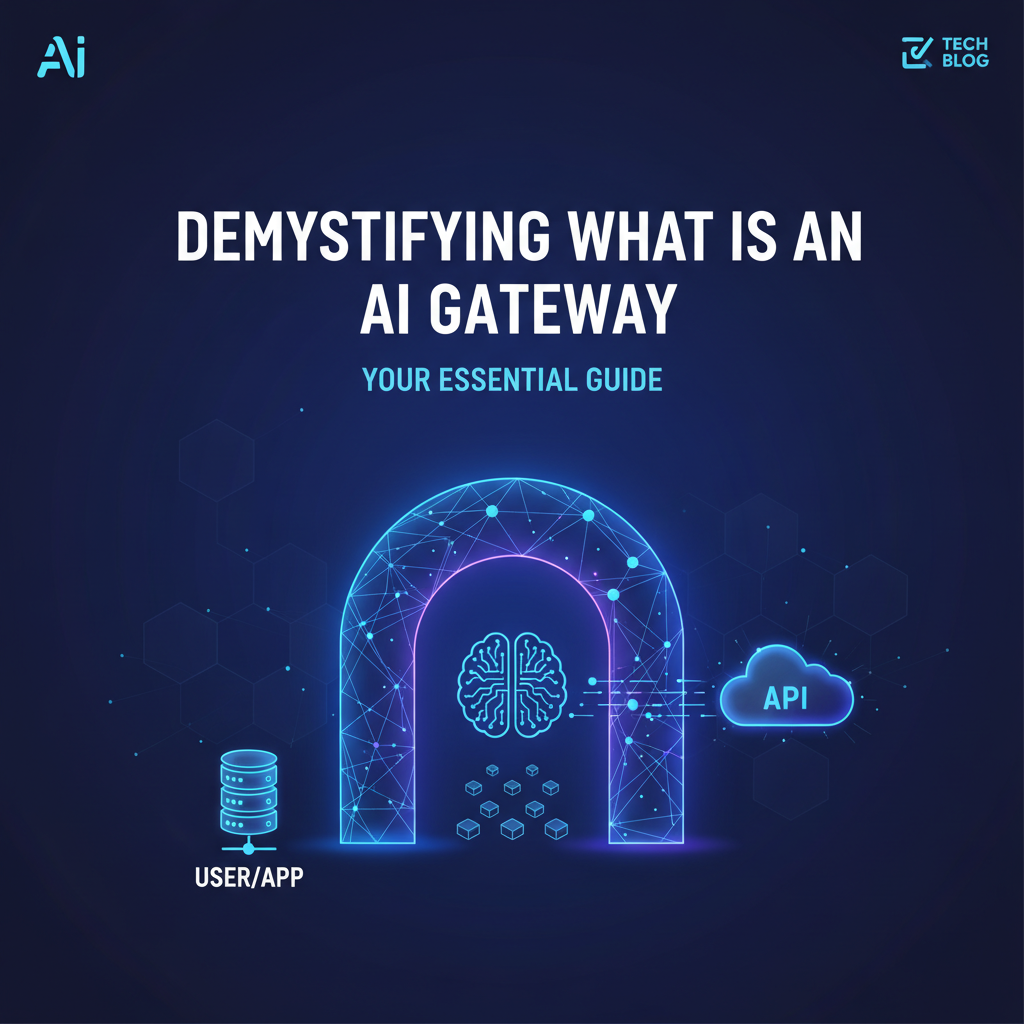


In an era increasingly defined by data and intelligent automation, the integration of Artificial Intelligence (AI) into business operations has moved from a futuristic concept to an immediate necessity. From automating customer service with sophisticated chatbots to personalizing user experiences and optimizing complex supply chains, AI is reshaping every facet of the digital economy. However, harnessing the immense power of AI, especially large-scale models, presents significant architectural and operational challenges. Developers and enterprises often grapple with a fragmented ecosystem of diverse AI models, varying API standards, intricate security demands, and the critical need for cost optimization. This intricate landscape necessitates robust infrastructure solutions that can streamline AI integration, ensure performance, and provide scalable governance.
Enter the gateway — a critical intermediary that stands at the nexus of complexity and simplicity. While traditional API Gateways have long served as the backbone for managing RESTful services, the unique characteristics and demands of AI workloads have spurred the evolution of specialized counterparts: the AI Gateway and, more recently, the LLM Gateway. These specialized gateways are not merely extensions of their predecessors; they represent a fundamental shift in how we interact with, manage, and scale intelligent systems. They offer a unified interface to a world of disparate AI models, abstracting away underlying complexities and providing a crucial layer of control, security, and efficiency. This comprehensive guide aims to demystify these essential components of modern AI infrastructure, dissecting their individual functions, highlighting their collective synergies, and outlining their indispensable role in the successful deployment and management of AI applications. By the end of this exploration, you will possess a profound understanding of what distinguishes an API Gateway from an AI Gateway, and an AI Gateway from an LLM Gateway, empowering you to make informed architectural decisions for your AI-driven future.
Part 1: The Foundational Concept - What is an API Gateway?
Before delving into the specialized domains of AI and LLM gateways, it is imperative to establish a solid understanding of the foundational concept: the API Gateway. In the realm of modern distributed systems, particularly those built on a microservices architecture, the API Gateway serves as an indispensable architectural pattern. It acts as a single, intelligent entry point for all client requests, effectively becoming the face of your backend services to the outside world. This architectural pattern emerged as a direct response to the complexities introduced by proliferating microservices, where direct client-to-microservice communication became unwieldy, inefficient, and insecure.
Definition and Core Functionality
At its core, an API Gateway is a server that sits between client applications (such as web browsers, mobile apps, or IoT devices) and a collection of backend services. Instead of clients making direct requests to multiple backend microservices, they send a single request to the API Gateway. The Gateway then intelligently routes this request to the appropriate service or services, aggregates the responses, and returns a unified result to the client. This seemingly simple redirection masks a powerful array of functionalities that are critical for managing complex API ecosystems. It decouples the clients from the intricacies of the microservices architecture, shielding them from changes in service location, protocol, or deployment. This abstraction dramatically simplifies client-side development and maintenance, as clients only need to know how to interact with the gateway, not with each individual microservice.
Key Features of a Traditional API Gateway
The robust capabilities of a traditional API Gateway extend far beyond mere request routing. These features are designed to enhance security, improve performance, ensure reliability, and streamline the operational management of APIs. Each capability plays a vital role in building resilient and scalable distributed systems:
- Routing and Load Balancing: One of the primary functions of an API Gateway is to intelligently direct incoming requests to the correct backend service instance. In a distributed environment, multiple instances of a service might be running to handle increased load or provide fault tolerance. Load balancing algorithms within the gateway distribute these requests across available instances, preventing any single service from becoming a bottleneck and ensuring optimal resource utilization. This also allows for seamless scaling of individual services without impacting client applications.
- Authentication and Authorization: Security is paramount in any networked application. The API Gateway acts as the first line of defense, centralizing authentication and authorization logic. Instead of each microservice needing to implement its own security mechanisms, the gateway can authenticate incoming requests (e.g., verifying API keys, JWTs, OAuth tokens) and authorize access based on predefined policies. This centralization simplifies security management, reduces the attack surface, and ensures consistent security enforcement across all APIs. Unauthorized requests are rejected at the gateway level, protecting backend services from malicious or unauthenticated access.
- Rate Limiting and Throttling: To protect backend services from abuse, accidental overload, or denial-of-service (DoS) attacks, API Gateways implement rate limiting and throttling. Rate limiting restricts the number of requests a client can make within a specified timeframe (e.g., 100 requests per minute). Throttling, on the other hand, controls the rate at which requests are processed, potentially queuing excess requests during peak times. These mechanisms ensure fair usage, maintain service availability, and prevent resource exhaustion on backend systems, which is especially critical for paid APIs.
- Monitoring and Logging: Observability is crucial for understanding the health and performance of an API ecosystem. The API Gateway serves as a central point for collecting detailed logs of all incoming requests and outgoing responses. These logs include information such as request timestamps, client IP addresses, requested endpoints, response status codes, and latency metrics. This consolidated data is invaluable for troubleshooting, performance analysis, security auditing, and capacity planning. Centralized monitoring dashboards can provide real-time insights into API traffic patterns and system behavior.
- Request/Response Transformation: Often, clients require data in a format different from what a backend service provides, or a backend service expects a specific input format from the gateway. An API Gateway can perform request and response transformations, modifying headers, query parameters, or even the entire payload body. This allows for seamless integration between clients and services that might have different data contracts or versions, abstracting away these incompatibilities and simplifying client-side logic. For example, it can convert XML to JSON or vice versa.
- Caching: To improve performance and reduce the load on backend services, API Gateways can implement caching mechanisms. Frequently requested data or responses that do not change often can be stored directly within the gateway. When a subsequent request for the same data arrives, the gateway can serve it directly from its cache, bypassing the backend service entirely. This significantly reduces latency for clients and conserves backend resources, leading to a more responsive and efficient system.
- Service Discovery: In dynamic microservices environments, service instances can frequently scale up, scale down, or move to different network locations. An API Gateway integrates with service discovery mechanisms (e.g., using Consul, Eureka, Kubernetes DNS) to dynamically locate the available instances of backend services. This ensures that the gateway always routes requests to healthy and accessible service endpoints, adapting automatically to changes in the underlying infrastructure without manual intervention.
- Circuit Breaking: To enhance resilience in distributed systems, API Gateways often incorporate circuit breaker patterns. If a backend service becomes unhealthy or unresponsive, the circuit breaker can "open," preventing the gateway from sending further requests to that failing service. Instead, it can return an immediate error or reroute the request to a fallback service. After a configurable timeout, the circuit breaker will "half-open" to cautiously test the service's recovery, preventing cascading failures and allowing the failing service time to recover without being overwhelmed by continuous requests.
Why API Gateways are Indispensable
The strategic placement and comprehensive feature set of API Gateways render them indispensable for modern software architectures, particularly those adopting microservices:
- Simplifying Client-Side Complexity: Clients no longer need to manage multiple endpoints, different authentication schemes, or various data formats from individual microservices. They interact with a single, consistent API exposed by the gateway, significantly streamlining client application development and maintenance.
- Enhancing Security: By centralizing security concerns like authentication, authorization, and threat protection, API Gateways provide a consistent and robust security layer, reducing the burden on individual microservices and minimizing potential vulnerabilities.
- Improving Performance and Scalability: Features like caching, load balancing, and rate limiting directly contribute to better application performance and the ability to scale backend services independently without affecting client experience.
- Enabling Microservices Architecture: The gateway acts as an abstraction layer, allowing microservices to evolve independently without forcing changes on client applications. This promotes agility, faster development cycles, and easier maintenance of complex systems.
- Centralized Management: From monitoring to policy enforcement, the API Gateway provides a single point of control for managing all inbound API traffic, simplifying operations and governance.
Common Use Cases
Traditional API Gateways are ubiquitous across various application domains. They are the silent workhorses behind:
- Web Applications and Mobile Apps: Providing a unified and secure interface for client applications to access diverse backend functionalities like user profiles, product catalogs, payment processing, and recommendation engines.
- IoT Solutions: Managing a potentially massive number of device connections and data ingestion points, routing device telemetry to appropriate processing services.
- Internal Integrations: Orchestrating communication between different internal departments or legacy systems, abstracting away their complexities and exposing them as standardized APIs.
In essence, an API Gateway transforms a complex web of services into a cohesive, manageable, and secure API ecosystem, laying the groundwork for more advanced integrations and specialized functionalities that AI and LLM gateways will build upon.
Part 2: Evolving for AI - What is an AI Gateway?
The burgeoning field of Artificial Intelligence, with its diverse models, ever-evolving capabilities, and unique operational demands, has introduced a new set of challenges for application developers and infrastructure architects. While a traditional API Gateway provides an excellent foundation for managing general-purpose APIs, the specific characteristics of AI services necessitate a more specialized approach. This is where the AI Gateway emerges, extending the core principles of API management to effectively address the intricacies of AI model integration and deployment.
The New Challenge with AI APIs
Integrating AI models into production applications is far from a trivial task. Developers frequently encounter several formidable hurdles that go beyond the scope of a standard API Gateway:
- Diversity of AI Models: The AI landscape is incredibly varied, encompassing machine learning models for tasks like classification and regression, deep learning models for image recognition and natural language processing, computer vision models, and time-series analysis models. These models are often developed using different frameworks (TensorFlow, PyTorch, Scikit-learn), deployed in various environments, and exposed through disparate APIs (REST, gRPC, custom SDKs).
- Different Vendor APIs: Organizations rarely rely on a single AI provider. They might use OpenAI for generative text, Google AI for specific vision tasks, AWS AI services for speech-to-text, or host their own models on platforms like Hugging Face. Each vendor has its own API endpoints, authentication mechanisms, request/response formats, and pricing structures, creating a fragmented and complex integration challenge.
- Unique Security Requirements: Beyond typical API security, AI models introduce new vulnerabilities. These include prompt injection attacks (for text models), model inversion attacks (reconstructing training data from outputs), data poisoning, adversarial attacks (manipulating inputs to cause incorrect outputs), and the critical need to prevent sensitive data leakage during inference or fine-tuning.
- Cost Management for Inference: Running AI models, especially large ones, can be expensive, with costs often tied to compute resources, inference time, or token usage. Tracking and optimizing these costs across multiple models and providers is a significant challenge.
- Performance Demands (Real-time Inference): Many AI applications require real-time or near real-time inference, such as fraud detection, live recommendations, or interactive chatbots. Managing latency and ensuring high throughput across diverse AI models is crucial for user experience and application efficacy.
- Version Control for Models: AI models are constantly being retrained, updated, and improved. Managing different versions of models, rolling out new ones seamlessly, and providing rollback capabilities without disrupting applications requires dedicated infrastructure.
- Prompt Engineering Management: For generative AI, the "prompt" is the input that guides the model's output. Managing, testing, versioning, and optimizing these prompts across different use cases and models becomes a complex challenge, especially as prompts evolve.
Definition and Core Functionality of an AI Gateway
An AI Gateway is a specialized type of API Gateway specifically designed to manage, secure, and optimize access to diverse Artificial Intelligence and Machine Learning models. It acts as a unified facade for various AI services, abstracting away the underlying complexities of integrating with different AI providers, model types, and deployment environments. While it retains many of the foundational capabilities of a traditional API Gateway (like routing, authentication, and rate limiting), it extends these with AI-specific features tailored to the unique demands of intelligent systems.
Its core functionality revolves around providing a single, consistent interface through which applications can interact with any AI model, regardless of its origin or underlying technology. This means a developer can call a sentiment analysis API, and the AI Gateway decides which specific model (from OpenAI, Google, or an internal deployment) should handle that request, applying necessary transformations, security policies, and cost optimizations along the way.
Key Features of an AI Gateway
The advanced capabilities of an AI Gateway are engineered to address the distinct challenges of AI integration, providing a robust layer of abstraction and control:
- Unified AI Model Integration: This is perhaps the most defining feature. An AI Gateway provides a single endpoint and a standardized API format for accessing a multitude of AI models, whether they are hosted internally or externally by various vendors. It handles the specific API calls, authentication, and data formats required by each individual AI service, presenting a consistent interface to the consuming application. For instance, a developer looking to perform image classification wouldn't need to learn the unique APIs of AWS Rekognition, Google Vision AI, and an internal custom model; they would simply call a unified image classification API endpoint on the gateway. Platforms like ApiPark exemplify this, offering quick integration of over 100 AI models with a unified management system for authentication and cost tracking. This dramatically reduces integration complexity and accelerates AI application development.
- Model Routing and Orchestration: An AI Gateway can intelligently route requests to the most appropriate AI model based on various criteria. This could include:
- Cost: Directing simple requests to cheaper, smaller models, and complex requests to more expensive, performant ones.
- Performance: Choosing the model with the lowest latency or highest throughput for a given task.
- Availability: Failing over to alternative models or providers if a primary one is unavailable.
- Specificity: Routing requests to specialized models (e.g., medical image classification to a specific medical AI model).
- A/B Testing: Directing a percentage of traffic to new model versions for performance comparison. This intelligent orchestration ensures optimal resource utilization and resilience.
- AI-Specific Security: Beyond standard API security, AI Gateways implement features to protect against AI-specific threats. This includes:
- Prompt Injection Prevention: For generative models, sanitizing and validating prompts to prevent malicious inputs that could hijack the model's behavior.
- Data Privacy & Masking: Ensuring sensitive data passed to AI models (especially third-party ones) is appropriately masked, redacted, or tokenized before inference, aligning with data privacy regulations like GDPR or HIPAA.
- Access Control at Model Level: Granular control over which users or applications can access specific AI models or model versions.
- Anomaly Detection: Monitoring AI inference patterns for unusual behavior that might indicate an attack or model degradation.
- Cost Optimization and Tracking: Given the variable and often high costs associated with AI inference, an AI Gateway provides sophisticated cost management tools. It can track usage metrics (e.g., number of inferences, tokens processed, compute time) for each model, user, or application. This data allows for detailed cost attribution, enabling organizations to understand where their AI budget is being spent. Furthermore, intelligent routing can actively optimize costs by directing requests to the most cost-effective model for a given task without compromising quality.
- Prompt Management and Versioning: For generative AI and many other intelligent services, the "prompt" or input instructions are crucial. An AI Gateway can centralize the management of prompts, allowing developers to:
- Store and Version Prompts: Treat prompts as code, enabling version control, collaboration, and rollback capabilities.
- Template Prompts: Create reusable prompt templates that can be dynamically populated with data, ensuring consistency and reducing repetitive work.
- A/B Test Prompts: Experiment with different prompt variations to optimize model output and performance.
- The ability to encapsulate complex prompts into simple REST APIs, a feature found in platforms like ApiPark, significantly reduces development overhead and ensures that changes in AI models or prompts do not affect the application or microservices, thereby simplifying AI usage and maintenance costs. This unified API format for AI invocation is critical for maintainability.
- Performance Monitoring and Latency Optimization: AI Gateways provide specific metrics for AI inference, tracking not just network latency but also model inference time, GPU utilization (if applicable), and throughput for different models. They can identify performance bottlenecks and potentially reroute traffic to faster instances or models. Caching of frequently requested inference results can also drastically reduce latency for repetitive queries.
- Model Governance and Lifecycle Management: As AI models are continuously updated and replaced, an AI Gateway facilitates their lifecycle management. It enables seamless deployment of new model versions, A/B testing, gradual rollouts, and graceful deprecation of older models. This ensures applications always interact with the most current and performant models without requiring code changes on the client side.
- Data Transformation for AI: Different AI models might expect data in vastly different formats. An AI Gateway can perform sophisticated data transformations to adapt client requests to the specific input requirements of various AI models (e.g., resizing images, vectorizing text, normalizing data) and convert model outputs back into a unified format for the client.
- Fallbacks and Redundancy: To ensure high availability, an AI Gateway can configure fallback mechanisms. If a primary AI model or provider fails or becomes unresponsive, the gateway can automatically switch to a predefined backup model or service, maintaining continuous operation and enhancing the resilience of AI-powered applications.
Benefits of an AI Gateway
The adoption of an AI Gateway yields profound advantages for enterprises integrating AI into their operations:
- Abstracts Complexity of Diverse AI APIs: Developers are shielded from the heterogeneity of AI models and vendor-specific APIs, allowing them to focus on building features rather than managing integration nuances.
- Ensures Consistent Security and Compliance: Centralized security policies, AI-specific threat protection, and data masking capabilities enhance the overall security posture and simplify compliance efforts.
- Optimizes Cost and Performance: Intelligent routing, cost tracking, and performance monitoring capabilities lead to more efficient resource utilization and better end-user experiences.
- Accelerates AI Application Development: By providing a unified and simplified interface, AI Gateways drastically reduce the time and effort required to integrate and deploy new AI-powered features.
- Improves Operational Efficiency: Centralized management, monitoring, and lifecycle control for all AI models streamline operations, making it easier to maintain, troubleshoot, and scale AI infrastructure.
In essence, an AI Gateway transforms the chaotic landscape of disparate AI models into a well-ordered, secure, and highly efficient ecosystem, paving the way for the next level of specialization: the LLM Gateway.
Part 3: Specializing for Large Language Models - What is an LLM Gateway?
While an AI Gateway provides robust management for a broad spectrum of AI models, the emergence and rapid proliferation of Large Language Models (LLMs) have introduced a new tier of complexity and specific challenges that warrant further specialization. LLMs, such as OpenAI's GPT series, Anthropic's Claude, Google's Gemini, and numerous open-source alternatives, are not just another type of AI model; they possess unique characteristics and operational demands that necessitate a dedicated infrastructure layer: the LLM Gateway.
The Unique Demands of LLMs
LLMs stand apart from other AI models due to several distinguishing factors that create specialized integration and management requirements:
- High Token Costs and Variability: LLM usage is typically billed per "token" (a word or sub-word unit) for both input prompts and generated output. These costs can be substantial and vary significantly between models and providers. Managing token usage, tracking expenditure granularly, and optimizing for cost efficiency across diverse LLM APIs is a critical concern.
- Specific Prompt Engineering Needs: Interacting with LLMs heavily relies on "prompt engineering"—crafting precise instructions and context to elicit desired outputs. This involves managing different roles (system, user, assistant), handling conversation history, and injecting external data (e.g., via Retrieval Augmented Generation). The effectiveness of an LLM application often hinges on the quality and dynamic management of its prompts.
- Context Windows and Memory Management: LLMs have a limited "context window" — the maximum number of tokens they can process in a single request. Managing this context, especially in long-running conversations, requires intelligent truncation, summarization, or external memory systems to keep conversations coherent without exceeding token limits or incurring excessive costs.
- Streaming Responses (Server-Sent Events): Unlike many traditional APIs that return a complete response after processing, LLMs often generate text token by token. To provide a responsive user experience, applications frequently need to consume these responses as a stream (e.g., using Server-Sent Events). An LLM Gateway must efficiently handle and relay these streaming data flows.
- Model Fine-tuning and Retrieval-Augmented Generation (RAG) Integration: Many enterprise LLM applications require models to be fine-tuned on proprietary data or to access up-to-date, domain-specific information via RAG systems. The gateway needs to facilitate seamless integration with these external knowledge bases and custom models.
- Latency Sensitivity for Conversational AI: For chatbots and virtual assistants, low latency is paramount for a natural and engaging user experience. The gateway must minimize overhead and optimize routing to ensure rapid response times from LLMs.
- Ethical Considerations (Bias, Toxicity): Generative LLMs can sometimes produce biased, toxic, or factually incorrect content. Implementing guardrails, content moderation filters, and safety checks at the gateway level is crucial to ensure responsible AI deployment and mitigate reputational risks.
Definition and Core Functionality of an LLM Gateway
An LLM Gateway is a highly specialized type of AI Gateway meticulously engineered to address the unique challenges and optimize the operation of Large Language Models. While it inherits the broader capabilities of an AI Gateway, its primary focus is on maximizing the efficiency, security, cost-effectiveness, and reliability of LLM interactions. It acts as an intelligent proxy specifically for LLM APIs, providing a unified and enhanced interface to various generative text models, whether commercial or open-source.
Its core functionality involves intelligent prompt management, token-level cost optimization, robust security tailored for generative AI, and advanced observability to provide unparalleled control over how LLMs are consumed and deployed within an organization. It aims to abstract away the intricate differences between LLM providers and models, allowing developers to treat them as fungible resources within a standardized framework.
Key Features of an LLM Gateway
The advanced features of an LLM Gateway are tailored to specifically tackle the nuances of large language models, providing granular control and sophisticated optimization:
- Advanced Prompt Engineering & Management:
- Prompt Templating and Versioning: Store, version, and manage a library of pre-defined prompt templates. This ensures consistency, allows for A/B testing of different prompt strategies, and enables rapid iteration without modifying application code.
- Input/Output Validation Specific to Text: Implement semantic and structural validation for both prompts and responses. This can include checking for desired keywords, detecting malformed JSON in function calls, or ensuring responses adhere to specific formats.
- Context Window Management: Intelligently manage the conversation history to fit within an LLM's context window. This can involve summarization techniques, dynamic truncation, or external memory systems integrated directly into the gateway logic.
- Prompt Chaining and Orchestration: Define sequences of prompts or calls to different LLMs to achieve complex tasks, with the gateway managing the flow and state.
- Token-Based Cost Management & Optimization:
- Granular Token Tracking: Monitor and log token usage (input and output) for every LLM call, enabling precise cost attribution to specific users, applications, or departments.
- Dynamic Model Switching Based on Cost/Performance: Automatically route requests to different LLMs based on real-time cost, latency, or quality metrics. For example, simple summarization tasks might go to a cheaper, faster LLM, while complex reasoning tasks are routed to a more capable but expensive model.
- Caching of Common Prompts/Responses: Store and serve responses for identical or highly similar prompts, drastically reducing costs and latency for repetitive queries. This is particularly effective for static knowledge retrieval or common FAQs.
- Streaming API Support: Crucially, an LLM Gateway natively supports and optimizes for streaming responses (Server-Sent Events), allowing client applications to receive tokens as they are generated by the LLM. It manages the connection, handles partial responses, and can even inject guardrails or transformations into the stream in real-time.
- Guardrails and Safety Filters: To ensure responsible and safe AI usage, LLM Gateways incorporate advanced content moderation and safety features:
- Content Moderation: Filter out undesirable content (hate speech, violence, sexual content) from both input prompts and generated responses, often by integrating with dedicated content moderation APIs or internal models.
- Prompt Injection Prevention: Implement sophisticated filters and heuristics to detect and block malicious prompt injection attempts that aim to bypass safety mechanisms or extract sensitive information.
- Factuality and Hallucination Detection: Integrate with external knowledge bases or fact-checking services to flag or prevent LLM outputs that are likely to be incorrect or "hallucinated."
- Response Rerouting and Fallback: If an LLM provider experiences an outage, exceeds rate limits, or returns an undesirable response, the gateway can automatically reroute the request to an alternative LLM from a different provider or an internally hosted model, ensuring service continuity and reliability.
- Observability for LLMs: Beyond standard API logging, an LLM Gateway provides deep insights into LLM interactions:
- Tracking Prompts and Responses: Detailed logging of every prompt and the corresponding LLM response, including model used, timestamps, and associated metadata.
- Token Usage Metrics: Granular reporting on input and output tokens for cost analysis.
- Latency and Throughput: Performance metrics specific to LLM inference, including time-to-first-token.
- Safety Scores and Moderation Flags: Insights into how often content moderation rules are triggered.
- Tool Calling and Function Calling Orchestration: Many advanced LLM applications require the LLM to interact with external tools or APIs (e.g., looking up information in a database, sending an email). An LLM Gateway can orchestrate these "tool calls" or "function calls," exposing external services to the LLM in a structured way, interpreting the LLM's requests for tools, and relaying the results back. The ability to quickly combine AI models with custom prompts to create new APIs, such as sentiment analysis or translation, a core feature of ApiPark, is highly relevant here as it empowers the creation of specific tool-calling APIs that LLMs can interact with.
- Integration with RAG Systems: Seamlessly connect LLMs with external knowledge bases (e.g., vector databases, document stores) for Retrieval-Augmented Generation (RAG). The gateway can manage the retrieval process, inject relevant context into prompts, and ensure the LLM has access to the most accurate and up-to-date information.
Benefits of an LLM Gateway
Implementing an LLM Gateway provides a strategic advantage for any organization building with large language models:
- Drastically Reduces LLM Operational Costs: Through intelligent routing, token optimization, and caching, organizations can significantly cut down their LLM inference expenses.
- Improves Reliability and Performance of LLM Applications: Fallback mechanisms, intelligent load balancing, and dedicated streaming support ensure high availability and responsiveness for LLM-powered features.
- Enhances Security and Compliance for Sensitive Text Data: Advanced guardrails, content moderation, and prompt injection prevention mitigate risks associated with generative AI, ensuring responsible deployment.
- Accelerates Development of Sophisticated LLM-Powered Features: Developers can leverage a unified, controlled, and optimized environment to rapidly build and iterate on complex LLM applications without managing underlying model complexities.
- Provides Unparalleled Control Over LLM Usage: Granular monitoring, detailed logging, and centralized policy enforcement give organizations full visibility and control over how their LLMs are being utilized across the enterprise.
In summary, an LLM Gateway is more than just a proxy; it is an intelligent orchestration layer that transforms the complex, costly, and potentially risky landscape of large language models into a manageable, secure, and highly efficient ecosystem for enterprise-grade AI applications.
APIPark is a high-performance AI gateway that allows you to securely access the most comprehensive LLM APIs globally on the APIPark platform, including OpenAI, Anthropic, Mistral, Llama2, Google Gemini, and more.Try APIPark now! 👇👇👇
Part 4: The Intersections and Distinctions: API Gateway, AI Gateway, LLM Gateway
The concepts of API Gateways, AI Gateways, and LLM Gateways, while sharing fundamental principles of intermediation and traffic management, represent distinct layers of specialization tailored to evolving technological needs. Understanding their hierarchical relationship, commonalities, and unique distinctions is crucial for designing a robust and future-proof enterprise architecture.
Hierarchy and Relationship
One way to conceptualize these gateways is through a hierarchical lens, where each subsequent type builds upon the capabilities of its predecessor, adding specialized features to address more specific and complex use cases:
- API Gateway: The Foundational Layer for Any API. This is the broadest category. A traditional API Gateway is designed to manage interactions with virtually any backend service that exposes an API (typically RESTful, but can include gRPC or SOAP). Its focus is on general concerns like routing, authentication, rate limiting, and monitoring, irrespective of the service's underlying logic. It acts as the universal traffic cop for all API calls in a microservices environment.
- AI Gateway: A Specialized API Gateway for AI APIs. An AI Gateway extends the core functionalities of a traditional API Gateway but specifically targets the challenges presented by diverse Artificial Intelligence and Machine Learning models. It retains general API management features but adds AI-specific capabilities such as unified model integration across vendors, AI-specific security (e.g., prompt injection prevention), cost optimization for inference, and prompt management. It understands the "language" and operational needs of various AI models.
- LLM Gateway: A Further Specialization of an AI Gateway, Optimized for LLM APIs. This is the most refined layer. An LLM Gateway is a specific type of AI Gateway that focuses exclusively on the unique and demanding characteristics of Large Language Models. It inherits all the benefits of an AI Gateway but supercharges them with features tailored for generative text, such as token-level cost management, advanced prompt engineering, streaming API support, sophisticated content moderation (guardrails), and deep observability for LLM interactions. It is the expert conductor for the symphony of large language models.
This hierarchy implies that an LLM Gateway is an AI Gateway, and an AI Gateway is an API Gateway, but each successive layer adds deeper, more focused intelligence and capabilities to handle its specific domain.
Table Comparison
To further clarify the distinctions and overlaps, the following table provides a comparative overview of the key features and focuses of each type of gateway:
| Feature / Capability | Traditional API Gateway | AI Gateway | LLM Gateway |
|---|---|---|---|
| Core Purpose | General API management and orchestration for any backend service. | Manage diverse AI/ML models from various providers. | Optimize, secure, and manage Large Language Models specifically. |
| Backend Focus | Any HTTP/S service (REST, gRPC, SOAP). | AI/ML APIs (OpenAI, Google AI, AWS AI, internal models, Hugging Face). | LLM APIs (GPT series, Claude, Gemini, open-source LLMs). |
| Routing | Path, host, header-based routing to microservices. | Intelligent routing based on model type, cost, performance, availability. | Dynamic model switching based on token cost, context length, RAG integration, A/B tests. |
| Authentication/Auth. | Centralized API key, JWT, OAuth for general API access. | Model-specific access control, data privacy, input sanitization. | LLM-specific user/group access, fine-grained control over prompt variations. |
| Security | Rate limiting, throttling, WAF, basic input validation. | AI-specific threat protection (prompt injection, model inversion, data leakage prevention). | Advanced guardrails, content moderation filters (toxicity, bias), hallucination detection, robust prompt injection prevention. |
| Cost Management | Basic rate limiting to prevent overload. | Model-specific usage tracking, intelligent routing for cost optimization. | Granular token-level cost tracking, dynamic model selection for lowest cost/optimal performance, aggressive caching for token reduction. |
| Transformation | Data format conversion (XML-JSON), header manipulation. | AI model input/output adaptation (e.g., image resizing for vision models, feature engineering for ML models). | Prompt templating, context window management, response parsing for tool calling, streaming transformation. |
| Observability | Request/response logs, latency, error rates, throughput. | AI inference metrics, model version tracking, provider latency, cost attribution. | Detailed prompt/response tracking, token usage, time-to-first-token, safety scores, sentiment analysis of output. |
| Caching | General API response caching. | Caching of AI inference results (e.g., for common classifications). | Prompt/response caching for identical LLM queries, conversation context caching. |
| Unique Features | Circuit breaking, service discovery, API versioning. | Unified AI model integration, prompt management, model lifecycle governance, fallbacks across AI providers. | Advanced prompt engineering, streaming API support, tool/function calling orchestration, RAG integration, conversation memory management. |
| Complexity of Backends | Moderate (managing multiple microservices). | High (diverse AI models, varying APIs, different vendors). | Very High (LLM nuances, token economics, context management, safety requirements, rapid model evolution). |
This table clearly illustrates the increasing specialization. While an API Gateway is concerned with any API, an AI Gateway narrows its focus to AI-specific APIs, and an LLM Gateway drills down even further to the very particular characteristics of Large Language Model APIs.
The Synergistic Relationship
It's important to recognize that these gateways are not mutually exclusive; rather, they can and often do coexist and complement each other within a sophisticated enterprise architecture:
- A large organization might have a foundational API Gateway managing all its internal microservices and external REST APIs.
- Within this architecture, a dedicated AI Gateway could be deployed to manage access to a range of AI services, including legacy ML models, computer vision APIs, and speech recognition services, potentially from various cloud providers or internal deployments.
- And specifically for applications heavily reliant on generative AI, an LLM Gateway would sit atop the AI Gateway layer (or directly alongside it), providing specialized optimization, security, and cost control for interactions with LLMs.
This layered approach allows organizations to leverage the general-purpose strengths of a traditional API Gateway while simultaneously benefiting from the targeted efficiencies and advanced features offered by AI and LLM Gateways for their intelligent applications. The choice isn't about which one to pick, but rather which combination best addresses the specific needs, scale, and complexity of an organization's API and AI landscape.
Part 5: Implementing and Choosing the Right Gateway
The decision to implement a gateway, and subsequently which type of gateway, is a critical architectural choice that impacts scalability, security, cost, and developer productivity. This section explores when to use each type of gateway, key considerations for selection, deployment strategies, and how these gateways fit into a broader API management strategy.
When to Use Which
The specific needs of your application and underlying architecture will dictate the most appropriate gateway solution:
- Traditional API Gateway: This is the default choice for virtually any modern application architecture involving multiple backend services, especially microservices.
- Use when: You need a single entry point for all client requests, desire to centralize authentication/authorization, require rate limiting for general APIs, want to abstract backend service complexity from clients, or are managing a diverse set of traditional RESTful APIs. It's the foundational layer for most API-driven enterprises.
- AI Gateway: Adopt an AI Gateway when your applications start integrating a variety of AI models, particularly when these models come from different vendors, have disparate APIs, or require specific security and cost management beyond general API concerns.
- Use when: You are integrating multiple distinct AI models (e.g., an image recognition model, a traditional NLP model, a predictive analytics model) into your applications. You need a unified API for these diverse AI services, require AI-specific security measures (like prompt injection prevention for early-stage text models, or data masking for sensitive AI inputs), or need to manage costs and performance across a heterogeneous AI model landscape. If your AI usage is growing beyond a single model from a single provider, an AI Gateway becomes essential.
- LLM Gateway: This specialized gateway becomes indispensable when your applications are heavily reliant on Large Language Models for core functionalities, especially if you are concerned with optimizing costs, managing prompts effectively, ensuring safety, and building resilient LLM-powered experiences.
- Use when: You are building conversational AI, generative AI applications, or features that extensively leverage LLMs from multiple providers or internal deployments. You need fine-grained control over token usage and cost, robust prompt engineering and versioning, support for streaming responses, advanced content moderation (guardrails), or seamless integration with RAG systems. If LLMs are central to your product strategy, an LLM Gateway is a strategic investment to unlock their full potential while mitigating common operational headaches.
It's not uncommon for a mature organization to employ all three types in a layered approach, where the LLM Gateway functions as a specialized component within the broader AI Gateway ecosystem, which in turn is managed as part of a comprehensive API Gateway infrastructure.
Key Considerations for Selection
Choosing the right gateway, whether a traditional, AI, or LLM variant, involves evaluating several critical factors to ensure it aligns with your technical requirements, business objectives, and operational capabilities:
- Scalability and Performance: The gateway must be able to handle anticipated traffic volumes without becoming a bottleneck. Look for solutions that offer horizontal scalability, low latency, and high throughput. For instance, platforms like ApiPark boast impressive performance, capable of achieving over 20,000 TPS with just an 8-core CPU and 8GB of memory, supporting cluster deployment for large-scale traffic. This kind of raw performance is vital for applications with demanding real-time requirements, especially for AI inference.
- Security Features: Beyond standard authentication and authorization, evaluate specific security capabilities. For AI Gateways, this means AI-specific threat protection (prompt injection, model inversion). For LLM Gateways, prioritize robust content moderation, guardrails, and data privacy features tailored for generative AI. Centralized security management is always a plus.
- Flexibility and Extensibility: Can the gateway integrate with your existing identity providers, monitoring tools, and CI/CD pipelines? Can its logic be extended with custom plugins or scripts to meet unique business requirements? Open-source solutions often offer greater flexibility in this regard.
- Integration Capabilities: Assess its ability to integrate with the AI models and providers you currently use or plan to use. For an AI Gateway, this means support for various cloud AI services (OpenAI, AWS, Google) and self-hosted models. For an LLM Gateway, look for deep integrations with specific LLM providers and specialized LLM ecosystem tools like vector databases for RAG. ApiPark, for example, highlights its capability for quick integration of over 100 AI models, demonstrating a strong focus on broad compatibility.
- Observability and Analytics: Robust monitoring, logging, and data analysis are non-negotiable. The gateway should provide detailed insights into API calls, performance metrics, errors, and, for AI/LLM gateways, specific AI inference metrics like token usage, model latency, and cost attribution. ApiPark emphasizes its detailed API call logging, which records every detail of each API call, and powerful data analysis features that display long-term trends and performance changes, enabling proactive issue resolution and preventive maintenance.
- Developer Experience and Ease of Use: How easy is it for developers to onboard, configure, and manage APIs through the gateway? Look for intuitive UIs, comprehensive documentation, and streamlined workflows. Features like ApiPark's quick 5-minute deployment with a single command line and its unified API format for AI invocation drastically simplify the developer experience, reducing friction and accelerating time-to-market.
- Open Source vs. Commercial Offerings: Open-source gateways offer transparency, community support, and often lower initial costs, making them appealing for startups and organizations wanting full control. Commercial solutions typically provide enterprise-grade features, professional support, and SLAs. ApiPark strategically offers an open-source product under the Apache 2.0 license, meeting basic needs, while also providing a commercial version with advanced features and professional technical support for leading enterprises, catering to a wide range of organizational requirements.
- Community and Support: A vibrant community and responsive vendor support are crucial for long-term viability, especially for open-source projects. Eolink, the company behind ApiPark, leverages its extensive experience serving over 100,000 companies and actively participating in the open-source ecosystem, providing a strong foundation for community and commercial support.
Deployment Strategies
Gateways can be deployed in various configurations depending on infrastructure preferences, scalability needs, and operational models:
- On-Premise/Self-Managed: Deploying the gateway on your own servers, virtual machines, or Kubernetes clusters. This offers maximum control but requires significant operational overhead for maintenance, scaling, and security. It's suitable for organizations with specific regulatory compliance requirements or substantial internal DevOps resources.
- Cloud-Managed/SaaS: Utilizing a cloud provider's managed gateway service (e.g., AWS API Gateway, Azure API Management) or a third-party SaaS solution. This reduces operational burden, as the provider handles infrastructure, scaling, and maintenance. It's ideal for organizations prioritizing speed and reduced operational overhead.
- Hybrid: A combination of both, where some gateways are managed in the cloud for external-facing APIs, while others are self-managed on-premise for internal or sensitive services. This offers flexibility to optimize for different workloads.
Regardless of the deployment strategy, the ease of installation and configuration can be a significant differentiator. ApiPark prides itself on quick deployment, stating it can be up and running in just 5 minutes with a single command line (curl -sSO https://download.apipark.com/install/quick-start.sh; bash quick-start.sh). This rapid setup is a huge advantage for developers and operations teams looking to get started quickly.
The Role of API Management Platforms
It's important to place gateways within the broader context of API management platforms. An API management platform is a comprehensive solution that encompasses the entire lifecycle of APIs, from design and development to publishing, security, monitoring, and versioning. An API Gateway is a core component within an API management platform, specifically responsible for enforcing policies and routing traffic at runtime.
Platforms like ApiPark are not just AI gateways; they are explicitly described as "an all-in-one AI gateway and API developer portal that is open-sourced." This means they offer an integrated suite of features that go beyond mere traffic forwarding:
- End-to-End API Lifecycle Management: Such platforms assist with managing APIs from design and publication through invocation and decommissioning. This helps regulate API management processes, manage traffic forwarding, load balancing, and versioning of published APIs.
- API Service Sharing within Teams: They centralize the display of all API services, making it easy for different departments and teams to find and use the required API services, fostering internal collaboration and API reuse.
- Independent API and Access Permissions for Each Tenant: For larger enterprises or SaaS providers, the ability to create multiple teams (tenants) with independent applications, data, user configurations, and security policies, while sharing underlying infrastructure, is crucial for improving resource utilization and reducing operational costs.
- API Resource Access Requires Approval: Features like subscription approval ensure that callers must subscribe to an API and await administrator approval before invocation, preventing unauthorized API calls and potential data breaches, which is critical for compliance and security.
By choosing a solution that integrates gateway functionality with a comprehensive API management platform, organizations can achieve a holistic approach to API governance, ensuring efficiency, security, and scalability across their entire digital landscape. ApiPark's powerful API governance solution is designed to enhance efficiency, security, and data optimization for developers, operations personnel, and business managers alike, providing significant value to enterprises.
Part 6: Advanced Capabilities and Future Trends
The landscape of gateways is continuously evolving, driven by rapid advancements in AI, distributed computing, and the increasing demand for intelligent, resilient, and secure systems. As organizations push the boundaries of AI integration, gateways are not just adapting but also innovating, incorporating advanced capabilities and anticipating future trends.
AI-Powered Gateways Themselves
An exciting future trend is the emergence of gateways that are themselves powered by AI. Instead of merely managing AI traffic, these next-generation gateways would leverage AI to enhance their own operations:
- Intelligent Routing and Optimization: AI algorithms could dynamically learn traffic patterns, backend service performance, and cost fluctuations to make real-time, predictive routing decisions. For instance, an AI-powered gateway could anticipate an upcoming surge in requests for a specific LLM and proactively pre-warm instances or reroute traffic to the most efficient provider before any latency occurs. It could also learn optimal prompt variations based on historical success rates and user feedback.
- Anomaly Detection and Predictive Scaling: Machine learning models within the gateway could detect subtle anomalies in API traffic or backend service behavior that might indicate an attack, an impending failure, or a performance degradation. This could trigger automated alerts, circuit breakers, or even predictive scaling events (e.g., automatically provisioning more AI model instances) before problems escalate.
- Automated Security Posture Management: AI could analyze security logs, identify emerging threat patterns (like novel prompt injection techniques), and automatically update security policies or generate new content moderation rules, providing a more adaptive and proactive defense.
- Self-Healing and Resilience: By learning from past failures, an AI-driven gateway could develop more sophisticated self-healing mechanisms, automatically adjusting fallback strategies, retry logic, and resource allocation to maintain service continuity even in complex failure scenarios.
Edge AI and Gateways
The proliferation of IoT devices and the demand for low-latency AI inference are driving the concept of "Edge AI." In this paradigm, AI models or parts of them are deployed closer to the data source, at the network edge, rather than solely in centralized cloud data centers.
- Gateways at the Edge: Gateways will play a crucial role in managing these distributed AI deployments. An edge AI gateway would sit between edge devices and edge AI models, performing local inference, data pre-processing, and filtering before sending relevant data back to the cloud. This reduces bandwidth consumption, improves response times, and enhances data privacy by processing sensitive information locally.
- Federated Learning Orchestration: For scenarios involving federated learning (where models are trained on decentralized edge devices without centralizing raw data), edge gateways could orchestrate the aggregation of model updates, secure communication, and model deployment to individual devices.
Federated AI and Gateways
Beyond edge deployments, the broader concept of "federated AI" involves managing AI models and data across diverse, distributed environments, including multiple clouds, on-premise data centers, and edge locations.
- Distributed Model Governance: Gateways will be essential for providing a unified control plane across these disparate AI deployments. They will manage access, enforce policies, track usage, and monitor performance of models deployed in different geographic regions or distinct cloud environments.
- Cross-Cloud AI Orchestration: An advanced AI Gateway could intelligently distribute AI inference workloads across multiple cloud providers, leveraging the strengths of each (e.g., cost-effectiveness, specialized hardware, regulatory compliance for specific regions) and ensuring multi-cloud resilience.
Compliance and Regulation
As AI becomes more pervasive, regulatory bodies worldwide are developing frameworks to address ethical concerns, data privacy, transparency, and accountability.
- Governance and Audit Trails: Gateways will serve as critical enforcement points for AI governance and compliance. They can record comprehensive audit trails of all AI interactions, including prompts, responses, model versions used, and moderation actions, facilitating compliance with regulations like GDPR, CCPA, and emerging AI-specific laws (e.g., EU AI Act).
- Explainable AI (XAI) Integration: Future gateways might integrate with XAI tools to provide explanations for AI model decisions, especially in critical applications like finance or healthcare. This could involve logging the "reasoning" or confidence scores provided by XAI components.
- Ethical AI Enforcement: Gateways could enforce policies related to fairness, bias detection, and responsible usage, acting as a final checkpoint before AI outputs reach end-users, potentially flagging or blocking outputs that violate ethical guidelines.
The API-First AI Strategy
The "API-first" approach, where APIs are treated as first-class products, is now extending to AI. Gateways are central to this strategy for AI:
- Rapid Iteration and Deployment: By abstracting AI model complexities, gateways enable development teams to rapidly prototype, test, and deploy new AI features as APIs, accelerating innovation cycles.
- Democratization of AI: Gateways make complex AI models accessible to a broader range of developers, even those without deep AI expertise. By providing simple, unified API endpoints, they democratize the use of advanced intelligence across an organization.
- Monetization and Ecosystem Building: For companies looking to offer their AI capabilities to external partners or customers, gateways provide the essential infrastructure for secure exposure, usage metering, and monetization of AI-as-a-Service.
The future of gateways is one of continuous intelligence and increasing sophistication. They will transform from mere traffic managers into intelligent orchestrators, guardians, and enablers of advanced AI applications, playing an ever more critical role in shaping how businesses harness the power of artificial intelligence.
Conclusion
In the rapidly accelerating world of digital transformation, the strategic management of APIs and Artificial Intelligence is no longer optional but imperative. As we have thoroughly explored, the journey from traditional API Gateways to specialized AI Gateways and, finally, to highly optimized LLM Gateways reflects the increasing complexity and unique demands of integrating intelligent systems into enterprise architectures. Each gateway plays a distinct yet interconnected role, forming a robust, multi-layered defense and orchestration system for the modern digital frontier.
The API Gateway serves as the foundational pillar, offering a unified, secure, and performant entry point for all API traffic, effectively abstracting the complexity of microservices architectures. Building upon this, the AI Gateway emerges as a necessary evolution, specifically tailored to manage the heterogeneity of various AI models, addressing their diverse integration challenges, unique security requirements, and crucial cost optimizations. Finally, the LLM Gateway represents the pinnacle of specialization, meticulously engineered to tackle the idiosyncratic demands of Large Language Models, from granular token-based cost control and advanced prompt engineering to sophisticated content moderation and robust streaming capabilities.
Understanding the distinctions and synergies between these gateways is paramount for architects and developers aiming to build resilient, scalable, and cost-effective AI applications. The right gateway strategy empowers organizations to abstract away underlying complexities, ensure consistent security, optimize performance, and gain unparalleled control over their intelligent assets. Furthermore, embracing comprehensive API management platforms, such as ApiPark, which seamlessly integrate AI gateway functionalities with end-to-end API lifecycle governance, offers a holistic approach to navigating this intricate landscape. These platforms enhance efficiency, security, and data optimization across all stakeholders—developers, operations personnel, and business managers alike—enabling a true API-first AI strategy.
As AI continues its relentless march into every sector, the role of these intelligent intermediaries will only grow in importance. They are not merely infrastructure components; they are strategic enablers, transforming the daunting task of AI integration into a streamlined, secure, and highly efficient process. By thoughtfully implementing and leveraging the power of API, AI, and LLM Gateways, enterprises can confidently harness the transformative potential of artificial intelligence, turning complex challenges into innovative solutions and securing their competitive edge in the intelligent era.
Frequently Asked Questions (FAQs)
1. What is the fundamental difference between an API Gateway, an AI Gateway, and an LLM Gateway?
The fundamental difference lies in their scope and specialization. An API Gateway is a general-purpose entry point for any backend service, handling common tasks like routing, authentication, and rate limiting. An AI Gateway is a specialized API Gateway designed for managing diverse AI and Machine Learning models, offering features like unified model integration, AI-specific security, and cost optimization for inference. An LLM Gateway is a further specialization of an AI Gateway, specifically optimized for the unique challenges of Large Language Models, focusing on token-based cost management, advanced prompt engineering, streaming support, and sophisticated content moderation (guardrails). Each builds upon the capabilities of the preceding one with increasing focus.
2. Why can't a traditional API Gateway simply manage AI and LLM APIs? What unique challenges do AI/LLM models present?
While a traditional API Gateway can route requests to an AI/LLM API endpoint, it lacks the specialized features needed to effectively manage these models. Unique challenges include: * Diverse API Formats: Different AI models/providers have varying input/output formats and authentication schemes. * AI-Specific Security: Threats like prompt injection, model inversion, and data leakage require specialized defenses. * Cost Management: AI models, especially LLMs, are often billed per inference or token, demanding granular tracking and optimization. * Performance: Real-time inference and streaming responses for LLMs require specific handling. * Prompt Management: LLMs need sophisticated prompt templating, versioning, and context management. * Safety & Ethics: LLMs can produce undesirable content, necessitating content moderation and guardrails. Specialized gateways are built to tackle these complexities directly.
3. Is it possible to use all three types of gateways (API, AI, and LLM) in a single enterprise architecture?
Yes, absolutely. In fact, for large and complex enterprises, it's a common and highly effective strategy. An API Gateway can form the foundational layer, managing all general API traffic. Within this, an AI Gateway can manage broader AI services (e.g., image recognition, traditional ML models), and then an LLM Gateway can be deployed specifically for applications heavily reliant on Large Language Models. This layered approach allows organizations to leverage the general benefits of a traditional API Gateway while simultaneously benefiting from the targeted efficiencies and advanced features offered by AI and LLM Gateways for their intelligent applications.
4. How does an LLM Gateway help with cost optimization for large language models?
An LLM Gateway offers several mechanisms for cost optimization: * Token-Level Tracking: Provides granular visibility into token usage per prompt and response, allowing for precise cost attribution. * Dynamic Model Switching: Routes requests to the most cost-effective LLM for a given task, based on complexity, performance, and current pricing (e.g., sending simple requests to cheaper models). * Caching: Caches responses for identical or highly similar prompts, reducing the need for repeated LLM calls and thus cutting down token usage. * Context Window Management: Intelligently manages conversation history to fit within an LLM's context window, preventing unnecessary token consumption. * Rate Limiting/Throttling: Prevents accidental over-usage that can lead to unexpected costs.
5. How does a product like ApiPark fit into the AI gateway landscape?
ApiPark is designed as an all-in-one AI gateway and API management platform. It directly addresses many of the challenges discussed for AI and LLM gateways. It provides quick integration for over 100 AI models, a unified API format for AI invocation, prompt encapsulation into REST APIs, and end-to-end API lifecycle management. Furthermore, it offers enterprise-grade features like performance rivaling Nginx, detailed API call logging, powerful data analysis, and multi-tenant capabilities, making it a comprehensive solution for managing and optimizing both general APIs and specialized AI/LLM services within an enterprise environment. As an open-source solution with commercial support, it caters to a wide range of organizations seeking robust AI and API governance.
🚀You can securely and efficiently call the OpenAI API on APIPark in just two steps:
Step 1: Deploy the APIPark AI gateway in 5 minutes.
APIPark is developed based on Golang, offering strong product performance and low development and maintenance costs. You can deploy APIPark with a single command line.
curl -sSO https://download.apipark.com/install/quick-start.sh; bash quick-start.sh

In my experience, you can see the successful deployment interface within 5 to 10 minutes. Then, you can log in to APIPark using your account.

Step 2: Call the OpenAI API.