Databricks AI Gateway: Simplify LLM Management
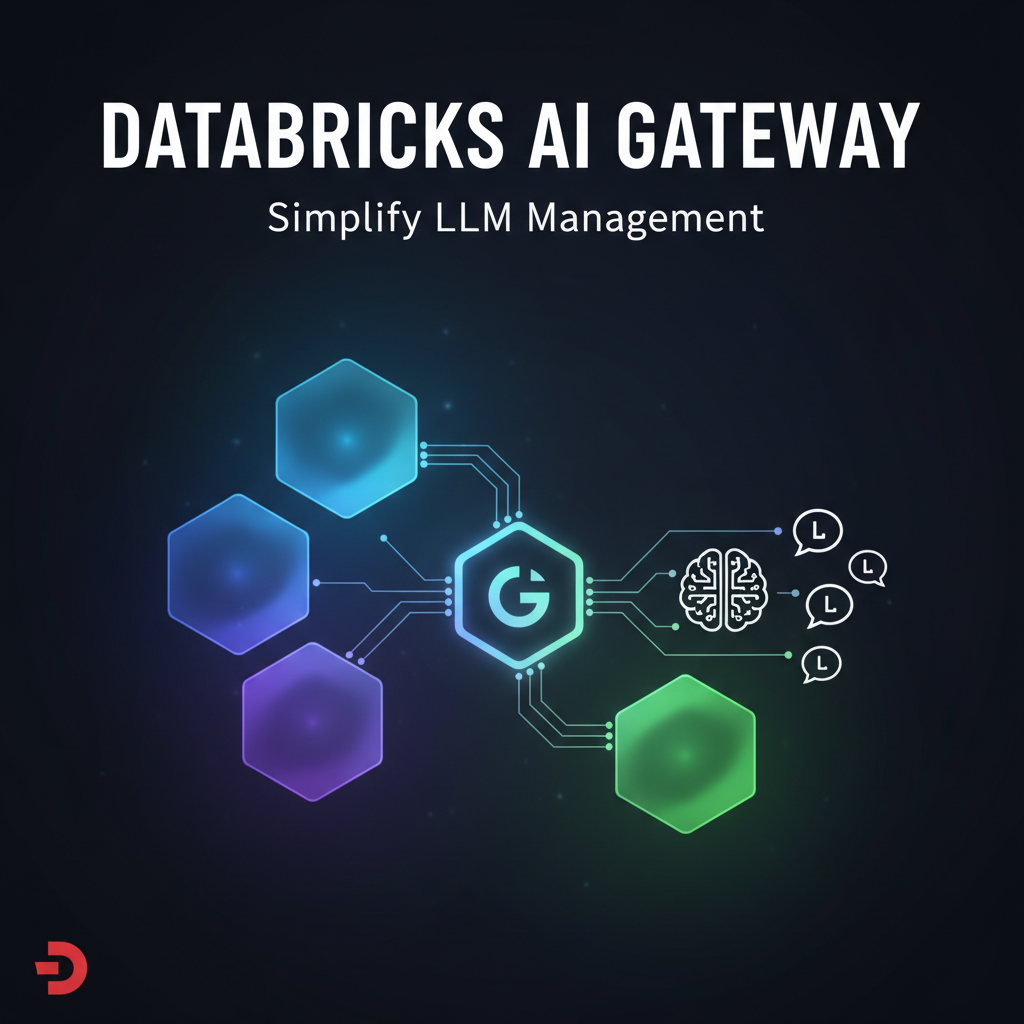


The digital landscape is undergoing a profound transformation, spearheaded by the unprecedented advancements in Artificial Intelligence, particularly Large Language Models (LLMs). These sophisticated AI models, capable of understanding, generating, and manipulating human-like text, are rapidly moving from research labs to the core of enterprise operations, promising revolutionary shifts in productivity, customer engagement, and innovation. From automating content creation and summarizing vast datasets to powering intelligent chatbots and enhancing developer workflows, the potential applications of LLMs are virtually limitless. However, translating this immense potential into tangible, secure, and scalable real-world solutions presents a complex array of challenges for organizations. The journey from model exploration to production deployment is fraught with technical hurdles, operational complexities, and strategic considerations that demand robust infrastructure and intelligent management solutions.
As enterprises increasingly adopt and integrate these powerful models into their applications and workflows, they encounter a multifaceted landscape of different LLM providers, varying API specifications, intricate security requirements, and the critical need for cost optimization and performance monitoring. Navigating this labyrinth of choices and complexities can quickly become a bottleneck, hindering the rapid development and deployment of generative AI applications. This is precisely where the concept of an AI Gateway becomes indispensable. More specifically, an LLM Gateway or an LLM Proxy emerges as a foundational layer, providing a crucial abstraction and management point between applications and the underlying LLMs.
Within this evolving ecosystem, Databricks, a leader in data and AI, has introduced its own compelling solution: the Databricks AI Gateway. Positioned as a pivotal component within its unified Lakehouse Platform, the Databricks AI Gateway is meticulously designed to simplify the management, integration, and secure deployment of Large Language Models. By offering a unified, scalable, and secure interface, it aims to demystify the complexities associated with LLM operations, enabling businesses to accelerate their generative AI initiatives with greater confidence and control. This article will delve deep into the intricacies of LLM management challenges, explore the transformative role of AI Gateways, and provide a comprehensive examination of how the Databricks AI Gateway stands out as a powerful tool for organizations striving to harness the full potential of LLMs effectively and efficiently. We will uncover its architecture, key features, benefits, and best practices for leveraging this innovative solution to build the next generation of intelligent applications.
The LLM Landscape: Opportunities and Intrinsic Challenges
The rapid ascent of Large Language Models has opened up a plethora of opportunities across virtually every industry imaginable. These models are not just incremental improvements; they represent a paradigm shift in how machines interact with and generate human language. Businesses are leveraging LLMs for automated customer service, intelligent content generation for marketing and sales, sophisticated data analysis and summarization, code generation and assistance for developers, personalized educational tools, and advanced research synthesis. The ability to process, understand, and generate natural language at scale promises unprecedented efficiencies and entirely new categories of products and services, driving innovation at a breakneck pace. For many organizations, LLMs are no longer a futuristic concept but a vital tool for maintaining competitive edge and unlocking new value streams.
However, realizing this vast potential is not without its significant challenges. The very power and flexibility of LLMs introduce a new set of complexities that traditional software development and machine learning operations (MLOps) workflows are not fully equipped to handle. Understanding these challenges is the first step towards appreciating the value of solutions like the Databricks AI Gateway.
A. The Proliferation of Models and APIs
One of the foremost challenges stems from the sheer diversity and rapid evolution of the LLM ecosystem. Organizations are faced with a dizzying array of choices: * Proprietary Models: From industry giants like OpenAI's GPT series, Anthropic's Claude, Google's Gemini, to others, each offering distinct capabilities, pricing structures, and API specifications. Integrating these often means grappling with varied authentication methods, request/response formats, and rate limits. * Open-Source Models: A burgeoning landscape of open-source models like Llama, Mistral, Falcon, and countless others, which can be fine-tuned or deployed on private infrastructure for greater control and customization. While offering flexibility, managing these models requires significant operational overhead, including deployment, scaling, and maintenance. * Fine-tuned and Domain-Specific Models: Many enterprises fine-tune base LLMs on their proprietary data to create models that are highly specialized for specific tasks or domains. Managing the lifecycle of these custom models, along with their associated prompts and versions, adds another layer of complexity.
This proliferation leads to "model sprawl," where different applications within an organization might be using different LLMs or even different versions of the same LLM, each with its own quirks. This inconsistency makes development, maintenance, and governance incredibly difficult, leading to fragmented efforts and increased technical debt.
B. Security, Compliance, and Data Governance Concerns
Integrating LLMs, especially those hosted by third-party providers, raises critical questions around data privacy, security, and regulatory compliance. * Sensitive Data Handling: The input prompts and generated responses can often contain sensitive business information, personally identifiable information (PII), or confidential intellectual property. Ensuring that this data is handled securely, protected from unauthorized access, and not inadvertently used for model training by third-party providers is paramount. * Prompt Injection Attacks: LLMs are susceptible to prompt injection attacks, where malicious inputs can manipulate the model into generating undesirable or harmful content, bypassing safety measures, or even revealing sensitive information it was not intended to expose. * Output Filtering: Similarly, LLMs can sometimes generate biased, inaccurate, or inappropriate content, which needs to be filtered or moderated before reaching end-users, especially in public-facing applications. * Regulatory Compliance: Industries subject to strict regulations (e.g., healthcare, finance) must ensure that their LLM integrations comply with standards like GDPR, HIPAA, CCPA, and others, dictating how data is stored, processed, and accessed. Achieving auditability and traceability of LLM interactions is a non-negotiable requirement for many enterprises.
C. Cost Management and Optimization
The cost associated with LLM inference, particularly for proprietary models, can quickly escalate, especially with high-volume applications. * Token-Based Pricing: Most commercial LLMs employ token-based pricing, making cost prediction and optimization challenging. A slight change in prompt engineering or application logic can significantly impact token usage and thus, costs. * Lack of Visibility: Without a centralized mechanism to track LLM usage across different teams and applications, it becomes difficult to attribute costs, identify inefficiencies, and implement cost-saving strategies like caching or intelligent model routing. * Inefficient Resource Utilization: Over-provisioning or inefficient scaling of self-hosted open-source models can lead to unnecessary infrastructure expenses.
D. Performance, Latency, and Scalability
User experience with LLM-powered applications is highly dependent on performance. * Latency: High latency in responses can degrade user experience, especially in real-time conversational AI applications. Optimizing inference time and network overhead is crucial. * Scalability: Applications must be able to scale seamlessly to handle fluctuating user demand. Direct integration with LLM providers might expose applications to rate limits or capacity constraints, requiring developers to implement complex retry logic and load balancing. * Reliability: LLM APIs, like any external service, can experience outages or performance degradation. Robust applications require fallback mechanisms and redundancy to ensure continuous service availability.
E. Observability, Monitoring, and Debugging
Understanding how LLMs are performing in production is vital for continuous improvement and troubleshooting. * Logging: Capturing detailed logs of all LLM requests, responses, token usage, and latency is essential for debugging issues, analyzing performance trends, and conducting post-mortems. * Metrics: Collecting metrics such as request volume, error rates, average response time, and token consumption per model helps in identifying bottlenecks and optimizing resource allocation. * Traceability: Tracing the complete lifecycle of a request, from user input through the LLM interaction and back to the application, is complex, especially when multiple models or intermediate steps are involved.
F. Prompt Engineering and Versioning
Prompts are the "code" for LLMs, and their effectiveness directly impacts the quality of generated outputs. * Prompt Management: Developing and refining prompts is an iterative process. Managing different versions of prompts, associating them with specific model versions, and conducting A/B tests to evaluate their performance can be cumbersome. * Consistency: Ensuring consistent prompt usage across different applications that rely on the same LLM functionality is crucial for maintaining brand voice and application behavior.
These challenges highlight a clear need for a centralized, intelligent layer that can abstract away much of this complexity, allowing developers to focus on building innovative applications rather than managing the underlying LLM infrastructure. This is the fundamental premise behind the rise of AI Gateways, LLM Gateways, and LLM Proxies.
Understanding AI Gateways, LLM Gateways, and LLM Proxies
In response to the intricate challenges of managing Large Language Models at an enterprise scale, the architectural pattern of a gateway has emerged as a cornerstone solution. While the terms AI Gateway, LLM Gateway, and LLM Proxy are often used interchangeably, they represent distinct, albeit related, concepts that vary in scope and specialization. Understanding these nuances is crucial for appreciating how solutions like the Databricks AI Gateway provide comprehensive value.
A. Defining the Concepts
- AI Gateway (Artificial Intelligence Gateway):
- Broadest Scope: An AI Gateway is a comprehensive intermediary layer designed to manage access to all types of artificial intelligence services within an organization. This includes not only Large Language Models but also traditional machine learning models (e.g., for classification, regression, computer vision), natural language processing (NLP) APIs, recommendation engines, and other specialized AI services.
- Core Function: It acts as a single entry point for applications to consume various AI capabilities, abstracting away the specifics of different AI model APIs, deployment environments, and underlying infrastructures.
- Features: Typically offers centralized authentication and authorization, rate limiting, logging, monitoring, and often service discovery for a wide range of AI endpoints. It's about unified governance and access control over the entire AI portfolio.
- LLM Gateway (Large Language Model Gateway):
- Specialized Scope: An LLM Gateway is a specific type of AI Gateway that focuses exclusively on managing interactions with Large Language Models. Its features are tailored to address the unique characteristics and challenges associated with LLMs.
- Core Function: While it performs many functions of a general AI Gateway, an LLM Gateway adds specialized capabilities for LLM-specific needs. This includes features like prompt templating and management, token usage tracking, intelligent routing between different LLM providers (e.g., OpenAI, Anthropic, self-hosted), PII redaction from prompts/responses, and cost optimization specific to token-based billing.
- Features: Enhances the general gateway features with LLM-specific intelligence like model versioning, fallback logic for different LLM providers, and mechanisms to mitigate LLM-specific security vulnerabilities like prompt injection.
- LLM Proxy (Large Language Model Proxy):
- Narrowest Scope: An LLM Proxy is typically a simpler, more lightweight component that primarily focuses on forwarding requests to LLMs. It acts as an intermediary for basic routing, caching, and potentially some elementary load balancing or request modification.
- Core Function: Often conceived as a "reverse proxy" for LLMs, its main role is to stand between the client application and one or more LLM endpoints, redirecting requests and responses. It might handle basic authentication and rate limiting but generally lacks the sophisticated management, observability, and advanced LLM-specific features of a full LLM Gateway.
- Features: Essential features might include API key management, basic request aggregation, simple caching for identical prompts, and potentially a minimal logging layer. It's often a building block within a larger LLM Gateway solution rather than a standalone comprehensive platform.
In essence, an LLM Proxy handles the "how to talk to LLMs" aspect, an LLM Gateway handles the "how to manage and optimize conversations with LLMs," and an AI Gateway handles the "how to manage and optimize interactions with all AI services." The Databricks AI Gateway, by focusing on LLMs within the Databricks ecosystem but offering advanced features, can be broadly categorized as an LLM Gateway with some characteristics of a broader AI Gateway in its ability to serve various types of models deployed via Databricks Model Serving.
B. Why are AI Gateways (and LLM Gateways) Crucial?
The strategic importance of an intermediary layer for AI services, particularly LLMs, cannot be overstated in modern enterprise architectures. They act as a central nervous system for AI consumption, bringing order and intelligence to what would otherwise be a chaotic and unmanageable sprawl of integrations.
- Centralized Control and Abstraction Layer:
- Unified Access: Provides a single, consistent API endpoint for developers to interact with any underlying LLM or AI service. This significantly simplifies integration effort, as developers no longer need to learn diverse API specs for each model or provider.
- Vendor Agnosticism: By abstracting the underlying LLM providers, an AI Gateway mitigates vendor lock-in. Organizations can easily switch between different LLM providers (e.g., from OpenAI to Anthropic or a self-hosted open-source model) or even run A/B tests with different models without requiring significant code changes in their client applications. This flexibility is vital in a rapidly evolving market.
- Enhanced Security and Compliance:
- Unified Authentication & Authorization: Enforces consistent security policies across all AI services. Integrates with existing enterprise identity and access management (IAM) systems (e.g., OAuth, SSO), centralizing user and application access control.
- Threat Mitigation: Acts as a defensive perimeter. Can implement input validation, detect and block prompt injection attempts, and filter sensitive information (PII, confidential data) from both prompts and generated responses before they leave the organization's control or are exposed to end-users.
- Audit Trails: Provides comprehensive logging of all interactions, creating an immutable audit trail for compliance, security investigations, and debugging.
- Improved Performance and Reliability:
- Caching: Caches frequent LLM requests and their responses, reducing latency for repetitive queries and decreasing the load on the actual LLM endpoints, which can also translate to cost savings.
- Load Balancing & Routing: Intelligently routes requests to the most appropriate or available LLM endpoint based on factors like cost, performance, capacity, or specific model capabilities. This ensures high availability and optimal resource utilization.
- Rate Limiting & Throttling: Protects LLM services (especially third-party APIs) from being overwhelmed by too many requests, preventing denial-of-service attacks, managing quota usage, and ensuring fair access for all applications.
- Fallback Mechanisms: Configures automatic fallback to alternative LLMs or pre-defined responses if a primary LLM service experiences an outage or performance degradation, enhancing the robustness of AI-powered applications.
- Cost Optimization and Management:
- Granular Usage Tracking: Provides detailed analytics on token usage, request volume, and costs per application, team, or user, offering unparalleled visibility into LLM expenditure.
- Intelligent Routing: Directs requests to the most cost-effective model for a given task (e.g., using a cheaper, smaller model for simple tasks and a more powerful, expensive model for complex ones).
- Tiered Access: Allows organizations to implement tiered access policies, potentially prioritizing critical applications or setting budget caps for different departments.
- Simplified Development and MLOps:
- Prompt Management: Offers centralized storage, versioning, and templating for prompts, allowing prompt engineers to iterate and deploy changes without requiring application code modifications. This decouples prompt logic from application logic.
- A/B Testing: Facilitates experimentation with different models, prompts, or model versions by easily routing a percentage of traffic to new configurations and comparing their performance.
- Observability: Provides a single pane of glass for monitoring the health, performance, and usage of all integrated LLMs, simplifying debugging and operational oversight.
In essence, an AI Gateway or LLM Gateway transforms the chaotic landscape of LLM integration into a structured, manageable, and secure environment. It empowers organizations to rapidly build, deploy, and scale generative AI applications while maintaining control over costs, security, and performance. This centralized approach reduces operational overhead, mitigates risks, and accelerates the time to value for AI initiatives.
Databricks AI Gateway: A Deep Dive into Simplifying LLM Management
Databricks has long been at the forefront of data and AI innovation, providing a unified Lakehouse Platform that converges data warehousing and data lakes to accelerate data engineering, machine learning, and business intelligence. With the explosive growth of generative AI and Large Language Models, Databricks has naturally extended its platform to address the unique challenges and opportunities presented by this new frontier. The Databricks AI Gateway stands as a testament to this commitment, representing a crucial component within the Lakehouse ecosystem designed to simplify and secure the management of LLMs for enterprise-grade applications.
A. Context and Vision: LLMs on the Lakehouse
Databricks envisions a future where generative AI is seamlessly integrated with an organization's proprietary data, enabling more accurate, contextually relevant, and powerful applications. The Lakehouse Platform provides the ideal foundation for this vision, as it offers a unified governance layer (Unity Catalog) for data and AI assets, robust MLOps capabilities (MLflow), and scalable compute infrastructure. The Databricks AI Gateway builds upon this foundation, acting as the intelligent intermediary that connects applications to a diverse array of LLMs, whether they are hosted on Databricks or provided by third parties, all while adhering to the stringent data governance and security standards of the Lakehouse.
B. What is the Databricks AI Gateway?
The Databricks AI Gateway is a fully managed service that provides a unified, secure, and scalable API endpoint for interacting with Large Language Models. It abstracts away the complexities of integrating with various LLM providers and models, offering developers a consistent interface to invoke generative AI capabilities. More than just a simple proxy, it is an intelligent layer designed to facilitate secure access, optimized performance, and streamlined management of LLMs within the Databricks environment.
C. Core Architecture and Seamless Integration
The strength of the Databricks AI Gateway lies in its deep integration with the broader Databricks Lakehouse Platform. It doesn't operate in a vacuum; instead, it leverages existing Databricks services to provide a holistic solution:
- Unity Catalog Integration: At its heart, the Databricks AI Gateway benefits from Unity Catalog, Databricks' unified governance solution for all data and AI assets. This integration allows for:
- Centralized Access Control: Permissions for accessing LLM endpoints can be managed directly within Unity Catalog, leveraging existing user and group hierarchies. This ensures that only authorized users or service principals can invoke specific models.
- Auditability: All LLM interactions through the gateway can be logged and audited within the Unity Catalog framework, providing a clear trail for compliance and security investigations.
- Model Registration: LLM endpoints (whether external or internal) can be registered and managed as governed assets within Unity Catalog, streamlining discovery and management.
- Databricks Model Serving Integration: The AI Gateway works seamlessly with Databricks Model Serving. This means organizations can:
- Serve Custom LLMs: Easily deploy and serve their own fine-tuned or open-source LLMs (e.g., Llama 2, Mistral) on Databricks' robust infrastructure, exposing them through the AI Gateway.
- Unified Endpoint for Diverse Models: Consolidate access to both proprietary third-party LLMs and internally served custom models through a single gateway interface, simplifying application development.
- MLflow Interoperability: While not directly an MLflow component, the gateway's operation complements MLflow's MLOps capabilities. Performance metrics, usage logs, and model versions facilitated by the gateway can feed into MLflow tracking experiments and model registries, providing a more comprehensive view of the entire LLM lifecycle.
D. Key Capabilities and How They Simplify LLM Management
The Databricks AI Gateway is engineered with a suite of features specifically designed to address the aforementioned challenges of LLM management, making it an indispensable tool for enterprises.
- Unified API Endpoint for Model Agnosticism:
- Simplifying Developer Experience: Developers interact with a single, consistent REST API endpoint provided by the Databricks AI Gateway, regardless of the underlying LLM. This eliminates the need to learn and adapt to different API specifications from OpenAI, Anthropic, Google, or various open-source models. The gateway handles the translation of the unified request into the specific format required by the chosen LLM.
- Seamless Model Switching: This abstraction layer is invaluable for rapid experimentation and future-proofing. Organizations can easily switch between different LLMs (e.g., trying a cheaper model for specific tasks, or a more advanced one for complex queries) without modifying application code. This flexibility is critical in a rapidly evolving market where new, better, or more cost-effective models emerge frequently.
- Support for Diverse Models: The Databricks AI Gateway supports a wide range of LLMs, including:
- Third-party Foundation Models: Direct integration with popular proprietary models like OpenAI's GPT series, Anthropic's Claude, and Google's Gemini (where supported).
- Databricks-hosted Models: Any LLM deployed and served through Databricks Model Serving, including fine-tuned open-source models, custom domain-specific models, or even smaller, task-specific models.
- Robust Authentication and Access Control:
- Leveraging Unity Catalog: Security is paramount, and the AI Gateway integrates deeply with Databricks Unity Catalog for enterprise-grade authentication and authorization. This means organizations can define who can access which LLM endpoints using the same fine-grained access controls they use for their data and other AI assets.
- Token-Based Security: Applications authenticate with the Databricks AI Gateway using standard Databricks authentication mechanisms (e.g., personal access tokens, service principal tokens). The gateway then securely manages and applies the necessary credentials for the underlying LLM provider, ensuring that LLM API keys are not exposed directly to client applications.
- Centralized Policy Enforcement: All access policies are managed centrally, ensuring consistency and simplifying compliance audits. This prevents unauthorized access and potential abuse of LLM resources.
- Rate Limiting and Cost Management:
- Preventing Overuse and Abuse: The gateway allows administrators to configure rate limits for specific LLM endpoints, users, or applications. This prevents any single application from consuming excessive resources, ensuring fair access for all and protecting against accidental or malicious denial-of-service scenarios.
- Optimizing Spend: By controlling the request volume, organizations can actively manage and optimize their spending on token-based LLM services. Combined with detailed usage logs, this provides the necessary visibility to make informed decisions about resource allocation and model choice.
- Cost Transparency: The ability to track usage through the gateway provides clear insights into which applications or teams are generating what level of LLM costs, facilitating chargeback models and budget accountability.
- Comprehensive Monitoring and Observability:
- Detailed Logging: Every request and response passing through the Databricks AI Gateway is logged comprehensively. This includes information about the calling application, the LLM invoked, input prompts, generated responses, latency, token usage, and any errors encountered. These logs are invaluable for debugging, performance analysis, and security audits.
- Performance Metrics: The gateway provides key performance metrics such as request volume, error rates, average response times, and token consumption. These metrics can be integrated with Databricks monitoring dashboards and alerts, offering a single pane of glass for the operational health of LLM integrations.
- Troubleshooting Simplified: With centralized logs and metrics, operations teams can quickly identify and troubleshoot issues related to LLM interactions, reducing downtime and improving the reliability of AI-powered applications.
- Security and Compliance Features:
- Data Masking and Redaction: The gateway can be configured to inspect and redact sensitive information (e.g., PII, credit card numbers) from prompts before they are sent to third-party LLMs, and from responses before they are returned to client applications. This is crucial for data privacy and regulatory compliance.
- Input/Output Filtering: Implement custom rules or leverage pre-built models to filter out undesirable content from prompts (e.g., prompt injection attempts, harmful content) or responses (e.g., biased, inappropriate, or hallucinated outputs).
- Secure Data Flow: By acting as a trusted intermediary, the gateway ensures that sensitive data flow to and from LLMs adheres to internal security policies and external compliance requirements.
- Scalability and Reliability:
- Managed Service Benefits: As a fully managed service, the Databricks AI Gateway automatically scales to handle varying loads, eliminating the operational burden of managing underlying infrastructure. This ensures high availability and consistent performance even during peak demand.
- Fault Tolerance: Built on Databricks' robust and distributed infrastructure, the gateway is inherently designed for high reliability, providing a resilient layer for LLM interactions.
- Ease of Deployment and Management:
- Simplified Setup: Deploying and configuring the Databricks AI Gateway is designed to be straightforward, allowing organizations to quickly establish secure and managed access to LLMs.
- Integrated Experience: The gateway is managed through the familiar Databricks console and APIs, offering a consistent experience for users already accustomed to the Lakehouse Platform.
E. Use Cases and Scenarios Enabled by Databricks AI Gateway
The capabilities of the Databricks AI Gateway unlock a wide array of powerful use cases for businesses leveraging generative AI:
- Building Robust GenAI Applications: Developers can rapidly build and iterate on applications such as intelligent chatbots for customer service, content generation tools for marketing teams, summarization services for business intelligence, or code assistants for engineering. The gateway provides the stable and secure API foundation needed for these applications.
- Integrating LLMs into Existing Data Pipelines: Organizations can seamlessly incorporate LLM capabilities into their existing ETL (Extract, Transform, Load) and data processing pipelines. For instance, using an LLM to extract structured information from unstructured text documents stored in the Lakehouse, classify customer feedback, or enrich data records before analytics.
- Managing Multiple LLM Providers: Enterprises often rely on a portfolio of LLMs. The Databricks AI Gateway allows them to manage and route requests to different providers based on cost, performance, security, or specific task requirements, all through a single, unified interface.
- Developing Advanced Prompt Engineering Workflows: Prompt engineers can use the gateway to manage different prompt versions, A/B test prompt variations against various LLMs, and refine their strategies for eliciting optimal responses, all without requiring application code changes.
- Enabling Internal AI Service Sharing: Teams within a large organization can publish their fine-tuned LLMs or specific LLM-powered functions through the gateway, making them easily discoverable and consumable by other departments while maintaining centralized governance.
The Databricks AI Gateway dramatically reduces the operational overhead and technical complexity typically associated with LLM integration, allowing enterprises to accelerate their generative AI journey and unlock the full potential of these transformative models within a secure, controlled, and scalable environment.
APIPark is a high-performance AI gateway that allows you to securely access the most comprehensive LLM APIs globally on the APIPark platform, including OpenAI, Anthropic, Mistral, Llama2, Google Gemini, and more.Try APIPark now! 👇👇👇
The Role of an AI Gateway in the Modern Enterprise AI Stack
In the increasingly complex world of enterprise AI, where models proliferate, data security is paramount, and efficiency is key, the role of an AI Gateway transcends mere convenience—it becomes a strategic necessity. While the Databricks AI Gateway offers deep integration within its ecosystem, it's essential to understand the broader strategic advantages that any robust AI Gateway, and particularly an LLM Gateway, brings to the modern enterprise AI stack. This layer is no longer an optional add-on but a fundamental piece of infrastructure that enables scalable, secure, and cost-effective AI adoption.
A. Beyond Databricks: General Importance of AI Gateways
Regardless of the specific cloud provider or internal infrastructure, the principles behind a powerful AI Gateway remain universally valuable. Direct API calls to multiple LLM providers or individually managing dozens of custom-deployed models quickly become an unscalable nightmare. Custom proxy servers might address some basic needs, but they often lack the sophisticated features, dedicated management interfaces, and deep integrations required for enterprise-grade operations. A dedicated AI Gateway is superior because it provides:
- Standardization: It enforces a common pattern for interacting with diverse AI services, reducing the cognitive load on developers and streamlining integration processes across the organization.
- Centralized Governance: All AI interactions flow through a single point, allowing for consistent application of security policies, compliance checks, and operational best practices.
- Optimized Resource Utilization: Features like caching, intelligent routing, and rate limiting directly translate into more efficient use of AI resources and lower operational costs.
- Accelerated Innovation: By abstracting away infrastructure complexities, developers are freed to focus on building innovative applications, experimenting with different models, and delivering value faster.
B. Strategic Advantages in the Enterprise
- Vendor Lock-in Mitigation:
- One of the most significant strategic advantages is the ability to mitigate vendor lock-in. By providing an abstraction layer, an AI Gateway decouples client applications from specific LLM providers. If a preferred LLM provider changes its pricing, API, or service quality, or if a new, superior model emerges, organizations can switch or integrate alternatives through the gateway with minimal or no changes to the consuming applications. This flexibility fosters competition among providers and empowers businesses to always use the best-fit model for their needs, rather than being constrained by existing integrations.
- Accelerated Development and Deployment:
- Developers, particularly those working on front-end applications or microservices, interact with a consistent, well-documented API provided by the gateway. They don't need to worry about the nuances of each LLM's authentication, rate limits, or specific request formats. This significantly reduces boilerplate code, accelerates the development cycle, and allows teams to bring generative AI applications to market much faster. Furthermore, prompt engineers can iterate on prompts independently, deploying changes through the gateway without requiring application code redeployments.
- Enhanced Governance and Compliance:
- For highly regulated industries or organizations with strict data policies, an AI Gateway is indispensable. It provides a centralized point to enforce critical governance rules:
- Data Privacy: Implement PII redaction and data masking policies to ensure sensitive information never leaves the organizational boundary or is processed by unauthorized LLMs.
- Content Moderation: Filter both inputs (to prevent prompt injection or harmful content) and outputs (to prevent biased, toxic, or hallucinated responses) at the gateway level.
- Auditability: Maintain comprehensive, immutable logs of every LLM interaction, providing a clear audit trail for compliance with regulations like GDPR, HIPAA, or CCPA. This allows organizations to demonstrate responsible AI usage.
- For highly regulated industries or organizations with strict data policies, an AI Gateway is indispensable. It provides a centralized point to enforce critical governance rules:
- Improved User Experience and System Reliability:
- By managing performance aspects like caching, load balancing, and fallback mechanisms, an AI Gateway contributes directly to a superior user experience. Lower latency, higher availability, and consistent response quality make AI-powered applications more reliable and enjoyable to use. In case of an LLM outage, the gateway can seamlessly route traffic to a secondary model or return a graceful fallback message, preventing application failures.
- Cost Optimization and Budget Control:
- The intelligent capabilities of an AI Gateway translate directly into significant cost savings. Through strategic model routing (e.g., using cheaper models for simpler tasks), effective caching of repeated queries, and robust rate limiting, organizations can drastically reduce their token consumption and associated billing. Granular cost tracking and attribution also allow for better budget management and accountability across different business units.
C. Example: Comparing Integration Approaches with an Ideal LLM Gateway
To illustrate the stark difference an LLM Gateway makes, let's consider a comparative table highlighting key features and how they are handled with and without a robust gateway solution.
| Feature | Direct LLM API Integration (Without Gateway) | Benefits of using an LLM Gateway (like Databricks AI Gateway or APIPark) |
|---|---|---|
| API Abstraction | Tightly coupled to specific LLM vendor APIs (e.g., OpenAI, Anthropic) | Unified, consistent API regardless of underlying LLM provider, reducing vendor lock-in and integration complexity. |
| Authentication/Authz | Managed separately for each LLM provider, potentially insecure API key storage | Centralized authentication and authorization, often integrating with enterprise IAM and secure secret management. |
| Rate Limiting/Throttling | Manual implementation in application code or reliant on provider limits, prone to errors | Enforced globally at the gateway, preventing abuse, managing costs, ensuring fair access, and protecting providers. |
| Caching | Custom implementation required, difficult to scale and manage | Built-in, intelligent caching for common requests, significantly reducing latency and costs for repetitive queries. |
| Load Balancing/Routing | Manual logic to switch between models/providers, complex to maintain | Intelligent routing based on cost, performance, availability, specific model capabilities, or A/B testing. |
| Cost Tracking | Aggregating usage from multiple vendor dashboards, inconsistent metrics | Centralized cost visibility and management across all LLMs, providing granular insights per application/user. |
| Observability/Monitoring | Multiple dashboards, inconsistent logging formats, manual aggregation | Unified logging, metrics, and tracing, offering a single pane of glass for all LLM interactions and proactive alerting. |
| Security/Compliance | Direct exposure of internal applications to LLM APIs, manual input/output validation | Input/output filtering, PII redaction, data governance, prompt injection detection, and comprehensive audit trails. |
| Prompt Management | Hardcoded in applications, difficult to version, requires code redeployments | Centralized prompt templating and versioning, enabling independent iteration, A/B testing, and easier updates without application changes. |
| Model Versioning/Fallback | Manual code changes for model updates or failures, complex error handling | Seamless model upgrades, automatic fallback to alternative models on failure, ensuring application resilience. |
| Developer Experience | Complexities of managing multiple, evolving LLM APIs, increased cognitive load | Simplified API calls, consistent interface, reduced boilerplate code, faster time-to-market for GenAI solutions. |
D. Broadening the Perspective: APIPark as an Example of a Comprehensive AI Gateway
While Databricks AI Gateway provides excellent capabilities within its ecosystem, catering specifically to the needs of Databricks users and their integrated workflows, it's worth noting that other solutions exist for broader API management and AI Gateway functionalities across diverse environments. For instance, platforms like APIPark offer open-source AI gateway and API management capabilities, allowing users to integrate 100+ AI models, unify API formats, and manage the full API lifecycle with robust features like performance rivalling Nginx, detailed logging, and powerful data analysis. This caters to a wide range of enterprise needs beyond specific cloud ecosystems, providing flexibility for organizations seeking comprehensive, vendor-agnostic API and AI service governance that can span multiple cloud providers, on-premises deployments, and a vast array of AI models, offering a compelling alternative or complementary solution for different architectural requirements. Such platforms underscore the critical need for a centralized control plane for all API and AI service interactions, regardless of their origin or destination.
The modern enterprise AI stack is characterized by diversity – diverse models, diverse data sources, and diverse consumption patterns. An AI Gateway, whether it's the deeply integrated Databricks AI Gateway or a versatile, open-source platform like APIPark, acts as the unifying force, bringing order, security, and efficiency to this dynamic environment. It empowers organizations to confidently experiment with new AI capabilities, rapidly deploy innovative applications, and manage their AI investments with unprecedented control and visibility.
Best Practices for Implementing and Leveraging Databricks AI Gateway
Implementing and leveraging the Databricks AI Gateway effectively requires more than just enabling the service; it involves adopting strategic best practices that align with broader MLOps, security, and data governance principles. By following these guidelines, organizations can maximize the value derived from the AI Gateway, ensuring secure, cost-efficient, and high-performing LLM integrations.
A. Prioritize Security and Access Control
Security must be the foundational pillar of any LLM integration strategy. The AI Gateway, as the central point of access, plays a critical role in enforcing robust security measures.
- Fine-Grained Access Control (Unity Catalog): Leverage Databricks Unity Catalog to its fullest extent. Define granular permissions for who can access specific LLM endpoints through the gateway. Instead of granting broad access, assign permissions based on the principle of least privilege – users and service principals should only have access to the models they absolutely need. Regularly review and update these access policies as team structures or project requirements evolve. This prevents unauthorized access to sensitive LLM capabilities or expensive proprietary models.
- Secure Credential Management: Ensure that any API keys or credentials for external LLM providers are stored securely within Databricks Secrets or a similar secrets management solution. The AI Gateway should be the only component that accesses these secrets, never exposing them directly to client applications or developer environments. Rotate these keys regularly to minimize the risk of compromise.
- Input and Output Validation & Filtering: Configure the gateway to perform robust validation and filtering of both incoming prompts and outgoing responses.
- Prompt Injection Prevention: Implement mechanisms to detect and block potential prompt injection attempts. This might involve keyword filtering, pattern matching, or even integrating with specialized security services that can analyze prompt intent.
- Data Masking/Redaction: For applications handling sensitive information (PII, financial data, health records), configure the gateway to automatically mask or redact this data from prompts before they are sent to third-party LLMs. Similarly, implement output filtering to ensure that generated responses do not inadvertently leak sensitive information or contain inappropriate content. This is crucial for compliance with regulations like GDPR, HIPAA, and CCPA.
- Audit Trails and Logging: Ensure detailed logging is enabled and retained for all interactions through the gateway. These logs serve as critical audit trails for security investigations, compliance reporting, and debugging. Integrate these logs with your centralized security information and event management (SIEM) system for comprehensive monitoring and alerting.
B. Implement Strategic Cost Management
LLM usage can quickly become a significant operational expense if not managed proactively. The AI Gateway provides powerful levers for cost optimization.
- Utilize Rate Limiting and Throttling: Configure appropriate rate limits for different applications, users, or LLM endpoints. This prevents individual services from consuming excessive tokens, protects against sudden cost spikes, and ensures fair access to shared resources. Regularly review usage patterns to adjust these limits as needed.
- Intelligent Model Routing: Whenever possible, implement logic to route requests to the most cost-effective LLM for a given task. For instance, simpler queries or internal drafts might be handled by a cheaper, smaller open-source model served on Databricks Model Serving, while complex, customer-facing tasks might go to a more powerful but expensive proprietary model. The gateway's abstraction makes this routing seamless.
- Effective Caching Strategies: Identify common, repetitive queries whose responses are stable over a period. Implement caching at the gateway level for these queries to reduce calls to the underlying LLM, thereby saving costs and improving response latency. Define clear cache invalidation policies to ensure data freshness.
- Monitor Usage and Attribute Costs: Leverage the AI Gateway's detailed logging and metrics to gain full visibility into LLM consumption. Track token usage, request counts, and estimated costs per application, team, or user. This data is essential for accurate cost attribution, chargeback mechanisms, and identifying areas for optimization. Set up alerts for unexpected usage spikes.
C. Embrace Comprehensive Observability and Monitoring
Understanding the performance and health of your LLM integrations is vital for reliable operations.
- Centralized Logging and Metrics: Ensure that all logs generated by the AI Gateway are sent to a centralized logging platform (e.g., Databricks Logs, Splunk, Datadog). Monitor key metrics such as API call volume, average latency, error rates, and token consumption.
- Alerting and Dashboards: Set up proactive alerts for anomalies, such as sudden increases in error rates, latency spikes, or unusual token usage patterns. Create comprehensive dashboards to visualize the performance and usage of different LLMs and applications consuming them. This allows operations teams to quickly identify and address issues.
- Tracing: If possible, integrate distributed tracing capabilities to follow a request through the entire stack – from the client application, through the AI Gateway, to the LLM, and back. This helps in pinpointing performance bottlenecks and debugging complex issues in a microservices environment.
D. Master Prompt Engineering and Management
Prompts are the interface to LLMs, and their quality directly impacts output. The AI Gateway can facilitate better prompt management.
- Centralized Prompt Store: Consider storing and managing your prompts centrally, separate from application code. This could be within a version-controlled repository, a configuration service, or specialized prompt management tools. The AI Gateway can then fetch these prompts, combine them with dynamic user input, and send them to the LLM.
- Version Control for Prompts: Treat prompts like code. Use version control (e.g., Git) to track changes, allow for rollbacks, and facilitate collaboration among prompt engineers. Link specific prompt versions to specific model versions or application deployments.
- A/B Testing and Experimentation: The gateway can be configured to route a percentage of traffic to different prompt versions or even different LLMs, enabling A/B testing of prompt effectiveness and model performance. This iterative approach is crucial for continuous improvement.
- Prompt Templating: Utilize templating engines to create flexible and reusable prompts. The gateway can dynamically inject variables (user input, context, historical data) into these templates before sending them to the LLM, ensuring consistency and reducing redundancy.
E. Design for Scalability and Resilience
The AI Gateway itself should be a highly available and scalable component of your architecture.
- Leverage Managed Service Capabilities: As a fully managed service, the Databricks AI Gateway automatically handles scaling and underlying infrastructure management. Understand its limits and ensure your overall architecture accounts for the maximum throughput requirements.
- High Availability: Ensure that your network configuration allows for high availability, minimizing single points of failure.
- Fallback Mechanisms: While the gateway itself is resilient, the underlying LLMs might not always be. Design your applications and configure the gateway with fallback strategies. This could include routing to an alternative LLM, returning a cached response, or providing a graceful error message to the user, ensuring a robust user experience even during partial outages.
F. Integrate with Broader MLOps Workflows
The Databricks AI Gateway is a piece of a larger MLOps puzzle.
- Lifecycle Management: Integrate the gateway's operation into your broader MLOps lifecycle. When a new LLM is fine-tuned and registered in MLflow Model Registry, automate its deployment via Databricks Model Serving and its registration with the AI Gateway.
- Data Governance Integration: Ensure that LLM interactions and data flows through the gateway adhere to the data governance policies defined in Unity Catalog for your entire Lakehouse. This includes data lineage, access logging, and data retention policies.
- DevOps and CI/CD: Incorporate gateway configurations and prompt changes into your continuous integration/continuous deployment (CI/CD) pipelines, enabling automated testing and deployment of LLM-powered features.
By meticulously applying these best practices, organizations can transform the Databricks AI Gateway from a mere technical component into a powerful strategic asset. It enables them to manage their LLM ecosystem with precision, security, and efficiency, thereby accelerating their journey towards groundbreaking generative AI applications while maintaining operational excellence and compliance.
Future Outlook: The Evolution of LLM Gateways and Databricks' Role
The field of Large Language Models is still in its nascent stages, evolving at an unprecedented pace. This rapid innovation directly impacts the requirements and capabilities of supporting infrastructure like LLM Gateways. As LLMs become more sophisticated, specialized, and deeply embedded into business processes, the role of the AI Gateway will also expand and transform, moving beyond basic proxy functions to become an even more intelligent and integral orchestrator of AI interactions.
A. Growing Sophistication of LLMs and User Expectations
Future LLMs are expected to exhibit enhanced reasoning capabilities, multi-modality (seamlessly handling text, images, audio, video), reduced hallucinations, and improved efficiency. This increasing sophistication will fuel higher user expectations for AI-powered applications, demanding even lower latency, greater accuracy, and more contextual awareness. The sheer volume and complexity of LLM-powered interactions will continue to skyrocket, placing immense pressure on the underlying infrastructure to manage this complexity effortlessly.
B. Increasing Demand for Specialized AI Gateways
As the LLM ecosystem matures, the demand for highly specialized AI Gateway solutions, particularly LLM Gateways, will intensify. Enterprises will require features that go beyond what generic API gateways offer, focusing on the unique challenges of generative AI. This specialization will manifest in several key areas:
- Advanced Prompt Orchestration: Future LLM Gateways will likely incorporate more sophisticated prompt orchestration capabilities. This includes dynamic prompt chaining, where the output of one LLM call automatically informs the prompt for a subsequent call to a different model or the same model, enabling complex multi-step reasoning. Features like automatic prompt optimization, where the gateway intelligently refines prompts to achieve better results or reduce token usage, could also emerge.
- Autonomous Agent Capabilities: With the rise of AI agents, LLM Gateways might evolve to facilitate the management and coordination of these agents. This could involve mediating agent-to-agent communication, managing tool access, and ensuring secure and auditable execution of agent workflows.
- Deeper Integration with Enterprise Knowledge Bases: To combat hallucinations and enhance contextual relevance, future gateways will offer even tighter integrations with vector databases and enterprise knowledge bases, allowing LLMs to perform retrieval-augmented generation (RAG) more effectively and securely. The gateway could manage the entire RAG pipeline, from query embedding to document retrieval and final LLM invocation.
- Enhanced Security Features: As threat actors become more sophisticated, LLM Gateways will need to evolve their security postures. This might include AI-powered threat detection for prompt injection, advanced techniques for redacting and sanitizing data, real-time adversarial attack detection, and mechanisms for ensuring explainability and auditability of LLM decisions in critical applications.
- Federated Learning and Privacy-Preserving AI: As organizations prioritize data privacy, LLM Gateways might play a role in facilitating federated learning approaches, allowing models to be trained on decentralized datasets without directly exposing raw data. They could also integrate privacy-preserving AI techniques like differential privacy directly into the interaction layer.
- Cost Prediction and Optimization Intelligence: Future gateways will offer even more granular and predictive cost analytics, potentially using machine learning to forecast LLM expenses and suggest optimal routing or model choices in real-time based on current market prices and task requirements.
C. Databricks' Continued Commitment to Democratizing AI
Databricks, with its deep roots in data and AI, is uniquely positioned to lead the evolution of LLM management within the enterprise. Its Databricks AI Gateway is already a powerful tool, benefiting from the integrated Lakehouse Platform and its robust governance capabilities (Unity Catalog) and MLOps tools (MLflow).
Looking ahead, Databricks is likely to continue enhancing its AI Gateway by:
- Expanding Model Support: Continuously adding support for the latest and most performant LLMs, both proprietary and open-source, ensuring that Databricks users always have access to cutting-edge models through a unified interface.
- Integrating Advanced Prompt Engineering Tools: Deepening integration with tools for prompt versioning, testing, and optimization, possibly building more of these capabilities directly into the gateway service itself.
- Enhancing Governance for GenAI: Further strengthening the link between the AI Gateway, Unity Catalog, and other data governance tools to provide even more comprehensive control over the entire generative AI lifecycle, from data ingestion to model deployment and invocation. This includes tighter controls on data provenance for RAG pipelines and stricter adherence to data sovereignty.
- Developing Intelligent Orchestration: Introducing more intelligent routing logic, automated fallback mechanisms, and sophisticated load balancing techniques that leverage machine learning to optimize for cost, latency, and model accuracy in real-time.
- Simplifying AI Agent Development: Providing features within the gateway to make it easier for developers to build, deploy, and manage AI agents that interact with various tools and data sources via LLMs.
The future of LLM management is dynamic, characterized by continuous innovation. The Databricks AI Gateway is a prime example of how a well-designed, integrated solution can simplify this complexity, empowering organizations to safely and effectively harness the revolutionary power of Large Language Models. As the AI landscape continues to evolve, the importance of intelligent, secure, and scalable AI Gateways will only grow, cementing their status as indispensable components of the modern enterprise AI architecture.
Conclusion
The advent of Large Language Models has heralded a new era of possibilities for enterprises, promising unprecedented levels of automation, innovation, and enhanced user experiences. However, the path to realizing this potential is paved with inherent complexities, including model sprawl, security vulnerabilities, cost management challenges, and the intricate demands of MLOps. Navigating this intricate landscape effectively is not merely a technical task but a strategic imperative for organizations aiming to remain competitive and lead in the age of AI.
This is precisely where the strategic importance of an AI Gateway, and more specifically, a dedicated LLM Gateway or LLM Proxy, becomes unequivocally clear. These architectural components serve as the critical abstraction layer, centralizing control, enhancing security, optimizing performance, and streamlining the management of diverse LLM interactions. They transform a chaotic array of individual model integrations into a unified, governable, and scalable ecosystem, allowing developers to focus on innovation rather than infrastructure.
The Databricks AI Gateway emerges as a robust and deeply integrated solution within this context. By leveraging the power of the Databricks Lakehouse Platform, with its unified governance (Unity Catalog) and MLOps capabilities, the AI Gateway provides a comprehensive answer to the most pressing challenges of LLM management. It simplifies access to a multitude of models—from cutting-edge proprietary services to self-hosted open-source deployments—through a single, consistent API. Its strong security features, derived from Unity Catalog, ensure that data privacy and access controls are paramount. Furthermore, its built-in capabilities for cost management, performance monitoring, and scalability empower organizations to deploy generative AI applications with confidence, control, and efficiency.
In essence, the Databricks AI Gateway is more than just a technical utility; it is an enabler. It empowers enterprises to accelerate their generative AI journey, mitigating risks and optimizing resources along the way. By abstracting complexity and providing a secure, performant, and observable interface to the world of LLMs, it allows businesses to confidently experiment, build, and scale the next generation of intelligent applications. As the AI landscape continues its rapid evolution, solutions like the Databricks AI Gateway will be indispensable in bridging the gap between raw LLM power and real-world enterprise value, ensuring that organizations can truly harness the full, transformative potential of AI.
Frequently Asked Questions (FAQ)
1. What is the primary purpose of an AI Gateway like the Databricks AI Gateway? The primary purpose of an AI Gateway, such as the Databricks AI Gateway, is to simplify and secure the management of interactions with various Artificial Intelligence models, especially Large Language Models (LLMs). It acts as a unified abstraction layer between client applications and the underlying AI models, providing a consistent API, centralized authentication, rate limiting, monitoring, and security features. This helps organizations manage diverse models, optimize costs, enhance security, and accelerate the development of AI-powered applications by abstracting away the complexities of individual model APIs and deployments.
2. How does an LLM Gateway help with cost management for Large Language Models? An LLM Gateway significantly aids in cost management by offering several key functionalities: * Rate Limiting & Throttling: Prevents excessive token consumption by controlling the number of requests an application or user can make within a given timeframe. * Intelligent Routing: Allows routing requests to the most cost-effective LLM for a specific task (e.g., a cheaper open-source model for simple queries, a more expensive proprietary model for complex ones). * Caching: Caches frequent prompts and their responses, reducing the number of actual calls to the LLM and thereby saving token usage and associated costs. * Detailed Usage Tracking: Provides granular visibility into token usage, request volumes, and estimated costs per application, enabling better budgeting and identification of cost inefficiencies.
3. What security benefits does the Databricks AI Gateway offer for LLM interactions? The Databricks AI Gateway provides robust security benefits, leveraging its integration with the Databricks Lakehouse Platform: * Unified Access Control (Unity Catalog): Enforces fine-grained access permissions for LLM endpoints using existing enterprise identity and access management. * Secure Credential Management: Protects LLM API keys by ensuring they are stored securely and not exposed directly to client applications. * Data Masking & Redaction: Can be configured to automatically mask or redact sensitive information (PII, confidential data) from prompts and responses. * Input/Output Filtering: Helps prevent prompt injection attacks and filters out harmful, biased, or inappropriate content from LLM outputs. * Comprehensive Audit Trails: Logs all LLM interactions for compliance, security investigations, and accountability.
4. Can the Databricks AI Gateway be used with open-source LLMs deployed on Databricks? Yes, absolutely. The Databricks AI Gateway is designed to work seamlessly with open-source LLMs that have been fine-tuned or deployed via Databricks Model Serving. Organizations can host their custom or open-source models within the Databricks environment and expose them through the AI Gateway, benefiting from the same unified API, security, and management features as proprietary third-party models. This flexibility allows enterprises to leverage the cost-effectiveness and control of open-source models while maintaining enterprise-grade operational standards.
5. How does an LLM Gateway help mitigate vendor lock-in with LLM providers? An LLM Gateway acts as a crucial abstraction layer that decouples client applications from the specific APIs of individual LLM providers. By presenting a unified API endpoint, the gateway allows organizations to easily switch between different LLM providers (e.g., OpenAI, Anthropic, Google) or even transition to internally hosted open-source models without requiring significant code changes in their applications. This flexibility ensures that businesses are not locked into a single vendor due to integration complexities, allowing them to always choose the best-performing, most cost-effective, or most secure LLM available in the market.
🚀You can securely and efficiently call the OpenAI API on APIPark in just two steps:
Step 1: Deploy the APIPark AI gateway in 5 minutes.
APIPark is developed based on Golang, offering strong product performance and low development and maintenance costs. You can deploy APIPark with a single command line.
curl -sSO https://download.apipark.com/install/quick-start.sh; bash quick-start.sh

In my experience, you can see the successful deployment interface within 5 to 10 minutes. Then, you can log in to APIPark using your account.

Step 2: Call the OpenAI API.