Cloudflare AI Gateway: Secure & Optimize AI APIs
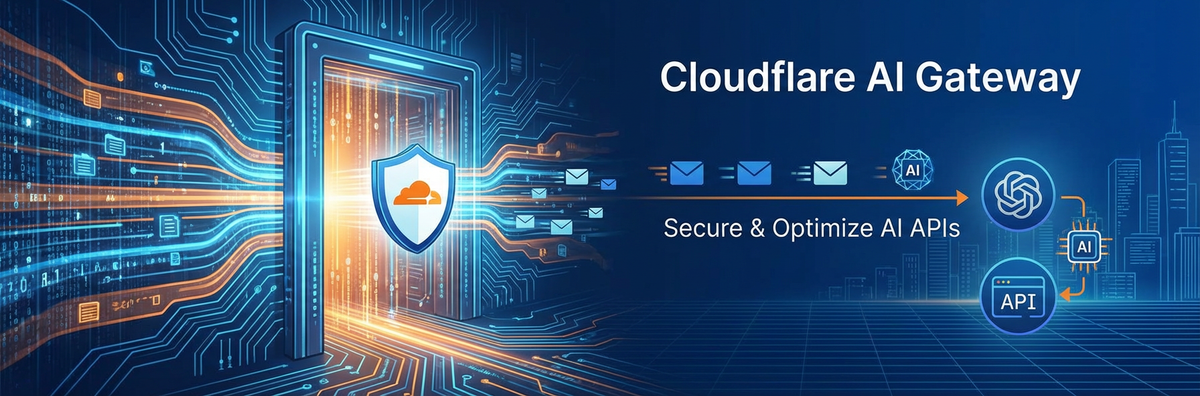


The digital frontier is constantly expanding, and at its vanguard lies Artificial Intelligence, reshaping industries, empowering innovative applications, and fundamentally altering how businesses interact with data and users. From sophisticated chatbots that offer hyper-personalized customer support to intricate recommendation engines driving e-commerce, and generative AI tools accelerating content creation, the capabilities of AI are no longer confined to research labs but are deeply embedded in the operational fabric of countless enterprises. This pervasive adoption, however, brings forth a new generation of technical and operational complexities, particularly when these intelligent services are exposed and consumed via Application Programming Interfaces (APIs). These AI APIs, the very conduits through which AI's power is harnessed, demand specialized attention regarding their security, performance, cost-efficiency, and overall manageability.
In this rapidly evolving landscape, the need for a robust, intelligent intermediary has become paramount. Enterprises find themselves grappling with securing sensitive data flowing to and from AI models, ensuring optimal performance for latency-sensitive applications, managing unpredictable traffic surges, and controlling the often-significant costs associated with AI model inference. Traditional API management solutions, while effective for general REST services, often fall short of addressing the unique nuances presented by AI workloads, especially those involving Large Language Models (LLMs) which introduce complexities like prompt engineering, token usage management, and dynamic model routing. This is precisely where the concept of an AI Gateway emerges as a critical infrastructure component, offering a specialized layer designed to mediate, protect, and optimize interactions with AI services. For scenarios involving the burgeoning world of large language models, this specialized solution often takes the form of an LLM Gateway, tailored specifically to handle the unique demands of conversational and generative AI.
Cloudflare, a recognized leader in web performance, security, and edge computing, is strategically positioned to address these intricate challenges with its advanced AI Gateway solution. Leveraging its expansive global network and comprehensive suite of security and optimization tools, Cloudflare extends its protective and performance-enhancing capabilities to the realm of AI APIs. This article will meticulously explore the multifaceted challenges inherent in managing AI APIs, delve into the transformative role of an AI Gateway in mitigating these issues, and provide an exhaustive analysis of how Cloudflare’s AI Gateway empowers developers and enterprises to deploy, secure, and optimize their AI-driven applications with unparalleled efficiency and confidence. We will dissect its core features, examine compelling use cases, and articulate the profound value it delivers in navigating the complexities of the modern AI-powered digital ecosystem.
The Exploding Landscape of AI APIs and Their Intricate Challenges
The proliferation of Artificial Intelligence is undeniable. What began as specialized algorithms for niche tasks has rapidly blossomed into a cornerstone technology, with new models and applications emerging at an astonishing pace. At the heart of this expansion are AI APIs, the programmatic interfaces that allow developers to integrate sophisticated AI capabilities into their applications without needing to build the underlying models from scratch. These APIs democratize AI, making powerful machine learning models, from natural language processing and computer vision to predictive analytics and generative content creation, accessible to a broad spectrum of developers and enterprises. The rise of Large Language Models (LLMs) like GPT, LLaMA, and Claude has further accelerated this trend, turning complex AI functionalities into readily consumable services that can power everything from intelligent chatbots and automated content generation to code assistance and data analysis tools.
However, the very nature of AI APIs, particularly those powering LLMs, introduces a unique set of challenges that diverge significantly from the traditional api gateway concerns. While a conventional api gateway is adept at managing authentication, rate limiting, and routing for standard RESTful services, AI APIs present additional layers of complexity that demand a more specialized approach. Enterprises leveraging these powerful tools must contend with a sophisticated array of issues that can profoundly impact the security, performance, cost-efficiency, and reliability of their AI-powered applications.
Inherent Challenges with AI APIs
- Performance and Latency Sensitivity: AI models, especially larger ones, often involve computationally intensive inference processes. The time it takes for a model to process an input (a "prompt" in the case of LLMs) and generate an output can vary significantly, contributing directly to application latency. For real-time or near real-time applications, such as live customer support chatbots, autonomous driving systems, or interactive content generators, even marginal increases in latency can severely degrade the user experience and the efficacy of the AI system. Network latency, the time it takes for a request to travel from the client to the AI model's serving infrastructure and back, compounds this issue. Moreover, AI workloads are often bursty; demand can spike unpredictably, putting immense pressure on the underlying infrastructure and potentially leading to service degradation or timeouts if not adequately managed. Optimizing the data path, caching frequent requests, and intelligently routing traffic become critical for maintaining responsiveness, making a specialized
AI Gatewayan indispensable component in mitigating these performance bottlenecks. - Robust Security and Data Privacy Concerns: AI APIs frequently handle vast amounts of data, much of which can be sensitive, proprietary, or subject to stringent regulatory compliance such as GDPR, HIPAA, or CCPA. Sending raw customer queries, personal identifiable information (PII), or confidential business data directly to third-party AI models without proper interception and sanitization poses significant privacy risks. Beyond data in transit, AI APIs are susceptible to unique attack vectors like "prompt injection," where malicious inputs are designed to manipulate the model's behavior, bypass safety guardrails, or extract confidential information. Unauthorized access to AI APIs can lead to intellectual property theft (e.g., reverse-engineering prompts or models), service abuse, or data breaches. A comprehensive
AI Gatewaymust provide advanced security features beyond traditional API security, including specialized prompt filtering, robust authentication and authorization mechanisms, data masking, and real-time threat detection to protect both the model and the data it processes. - Cost Management and Financial Efficiency: The consumption of AI services, particularly those provided by third-party vendors for LLMs, is typically usage-based, often billed per token for language models or per inference for other model types. Uncontrolled or inefficient API calls can quickly escalate operational costs, turning a promising AI initiative into a financial burden. Redundant requests, poorly optimized prompts, or malicious usage patterns (like denial-of-service attempts via excessive API calls) can lead to significant overspending. Without granular visibility into usage patterns and effective rate-limiting strategies, organizations struggle to forecast costs accurately and prevent budget overruns. An
AI Gatewaycan provide crucial cost controls by enforcing quotas, caching identical requests to minimize redundant model calls, and offering detailed analytics on token consumption and API usage, thereby transforming potential cost sinkholes into predictable, manageable expenditures. - Reliability, Availability, and Vendor Lock-in: Many AI applications rely on external AI model providers. This introduces a single point of failure: if a provider experiences an outage, performance degradation, or implements breaking changes to their API, the dependent application can suffer severe disruptions. Building resilience against such external dependencies requires sophisticated traffic management, including failover mechanisms to alternative models or providers. Furthermore, integrating directly with a specific AI provider's API often leads to vendor lock-in, making it difficult and costly to switch providers or integrate new models without extensive refactoring of application code. An
LLM GatewayorAI Gatewaycan abstract away the specifics of different AI providers, presenting a unified interface to the application layer. This allows for seamless model swapping, multi-vendor strategies, and improved overall system availability and reliability, reducing the risk profile associated with external AI service dependencies. - Comprehensive Observability and Debugging: Understanding how AI APIs are being used, their performance characteristics, and where errors might be occurring is critical for successful AI application development and operation. Traditional logging and monitoring tools might capture basic API call data, but they often lack the depth required for AI-specific insights. Developers need to know not just that an API call failed, but why it failed, which prompt led to a particular response, how many tokens were consumed, and the latency experienced at various stages of the AI inference pipeline. Without robust logging, detailed metrics, and intuitive dashboards, debugging issues, optimizing prompts, and identifying performance bottlenecks in AI applications becomes a cumbersome and time-consuming process. A specialized
AI Gatewayoffers enhanced observability, capturing granular details of AI interactions, enabling sophisticated analytics, and providing a clearer window into the behavior and performance of the AI services. - Complexity of Integration and Management: Integrating multiple AI models from different providers, each with its own API conventions, authentication methods, and data formats, can be a complex and time-consuming endeavor. This fragmentation adds significant development overhead and maintenance burden. As AI models rapidly evolve, managing versions, orchestrating prompts, and implementing model-specific logic directly within application code becomes increasingly unwieldy. A robust
AI Gatewayacts as a central control plane, standardizing interactions, abstracting away underlying model complexities, and simplifying the overall management of a diverse AI service ecosystem. It facilitates unified prompt management, consistent API formats, and streamlined version control, significantly reducing the operational friction associated with AI integration.
These intricate challenges underscore the critical need for a specialized infrastructure layer – an AI Gateway – that can intelligently mediate, secure, optimize, and manage the flow of requests and responses to and from AI models. Cloudflare’s solution is designed precisely to meet these multifaceted demands, providing a comprehensive framework for building and operating next-generation AI-powered applications with confidence and efficiency.
Understanding the Transformative Concept of an AI Gateway
In the realm of modern application architecture, the concept of an API Gateway has long been established as an indispensable component. It serves as a single entry point for all client requests, acting as a reverse proxy to route requests to appropriate microservices, enforce security policies, apply rate limiting, and aggregate responses. This centralized control layer simplifies client interactions, enhances security, and improves the manageability of complex distributed systems. However, as the distinct nature and challenges of Artificial Intelligence APIs have become apparent, a new, more specialized form of this architectural pattern has emerged: the AI Gateway.
An AI Gateway can be fundamentally understood as an advanced api gateway specifically engineered to handle the unique characteristics and requirements of AI workloads. While it inherits many foundational capabilities from its traditional counterpart, its true value lies in the specialized features it offers to mediate, secure, and optimize interactions with machine learning models, particularly Large Language Models (LLMs). It acts as an intelligent intermediary layer positioned between AI-powered applications (clients) and the actual AI model inference services (servers), whether those models are hosted internally, by third-party providers, or at the edge.
Differentiating AI Gateway from Traditional API Gateway
The distinction between a traditional api gateway and an AI Gateway is crucial. A standard api gateway is largely protocol-agnostic, focusing on HTTP/HTTPS traffic for general-purpose REST or GraphQL APIs. Its features are broad: request/response transformation, basic caching, authentication/authorization, and generic rate limiting. These are essential for managing API traffic in general.
An AI Gateway, on the other hand, is acutely aware of the semantics of AI interactions. It understands that requests are often "prompts" or "inputs" to a model, and responses are "inferences" or "outputs." This contextual awareness enables a deeper level of optimization and control. For instance:
- Prompt-aware processing: It can inspect, validate, and transform prompts, applying safety filters or injecting specific parameters before they reach the model.
- Token management: For LLMs, it can track token usage, enforce token limits, and even optimize token generation for cost or performance.
- Model-specific routing: It can intelligently route requests to different models based on context, cost, performance, or availability.
- Response caching for AI: While traditional gateways cache HTTP responses, an
AI Gatewaycan cache model inferences based on prompt similarity or exact matches, a crucial optimization for frequently asked questions or common AI tasks. - AI-specific security: It provides specialized defenses against prompt injection, model exfiltration attempts, and other AI-centric vulnerabilities.
Core Functionalities of an AI Gateway
The specialized nature of an AI Gateway manifests in several critical functionalities:
- Unified API Abstraction and Routing: One of the primary benefits of an
AI Gatewayis its ability to abstract away the underlying complexities of diverse AI models and providers. It can present a single, standardized API endpoint to developers, regardless of whether the actual inference is performed by OpenAI's GPT, Anthropic's Claude, a custom fine-tuned model, or an open-source LLM hosted on premise. The gateway then intelligently routes incoming requests to the most appropriate model based on predefined rules, load, cost, or performance metrics. This unification simplifies development, reduces integration efforts, and insulates applications from changes in individual model APIs. This is particularly vital in an LLM Gateway context, where developers might want to switch between different LLMs or leverage multiple models for various tasks without rewriting large portions of their application code. - Advanced Authentication and Authorization: Beyond standard API key validation or OAuth, an
AI Gatewaycan implement granular access controls tailored for AI services. This includes multi-factor authentication, role-based access control (RBAC) to specific models or capabilities, and detailed permission management for internal teams and external consumers. It ensures that only authorized entities can invoke sensitive AI models, preventing misuse and protecting intellectual property. - Intelligent Rate Limiting and Quota Management: Critical for cost control and preventing service abuse,
AI Gatewaysoffer sophisticated rate-limiting capabilities. These can be applied based on user, API key, IP address, or even on specific AI resource consumption (e.g., tokens per minute for LLMs). Quotas can be configured to manage usage tiers, ensuring fair access and preventing individual users or applications from monopolizing resources or exceeding budget allocations. This is a cornerstone for any effective LLM Gateway aiming to control spiraling inference costs. - Caching for AI Responses: Caching is a powerful optimization technique. An
AI Gatewaycan cache responses from AI models for identical or sufficiently similar prompts, drastically reducing the number of redundant model inferences. This not only improves performance by serving responses faster but also significantly cuts down on operational costs associated with per-use billing for AI services. This intelligent caching can distinguish between prompts that require a fresh inference and those that can benefit from a cached result, a nuanced capability distinct from generic HTTP caching. - Observability, Logging, and Analytics: A robust
AI Gatewayprovides comprehensive logging of every AI API interaction, capturing details like the incoming prompt, the outgoing response, model used, latency, token count, and any errors. This rich dataset fuels powerful analytics, offering insights into usage patterns, model performance, cost attribution, and potential areas for optimization. These detailed logs are invaluable for debugging AI applications, performing post-mortem analysis, and continuously improving the user experience and model efficacy. - Prompt Management and Transformation: For LLMs, the quality and structure of prompts are paramount. An
LLM Gatewaycan offer features for prompt templating, versioning, and transformation. This allows developers to standardize prompts, inject system instructions, apply safety filters (e.g., PII masking, content moderation), or modify prompts dynamically based on application context, all before the request even reaches the underlying LLM. This centralized prompt management ensures consistency, improves model safety, and simplifies prompt engineering efforts across an organization. - Security Enhancements Against AI-Specific Threats: Beyond traditional API security, an
AI Gatewaycan implement specific defenses against prompt injection attacks (e.g., by sanitizing inputs or using specialized detection models), protect against model exfiltration attempts, and enforce data privacy by filtering or masking sensitive information before it leaves the organization's control and reaches a third-party AI model.
In essence, an AI Gateway elevates the management of AI APIs from a generic network problem to a specialized, intelligent orchestration task. It becomes the critical control point for optimizing performance, ensuring robust security, controlling costs, and simplifying the development and operational complexities inherent in deploying AI-powered applications at scale. For organizations deeply invested in LLMs, an LLM Gateway is not just beneficial but foundational for building secure, efficient, and scalable conversational AI solutions.
Cloudflare's Vision for AI API Management
Cloudflare has long established itself as a foundational pillar of the internet, providing an extensive suite of services that ensure the security, performance, and reliability of millions of websites and applications worldwide. Its globally distributed network, spanning hundreds of cities in over 100 countries, places compute and security capabilities literally at the "edge" – closer to users and data sources than virtually any other provider. This unique architecture, honed over years of defending against massive DDoS attacks, accelerating web content delivery, and securing API endpoints, naturally positions Cloudflare as a formidable player in the emerging landscape of AI API management.
Cloudflare's vision for AI API management is not merely to extend existing API gateway features to AI, but to fundamentally redefine how AI services are consumed and protected by leveraging its core strengths: its ubiquitous global network, its unparalleled security expertise, and its commitment to developers through serverless platforms like Workers. This vision centers on creating an AI Gateway that acts as an intelligent, secure, and performant intermediary, allowing businesses to harness the power of AI without inheriting its inherent complexities and risks.
Leveraging Core Strengths for AI
- The Global Edge Network Advantage: Cloudflare's most significant asset is its expansive global network. With data centers strategically located across the globe, Cloudflare brings computing resources closer to the end-users and the data sources. For AI applications, especially those that are latency-sensitive (like real-time chatbots or interactive generative AI tools), this "edge computing" paradigm is revolutionary. By processing AI API requests at the nearest Cloudflare edge location, the network latency component is drastically reduced. This means prompts reach AI models faster, and responses return to users quicker, leading to a superior user experience. Furthermore, the ability to perform pre-processing, caching, and security checks at the edge minimizes the data volume that needs to traverse longer distances, optimizing both performance and cost. An
LLM Gatewaybuilt on this edge infrastructure can thus deliver unparalleled responsiveness for conversational AI. - Unmatched Security Pedigree: Security is in Cloudflare's DNA. For years, Cloudflare has been at the forefront of protecting internet properties from the most sophisticated cyber threats, including massive DDoS attacks, complex web application exploits, and API vulnerabilities. This deep expertise in network security, web application firewalls (WAF), and API protection translates directly into a powerful foundation for securing AI APIs. Cloudflare's existing security layers can be repurposed and specialized to address AI-specific threats, such as prompt injection attacks, model exfiltration, and unauthorized access to AI services. By placing an
AI Gatewayon Cloudflare's network, organizations can inherit world-class security protections, ensuring that their valuable AI models and sensitive data remain shielded from malicious actors and accidental exposures. - Developer-Centric Serverless Platform (Workers): Cloudflare Workers, its serverless compute platform, allows developers to deploy custom code directly onto Cloudflare's global network. This powerful capability is central to Cloudflare's
AI Gatewaystrategy. It means that the intelligent logic required for anAI Gateway– such as dynamic routing, sophisticated prompt transformations, real-time analytics, and custom rate-limiting algorithms – can be implemented and executed at the edge, with minimal latency and maximum flexibility. Developers gain the ability to tailor their AI API management precisely to their needs, extending the gateway's functionality with custom business logic without managing any infrastructure. This blend of powerful infrastructure and programmable edge intelligence creates a highly adaptable and efficientLLM Gatewaysolution.
Introducing Cloudflare AI Gateway
The Cloudflare AI Gateway is not just an add-on feature; it is an integrated solution designed from the ground up to address the unique demands of AI APIs. It leverages Cloudflare's existing robust infrastructure, extending its capabilities to provide a specialized layer for AI interaction. At its core, the Cloudflare AI Gateway acts as a unified control plane for all AI API traffic, mediating requests between applications and various AI models, whether they are hosted on external services like OpenAI, internal proprietary models, or even open-source LLMs deployed on Cloudflare Workers AI.
The philosophy behind Cloudflare's AI Gateway is to: * Abstract Complexity: Shield developers from the intricacies of different AI model APIs and providers, offering a consistent interface. * Enhance Security: Provide advanced, AI-aware security measures to protect against emerging threats like prompt injection and data breaches. * Boost Performance: Utilize its global edge network and intelligent caching to minimize latency and accelerate AI responses. * Optimize Costs: Implement granular controls for rate limiting, quota management, and caching to ensure efficient AI resource consumption. * Improve Observability: Offer detailed logging and analytics specific to AI interactions, enabling better debugging and optimization. * Enable Flexibility: Allow developers to easily switch between AI models, implement failover strategies, and integrate custom logic at the edge.
By embodying these principles, Cloudflare's AI Gateway aims to demystify and streamline the deployment and management of AI applications. It empowers enterprises to focus on building innovative AI features, confident that the underlying API infrastructure is secure, performant, and cost-effective. For those specifically dealing with the rapidly evolving LLM ecosystem, this gateway provides a crucial LLM Gateway functionality that simplifies prompt engineering, model orchestration, and token management, ensuring that conversational AI and generative applications are both powerful and manageable.
Key Features and Benefits of Cloudflare AI Gateway: A Deep Dive
The true power of Cloudflare's AI Gateway lies in its comprehensive suite of features, meticulously engineered to address the multifaceted challenges of managing AI APIs at scale. By integrating its core capabilities with the specific requirements of AI workloads, Cloudflare delivers a solution that not only secures and optimizes AI interactions but also simplifies their deployment and management. This deep dive will explore these features and elucidate the profound benefits they offer to developers and enterprises alike, further cementing its role as a leading api gateway for AI-driven services, including specialized LLM Gateway functionalities.
Enhanced Security: Protecting AI Models and Data
Security for AI APIs goes beyond traditional API security; it demands specialized defenses against novel threats. Cloudflare's AI Gateway integrates its industry-leading security features with AI-specific protections, creating a robust shield for sensitive data and valuable models.
- DDoS Protection and Web Application Firewall (WAF) for API Endpoints: Cloudflare's foundational DDoS protection automatically mitigates even the largest volumetric attacks, ensuring AI APIs remain available under extreme load. The WAF is specifically configured to protect API endpoints, defending against the OWASP API Security Top 10 vulnerabilities, such as broken object-level authorization, excessive data exposure, and security misconfigurations. Crucially, for AI, the WAF can be fine-tuned to detect and mitigate prompt injection attacks, where malicious inputs attempt to manipulate LLMs to reveal sensitive information or perform unintended actions. By analyzing request payloads, the gateway can identify suspicious patterns indicative of adversarial prompts and block them before they ever reach the AI model, safeguarding intellectual property and preventing model misuse.
- API Shield for Advanced Authentication and Schema Validation: API Shield provides advanced controls beyond simple API key checks. It enables mutual TLS (mTLS) for strong, certificate-based authentication, ensuring that only trusted clients can connect to AI APIs. Schema validation ensures that incoming requests conform to the expected API schema, preventing malformed requests that could exploit vulnerabilities or cause unexpected model behavior. This is particularly important for AI models that expect specific input formats. Coupled with rate limiting policies, API Shield ensures robust access control and integrity for AI workloads.
- Data Encryption (TLS) and Secure Access Controls: All communication between clients, the
AI Gateway, and the AI models is secured with TLS encryption, protecting data in transit from eavesdropping and tampering. Furthermore, Cloudflare allows for granular access control policies based on IP reputation, geographic location, user identity, or custom rules, ensuring that only authorized requests can proceed to the AI models. This prevents unauthorized access to valuable AI services and keeps proprietary data secure. - Mitigating Model Exfiltration and Data Privacy Risks: For organizations dealing with sensitive data, the
AI Gatewaycan act as a crucial enforcement point for data privacy. It can be configured to filter, mask, or redact personally identifiable information (PII) or confidential data from prompts before they are sent to third-party AI models. This prevents sensitive data from leaving the organization's control, significantly reducing compliance risks (e.g., GDPR, HIPAA). It also helps mitigate the risk of model exfiltration, where an attacker attempts to reverse-engineer or steal the underlying AI model by making numerous queries and analyzing responses. The gateway's comprehensive logging and anomaly detection can flag such suspicious patterns.
Performance Optimization: Accelerating AI Interactions
Latency is a critical factor for AI applications. Cloudflare's global network and optimization features dramatically improve the speed and responsiveness of AI API calls.
- Global CDN and Edge Caching for AI Responses: Cloudflare's extensive Content Delivery Network (CDN) is renowned for accelerating web content. For AI, this translates into powerful edge caching capabilities. The
AI Gatewaycan intelligently cache responses from AI models for identical or frequently occurring prompts. For instance, if many users ask the same question to an LLM, the gateway can serve the cached answer instantly from a nearby edge location, drastically reducing latency and the need for redundant model inference calls. This is a game-changer for common queries or knowledge retrieval tasks, transforming anLLM Gatewayinto a highly efficient response delivery system. - Intelligent Load Balancing Across AI Providers/Models: To enhance reliability and performance, the
AI Gatewaycan load balance requests across multiple instances of an AI model or even different AI providers. If one provider experiences high latency or an outage, the gateway can automatically route traffic to a healthier alternative, ensuring continuous service. This multi-model, multi-provider strategy builds resilience and allows organizations to leverage the best-performing or most cost-effective model for a given task dynamically. - Optimal Routing and Reduced Latency: By processing requests at the edge, Cloudflare minimizes the distance data needs to travel. The
AI Gatewayuses Cloudflare's Anycast network to intelligently route requests to the nearest and fastest edge location, then onward to the AI model provider via optimized network paths. This significantly reduces overall round-trip time, which is crucial for real-time AI applications where every millisecond counts.
Cost Management & Efficiency: Controlling AI Spending
AI model inference can be expensive. Cloudflare's AI Gateway provides sophisticated tools to monitor and control these costs effectively.
- Granular Rate Limiting and Quotas: The
AI Gatewayenables fine-grained rate limiting based on various parameters such as API key, user ID, IP address, or even geographical location. This prevents individual users or applications from consuming excessive AI resources, thereby protecting budgets and ensuring fair access. Quotas can be set for daily, weekly, or monthly usage, with automated alerts or blocks when limits are approached or exceeded. This is a crucial feature for anLLM Gatewaywhere token-based billing can quickly spiral out of control. - Caching to Reduce Redundant Model Calls: As mentioned, intelligent caching of AI responses directly translates into cost savings. By serving cached responses instead of making fresh inference calls, organizations pay less for AI model usage, especially for frequently invoked prompts or common queries. This passive cost optimization can lead to significant savings over time.
- Detailed Usage Analytics for Cost Attribution: The
AI Gatewayprovides comprehensive analytics and logging, detailing every AI API call, the model used, latency, and crucially, the token count (for LLMs) or inference units consumed. This granular data allows businesses to accurately attribute costs to specific applications, teams, or users, fostering accountability and enabling data-driven decisions for optimizing AI spending. This visibility is key to understanding where AI budgets are being spent and identifying areas for improvement.
Observability & Analytics: Gaining Insights into AI Performance
Understanding the behavior of AI APIs is critical for development, debugging, and continuous improvement. The AI Gateway offers deep insights into AI interactions.
- Comprehensive Logging of AI API Requests and Responses: Every request, including the prompt, and every response, including the AI-generated output, is meticulously logged by the
AI Gateway. This detailed record is invaluable for debugging issues, understanding model behavior, and ensuring compliance. Logs also include metadata such as model used, latency, and token count, providing a complete picture of each interaction. - Rich Metrics for Performance and Usage: The gateway collects and exposes a wealth of metrics, including request volume, success rates, error rates, average latency, peak latency, and token usage (for LLMs). These metrics can be visualized through dashboards, allowing developers and operations teams to monitor the health and performance of their AI services in real-time. Anomalies can be quickly identified, prompting proactive intervention.
- Integration with Analytics Platforms: The detailed logs and metrics can be easily integrated with external SIEM (Security Information and Event Management) systems, observability platforms, or data lakes for deeper analysis, custom reporting, and long-term trend identification. This allows businesses to correlate AI usage data with other operational metrics for a holistic view.
- Debugging Tools for AI Interactions: With complete logs of prompts and responses, developers can easily retrace the steps of any AI interaction, identify problematic prompts, understand why a model generated a particular output, and troubleshoot errors more effectively. This dramatically reduces the time and effort required to debug complex AI applications.
Reliability & Resilience: Ensuring Continuous AI Service
AI applications are often critical, demanding high availability. The AI Gateway enhances the reliability and resilience of AI services.
- Failover Mechanisms Between AI Providers or Model Versions: In the event of an outage or performance degradation from a primary AI model provider, the
AI Gatewaycan automatically failover to a pre-configured secondary provider or a different model version. This ensures that AI applications remain operational even when external dependencies falter, providing critical business continuity. - Traffic Management Policies for Graceful Degradation: The gateway allows for the implementation of intelligent traffic management policies. For example, during periods of extreme load, it can prioritize critical requests, shed non-essential traffic, or route requests to less performant but available models, ensuring graceful degradation rather than outright service failure.
- High Availability Infrastructure: Built on Cloudflare's globally distributed, highly available network, the
AI Gatewayitself is inherently resilient. Redundancy and automatic failover mechanisms within Cloudflare's infrastructure ensure that the gateway remains operational, providing a reliable intermediary for AI interactions.
Simplification & Unification: Streamlining AI Development
Managing a diverse ecosystem of AI models can be complex. The AI Gateway simplifies this by offering a unified control plane.
- Abstracting Underlying AI Models: Developers no longer need to write specific integration code for each AI model or provider. The
AI Gatewaypresents a single, consistent API, abstracting away the variations in endpoints, authentication methods, and data formats of different underlying AI services. This accelerates development and reduces integration efforts. - Unified API for Interacting with Diverse LLMs and AI Services: Whether integrating with OpenAI, Anthropic, Google Gemini, or custom models, the gateway can normalize requests and responses, providing a consistent interaction pattern. This is particularly valuable for an
LLM Gateway, allowing developers to experiment with or switch between various LLMs without significant application changes. - Prompt Templating and Versioning: The
AI Gatewaycan facilitate prompt management by allowing organizations to define, store, and version prompt templates centrally. This ensures consistency across applications, simplifies prompt engineering, and enables rapid iteration. Changes to prompts can be deployed and managed directly at the gateway, decoupling them from application code releases. - Response Transformation: The gateway can also transform AI model responses to fit specific application needs, ensuring consistency in output format even if the underlying models return slightly different structures.
In summary, the Cloudflare AI Gateway is far more than a simple proxy. It is a sophisticated, AI-aware platform that combines robust security, advanced performance optimization, granular cost control, deep observability, and simplified management into a cohesive solution. By leveraging Cloudflare's global edge network and serverless capabilities, it empowers enterprises to build, deploy, and scale their AI-powered applications with unprecedented confidence, efficiency, and intelligence, making it an indispensable api gateway for the AI era.
Beyond proprietary solutions, the open-source landscape also offers powerful tools for managing AI APIs. For organizations seeking flexibility, transparency, and a high degree of control over their infrastructure, a solution like APIPark presents a compelling alternative. APIPark is an open-source AI Gateway and API management platform, licensed under Apache 2.0, designed to streamline the management, integration, and deployment of both AI and REST services. It excels at quick integration of over 100 AI models, offering a unified API format for AI invocation, which ensures application stability even when underlying models or prompts change. Furthermore, APIPark enables users to encapsulate prompts into REST APIs, facilitating the creation of custom AI services like sentiment analysis or translation APIs. Its comprehensive features include end-to-end API lifecycle management, team-based service sharing, independent API and access permissions for multi-tenancy, and subscription approval workflows for enhanced security. Boasting performance rivaling Nginx (over 20,000 TPS with modest resources) and robust logging and data analysis capabilities, APIPark offers a powerful, self-hostable solution that can be deployed in minutes. For enterprises valuing open-source principles and granular control, APIPark stands as a strong contender in the AI Gateway and api gateway space, complementing the broader ecosystem of AI infrastructure tools.
APIPark is a high-performance AI gateway that allows you to securely access the most comprehensive LLM APIs globally on the APIPark platform, including OpenAI, Anthropic, Mistral, Llama2, Google Gemini, and more.Try APIPark now! 👇👇👇
Use Cases and Scenarios for Cloudflare AI Gateway
The versatility and robust capabilities of Cloudflare's AI Gateway make it an ideal solution for a wide array of use cases across various industries. From securing internal enterprise applications to powering scalable customer-facing AI experiences, the gateway provides the critical infrastructure necessary to manage the complexities of AI APIs effectively. Its specialized features, particularly its LLM Gateway functionalities, are indispensable for organizations leveraging the power of large language models.
1. Enterprise LLM Deployments: Securing Internal Applications and Proprietary Models
Many enterprises are integrating LLMs into their internal workflows for tasks like code generation, document summarization, internal knowledge retrieval, and data analysis. These applications often handle sensitive internal data or proprietary business logic.
- Scenario: A large financial institution wants to provide its analysts with an internal LLM-powered assistant to summarize complex financial reports and answer specific queries about market data. The institution is concerned about data privacy and preventing the exposure of confidential information to third-party models, as well as controlling access to its own fine-tuned proprietary models.
- Cloudflare AI Gateway Solution: The
AI Gatewayis deployed in front of both external (e.g., OpenAI, via secure, controlled channels) and internal (e.g., a self-hosted LLaMA model) LLM services.- Data Masking: The gateway can be configured to automatically identify and mask sensitive financial data or PII in prompts before they are sent to external LLMs, ensuring compliance and preventing data leakage.
- Access Control: Strong authentication and authorization policies (e.g., integrating with enterprise SSO) ensure that only authorized employees can access the AI assistant. Role-based access can differentiate between who can use general LLMs versus highly specialized, proprietary models.
- Cost Control: Rate limiting prevents any single department or user from incurring excessive costs on external LLM APIs. Internal usage of proprietary models can also be monitored for resource allocation.
- Unified Interface: Analysts interact with a single, unified interface, unaware of whether their query is being handled by an external or internal model, managed seamlessly by the
AI Gateway.
2. Customer-Facing AI Applications: Chatbots, Virtual Assistants, and Personalized Recommendations
Customer-facing AI applications demand low latency, high availability, and robust security to maintain a positive user experience and protect customer data.
- Scenario: An e-commerce platform uses an LLM-powered chatbot for customer support, product recommendations, and personalized shopping assistance. During peak sales events, traffic to the chatbot can surge dramatically, and any latency or outage can lead to lost sales and customer dissatisfaction.
- Cloudflare AI Gateway Solution: The
AI Gatewayis placed between the e-commerce website/app and the LLM service.- Performance Optimization: Cloudflare's edge network and caching significantly reduce latency for chatbot interactions. Common customer queries (e.g., "What's your return policy?") can be served from the cache instantly, improving responsiveness. Load balancing ensures that even during peak traffic, requests are distributed efficiently across multiple LLM instances or providers.
- Security: The WAF protects against prompt injection attempts that could trick the chatbot into revealing internal information or misbehaving. DDoS protection ensures the chatbot remains available even under malicious attacks.
- Scalability: The gateway's ability to handle bursty traffic and scale automatically ensures that the chatbot can manage sudden spikes in customer interactions without degradation in service.
- Observability: Detailed logs allow the e-commerce team to analyze customer interactions, identify common pain points, and continually refine the chatbot's responses and the underlying LLM's performance.
3. Developer Platforms: Providing Controlled Access to AI APIs for Third-Party Developers
Many companies build platforms that allow third-party developers to integrate AI capabilities into their own applications. This requires robust API management, security, and usage tracking.
- Scenario: A SaaS company offers a platform for content creators, and they want to provide a "generative AI" feature that allows third-party developers to integrate AI content creation tools (e.g., image generation, text summarization) into their plugins. The company needs to control access, track usage, and monetize these AI services.
- Cloudflare AI Gateway Solution: The
AI Gatewayacts as the public-facing API endpoint for third-party developers.- API Management: The gateway provides a unified API interface for various AI models, simplifying integration for developers. API Shield can enforce robust authentication for developer API keys.
- Rate Limiting & Quotas: The platform can implement tiered access plans (e.g., free tier with limited requests, premium tiers with higher limits) using the gateway's granular rate-limiting and quota features. This enables monetization and prevents abuse.
- Security: All third-party requests are screened by Cloudflare's security layers, protecting the underlying AI models from external threats.
- Analytics: Detailed usage logs provide the SaaS company with insights into which AI features are most popular, which developers are using them, and how to optimize their offerings and billing models.
4. Multi-Cloud / Multi-Model Strategies: Orchestrating Traffic Across Different AI Service Providers
To avoid vendor lock-in, leverage best-of-breed models, or ensure resilience, organizations often use multiple AI models from different providers.
- Scenario: A media company uses one LLM for creative text generation (e.g., scriptwriting), another for factual information retrieval, and a third, custom-trained model for content moderation. They need a way to seamlessly switch between these models and ensure business continuity if one provider experiences an issue.
- Cloudflare AI Gateway Solution: The
AI Gatewayserves as the intelligent orchestration layer.- Dynamic Routing: The gateway can dynamically route incoming requests to the most appropriate AI model based on the request's context, prompt content (e.g., a "creative" prompt goes to Model A, a "factual" prompt goes to Model B), cost considerations, or real-time performance metrics.
- Failover and Resilience: If the primary LLM provider for creative text generation goes down, the
AI Gatewaycan automatically reroute those requests to a backup creative LLM, ensuring uninterrupted service for content creators. - Unified Observability: Despite using multiple providers, the media company gets a single pane of glass for monitoring all AI API traffic, performance, and costs through the gateway's analytics.
5. Data Privacy Compliance: Ensuring PII Handling and Regulatory Adherence
Compliance with data privacy regulations is a non-negotiable requirement for many businesses, especially when interacting with AI services.
- Scenario: A healthcare provider is developing an AI-powered symptom checker that uses an LLM to assist medical professionals. Strict HIPAA regulations demand that patient data (PHI/PII) is never exposed to unauthorized external systems or stored inappropriately.
- Cloudflare AI Gateway Solution: The
AI Gatewayacts as a privacy enforcement point.- PII Masking/Filtering: Before any patient query leaves the internal network for an external LLM, the
AI Gatewaycan apply sophisticated rules to detect and mask or redact protected health information (PHI) or PII, ensuring that only anonymized or non-sensitive data reaches the third-party AI model. - Access Logging: Detailed audit trails of every AI API interaction, including who made the request, when, and what data was involved (even if masked), are stored securely, providing irrefutable evidence for compliance audits.
- Geo-Fencing: The gateway can enforce geo-restrictions, preventing AI API calls from certain regions or to AI models hosted in non-compliant jurisdictions, further strengthening data residency and privacy controls.
- PII Masking/Filtering: Before any patient query leaves the internal network for an external LLM, the
These diverse use cases underscore the critical role Cloudflare's AI Gateway plays in making AI applications secure, performant, cost-effective, and manageable across various operational contexts. By providing specialized api gateway functionality for AI, and robust LLM Gateway features for language models, it empowers organizations to confidently leverage AI as a core component of their digital strategy.
Implementing Cloudflare AI Gateway: Practical Aspects
Integrating Cloudflare's AI Gateway into an existing or new AI application architecture is designed to be a streamlined process, leveraging the familiarity of Cloudflare's ecosystem. The practical implementation involves a few key steps, from initial setup to ongoing configuration and integration with other Cloudflare services, offering a developer-friendly experience.
High-Level Setup Steps
- Cloudflare Account and Domain Configuration: The prerequisite is an active Cloudflare account with the relevant domain already configured to use Cloudflare's DNS. This is where your AI application's domain will point, allowing Cloudflare to intercept and manage traffic to your AI APIs.
- Define AI Gateway Endpoints: You'll define the specific AI API endpoints that the
AI Gatewaywill manage. This typically involves configuring routes within your Cloudflare dashboard or through API calls. You'll specify the public-facing URL for your AI service (e.g.,api.yourdomain.com/ai/predict) and the actual origin server(s) where your AI models are hosted (e.g.,openai.com/v1/chat/completions, or your own internal model's endpoint). TheAI Gatewaythen acts as the intermediary, proxying requests. - Configure Security Policies: Implement the necessary security layers. This involves:
- Activating Cloudflare's WAF for your AI API endpoints, with custom rules for AI-specific threats like prompt injection.
- Setting up API Shield for advanced authentication (e.g., mTLS), schema validation, and rate limiting rules.
- Defining access policies based on IP, geo-location, or client certificates.
- Configuring data masking or filtering rules if sensitive data (PII/PHI) needs to be scrubbed before reaching external AI models.
- Implement Performance Optimizations:
- Enable caching policies for AI responses, specifying which types of prompts or responses are eligible for edge caching to reduce latency and inference costs.
- Configure load balancing if you are using multiple AI model instances or providers, defining routing policies (e.g., round-robin, least connections, fastest response).
- Leverage Cloudflare's Argo Smart Routing for optimized network paths to AI model origins.
- Set Up Observability and Analytics:
- Ensure detailed logging is enabled for all AI API traffic through the
AI Gateway. - Integrate with Cloudflare Analytics dashboards to monitor key metrics such as latency, error rates, token usage, and request volume.
- Set up alerts for unusual activity or performance degradation, providing proactive monitoring.
- Ensure detailed logging is enabled for all AI API traffic through the
- Custom Logic with Cloudflare Workers (Optional but Recommended): For advanced scenarios, Cloudflare Workers become incredibly powerful. You can write custom JavaScript, TypeScript, or WebAssembly code to run directly on the
AI Gatewayat the edge.- Dynamic Prompt Engineering: Transform incoming prompts, add system instructions, or select different prompt templates based on request context.
- AI Model Selection Logic: Implement sophisticated logic to choose the optimal AI model based on cost, current load, specific user groups, or even the linguistic complexity of the prompt (making it a truly intelligent
LLM Gateway). - Response Post-processing: Modify AI responses before sending them back to the client, e.g., to summarize, reformat, or apply further content moderation.
- A/B Testing: Route a percentage of traffic to a new model version or a new prompt strategy to test its performance and efficacy.
Integration with Existing Cloudflare Services
The strength of Cloudflare's AI Gateway is its seamless integration with its broader ecosystem:
- Cloudflare Access: For internal AI applications, Cloudflare Access can provide a zero-trust layer, ensuring that only authenticated and authorized users can even reach the
AI Gatewayendpoint, regardless of their network location. - Cloudflare Load Balancing: The
AI Gatewaycan leverage Cloudflare's advanced load balancing capabilities to distribute requests across multiple AI model origins, not just for failover but also for optimizing performance and cost. - Cloudflare Stream/Images: For AI APIs dealing with multimedia (e.g., AI video generation, image processing), integration with Cloudflare Stream or Images ensures that media assets are managed and delivered efficiently.
- Cloudflare R2: Responses or contextual data for AI models can be stored in Cloudflare R2, its S3-compatible object storage, providing a cost-effective and highly available storage solution.
Configuration Options and Developer Experience
Cloudflare provides multiple ways to configure the AI Gateway:
- Cloudflare Dashboard: An intuitive web interface allows for straightforward setup and management of routes, security rules, and performance settings.
- Cloudflare API: For programmatic control and automation, all
AI Gatewayfeatures are exposed via a comprehensive REST API, enabling CI/CD integration and infrastructure-as-code practices. - Terraform Provider: Cloudflare's Terraform provider allows developers to manage their
AI Gatewayconfigurations using familiar infrastructure-as-code tools, ensuring consistency and version control.
The developer experience is prioritized, aiming to abstract away infrastructure complexities so that developers can focus on building innovative AI applications. By centralizing AI API management at the edge, Cloudflare empowers teams to iterate faster, deploy more securely, and optimize the performance and cost of their AI services without getting bogged down in intricate network or security configurations. This robust platform provides the flexibility needed for both simple integrations and highly customized, intelligent LLM Gateway deployments.
The Future of AI Gateways and Cloudflare's Pivotal Role
The trajectory of Artificial Intelligence is one of relentless innovation, with new models, capabilities, and applications emerging at an accelerating pace. As AI becomes increasingly embedded in every facet of technology and business, the infrastructure designed to support it must evolve in tandem. The AI Gateway, particularly the specialized LLM Gateway, is not merely a transient architectural pattern but a foundational component whose importance will only grow as AI itself matures and diversifies. Cloudflare, with its strategic position at the internet's edge and its continuous commitment to innovation, is poised to play a pivotal role in shaping this future.
Predictions for the Evolution of AI APIs and Gateways
- Hyper-Specialization and Multi-Modality: While current LLMs are powerful, the future will see a proliferation of highly specialized AI models – for specific industries (e.g., legal AI, medical AI), specific tasks (e.g., code generation, scientific discovery), and increasingly, multi-modal AI that seamlessly integrates text, image, audio, and video processing.
AI Gatewayswill need to become even more intelligent in routing requests to the optimal specialized model, managing disparate data types, and ensuring consistent interactions across these diverse capabilities. AnLLM Gatewaywill expand to become a generalAI Gatewayorchestrating interactions with various model types beyond just language. - Increased Edge Inference and Local AI: The demand for lower latency, enhanced privacy, and reduced costs will drive more AI inference to the edge – closer to the data source and the user. This means running smaller, optimized AI models directly on edge devices or within the
AI Gatewayitself (serverless AI at the edge).AI Gatewayswill evolve to not just proxy requests but also to perform partial or full inference for specific tasks, especially for real-time applications where every millisecond counts. This could involve filtering, pre-processing, or even generating responses for simple queries directly at the Cloudflare edge. - Advanced Security for AI-Specific Threats: As AI becomes more sophisticated, so too will the threats. Beyond prompt injection, we might see more advanced forms of model poisoning, adversarial attacks, and more subtle forms of data leakage.
AI Gatewayswill need to incorporate AI-powered security itself, using machine learning to detect anomalous prompt patterns, identify model vulnerabilities, and enforce proactive defensive measures against evolving threats. Behavioral analysis of API calls will become standard for detecting sophisticated attacks. - Sophisticated Cost Optimization and Dynamic Billing: The cost model for AI services will likely become more complex, involving not just tokens but compute time, model complexity, and contextual factors.
AI Gatewayswill need to provide even more granular cost tracking, dynamic model selection based on real-time pricing, and intelligent caching strategies that are acutely aware of the cost implications of each inference. This will be crucial for managing the economic realities of large-scale AI deployment. - Autonomous AI Agents and Orchestration: The rise of autonomous AI agents that interact with multiple APIs and decision-making processes will require
AI Gatewaysto act as central orchestrators, managing complex sequences of AI calls, state management, and ensuring the secure and efficient execution of multi-step AI workflows. This moves beyond simple request-response to intelligent workflow management.
Cloudflare's Continuous Innovation in this Space
Cloudflare is uniquely positioned to address these future trends due to its fundamental architectural advantages and its track record of innovation:
- Edge Computing Prowess: Cloudflare's global network is already a massive distributed computing platform. Its investment in serverless computing (Workers and Workers AI) means it can seamlessly integrate AI inference directly into the
AI Gatewaylayer. This will allow for true edge inference, where prompts are processed and responses generated as close to the user as possible, revolutionizing latency-sensitive AI applications. This positions Cloudflare as a leading platform for serverless AI, with theAI Gatewaybeing the central control point. - Security-First Philosophy: Cloudflare's deep security expertise provides a strong foundation for developing next-generation AI security features. It can rapidly adapt its WAF and threat intelligence to counter new AI-specific attack vectors, offering unparalleled protection for AI models and data. The ability to inspect and filter prompts at the edge is a powerful preventative measure against evolving threats.
- Developer Empowerment: Cloudflare's commitment to developers, evident in its Workers platform, ensures that the
AI Gatewaywill remain highly programmable and customizable. This flexibility allows businesses to adapt to the rapid pace of AI innovation, implement custom logic, and integrate new models or providers with minimal friction, keeping pace with the cutting edge of AI development. - Unified Control Plane: As the complexity of AI ecosystems grows, the need for a unified control plane becomes paramount. Cloudflare's
AI Gatewaycan evolve into a single management interface for all AI interactions, offering consistency, simplified operations, and holistic observability across an organization's entire AI landscape, regardless of where models are hosted.
The future of AI is intertwined with the future of its underlying infrastructure. As AI models become more ubiquitous, powerful, and complex, the AI Gateway will evolve from a beneficial component to an essential linchpin, securing, optimizing, and orchestrating the intelligent services that drive the next generation of digital experiences. Cloudflare, with its strategic vision and robust platform, is exceptionally well-equipped to lead this evolution, ensuring that enterprises can confidently harness the transformative potential of AI.
Conclusion
The advent of Artificial Intelligence, particularly the widespread adoption of Large Language Models, has ushered in an era of unprecedented innovation, transforming how businesses operate and interact with their customers. However, this transformative power comes with a complex set of challenges, ranging from ensuring robust security and managing unpredictable performance to controlling escalating costs and simplifying integration. Traditional API management solutions, while foundational, often fall short of addressing the unique and intricate demands presented by AI APIs. The need for a specialized, intelligent intermediary has become abundantly clear, leading to the emergence of the AI Gateway as a critical architectural component. For organizations navigating the nuances of conversational and generative AI, the distinction and functionality of an LLM Gateway are particularly vital.
Cloudflare's AI Gateway stands out as a comprehensive and highly effective solution designed to meet these multifaceted challenges head-on. By leveraging its globally distributed edge network, world-class security infrastructure, and developer-centric serverless platform, Cloudflare extends its proven capabilities to the realm of AI APIs. This integrated approach ensures that AI-powered applications are not only performant and cost-efficient but also secure against evolving threats like prompt injection and data exfiltration.
We have meticulously explored how Cloudflare's AI Gateway delivers:
- Unparalleled Security: Through advanced DDoS protection, Web Application Firewall capabilities tailored for API threats, API Shield for robust authentication, and intelligent data masking, safeguarding sensitive data and proprietary AI models.
- Superior Performance Optimization: By utilizing its global CDN for edge caching of AI responses, intelligent load balancing across multiple models, and optimized routing, significantly reducing latency and enhancing user experience.
- Effective Cost Management: With granular rate limiting, quota management, and detailed usage analytics, ensuring predictable spending and preventing budget overruns on AI inference.
- Profound Observability: Offering comprehensive logging, rich metrics, and integration with analytics platforms, providing deep insights into AI API behavior for efficient debugging and continuous improvement.
- Enhanced Reliability and Resilience: Through failover mechanisms, intelligent traffic management, and a highly available infrastructure, guaranteeing business continuity for critical AI applications.
- Streamlined Management and Unification: By abstracting away the complexities of diverse AI models, providing a unified API interface, and enabling flexible prompt management, simplifying development and operations.
From securing internal enterprise LLM deployments to powering scalable customer-facing AI applications, facilitating multi-cloud AI strategies, and ensuring rigorous data privacy compliance, Cloudflare's AI Gateway proves indispensable. It empowers developers and enterprises to confidently build, deploy, and scale their AI initiatives, freeing them from the intricate technical burdens and allowing them to focus on innovation. Whether you are building the next generation of conversational AI or integrating sophisticated machine learning into your core products, Cloudflare provides the secure, performant, and intelligent api gateway infrastructure required to thrive in the AI-driven future. The landscape of AI is dynamic, but with Cloudflare, the path to its secure and optimized deployment is clear.
Cloudflare AI Gateway Feature Summary
The table below provides a concise summary of the key features and benefits offered by Cloudflare AI Gateway, highlighting its value proposition for securing and optimizing AI APIs.
| Feature Category | Cloudflare AI Gateway Feature | Core Benefit for AI APIs | Example Application Context |
|---|---|---|---|
| Security & Compliance | WAF & DDoS Protection for API Endpoints | Protects against common API threats, prompt injection, and volumetric attacks. | Securing a customer-facing chatbot from malicious inputs or traffic surges. |
| API Shield (mTLS, Schema Validation) | Enforces strong authentication and ensures API request integrity. | Restricting internal-only LLM APIs to authorized microservices. | |
| Data Masking & PII Filtering (via Workers) | Prevents sensitive data from reaching third-party AI models, ensuring compliance. | Anonymizing customer data before sending to an external sentiment analysis AI. | |
| Performance & Latency | Edge Caching for AI Responses | Drastically reduces latency and inference costs for repeated prompts/queries. | Instantly serving cached answers for frequently asked questions in an FAQ bot. |
| Intelligent Load Balancing & Optimal Routing | Distributes traffic efficiently, provides failover, and minimizes network latency. | Routing LLM queries to the fastest available model instance or provider. | |
| Cost Control | Granular Rate Limiting & Quotas | Prevents excessive API usage, controls spending, and ensures fair resource allocation. | Implementing usage tiers for third-party developers consuming AI services. |
| Usage Analytics & Cost Attribution | Provides detailed insights into AI API consumption for budgeting and optimization. | Identifying which department is incurring the highest token usage on an LLM. | |
| Observability & Debugging | Comprehensive Logging (Prompts, Responses, Metrics) | Enables quick debugging, performance analysis, and understanding model behavior. | Troubleshooting why an LLM provided an unexpected answer to a specific prompt. |
| Real-time Monitoring & Alerts | Proactively identifies performance degradation or security anomalies. | Alerting operations when LLM API error rates exceed a defined threshold. | |
| Management & Flexibility | Unified API Abstraction (LLM Gateway Functionality) | Simplifies integration with diverse AI models and reduces vendor lock-in. | Switching between OpenAI and Anthropic LLMs without code changes. |
| Prompt Templating & Transformation (via Workers) | Centralizes prompt management, enforces consistency, and enables dynamic prompt engineering. | Injecting system instructions or safety parameters into user prompts at the edge. | |
| Multi-Model/Multi-Provider Routing (via Workers) | Dynamically routes requests to the best-fit model based on context, cost, or performance. | Sending creative writing prompts to one LLM and data analysis prompts to another. |
5 Frequently Asked Questions (FAQs)
- What is an AI Gateway and how is it different from a traditional API Gateway? An AI Gateway is a specialized type of api gateway designed to manage, secure, and optimize interactions with Artificial Intelligence models, particularly Large Language Models (LLMs). While a traditional API Gateway handles general RESTful API traffic with features like basic authentication, rate limiting, and routing, an AI Gateway offers AI-specific functionalities. These include intelligent caching of AI responses, prompt-aware security (like prompt injection protection), dynamic routing to different AI models based on context or cost, token usage management, and detailed AI-specific observability. It understands the nuances of AI interactions, making it more effective for AI workloads than a generic solution.
- How does Cloudflare AI Gateway help with LLM Gateway specific challenges like prompt management and cost control? Cloudflare's AI Gateway provides robust LLM Gateway functionalities to address these challenges. For prompt management, it allows for prompt templating, versioning, and transformation at the edge using Cloudflare Workers. This enables centralized control over prompts, ensuring consistency, injecting safety instructions, or dynamically modifying prompts before they reach the LLM. For cost control, the gateway implements granular rate limiting based on token usage or request volume, offers intelligent caching for repeated prompts to reduce redundant model calls, and provides detailed analytics on token consumption, giving organizations precise visibility and control over their LLM expenditures.
- Can Cloudflare AI Gateway integrate with both third-party and self-hosted AI models? Yes, absolutely. Cloudflare's AI Gateway is designed to provide a unified control plane for a diverse AI ecosystem. It can seamlessly integrate with popular third-party AI service providers (like OpenAI, Anthropic, Google AI, etc.) by acting as a proxy and applying its security and optimization layers. Simultaneously, it can be configured to manage and secure interactions with self-hosted or proprietary AI models deployed on your own infrastructure or even on Cloudflare's Workers AI. This flexibility allows organizations to adopt a multi-model strategy, leveraging the best of both external and internal AI capabilities through a single gateway.
- What kind of security protections does Cloudflare AI Gateway offer against new AI threats? Cloudflare's AI Gateway extends its industry-leading security suite with specialized protections against emerging AI threats. It utilizes its Web Application Firewall (WAF) to detect and mitigate prompt injection attacks by analyzing request payloads for malicious patterns before they reach the AI model. API Shield provides advanced authentication like mutual TLS and schema validation to ensure only authorized and well-formed requests proceed. Furthermore, the gateway can perform data masking or PII filtering at the edge, preventing sensitive information from leaving your control and reaching third-party AI models, thereby enhancing data privacy and compliance. DDoS protection ensures your AI APIs remain available even under attack.
- How does Cloudflare AI Gateway improve performance and reduce latency for AI applications? Cloudflare's AI Gateway significantly improves performance and reduces latency by leveraging its global edge network. Firstly, it employs intelligent edge caching for AI responses, serving cached results for common or identical prompts directly from a nearby data center, drastically reducing the need for repeated model inferences and improving response times. Secondly, its advanced load balancing capabilities distribute requests across multiple AI model instances or providers, ensuring optimal resource utilization and failover. Lastly, Cloudflare's optimized network routing ensures that requests travel the fastest possible path to the AI model's origin, minimizing overall network latency and providing a snappier experience for end-users of AI-powered applications.
🚀You can securely and efficiently call the OpenAI API on APIPark in just two steps:
Step 1: Deploy the APIPark AI gateway in 5 minutes.
APIPark is developed based on Golang, offering strong product performance and low development and maintenance costs. You can deploy APIPark with a single command line.
curl -sSO https://download.apipark.com/install/quick-start.sh; bash quick-start.sh

In my experience, you can see the successful deployment interface within 5 to 10 minutes. Then, you can log in to APIPark using your account.

Step 2: Call the OpenAI API.