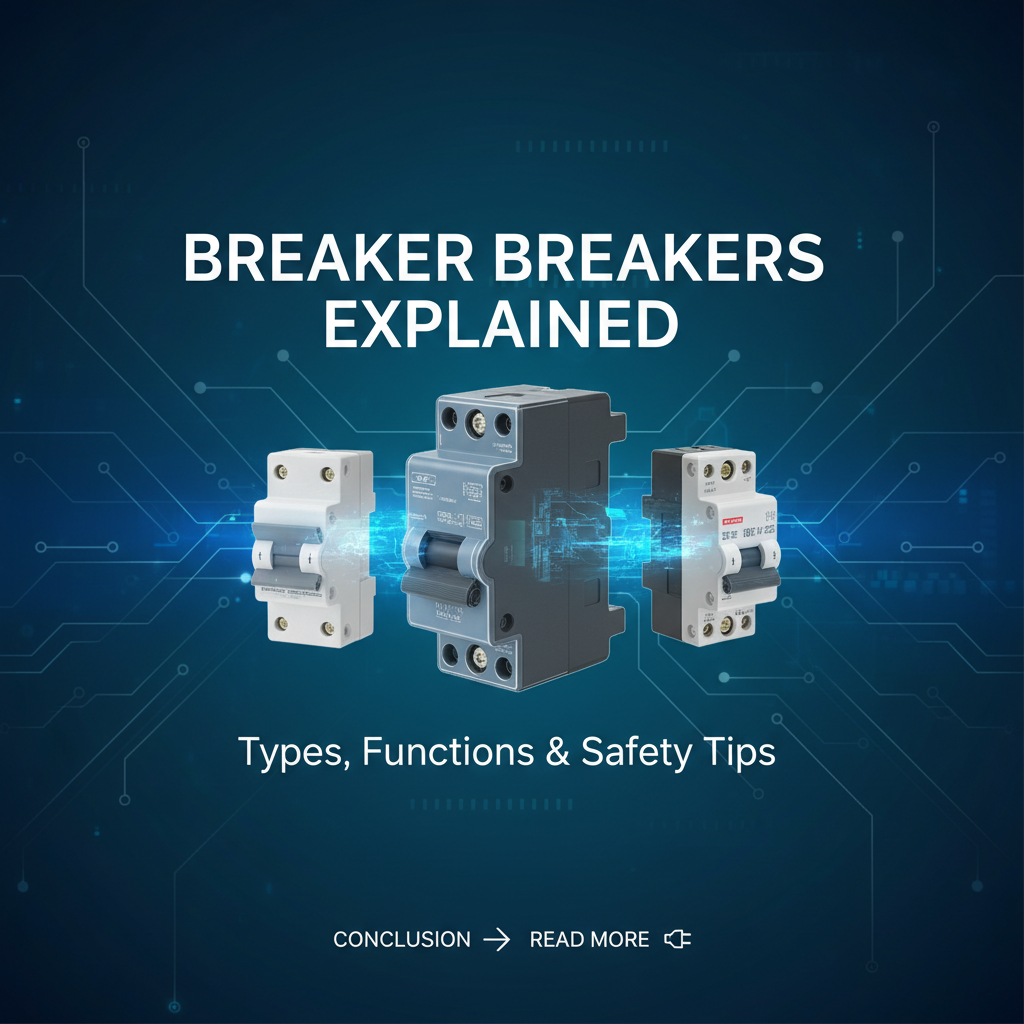
Breaker Breakers Explained: Types, Functions & Safety Tips


In the intricate dance of modern living and industrial operation, electricity serves as the lifeblood, powering everything from the smallest household appliance to the largest manufacturing plant. Yet, this invisible force, for all its indispensable utility, harbors inherent dangers. Faults, surges, and overloads can not only damage invaluable equipment but, more critically, pose severe risks of electric shock, fire, and catastrophic system failures. Standing as the silent, ever-vigilant guardians against these perils are "breaker breakers" – more commonly known as circuit breakers. These devices are fundamental to the safety and reliability of any electrical system, diligently monitoring the flow of current and springing into action the instant an anomaly is detected, effectively severing the connection and protecting both the infrastructure and, most importantly, human lives.
This comprehensive exploration delves into the sophisticated world of circuit breakers, peeling back the layers of their design, operation, and application. We will traverse the historical landscape that led to their development, dissect the core components that enable their protective functions, and meticulously examine the diverse array of types, each engineered for specific environments and threat profiles. From the humble miniature circuit breaker safeguarding a home outlet to the colossal SF6 breakers managing vast power grids, understanding these devices is not merely a technical exercise but a crucial step towards fostering a safer and more resilient electrical future. Furthermore, we will delve into critical aspects such as installation, maintenance, troubleshooting, and paramount safety protocols, ensuring that both professionals and the curious alike gain a profound appreciation for these essential unsung heroes of our electrified world.
The Fundamental Imperative: Why We Need Circuit Breakers
The necessity of circuit breakers stems directly from the inherent characteristics and potential hazards of electricity. An electrical circuit is designed to carry a specific amount of current safely. When this current significantly exceeds its rated capacity, a condition known as an "overcurrent" occurs. Overcurrents can manifest in two primary forms:
- Overload: This happens when too many electrical devices are connected to a single circuit, drawing more current than the wiring is designed to handle. Imagine plugging in a space heater, a microwave, and a toaster into the same kitchen outlet simultaneously. The wires in the wall, designed for a certain amperage, become excessively hot. This sustained overheating can degrade wire insulation, leading to short circuits or, more dangerously, igniting surrounding flammable materials, culminating in electrical fires. The danger here is insidious, often building slowly until a critical temperature is reached.
- Short Circuit: This is a more abrupt and catastrophic event. A short circuit occurs when there is an unintended, low-resistance path between two conductors, allowing current to bypass the normal load. This can happen due to damaged wire insulation, loose connections, or a faulty appliance. In a short circuit, the resistance in the circuit drops dramatically, causing an almost instantaneous surge of extremely high current – sometimes thousands of amperes. This sudden, massive current surge generates intense heat and powerful magnetic forces. The heat can instantly vaporize conductors, melt insulation, and create an arc flash, which is a highly energetic discharge of light and heat that can cause severe burns, ignite fires, and even lead to explosions.
Before the advent of circuit breakers, fuses served a similar protective role. A fuse contains a thin wire or filament designed to melt and break the circuit when an overcurrent flows through it. While effective, fuses are single-use devices; once they "blow," they must be replaced. This can be inconvenient, costly, and, in some cases, lead to dangerous practices where individuals might try to bypass a blown fuse with an improper conductor, negating the protection entirely. The evolution from fuses to resettable circuit breakers marked a significant leap in electrical safety and convenience, offering a more robust, reliable, and user-friendly solution to fault protection. Circuit breakers act as sophisticated gateways, constantly monitoring the electrical flow, and are engineered to open that gateway with precision and speed the moment a dangerous condition threatens the integrity of the electrical system or the safety of its users.
Anatomy of Protection: Core Components of a Circuit Breaker
Despite the vast array of types and sizes, most circuit breakers share fundamental components that collectively enable their protective function. Understanding these parts is crucial to grasping how these devices operate and maintain electrical safety.
- Contacts (Fixed and Moving): At the heart of any circuit breaker are the electrical contacts. When the breaker is in the "ON" position, these contacts are closed, allowing current to flow unimpeded through the circuit. When a fault is detected, the operating mechanism forces the moving contact away from the fixed contact, creating an air gap (or gap in another medium) and interrupting the current flow. These contacts are typically made from highly conductive and arc-resistant materials, often alloys of silver, tungsten, or copper, to withstand the extreme temperatures and forces generated during arc interruption. Their design is critical for both efficient current transfer and rapid, reliable separation under fault conditions.
- Arc Extinguishing Mechanism: When the contacts separate under load, especially during a short circuit, the current doesn't just stop instantly. Instead, an electrical arc forms across the gap between the separating contacts. This arc is a superheated plasma that can sustain the current flow, rapidly erode the contacts, and generate immense heat, potentially damaging the breaker or causing a fire. The arc extinguishing mechanism is arguably the most vital part of a circuit breaker. Different types of breakers employ various methods to cool, elongate, and ultimately extinguish this arc:
- Arc Chutes/Splitters: Common in MCBs and MCCBs, these consist of a series of metal plates that divide the single arc into smaller, less powerful arcs, which are then rapidly cooled and extinguished.
- Dielectric Medium: Larger breakers utilize insulating mediums like air (ACBs), vacuum (VCBs), or Sulfur Hexafluoride (SF6) gas (SF6 breakers) to rapidly deionize the arc path and prevent restriking.
- Oil: Historically used in Oil Circuit Breakers (OCBs), oil dissipates heat from the arc and helps to extinguish it, though this method is largely phased out due to fire risk and environmental concerns.
- Operating Mechanism: This is the mechanical linkage that facilitates the opening and closing of the contacts. It can be manually operated (a lever or toggle switch on smaller breakers) or automatically tripped by the trip unit. Crucially, the operating mechanism usually incorporates a "trip-free" feature. This means that even if the operating handle is held in the "ON" position, the breaker contacts will still open if a fault occurs. This prevents an operator from inadvertently holding the contacts closed against a fault, which could have catastrophic consequences. The mechanism stores energy (e.g., in springs) to ensure rapid contact separation, which is vital for effective arc quenching.
- Trip Unit: This is the "brain" of the circuit breaker, responsible for detecting abnormal conditions and initiating the tripping sequence. Trip units come in various forms, each designed to respond to different types of faults:
- Thermal Trip Unit: Consists of a bimetallic strip or element. When an overcurrent flows for an extended period, the strip heats up and bends, eventually releasing the latch that holds the contacts closed. This mechanism provides "inverse time" protection, meaning the higher the overcurrent, the faster it trips. It primarily protects against sustained overloads.
- Magnetic Trip Unit: Comprises an electromagnet coil. When a short circuit occurs, the extremely high current instantly creates a powerful magnetic field that attracts an armature, directly and quickly releasing the latch. This provides "instantaneous" protection against severe short circuits.
- Electronic Trip Unit: Found in larger, more sophisticated breakers, these units use microprocessors to sense current via current transformers (CTs). They offer highly accurate, adjustable, and customizable protection characteristics, including long-time, short-time, instantaneous, and ground fault protection. They can also provide data logging, communication capabilities, and more complex logic for selective coordination.
- Residual Current (Ground Fault) Trip Unit: Specifically designed to detect small imbalances in current between the live and neutral conductors, indicating a leakage current to ground (a ground fault), which is a common cause of electric shock.
- Arc Fault Trip Unit: Utilizes advanced algorithms to recognize the unique electrical signatures of dangerous arcing faults that are too low in current to be detected by standard overcurrent protection.
- Enclosure/Molded Case: This housing provides insulation for the internal components, protects them from environmental factors (dust, moisture, physical impact), and offers a safe interface for human interaction. For MCCBs, the "molded case" itself provides structural integrity and isolation. The enclosure materials are typically robust, non-conductive plastics or composites, designed to withstand the internal pressures and heat generated during a fault.
These components, meticulously engineered and precisely calibrated, work in concert to form a reliable and critical safety device. Each part plays a vital role in ensuring that when an electrical anomaly threatens, the circuit breaker acts decisively and effectively to prevent damage and protect life.
The Principles of Operation: How Circuit Breakers Protect
The operation of a circuit breaker, while appearing instantaneous in a fault scenario, is a sequence of precisely engineered steps. This sequence ensures that the electrical supply is interrupted safely and effectively, mitigating potential hazards.
- Normal Operation: Unimpeded Current Flow Under normal conditions, when a circuit breaker is "ON," its fixed and moving contacts are firmly pressed together, creating a low-resistance path for electrical current. Electricity flows from the power source, through the breaker's contacts and trip unit, and out to the connected load (e.g., lights, appliances). The trip unit continuously monitors this current. If the current remains within the breaker's rated capacity, it passes through without incident, and the breaker remains in its closed state, functioning as a simple switch. The materials used in the current path within the breaker, particularly the contacts, are chosen for their excellent conductivity and minimal resistance to prevent unnecessary heat generation.
- Fault Detection: Sensing Anomalies The moment an abnormal condition arises – either an overload or a short circuit – the current flowing through the breaker deviates significantly from its normal operating range.
- Overload Detection: In the case of an overload, the current exceeds the breaker's continuous rating but typically not by a massive factor. This sustained excess current causes the thermal element (e.g., bimetallic strip) within the trip unit to heat up. Because the heating and bending of the bimetallic strip take time, this mechanism provides "inverse time" protection: the greater the overload current, the faster the strip heats and trips; a smaller overload takes longer to trip. This delay prevents nuisance tripping from momentary current surges that are not dangerous.
- Short Circuit Detection: During a short circuit, the current surges to extremely high levels almost instantaneously. The magnetic element within the trip unit (a coil with an armature) reacts immediately to this massive current. The strong magnetic field generated overcomes the restraining force, causing the armature to move and trip the breaker without any intentional delay. This "instantaneous" action is crucial for preventing severe damage from high fault currents.
- Other Faults (Ground Faults, Arc Faults): Specialized trip units (RCD/GFCI, AFCI) employ more sophisticated detection methods. RCDs constantly compare the current flowing on the live wire with the current returning on the neutral wire. If an imbalance is detected (meaning current is leaking to ground), the trip unit activates. AFCIs use advanced electronics to analyze the current waveform for unique characteristics indicative of dangerous arcing faults, distinguishing them from normal operational arcs (like those from a motor starting).
- Interruption: Breaking the Circuit Once the trip unit detects a fault and determines that the protection threshold has been crossed, it releases a latch within the operating mechanism. This release allows stored energy, typically in compressed springs, to rapidly separate the fixed and moving contacts. The speed of this separation is critical. A slow break would prolong the arcing, causing more damage. The "trip-free" mechanism ensures that even if the operator holds the handle "ON," the internal components still separate, guaranteeing protection. This swift disconnection physically opens the circuit, halting the flow of electricity to the faulty section.
- Arc Quenching: The Critical Challenge The most challenging and potentially dangerous phase of fault interruption is arc quenching. As the contacts separate, the current, under high voltage, attempts to jump the gap, creating an intensely hot and luminous electrical arc. This arc consists of ionized gas (plasma) which is highly conductive and can sustain the current, continuing the fault. The arc quenching mechanism must rapidly extinguish this arc:
- Arc Chutes: In smaller breakers, arc chutes split the arc into multiple smaller arcs, elongating them and exposing them to cooling metal plates. This process rapidly cools and deionizes the plasma, increasing its resistance until the current can no longer be sustained.
- Dielectric Mediums: In larger breakers, the contacts separate within a highly effective insulating medium. In Vacuum Circuit Breakers, the vacuum prevents ionization. In SF6 breakers, the SF6 gas, with its excellent dielectric strength and arc-quenching properties, rapidly cools and absorbs free electrons from the arc. In Air Circuit Breakers, a blast of compressed air (or the natural convection/magnetic forces) elongates and cools the arc. The goal in all cases is to deionize the gap between the contacts so quickly that the arc cannot re-ignite after the AC current waveform naturally passes through zero.
- Resetting/Reclosing: After the fault has been cleared and the breaker has tripped, it remains in the "OFF" (or tripped) position. Before re-energizing the circuit, it is crucial to investigate and rectify the cause of the fault. Once the underlying issue is resolved, the breaker can be manually reset and switched back to the "ON" position. This involves first pushing the handle fully to the "OFF" position (if it hasn't latched there already after tripping), then pushing it to "ON." This resets the internal trip mechanism and re-closes the contacts, restoring power to the circuit. Attempting to immediately reset a breaker without addressing the fault will likely result in it tripping again instantly, indicating the persistence of the dangerous condition.
This methodical operation ensures that circuit breakers provide robust and reliable protection, preventing damage to electrical infrastructure and safeguarding lives from the hazards of uncontrolled electrical energy. The precise coordination of these components underpins the pervasive safety of modern electrical systems, effectively serving as an intelligent gateway for power, ensuring that only safe current is allowed to pass.
A Taxonomy of Protectors: Diverse Types of Circuit Breakers
The world of circuit breakers is far from monolithic. Different applications, voltage levels, current ratings, and fault characteristics necessitate a diverse array of designs. Each type is meticulously engineered to provide optimal protection within its specific domain.
Miniature Circuit Breakers (MCBs)
Description: MCBs are perhaps the most common type of circuit breaker, ubiquitous in residential, commercial, and light industrial settings. They are compact, modular devices designed for low voltage applications (typically up to 400V) and lower current ratings (typically 1A to 125A). They replace the older generation of fuses in most modern installations due to their resettable nature.
Applications: * Residential Buildings: Protecting individual circuits for lighting, power outlets, and major appliances. * Small Commercial Buildings: Offices, retail stores, providing overcurrent protection for various electrical loads. * Light Industrial Equipment: Small machinery and workshops.
Thermal and Magnetic Trip Mechanisms: MCBs combine both thermal and magnetic trip mechanisms within a single unit: * Thermal Trip: A bimetallic strip heats up and bends in response to a prolonged overload, eventually tripping the breaker. This provides time-delayed protection against gradual overheating of wires. * Magnetic Trip: An electromagnet instantly reacts to a short-circuit current, quickly forcing the contacts apart. This provides instantaneous protection against severe faults.
Breaking Capacities and Trip Curves: MCBs have varying breaking capacities (Icn), typically ranging from 3kA to 10kA (kiloamperes), indicating the maximum fault current they can safely interrupt. More importantly, they are characterized by their "trip curve" or "characteristic," which defines how quickly they trip at different multiples of their rated current (In). Common trip curves, standardized by IEC 60898/60947-2, include: * Type B: Trips between 3 to 5 times In. Suitable for resistive or lightly inductive loads (e.g., lighting circuits, heating elements) where small current surges are expected. * Type C: Trips between 5 to 10 times In. The most common type, suitable for general-purpose circuits with moderate inductive loads (e.g., fluorescent lighting, small motors). * Type D: Trips between 10 to 20 times In. Used for highly inductive loads with high inrush currents (e.g., large motors, transformers, X-ray machines) where higher momentary surges are anticipated. * Type K: Trips between 8 to 12 times In. Similar to Type D but with a narrower band, specifically designed for motor protection to tolerate motor starting currents. * Type Z: Trips between 2 to 3 times In. Highly sensitive, suitable for protecting very sensitive electronic equipment (e.g., semiconductor devices) where even small overcurrents could cause damage.
Molded Case Circuit Breakers (MCCBs)
Description: MCCBs are larger and more robust than MCBs, designed for higher current ratings (from 10A up to 2500A) and higher breaking capacities (typically 10kA to 200kA). Their name derives from the fact that their operational components are encapsulated within a single, strong, molded composite case, providing insulation and mechanical support. They are suitable for low voltage applications (up to 1000V AC).
Applications: * Commercial and Industrial Main Distribution Panels: Protecting main feeders and large branch circuits. * Motor Control Centers: Providing protection for large industrial motors. * Generator Protection: Safeguarding output from generators. * Transformer Protection: Protecting the primary and secondary sides of distribution transformers.
Adjustable Trip Settings: A key advantage of MCCBs, especially the larger ones, is their adjustable trip units. Unlike MCBs with fixed trip characteristics, many MCCBs feature electronic trip units that allow for precise adjustment of: * Long-Time Delay (LTD): Sets the overload protection threshold and delay. * Short-Time Delay (STD): Sets the short-circuit protection threshold and a brief intentional delay for selective coordination. * Instantaneous (Inst): Sets the threshold for immediate tripping during severe short circuits. * Ground Fault (GF): Optional, for detecting earth leakage currents. This adjustability enables selective coordination, ensuring that only the breaker immediately upstream of a fault trips, isolating the problem without affecting other parts of the electrical system.
Air Circuit Breakers (ACBs)
Description: ACBs are high-current, low-voltage circuit breakers (up to 690V AC, typically 800A to 6300A, some up to 10,000A) found in heavy industrial and large commercial installations. They utilize air at atmospheric pressure as the arc quenching medium. Their construction is often open, allowing for maintenance and inspection of contacts and arc chutes.
Applications: * Main Incoming Switchgear: Primary protection for large industrial plants, data centers, and commercial buildings. * Generator and Transformer Output Protection: High current applications. * Bus-Tie Applications: Connecting different sections of a busbar.
Air as Arc Quenching Medium: When contacts separate, the arc is drawn into a series of arc chutes, similar to MCBs/MCCBs but on a much larger scale. Strong magnetic fields, generated by the fault current itself, help to drive and elongate the arc into the chutes. The cool, ambient air rapidly extinguishes the arc by deionization and cooling. Some ACBs might also use a "blast" of compressed air, though this is more characteristic of older designs or very high fault current ACBs. ACBs are known for their high breaking capacities (up to 150kA) and robust construction, often designed for frequent operation. They nearly always feature advanced electronic trip units, providing comprehensive, adjustable protection and communication capabilities.
Vacuum Circuit Breakers (VCBs)
Description: VCBs are the preferred choice for medium voltage applications (typically 1kV to 38kV). Their defining feature is the vacuum interrupter – a sealed ceramic or glass envelope containing the fixed and moving contacts, which operate in a high vacuum.
Applications: * Industrial Plants: Medium voltage motor control, feeder protection. * Utility Distribution Systems: Substations, reclosers on overhead lines. * Wind Turbines and Solar Farms: Protecting power generation components. * Arc Furnace Control: Applications requiring frequent switching.
Vacuum Interrupter Technology: The high vacuum within the interrupter provides an almost perfect dielectric medium. When the contacts separate, the arc plasma consists primarily of metal vapor from the contacts. Due to the absence of air molecules, there are no other particles to ionize. The metallic vapor rapidly condenses back onto the contacts and a surrounding shield, quickly deionizing the gap and extinguishing the arc. Advantages: * Compact Size: Vacuum interrupters are small. * Long Electrical Life: Contacts suffer minimal erosion. * Environmentally Friendly: No hazardous gases. * Maintenance-Free: Sealed for life, no external arc quenching medium to replace. * High Breaking Capacity: Very effective at interrupting high fault currents.
SF6 Circuit Breakers
Description: SF6 (Sulfur Hexafluoride) circuit breakers are primarily used for high voltage applications (from 33kV up to 800kV and beyond) in power transmission and distribution networks. SF6 gas is an extremely stable, non-flammable, and non-toxic (at room temperature) gas with exceptional dielectric and arc-quenching properties, far superior to air or oil.
Applications: * High Voltage Transmission Lines: Protecting critical sections of the national grid. * Major Substations: Main interrupters. * Power Plants: Generator main circuit breakers. * Busbar Protection: In large utility switchyards.
Sulfur Hexafluoride Gas as Arc Quenching Medium: There are two main designs: * Puffer Type: A piston compresses SF6 gas during contact separation, blasting it over the arc. * Self-Blast Type: The energy of the arc itself heats and expands the SF6 gas, creating a pressure differential that forces the gas through the arc, cooling and extinguishing it. Advantages: * Extremely High Breaking Capacity: Can interrupt enormous fault currents quickly. * Excellent Dielectric Strength: Provides superior insulation in a compact design. * Rapid Arc Quenching: Very effective at deionizing the arc. * Low Maintenance: SF6 gas does not degrade quickly in typical operation. Environmental Concerns: Despite its advantages, SF6 is a potent greenhouse gas, with a Global Warming Potential (GWP) approximately 23,500 times that of CO2 over a 100-year period. Strict regulations and efforts to reduce SF6 emissions and find alternative gases are ongoing.
Residual Current Devices (RCDs) / Ground Fault Circuit Interrupters (GFCIs)
Description: RCDs (European term) or GFCIs (North American term) are specialized protective devices designed primarily for personal protection against electric shock, as well as fire prevention from persistent earth faults. They detect small leakage currents to ground that standard overcurrent devices (MCBs/MCCBs) would typically miss. They do not provide overcurrent protection themselves, though combined units exist (RCBOs/GFCI breakers).
Applications: * Wet Locations: Bathrooms, kitchens, outdoor outlets where the risk of electric shock is higher. * Construction Sites: Protecting temporary power supplies. * Swimming Pools and Spas: Required by code for all associated circuits. * Medical Equipment: Some critical medical devices require RCD protection.
Principle of Operation (Current Imbalance Detection): An RCD continuously monitors the current flowing in the live conductor(s) and compares it with the current returning in the neutral conductor. In a healthy circuit, these currents should be equal (Kirchhoff's Current Law). If there is an imbalance, it means current is leaking to ground (e.g., through a person touching a faulty appliance). Even a small leakage current (typically 10mA, 30mA, or 100mA, depending on the application) is detected by a current transformer within the RCD. If the imbalance exceeds the trip threshold, the RCD rapidly trips, interrupting the supply within milliseconds, significantly reducing the risk of a fatal electric shock.
Types: * RCD/GFCI Outlets: Integrated into a receptacle, protecting anything plugged into it and downstream outlets. * RCD/GFCI Breakers: Replace standard MCBs/MCCBs in the distribution board, protecting an entire circuit. * RCBO (Residual Current Breaker with Overcurrent Protection): A combined device that offers both residual current protection and conventional overcurrent (thermal and magnetic) protection in a single unit.
Arc Fault Circuit Interrupters (AFCIs)
Description: AFCIs are another critical safety innovation, specifically designed to protect against arc faults, which are a leading cause of electrical fires. Unlike GFCIs which detect current leakage to ground, AFCIs detect dangerous electrical arcs that occur within damaged wiring, loose connections, or faulty equipment, even if the current levels are below the trip threshold of standard overcurrent protection.
Applications: * Residential Buildings: Increasingly mandated by electrical codes (e.g., NEC in North America) for bedroom circuits, and now often for almost all living areas, to protect against fires.
Principle of Operation (Detecting Unique Arc Signatures): AFCIs use sophisticated electronic circuitry and digital signal processing to analyze the electrical waveform on the circuit. They are programmed to recognize the unique, erratic patterns and 'noise' generated by a dangerous arc fault (e.g., series arcs, parallel arcs, ground arcs) and differentiate them from harmless arcs that occur during normal operation (e.g., when a switch is flipped, or a motor brushes spark). When a dangerous arc signature is detected, the AFCI trips almost instantly, preventing the arc from escalating into a fire. AFCIs are often combined with GFCI protection in single units (AFCI/GFCI breakers) for comprehensive safety.
Oil Circuit Breakers (OCBs)
Description: OCBs are a historical type of circuit breaker, largely superseded by VCBs and SF6 breakers due to their disadvantages. They utilized mineral oil as both the arc quenching and insulating medium.
Historical Context, Diminishing Use: OCBs were once common for medium and high voltage applications. However, their use has significantly declined due to several critical drawbacks.
Oil as Arc Quenching and Insulating Medium: When contacts separated in oil, the heat from the arc vaporized the oil, creating a bubble of hydrogen-rich gas. This gas, along with the cooling effect of the surrounding oil, helped to extinguish the arc. The oil also provided insulation between the contacts and the breaker's enclosure.
Disadvantages: * Fire Hazard: The mineral oil is flammable, posing a significant fire and explosion risk, especially during severe faults where oil could leak or ignite. * Maintenance Intensive: The oil degrades over time and with each operation, requiring frequent inspection, filtration, and replacement. * Environmental Concerns: Oil spills are a pollution risk. * Slow Operation: Compared to modern vacuum or SF6 breakers, OCBs were relatively slower in operation. * Large Footprint: Required significant space due to the large volume of oil.
While still found in some older installations, OCBs are rarely installed in new construction, with safer and more efficient alternatives now universally preferred.
This diverse range of circuit breaker types underscores the adaptive nature of electrical protection engineering, where each solution is tailored to the specific demands and hazards of its intended environment, providing an essential layer of safety across the entire spectrum of electrical power distribution.
Advanced Considerations: Trip Units and Their Intelligence
While the physical act of breaking a circuit is mechanical, the intelligence behind when and how to trip resides in the trip unit. Modern trip units, especially electronic ones, have transformed circuit breakers from simple overcurrent devices into sophisticated protective relays capable of intricate control and communication.
Thermal Trip Units: The Overload Watchdog
Mechanism: As discussed, thermal trip units rely on the principle of thermal expansion. A bimetallic strip, made of two different metals with differing coefficients of thermal expansion bonded together, is heated by the current flowing through it. When an overcurrent flows for an extended period, the strip heats up, causing one metal to expand more than the other, making the strip bend. This bending movement eventually trips a mechanical latch, opening the breaker contacts. Function: Thermal units primarily provide protection against sustained overloads. They exhibit an "inverse time" characteristic, meaning the greater the overload current, the faster the strip heats up and trips the breaker. Conversely, a smaller overload requires a longer duration to trip. This characteristic is crucial for protecting wiring and equipment from overheating due to prolonged excess current, but also allows for safe, momentary inrush currents (like motor starting) without nuisance tripping. Limitations: Their response time is inherently slower than magnetic trips, making them unsuitable for instantaneous short-circuit protection alone. They are also susceptible to ambient temperature changes, which can slightly affect their calibration.
Magnetic Trip Units: The Instantaneous Guardian
Mechanism: Magnetic trip units consist of an electromagnet coil through which the circuit current flows. Inside the coil, an armature (a movable piece of metal) is held in place by a spring or latch. When a short circuit occurs, the current surges dramatically, creating an extremely powerful magnetic field in the coil. This magnetic field instantly overcomes the restraining force, pulling the armature, which then quickly releases the breaker's main trip latch. Function: Magnetic units provide instantaneous protection against severe short circuits. Their response is almost immediate, typically within cycles of the AC waveform (e.g., 0.01-0.03 seconds), preventing the extremely high fault currents from causing extensive damage or an arc flash. They are essential for quickly clearing faults that pose immediate and severe threats. Sensitivity: The trip threshold for magnetic units is often fixed in smaller breakers (MCBs), typically 5-10 times the rated current. In larger MCCBs, this threshold may be adjustable, allowing for fine-tuning of the instantaneous trip setting.
Electronic Trip Units: The Apex of Protection and Control
Mechanism: Electronic trip units represent the cutting edge of circuit breaker technology. They incorporate current transformers (CTs) that precisely measure the current flowing through each phase. These current signals are then fed into a microprocessor-based unit that digitally processes the data. The unit continuously compares the measured current characteristics against a set of programmed protection curves and thresholds. Sophisticated Control and Adjustability: The true power of electronic trip units lies in their programmability and advanced features: * Long-Time Delay (LTD): Mimics thermal protection for overloads but with much greater accuracy and adjustability. Users can set the trip current (Ir) and the time delay for various overload magnitudes. * Short-Time Delay (STD): Provides delayed short-circuit protection. This delay (e.g., 0.1 to 0.5 seconds) is crucial for selective coordination (or discrimination). In a system with multiple breakers in series, an STD allows a downstream breaker closer to the fault to trip first, isolating the fault and keeping the rest of the system operational. If the downstream breaker fails or is too small, the upstream breaker will eventually trip after its short-time delay. * Instantaneous (Inst): Provides immediate protection for very high fault currents, typically above the short-time threshold. This ensures rapid clearing of catastrophic faults. The trip setting (Ii) is often adjustable. * Ground Fault (GF): Integrated ground fault protection (typically for phase-to-ground faults) can be precisely set for both current magnitude (Ig) and time delay (Tg), allowing for coordination with other ground fault devices. * Arc Flash Reduction: Some advanced electronic trip units include features like "maintenance mode" or "arc reduction systems." When activated, these settings dramatically lower the instantaneous trip threshold, causing the breaker to trip much faster during a fault, thereby reducing the incident energy of a potential arc flash during maintenance activities. * Harmonic Filtering: More advanced units can analyze current waveforms for harmonics, providing better protection in environments with non-linear loads.
Integration with Control Systems: Beyond protection, electronic trip units offer unparalleled connectivity and data capabilities. They often include communication ports (e.g., Modbus, Ethernet/IP, Profibus, IEC 61850) that allow them to interface with: * Building Management Systems (BMS): For remote monitoring of breaker status, load currents, and energy consumption. * Supervisory Control and Data Acquisition (SCADA) Systems: In industrial settings, for centralized control and data collection from numerous breakers. * Programmable Logic Controllers (PLCs): For integration into automated control sequences. * Energy Management Systems (EMS): Providing granular data for optimizing energy usage and identifying inefficiencies.
This connectivity transforms individual circuit breakers into intelligent nodes within a larger electrical platform, providing real-time data and enabling sophisticated protective and operational strategies. The ability to access this kind of data and control functionality often relies on the provision of an API (Application Programming Interface), allowing different software systems to seamlessly communicate with the breaker's trip unit and associated management platforms. This represents a significant shift from purely mechanical protection to an integrated, data-driven approach to electrical system management.
APIPark is a high-performance AI gateway that allows you to securely access the most comprehensive LLM APIs globally on the APIPark platform, including OpenAI, Anthropic, Mistral, Llama2, Google Gemini, and more.Try APIPark now! 👇👇👇
Ratings and Specifications: Decoding Circuit Breaker Labels
Every circuit breaker is marked with a series of ratings and specifications that define its operational limits and protective characteristics. Understanding these labels is fundamental for correct selection, installation, and ensuring safe and reliable electrical systems.
Rated Voltage (Vn or Ue)
Definition: The maximum voltage at which the circuit breaker is designed to operate continuously and safely interrupt a fault. Importance: Installing a breaker in a circuit with a voltage higher than its rating can lead to insulation breakdown, arcing, and failure to interrupt a fault, posing severe safety risks. Conversely, using a breaker with a much higher voltage rating than necessary is generally safe but might be an unnecessary cost. Typical Values: * Residential/Light Commercial: 120V, 240V, 208V, 277V, 480V (AC) * Industrial/Distribution: 480V, 600V, 690V, 4.16kV, 13.8kV, 34.5kV (AC) * High Voltage Transmission: 69kV, 138kV, 230kV, 500kV, 765kV (AC)
Rated Current (In or Iu)
Definition: The maximum continuous current that the circuit breaker is designed to carry without tripping under specified ambient temperature conditions. This is the current for which the thermal protection element is calibrated. Importance: The rated current of a breaker must match or be appropriately sized for the continuous current rating of the circuit's wiring and the connected load. Oversizing the breaker means the wiring could overheat before the breaker trips, leading to fire. Undersizing leads to nuisance tripping. Typical Values: Common ratings include 15A, 20A, 30A, 50A, 60A, 100A, 200A, 400A, and up to several thousand amperes for main distribution breakers.
Breaking Capacity (Icu or Icn for IEC, AIC for UL)
Definition: The maximum prospective fault current (short-circuit current) that the circuit breaker is capable of safely interrupting without sustaining damage to itself or the surrounding switchgear. This is a critical safety rating. Importance: The breaking capacity of a circuit breaker must be equal to or greater than the maximum available short-circuit current at its point of installation. If a fault occurs and the available current exceeds the breaker's breaking capacity, the breaker could fail explosively, leading to severe damage, arc flash incidents, and potential injuries. This value is determined by the utility's transformer size and impedance, and the length/gauge of the feeder cables. Values (IEC Standard): * Icu (Ultimate Breaking Capacity): The maximum current the breaker can interrupt once without being expected to carry current again. It might require inspection or replacement after clearing such a fault. * Ics (Service Breaking Capacity): A percentage of Icu (e.g., 25%, 50%, 75%, 100% Icu) that the breaker can interrupt multiple times while remaining fully operational. This is a more realistic operational rating. Values (UL Standard): * AIC (Amperes Interrupting Capacity): Similar to Icu, it's the maximum short-circuit current a breaker can interrupt at its rated voltage. Common AIC ratings for residential breakers are 10kA (10,000A), while industrial breakers can be 35kA, 65kA, 100kA, or even 200kA.
Trip Curve/Characteristic
Definition: A graphical representation or alphanumeric designation (e.g., Type B, C, D for MCBs) that describes how quickly a circuit breaker will trip at different multiples of its rated current. It illustrates the inverse time (overload) and instantaneous (short-circuit) response. Importance: Selecting the correct trip curve is vital for protecting specific types of loads and for achieving selective coordination. For example, a Type C MCB is suitable for general-purpose inductive loads, while a Type D would be chosen for motors with high inrush currents to prevent nuisance tripping. For electronic trip units, the curves can be finely adjusted.
Poles
Definition: The number of independent current paths or phases that the circuit breaker simultaneously opens or closes. Importance: Dictates the type of circuit the breaker can protect. * Single-Pole: For single-phase circuits, interrupting only the live conductor. Common for lighting and general-purpose outlets in residential settings. * Double-Pole: For single-phase 240V circuits or multi-wire branch circuits (L1 & L2), interrupting both live conductors simultaneously. Used for large appliances like water heaters, dryers, or stoves. * Three-Pole: For three-phase circuits, interrupting all three live conductors simultaneously. Common in industrial and commercial applications for motors and three-phase distribution. * Four-Pole: For three-phase systems with a switched neutral (e.g., TN-S or TT systems with RCD protection on all poles, including neutral). Interrupts all three phases and the neutral.
Frequency
Definition: The AC line frequency at which the circuit breaker is designed to operate. Importance: Most breakers are designed for 50 Hz or 60 Hz. While many are dual-rated, it's important to verify. Operation at an incorrect frequency can affect the performance of magnetic trip units and other frequency-dependent components.
Other Important Specifications:
- Auxiliary Contacts: Contacts that indicate the breaker's status (ON/OFF/TRIPPED) to a remote system.
- Shunt Trip: An optional coil that allows the breaker to be tripped remotely by an external electrical signal.
- Under-voltage Trip: An optional coil that trips the breaker if the supply voltage drops below a preset level.
- Mechanical and Electrical Endurance: The number of operations (make/break cycles) the breaker can perform reliably, both mechanically (without current) and electrically (interrupting current).
- Standards Compliance: Indication of compliance with relevant national or international standards (e.g., IEC 60898, IEC 60947-2, UL 489, NEMA).
Understanding these detailed specifications is paramount for ensuring that the chosen circuit breaker provides optimal protection, complies with safety regulations, and integrates effectively into its intended electrical environment. This meticulous attention to detail is what defines a robust electrical safety platform.
Installation and Maintenance: Ensuring Continuous Reliability
The effectiveness of any circuit breaker relies not only on its inherent design but equally on its correct installation and diligent, routine maintenance. Neglecting these aspects can compromise safety, lead to premature failure, and result in costly downtime or, worse, dangerous incidents.
Proper Selection Based on Load and Fault Current
The journey to reliable electrical protection begins with accurate selection. This involves several critical steps: 1. Determine Load Current: Calculate the continuous operating current of the circuit, including all connected loads. For motors, consider the full-load current (FLA) and starting current characteristics. For circuits with non-linear loads, consider harmonic content. 2. Match Wire Gauge: The selected breaker's rated current (In) must be appropriately sized for the gauge (cross-sectional area) of the conductors it is protecting. The breaker must trip before the wire can overheat to a dangerous temperature. Electrical codes provide tables correlating wire size with maximum ampacity. Never oversize a breaker relative to the wire gauge. 3. Calculate Available Short-Circuit Current: This is perhaps the most critical calculation. An electrical engineer or qualified technician must determine the maximum prospective short-circuit current at the point of installation. This depends on the utility transformer's characteristics, the impedance of feeder cables, and other factors. 4. Verify Breaking Capacity: The chosen breaker's breaking capacity (Icu/AIC) must be equal to or greater than the calculated available short-circuit current. This ensures the breaker can safely interrupt the largest potential fault without failing explosively. 5. Consider Voltage and System Type: Ensure the breaker's rated voltage matches the system voltage (e.g., 240V, 480V). Select the correct number of poles (single, double, triple, or four-pole) for the circuit type (single-phase, three-phase, switched neutral). 6. Account for Environmental Factors: For harsh environments (e.g., dusty, corrosive, high humidity, explosive atmospheres), select breakers with appropriate enclosures (NEMA ratings, IP ratings) and internal components designed for such conditions. 7. Selective Coordination: In multi-level distribution systems, breakers must be coordinated. This means that if a fault occurs, only the breaker closest to the fault trips, leaving upstream breakers to continue supplying power to healthy parts of the system. This often involves careful selection of trip curves for MCBs or precise adjustment of electronic trip unit settings (long-time, short-time, instantaneous, ground fault delays) for MCCBs and ACBs.
Adherence to Wiring Codes (NEC, IEC)
Strict adherence to national and international electrical wiring codes (such as the National Electrical Code (NEC) in North America, or IEC 60364 series globally, alongside local regulations) is non-negotiable. These codes specify: * Mounting Requirements: How breakers must be mounted in panels, enclosures, and switchgear. * Enclosure Requirements: The type of enclosure needed for different environments. * Wire Sizing: Correct conductor sizing for various load types and overcurrent protection. * Protection Requirements: Where specific types of protection are mandatory (e.g., GFCIs in wet locations, AFCIs in bedrooms). * Working Clearances: Safe distances around electrical equipment for operation and maintenance. * Labeling and Documentation: Proper identification of circuits and protective devices. Violating these codes not only creates unsafe conditions but can also lead to legal liabilities and insurance issues.
Mounting and Torque Specifications
- Secure Mounting: Breakers must be securely mounted in their panels or switchgear according to manufacturer instructions. Loose mounting can lead to poor electrical connections, overheating, and mechanical stress on the breaker.
- Proper Torque: All electrical connections (wire terminals, busbar connections) must be tightened to the manufacturer's specified torque values using a calibrated torque wrench. Under-torqued connections lead to high resistance, heat buildup, and potential fire hazards. Over-torqued connections can strip threads, damage terminals, or deform conductors, also leading to poor contact and overheating.
Regular Inspection and Testing
Scheduled maintenance is paramount for ensuring the long-term reliability and functionality of circuit breakers. This is not a "set it and forget it" component. 1. Visual Inspection (Regular): * Check for signs of overheating: discolored insulation, charred terminals, melted plastic. * Look for loose connections, frayed wires, or damaged insulation. * Inspect for dust, dirt, moisture, or corrosion inside enclosures. * Ensure all labels are legible and circuits are correctly identified. * Verify operating handle is in the correct position (ON/OFF/TRIPPED). 2. Thermal Scanning (Annual/Bi-Annual): * Using an infrared camera, scan breakers and connections under load to identify hot spots. Elevated temperatures indicate high resistance connections or overloaded circuits. Early detection allows for corrective action before failure. 3. Insulation Resistance Tests (Periodic): * Using a megohmmeter, test the insulation integrity between phases and to ground. Degradation of insulation can indicate moisture ingress, contamination, or aging, leading to short circuits or ground faults. 4. Contact Resistance Tests (Periodic): * Using a micro-ohmmeter, measure the resistance across the main contacts of the breaker. High contact resistance can indicate pitted contacts, loose connections, or mechanical issues, leading to overheating and reduced current-carrying capacity. 5. Breaker Exercising (Annual/Bi-Annual): * For larger breakers (MCCBs, ACBs, VCBs), manually open and close them a few times to ensure the operating mechanism moves freely. Over time, mechanisms can seize due to lack of use, dust, or lubricant degradation. This ensures the breaker can physically operate when needed. 6. Trip Unit Testing (Every 3-5 years or per manufacturer spec): * Primary Injection Testing: High current is injected through the main poles of the breaker to verify the time-current characteristics of the trip unit. This confirms the breaker will trip at the correct current and time. * Secondary Injection Testing: For electronic trip units, current is injected directly into the current transformer (CT) inputs of the trip unit. This verifies the electronic logic, settings, and communication functions without requiring high currents through the main contacts. This is crucial for checking selective coordination settings. 7. SF6 Gas Monitoring (For SF6 Breakers): * Regularly monitor SF6 gas pressure to detect leaks and ensure sufficient gas for arc quenching and insulation. 8. Vacuum Interrupter Integrity (For VCBs): * While sealed, tests like contact resistance, and sometimes specific vacuum interrupter tests (like withstand voltage tests), can verify integrity.
Maintenance intervals and specific tests will vary depending on the breaker type, application, operating environment, and manufacturer recommendations. A robust preventative maintenance program, based on IEEE, NETA, or manufacturer guidelines, is essential for ensuring the continued reliability and safety of the entire electrical distribution platform. Detailed records of all inspections, tests, and repairs should be meticulously maintained for compliance and historical analysis.
Troubleshooting Common Breaker Issues
Even with proper installation and maintenance, circuit breakers can occasionally exhibit issues. Understanding common problems and their potential causes is essential for effective troubleshooting and ensuring continued electrical safety.
Nuisance Tripping
This is one of the most frequent complaints and refers to a breaker tripping without an apparent, easily identifiable fault. It can be frustrating but almost always points to an underlying issue that needs investigation.
1. Overloaded Circuits: * Symptom: Breaker trips after a period of operation, especially when multiple appliances are used simultaneously. It often trips with a warm handle. * Cause: The total current drawn by all connected devices exceeds the breaker's rated current (In). This could be due to adding new appliances, using high-power devices on a low-amp circuit, or an undersized breaker for the actual load. * Troubleshooting: * Unplug all devices from the circuit. Reset the breaker. If it holds, plug devices back in one by one until it trips again, identifying the culprit. * Calculate the total wattage/amperage of devices on the circuit. Compare it to the breaker's rating. * Solution: Redistribute loads to other circuits, upgrade the circuit (heavier gauge wire and higher rated breaker, if feasible and within panel capacity), or add new dedicated circuits for high-power appliances.
2. Ground Faults: * Symptom: A GFCI/RCD breaker (or outlet) trips suddenly, often without warning, even with light loads. It's particularly common in wet areas or when an appliance is used outdoors. * Cause: A small amount of current is leaking from the live conductor to ground (earth). This could be due to damaged appliance wiring, faulty insulation in a device, water ingress, or even a person making accidental contact with a live part. The current is too low to trip a standard overcurrent breaker but is detected by the GFCI/RCD. * Troubleshooting: * Unplug all devices connected to the GFCI/RCD protected circuit. Reset the breaker. If it holds, plug devices back in one by one. If it trips with a specific device, that device is faulty. * Inspect extension cords, outdoor lighting, and appliances for damage. * If no appliance is found, there might be a wiring fault (e.g., pinched wire, loose neutral-to-ground connection) within the circuit itself. This requires an electrician to trace. * Solution: Repair or replace faulty appliances/cords. Address wiring issues.
3. Arc Faults: * Symptom: An AFCI breaker trips, often unpredictably, and might be accompanied by flickering lights or crackling sounds before tripping. * Cause: A dangerous electrical arc is occurring somewhere in the circuit. This could be due to loose wire connections at an outlet or switch, damaged insulation allowing two wires to occasionally touch, a pinched wire, or a faulty appliance cord. * Troubleshooting: * Unplug all devices. Reset the AFCI. If it holds, plug devices back in one by one. * Carefully inspect outlets, switches, and junction boxes for loose connections. (Ensure power is off before inspecting.) * Look for signs of damage to appliance cords or internal wiring. * Solution: Tighten loose connections, repair or replace damaged wiring/appliances. If the fault persists and no external cause is found, an electrician may need to use specialized AFCI testers or diagnostic tools.
4. Nuisance Magnetic Trips: * Symptom: Breaker trips instantly upon startup of a specific appliance (e.g., motor, transformer) even if the continuous current is within limits. * Cause: The appliance has a high "inrush current" when it first starts up. This momentary surge, while not an overload, is high enough to trigger the instantaneous magnetic trip of a standard breaker. * Troubleshooting: * Observe if the tripping consistently occurs during the startup of a specific motor or inductive load. * Solution: Replace the breaker with one having a higher instantaneous trip setting (e.g., a Type D or K MCB instead of a Type C) or a higher frame size MCCB with adjustable magnetic trip. This must be done carefully to ensure the wiring is still adequately protected.
Breaker Not Holding (Internal Fault, Worn Mechanism)
- Symptom: The breaker trips immediately upon being reset, even with no load connected, or it trips randomly without any apparent external cause.
- Cause: This usually indicates an internal fault within the breaker itself, such as a worn or damaged trip mechanism, a sticking bimetallic strip, or a short circuit within the breaker's own internal wiring. It could also be a persistent, severe fault on the circuit that is tripping it instantaneously.
- Troubleshooting:
- Disconnect all loads from the circuit at the panel (if possible, by removing the wires from the load side of the breaker) and try to reset the breaker. If it still trips, the breaker itself is likely faulty.
- If the breaker holds with no load, reconnect the circuit wires. If it trips immediately, there is a hard short circuit on the wiring.
- Solution: Replace the faulty breaker. If a wiring fault is suspected, an electrician must locate and repair it.
Breaker Not Tripping (Dangerous Failure)
- Symptom: An obvious overload (e.g., glowing wires, burning smell) or a clear short circuit occurs, but the breaker does not trip.
- Cause: This is an extremely dangerous condition, indicating a critical failure of the breaker's protective mechanism. Causes include:
- Worn or Damaged Trip Unit: The thermal or magnetic elements are not functioning correctly.
- Stuck Mechanism: The internal latching mechanism is seized or damaged, preventing the contacts from opening.
- Bypassed Protection: Deliberate (and illegal/dangerous) modification or accidental damage to the trip unit.
- Incorrect Installation: Improper wiring that bypasses the trip unit.
- Troubleshooting:
- Immediately disconnect power to the affected circuit from the main disconnect or utility if the breaker is failing to operate during a fault.
- Visually inspect the breaker for any signs of damage or modification.
- Solution: The breaker is compromised and must be replaced immediately by a qualified electrician. This situation demands urgent attention as it leaves the circuit completely unprotected.
Troubleshooting circuit breakers requires a methodical approach, a healthy respect for electricity, and, for anything beyond simple appliance-level checks, the expertise of a qualified electrician. Always prioritize safety, and when in doubt, call a professional.
Safety First: Essential Practices Around Circuit Breakers
Working with electricity, particularly around circuit breakers and electrical panels, demands an unwavering commitment to safety. Disregarding established protocols can lead to severe injury, electrocution, arc flash burns, or fires. Prioritizing safety through education and adherence to best practices is paramount for everyone, from homeowners to seasoned industrial electricians.
1. Always Treat Circuits as Live
The golden rule of electrical safety: assume all circuits are live until proven otherwise. Even if a breaker is in the "OFF" position, never assume the circuit is de-energized without verifying it with a known-good voltage tester. Breakers can fail, or circuits can be mislabeled. This mindset cultivates caution and prevents complacency.
2. Proper Lockout/Tagout Procedures (LOTO)
For any maintenance, repair, or installation work on electrical equipment in industrial and commercial settings, Lockout/Tagout (LOTO) is a non-negotiable safety procedure. * Lockout: Physically locking the circuit breaker (or disconnect switch) in the "OFF" position using a dedicated lock. * Tagout: Attaching a tag to the locked-out device, clearly stating who applied the lock, why, and when. Purpose: LOTO prevents accidental re-energization of the circuit by another person while work is being performed, safeguarding the worker from unexpected startup or release of hazardous energy. This procedure is legally mandated in many jurisdictions (e.g., OSHA in the US).
3. Using Appropriate Personal Protective Equipment (PPE)
Depending on the task and the potential hazard, various types of PPE are essential: * Insulated Gloves: Rated for the voltage of the circuit, providing critical protection against electric shock. * Safety Glasses/Face Shield: Protect eyes and face from arc flash, sparks, and flying debris. * Arc-Rated Clothing: Specifically designed to withstand the intense heat of an arc flash, preventing severe burns and ignition of clothing. * Insulated Tools: Tools with handles rated to prevent current conduction. * Dielectric Footwear: Non-conductive shoes or boots. * Hard Hat: For head protection. The specific level of PPE required is determined by an Arc Flash Risk Assessment, which calculates the incident energy at the point of work. Never skimp on PPE.
4. Avoiding Modifications or Overrides
Circuit breakers are precisely engineered safety devices. Any attempt to modify, bypass, or override their protective mechanisms is extremely dangerous and strictly forbidden: * "Cheating" a breaker: Never attempt to tape down a tripping breaker, insert coins or metal objects to bypass its internal mechanism, or replace it with a higher-rated breaker without ensuring the wiring can handle the increased current. * Improper repairs: Do not attempt to repair a faulty breaker yourself unless you are a qualified and authorized professional. Faulty breakers must be replaced. These actions defeat the breaker's purpose, remove crucial protection, and create immediate fire and shock hazards.
5. Calling Qualified Electricians
For anything beyond resetting a tripped breaker after identifying a clear overload (and even then, if it repeatedly trips), always defer to qualified professionals: * Installation of new circuits or breakers. * Troubleshooting persistent tripping issues. * Repairing damaged wiring or equipment. * Performing maintenance or testing on electrical panels. * Any task requiring opening an electrical panel (unless specifically trained and authorized for the task at hand). Qualified electricians possess the necessary training, knowledge, experience, and tools to safely diagnose and rectify electrical problems, adhering to all applicable codes and safety standards. Their expertise is invaluable in preventing accidents.
6. Understanding the Risks: Shock, Arc Flash, Fire
Awareness of the specific dangers associated with electricity is a powerful motivator for safety: * Electric Shock: Occurs when current passes through the body. Effects can range from a tingling sensation to severe burns, muscle contractions (inability to let go), cardiac arrest, and death. Even low voltages can be fatal under certain conditions. * Arc Flash: A sudden, uncontrolled release of electrical energy when a fault creates an arc through the air. It produces extreme heat (up to 35,000°F), intense light, a pressure wave (blast), and molten metal spray. Arc flashes can cause severe, often fatal, third-degree burns, concussions, hearing loss, and other catastrophic injuries, even without direct electrical contact. * Fire: Overloads, short circuits, and arc faults can generate enough heat to ignite nearby flammable materials, leading to devastating electrical fires. Damaged insulation, loose connections, and faulty equipment are common culprits.
Table 1: Key Electrical Hazards and Preventive Measures
| Hazard Type | Description | Primary Risk | Key Safety Measures |
|---|---|---|---|
| Electric Shock | Current passing through the human body. | Electrocution, burns, cardiac arrest | LOTO, Insulated Gloves, GFCI/RCD, Voltage Verification, Qualified Personnel |
| Arc Flash | Sudden release of intense heat, light, and pressure from an electrical arc. | Severe burns, blast injuries, blindness | Arc-Rated PPE, Arc Flash Analysis, Remote Racking, De-energized Work |
| Electrical Fire | Ignition of materials due to overheating, arcing, or short circuits. | Property damage, injury, fatality | Correct Breaker Sizing, AFCI, Proper Wiring, Regular Maintenance, Fire Extinguishers |
| Explosion | Rapid combustion or pressure buildup, often from arc flash in confined spaces or flammable gases. | Catastrophic damage, severe injury/fatality | Hazardous Location Equipment, Proper Venting, Arc-Resistant Switchgear |
Safety around circuit breakers and electrical systems is not just a recommendation; it's a critical imperative. By following these essential practices, understanding the risks, and respecting the power of electricity, we can significantly minimize the potential for accidents and ensure a safer environment for everyone.
The Future of Protection: Smart Breakers and Integrated Systems
The evolution of circuit breakers is far from complete. As our world becomes increasingly digitized and interconnected, so too are the demands on electrical protection systems. The advent of the Internet of Things (IoT), advanced sensing technologies, and sophisticated data analytics is ushering in an era of "smart breakers" and seamlessly integrated electrical infrastructure. These innovations promise to move beyond mere fault interruption to proactive monitoring, predictive maintenance, and optimized energy management.
IoT Integration, Remote Monitoring and Control
Smart breakers are equipped with embedded sensors and communication modules that allow them to connect to networks, often wirelessly. This IoT integration enables: * Real-time Data Acquisition: Smart breakers can continuously monitor crucial parameters such as current, voltage, power, energy consumption, temperature, and even power quality (e.g., harmonics). * Remote Monitoring: This data is transmitted to a central control system, a cloud platform, or a mobile application, allowing facilities managers or homeowners to monitor the status of their electrical system from anywhere in the world. Alerts can be sent instantly if a fault occurs or if parameters exceed predefined thresholds. * Remote Control: In some applications, smart breakers can be remotely tripped or reset. This is particularly valuable in industrial settings for rapid fault isolation or in smart homes for controlling specific circuits (e.g., turning off lights or appliances when nobody is home). * Diagnostic Information: Beyond simply tripping, smart breakers can provide detailed information about the nature of a fault (e.g., overload type, short-circuit current magnitude, ground fault location), significantly speeding up troubleshooting and root cause analysis.
Predictive Maintenance
One of the most transformative benefits of smart breakers is their role in predictive maintenance strategies. By continuously collecting and analyzing operational data, these devices can: * Detect Anomalies Early: Subtle changes in current patterns, slight increases in contact resistance, or deviations in temperature can signal an impending component failure long before it becomes critical. * Forecast Component Lifespan: By tracking operating cycles, fault interruptions, and environmental stresses, smart breakers can estimate the remaining useful life of internal components, allowing for scheduled replacement before failure. * Optimize Maintenance Schedules: Instead of time-based maintenance (which can be inefficient), maintenance can be performed precisely when needed, reducing downtime, labor costs, and the risk of unexpected outages. This shifts from reactive or preventive maintenance to a far more efficient predictive approach.
Energy Management and Optimization
Smart breakers are also powerful tools for energy efficiency and sustainability: * Granular Energy Consumption Data: They provide detailed insights into how much energy each circuit or connected load consumes. This data helps identify energy hogs, inefficient equipment, or periods of peak consumption. * Load Shedding: In systems with demand-side management, smart breakers can be programmed or remotely controlled to shed non-critical loads during peak demand periods, reducing energy costs and strain on the grid. * Power Quality Monitoring: By detecting issues like voltage sags, swells, or harmonics, smart breakers contribute to improving overall power quality, which can extend the life of equipment and prevent operational disruptions. * Integration with Renewables: In smart grids, breakers can intelligently manage power flow from intermittent renewable sources (like solar and wind), ensuring grid stability and optimizing energy utilization.
Modern industrial and smart building infrastructures are increasingly complex, relying on a vast network of interconnected devices and data streams. Effective management of these diverse systems, especially when integrating various AI and REST services, often requires robust API management solutions. For instance, platforms like APIPark, an open-source AI gateway and API management platform, help organizations manage, integrate, and deploy these services with ease. Such platforms become essential gateways for data flow, providing an Open Platform approach to system interaction, where different devices and software components communicate via an API. This facilitates everything from remote diagnostics of smart breakers to comprehensive energy management strategies, creating a seamless and intelligent operational platform. The ability to abstract and standardize these interactions through an API allows developers and system integrators to build more resilient, scalable, and intelligent electrical ecosystems, leveraging the data from smart breakers to drive operational efficiency and predictive insights.
The future of circuit breakers is undoubtedly smart, connected, and increasingly intelligent. As the foundational elements of electrical safety, their evolution into data-rich, communicative devices will play a pivotal role in creating more resilient, efficient, and sustainable power systems for the next generation.
Conclusion: Vigilance in the Electrical Age
The humble circuit breaker, often overlooked and housed behind a panel door, stands as one of the most critical safety innovations of the modern era. From its rudimentary origins to its contemporary manifestation as a sophisticated, intelligent device, its core mission has remained steadfast: to protect electrical circuits, equipment, and, most importantly, human lives from the destructive forces of overcurrents and faults. Our journey through the intricacies of breaker types, their operational principles, the essential components that define their function, and the rigorous demands of their installation and maintenance underscores the profound importance of these unsung guardians.
We have explored the precise mechanics of how a bimetallic strip bends under an overload, how a magnetic field instantaneously snaps contacts open during a short circuit, and how advanced arc-quenching mediums like vacuum or SF6 gas deftly extinguish a plasma arc that could otherwise wreak havoc. Understanding the nuanced differences between miniature circuit breakers safeguarding residential lights, robust molded case breakers protecting industrial machinery, and the specialized residual current and arc fault devices offering granular personal protection against shock and fire, highlights the adaptive engineering behind these devices. The myriad of ratings, from continuous current to ultimate breaking capacity, serves as a testament to the meticulous standards governing their deployment, ensuring that each breaker is precisely matched to its challenging role.
Furthermore, we've emphasized that the best-designed breaker is only as effective as its installation and ongoing care. Adherence to strict wiring codes, meticulous torqueing of connections, and comprehensive maintenance routines – including thermal scanning, trip unit testing, and component exercising – are not merely best practices; they are indispensable commandments for preserving safety and reliability. The troubleshooting guide provided offers a methodical approach to diagnosing common issues, reinforcing the need for informed action and, when necessary, the immediate intervention of qualified professionals.
As we look towards the horizon, the emergence of smart breakers, integrated with the Internet of Things, promises to elevate electrical protection to unprecedented levels of intelligence. These connected devices, capable of real-time monitoring, predictive maintenance, and seamless communication with advanced management platforms—often facilitated by an API like those managed by APIPark for a truly Open Platform approach—are transforming passive protection into an active, data-driven strategy for optimizing energy efficiency and enhancing system resilience.
In essence, the vigilance of the circuit breaker is a reflection of our collective commitment to safety in an increasingly electrified world. A deep understanding of their function, a rigorous approach to their deployment and maintenance, and a continuous embrace of emerging technologies are all crucial. By recognizing circuit breakers not just as components but as vital gateways of safety, we empower ourselves to build and maintain electrical systems that are not only powerful and efficient but also inherently secure for generations to come.
Frequently Asked Questions (FAQs)
1. What is the fundamental difference between a fuse and a circuit breaker? The fundamental difference lies in their reusability. A fuse contains a wire designed to melt and break the circuit during an overcurrent, meaning it's a single-use device that must be replaced after it "blows." A circuit breaker, on the other hand, is an electromechanical switch that automatically trips open during an overcurrent but can be manually reset and reused after the fault has been cleared, offering greater convenience and cost-effectiveness.
2. Why do I have different types of circuit breakers in my home, like regular breakers, GFCIs, and AFCIs? Each type of breaker protects against a different specific hazard: * Regular (Miniature) Circuit Breakers (MCBs): Protect against overloads and short circuits, preventing wire overheating and damage to appliances. * Ground Fault Circuit Interrupters (GFCIs): Protect against electric shock by detecting small imbalances in current (leakage to ground) that can occur if a person touches a live wire or if an appliance has faulty insulation, tripping much faster than a standard breaker. They are typically required in wet or outdoor locations. * Arc Fault Circuit Interrupters (AFCIs): Protect against electrical fires by detecting dangerous arc faults (sparks) within wiring or cords, which can be caused by damaged insulation, loose connections, or pinched wires, and might not be detected by standard overcurrent protection. They are increasingly mandated in living areas of homes.
3. What does "breaking capacity" mean, and why is it important? Breaking capacity (often denoted as Icu, Icn, or AIC) is the maximum short-circuit current that a circuit breaker can safely interrupt without being damaged or failing explosively. It's crucial because if the actual fault current available at the point of installation exceeds the breaker's breaking capacity, the breaker could catastrophically fail during a fault, leading to severe damage, arc flash incidents, and potential injuries. The breaker's breaking capacity must always be equal to or greater than the maximum prospective short-circuit current in the circuit.
4. My circuit breaker keeps tripping. What should I do, and when should I call an electrician? If a breaker keeps tripping, it's a sign of a problem and should not be ignored. First, try to identify the cause: 1. Overload: Unplug all devices on the circuit. Reset the breaker. If it holds, plug devices back in one by one to find the culprit. Redistribute loads. 2. Ground Fault (GFCI/RCD): Unplug all devices. Reset. If it holds, plug back one by one. Check for water or damaged appliance cords. 3. Arc Fault (AFCI): Unplug all devices. Reset. Look for flickering lights. Carefully check outlets/switches for loose connections (power off!). Call an electrician immediately if: * The breaker trips immediately upon resetting, even with no load connected. * You smell burning, see smoke, or notice discolored outlets/switches. * You cannot identify the cause, or the tripping persists after your checks. * You need to open the electrical panel (unless specifically qualified and authorized).
5. How do smart breakers differ from traditional circuit breakers? Smart breakers incorporate advanced electronics, sensors, and communication capabilities (often via IoT) that go beyond the basic overload and short-circuit protection of traditional breakers. Key differences include: * Real-time Monitoring: Continuously track current, voltage, power, and energy consumption. * Remote Control: Can be remotely tripped or reset. * Predictive Maintenance: Analyze data to forecast potential failures and optimize maintenance schedules. * Enhanced Diagnostics: Provide detailed fault information (type, magnitude) for faster troubleshooting. * Integration: Can communicate with Building Management Systems (BMS), SCADA, and other smart home/industrial platforms, enabling more sophisticated energy management and system optimization. Traditional breakers are purely mechanical/thermal-magnetic protective devices with no data or communication features.
🚀You can securely and efficiently call the OpenAI API on APIPark in just two steps:
Step 1: Deploy the APIPark AI gateway in 5 minutes.
APIPark is developed based on Golang, offering strong product performance and low development and maintenance costs. You can deploy APIPark with a single command line.
curl -sSO https://download.apipark.com/install/quick-start.sh; bash quick-start.sh

In my experience, you can see the successful deployment interface within 5 to 10 minutes. Then, you can log in to APIPark using your account.

Step 2: Call the OpenAI API.