API Gateway Main Concepts: Demystifying the Essentials
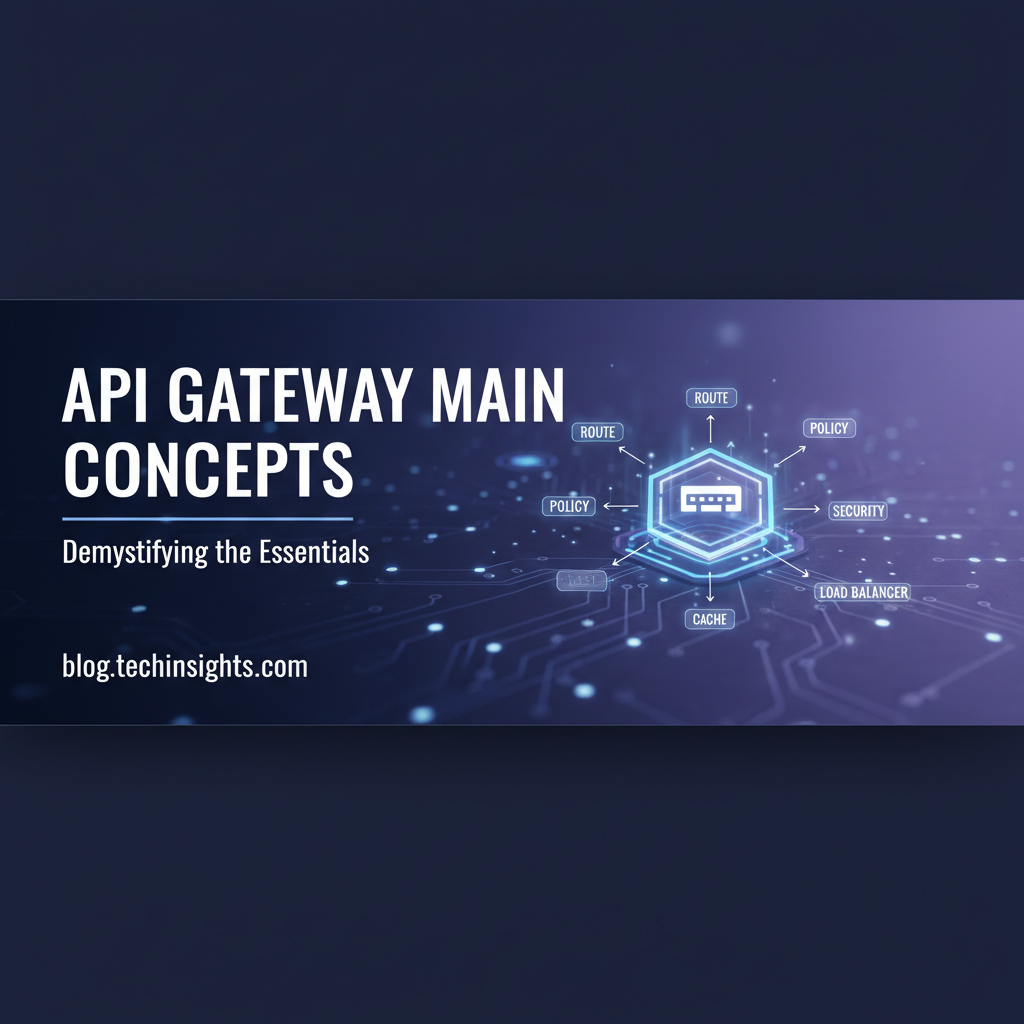


In the intricate tapestry of modern software architecture, where microservices reign supreme and interconnectedness is key, the API Gateway emerges as a critical, often indispensable, component. Its role, while seemingly straightforward on the surface, involves a sophisticated orchestration of tasks that fundamentally reshape how applications communicate, how security is enforced, and how performance is optimized. For developers, architects, and business stakeholders alike, a deep understanding of the API Gateway is no longer a luxury but a necessity, serving as the very bedrock for building robust, scalable, and secure digital experiences. This comprehensive guide aims to demystify the core concepts surrounding the API Gateway, dissecting its functionalities, exploring its profound impact, and illuminating its strategic importance in today's API-driven world.
The digital landscape has undergone a dramatic transformation, moving from monolithic applications to highly distributed systems. This paradigm shift has given rise to an explosion of Application Programming Interfaces (APIs), each serving as a precise contract for interaction between distinct software components. Whether it's a mobile application fetching data, a front-end web service communicating with numerous backend microservices, or third-party integrators accessing an organization's digital offerings, APIs are the invisible threads that weave these disparate elements into a cohesive whole. Yet, with this proliferation of APIs comes an inherent complexity: how do you manage hundreds, if not thousands, of endpoints? How do you secure them consistently? How do you ensure high performance and reliability across a distributed mesh of services? The answers to these questions invariably lead to the door of the API Gateway, a powerful intermediary that stands between the clients and the myriad backend services, orchestrating requests and responses with unparalleled efficiency and control.
The Evolving API Landscape and the Inevitable Rise of the Gateway
Before diving deep into the mechanics of an API Gateway, it's crucial to appreciate the context that necessitated its invention and widespread adoption. For decades, software applications were predominantly monolithic. A single, self-contained unit housed all business logic, data access layers, and user interface components. In such an environment, inter-service communication was internal, often through function calls or shared memory, and external access was limited to a few well-defined public endpoints, typically managed by a load balancer or a simple reverse proxy. The need for a sophisticated gateway was minimal because the surface area of external interaction was small and easily controllable.
However, the advent of cloud computing, the rise of microservices architecture, and the explosion of mobile and IoT devices dramatically altered this landscape. Organizations began breaking down their monolithic applications into smaller, independent, and loosely coupled services, each responsible for a specific business capability. This architectural pattern offered significant advantages in terms of agility, scalability, and resilience. Development teams could work independently, deploy services frequently, and scale individual components based on demand.
But this newfound flexibility came with its own set of challenges:
- Increased Network Hops: A single client request might need to interact with multiple backend services to fulfill its purpose. Managing these direct connections from the client side became cumbersome and inefficient, leading to increased latency and chatty communication.
- Security Sprawl: Each microservice would theoretically need to implement its own authentication, authorization, and security policies. This redundancy is not only inefficient but also a significant security risk, as a single misconfiguration could expose vulnerabilities across the entire system.
- Performance Bottlenecks: Direct client-to-service communication often lacked centralized mechanisms for caching, rate limiting, or load balancing, leading to performance degradation under heavy load.
- API Versioning Headaches: As services evolved, managing different versions of APIs and ensuring backward compatibility for various client applications became an operational nightmare.
- Operational Complexity: Monitoring, logging, and tracing requests across a multitude of services presented a significant challenge, making troubleshooting difficult and system observability opaque.
It became abundantly clear that a new architectural component was needed to address these burgeoning complexities. Enterprises needed a centralized control point, a single façade that could manage external traffic, enforce policies, and abstract the internal complexities of the microservices architecture from client applications. This need gave birth to the API Gateway. It emerged not just as a convenience but as an architectural imperative, simplifying client-side development, enhancing security, and providing a robust foundation for managing modern, distributed systems. The API Gateway acts as the vigilant gatekeeper, ensuring that every interaction between the outside world and the internal services is managed, secured, and optimized with precision.
What is an API Gateway? A Deep Dive into its Architectural Role
At its core, an API Gateway is a server that sits between client applications and backend services. It acts as a single entry point for all client requests, effectively providing a unified, coherent interface to a collection of disparate services. Conceptually, you can think of an API Gateway as a sophisticated traffic controller, a diligent security guard, and an intelligent concierge all rolled into one for your digital assets. It doesn't just forward requests; it actively processes, enhances, and secures them before directing them to their ultimate destination.
Architecturally, the API Gateway is positioned at the edge of the system, often deployed as a reverse proxy. When a client application (e.g., a mobile app, a web browser, another service) makes a request, it doesn't directly call individual backend services. Instead, it sends the request to the API Gateway. The Gateway then takes on the responsibility of routing that request to the appropriate service or services, potentially transforming the request along the way, authenticating the client, enforcing rate limits, and caching responses, among many other crucial tasks. Once the backend service processes the request and returns a response, the API Gateway can further process that response (e.g., aggregating data from multiple services, applying transformations) before sending it back to the client.
This intermediary role is profoundly impactful. It decouples the client from the internal architecture of the backend system. Clients no longer need to know the specific network locations, protocols, or scaling details of individual microservices. They interact with a single, stable endpoint – the API Gateway – which abstracts away all that underlying complexity. This abstraction is a cornerstone of robust distributed system design, promoting loose coupling and making the system more resilient to changes in backend implementation.
Let's break down its architectural position and functions further:
- The Single Entry Point: For any external entity, the API Gateway represents the entire backend system. This simplifies the client-side code dramatically, as developers only need to configure one URL to access all available APIs. This contrasts sharply with a scenario where clients might have to manage multiple endpoints for different microservices, leading to increased complexity and maintenance overhead.
- Reverse Proxy with Intelligence: While sharing similarities with a traditional reverse proxy (which forwards client requests to servers and returns the servers' responses to the client), an API Gateway goes significantly beyond mere redirection. It's a "smart" reverse proxy, equipped with business logic and policy enforcement capabilities. It inspects requests, makes decisions based on predefined rules (e.g., security policies, routing rules), and potentially modifies requests or responses dynamically.
- Edge Component: The API Gateway typically resides at the very edge of the internal network, exposed to the internet or external client applications. This strategic placement allows it to act as the first line of defense, intercepting all incoming traffic and applying foundational security and traffic management policies before requests even reach the internal services.
- Abstraction Layer: One of the most significant benefits is the abstraction it provides. If an organization decides to refactor a microservice, merge two services, or change its internal networking scheme, the clients remain oblivious. The API Gateway can be reconfigured to reflect these internal changes, maintaining a consistent api contract for external consumers. This allows backend teams to iterate and evolve their services rapidly without breaking existing client applications.
- Aggregator of Services: In many modern applications, a single UI screen might require data from several backend microservices. Without an API Gateway, the client would have to make multiple calls to different services, increasing network latency and complexity. The API Gateway can aggregate these calls, making a single request to the client, fetching data from multiple internal services, combining it, and then sending a consolidated response back. This reduces chatty communication and optimizes data fetching for client applications, particularly mobile devices where network latency and battery life are critical considerations.
In essence, the API Gateway transforms a complex web of individual API endpoints into a coherent, manageable, and secure gateway for all interactions, streamlining development, bolstering security, and laying the groundwork for scalable and resilient distributed systems. It's not merely a pass-through; it's an active participant in the request-response lifecycle, adding value at every step.
Core Concepts and Essential Features of an API Gateway
The power and utility of an API Gateway stem from its rich set of features, each designed to address specific challenges in managing modern API ecosystems. Understanding these core concepts is key to leveraging an API Gateway effectively.
1. Routing and Request Forwarding
The most fundamental function of an API Gateway is to intelligently route incoming requests to the correct backend services. When a client sends a request to the gateway, the gateway inspects the request's URL, HTTP method, headers, and sometimes even the body, to determine which internal service should handle it.
- Path-based Routing: Requests can be routed based on the URL path. For example,
/users/123might go to theUser Service, while/products/456goes to theProduct Service. - Host-based Routing: In multi-tenant environments or with multiple domains, requests can be routed based on the hostname.
- Header-based Routing: More advanced routing can inspect specific HTTP headers to direct traffic.
- Dynamic Routing: Integration with service discovery mechanisms allows the gateway to dynamically find and route requests to available service instances, even as services scale up or down.
This centralized routing capability simplifies client applications, as they only need to know the gateway's address, not the internal topology of the backend. It also allows for flexible deployment strategies, where services can be moved or scaled without impacting external clients.
2. Authentication and Authorization
Security is paramount in any API ecosystem, and the API Gateway serves as the ideal enforcement point for security policies. By centralizing authentication and authorization, the gateway significantly reduces the security burden on individual backend services.
- Authentication: The API Gateway can verify the identity of the client making the request. This often involves integrating with various identity providers (IDPs) and authentication schemes like OAuth 2.0, OpenID Connect, JWTs (JSON Web Tokens), or API keys. Instead of each microservice validating tokens or credentials, the gateway handles this once, offloading the task from the backend.
- Authorization: Once authenticated, the gateway can determine if the authenticated client has the necessary permissions to access the requested resource or perform a specific action. This can be based on roles, scopes, or granular access control lists (ACLs). The gateway can inject user identity and permissions into the request headers before forwarding them to the backend, allowing services to trust the incoming requests without re-authenticating.
This centralized security approach ensures consistent policy enforcement, reduces the risk of security vulnerabilities due to scattered implementation, and simplifies auditing.
3. Rate Limiting and Throttling
To protect backend services from abuse, prevent resource exhaustion, and ensure fair usage among consumers, API Gateways offer robust rate limiting and throttling capabilities.
- Rate Limiting: This feature restricts the number of requests a client can make within a specified time window. For example, a client might be limited to 100 requests per minute. If the limit is exceeded, the gateway responds with an HTTP 429 (Too Many Requests) status code.
- Throttling: Similar to rate limiting, but often involves delaying or pacing requests rather than outright rejecting them, especially for bursty traffic.
- Concurrency Limits: Limiting the number of simultaneous requests a client can have open.
These controls are essential for several reasons: preventing denial-of-service (DoS) attacks, managing costs (especially for pay-per-use APIs), ensuring service stability, and providing quality of service (QoS) guarantees to different tiers of users (e.g., premium users might have higher limits). The api gateway prevents overwhelming downstream services, maintaining their stability and responsiveness.
4. Load Balancing
While separate load balancers are often used in conjunction with API Gateways, many modern gateways incorporate basic to advanced load balancing features, especially when acting as the entry point to multiple instances of a service.
- Distribution of Traffic: The gateway can distribute incoming requests across multiple instances of a backend service to ensure optimal resource utilization and prevent any single instance from becoming a bottleneck.
- Health Checks: It can monitor the health of backend service instances and automatically remove unhealthy ones from the rotation, directing traffic only to operational services.
- Load Balancing Algorithms: Various algorithms can be employed, such as round-robin, least connections, or weighted round-robin, to distribute traffic effectively based on service capacity and current load.
This ensures high availability and scalability of the backend services, making the overall system more resilient.
5. Caching
Caching at the API Gateway level can significantly improve performance and reduce the load on backend services by storing frequently accessed responses closer to the client.
- Reduced Latency: For idempotent requests (e.g., GET requests), the gateway can serve cached responses directly without forwarding the request to the backend. This drastically reduces response times for repeat requests.
- Backend Offload: By serving responses from its cache, the gateway reduces the computational and network load on backend services, allowing them to focus on processing unique or complex requests.
- Configurable Caching Policies: Administrators can configure caching rules based on URL patterns, headers, query parameters, and cache invalidation strategies (e.g., time-to-live, conditional caching).
Caching is particularly effective for static or infrequently changing data, dramatically enhancing the user experience and optimizing infrastructure costs.
6. Logging and Monitoring
An API Gateway is a central point of contact for all API traffic, making it an invaluable source of operational data. Comprehensive logging and monitoring capabilities are therefore critical.
- Detailed Call Logs: The gateway can record every detail of an API call, including the client's IP, request headers, request body (if configured), response status, response body size, latency, and the backend service called. This granular data is invaluable for auditing, troubleshooting, and compliance.
- Metrics and Analytics: It can collect and expose metrics such as request rates, error rates, average response times, and unique client counts. These metrics feed into monitoring dashboards, providing real-time insights into API performance and usage patterns.
- Traceability: Integration with distributed tracing systems allows requests to be tracked end-to-end, providing visibility into the entire request lifecycle across multiple services.
These capabilities provide the necessary visibility for operations teams to quickly identify and resolve issues, understand usage trends, and ensure the overall health and stability of the API ecosystem. For instance, APIPark, an open-source AI gateway and API management platform, excels in providing detailed API call logging and powerful data analysis, offering comprehensive insights into API usage and performance trends. This allows businesses to proactively address issues and optimize their API strategies.
7. Transformation and Protocol Translation
API Gateways often need to adapt requests and responses to suit the needs of different clients or backend services.
- Request/Response Transformation: The gateway can modify request headers, query parameters, or the request body before forwarding to the backend. Similarly, it can transform response data (e.g., filter fields, reformat JSON/XML) before sending it back to the client. This is particularly useful for exposing internal APIs with a clean, client-friendly external interface.
- Protocol Translation: In heterogeneous environments, the gateway can bridge different communication protocols. For example, it might expose a RESTful API to clients while internally communicating with a gRPC or message queue-based service. This allows clients to use their preferred protocol without requiring backend services to support multiple communication styles.
- Payload Manipulation: Combining AI models with custom prompts to create new APIs, like sentiment analysis, translation, or data analysis APIs, is a powerful transformation capability. This prompt encapsulation into a REST API form is a feature found in advanced gateways like APIPark, allowing for flexible AI model usage. Furthermore, standardizing the request data format across AI models ensures that changes in AI models or prompts do not affect the application or microservices, simplifying AI usage and maintenance costs.
These features allow for greater flexibility in service design and enable the gateway to act as an effective façade for disparate backend systems.
8. API Versioning
Managing different versions of an API is a common challenge. An API Gateway simplifies this by allowing multiple versions of an API to coexist and be routed appropriately.
- Version Routing: The gateway can route requests to specific API versions based on URL paths (e.g.,
/v1/users,/v2/users), request headers (e.g.,Accept-Version: v2), or query parameters. - Graceful Deprecation: It enables the graceful deprecation of older API versions by redirecting traffic or applying specific policies to legacy clients, giving them time to migrate.
- Client Abstraction: Clients can continue using a specific API version exposed by the gateway, even if the underlying backend services have undergone significant internal changes or new versions have been deployed.
This helps maintain backward compatibility for existing clients while allowing for continuous evolution and improvement of backend services.
9. Security Policies (WAF, DDoS Protection)
Beyond basic authentication and authorization, API Gateways can integrate more advanced security features.
- Web Application Firewall (WAF) Integration: Many gateways can either include WAF capabilities or integrate with external WAFs to protect against common web vulnerabilities like SQL injection, cross-site scripting (XSS), and other OWASP Top 10 threats.
- DDoS Protection: By identifying and mitigating distributed denial-of-service attacks, the gateway safeguards backend services from being overwhelmed by malicious traffic.
- IP Whitelisting/Blacklisting: Allowing or denying access based on specific IP addresses or ranges.
These features fortify the API ecosystem against a broad spectrum of cyber threats.
10. Circuit Breaking
In a microservices architecture, a failure in one service can potentially cascade and bring down other dependent services. Circuit breaking is a resilience pattern that prevents this.
- Failure Detection: The API Gateway can monitor the success/failure rate of requests to backend services. If a service starts to fail consistently, the gateway "opens the circuit."
- Short-circuiting: When the circuit is open, the gateway immediately returns an error or a fallback response to subsequent requests for that service without even attempting to forward them. This prevents overwhelming the failing service and allows it to recover.
- Automatic Reset: After a configurable timeout, the gateway periodically attempts to send a few requests to the failing service (half-open state). If these requests succeed, the circuit closes, and normal traffic resumes.
This mechanism significantly improves the fault tolerance and resilience of the overall system.
11. Service Discovery Integration
Modern microservices environments are highly dynamic, with service instances being created, destroyed, and scaled frequently. An API Gateway needs to be aware of the current state and location of these services.
- Dynamic Resolution: The gateway integrates with service discovery mechanisms (e.g., Consul, Eureka, Kubernetes' built-in service discovery) to dynamically resolve the network locations of backend service instances. Instead of being hardcoded, the gateway queries the service registry to find healthy instances to route requests to.
- Load Balancing and Health Checks: This integration allows the gateway to combine dynamic service discovery with its load balancing and health checking capabilities, ensuring requests are always routed to available and healthy service instances.
This ensures that the gateway can operate effectively in highly dynamic and elastic cloud-native environments.
Here's a summary table of these essential API Gateway features:
| Feature | Description | Primary Benefit |
|---|---|---|
| Routing | Directs incoming requests to the correct backend service based on defined rules. | Simplifies client interaction, abstracts backend topology. |
| Authentication/Authorization | Verifies client identity and permissions; enforces access control policies. | Centralized security, reduced backend burden, consistent policy enforcement. |
| Rate Limiting/Throttling | Restricts the number of requests a client can make within a timeframe. | Protects backend from overload, ensures fair usage, prevents abuse. |
| Load Balancing | Distributes traffic across multiple instances of a service. | High availability, optimal resource utilization, improved scalability. |
| Caching | Stores frequently accessed responses to serve them quickly. | Reduces latency, decreases backend load, optimizes performance. |
| Logging/Monitoring | Records API call details and collects performance metrics. | Enhanced observability, faster troubleshooting, valuable analytics. |
| Transformation/Translation | Modifies requests/responses, bridges different communication protocols. | Flexible service design, clean API contracts, AI model integration. |
| API Versioning | Manages multiple versions of APIs to coexist gracefully. | Ensures backward compatibility, enables continuous API evolution. |
| Security Policies | Provides advanced protection against web vulnerabilities and DDoS attacks. | Fortified security posture, protection against common cyber threats. |
| Circuit Breaking | Prevents cascading failures by short-circuiting requests to failing services. | Increased system resilience, fault tolerance. |
| Service Discovery | Dynamically locates and routes requests to available service instances. | Operates effectively in dynamic microservices environments, high availability. |
Each of these features, individually and collectively, contributes to the API Gateway's role as a robust, intelligent, and indispensable component for managing and securing modern API-driven architectures. They transform a chaotic collection of services into a well-ordered, performant, and secure system accessible through a single, dependable gateway.
Benefits of Implementing an API Gateway
The strategic adoption of an API Gateway brings forth a multitude of significant advantages that resonate across development, operations, and business functions. It's more than just a technical component; it's an enabler for broader organizational goals like agility, security, and market responsiveness.
1. Simplified Client-Side Development
One of the most immediate and tangible benefits is the simplification it offers to client applications. Imagine a mobile application that needs to display user profiles, recent orders, and notification settings. Without an API Gateway, the mobile app would have to make three separate calls to three different microservices, manage different endpoints, handle potential network latency for each call, and possibly aggregate the data on the client side. This increases the complexity of client code, introduces more points of failure, and can degrade user experience.
With an API Gateway, the mobile app makes a single request to the gateway, which then fan-out to the respective backend services (user, order, notification), aggregates the responses, and sends back a single, consolidated response. This pattern, often referred to as "Backend-for-Frontend" (BFF) when the gateway is tailored for a specific client type, drastically reduces client-side code complexity, minimizes network chatter, and improves responsiveness, especially for resource-constrained devices like smartphones. Clients interact with a single, stable api endpoint, shielded from the internal architecture's complexities and constant evolution.
2. Enhanced Security
The API Gateway serves as a centralized enforcement point for security policies, significantly bolstering the overall security posture of the API ecosystem. Instead of having each microservice implement its own authentication and authorization logic, which is prone to inconsistencies and potential misconfigurations, the gateway handles these critical functions uniformly.
- Centralized Authentication: It acts as the gatekeeper, verifying user identities and handling token validation (e.g., JWTs, OAuth tokens). This offloads the security burden from individual microservices, allowing them to focus on their core business logic.
- Consistent Authorization: Role-based access control (RBAC) or attribute-based access control (ABAC) policies can be enforced at the gateway level, ensuring that only authorized users can access specific resources or perform certain actions.
- Threat Protection: Advanced features like WAF integration, IP blacklisting, and DDoS mitigation can be implemented at the gateway, providing a robust first line of defense against a wide array of cyber threats.
- Reduced Attack Surface: By exposing only a single, well-secured gateway to the outside world, the attack surface for the entire backend system is significantly reduced. Internal services, often not directly exposed to the internet, can reside in a more protected network segment.
This centralized approach ensures consistency, simplifies auditing, and enhances the overall trustworthiness of the API ecosystem.
3. Improved Performance and Scalability
API Gateways are instrumental in optimizing performance and ensuring the scalability of distributed systems.
- Caching: By caching frequently accessed responses, the gateway reduces the number of requests that reach the backend services, leading to faster response times for clients and less load on services.
- Rate Limiting and Throttling: These mechanisms prevent individual services from being overwhelmed by traffic surges or malicious attacks, ensuring stable performance for legitimate users.
- Load Balancing: The gateway can efficiently distribute incoming requests across multiple instances of backend services, preventing bottlenecks and maximizing resource utilization. This allows individual services to scale horizontally without client awareness.
- Reduced Network Latency: Aggregating multiple calls into a single request/response cycle minimizes network round-trips for clients, particularly beneficial for mobile applications.
- Connection Pooling: The gateway can maintain persistent connections to backend services, reducing the overhead of establishing new connections for every request.
These features collectively contribute to a more performant, responsive, and scalable API infrastructure, capable of handling large volumes of traffic with consistent reliability.
4. Better Management and Observability
Managing a complex microservices landscape without a central point of control can quickly become a nightmare. The API Gateway provides that essential control and visibility.
- Centralized Policy Enforcement: All traffic management, security, and transformation policies are defined and enforced in one place, simplifying configuration and reducing operational overhead.
- Unified Monitoring and Logging: Every request passing through the gateway can be logged, and detailed metrics can be collected. This provides a single, comprehensive source of truth for API usage, performance, errors, and security events. Tools like APIPark leverage this with powerful data analysis to display long-term trends and performance changes, helping businesses with preventive maintenance and optimization.
- Auditing and Troubleshooting: Detailed logs and metrics from the gateway make it significantly easier to trace requests, identify performance bottlenecks, and diagnose issues across multiple services, streamlining the troubleshooting process.
- API Productization: For businesses that offer APIs as products, the gateway provides the necessary tools for metering usage, enforcing subscription tiers, and gathering analytics essential for monetization strategies.
This centralized control and enhanced observability transform a potentially chaotic system into a well-managed, transparent, and auditable API platform.
5. Enabling Microservices Architecture
The API Gateway is often considered a foundational pattern for successful microservices adoption. It helps overcome many of the inherent challenges of distributed systems.
- Decoupling: It decouples clients from the specific implementation details, network locations, and number of instances of individual microservices. This allows backend teams to independently develop, deploy, and scale their services without impacting client applications.
- Abstraction of Complexity: The gateway hides the internal complexities of service orchestration, protocol differences, and data aggregation from the client, presenting a simplified, consistent API contract.
- API Versioning Management: As microservices evolve, the gateway facilitates the smooth introduction of new API versions and the graceful deprecation of older ones, ensuring that clients are not abruptly broken by changes.
- Resilience: Features like circuit breaking protect the system from cascading failures, enhancing the overall resilience of the microservices architecture.
Without an API Gateway, the benefits of microservices (agility, independent deployment) would often be overshadowed by the operational overhead and client-side complexity, making the architecture less appealing.
6. API Monetization and Productization
For organizations looking to expose their data and functionalities as a product, the API Gateway is an indispensable tool for commercializing their APIs.
- Subscription Management: Features like API resource access requiring approval, where callers must subscribe to an API and await administrator approval before invocation (as offered by APIPark), enable controlled access and tiered service offerings.
- Metering and Analytics: The gateway can track detailed usage statistics per client, per API, or per tier. This data is crucial for billing, understanding API popularity, and identifying opportunities for new API products.
- Developer Portal Integration: Many API Gateways integrate with or provide developer portals, which are essential for API discovery, documentation, self-service subscription, and community engagement. APIPark, for example, functions as an API developer portal, centralizing the display of API services for easy team sharing and usage.
- Policy Enforcement: Business policies, such as specific rate limits for premium customers or custom access rules, can be enforced directly at the gateway, ensuring adherence to commercial agreements.
By providing these capabilities, the API Gateway enables organizations to transform their APIs into revenue-generating products, fostering innovation and extending their reach to external developers and partners.
In summary, an API Gateway transcends its technical definition to become a strategic asset, empowering organizations to build, secure, and manage their digital interfaces with unprecedented efficiency and control. It paves the way for scalable, resilient, and manageable API ecosystems, critical for thriving in the rapidly evolving digital economy.
API Gateway Architecture Patterns
The deployment and architectural style of an API Gateway can vary depending on the organization's needs, scale, and existing infrastructure. While the core functions remain consistent, how they are implemented and where the gateway is positioned can differ.
1. Centralized Gateway
This is the most common and often the initial architecture pattern for API Gateways. In this model, a single, monolithic API Gateway instance (or a cluster of instances for high availability) serves as the entry point for all client requests across all microservices or applications.
- Description: All external API traffic flows through this one central gateway. It's responsible for routing requests to various backend services, applying global policies (authentication, rate limiting, logging), and aggregating responses.
- Pros:
- Simplicity: Easier to set up and manage initially, as there's only one component to configure and maintain.
- Consistent Policies: Ensures uniform application of security, traffic management, and observability policies across all APIs.
- Cost-Effective: Potentially lower infrastructure costs as resources are shared.
- Unified Monitoring: A single point for collecting all API traffic logs and metrics.
- Cons:
- Single Point of Failure (SPOF): If the central gateway goes down, all APIs become inaccessible. High availability measures (clustering, load balancing) are critical.
- Performance Bottleneck: Can become a performance bottleneck if not properly scaled, as all traffic must pass through it.
- Tight Coupling: Changes to one service's API or policy might require redeployment or reconfiguration of the central gateway, potentially impacting other services.
- Organizational Bottleneck: A single team might own the gateway, leading to potential development bottlenecks if multiple teams need changes or new API exposure.
- Scalability Challenges: Scaling a monolithic gateway to handle diverse and rapidly changing demands from different APIs can be complex.
A centralized gateway is often suitable for smaller organizations or those with a relatively stable and homogenous set of APIs.
2. Decentralized/Micro-Gateways (or Edge Gateways)
In contrast to a centralized model, decentralized gateways involve deploying multiple, smaller gateway instances, often aligned with specific business domains, teams, or even individual microservices.
- Description: Each microservice or a logical group of services has its own dedicated, lightweight API Gateway. These gateways are typically deployed very close to the services they manage, often within the same deployment unit (e.g., a Kubernetes pod). They are sometimes referred to as "edge gateways" for specific service boundaries.
- Pros:
- Independent Deployment: Teams can deploy and manage their own gateway instances independently, reducing dependencies and allowing for faster iteration.
- Improved Scalability: Gateways can scale with their respective services, preventing a single point of congestion.
- Fault Isolation: Failure in one micro-gateway only affects a subset of services, not the entire API ecosystem.
- Domain-Specific Policies: Policies (rate limits, authentication) can be tailored precisely to the needs of specific services, rather than being a one-size-fits-all approach.
- Reduced Latency: By being closer to the services, latency can be reduced for internal service-to-service communication.
- Cons:
- Increased Operational Overhead: Managing numerous gateway instances can be complex, requiring robust automation and tooling.
- Inconsistent Policies: Risk of fragmented or inconsistent security and management policies across different gateways if not centrally governed.
- Higher Resource Consumption: More gateway instances mean more compute and memory resources.
- Discovery Challenges: Clients might need a routing layer (e.g., a public load balancer or a lightweight "discovery gateway") to find the correct micro-gateway.
This pattern is often favored in large organizations with many independent teams and a mature microservices architecture, where operational autonomy and fault isolation are highly valued.
3. Backend-for-Frontend (BFF) Gateway
The BFF pattern is a specialized form of API Gateway that focuses on tailoring API interactions for specific client types (e.g., web, iOS, Android).
- Description: Instead of a single gateway serving all clients, a dedicated gateway is created for each distinct client application or UI. This allows the gateway to be optimized for the specific data requirements and interaction patterns of that client. For example, a "Web BFF" might aggregate data differently or have different transformation rules than an "iOS BFF."
- Pros:
- Client-Specific Optimizations: The API Gateway can be designed to fetch only the data relevant to a specific client and transform it into the exact format that client expects, minimizing over-fetching or under-fetching of data.
- Reduced Client-Side Complexity: Clients don't need to perform data aggregation or complex transformations, simplifying their codebase.
- Faster UI Development: UI teams can iterate on their specific BFF gateway without impacting other clients or general-purpose backend services.
- Improved Performance: Tailored responses can reduce payload sizes and network latency for specific clients.
- Cons:
- Increased Number of Gateways: Potentially leads to more gateway instances to manage, similar to decentralized gateways.
- Duplication of Logic: Some common logic (e.g., core authentication) might be duplicated across multiple BFFs, although this can be mitigated by shared libraries or a common underlying general API Gateway.
- Higher Resource Usage: Each BFF consumes its own resources.
The BFF pattern is highly effective for organizations supporting a diverse range of client applications with distinct data consumption patterns, ensuring an optimal experience for each client type.
The choice of API Gateway architecture pattern depends on factors such as organizational structure, the number and complexity of services, performance requirements, and operational capabilities. It's not uncommon for organizations to combine these patterns, perhaps having a centralized gateway for broad public APIs, and then employing BFFs for specific rich client applications. The key is to select a pattern that best balances agility, scalability, and maintainability for the specific context.
APIPark is a high-performance AI gateway that allows you to securely access the most comprehensive LLM APIs globally on the APIPark platform, including OpenAI, Anthropic, Mistral, Llama2, Google Gemini, and more.Try APIPark now! 👇👇👇
Choosing the Right API Gateway
Selecting the appropriate API Gateway is a strategic decision that impacts the performance, security, and scalability of your entire API ecosystem. With a plethora of options available, ranging from open-source projects to commercial enterprise solutions, careful consideration of several factors is essential.
1. Performance and Scalability
- Throughput (TPS): How many requests per second can the gateway handle? This is critical for high-traffic applications. A good API Gateway should be able to process a high volume of concurrent requests with minimal latency. For example, platforms like APIPark boast performance rivaling Nginx, achieving over 20,000 TPS with an 8-core CPU and 8GB of memory, supporting cluster deployment for large-scale traffic.
- Latency: How much overhead does the gateway add to each request? While some overhead is inevitable, it should be minimal to maintain a responsive user experience.
- Scalability: Can the gateway scale horizontally (add more instances) or vertically (increase resources for a single instance) to meet fluctuating demand? Is it designed for cloud-native environments and container orchestration (e.g., Kubernetes)?
2. Feature Set
Evaluate the breadth and depth of features offered, aligning them with your organization's specific needs.
- Core Features: Does it provide robust routing, authentication/authorization, rate limiting, and caching?
- Advanced Features: Does it support API versioning, request/response transformation, protocol translation, circuit breaking, service discovery integration, and advanced security policies (WAF, DDoS)?
- AI Integration: For modern applications leveraging AI, features like quick integration of 100+ AI models, unified API format for AI invocation, and prompt encapsulation into REST API (as offered by APIPark) can be crucial.
- Management & Observability: Are there comprehensive logging, monitoring, and analytics capabilities? Does it integrate with your existing observability stack?
3. Ecosystem and Integrations
- Backend Services: How well does it integrate with different types of backend services (REST, gRPC, GraphQL, serverless functions)?
- Identity Providers: Does it support your existing authentication systems (OAuth, OpenID Connect, LDAP, custom IDPs)?
- Developer Experience: Is there a developer portal for API discovery, documentation, and self-service? How easy is it for developers to consume your APIs?
- Cloud Platform Integration: For cloud-native deployments, does it integrate seamlessly with your chosen cloud provider's services (e.g., AWS API Gateway, Azure API Management, Google Cloud Apigee)?
4. Deployment Options and Flexibility
- Deployment Models: Can it be deployed on-premises, in the cloud, as a container, or as a serverless function?
- Platform Agnostic: Is it tied to a specific vendor or can it run on various infrastructures?
- Ease of Deployment: How quickly and easily can it be deployed and configured? Tools like APIPark offer quick deployment in just 5 minutes with a single command line.
- Multi-tenant Support: For SaaS providers or large enterprises, does it offer independent API and access permissions for each tenant, improving resource utilization and security? (e.g., APIPark's tenant management features).
5. Open Source vs. Commercial Solutions
- Open Source:
- Pros: Often cost-effective (no license fees), highly customizable, strong community support, transparency in codebase.
- Cons: Requires in-house expertise for setup, maintenance, and support; may lack enterprise-grade features or dedicated support.
- Example: Solutions like APIPark, being open-sourced under the Apache 2.0 license, provide a robust platform for managing AI and REST APIs with a strong community backing, while also offering commercial versions for advanced features and professional support.
- Commercial:
- Pros: Dedicated professional support, extensive documentation, often more advanced features, enterprise-grade stability and security, managed services available.
- Cons: Licensing costs can be significant, vendor lock-in, less flexibility for deep customization.
- Examples: Kong Gateway (commercial version), Apigee, AWS API Gateway, Azure API Management.
6. Cost
- Licensing Fees: For commercial products.
- Infrastructure Costs: The compute, memory, and network resources required to run the gateway.
- Operational Costs: The cost of engineers to set up, configure, monitor, and maintain the gateway.
- Hidden Costs: Training, consulting, integration costs.
7. Community and Support
- Documentation: Is the documentation clear, comprehensive, and up-to-date?
- Community: For open-source projects, is there an active and helpful community for troubleshooting and guidance?
- Vendor Support: For commercial products, what level of support is offered (SLAs, response times, channels)?
Introducing APIPark:
When considering an API Gateway, it's worth noting robust open-source options that provide extensive capabilities. APIPark (ApiPark), for instance, stands out as an all-in-one open-source AI gateway and API management platform. It's designed to streamline the management, integration, and deployment of both AI and traditional REST services. Key features include quick integration of over 100 AI models, unified API formats for AI invocation, and the ability to encapsulate prompts into REST APIs. Beyond AI, it offers end-to-end API lifecycle management, API service sharing within teams, and robust security features like independent API and access permissions for each tenant, and subscription approval workflows. Its impressive performance, detailed API call logging, and powerful data analysis tools make it a compelling choice for businesses looking for a comprehensive, scalable, and secure API management solution that can handle both traditional and AI-driven workloads effectively. APIPark also provides commercial support and advanced features for enterprises, building on its strong open-source foundation.
Choosing the right API Gateway is a critical architectural decision. It's not merely about picking a tool, but about selecting a strategic component that aligns with your organization's technical needs, operational capabilities, and business objectives. A thorough evaluation based on these criteria will help ensure you select a gateway that empowers your API strategy for years to come.
Implementing and Operating an API Gateway
Successfully implementing and operating an API Gateway involves more than just selecting the right software; it requires careful planning, strategic deployment, and continuous monitoring. A well-executed API Gateway strategy ensures seamless API management, optimal performance, and robust security.
1. Planning and Design
Before deploying any gateway, a thorough planning phase is crucial.
- Identify API Landscape: Catalog all your existing and planned APIs. Understand their characteristics (public/private, REST/gRPC, data sensitivity, traffic patterns).
- Define Requirements: What are the key functional and non-functional requirements? (e.g., "must support OAuth 2.0," "must handle 10,000 TPS," "must have multi-region deployment").
- Architectural Fit: How will the API Gateway integrate with your existing infrastructure (service mesh, Kubernetes, existing load balancers, identity providers)? Choose an architectural pattern (centralized, decentralized, BFF) that best fits your organizational structure and technical needs.
- Policy Definition: Clearly define your security policies (who can access what), rate limiting rules, caching strategies, and transformation requirements. These policies will be the core configuration of your api gateway.
- Team Ownership: Determine which team(s) will be responsible for deploying, configuring, and maintaining the gateway. This is crucial for avoiding bottlenecks, especially with a centralized gateway.
2. Deployment Strategies
Modern API Gateways are designed for flexible deployment, often leveraging cloud-native principles.
- Containerization (Docker): Packaging the gateway as a Docker image allows for consistent deployment across different environments (local development, staging, production).
- Container Orchestration (Kubernetes): Deploying the gateway on Kubernetes provides built-in capabilities for scaling, self-healing, service discovery, and declarative configuration. This is often the preferred method for cloud-native applications, as it provides high availability and resilience.
- Cloud-Native Services: Utilizing managed API Gateway services provided by cloud vendors (e.g., AWS API Gateway, Azure API Management, Google Cloud Apigee) offloads much of the operational burden, allowing teams to focus on configuration rather than infrastructure management.
- On-Premises/Hybrid: For organizations with existing data centers or specific compliance requirements, deployment on-premises or in a hybrid cloud setup might be necessary. Ensure the chosen gateway supports these environments. Tools like APIPark offer quick deployment via a simple command line, demonstrating ease of setup regardless of the underlying infrastructure, and can be deployed in various environments.
3. Configuration Management
The effectiveness of an API Gateway hinges on its configuration.
- Declarative Configuration: Prefer gateways that support declarative configuration (e.g., YAML, JSON files, or custom resource definitions in Kubernetes). This allows configurations to be version-controlled, reviewed, and deployed via CI/CD pipelines.
- Automated Deployment: Integrate gateway configuration deployment into your CI/CD pipelines to ensure consistency, prevent manual errors, and enable rapid iteration.
- Granular Policies: Configure specific policies for each api or group of APIs rather than applying blanket rules, to optimize performance and security where needed.
- Dynamic Configuration: For highly dynamic environments, ensure the gateway can dynamically load new configurations or integrate with service registries to adapt to changes in backend services without requiring a full restart.
4. Monitoring and Alerting Best Practices
An operational API Gateway needs continuous oversight.
- Comprehensive Metrics: Collect metrics on request counts, error rates, latency, CPU/memory usage, and unique client counts. Use monitoring tools (Prometheus, Grafana, Datadog) to visualize these metrics.
- Centralized Logging: Aggregate all gateway logs into a centralized logging system (ELK stack, Splunk, cloud logging services) for easy search, analysis, and auditing. Detailed logging, such as that offered by APIPark, allows for quick tracing and troubleshooting of API calls.
- Alerting: Set up alerts for critical thresholds (e.g., high error rates, increased latency, gateway instance failures) to proactively identify and address issues before they impact users.
- Distributed Tracing: Integrate with distributed tracing systems (Jaeger, Zipkin) to track requests end-to-end across the gateway and all backend microservices, providing deep visibility into performance bottlenecks.
- Synthetic Monitoring: Implement external monitors that periodically send requests to your APIs via the gateway to ensure availability and performance from an end-user perspective.
5. Scalability and High Availability
- Horizontal Scaling: Design your gateway deployment for horizontal scalability. Run multiple instances behind a load balancer to distribute traffic and prevent a single point of failure.
- Redundancy: Ensure your gateway instances are deployed across multiple availability zones or regions to withstand localized outages.
- Automated Scaling: Leverage auto-scaling groups or Kubernetes Horizontal Pod Autoscalers (HPAs) to automatically adjust the number of gateway instances based on traffic load.
- Resource Allocation: Allocate sufficient CPU, memory, and network resources to the gateway instances to handle anticipated peak loads.
6. Testing the Gateway
- Unit Tests: Test individual gateway configurations and policy rules.
- Integration Tests: Test the end-to-end flow from client through the gateway to the backend service and back.
- Performance Tests: Conduct load testing and stress testing to ensure the gateway can handle expected traffic volumes and identify potential bottlenecks.
- Security Tests: Perform penetration testing and vulnerability assessments on the exposed gateway endpoints.
Implementing and operating an API Gateway is an ongoing process that requires continuous refinement. By adhering to these best practices, organizations can build a robust, scalable, and secure API infrastructure that acts as a reliable gateway for their digital services, enabling agility and resilience in the face of evolving demands.
Challenges and Anti-Patterns
While an API Gateway offers significant advantages, its implementation is not without potential pitfalls. Awareness of these challenges and anti-patterns is crucial for designing a robust and effective gateway solution, rather than creating new problems.
1. Single Point of Failure (SPOF)
- Challenge: A centralized API Gateway, by its very nature, becomes a single entry point for all client requests. If this gateway fails, all APIs become inaccessible, leading to a complete system outage.
- Anti-Pattern: Deploying a single instance of the gateway without redundancy.
- Mitigation:
- High Availability (HA) Deployments: Always deploy the API Gateway as a cluster of instances behind a load balancer.
- Distributed Across Zones/Regions: Distribute gateway instances across multiple availability zones or even geographic regions to protect against localized data center failures.
- Automated Recovery: Implement automated health checks and recovery mechanisms (e.g., Kubernetes self-healing) to quickly replace failed instances.
2. Performance Bottlenecks
- Challenge: Since all API traffic flows through the gateway, it can become a performance bottleneck if not adequately provisioned or optimized. Excessive processing (complex transformations, deep inspection) can add significant latency.
- Anti-Pattern: Overloading the gateway with too much complex logic that could be handled more efficiently downstream, or under-provisioning its compute resources.
- Mitigation:
- Right-Sizing: Ensure the gateway instances have sufficient CPU, memory, and network bandwidth to handle peak traffic.
- Performance Testing: Conduct rigorous load and stress testing to identify and address bottlenecks early.
- Optimize Policies: Keep policies simple where possible. Offload complex data transformations to specialized services if they are resource-intensive.
- Caching: Leverage caching extensively for frequently accessed data to reduce backend load.
- Horizontal Scaling: Scale gateway instances horizontally to distribute the load.
3. Over-Centralization (Monolithic Gateway)
- Challenge: An API Gateway can evolve into a "monolith" itself, accumulating too much logic and becoming a bottleneck for development teams. If a single team owns and maintains this large, complex gateway, any change or new API exposure requires coordination with that team, slowing down feature delivery.
- Anti-Pattern: Treating the API Gateway as a giant "Swiss Army knife" where all possible logic is implemented, making it bloated and difficult to manage. Also, having a single team be the bottleneck for all gateway-related changes.
- Mitigation:
- Decentralized/BFF Architectures: Consider decentralized or Backend-for-Frontend (BFF) gateways where appropriate, allowing domain teams more autonomy.
- Clear Responsibilities: Define clear responsibilities for what logic belongs in the gateway versus what belongs in backend services. The gateway should handle cross-cutting concerns (security, traffic management), while services handle business logic.
- Configuration as Code: Use declarative configuration that can be version-controlled and deployed automatically, enabling domain teams to manage their API configurations without direct intervention from a central gateway team.
- Lightweight Gateways: Choose a lightweight gateway solution that is easy to deploy and manage, and avoids unnecessary feature bloat.
4. Complexity in Configuration
- Challenge: As the number of APIs and policies grows, configuring an API Gateway can become exceedingly complex, leading to errors, inconsistencies, and difficulty in debugging.
- Anti-Pattern: Manually configuring the gateway, using arcane configuration languages, or lacking proper version control for configurations.
- Mitigation:
- Declarative Configuration: Use configuration files (YAML, JSON) that are human-readable and machine-manageable.
- Version Control: Store all gateway configurations in a version control system (Git) and integrate them into CI/CD pipelines.
- Automation Tools: Leverage automation tools and scripts for deploying and managing gateway configurations.
- Modularity: Break down configurations into smaller, reusable modules if the gateway supports it.
- Clear Documentation: Maintain comprehensive documentation for all configurations and policies.
5. Vendor Lock-in (for Commercial Gateways)
- Challenge: Relying heavily on a commercial API Gateway can lead to vendor lock-in, making it difficult and costly to switch providers later if needs change or a better solution emerges.
- Anti-Pattern: Choosing a commercial gateway without considering its portability, open standards support, or exit strategy.
- Mitigation:
- Open Standards: Prioritize gateways that support open standards (e.g., OpenAPI/Swagger for API definitions, OAuth 2.0 for security).
- Evaluate Open Source Alternatives: Consider robust open-source solutions like APIPark, which offer flexibility, community support, and often competitive feature sets, while providing optional commercial support for enterprises.
- Abstract Gateway Logic: Where possible, abstract generic gateway policies (e.g., rate limit settings) into a common format that is not tightly coupled to a specific vendor's implementation.
6. Security Misconfigurations
- Challenge: Despite centralizing security, incorrect configuration of the API Gateway can introduce new security vulnerabilities or fail to adequately protect backend services.
- Anti-Pattern: Rushing security configurations, not conducting regular security audits, or lacking proper separation of duties for security policy management.
- Mitigation:
- Security by Design: Embed security considerations from the initial design phase.
- Principle of Least Privilege: Configure the gateway with the minimum necessary permissions to perform its functions.
- Regular Audits: Periodically audit gateway configurations and access logs for anomalies and compliance.
- Automated Security Scans: Use automated tools to scan gateway configurations for common security misconfigurations.
- Secure Secrets Management: Use robust secrets management solutions for API keys, tokens, and other sensitive credentials.
Understanding these challenges and actively working to avoid these anti-patterns is paramount to realizing the full potential of an API Gateway as a robust, secure, and scalable component in your modern software architecture. The gateway should be an enabler, not an impediment, to the agility and reliability of your API ecosystem.
The Future of API Gateways
The evolution of software architecture is ceaseless, and the API Gateway is no exception. As distributed systems become even more complex and as new technologies emerge, the role and capabilities of API Gateways continue to expand and adapt. The future promises even more intelligence, integration, and sophistication for these critical intermediaries.
1. Deeper Integration with Service Meshes
Service meshes (like Istio, Linkerd, Consul Connect) have emerged to address service-to-service communication within the internal network, providing features like traffic management, security, and observability at the application layer. There's a natural overlap and synergy between service meshes and API Gateways.
- Convergence or Clearer Separation: The future will likely see either a clearer functional separation where the API Gateway handles north-south traffic (client to services) and the service mesh handles east-west traffic (service to service), or a tighter integration where the gateway leverages the service mesh's control plane for dynamic routing, policy enforcement, and unified observability.
- Unified Control Plane: Imagine a single control plane that manages both the edge gateway and the internal service mesh, providing a consistent policy framework from client all the way to the deepest microservice. This would simplify management and improve security and observability across the entire distributed system.
- Edge-Native Service Mesh: Some solutions are blurring the lines, extending service mesh capabilities to the edge, making the distinction between an ingress controller, API Gateway, and service mesh increasingly nuanced.
2. Edge Computing and Distributed Gateways
As applications push further towards the edge to reduce latency and process data closer to its source (e.g., IoT devices, mobile applications), API Gateways will also need to become more distributed.
- Gateways at the Edge: Lightweight API Gateways will be deployed closer to the clients, perhaps even on edge devices or in regional data centers, rather than solely in central cloud regions.
- Federated Gateways: A network of interconnected gateways that can route traffic intelligently between regional deployments and central cloud resources.
- Reduced Latency: Processing and authenticating requests at the edge significantly reduces round-trip times, enhancing the user experience for globally distributed applications.
3. AI/ML Integration for Intelligent Routing and Security
The rise of artificial intelligence and machine learning will undoubtedly imbue API Gateways with greater intelligence.
- Intelligent Routing: AI/ML models can analyze historical traffic patterns, service performance, and user behavior to make more intelligent routing decisions, optimizing for latency, cost, or resource utilization.
- Advanced Threat Detection: Machine learning can identify anomalous traffic patterns indicative of sophisticated attacks (e.g., zero-day exploits, advanced DDoS) that signature-based WAFs might miss, providing proactive security.
- Predictive Scaling: AI can forecast API traffic spikes and automatically scale gateway instances and backend services preemptively, ensuring continuous availability.
- Personalized APIs: AI-driven gateways could dynamically adapt API responses or even API contracts based on client context, user preferences, or real-time data, enabling highly personalized digital experiences. Products like APIPark already showcase this trend by integrating AI models and allowing prompt encapsulation into REST APIs, standardizing AI invocation.
4. Evolution Towards Full API Management Platforms
The API Gateway is already a core component of API Management (APIM) platforms. The future will see even deeper integration and expansion of APIM platforms to offer a more comprehensive, end-to-end lifecycle management solution.
- Unified Developer Experience: API Management platforms will provide more sophisticated developer portals, self-service tools, and sandboxes, making it even easier for developers to discover, test, and consume APIs.
- Enhanced API Design Tools: Deeper integration with API design tools (e.g., OpenAPI generators, API mocking) to streamline the API design-first approach.
- Business Intelligence & Monetization: More advanced analytics, reporting, and monetization capabilities, allowing businesses to derive maximum value from their APIs.
- APIOps: The adoption of "APIOps" principles, treating API definitions and gateway configurations as code, and integrating them fully into CI/CD pipelines, will become standard practice, enabling faster, more reliable API deployments.
5. Increased Focus on Observability and Governance
As distributed systems grow, so does the challenge of understanding their behavior and ensuring compliance.
- Advanced Observability: Gateways will offer more sophisticated distributed tracing, advanced metrics, and logging integration, providing unparalleled visibility into the entire API transaction lifecycle.
- Automated Governance: Tools will emerge to automatically scan and enforce API governance policies (e.g., naming conventions, security standards) across the gateway and throughout the API lifecycle.
The API Gateway is no longer just a proxy; it's transforming into an intelligent, programmable, and highly integrated control point for the entire API ecosystem. Its continuous evolution will be critical in shaping how organizations build, secure, and deliver digital services in an increasingly interconnected and intelligent world. The gateway will remain at the forefront, orchestrating the complex dance between clients and services, ensuring security, performance, and agility for the digital age.
Conclusion
In the dynamic and ever-expanding landscape of modern software architecture, the API Gateway has unequivocally cemented its position as an indispensable component. Far from being a mere traffic cop, it acts as a sophisticated digital concierge, managing the complex interactions between diverse client applications and a multitude of backend services. We've journeyed through its core concepts, from fundamental routing and robust security mechanisms to advanced features like caching, rate limiting, and intelligent transformations. Each functionality plays a pivotal role in simplifying client-side development, bolstering security, enhancing performance, and enabling the efficient management of sprawling API ecosystems.
The advent of microservices, the proliferation of mobile and IoT devices, and the increasing demand for secure, scalable, and resilient digital experiences have elevated the API Gateway from a niche solution to a foundational architectural pattern. It abstracts away the intricate complexities of distributed systems, presenting a unified and consistent API contract to the outside world. This abstraction is not just a convenience; it's a strategic enabler that empowers organizations to innovate faster, deploy more frequently, and adapt to market demands with unparalleled agility. By centralizing cross-cutting concerns such as authentication, authorization, and traffic management, the gateway drastically reduces the operational burden on individual services, allowing development teams to focus on their core business logic.
While challenges like potential bottlenecks, over-centralization, and complex configurations exist, understanding these pitfalls and adopting best practices for deployment, monitoring, and governance are key to harnessing the gateway's full potential. The future promises an even more intelligent and integrated API Gateway, with deeper ties to service meshes, pervasive AI/ML capabilities, and a stronger emphasis on edge computing. Solutions like APIPark (ApiPark) exemplify this evolution, offering an open-source, AI-first approach to API management that addresses both traditional REST APIs and the emerging demands of artificial intelligence integration, highlighting the continuous innovation in this crucial domain.
Ultimately, the API Gateway is more than just a piece of technology; it is a strategic asset that underpins the success of any API-driven strategy. It transforms a potentially chaotic collection of services into a well-ordered, performant, and secure system, acting as the vigilant gateway through which all digital interactions flow. Demystifying its essentials is the first step towards building a resilient, scalable, and future-proof digital infrastructure capable of meeting the demands of tomorrow's interconnected world.
Frequently Asked Questions (FAQs)
1. What is the primary purpose of an API Gateway? The primary purpose of an API Gateway is to act as a single entry point for all client requests to backend services. It centralizes common functionalities like authentication, authorization, routing, rate limiting, caching, and logging, thereby simplifying client interactions, enhancing security, improving performance, and abstracting the complexity of the underlying microservices architecture from client applications. It provides a cohesive façade for a potentially large and distributed set of APIs.
2. How does an API Gateway differ from a traditional Load Balancer or Reverse Proxy? While an API Gateway often includes load balancing and reverse proxy capabilities, it goes significantly beyond them. A traditional load balancer primarily distributes network traffic across multiple servers to optimize resource utilization and prevent overload. A reverse proxy forwards client requests to a backend server. An API Gateway, however, adds a layer of "intelligence" by inspecting requests, applying business logic and policies (e.g., authentication, authorization, rate limiting, data transformation, API versioning) before routing, and potentially aggregating responses from multiple services. It's a smart, policy-driven intermediary, whereas load balancers and reverse proxies are primarily network-layer traffic managers.
3. Is an API Gateway always necessary for a microservices architecture? While not strictly "always necessary" for every single microservice deployment, an API Gateway is highly recommended and often becomes essential as the number of microservices and client applications grows. For very small, simple microservices deployments with only a few services and limited client types, direct client-to-service communication might initially suffice. However, as complexity increases, the benefits of an API Gateway (centralized security, simplified client-side development, improved performance, better management, etc.) quickly outweigh the overhead, making it a critical component for scalable and maintainable microservices architectures.
4. What are some key benefits of using an API Gateway for security? An API Gateway significantly enhances security by centralizing critical security functions. It acts as the first line of defense, handling authentication (verifying client identities, e.g., via OAuth, JWTs) and authorization (checking permissions) before requests reach backend services. This ensures consistent security policy enforcement across all APIs and reduces the security burden on individual microservices. Additionally, many gateways provide advanced threat protection like rate limiting to prevent DDoS attacks, IP blacklisting, and integration with Web Application Firewalls (WAFs) to guard against common web vulnerabilities, effectively reducing the attack surface of the entire system.
5. Can an API Gateway also manage AI-specific APIs? Yes, modern API Gateways are increasingly designed to manage AI-specific APIs, and specialized "AI Gateways" are emerging. Platforms like APIPark (ApiPark) are built precisely for this purpose. They offer features such as quick integration with various AI models, standardizing the request and response formats for AI invocations (ensuring application resilience to AI model changes), and even encapsulating complex AI prompts into simple REST API endpoints. This allows organizations to leverage AI capabilities within their applications efficiently, securely, and scalably, treating AI models as another type of service managed by the gateway.
🚀You can securely and efficiently call the OpenAI API on APIPark in just two steps:
Step 1: Deploy the APIPark AI gateway in 5 minutes.
APIPark is developed based on Golang, offering strong product performance and low development and maintenance costs. You can deploy APIPark with a single command line.
curl -sSO https://download.apipark.com/install/quick-start.sh; bash quick-start.sh

In my experience, you can see the successful deployment interface within 5 to 10 minutes. Then, you can log in to APIPark using your account.

Step 2: Call the OpenAI API.